Reviewed · TOURS IN ROME
Rome: Jewish Ghetto and Trastevere Tour
Rome’s Jewish Ghetto and Trastevere are close on a map, but their stories take you through very different sides of Rome. This tour connects them on foot, beginning among ancient ruins and Jewish landmarks before crossing Tiber Island and ending in the narrow lanes of Trastevere.
I like two things here: the strong storytelling, which turns stones and church façades into human stories, and the route’s range. In 2.5 hours, you move from the Theatre of Marcellus and Roman antiquity to Jewish history, Christian tradition, neighborhood life, and food culture. The main consideration is that the synagogue is seen only from outside, and the tour covers cobblestones in all weather.
Key points to know before booking
- Ancient Rome sets the stage: The Theatre of Marcellus and Portico d’Ottavia give the Jewish Ghetto a wider Roman context.
- The Jewish Ghetto gets the most attention: Expect about 50 minutes of guided time in the area, spread across several stops.
- Tiber Island provides the bridge: A short break here divides the historical walk from the Trastevere portion.
- Guides make or break walking tours: Ben, Guido, Alethea, Alithia, Ariel, and others are praised for clear English, humor, and strong storytelling.
- The finish is useful: The tour ends at Piazza Trilussa, close to Trastevere restaurants and bars.
- The value is solid: At $35, you get 2.5 hours with a live guide, but food, drinks, and synagogue entry cost extra.
Why this Rome walk feels different
Many first-time Rome walks focus on the Colosseum, Trevi Fountain, or the Vatican. This one takes you into neighborhoods where the city’s past is easier to read in small details: a street plan, a church, an old fountain, a piece of Roman masonry, or a plaque set into the pavement.
The Jewish Ghetto is not a museum district sealed off from modern life. It is a living part of central Rome, with restaurants, cafés, traffic, residents, and reminders of difficult chapters. The guide’s job is to explain how those layers fit together without reducing the area to a list of dates.
That human side is the tour’s main strength. Guides including Ben, Guido, and Alethea have been praised for making complicated history clear without throwing too many facts at you at once. Alithia and Ariel are also singled out for energy, humor, and the ability to connect ancient events with later stories.
You should expect a conversational walking tour rather than a formal lecture. You can ask questions, and the guide may adjust the emphasis to suit the group. The tone can be light when the subject allows it, but the history of Rome’s Jewish community also includes painful and serious episodes. The better moments come when the guide gives both sides their proper weight.
Other days out people book in Rome:
- Vatican: Museums & Sistine Chapel Entrance Ticket
★ 4.5 · 144,003 reviews - Vatican Museums & Sistine Chapel Tour with Optional Basilica
★ 4.3 · 67,413 reviews - Colosseum, Roman Forum & Palatine Guided Tour
★ 4.7 · 63,148 reviews
Starting beside the Theatre of Marcellus
The meeting point is outside Santa Rita da Cascia in Campitelli, on Via Montanara, beside Antico Caffè del Teatro Marcello. Arrive 10 minutes early and look for a guide holding a sign reading Jewish Ghetto & Trastevere Stroll.
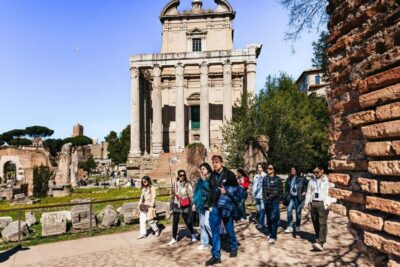
This is a useful starting point because you are not dropped straight into one narrow historical subject. The Theatre of Marcellus introduces the older Roman setting first. The guide spends about 10 minutes here, explaining what makes the theater important and how the surrounding ruins help you read the city.
You do not enter a major archaeological site on this tour, so do not book it expecting an interior visit. The value is in seeing how ancient Roman remains sit within the modern street network and how the guide uses them to frame what comes next.
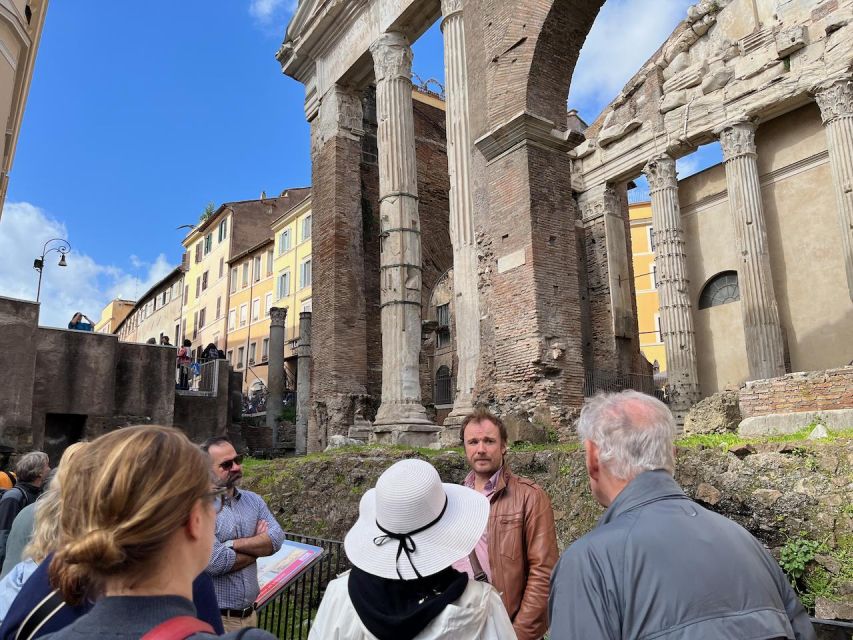
From here, you continue toward the Portico d’Ottavia. The stop is brief, around five minutes, but it matters because it marks the transition into the Jewish Ghetto. The portico is an ancient Roman monument, and its location helps explain why this neighborhood contains such a close mix of Roman, Jewish, and Christian landmarks.
Walking through the Jewish Ghetto
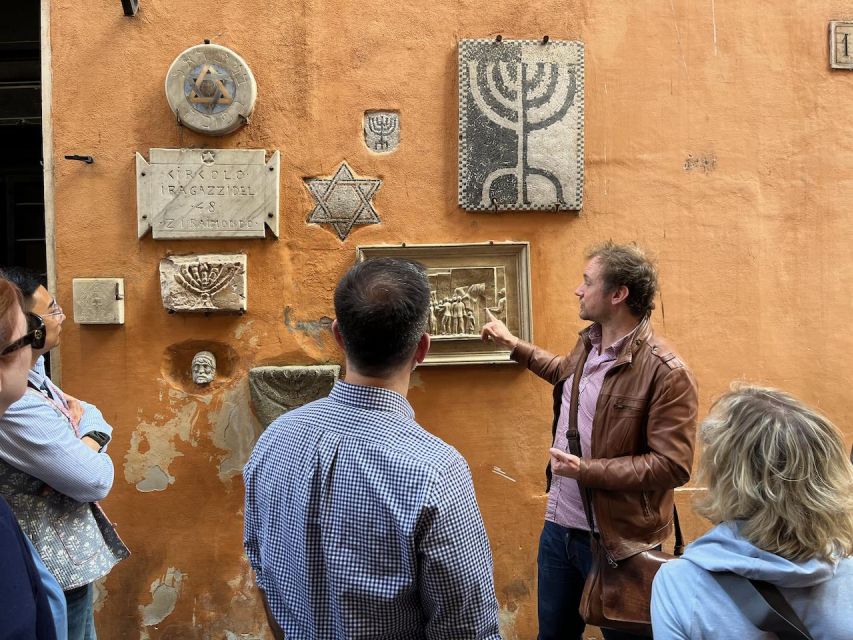
The Jewish Ghetto receives the largest share of the tour. You spend roughly 30 minutes in one guided section, then return to the area after Piazza Mattei for another 20 minutes. That split works well because the neighborhood is easier to understand in stages.
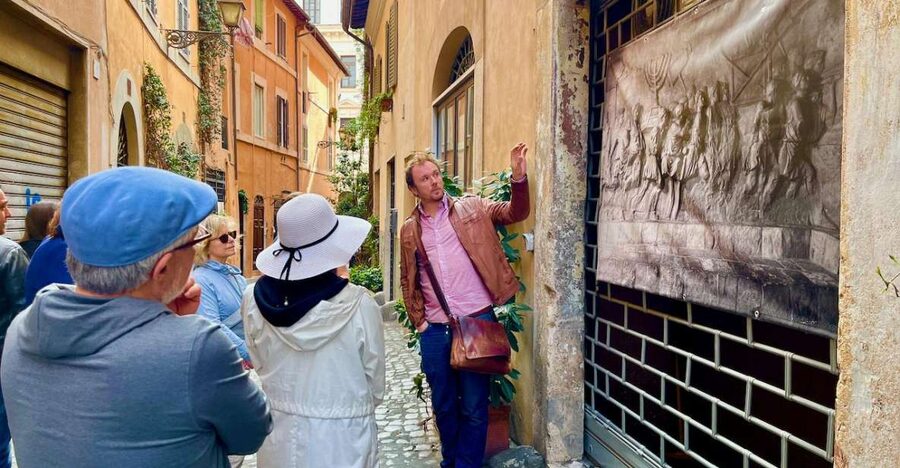
Your guide explains the long presence of Rome’s Jewish community, the restrictions imposed on it, and the ways people maintained community life through difficult periods. The aim is not just to point at buildings. You are given the social background needed to understand why this small area matters to Rome’s story.
The route moves through winding streets and cobbled lanes. That gives the walk atmosphere, but it also means you should wear shoes with firm soles. The surface can be uneven, and the tour is conducted rain or shine.
One important limit is that the synagogue is viewed from the outside only. You will not receive a synagogue interior visit as part of the $35 price. If entering a synagogue is central to your plans, you will need to arrange that separately. For a general introduction to the quarter, though, the outside view and the guide’s explanation still provide useful context.
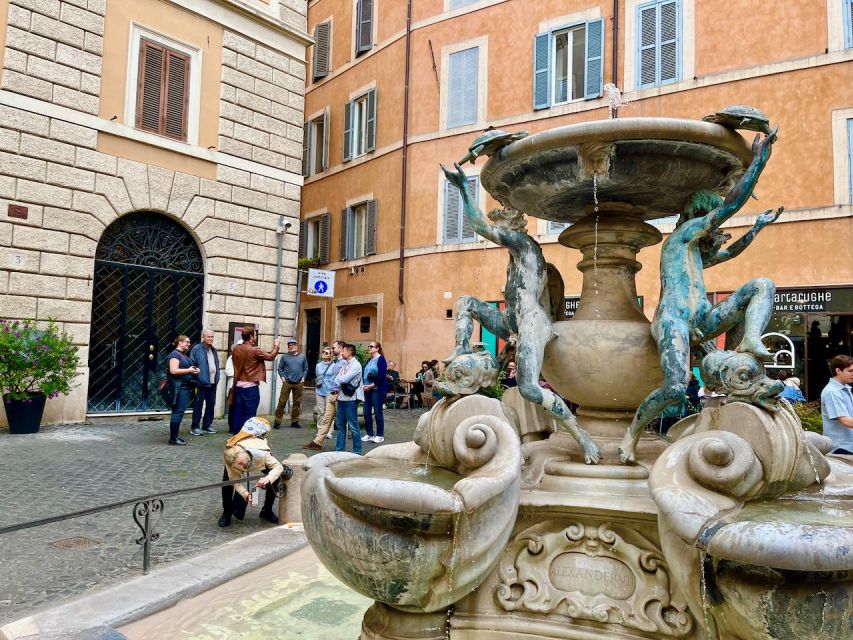
Piazza Mattei is another worthwhile pause. The guided stop lasts about 10 minutes, and the square gives you a change of scale after the tighter lanes. It is also a good place for the guide to tie the neighborhood’s architecture and public spaces to the people who lived here.
The second Jewish Ghetto section allows the story to continue rather than ending after one monument. This is where a strong guide makes a real difference. Ben is often praised for giving detailed explanations without losing the thread, while Guido is noted for making each stop lively and easy to follow. Alethea is described as prepared, funny, and generous with answers.
The subject is not presented as a simple tale of suffering or survival. You hear about tragedy, but also about ordinary life, endurance, and the best of human behavior. That balance gives the tour more weight than a quick photo stop.
Crossing Tiber Island
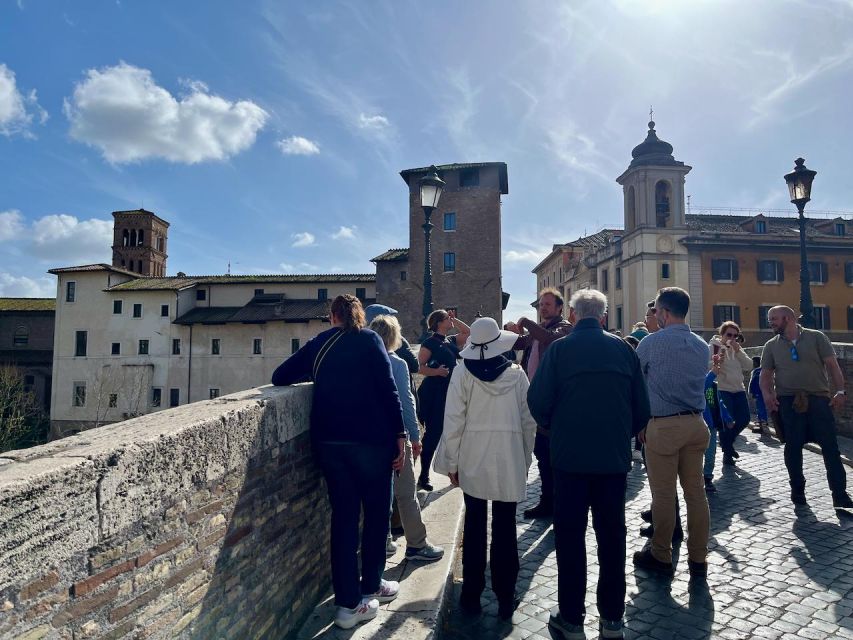
After the Jewish Ghetto, you walk to Tiber Island. The island is small, but it works as a natural hinge between the two parts of the tour. The guide spends about 15 minutes explaining its place in Roman history and society, followed by a 10-minute break.
That pause is practical. Two and a half hours on foot can feel long in Rome, especially in summer, so this is a chance to drink water, check your bearings, and let the first half settle. Bring a refillable bottle. Rome’s public fountains make refills possible, and the organizers specifically recommend carrying water in warm weather.
The island stop also prevents the route from feeling like two unrelated neighborhood walks. You have just been looking closely at the Jewish Ghetto. Now the river gives you physical and historical distance before you enter Trastevere.
Do not expect a long rest or a full meal here. Food and drinks are not included. An optional stop at a gelateria or café may be made, but you should not count on this as a scheduled tasting.
Same base, a different kind of day:
- Vatican Museums, Sistine Chapel & St Peter’s Basilica Guided Tour
★ 4.5 · 39,149 reviews - Rome: Colosseum, Palatine Hill and Roman Forum Guided Tour
★ 4.8 · 32,814 reviews - Rome: Guided Tour of Colosseum, Roman Forum & Palatine Hill
★ 4.7 · 27,897 reviews - Rome: Colosseum & Forum with Audio Guide App -Optional Arena
★ 4.2 · 24,770 reviews
Discovering Trastevere on foot
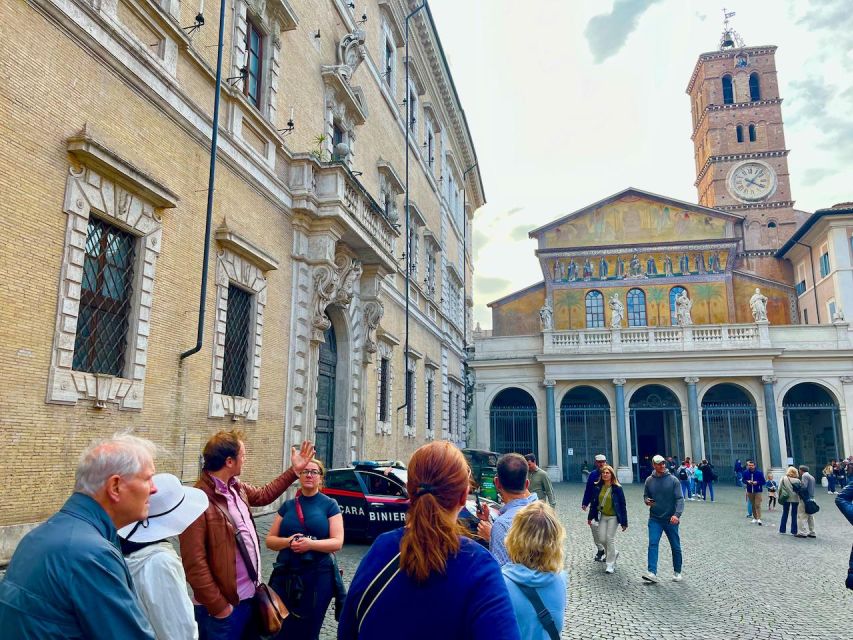
The Trastevere section lasts about an hour in total, with roughly 30 minutes of guided walking, 10 minutes at Santa Maria in Trastevere, another 20 minutes in the neighborhood, and a final five-minute stop at Piazza Trilussa.
Trastevere feels different from the Jewish Ghetto. Its narrow lanes, ivy-covered houses, old churches, and uneven streets create a more rustic Roman mood. The guide explains why the district has such a strong identity while keeping the focus on the connection between the two neighborhoods.
Santa Maria in Trastevere receives about 10 minutes of attention. This is not an interior-focused church tour, but the stop gives the guide a chance to discuss the church and the district’s religious and architectural character. If you want an exhaustive art-history treatment, this tour will be too brief. If you want to understand how the church fits into the neighborhood, the time is well used.
The final walk through Trastevere is where practical advice becomes especially useful. Guides have recommended places to eat and drink, and several people have continued exploring the area after the tour. You finish at Piazza Trilussa, a convenient point for deciding whether to stay for dinner, have a drink, or walk onward.
I like this ending because the tour does not leave you at an isolated monument. It puts you in a neighborhood where you can use what you have learned immediately. Ask your guide for restaurant advice, but remember that food is not part of the booking price.
What the guides do best
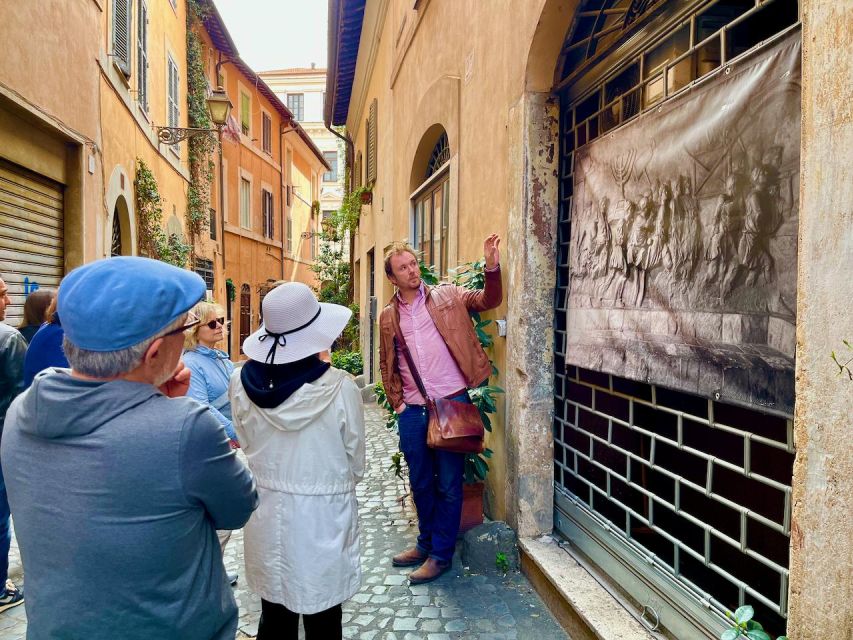
The strongest feature is the guide’s delivery. This route contains many dates, communities, rulers, religious institutions, and changes to Rome’s streets. A guide who simply recites facts would make it tiring.
The best named guides on this experience include:
- Ben, praised for humor, patience, clear explanations, and the ability to answer questions without overwhelming the group.
- Guido, noted for blending history and architecture, keeping a good pace, and making every stop feel active.
- Alethea and Alithia, praised for preparation, energy, fun facts, and strong interaction with the group.
- Ariel, described as able to connect more than 2,000 years of Roman history into a clear story.
- Ivana and Alice, also praised for friendly, engaging guidance and helpful local tips.
You cannot choose a specific guide from the information provided, so treat the names as examples of the guide team rather than a guarantee. What you can reasonably expect is an English-language guide who works from stories and explanations instead of pointing silently at monuments.
The small-group feel is another advantage when it occurs. A smaller group makes it easier to hear on narrow streets and easier to ask questions. It also gives the guide more room to respond to the group’s interests. Group size is not stated as a fixed feature, so I would not book solely on the assumption that every departure will be tiny.
Is $35 a fair price?
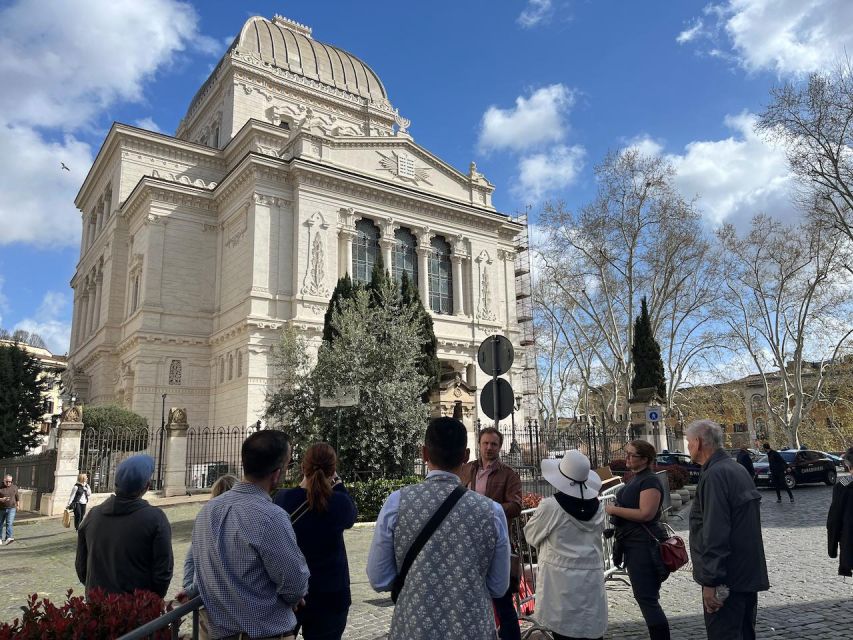
At $35 per person, this is a sensible price for a 2.5-hour guided walk in central Rome. You are paying for a live English-speaking guide, a carefully connected route, and interpretation that would be hard to reproduce from a guidebook while walking.
The value is strongest if you want context. You can walk through the Jewish Ghetto and Trastevere for free, of course. The fee earns its keep when the guide explains why the areas matter and helps you notice connections between ancient Rome, Jewish life, Christianity, and present-day neighborhood culture.
The price does not include food, drinks, or entry to the synagogue. That keeps the base cost modest, but budget separately if you hope to stop for gelato or a café drink. The tour also does not replace a full archaeological or religious-site visit.
Free cancellation up to 24 hours before the start and the reserve-now, pay-later option add useful flexibility. The tour is wheelchair accessible, though the route’s cobblestone streets and narrow lanes are still worth considering for anyone who needs especially smooth surfaces.
Pace, weather, and what to bring
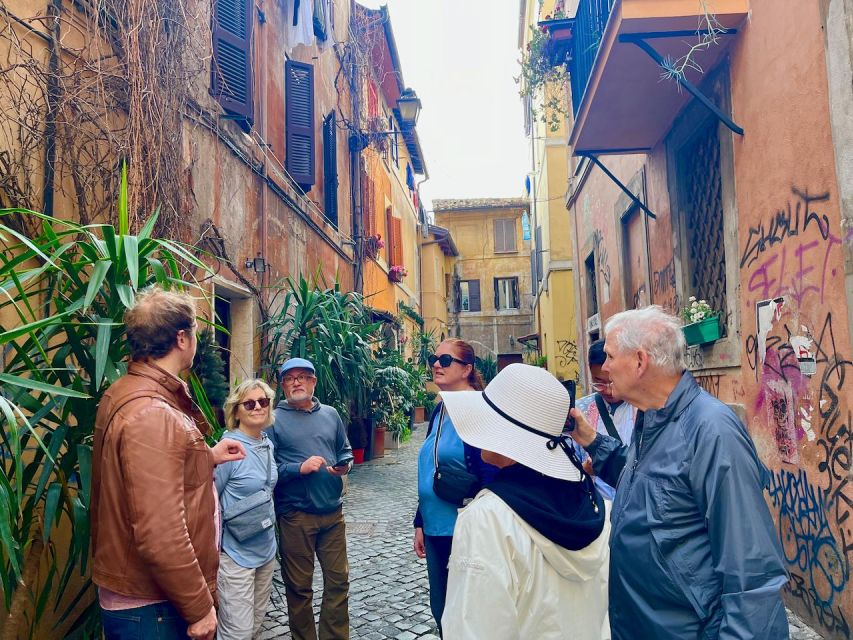
The walk is described as leisurely, and the published timing totals 2.5 hours. One account puts the actual walk at just over two hours, so the exact pace may vary with questions and the group.
Wear comfortable shoes. This is not optional advice in Rome, where old streets can be hard on your feet even when the distance looks modest. Bring weather protection because the tour runs in rain or shine.
Summer can be warm. Carry water and use the public fountains for refills. The route has an outdoor focus, so sunglasses, a hat, or a light rain layer may matter more here than they would on a museum visit.
The meeting point is easy to miss if you arrive at the last minute. Go to Santa Rita da Cascia in Campitelli on Via Montanara, next to Antico Caffè del Teatro Marcello, and arrive early enough to locate the guide and sign.
Who should book this walk?
I would choose this tour if you want Rome beyond the standard ancient attractions and if you like history explained through streets and neighborhoods. It is especially suitable for first-time visitors who want an orientation to central Rome, as well as repeat visitors looking for a different side of the city.
Families with older children and teenagers can also do well here. The stories, jokes, and shorter stops keep the walk from becoming a long string of dates. One guide was praised for holding the attention of teenagers without firing facts at them too quickly.
You should be comfortable walking for 2.5 hours and listening outdoors. This is not the best choice if you need extensive indoor shelter, want a formal synagogue visit, or prefer a food tour with included tastings.
The tour’s 4.9 rating from 208 bookings reflects especially strong approval of the guides’ clarity, humor, pacing, and ability to answer questions. I would place less weight on the score itself than on the pattern behind it: people repeatedly value the storytelling, the balance of serious and lighter moments, and the practical restaurant advice.
Should you book the Jewish Ghetto and Trastevere tour?
Yes, if you want a well-paced introduction to two central neighborhoods and prefer stories to a monument checklist. At $35, the route covers a lot of ground without demanding a full day, and the move from the Jewish Ghetto to Tiber Island and Trastevere feels purposeful.
Book it with realistic expectations. You see the synagogue from outside, pay separately for food, and spend the full time on city streets. Bring water, wear good shoes, and arrive early. If those limits suit you, this is one of the better-value ways to understand why these two neighborhoods matter to Rome.
FAQ
How long does the Jewish Ghetto and Trastevere tour last?
The tour lasts 2.5 hours. The walk includes a 10-minute break on Tiber Island.
How much does the tour cost?
The price is $35 per person.
What language is the tour conducted in?
The live tour guide speaks English.
Where does the tour meet?
Meet outside Santa Rita da Cascia in Campitelli on Via Montanara, next to Antico Caffè del Teatro Marcello. The guide holds a sign reading Jewish Ghetto & Trastevere Stroll.
Where does the tour finish?
The tour finishes at Piazza Trilussa in Trastevere.
Is the synagogue included?
No. The synagogue is viewed from the outside only, and entry is not included.
Are food and drinks included?
No. Food and drinks are not included. The guide may make an optional stop at a gelateria or café.
Is the tour wheelchair accessible?
Yes, the activity is listed as wheelchair accessible.
What should I bring?
Bring comfortable shoes and suitable protection for the weather. In summer, bring a water bottle because the walk can be warm and public fountains are available for refills.
Just added in Rome
- Civitavecchia Private Transfer: From the Port to Rome Airport★ 5.0 · 309 reviews
- Civitavecchia Shore Excursion: Best of Rome Private Tour★ 5.0 · 247 reviews
- Civitavecchia Private Transfer from ship to FCO airport or Rome★ 5.0 · 245 reviews
- Food Tasty and History Tour in Civitavecchia★ 5.0 · 256 reviews
- Palatine Hill and Roman Forum Tour with Fast-Track Entrance★ 4.2 · 417 reviews
- Tivoli: Villa D’Este & Villa Adriana Pass & App Audioguide★ 4.4 · 364 reviews
- Tivoli: Villa D’Este Entry Ticket and App Audio Guide★ 4.3 · 191 reviews
- Vatican Museums & Sistine Chapel Skip-the-Line Guided Tour★ 4.6 · 254 reviews
Tours in Rome, compared.
Vatican: Museums & Sistine Chapel Entrance Ticket
Read our review →
Vatican Museums & Sistine Chapel Tour with Optional Basilica
Read our review →
Colosseum, Roman Forum & Palatine Guided Tour
Read our review →
Vatican Museums, Sistine Chapel & St Peter’s Basilica Guided Tour
Read our review →
Colosseum & Forum with Audio Guide App -Optional Arena
Read our review →
Pantheon Fast-Track Ticket and Official Audio Guide
Read our review →
City Sightseeing Hop-on Hop-off Bus with Audioguide
Read our review →