Reviewed · TOURS IN ROME
Rome: Castel Sant’Angelo Skip-the-Line Guided Tour
Castel Sant’Angelo is more than a big round fortress beside the Tiber. It began as Emperor Hadrian’s tomb and later became a papal residence, state treasury, prison, and public execution site. This guided visit takes you through that long story, including restricted areas such as the Olearie, historic prisons, and Clemente VII’s theater.
I like two things here. First, the guide gives the building a clear thread instead of leaving you to guess why one room follows another. Second, the terrace views bring Rome into focus, with the city’s churches, bridges, and famous monuments spread below. The main drawback is practical: reaching the terrace means climbing a series of stairs, and the tour is not suitable for wheelchair users.
The guides are often the key to the experience. Alec is praised for his humor, clear English, and wide knowledge of the castle and Rome, while Alicia, Donatella, Agnese, and Oleg have also led highly engaging visits. Your guide may differ, but you can expect an English-speaking professional and headsets when needed.
Key points to know before booking
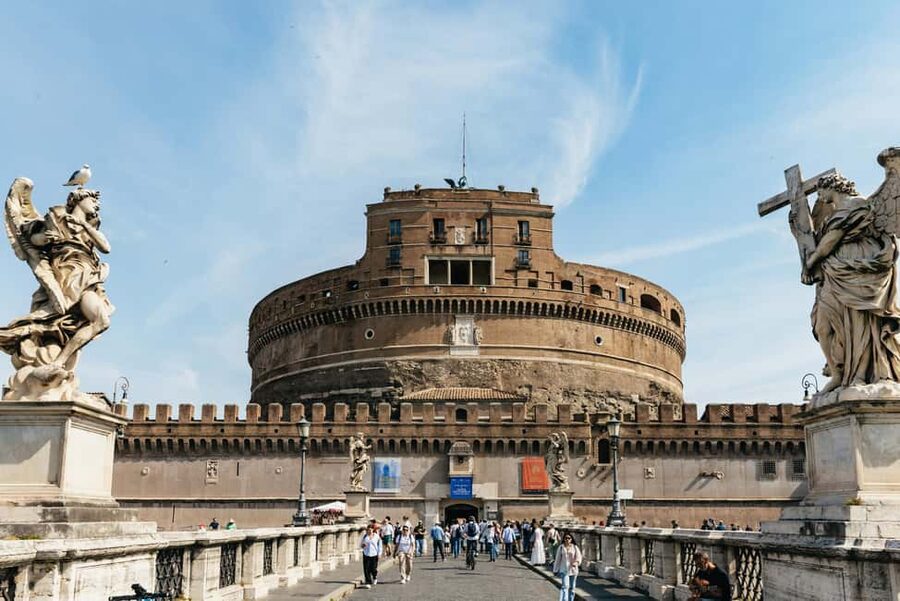
- The castle has several lives: You’ll trace its change from Hadrian’s tomb to fortress, papal residence, prison, treasury, and execution site.
- Restricted rooms add real value: The Olearie, historic prisons, and Clemente VII’s theater are not simply the standard public highlights.
- The rooftop is the payoff: After the indoor rooms and stairs, the terrace gives you broad views across Rome.
- A guide makes the structure easier to read: Paintings, sculptures, papal apartments, and defensive spaces make more sense with a good explanation.
- Plan for a precise meeting: Meet in front of the main entrance on Lungotevere Castello and look for a representative holding a Loving Rome flag.
- The visit is short but focused: Allow 1 to 2 hours, then add the optional nearby aperitivo if you want to keep the outing going.
Why Castel Sant’Angelo is worth your time
Rome has no shortage of ancient monuments, but Castel Sant’Angelo offers a different kind of history. You are not looking at one building from one period. You are walking through a structure repeatedly adapted to meet new needs.
The original purpose was funerary. Emperor Hadrian had the great cylindrical tomb built for himself and later members of his family. The building’s identity changed over time as Rome’s rulers needed a strong defensive position near the Vatican and the Tiber.
That shift is what makes a guided visit useful. The thick walls and fortress layout do not explain themselves. One room may relate to imperial burial, another to papal life, another to military defense, and another to imprisonment. A guide can connect those pieces without forcing you to read every sign.
I also like the contrast between the castle’s serious past and the open view from the top. Inside, the mood can be heavy, especially around the prisons and execution history. Outside, Rome opens up in every direction. It is a strong finish to a compact tour.
A few more things to do in Rome
- Colosseum, Roman Forum & Palatine Guided Tour
★ 4.7 · 63,148 reviews - Vatican Museums, Sistine Chapel & St Peter’s Basilica Guided Tour
★ 4.5 · 39,149 reviews - Rome: Colosseum, Palatine Hill and Roman Forum Guided Tour
★ 4.8 · 32,814 reviews
Meeting at Lungotevere Castello
Your meeting point is in front of the main entrance to Lungotevere Castello. Look for a representative carrying a Loving Rome flag. This is not the moment to arrive casually and hope you find the group inside, so give yourself enough time to identify the meeting point.
The ticket is tied to the selected date and time slot. Full names must be entered during booking exactly as they appear on each passport or valid ID, and you need to bring that document for verification. Late arrivals and no-shows are not accommodated or refunded.
That strict timing is common for timed attractions, but it matters here because the group starts together and uses a separate entrance for skip-the-line access. Keep the meeting instructions handy, especially if Castel Sant’Angelo is one stop in a busy day around central Rome.
Skip-the-line entry and the first look inside

The skip-the-line ticket is one of the clearest practical benefits. Castel Sant’Angelo is a major sight, and avoiding the main ticket queue can protect your limited sightseeing time. It does not mean the entire visit is free of waiting or security procedures, but it lets the tour begin through a separate entrance.
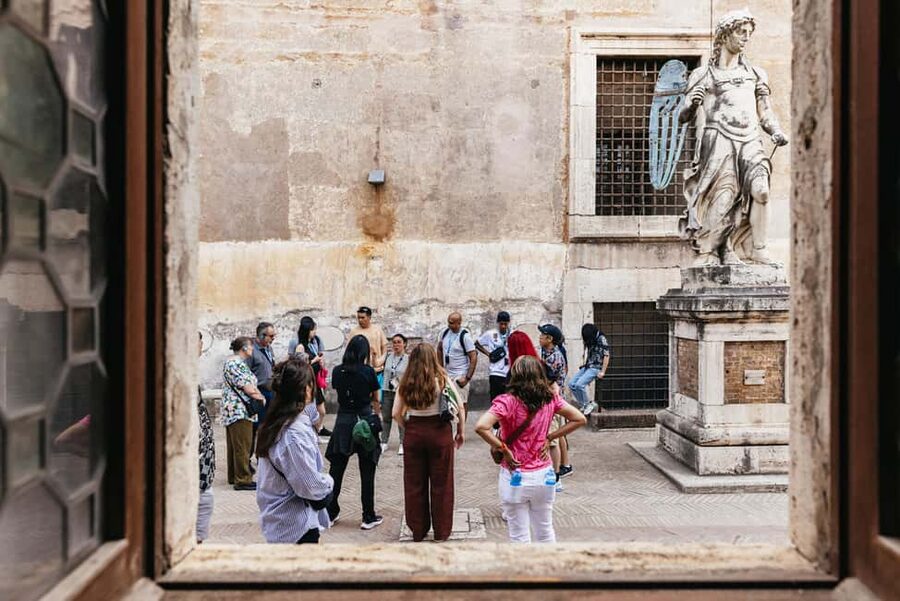
Once inside, the guide sets the building in context. You’ll learn about its construction under Hadrian and the way the monument later became a fortress. The building’s circular form and heavy structure make much more sense once you know that it was first designed as a monumental burial place.
This opening section is also where a strong guide earns the fee. Alec is repeatedly praised for explaining difficult material in simple English while keeping the group interested. Other guides, including Alicia and Donatella, are described as attentive and able to answer questions. Names are not guaranteed, but the experience depends heavily on the person leading it.
Headsets may be provided if needed. They are useful in a stone building where voices can be hard to follow, particularly when the group moves through narrow rooms or gathers around a work of art.
The Olearie and the fortress story
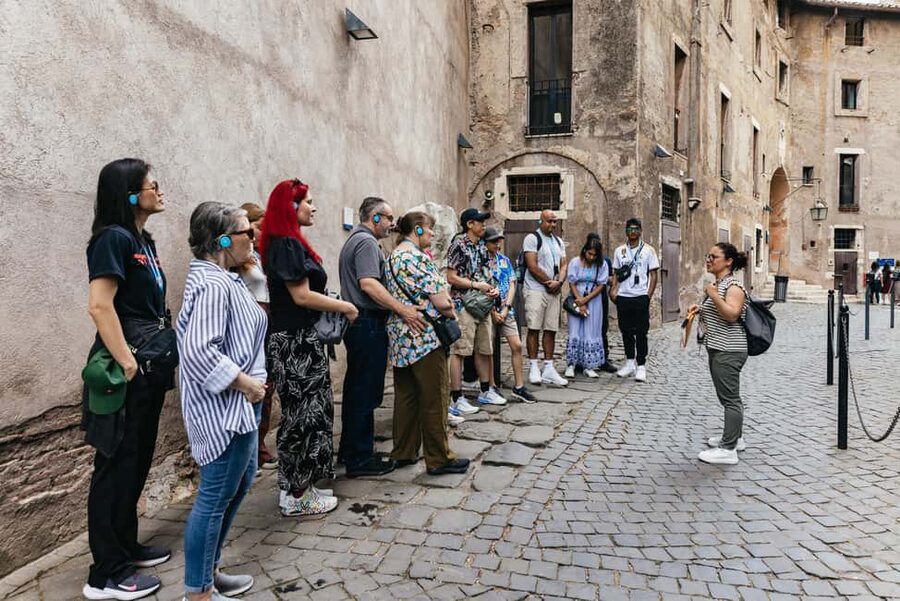
The Olearie are among the less familiar spaces included on this visit. They help show the practical side of the castle, rather than only its grand rooms and rooftop view. This is one of the places where access beyond the usual public route adds real value.
You’ll hear how the building worked as a fortress and how its uses changed as political power shifted in Rome. The castle was not just a place to display authority. It served defensive, residential, financial, and judicial purposes.
A guide can point out how those different roles affected the rooms around you. Instead of seeing an impressive but confusing sequence of corridors, you get a working explanation of why the castle contains such a mix of spaces.
The tour’s 1 to 2-hour length suits this kind of visit. It gives you enough time to understand the main story without turning every room into a long lecture. Several of the strongest guide comments describe a good pace and plenty of information without feeling overloaded.
Same base, a different kind of day:
- Vatican: Museums & Sistine Chapel Entrance Ticket
★ 4.5 · 144,003 reviews - Vatican Museums & Sistine Chapel Tour with Optional Basilica
★ 4.3 · 67,413 reviews - Rome: Guided Tour of Colosseum, Roman Forum & Palatine Hill
★ 4.7 · 27,897 reviews - Rome: Colosseum & Forum with Audio Guide App -Optional Arena
★ 4.2 · 24,770 reviews
Historic prisons and the darker side of the castle

The historic prisons add a sobering note. Castel Sant’Angelo was not only a papal residence or defensive stronghold. It also held prisoners and served as a site of public executions.
This part may not be comfortable, but it is important. A polished palace tour can make the past look grand and harmless. The prison spaces show how power was enforced, and they make the castle’s history more human and more troubling.
Your guide explains how the building functioned within Rome’s systems of authority. That context is more useful than simply seeing an old cell and moving on. You can consider who controlled the castle, who was protected by it, and who was confined there.
If you prefer light sightseeing only, this section may feel serious. For most visitors interested in Rome beyond postcard views, it gives the castle needed depth without turning the whole tour into a grim exercise.
Clemente VII’s theater and the papal rooms
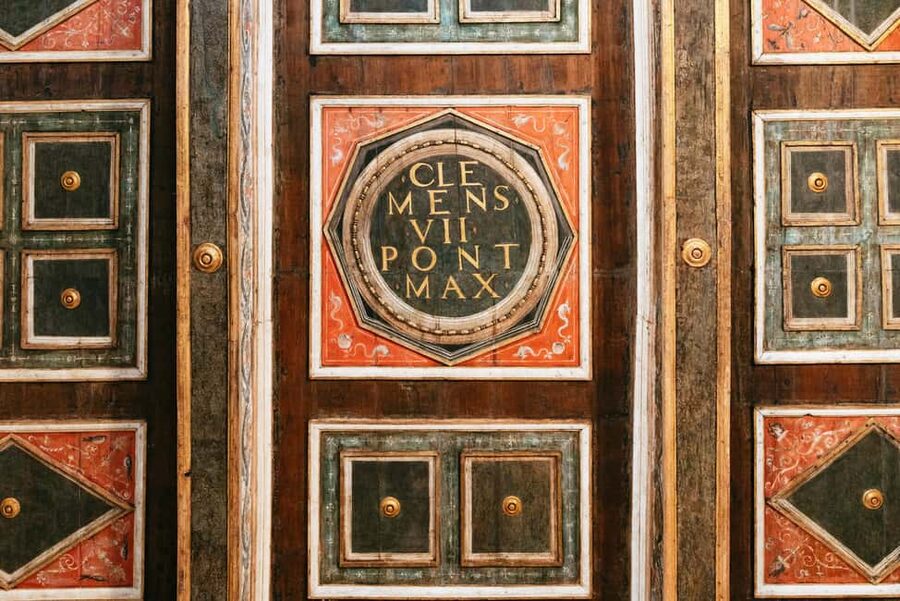
The theater of Clemente VII is another unusual stop. It shows that the castle was not only a military site. Popes also used parts of it as a residence and court, and the building supported ceremony as well as defense.
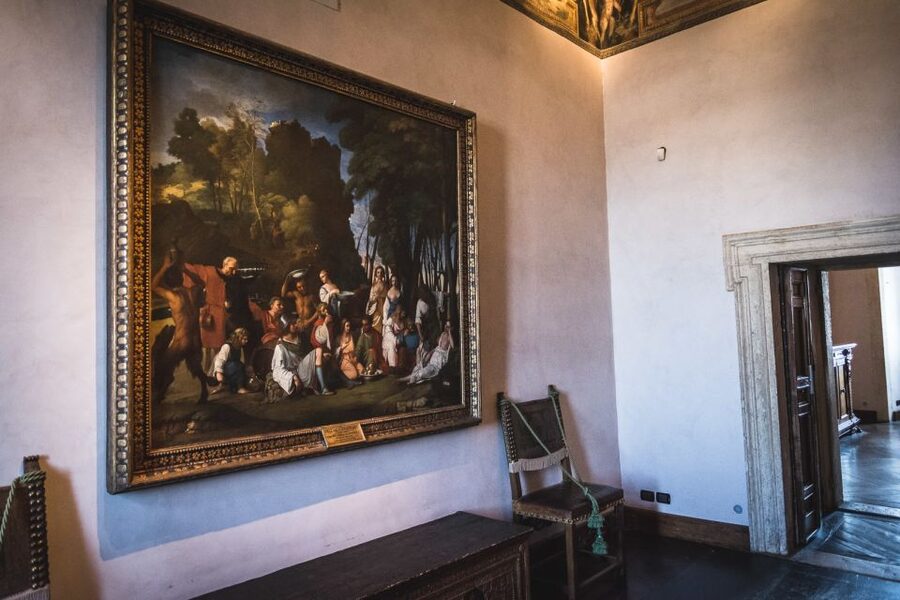
You’ll also see the pope’s apartment, where the castle’s residential role becomes easier to understand. Paintings, decorative details, and sculpture help explain the status the papacy wanted to project.
The contrast is striking. Within one visit, you move from burial monument to prison, from fortress to papal home, and from functional spaces to rooms meant to show power and taste. That range is the reason I would choose a guided visit over a quick self-guided walk.
Guides such as Alicia and Alec have been praised for tying the art and sculpture to the building’s changing use. You do not need to remember every pope or date. The important point is how each period left a mark on the structure.
The treasury and Castel Sant’Angelo’s changing role
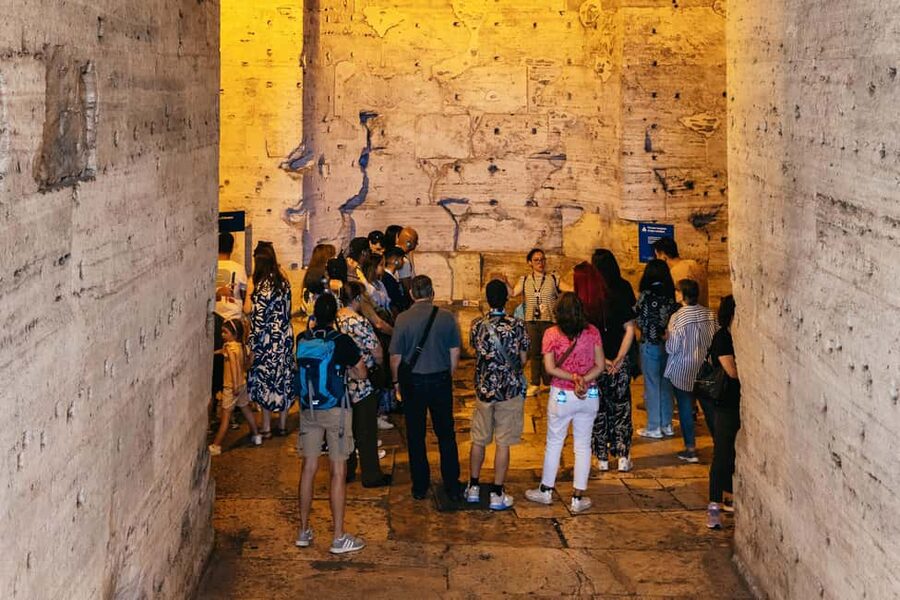
The treasury room gives another view of the castle’s importance. This was a place connected with wealth and security, not simply art and ceremony. Its presence helps explain why a massive fortress near the Vatican mattered so much.
The guide also covers the castle’s role as a state treasury. This broadens the story beyond the papal apartment and makes clear that the building protected people, money, and political interests.
I like this part because it makes the castle feel active. You are not just touring a monument that became obsolete. You are seeing a place repeatedly reused because its location and structure remained valuable.
The exact order of stops can vary, but the main themes remain consistent: construction under Hadrian, later defense, papal occupation, imprisonment, treasury functions, art, and the city view from above.
The terrace: Rome from above
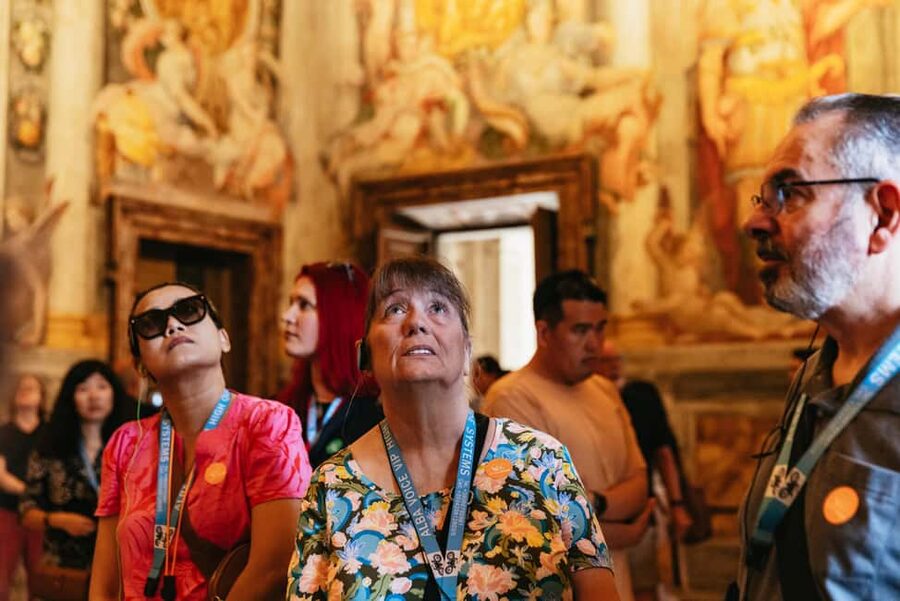
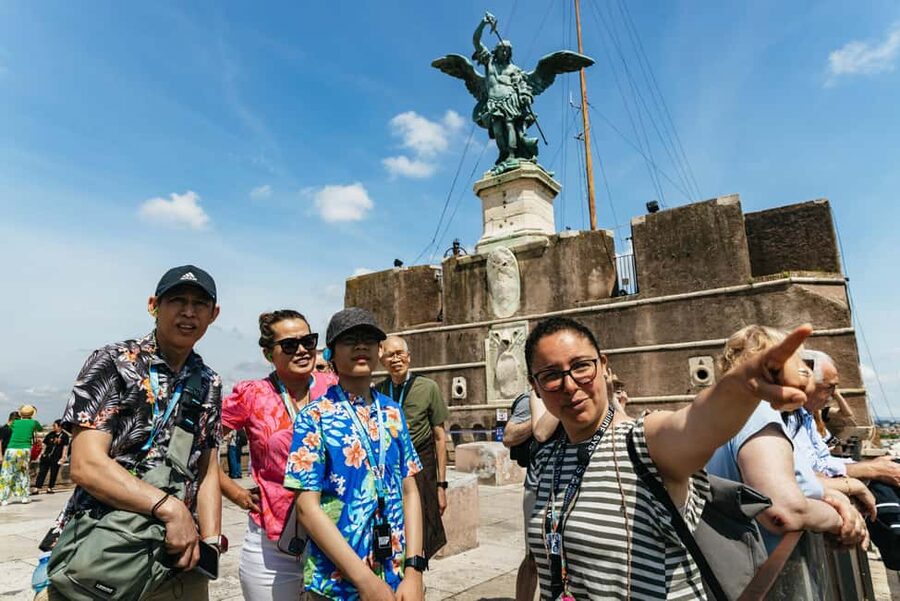
The panoramic terrace is the natural finale. You’ll need to climb a series of stairs, so comfortable shoes are essential. The climb is a genuine consideration for anyone with mobility concerns, and the activity is not suitable for wheelchair users.
The effort pays off with wide views of Rome. From the top, the surrounding monuments and streets become easier to place in relation to one another. One guide-led visit was especially appreciated for helping connect different parts of Rome that had already been seen elsewhere.
This is also the best point for photographs. The terrace gives you a chance to pause after the indoor rooms and take in the city without a speech running every second. If you book a late session in winter, sunset may add another layer to the view, though the exact light depends on the date and start time.
The terrace is not a separate attraction tacked onto the end. It changes your understanding of the castle. From inside, you see a protected stronghold. From above, you see why its position mattered.
What the $66.05 price includes
At $66.05 per person, this is not the cheapest way to enter Castel Sant’Angelo. You are paying for more than admission, though. The price includes skip-the-line entry, an English-speaking guide, and headsets when needed.
The strongest value comes from the restricted areas and the explanation. If you only want to walk through the main public rooms and take rooftop photographs, a basic ticket may suit you better, when available. If you want the building’s long story explained and want access to places generally closed to the public, the guided format makes more sense.
I would especially consider it worthwhile for a first visit to the castle. The building has too many layers for a quick glance to reveal much. It is also a practical choice if your Rome schedule is tight, since the visit lasts about 1 to 2 hours and the skip-the-line entry cuts down on queue time.
The optional traditional aperitivo at a nearby bar is a pleasant add-on for anyone who wants to continue the outing. It is not part of the core castle visit, so treat it as a social extra rather than a reason to book.
Who will enjoy this tour most
This tour fits you well if you enjoy history, architecture, and stories about how buildings change over time. It is also a good choice if you want a guide who can connect Castel Sant’Angelo with the wider story of Rome.
Families with older children may appreciate the mix of fortress, prison, papal rooms, and rooftop views. The different uses give the visit more variety than a standard art-focused tour, though younger children may find the historical explanations long.
It suits independent visitors who want structure without spending half a day at the site. The guide keeps the route moving, and the English commentary helps you focus on the rooms rather than stop constantly to decode information.
You may want to skip it if stairs are a serious problem, if you dislike timed meeting points, or if you prefer to explore entirely at your own pace. The tour ends back at the meeting point, and late arrivals cannot join or receive a refund.
Simple ways to make the visit better
Wear comfortable shoes. The terrace requires stairs, and the castle’s stone surfaces are better handled with practical footwear than fashionable but unstable shoes.
Do not bring food, drinks, luggage, or large bags. The attraction does not allow them, and a small, tidy day bag will make the visit easier.
Bring the passport or valid ID used for booking. Names must match the document exactly, and the ticket works only for the chosen date and time slot.
Try to protect a little time after the tour. The guide may finish at the meeting point, but the terrace views and the optional aperitivo are easier to enjoy when you are not rushing immediately to another timed attraction.
Should you book Castel Sant’Angelo with a guide?
I would book this tour if you want the castle to make sense, not simply appear as a dramatic round building beside the river. The Olearie, prisons, Clemente VII’s theater, papal rooms, treasury, and terrace create a varied route, and the guide provides the thread tying them together.
At $66.05, the price is easiest to justify when you value skip-the-line access and restricted areas. It is less compelling if you only want a quick photo from the top or prefer to read at your own pace.
For an English-speaking visitor with comfortable shoes, a firm arrival time, and an interest in Rome’s changing power centers, this is a strong, focused visit. Book it for the stories and unusual rooms, then stay for the view.
FAQ
How long does the Castel Sant’Angelo tour last?
The activity lasts approximately 1 to 2 hours. Starting times vary, so check availability for the date you want.
What language is the guided tour?
The live tour guide speaks English. An English audio guide option is also available.
Where is the meeting point?
Meet in front of the main entrance to Lungotevere Castello. Look for a representative holding a Loving Rome flag.
Is skip-the-line entry included?
Yes. The experience includes skip-the-line admission through a separate entrance.
Which areas can I see on the tour?
The route includes the Olearie, historic prisons, the theater of Clemente VII, the pope’s apartment, the treasury room, and the panoramic terrace. The guide also explains the castle’s construction and changing uses.
Do I need to bring identification?
Yes. Bring your passport or valid ID for verification. The full name entered for each participant must match the document exactly.
Can I bring food, drinks, or luggage?
No. Food, drinks, luggage, and large bags are not allowed.
Is the tour suitable for wheelchair users?
No. The activity is not suitable for wheelchair users, and you must climb a series of stairs to reach the panoramic terrace.
Can I cancel the booking?
You can cancel up to 24 hours in advance for a full refund. Tickets are valid only for the selected date and time slot, and late arrivals or no-shows are not refunded.
Just added in Rome
- Civitavecchia Private Transfer: From the Port to Rome Airport★ 5.0 · 309 reviews
- Civitavecchia Shore Excursion: Best of Rome Private Tour★ 5.0 · 247 reviews
- Civitavecchia Private Transfer from ship to FCO airport or Rome★ 5.0 · 245 reviews
- Food Tasty and History Tour in Civitavecchia★ 5.0 · 256 reviews
- Palatine Hill and Roman Forum Tour with Fast-Track Entrance★ 4.2 · 417 reviews
- Tivoli: Villa D’Este & Villa Adriana Pass & App Audioguide★ 4.4 · 364 reviews
- Tivoli: Villa D’Este Entry Ticket and App Audio Guide★ 4.3 · 191 reviews
- Vatican Museums & Sistine Chapel Skip-the-Line Guided Tour★ 4.6 · 254 reviews
Tours in Rome, compared.

Vatican: Museums & Sistine Chapel Entrance Ticket
Read our review →
Vatican Museums & Sistine Chapel Tour with Optional Basilica
Read our review →
Colosseum, Roman Forum & Palatine Guided Tour
Read our review →
Vatican Museums, Sistine Chapel & St Peter’s Basilica Guided Tour
Read our review →
Colosseum & Forum with Audio Guide App -Optional Arena
Read our review →
Pantheon Fast-Track Ticket and Official Audio Guide
Read our review →
City Sightseeing Hop-on Hop-off Bus with Audioguide
Read our review →