
Reviewed · CATACOMBS & UNDERGROUND TOURS
Rome: Appian Way, Catacombs, & Roman Aqueducts E-bike Tour
Rome’s ancient Appian Way is best understood at bicycle speed. On this small-group ride, you leave the Colosseum area, pass through the Aurelian Walls, and soon trade Rome’s buildings for old stones, umbrella pines, fields, tombs, and long views. The payoff is the Park of the Aqueducts, where enormous Roman arches cross the countryside like a stone bridge to another age.
I like two things here. First, the route ties several big subjects together: Roman engineering, imperial power, early Christianity, and rural life outside the city walls. Second, the Cannondale e-bike makes a 27-kilometer route manageable, even when the surface turns rough. Guides such as Arina, Oscar, Agnese, and Pablo have been praised for clear history and careful handling in traffic.
The main caution is simple: this is still a real bike ride. About 60 percent of the route is off-road, with gravel, bumps, and uneven ground, while about 40 percent runs through city streets. You should be comfortable controlling a bicycle before signing up, even though the electric assistance handles much of the effort.
Key points to know before you book

- The six-hour version includes the Catacombs: You get a guided underground visit at St. Callixtus or St. Sebastian, while the four-hour ride only pauses at the entrance for a short explanation.
- The route covers 27 kilometers: E-bike assistance helps with distance and hills, but you still need steady bike-handling skills.
- Most of the best riding is away from traffic: The Appian Way, Aqueducts Park, and Caffarella Valley provide the peaceful sections.
- City riding is part of the connection: Your guide leads you through selected streets between the historic parks, but traffic cannot be avoided entirely.
- The group is limited to 10 people: That matters on narrow paths and busy crossings, where a guide can keep everyone together.
- The $85 price buys a full half-day experience: A quality e-bike, helmet, guide, water, and the Catacombs on the longer option are included.
Why this route shows Rome beyond the Colosseum
Rome can become a parade of indoor ruins and crowded squares. This ride gives you a different sense of the city. You see Rome as a sprawling capital connected to farms, burial grounds, country villas, ancient roads, and huge water systems.
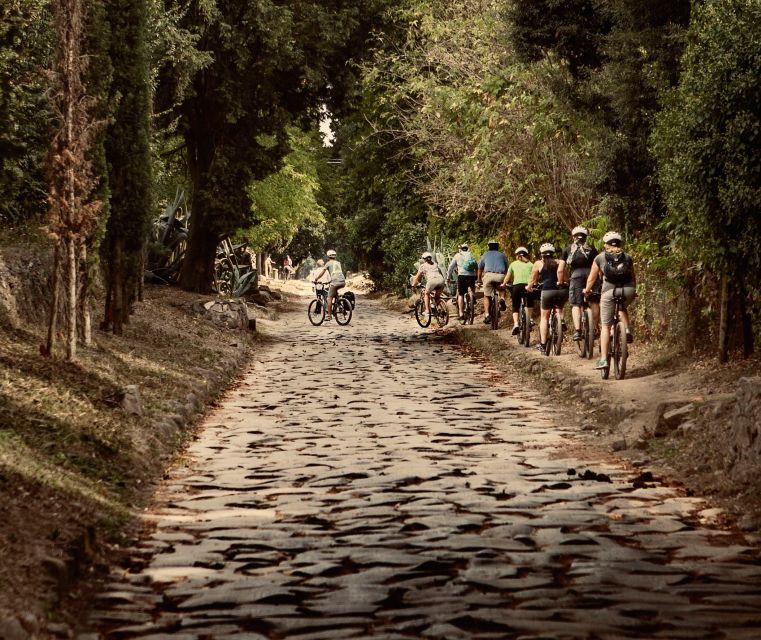
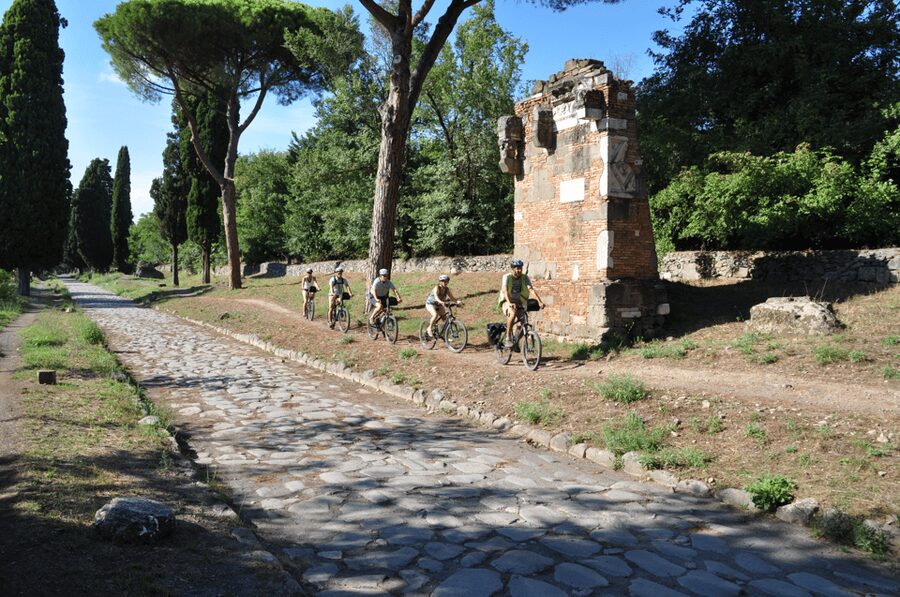
The Appian Way was built more than 2,300 years ago. It helped Rome move soldiers, officials, goods, and messages across Italy. Riding along it gives you a physical feel for that reach. You are not simply looking at a fragment of pavement behind a museum rope. You are following an old route through open country, with Roman remains scattered along the way.
I also like the change in pace. At the beginning, you deal with city streets and the practical work of getting a group out of central Rome. Then the ride opens up. The noise fades, the roads become rougher, and the sites appear with more space around them.
The experience works especially well if you have already seen the Colosseum and Roman Forum and want to understand the city’s outer edges. It is also a strong choice for families with older children and for anyone who prefers active sightseeing to another museum visit.
More Underground Tours in Rome
- Colosseum: Underground and Ancient Rome Tour
★ 4.7 · 12,691 reviews - Rome: Crypts and Catacombs Underground Tour with Transfers
★ 4.6 · 5,341 reviews - Expert Guided Tour of Colosseum Arena OR Underground, and Forum
★ 4.5 · 5,041 reviews
Starting at Via Labicana 49
The meeting point is on Via Labicana 49, within walking distance of both the Colosseum and Manzoni Metro stations. From the Colosseum Metro stop, allow about 10 to 15 minutes. From Manzoni, the walk takes about 10 minutes.
You begin with a bike fitting, safety instructions, and a basic introduction to the electric assistance. The bikes are Cannondale e-mountain bikes with anti-puncture tires. A helmet is required, and each rider receives a five-liter handlebar bag and a biodegradable bottle of water.
That equipment matters. A small front bag keeps your hands free, while the mountain-bike design is better suited to gravel and broken surfaces than a basic city bicycle. Still, do not mistake an e-bike for a motor scooter. You pedal throughout the ride, and you must steer, brake, balance, and watch the surface.
The group limit of 10 is a useful size. It is small enough for the guide to give individual help, but large enough to feel social. Several guides, including Oscar, Arina, Anna, and Bita, have been praised for preparing riders for the harder road sections and keeping the group together.
Passing through the Aurelian Walls

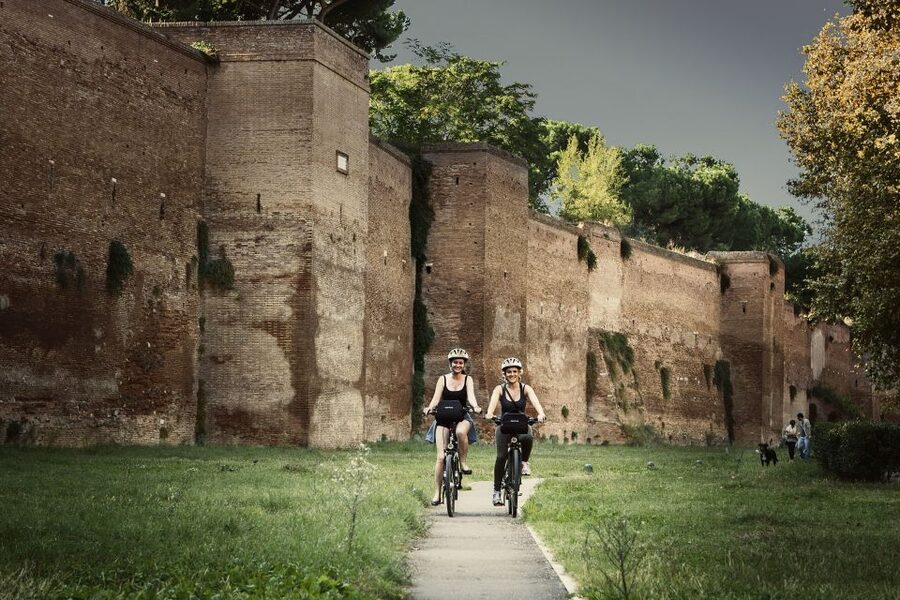
The route begins near the Aurelian Walls, Rome’s great defensive circuit. Passing through St. Sebastian’s Gate gives the ride a proper sense of departure. You are leaving the center through the same broad historical boundary that once protected imperial Rome.
This is a short stop, but it sets up the rest of the day. The walls remind you that ancient Rome was not just a collection of monuments. It was a functioning city with roads, gates, defenses, supply lines, and a large population to support.
The first city section requires attention. Your guide chooses streets designed to make the connection safer, but Rome is still Rome. Cars, crossings, and changing road conditions are part of the ride. If city cycling makes you nervous, say so during the introduction and pay close attention to the guide’s signals.
The electric motor is most helpful here when you need to start again after stopping. You do not have to fight every restart or climb, but you still need to ride predictably.
The Catacombs: choose the six-hour version carefully
The six-hour option includes a guided visit to the Catacombs of St. Callixtus or St. Sebastian. Underground, you move through crypts and corridors tied to the early Christian community in Rome.
This is the portion that most clearly changes the subject of the tour. The Appian Way shows Rome’s military and civic power. The Catacombs reveal a quieter side of the ancient city, with burial practices and religious life beneath the ground.
The four-hour option does not include the underground visit. Instead, you stop at the catacomb entrance for about five minutes while the guide explains its purpose and historical importance. That shorter version can work if you mainly want the ride and the outdoor ruins, but the six-hour trip is the better pick if the Catacombs are a major reason for booking.
Do not select the shorter tour by accident. The two versions share the main cycling route, but they do not offer the same Catacomb experience. The longer day also gives the entire outing a less hurried rhythm.
Other things to see below Rome:
- The Original Roman Crypts and Catacombs Tour with Transfers
★ 4.5 · 4,896 reviews - Rome: Colosseum Underground Small Group Guided Tour
★ 4.7 · 4,844 reviews - Rome: St. Peter’s Basilica, Dome Climb, and Underground Tour
★ 4.8 · 3,404 reviews - Rome: Colosseum Underground, Arena & Forum Tour
★ 4.7 · 3,272 reviews
Riding past Roman tombs and villas
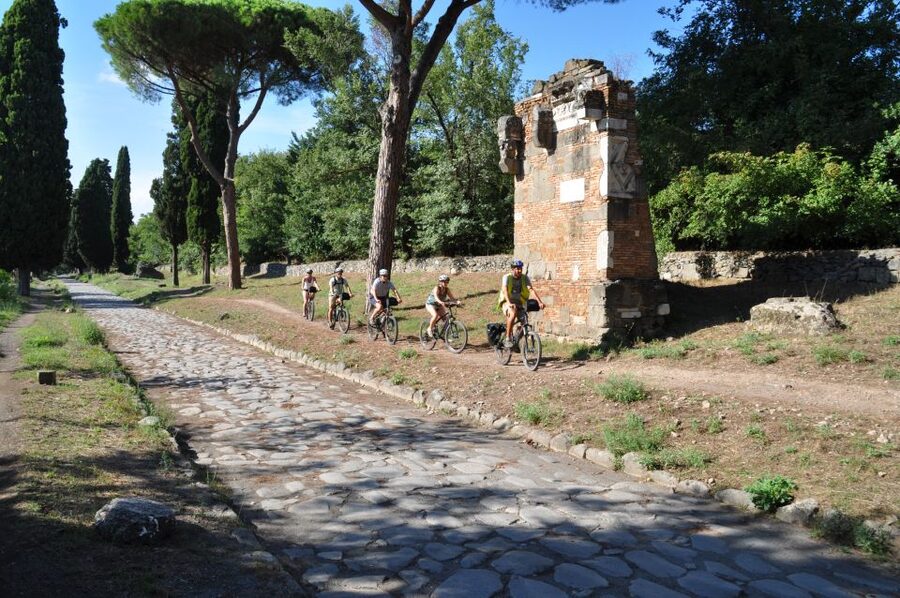
After the Catacombs, the route continues along the Appian Way. This is where the tour becomes especially satisfying. You pass mausoleums, tombstones, villas, and the remains of properties linked to wealthy Roman families.
The old road is not a smooth cycle path. Expect gravel and uneven sections. One rider described the rough ground as manageable but bumpy, while another noted that rear suspension would have made the ride more comfortable. That is a fair warning. The Cannondale bikes are sturdy, but the bicycle does not erase every jolt.
The reward is the setting. Ancient remains sit beside grass and trees rather than behind dense city streets. Your guide stops at several points to explain what you are seeing and allow time for photographs. That pause-and-ride pattern keeps the history from becoming a lecture delivered while everyone is trying to steer.
The Circus of Maxentius is one of the notable stops. This ancient racing complex helps you picture the scale of Roman entertainment beyond the better-known Colosseum. The Tomb of Cecilia Metella gives the Appian Way one of its most recognizable monuments, with the road, tomb, and surrounding countryside working together as a single scene.
Villa dei Quintili adds another layer. It represents the large suburban estates built by powerful Romans outside the city center. You are seeing not only public monuments but also the private world of elite Romans, with space, wealth, and country living on a grand scale.
The Park of the Aqueducts
The Aqueducts Park is the visual high point of the ride. Long lines of colossal arches cross the grass, often with Rome’s distant buildings far away. After the enclosed streets and scattered tombs of the Appian Way, the aqueducts feel broad and almost theatrical.
The engineering is impressive, but the best part is understanding the purpose behind the beauty. These structures carried water over long distances to supply public baths, fountains, homes, and other parts of Rome. Their height allowed gravity to do the work. The arches are not decoration. They are the visible framework of a water system that helped a huge city function.
You follow the aqueducts back toward modern Rome. This is usually one of the more relaxed sections because most of the riding takes place in the park, away from cars. The route can still be uneven, so keep your eyes on the ground instead of looking only at the arches.
The open setting also makes this a good place for photographs. You get scale here. A single arch is impressive, but a long line of arches stretching across the field explains far more about Roman construction than a close view of one stone block.
Crossing Caffarella Valley and returning to Rome
The ride continues through the green Caffarella Valley before returning toward the starting point. This section gives you another look at Rome’s outer countryside, with paths and open ground replacing the city’s tight streets.
The return does include more urban riding. You are not on a traffic-free route from start to finish. Your guide handles the transitions, but you need to stay alert, maintain your position, and avoid riding too close to the person ahead.
The Baths of Caracalla are part of the sightseeing route near the end. They bring the story back to the Roman city and its public life. After seeing roads, tombs, estates, and aqueducts, the baths help connect the countryside to the urban system those roads and waterworks served.
A stop for food may be possible along the way, and some groups have paused at a local pizzeria. Food and drinks are not included, so carry the supplied water and plan to buy anything else you need. The exact food stop should not be the reason you choose the tour. The ancient sites and the ride are the main event.
How difficult is the 27-kilometer ride?
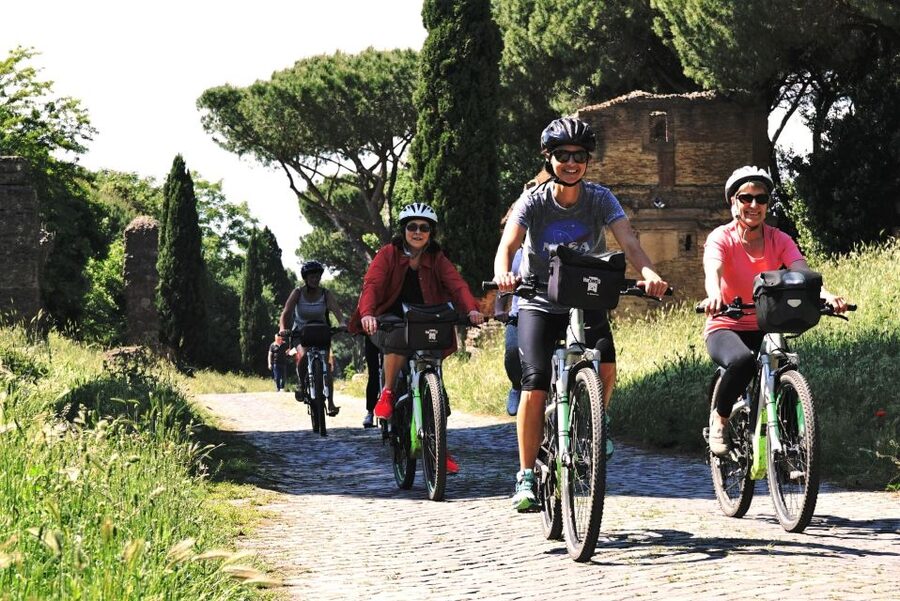
The operator rates the route intermediate. That is accurate. The electric motor reduces the strain, but not the technical demands.
You should be able to:
- Ride confidently on pavement and gravel
- Brake and steer on uneven ground
- Start and stop in a group
- Follow instructions in city traffic
- Ride for several hours with breaks
People who rarely cycle may manage the distance with electric assistance but still feel uneasy on rough paths or busy streets. One useful idea is to try an e-bike in a quiet place before this tour, especially if it is your first time using one.
Children aged 9 and older can ride their own e-bike. Children aged 5 to 8 use a child extension, and children from 1 to 4 can ride in a child seat, up to 22 kilograms. The route is considered difficult with a child seat or extension, so parents should take the terrain seriously.
The bike equipment has a maximum rider weight of 136 kilograms. Babies under 1 are not permitted. These limits are practical safety rules, not minor fine print.
Warm weather also changes the experience. Several riders found the ride enjoyable in hot conditions because the group stopped often for water, but summer heat can still make six hours feel long. Comfortable shoes are essential, and clothing suited to sun and changing surfaces will help.
Is $85 a good value?
At $85 per person, this is not the cheapest way to see an ancient site in Rome. It is a good value if you want several different experiences in one outing and would otherwise need separate transport or tours.
The price includes:
- A Cannondale e-mountain bike
- Helmet
- Professional guide
- Handlebar bag
- Water
- Guided Catacomb entry on the six-hour option
You are paying for route planning as much as for the bicycle. Connecting the Appian Way, Catacombs, Aqueducts Park, Caffarella Valley, Baths of Caracalla, and central Rome on your own would take more planning and would be harder by public transport.
The value is strongest on the six-hour version. The Catacomb visit adds a substantial historical layer, and the longer schedule gives you more time for stops. The four-hour tour makes sense if your schedule is tight or if you mainly want the outdoor riding and aqueducts.
The minimum group requirement is four participants. If that number is not reached, you are offered another arrangement or a full refund. You can cancel up to 24 hours ahead for a full refund, and you can reserve while postponing payment, which helps if your Rome schedule is still shifting.
Who should book this Rome e-bike tour?
I would choose this for active sightseers who have already covered the central monuments or who want a break from indoor archaeology. It is also a good match for families with children old enough to handle the route and for couples who want history with fresh air and movement.
It is less suitable if you want a gentle city bicycle ride, dislike gravel, or feel uncomfortable sharing streets with traffic. The electric assistance makes the ride less tiring, but it does not turn the route into a passive sightseeing vehicle.
The route is offered with guides speaking English, Italian, French, Spanish, German, and Dutch. The guide makes a large difference, especially during city connections and historical stops. Names assigned to tours vary, but guides such as Arina, Oscar, Agnese, Pablo, and Bita have been praised for clear explanations, good pacing, and calm road leadership.
Should you book it?
Book this tour if you want to see a less crowded side of Rome and are ready for a genuine ride rather than a short pedal between monuments. The Appian Way and Aqueducts Park are the strongest reasons to go, while the Catacombs make the six-hour version a fuller historical experience.
Choose the four-hour option for a shorter outdoor outing. Choose six hours if you want the underground visit, more relaxed pacing, and the best value from the $85 price. Either way, bring comfortable shoes, expect bumps, and be honest about your cycling ability. If that sounds manageable, this is one of Rome’s most rewarding ways to connect ancient ruins with the countryside around them.
FAQ
How long is the Appian Way e-bike tour?
You can choose between a four-hour and a six-hour version. The longer version includes a guided Catacomb visit.
How far do you ride?
The route is 27 kilometers, or about 17 miles. Around 60 percent is off-road, and about 40 percent takes place in city streets.
Are the Catacombs included?
They are included only on the six-hour tour, which provides a guided visit to the Catacombs of St. Callixtus or St. Sebastian. The four-hour tour stops at the entrance for a brief explanation but does not go underground.
Is the tour suitable for children?
Children aged 9 and older can ride their own e-bike. Children aged 5 to 8 use a child extension, and children aged 1 to 4 can use a child seat up to 22 kilograms. The route is more difficult with a child seat or extension.
What is included in the price?
The tour includes a Cannondale e-mountain bike, helmet, professional guide, five-liter handlebar bag, and biodegradable bottle of water. The guided Catacomb visit is included only with the six-hour tour. Food and other drinks are not included.
Where does the tour meet?
The meeting point is Via Labicana 49. It is about a 10 to 15-minute walk from the Colosseum Metro station and about a 10-minute walk from Manzoni Metro station.
More e-bike rides around Rome
- Rome: E-Bike Night Tour with Food and Wine Tasting
★ 4.9 · 1,131 reviews - Rome: Appian Way E-Bike Tour Catacombs, Aqueducts & Picnic
★ 4.6 · 727 reviews - Rome: Appian Way & Catacomb Sunset E-bike Tour with Aperitif
★ 4.5 · 682 reviews - Rome:Appian Way E-bike Tour, Catacombs, Aqueducts & Transfer
★ 4.9 · 404 reviews
More bike rides around Rome
- Rome EBike Tour: Appian Way, Catacombs & Roman Aqueducts
★ 5.0 · 1,766 reviews - Rome: Top Highlights & Hidden Gems Tour by Cannondale E-Bike
★ 4.9 · 1,760 reviews - Rome City Small Group Bike Tour with quality Cannondale EBike
★ 5.0 · 1,380 reviews - Rome:Appian Way E-bike Tour with Catacombs, Aqueducts & Food
★ 4.9 · 1,210 reviews
Just added in Rome
- Civitavecchia Private Transfer: From the Port to Rome Airport★ 5.0 · 309 reviews
- Civitavecchia Shore Excursion: Best of Rome Private Tour★ 5.0 · 247 reviews
- Civitavecchia Private Transfer from ship to FCO airport or Rome★ 5.0 · 245 reviews
- Food Tasty and History Tour in Civitavecchia★ 5.0 · 256 reviews
- Palatine Hill and Roman Forum Tour with Fast-Track Entrance★ 4.2 · 417 reviews
- Tivoli: Villa D’Este & Villa Adriana Pass & App Audioguide★ 4.4 · 364 reviews
- Tivoli: Villa D’Este Entry Ticket and App Audio Guide★ 4.3 · 191 reviews
- Vatican Museums & Sistine Chapel Skip-the-Line Guided Tour★ 4.6 · 254 reviews
Catacombs & Underground Tours, compared.
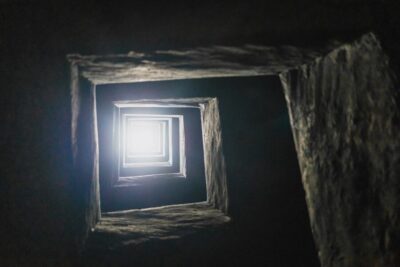
Naples Underground Entry Ticket and Guided Tour
Read our review →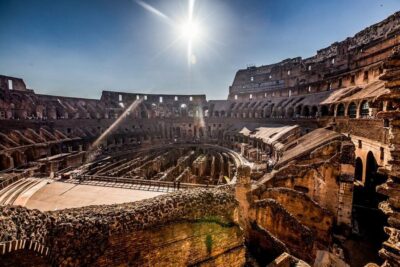
Colosseum: Underground and Ancient Rome Tour
Read our review →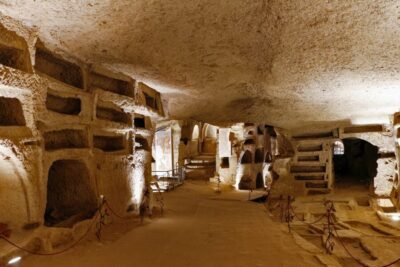
Catacombs of San Gennaro Entry Ticket & Guided Tour
Read our review →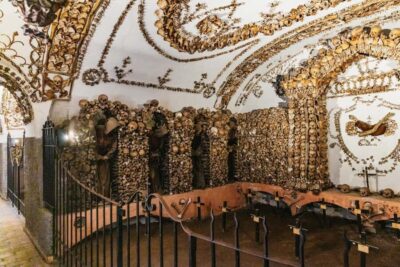
Crypts and Catacombs Underground Tour with Transfers
Read our review →
Expert Guided Tour of Colosseum Arena OR Underground, and Forum
Read our review →
The Original Roman Crypts and Catacombs Tour with Transfers
Read our review →
Colosseum Underground Small Group Guided Tour
Read our review →Browse the lists this tour appears in