
Reviewed · CATACOMBS & UNDERGROUND TOURS
Rome:Appian Way E-bike Tour, Catacombs, Aqueducts & Transfer
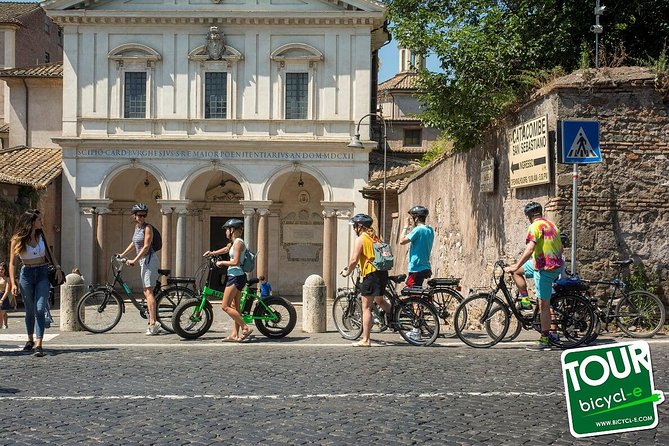
The best part of this tour is the sudden change from central Rome to open countryside. After a private shuttle from the Circus Maximus, you pedal over the ancient Appian Way, visit underground catacombs, and reach the enormous arches of the Aqueducts Park. I especially like the easy-assist bikes and the way guides such as Emanuele, Alessandro, and Alberto add stories at the ruins instead of simply leading you from stop to stop.
I also like the practical setup: the shuttle avoids a long ride through Rome, and the catacomb ticket, helmet, lock, and bike are included. The trade-off is the rough Roman paving. You need basic to moderate bike skills, and the main route can be tiring, especially in heat or on a busy weekend.
Key points to know before booking
- The ancient road is the main event: About 90 percent of the ride follows Roman paving on the Via Appia Antica.
- The catacomb visit lasts about 45 minutes: Expect a guided underground visit, with cooler air and a very different view of Rome’s past.
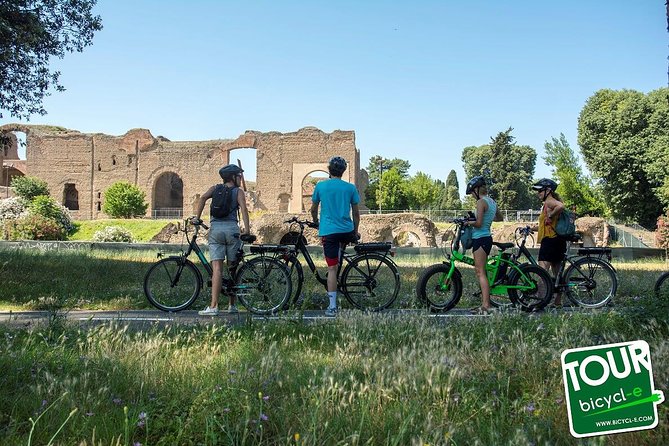
- The Aqueducts Park gives you Rome’s big open views: Massive ancient arches and wide grassland replace city streets.
- The shuttle saves time and effort: A private nine-seat minivan takes about 20 minutes each way between Viale Aventino and the cycling area.
- The ride is active, not a casual city spin: E-bikes help, but you still handle a large bicycle over cobbles, gravel, and park paths.
- Small groups make the history easier to follow: Shared tours run with four to eight people, and private groups are also available.
Why the Appian Way feels so different from central Rome
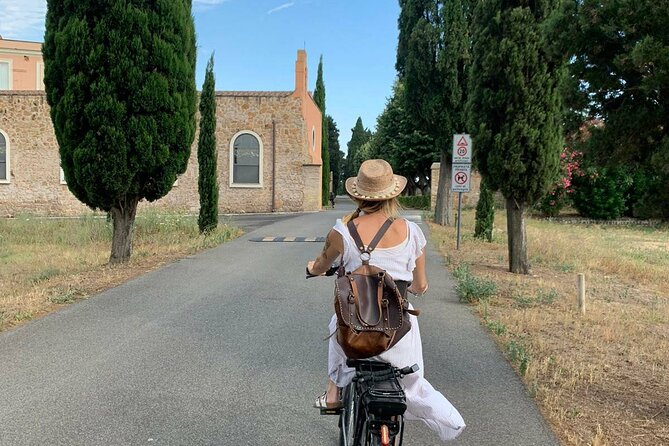
Rome is famous for its crowded historic center, but the Appian Way offers a quieter and more spacious experience. This ancient road runs through parks and open countryside, with Roman tombs, old stone surfaces, trees, and long views replacing the usual stream of buses and pedestrians.
The ride begins near Viale Aventino, 46, close to the Circus Maximus. Look for the nine-seat minivan with the Bike Adventure sign in front of the RUVER Teglia Frazionata pizzeria. A guide meets you there, checks your equipment, and takes you toward the Appian Way.
That transfer matters. You do not need to spend the first part of the tour navigating Rome’s streets by bike. The drive takes about 20 minutes each way, leaving the main part of the four-and-a-half-hour activity for the catacombs, ancient road, parks, and aqueducts.
You may still encounter traffic during the city connections. One helpful detail is that most of the ride itself takes place away from regular car traffic, with only two notable crossings when the route moves between the Appian Way Regional Park, Aqueduct Park, Tor Fiscale Park, and Caffarella Park. Guides choose quieter roads, but you should not expect a completely traffic-free experience from pickup to drop-off.
More Underground Tours in Rome
- Colosseum: Underground and Ancient Rome Tour
★ 4.7 · 12,691 reviews - Rome: Crypts and Catacombs Underground Tour with Transfers
★ 4.6 · 5,341 reviews - Expert Guided Tour of Colosseum Arena OR Underground, and Forum
★ 4.5 · 5,041 reviews
Getting fitted for the e-bike
The included mountain-style e-bikes are the key to making this route manageable. The ancient paving is uneven, and the route includes gravel and park paths. The electric assistance helps with distance and effort, but it does not remove the need to steer carefully or keep your balance.
Your guide sets up the bike and asks about your cycling ability. That check is useful because the bikes are described as comfortable and easy to ride, but they are also large and heavy. You should already be comfortable riding a normal bicycle before booking.
Helmets and locks are included. Some bikes have baskets, which are useful for a small bag and water bottle. Ponchos may be supplied if rain threatens, but you should still dress for the forecast and bring water since refreshments are not included.
The rules are specific:
- Children can ride their own e-bike from age 12.
- Children shorter than 140 centimeters are not accepted as standard riders.
- Children up to 139 centimeters can use a trailer bike.
- Infants up to 20 kilograms can ride free in a child seat.
- The activity is not suitable for pregnant women.
- You need to bring a passport or identity card.
The guide can refuse participation after the safety briefing if someone is not considered fit for the ride or lacks the required cycling ability. This is important for anyone hoping to treat the tour as a gentle sightseeing outing. It is still a bicycle tour first.
The catacombs: 45 minutes below the road
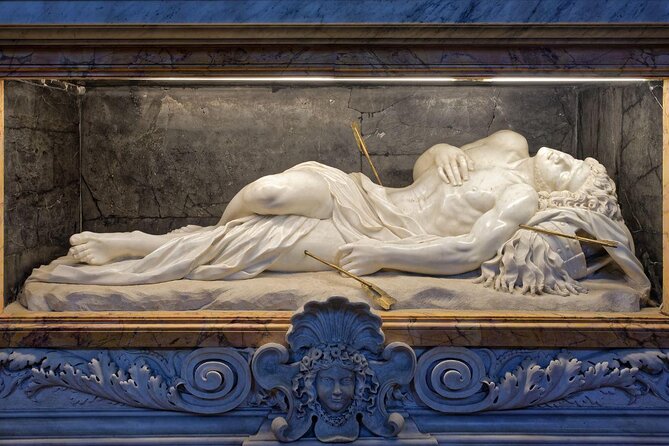
The catacomb visit is one of the strongest parts of the outing because it changes the pace. After cycling outdoors, you go underground for a guided visit of about 45 minutes. The air is cooler, the light is low, and the focus shifts from open Roman countryside to burial chambers and early Christian history.
The exact catacomb site is listed simply as the Catacombs of Rome, so you should not book this expecting a particular named complex unless the operator confirms it before departure. The entrance ticket and guided visit are included, which keeps the experience simple once you arrive.
This stop also gives your legs a break. A bike tour can feel long if every minute is spent pedaling, but the catacombs divide the activity into clear sections. You get history underground, then a ride through monuments and parks above ground.
The visit is guided rather than self-directed. That matters in catacombs, where narrow passages and unfamiliar spaces are far easier to understand with someone explaining what you are seeing. You should follow the guide’s instructions and expect the underground portion to be more about atmosphere and historical context than dramatic decoration.
Roman tombs and the Circus of Maxentius
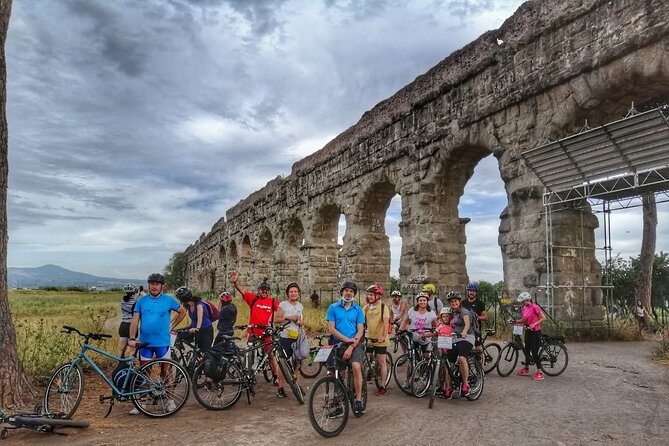
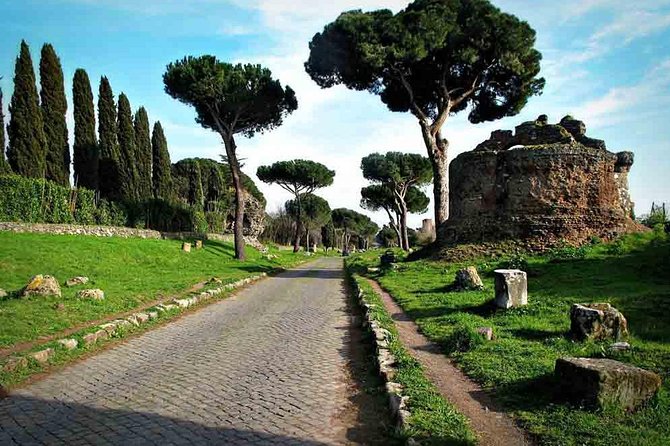
Back outside, the route passes monumental remains along the ancient road. The Circus of Maxentius is a short photo stop, followed by the Tomb of Cecilia Metella. These stops are brief, but they help you read the Appian Way as a road lined with funerary monuments and public works.
The Tomb of Cecilia Metella is especially useful as a visual marker. It is not just another ruin beside the path. Its large, solid form shows how important burial monuments were along this route and gives you a strong photo stop without requiring a long museum visit.
The Circus of Maxentius adds another layer. The stop is short, so you will not get an extended archaeological tour there, but your guide can connect the remains to the wider Roman road system and explain what you are passing as you cycle.
Guides have received particular praise for stopping often enough to explain buildings, views, and ruins. Emanuele is known for adjusting the pace and helping with photos, while Alessandro has been singled out for pointing out small historical details in the countryside. The guide assigned to your departure may be different, but the format depends on that local commentary.
Other things to see below Rome:
- The Original Roman Crypts and Catacombs Tour with Transfers
★ 4.5 · 4,896 reviews - Rome: Colosseum Underground Small Group Guided Tour
★ 4.7 · 4,844 reviews - Rome: St. Peter’s Basilica, Dome Climb, and Underground Tour
★ 4.8 · 3,404 reviews - Rome: Colosseum Underground, Arena & Forum Tour
★ 4.7 · 3,272 reviews
Riding the ancient Appian paving
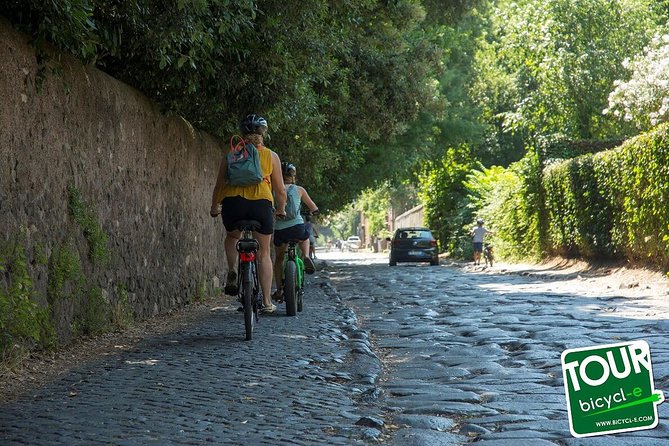
The Appian Way is memorable partly because it is not smooth. The original Roman paving gives the route its character, but it also creates the main physical challenge. Your bike will roll over irregular stones, and you will need to choose your line carefully rather than simply glide along a flat cycle path.
The electric motor helps with the length of the route and any gradual climbs. It does not flatten the cobbles. Keep both hands steady, reduce your speed when needed, and avoid carrying a large loose bag.
The main route is generally calmer than central Rome, but conditions change by day and time. Saturdays can bring more walkers, strollers, and cyclists. If you want a quieter ride, a weekday booking is the safer choice.
Several people have found the first city sections busier than expected, while the open-country portion feels much more relaxed. That is a fair way to picture the tour: some road awareness at the connections, followed by long stretches where the ancient road and park paths take over.
The guides also adjust the ride to the group. If everyone is moving well, the route may include extra sights on the way back. If the group needs a slower pace, the guide can focus on safe riding and the main historical stops. This flexibility is one reason a small group can work better than a large cycling convoy.
Aqueducts Park and the Roman engineering lesson
Aqueducts Park is the visual high point. Here, the remains of Roman water channels stretch across open ground, giving you a clear view of how far Roman engineering reached beyond the city center.
You do not need to be an engineering specialist to appreciate the scale. The arches are easy to understand from a bicycle because you can move alongside them and see how they cross the countryside. Your guide explains how the water system worked and why these structures mattered to daily life in ancient Rome.
The park also changes the feel of the tour again. The Appian Way is a historic road with tombs and paving beneath your wheels. Aqueducts Park is broader and more open, with long lines of masonry and a sense of space. It is a good place for photographs, especially if you want pictures that look very different from the Colosseum or Roman Forum.
The scheduled visit here is about 30 minutes, with additional riding through nearby parks. That is enough for an introduction and photographs, but not a detailed archaeological study. If you want every aqueduct identified and explained at length, a specialist walking tour would offer more depth. If you want to see the structures while covering several parts of southern Rome, this format works well.
Tor Fiscale and Caffarella Parks
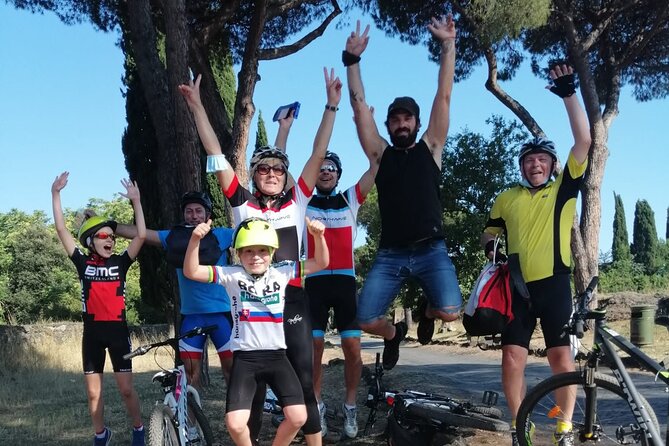
The route continues through Tor Fiscale Park and Caffarella Park, two green areas that show how much open space remains around the ancient roads. These sections are less about one famous monument and more about the contrast between Rome’s dense center and its rural edge.
Tor Fiscale Park provides another view of the aqueducts and their surrounding countryside. Caffarella Park brings more open paths and natural scenery, with the city often feeling surprisingly distant. One unusual detail from the ride is the possibility of sheep crossing the route, a reminder that this is not simply an archaeological theme park.
These parks are also where the ride feels most like a genuine local outing. You are not just stopping at famous monuments and returning to a coach. You are moving through connected public spaces, with the guide pointing out small details that are easy to miss on your own.
The route can be extended slightly when the group is making good time. Sabrina, one of the guides, has been known to take a longer way back and add extra sights. Do not assume every departure will follow exactly the same detour, but expect the guide to make practical adjustments when conditions allow.
Guides, group size, and the personal touch
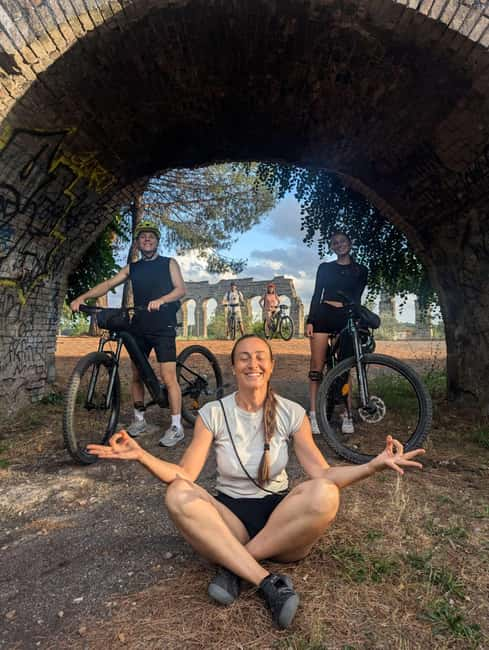
The tour is offered as a shared group with four to eight participants, or as a private tour. The minimum matters: if a shared departure does not reach four people, you may be offered another option or a full refund.
A small group is a good match for this route. You need space to ride safely, and a guide can stop to answer questions without holding up a large line of cyclists. It also makes bike fitting and pace adjustments easier.
The guides have different strengths. Emanuele is often praised for checking bike setup, asking about riding ability, explaining Roman sites, and taking photographs. Alessandro has a strong eye for details in the countryside and local food suggestions. Alberto has been appreciated for using pictures and drawings to make historical details easier to understand, while Alessio is known for a friendly manner and careful route choices.
Those personal touches matter because the route itself is not a single blockbuster sight. Much of its value comes from understanding why a wall, tomb, road, or aqueduct is in front of you. A guide who notices your pace and stops at good photo points can make the same route feel far more rewarding.
Is the $86.66 price fair?
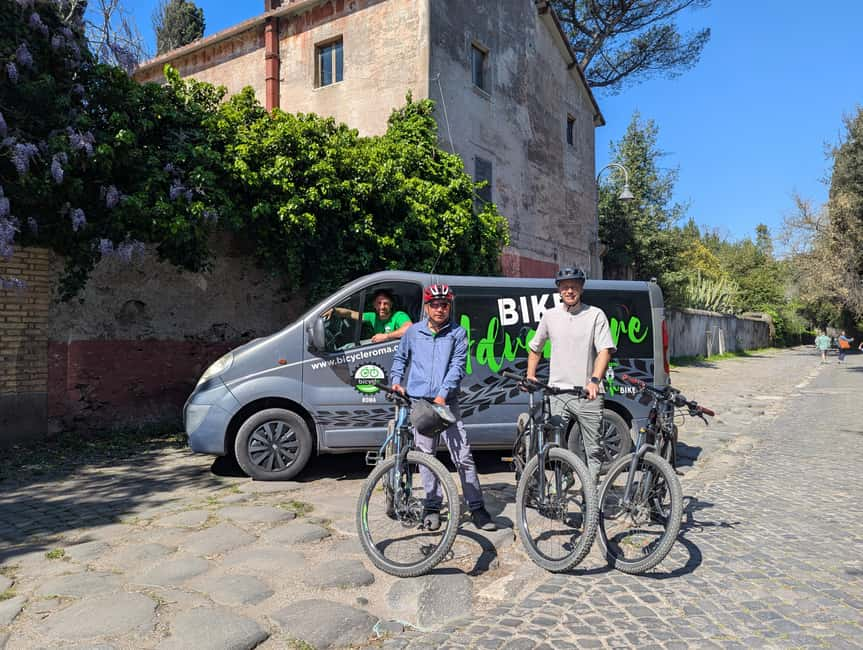
At $86.66 per person, the price is reasonable if you value convenience and guided interpretation. You are paying for the e-bike, helmet, lock, local guide, catacomb admission and guided visit, a private shuttle from the Circus Maximus, and access to the Aqueducts Park portion of the route.
The transfer is especially useful. Reaching the Appian Way independently can take time and may involve public transport, walking, or a taxi. Here, the operator handles the connection and gets you riding sooner.
The price is less attractive if you already have your own bicycle, prefer to explore without a guide, or want only a short ride. You also need to buy your own refreshments, so bring water and a snack if you need one during the half-day.
The included Roma ‘n Bike Card adds a discount circuit for cycle tourists, though its value depends on whether you use any participating offers afterward. I would judge the tour mainly on the shuttle, equipment, catacomb entry, and guide rather than on the card.
Who should book this ride?
I would recommend it to you if you want to see a less familiar side of Rome and are comfortable spending several hours on a bicycle. Families with older children can enjoy it, especially with the electric assistance and the chance to leave the city center behind. Children aged 13, 15, and 17 have handled the ride well, but age alone does not replace cycling ability.
It is also a strong choice if you have limited time. In one half-day, you can combine catacombs, Roman tombs, the Appian Way, several parks, and aqueducts without arranging separate transport.
I would hesitate if you dislike uneven roads, have not ridden a bicycle recently, or expect a polished cycle path. The route is active and sometimes rough. Summer heat, weekend crowds on the paving, and short traffic sections can affect the experience.
Book early in the day or during the week if you want a calmer ride. Wear comfortable clothes, bring identification, water, and sun protection, and leave large luggage behind.
FAQ
Where does the tour start?
The meeting point is at Viale Aventino, 46, near the Circus Maximus. The private shuttle waits in front of the RUVER Teglia Frazionata pizzeria with a Bike Adventure sign.
How long does the activity last?
The tour lasts about 4.5 hours. The shuttle takes approximately 20 minutes each way.
Is the catacomb entrance included?
Yes. The tour includes the catacomb entrance ticket and a guided visit lasting about 45 minutes.
What languages are available?
The live tour guide service is in English.
How many people are in the shared group?
The group tour requires at least four participants and accepts up to eight. A private group option is also available.
Do I need to be an experienced cyclist?
You need basic to medium bike-riding skills. About 90 percent of the route follows the Roman paving of the Via Appia Antica, and the uneven surface requires steady bike handling.
Can children join the tour?
Children can ride their own e-bike from age 12. Children up to 139 centimeters can use a trailer bike, and infants up to 20 kilograms can ride in a child seat free of charge.
Should you book the Appian Way e-bike tour?
Book this tour if you want ancient Rome with room to breathe. The catacombs give you an underground history lesson, the Appian Way supplies the dramatic old road, and the Aqueducts Park provides the biggest views. The shuttle and included equipment make the outing easier to arrange than doing it alone.
Skip it if you want a gentle, flat ride or dislike cobblestones. For the right cyclist, though, this is a useful half-day combination of history, countryside, and exercise, with enough guide support to make the route approachable without turning it into a slow procession.
More e-bike rides around Rome
- Rome:Appian Way E-bike Tour with Catacombs, Aqueducts & Food
★ 4.9 · 1,210 reviews - Rome: E-Bike Night Tour with Food and Wine Tasting
★ 4.9 · 1,131 reviews - Rome: Appian Way E-Bike Tour Catacombs, Aqueducts & Picnic
★ 4.6 · 727 reviews - Rome: Appian Way & Catacomb Sunset E-bike Tour with Aperitif
★ 4.5 · 682 reviews
More bike rides around Rome
- Rome EBike Tour: Appian Way, Catacombs & Roman Aqueducts
★ 5.0 · 1,766 reviews - Rome: Top Highlights & Hidden Gems Tour by Cannondale E-Bike
★ 4.9 · 1,760 reviews - Rome: Appian Way, Catacombs, & Roman Aqueducts E-bike Tour
★ 4.9 · 1,421 reviews - Rome City Small Group Bike Tour with quality Cannondale EBike
★ 5.0 · 1,380 reviews
Just added in Rome
- Civitavecchia Private Transfer: From the Port to Rome Airport★ 5.0 · 309 reviews
- Civitavecchia Shore Excursion: Best of Rome Private Tour★ 5.0 · 247 reviews
- Civitavecchia Private Transfer from ship to FCO airport or Rome★ 5.0 · 245 reviews
- Food Tasty and History Tour in Civitavecchia★ 5.0 · 256 reviews
- Palatine Hill and Roman Forum Tour with Fast-Track Entrance★ 4.2 · 417 reviews
- Tivoli: Villa D’Este & Villa Adriana Pass & App Audioguide★ 4.4 · 364 reviews
- Tivoli: Villa D’Este Entry Ticket and App Audio Guide★ 4.3 · 191 reviews
- Vatican Museums & Sistine Chapel Skip-the-Line Guided Tour★ 4.6 · 254 reviews
Catacombs & Underground Tours, compared.
Naples Underground Entry Ticket and Guided Tour
Read our review →
Colosseum: Underground and Ancient Rome Tour
Read our review →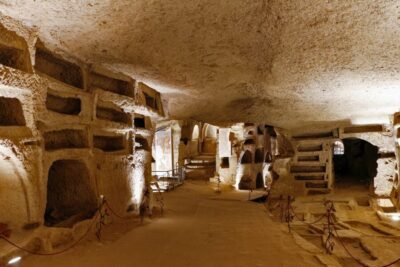
Catacombs of San Gennaro Entry Ticket & Guided Tour
Read our review →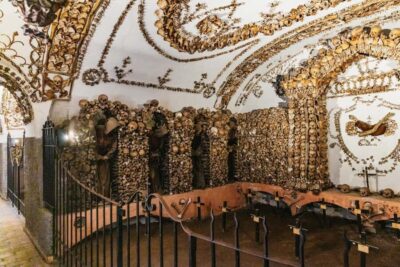
Crypts and Catacombs Underground Tour with Transfers
Read our review →
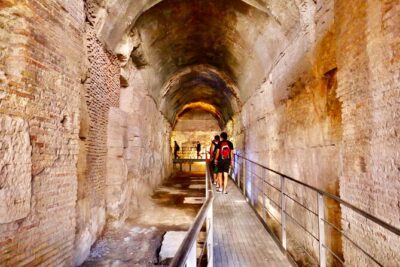
Expert Guided Tour of Colosseum Arena OR Underground, and Forum
Read our review →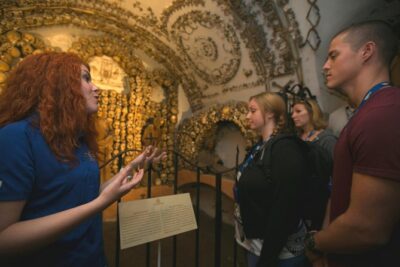
The Original Roman Crypts and Catacombs Tour with Transfers
Read our review →
Colosseum Underground Small Group Guided Tour
Read our review →Browse the lists this tour appears in