
Reviewed · MUSEUMS
Milan: Science and Technology Leonardo da Vinci Museum Entry
Milan’s Science and Technology Museum is far more than a Leonardo da Vinci stop. Its New Galleries present 170 models, artworks, books, and installations about the great engineer, while the wider museum moves from steam trains and ocean liners to rockets, spacecraft, and particle physics. I like the sheer variety, and I like that the setting is a former Renaissance monastery rather than a plain modern hall. The main drawback is simple: this museum is huge, and a quick visit will leave you rushing past some of the best rooms.
I especially like the transport displays, where full-size trains, boats, aircraft, and a submarine make technology feel tangible. I also like the space collection, including the only moon fragment visible in Italy. Plan at least three hours, and ideally much more. The floor plan can be confusing, and some outdoor objects or submarine access may be affected by renovations or separate booking arrangements.
Key points to know before you go
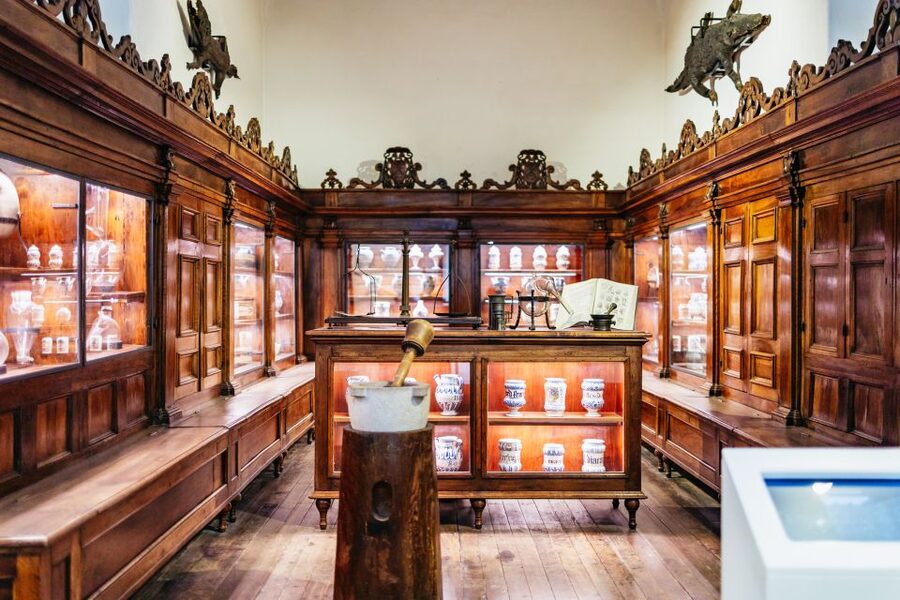
- Leonardo’s 170 historical models: See how drawings by Leonardo da Vinci were turned into working-scale models and teaching displays.
- A museum far beyond Leonardo: Allow time for trains, ships, aircraft, telecommunications, energy, materials, and space technology.
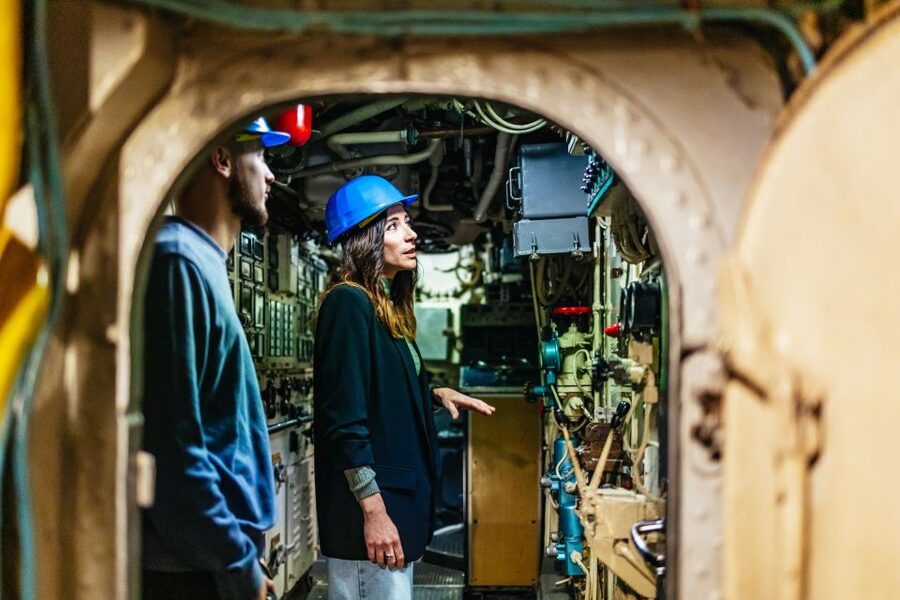
- Full-size transport exhibits: The collection includes the Enrico Toti submarine, Ebe sailing ship, Conte Biancamano liner, and Luna Rossa AC72 catamaran.
- A rare lunar object: The space section displays a moon fragment brought back during the Apollo era.
- Strong value at $15: The ticket can fill several hours, making it one of Milan’s better low-cost indoor attractions.
- Plan your route: Exchange your voucher at the ticket office, check submarine availability, and do not assume the Leonardo section is the whole museum.
A former monastery filled with machines
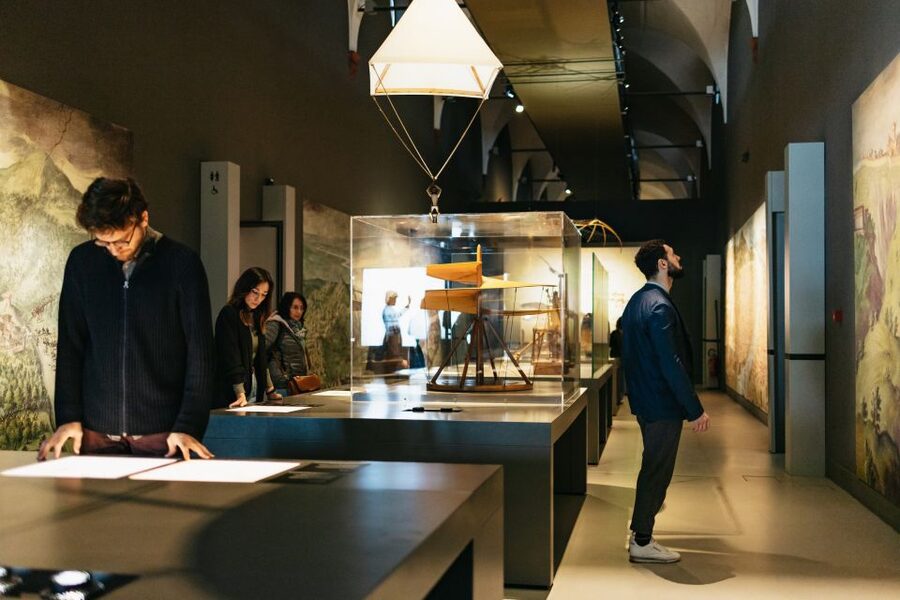
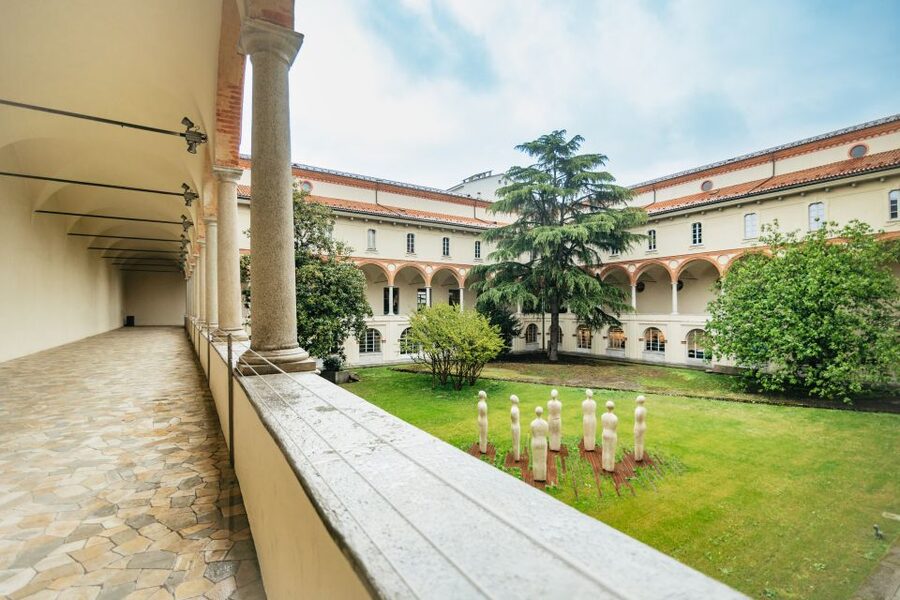
The museum sits at Via San Vittore 21, close to Milan’s central sights. You enter through a historic complex of cloisters and old monastery buildings, then move through galleries that cover centuries of invention.
That setting changes the mood. You are not simply walking through a row of white display rooms. The old architecture frames modern machines and technical drawings, so the visit feels like a walk through several different eras at once.
The museum covers science and technology in a broad sense. Leonardo is the headline attraction, but the collection also includes transport, communication, energy, materials, space, and particle physics. If you arrive expecting only Renaissance inventions, you may be surprised by the size and range of the rest.
I would not plan this as a 30-minute stop between other Milan sights. Even a brisk visit can take two to two and a half hours. If you read the labels, try the interactive displays, and pause at the large vehicles, three to five hours is more realistic.
Other museums and galleries in Milan:
- Official San Siro Stadium and Museum Guided Tour
★ 4.4 · 3,573 reviews - Milan: Leonardo3 The World of Leonardo Museum Entry Ticket
★ 4.4 · 3,241 reviews - Milan: La Scala Theater & Museum Guided Experience
★ 4.1 · 2,931 reviews
Start with Leonardo’s New Galleries
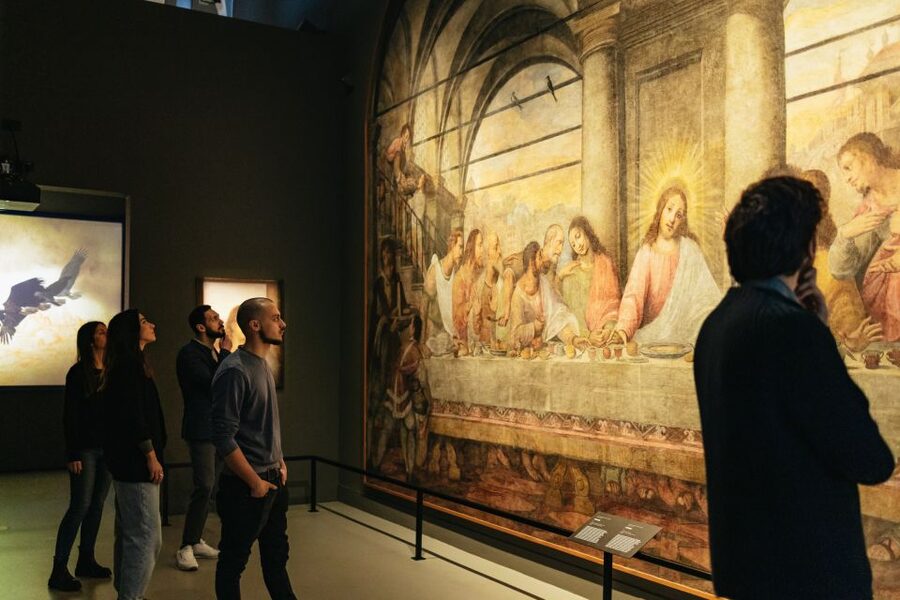
The Leonardo section is the museum’s main draw, and it deserves your best attention. The New Galleries are described as the largest permanent exhibition in the world devoted to Leonardo da Vinci. Their scale helps explain why the museum is much more than a famous-name display.
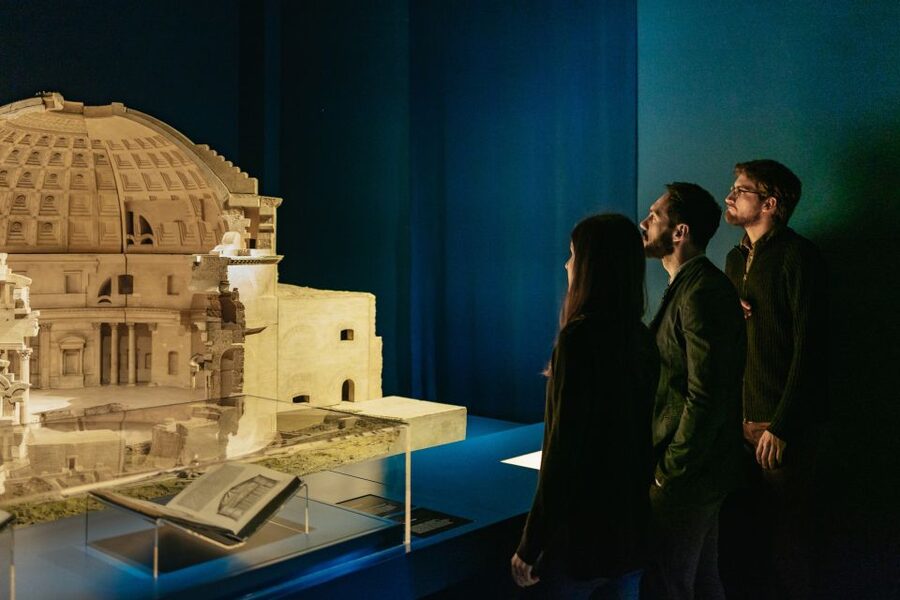
You will see 170 historical models, works of art, old volumes, and installations connected to Leonardo’s work as an engineer and humanist. The models give physical form to ideas that can otherwise remain trapped in sketches. Machines for movement, construction, water, flight, and military use become easier to understand when you can see their parts and proportions.
This is also where the museum is strongest for visitors who want context. Leonardo was not only an inventor in the modern sense. His notebooks show an intense interest in observation, mechanics, anatomy, nature, and the relationship between art and science. The exhibition presents that broad range rather than reducing him to a short list of clever machines.
You should expect a fair amount of reading. Much of the material is available in English, which helps international visitors, but the amount of information can slow your pace. I found this section best approached selectively. Pick the drawings and models that catch your attention, then spend time understanding how the design works instead of trying to read every panel.
Families have plenty to do here, too. The displays connect well with the idea of building, testing, and asking how a machine functions. Younger children may enjoy the hands-on elements more than the long written explanations, while older children and teenagers can spend time on the engineering problems behind the models.
Trains, ships, and aircraft make the museum memorable
The transport collection is one of the strongest reasons to visit, especially if Leonardo is not your main interest. The large train hall gives you the scale that small museum objects cannot provide. Steam locomotives and other rail equipment show how quickly travel and industry changed once steam power became practical.
You can then move into displays about ships and aircraft. The brigantine schooner Ebe and the Conte Biancamano transatlantic liner show two very different sides of maritime travel. One points to sailing traditions; the other reflects the age of long-distance ocean travel and large passenger vessels.
The Luna Rossa AC72 catamaran adds a modern sporting and engineering angle. Its design demonstrates how speed, materials, balance, and wind combine in high-performance sailing. It also gives the museum a useful link between older transport technology and recent innovation.
The Enrico Toti submarine is another major attraction. Its presence makes the story of naval engineering physical and immediate. However, do not assume that the standard ticket automatically lets you walk inside. Access to the interior may require a separate booking at the ticket office, and availability can change. Ask about it as soon as you arrive, not after you have finished the museum.
Aircraft and rockets extend the transport story into the air and beyond it. If you have a limited amount of time, I would not skip the large vehicle rooms in favor of reading every smaller display. The full-size objects are what make this museum different from a typical science center.
The space section reaches beyond Earth
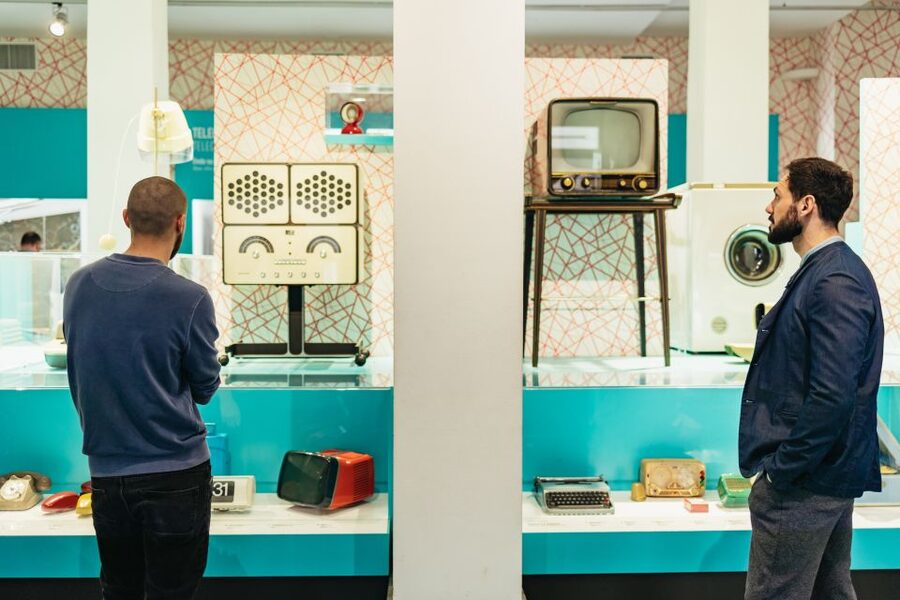
The space area is compact compared with the transport halls, but it carries unusual appeal. The museum displays a fragment of the moon, described as the only moon fragment visible in Italy. That is a small object with a huge story behind it, and it gives the space section a clear focal point.
You can also see the Vega space launcher and other space-related objects and information. The displays connect the technical side of launch systems with the wider story of exploration. For children, the puzzles and hands-on activities in the space area add a welcome change of pace. Adults may find themselves lingering over the lunar and spacecraft material longer than expected.
This section worked especially well for family groups and for anyone interested in the Apollo era. It also gives the museum a good balance. Leonardo’s machines belong to a world of sketches and early mechanics, while the space displays show engineering operating at a very different scale.
Same base, a different kind of day:
- Milan: Cathedral and Duomo’s Terraces Entrance Ticket
★ 4.6 · 61,054 reviews - Milan: Da Vinci’s Last Supper Guided Tour
★ 4.7 · 10,143 reviews - Milan: City Sightseeing Hop-On Hop-Off Bus with Audio Guide
★ 4.0 · 6,256 reviews - Milan Cathedral: Duomo Terraces Ticket (No Church Access)
★ 4.6 · 6,111 reviews
Temporary exhibitions keep the visit changing
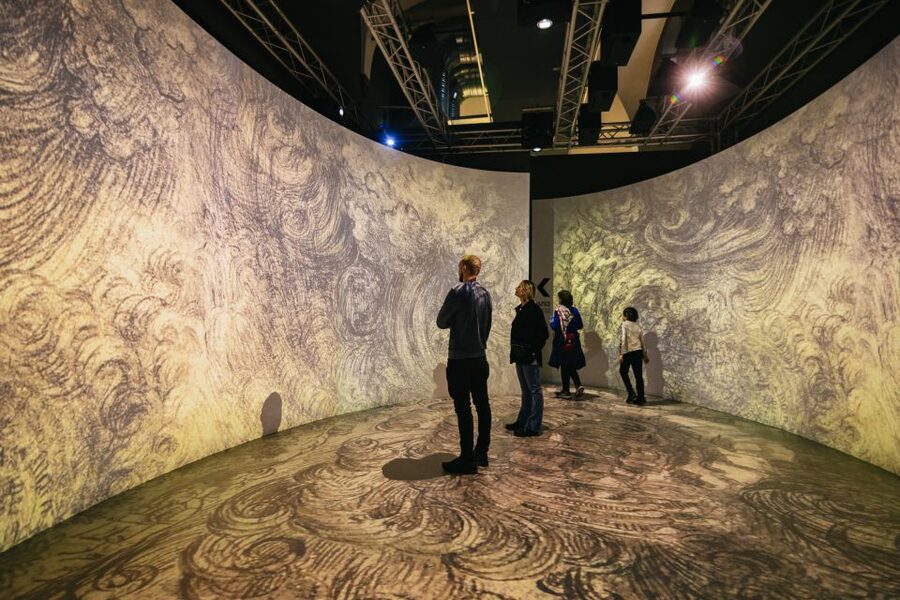
The permanent collection is the main reason to buy a ticket, but temporary displays can add another layer. Topics may include energy, materials, communication, transport, and particle physics.
Because temporary shows change, I would check what is scheduled when you visit. A repeat visit may feel different if one of these subjects matches your interests. It also means the museum can work for more than one kind of visitor. One person in your group can focus on Leonardo, another on trains, and another on modern science.
The museum is not presented as one simple chronological walk. You may move from old machinery to recent technology, then back to historical objects. That variety is part of the fun, but it can also make the route feel less obvious.
How to handle the size and layout
The most useful advice is to decide what matters before you enter. If you have three hours, choose two or three priorities. Leonardo, transport, and space make a sensible first visit. If you have most of the day, read more of the smaller displays and allow time to return to sections you passed quickly.
The floor plan is not always straightforward. You can lose time finding the next room, especially in a complex made from several historic buildings and exhibition areas. I would take a moment at the beginning to study the map and ask staff where the Leonardo galleries, train hall, space section, and submarine access are located.
The ticket allows entry at any time within the specified time slot, but you still need to exchange the voucher at the ticket office for the entrance ticket. This is a small step, yet it matters. Do not walk straight past the ticket desk assuming the digital voucher is the final admission ticket.
A visit may also be affected by restoration work. Some outdoor models, including a submarine or aircraft, may not be viewable during renovations. Conditions can change, so keep your expectations flexible if a particular object is the main reason you are going.
Is $15 good value?
At $15 per person, the museum offers strong value if you have the time to use it. The ticket is valid for one day, and the collection is large enough to occupy several hours. You are paying for a substantial museum visit, not just a single Leonardo room.
The value is especially good for families. Several displays are interactive, and the range of subjects gives children chances to move from machines to vehicles, space, and hands-on activities. Adults do not need to be science specialists. The historic objects, design details, and large transport exhibits provide plenty of interest without requiring technical training.
The museum-shop discount adds a modest extra benefit. Your ticket includes 10 percent off purchases there, though I would treat that as a bonus rather than a reason to book.
The main value question is your available time. If you have only an hour before another reservation, the museum may feel frustrating because you will see only a fraction of it. If you can stay for half a day, the price becomes very reasonable.
Who will enjoy this most?
I would recommend the museum to:
- Families who want an indoor activity with interactive displays
- Visitors interested in engineering, transport, space, or industrial design
- Leonardo fans who want more than a painting visit
- Adults who enjoy technical objects and historical machinery
- Anyone looking for a substantial Milan attraction at a moderate price
It is less suitable if you dislike museums that require walking and reading. There is no included guide, so you explore independently. You can learn a great deal, but you must set your own pace and choose where to focus.
The museum is also a good companion to a visit to Leonardo’s Last Supper, since the two sights are close to one another. Do not squeeze both into an unrealistic schedule. The museum alone can take most of a day if you want to see it properly.
Practical details for a smoother visit
Wear comfortable shoes. The complex is large, and the visit involves plenty of walking between galleries and large halls.
Use the ticket office as your first stop. Exchange the voucher there, ask about submarine entry, and find out if renovation work has changed access to any outdoor exhibits.
There is no included guided tour. If you prefer explanations from a person rather than labels, bring your own plan for the visit and allow extra time to read. An audio guide is not listed among the included services, so you should not count on one being part of the ticket.
The museum is wheelchair accessible. Assistance dogs are allowed, but other pets are not.
Free cancellation is available up to 24 hours before the visit, and the reserve-now, pay-later option can help if your Milan plans are still shifting. The important practical point is to check the available time slot before booking and arrive with enough time for the voucher exchange.
Should you book the Science and Technology Museum?
Yes, if you want a museum with real scale and variety. The Leonardo galleries are excellent, but the full-size trains, ships, aircraft, submarine, catamaran, and space exhibits are what make the entire visit worthwhile.
Book it if you can spare at least three hours, and make it a half-day stop if science, transport, or engineering interests you. If your schedule is already packed with Milan’s major art sights, do not book this expecting a quick add-on. At $15, it is a bargain for a long visit, but only if you give the collection enough time.
FAQ
Where is the Science and Technology Leonardo da Vinci Museum?
The museum is at Via San Vittore 21 in Milan, Lombardy.
How long is the ticket valid?
The ticket is valid for one day. Entry is allowed at any time within the specified time slot.
Does the ticket include a guided tour?
No. The entry ticket does not include a guided tour.
Do I need to exchange my voucher?
Yes. You need to exchange the voucher at the ticket office to receive the entrance ticket.
What is included with admission?
Admission to the museum is included, along with a 10 percent discount at the museum shop.
Is the museum wheelchair accessible?
Yes, the museum is wheelchair accessible.
Are pets allowed?
Pets are not allowed. Assistance dogs are permitted.
Can I see a moon fragment at the museum?
Yes. The space area displays a moon fragment described as the only one visible in Italy.
Can I enter the Enrico Toti submarine?
Submarine access may require a separate booking at the ticket office. Ask about availability when you arrive.
Can I cancel for a full refund?
Yes. You can cancel up to 24 hours in advance for a full refund.
Just added in Milan
- Highlights and hidden gems of Milan Bike Tour★ 5.0 · 491 reviews
- Milan Gourmet Tour: A Premium Tasting Experience by Do Eat Better★ 5.0 · 241 reviews
- Private Milan Food Walking Tour of Brera★ 5.0 · 217 reviews
- Da Vinci’s Last Supper and Santa Maria delle Grazie Church Tour★ 4.5 · 218 reviews
- Learn to Cook Italian Recipes with an Italian Chef★ 5.0 · 283 reviews
- Leonardo3 The World of Leonardo: Tickets for the Interactive Exhibition★ 4.0 · 220 reviews
- La Scala Theatre and Museum guided experience★ 4.5 · 664 reviews
- La Scala Theatre and Museum Tour in Milan With Private Guide★ 3.5 · 384 reviews
Museums, compared.

Vatican: Museums & Sistine Chapel Entrance Ticket
Read our review →
Vatican Museums & Sistine Chapel Tour with Optional Basilica
Read our review →
Vatican Museums, Sistine Chapel & St Peter’s Basilica Guided Tour
Read our review →
Skip-The-Line Uffizi Gallery Timed Entry Ticket
Read our review →
Vatican Museums & Sistine Chapel Skip-the-Line Entry Ticket
Read our review →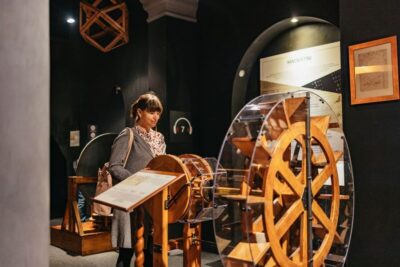
Browse the lists this tour appears in