
Reviewed · GHOST & MYSTERY TOURS
Ghosts, Legends & Mysteries of Rome Tip-Based Walking Tour
Rome’s grand monuments look different after sunset, especially when the story shifts from emperors and artists to executions, poisoners, corrupt popes, and ghosts. This 90-minute walk traces the darker side of central Rome, beginning at Castel Sant’Angelo and ending at Campo de’ Fiori.
I like two things right away: the route gives familiar sights a new mood, and guides such as Ivan, Leonardo, Simone, and Simon turn grim facts into lively storytelling. The dark jokes and face-to-face format keep the walk from feeling like a lecture. The main drawback is that 1.5 hours can feel short, and one stop is described as a little loosely connected to the next.
Key points to know
- Castel Sant’Angelo at night: Start beside one of Rome’s most atmospheric buildings, with stories linked to violence, power, and haunting.
- A route through darker Rome: Walk from the castle to Campo de’ Fiori, passing execution sites, old palaces, fountains, churches, and less obvious corners.
- Storytelling matters here: Ivan, Leonardo, Simone, and Simon have been praised for humor, strong delivery, and their ability to keep groups involved.
- History without a polished filter: Expect witches, heretics, the Inquisition, assassins, poisoners, and crimes connected to actual places.
- Pay what you want, but plan to tip: The booking price is listed at $3.77, while a cash tip of at least €10 per person is a practical budget.
- A good evening alternative: Choose it for unusual Roman history, not for formal monument access or a long, detailed architectural tour.
Castel Sant’Angelo sets the right dark tone
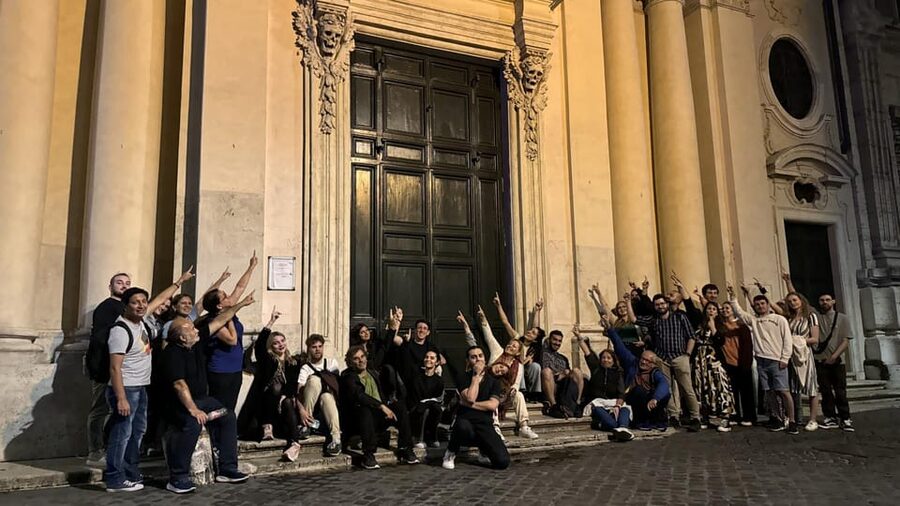
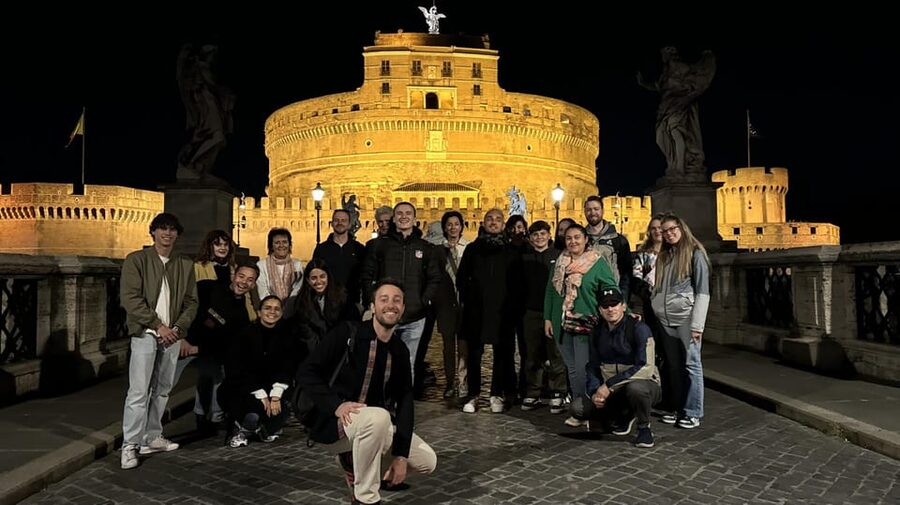
Meet in front of Castel Sant’Angelo, by the Sant’Angelo bridge. This is a useful starting point because the castle already carries a heavy sense of power and confinement. You do not enter the monument on this walk, but you pause for about 15 minutes while the guide sets the scene and explains the darker stories tied to the area.
At night, the castle and bridge provide a memorable backdrop for tales of popes, prisoners, executions, and political violence. The setting does much of the work. You are not simply standing in a classroom hearing old names. You are looking at the buildings and streets connected to the stories.
The guide’s delivery is central to the experience. Ivan is often described as warm, funny, and able to keep a group focused. Leonardo receives similar praise for his charisma and storytelling. Simone and Simon are also named as engaging guides. Your guide may vary, but the format is clear: one local storyteller, a moving group, and plenty of chances to ask questions.
The tour uses no headphones, according to one detailed account. That is a small advantage for a short walking route. You can see the guide’s expressions, hear the jokes directly, and ask about a detail before the group moves on.
Other trips after dark in Rome:
- Rome by Night Walking Tour – Legends & Criminal Stories
★ 4.5 · 1,003 reviews - Rome: Small Group Rome’s Dark Side – Ghosts & Legends Tour
★ 4.9 · 343 reviews - Dark Heart of Rome – Facts, Legend & Mystery Walking Tour
★ 4.5 · 329 reviews
From the castle to Rome’s uncomfortable past
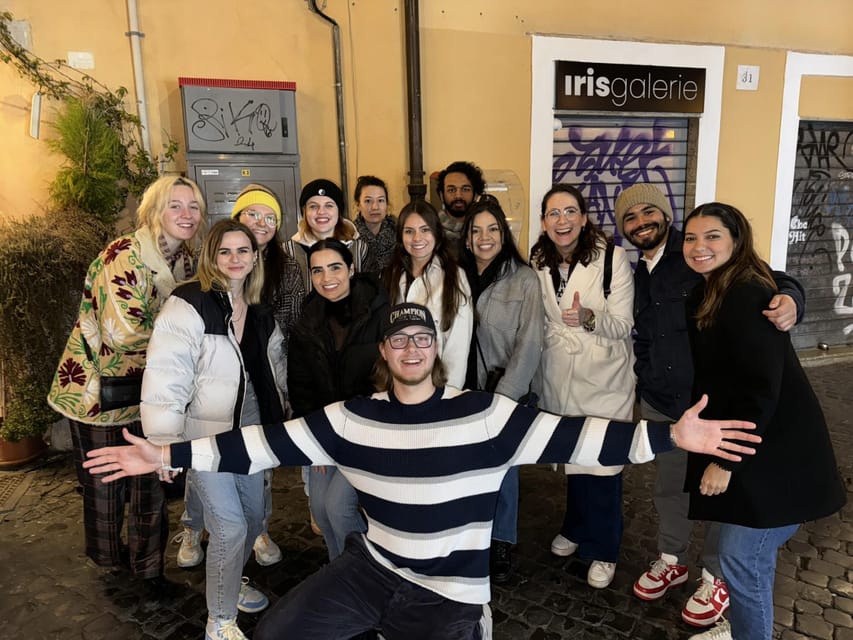
After Castel Sant’Angelo, the walk continues through central Rome in several short stages. Some stops are not named in advance, and two are presented as secret stops. That keeps a little mystery in the route, though it also means you should not expect a full stop-by-stop sightseeing program.
The stories cover haunted places, old crimes, executions, and urban legends. The point is not to prove every ghost story. Instead, the guide connects old streets and buildings with the people who lived, plotted, suffered, or died there.
You hear about witches, heretics, the Inquisition, assassins, and popes whose conduct was far from saintly. Giulia Tofana, the infamous poisoner, is one of the named figures. Her story gives the tour a particularly sharp edge because it links crime, gender, power, and fear in old Rome.
The history is intentionally not polished for family brochure treatment. The humor can be politically incorrect, and some jokes may not suit every group. I would choose this walk if you enjoy black humor and can handle stories about brutality and death without expecting a solemn academic lecture.
Short stops keep the pace moving
Several parts of the route last only five minutes, followed by another walk. This structure works well for an evening in Rome. You keep changing your view, and the guide can match each story to a street, building, or corner rather than holding the group in one place for too long.
The trade-off is depth. A five-minute stop can deliver a vivid anecdote, but not a full explanation of the building’s architecture, political role, and wider context. If you want dates, names, and long historical arguments, this is not the right format.
One account found the facts a little disconnected, with one person living in a place, then doing something elsewhere, followed by a separate piece of history. That is a fair warning. The walk is built around memorable episodes more than a single rising plot. Some people will find that lively. Others may want a clearer beginning, middle, and ending.
The guide’s skill makes a real difference. A strong storyteller can make a short stop feel complete. Leonardo, Ivan, and Simone are repeatedly described as funny and well prepared, so the experience appears to depend less on visual effects and more on delivery.
Secret stops add surprise, not monument access
The itinerary includes two secret stops, one lasting about 10 minutes and another about five minutes. Their exact locations are not specified, so you should think of them as surprise story points rather than promised attractions.
That uncertainty is part of the appeal. You are not simply ticking off famous Roman sights. The guide can point out a doorway, alley, or building that you might pass without noticing during the day. The value comes from learning why the place matters, not from entering it.
Keep your expectations realistic. The tour includes a walking route and guided sightseeing, but it does not list interior admissions. You will hear the stories from the street. This is especially important for anyone comparing it with a paid museum visit or a formal tour inside Castel Sant’Angelo.
The route also gives you a different way to read Rome. A palace may suggest wealth and art in daylight. After dark, the same facade can become the setting for a story about betrayal, confinement, or revenge. That change in perspective is the real product here.
Other walks around Rome:
- Rome: Trastevere & Campo de Fiori Street Food Walking Tour
★ 4.9 · 2,768 reviews - Rome: Paranormal Night Walking Tour & Secret Backstreets
★ 4.9 · 1,921 reviews - Rome: Guided City Center Evening Sightseeing Walking Tour
★ 4.4 · 953 reviews - Rome: Under the Moonlight Evening Walking Tour
★ 4.8 · 852 reviews
The Fountain of the Mask brings folklore into the walk
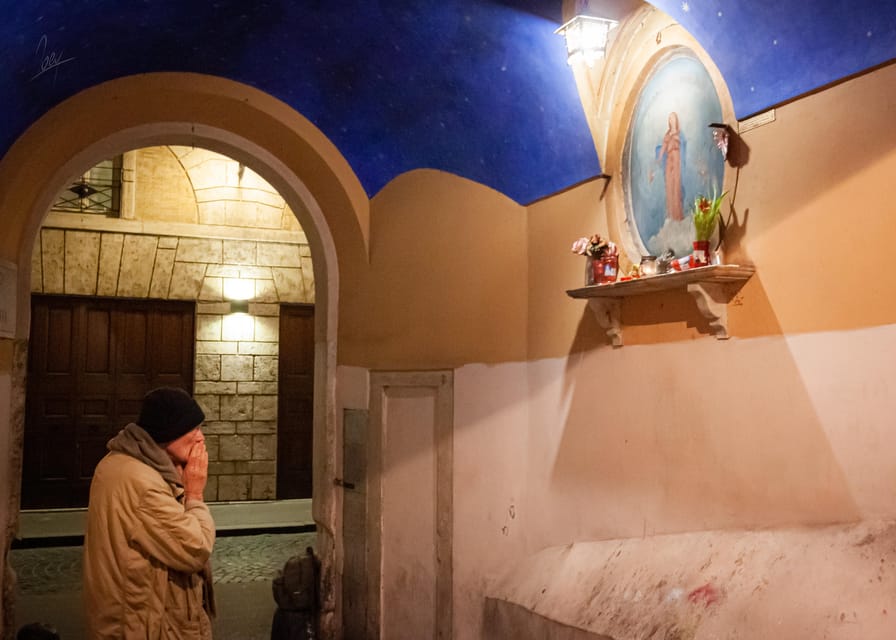
The Fountain of the Mask is one of the named stops, with about five minutes for explanation and sightseeing. It fits the tour’s interest in strange details and local stories rather than major headline monuments.
A stop like this is useful because it breaks up the heavier material. The walk is not only a list of murders and executions. It also includes local folklore, visual details, and the odd corners that give central Rome its character.
You will likely spend more time listening than photographing. The short stop gives you enough time to take in the feature and hear its story, but not enough for a long photo session. If you want pictures, keep your phone ready before the guide starts talking.
Farnese Palace reveals the power behind the stories
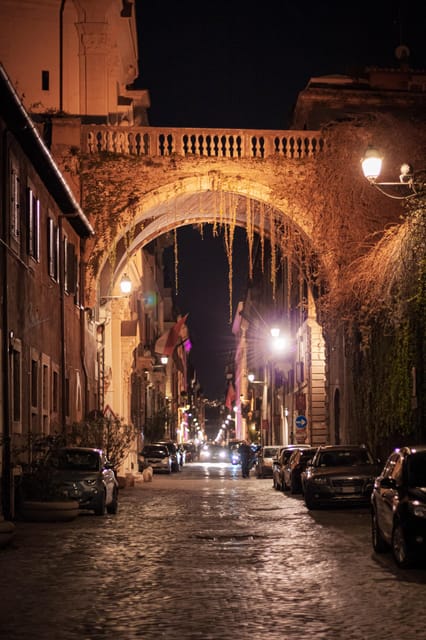
Farnese Palace is another named stop, also scheduled for roughly five minutes. Its presence helps shift the walk from supernatural tales to the relationship between wealth, authority, religion, and crime.
The tour’s stories about popes, heretics, and the Inquisition make more sense when you notice how much power was concentrated in Rome’s palaces and religious institutions. The guide uses the city itself as a prompt for discussing people who could punish others, protect themselves, or manipulate public opinion.
This is not an architectural tour of Farnese Palace. You should expect a focused story connected to the building or its setting, not a full account of its design. Still, the stop adds useful context to the human behavior at the heart of the walk. Rome’s darker episodes did not happen in isolation. They were tied to status, institutions, money, and influence.
Campo de’ Fiori is a fitting finish
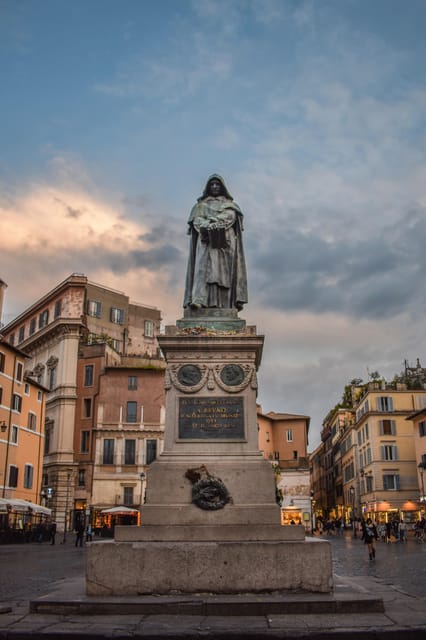
The walk ends at Campo de’ Fiori after about 10 minutes at the square. This is a strong finish for a tour concerned with executions and public memory. The square is also practical because you can continue into dinner or drinks afterward.
The final stop gives the route a clear endpoint, even if the stories along the way are not arranged as one continuous narrative. By this point, you have crossed from the castle toward one of Rome’s best-known central squares while hearing about people and events that standard sightseeing routes often skip.
Campo de’ Fiori also makes the guide’s food and drink recommendations useful. Several guides are praised for sharing lists of local eateries, gelaterias, and places to eat after the walk. Treat this as an extra benefit rather than a formal tasting component. Food is not included, and the tour does not promise restaurant reservations or a meal.
Why the $3.77 price needs a closer look
The advertised booking price is just $3.77 per person, but this is a tip-based walking tour. The guide works for tips, so the displayed price does not represent the full amount you should expect to pay.
A practical budget is at least €10 per person in cash. The stated usual range reaches from €10 to $50, depending on what you feel the tour was worth. You can decide at the end, but planning for a tip avoids treating the low booking price as the complete cost.
At €10, the value is strong if you enjoy storytelling and want an evening activity that does not require museum admission. You receive 90 minutes with a live guide, a route through several central locations, and a set of unusual stories that can change how you see Rome afterward.
The value is weaker if you want a formal tour with guaranteed monument entry, detailed historical documentation, or a long route. It is also less suitable if you are uncomfortable with death, torture, poison, executions, or crude jokes. The pay-what-you-want model gives you flexibility, but it works best when you approach it as a service that deserves fair payment.
Who will enjoy this Rome night walk
I would recommend it to you if you have already seen the major Roman sights and want something less predictable. It also works well early in a visit because the route gives you story hooks to notice as you walk around central Rome later.
The experience suits:
- Adults and older teenagers interested in crime, folklore, and unusual history
- Couples or friends looking for a nighttime activity
- Repeat visitors who want a different side of familiar streets
- People who enjoy jokes mixed with serious subjects
- Visitors who prefer a live storyteller to a recorded audio guide
- Anyone who wants restaurant and gelato suggestions after the walk
I would be cautious about booking it for very young children. The material includes brutality, executions, poison, and disturbing deaths. The politically incorrect humor may also be too much for some families.
You should also arrive ready to walk for 1.5 hours. The route has several short walks between stops, and the tour does not end where it begins. Since it finishes at Campo de’ Fiori, plan your evening around that area rather than expecting to return to Castel Sant’Angelo.
Languages, timing, and practical planning
The live tour is offered in English and Spanish. Starting times vary, so check availability for your date. Since the experience takes place at night, wear shoes that are comfortable for city walking and bring enough cash for the tip.
The meeting point is specific: in front of the Castel Sant’Angelo entrance, by the Sant’Angelo bridge. Give yourself time to find the correct side of the castle, especially if you are coming from another part of Rome.
Some groups have been described as comfortable and not overwhelming, while one account found a group too large for everyone to speak easily. Group size may vary. If asking questions is important to you, stay close enough to hear the guide and speak up during the shorter stops.
The tour allows free cancellation up to 24 hours before the start for a full refund, and you can reserve while paying later. That makes it easy to fit into a changing Rome schedule.
Should you book Ghosts, Legends & Mysteries of Rome?
Book it if you want Rome told through crime, superstition, and human misbehavior, with a guide who can make grim material funny without turning the walk into a haunted-house show. Ivan, Leonardo, Simone, and Simon are all noted for lively delivery, and the face-to-face format leaves room for questions.
Do not book it expecting a complete history of Rome, a formal castle visit, or a perfectly connected narrative. The route is short, the stops are often brief, and the quality depends heavily on the guide leading your departure.
For the right audience, this is a smart use of an evening. Budget at least €10 per person for the tip, meet by Castel Sant’Angelo, and finish ready for dinner around Campo de’ Fiori. If you like your city history unsettling, funny, and a little rough around the edges, this walk is worth adding to your Rome plans.
FAQ
How long does the Ghosts, Legends & Mysteries of Rome tour last?
The walking tour lasts 1.5 hours, or about 90 minutes.
Where does the tour begin?
It begins in front of the Castel Sant’Angelo entrance, by the Sant’Angelo bridge.
Where does the tour end?
The tour ends at Campo de’ Fiori.
What languages are available?
The live guide offers the tour in English and Spanish.
How much should I tip the guide?
The tour uses a pay-what-you-want model. A tip of at least €10 per person is a sensible amount to plan for, though the final amount is up to you.
Does the tour include entry to Castel Sant’Angelo?
No interior admission is listed. Castel Sant’Angelo is used as the starting point for a photo stop, guided explanation, and sightseeing.
Just added in Rome
- Civitavecchia Private Transfer: From the Port to Rome Airport★ 5.0 · 309 reviews
- Civitavecchia Shore Excursion: Best of Rome Private Tour★ 5.0 · 247 reviews
- Civitavecchia Private Transfer from ship to FCO airport or Rome★ 5.0 · 245 reviews
- Food Tasty and History Tour in Civitavecchia★ 5.0 · 256 reviews
- Palatine Hill and Roman Forum Tour with Fast-Track Entrance★ 4.2 · 417 reviews
- Tivoli: Villa D’Este & Villa Adriana Pass & App Audioguide★ 4.4 · 364 reviews
- Tivoli: Villa D’Este Entry Ticket and App Audio Guide★ 4.3 · 191 reviews
- Vatican Museums & Sistine Chapel Skip-the-Line Guided Tour★ 4.6 · 254 reviews
Ghost & Mystery Tours, compared.
The Dark Side of Florence: Mysteries and Legends
Read our review →
The Secrets to Learn Fresh Pasta and Tiramisù in a Glam Home
Read our review →
Dark Mysteries and Legends Guided Walking Tour
Read our review →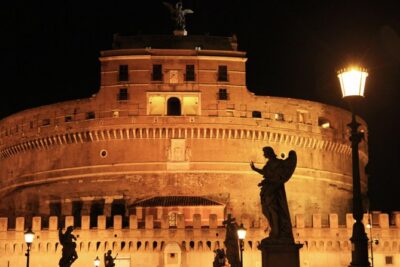
Rome by Night Walking Tour – Legends & Criminal Stories
Read our review →
Skip-the-Line Accademia Guided Visit: David Secrets and Beyond
Read our review →
Guided Tour of Medici Family Secrets and Chapels
Read our review →Browse the lists this tour appears in