
Reviewed · WALKING TOURS
Rome: Guided City Center Evening Sightseeing Walking Tour
Rome is at its most memorable when the heat drops and the stone begins to glow. This three-hour evening walk links Pincio Terrace, the Trevi Fountain, and Piazza Navona, giving you a useful first look at central Rome without spending the night underground or inside a museum.
I like the sunset view from Pincio Terrace and the way the route connects famous sights with smaller details about art, religion, and Roman life. I also like the timing: you can use this walk to get your bearings on your first evening, then return later to the places that deserve more time.
The tradeoff is simple: this is a full three hours on foot, with an uphill start and no planned break. If you have mobility limits, dislike crowds, or want to enter the monuments, this is not the right tour.
Key points to know before you book
- Sunset begins at Pincio Terrace: Start above Piazza del Popolo for wide views across Rome’s rooftops.
- The route covers major center-city sights: You pass the Spanish Steps, Trevi Fountain, Pantheon, Piazza Navona, and Campo de’ Fiori.
- The walking is continuous: Plan on being on your feet for nearly the whole three hours, including the climb to the terrace.
- The guide makes the difference: Guides including Andrada, Carolina, Marzia, Ava, and Ghil have been praised for clear history, art knowledge, humor, and helpful restaurant tips.
- The price is reasonable for an orientation walk: At $46 per person, you are paying for a live English-speaking guide and a concentrated introduction to Rome.
- It is best early in your stay: The route helps you decide where to return for a meal, a closer look, or a daytime visit.
Why an evening walk works so well in Rome
Rome can feel like a history book left open on every street corner. The trouble is knowing what you are looking at. A fountain may look decorative until you learn who designed it, an obelisk may seem like a stray monument until its journey is explained, and a church facade may reveal a contest between famous architects.
That is the value of this walk. You move through the historic center while a guide gives the stones a human story. The route does not try to cover every part of Rome. Instead, it links several famous squares and monuments into one manageable evening.
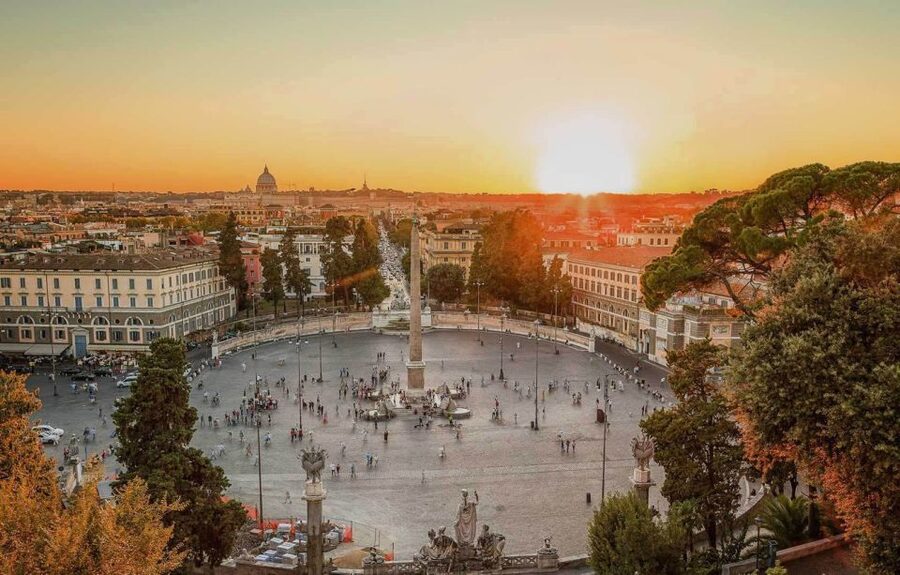
The light helps, too. The tour begins at Piazza del Popolo and climbs to Pincio Terrace near sunset. Later, the fountains and piazzas take on a different mood as daylight fades. You also avoid the worst of the daytime heat, which is especially useful in summer.
The timing suits a first night in Rome. You can see a large part of the center, learn the basic shape of the city, and make a mental list of places to revisit. Several past participants used it exactly this way, treating the walk as an orientation before returning to the Pantheon, Trevi Fountain, or a favorite square.
Other walks around Rome:
- Rome: Trastevere & Campo de Fiori Street Food Walking Tour
★ 4.9 · 2,768 reviews - Rome: Paranormal Night Walking Tour & Secret Backstreets
★ 4.9 · 1,921 reviews - Rome by Night Walking Tour – Legends & Criminal Stories
★ 4.5 · 1,003 reviews
Meeting at Piazza del Popolo
The meeting point is in front of Santa Maria del Popolo Church, next to the Leonardo da Vinci Museum. Look for a guide holding a Rome Your Way sign.
Piazza del Popolo is a fitting place to begin. The broad square brings together churches, fountains, an obelisk, and grand buildings, so you receive an immediate lesson in how Rome layers different periods in one space. Before you even start walking, there is plenty to look at.
The meeting point can be a little confusing, so arrive with enough time to locate the church and the sign. The square is large, and the church is easy to mistake for one of several nearby attractions if you are rushing.
Pincio Terrace and Rome at sunset
The first major move is uphill to Pincio Terrace. This is one of the tour’s best moments, but it is also where the physical demands begin. The climb is steep enough to notice, and one past participant specifically called it the difficult part of the opening.
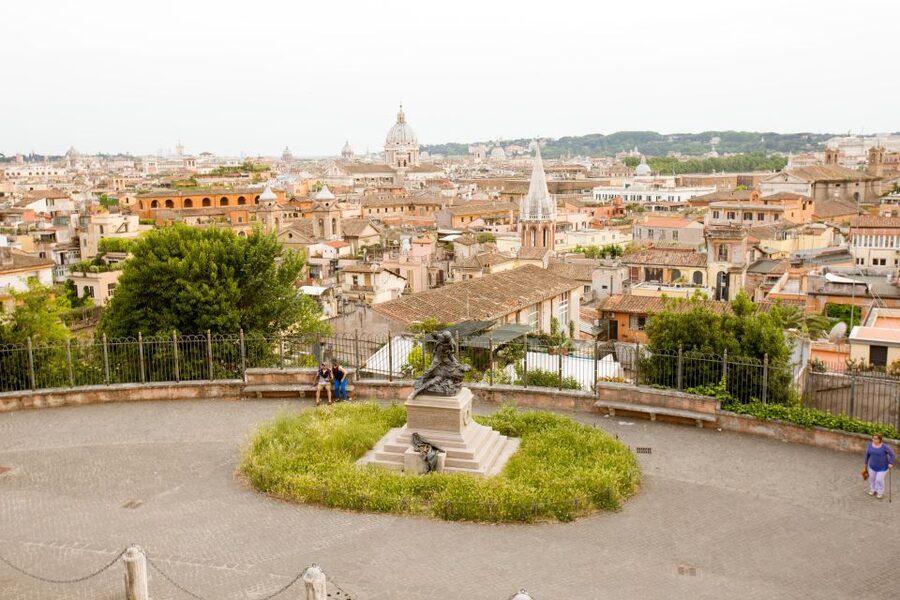
At the top, you get a broad view over Rome, including the rooftops and the area around Piazza del Popolo. The timing is designed to catch the evening light, so you begin with a view rather than waiting until the end of the walk, when tired feet can make you less receptive.
This stop gives your guide a useful stage for explaining Rome’s layout. You can see how the historic center spreads below you, then spend the rest of the evening walking through the places you have just viewed from above.
The terrace is not simply a photo stop. It gives the tour a calm opening before the route moves into crowded streets and famous squares. Take a moment to look beyond the camera screen. The rooftops, domes, and fading light are part of the experience.
Spanish Steps and Bernini’s Barcaccia Fountain
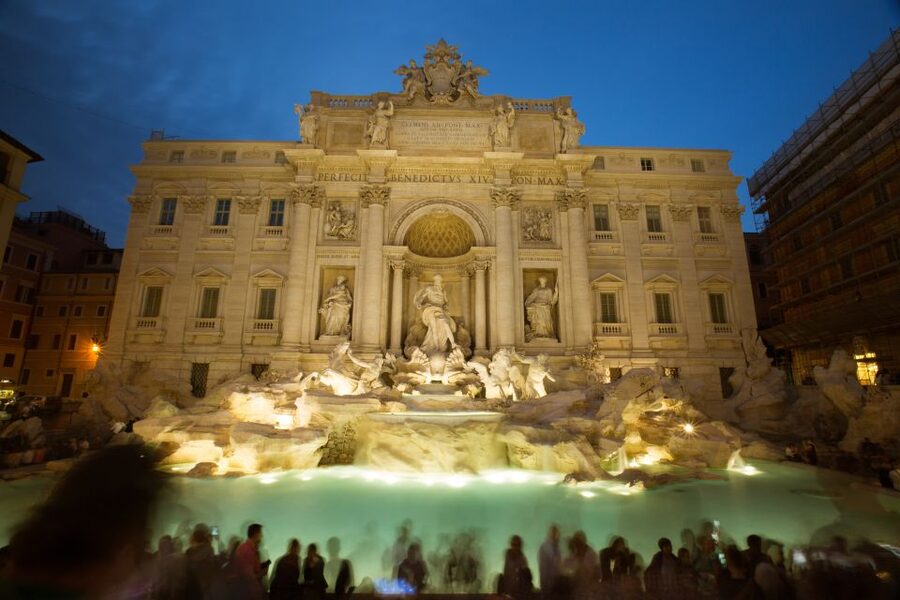
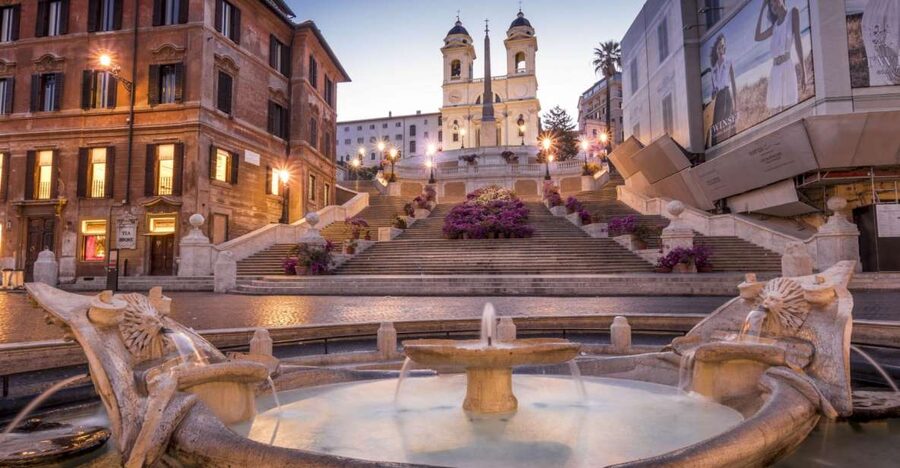
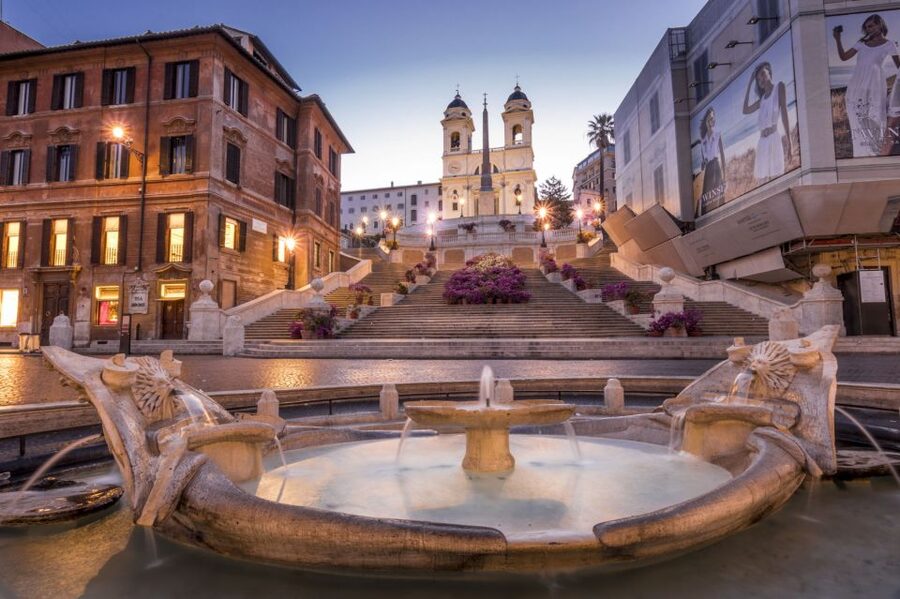
From the terrace, the route continues toward Piazza di Spagna and the Spanish Steps. The steps are one of Rome’s most recognizable gathering places, but the surrounding details are what make a guide useful here.
At the foot sits Bernini’s Barcaccia Fountain, a low boat-shaped fountain. Its design is easy to miss if you are focused only on climbing the steps or finding a clear photo. A guide can point out how the fountain fits into the square and how Baroque Rome used water, sculpture, and architecture together.
Expect people around the Spanish Steps, even in the evening. This is not a quiet stop, and you will not have the place to yourself. The benefit of coming with a group is that you receive context without needing to work out the details while keeping track of the route.
You should also expect to keep moving. This is a sightseeing walk, not a long stop at each monument. If you want time to sit on the steps, study the fountain, or browse the surrounding streets, mark the area for a return visit.
A few more things to do in Rome
- Colosseum, Roman Forum & Palatine Guided Tour
★ 4.7 · 63,148 reviews - Vatican Museums, Sistine Chapel & St Peter’s Basilica Guided Tour
★ 4.5 · 39,149 reviews - Rome: Colosseum, Palatine Hill and Roman Forum Guided Tour
★ 4.8 · 32,814 reviews - Rome: Guided Tour of Colosseum, Roman Forum & Palatine Hill
★ 4.7 · 27,897 reviews
Tossing a coin at the Trevi Fountain
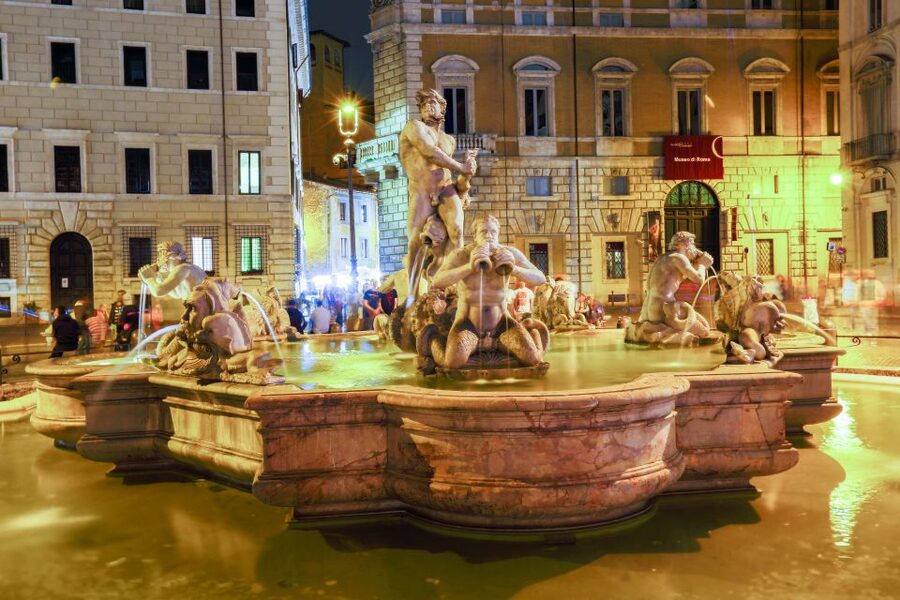
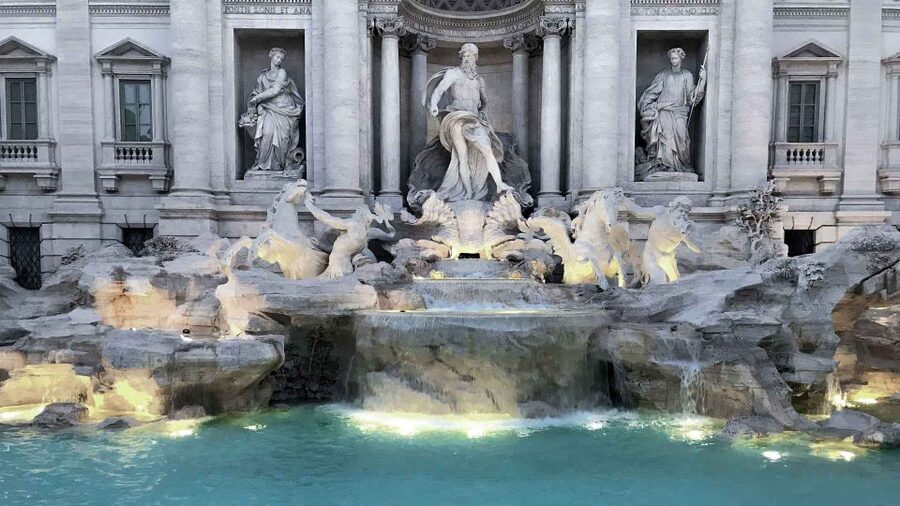
The walk then reaches the Trevi Fountain, Rome’s largest Baroque fountain. Its scale can be startling, especially when you first approach through the narrower streets around it.
The familiar custom is to toss a coin over your left shoulder if you hope to return to Rome. The tradition gives the visit a playful moment, but the fountain itself deserves your attention. Look at the theatrical figures, the water, and the way the monument fills the space behind it.
Trevi is usually one of the busiest points on the route. You may need to stay close to your guide and listen carefully. Headsets are provided when needed, which helps when the group is near a noisy or crowded monument.
This is also a stop where expectations matter. You will see the fountain and hear its story, but the tour does not include a long, private viewing period. Come for the atmosphere and explanation, then return later if you want quieter photographs.
Piazza della Rotonda and the Pantheon exterior
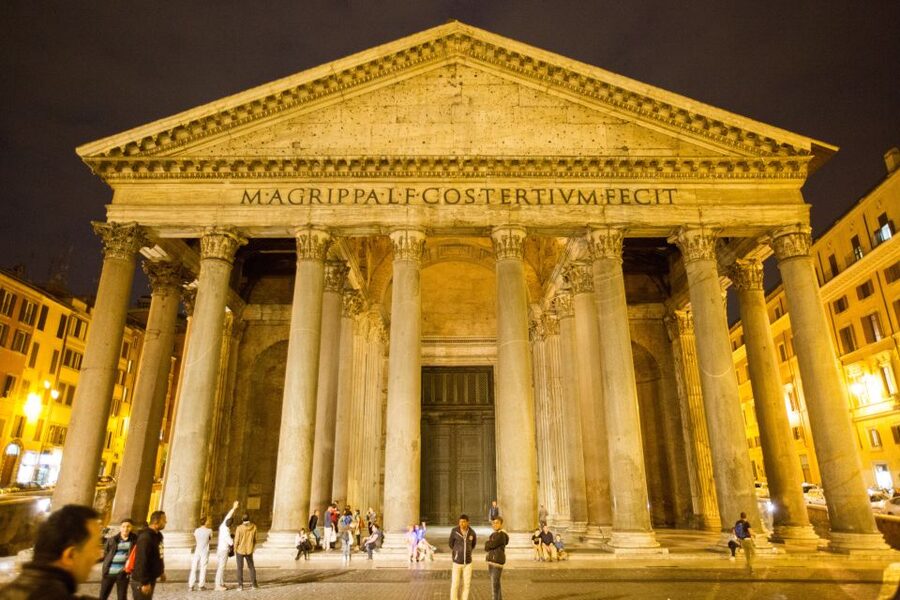
Next comes Piazza della Rotonda, home to the Pantheon. The building began in 27 B.C. and was later converted into a church dedicated to Mary and the martyrs. It also contains the tomb of Raffaello and other major Renaissance artists.
The tour views the Pantheon from outside. That makes this stop useful for orientation and architectural context, but it is important to know that interior entry is not part of the experience. You will not spend time beneath the famous dome during this evening walk.
Even from the square, the Pantheon makes a strong impression. Its ancient facade faces a lively public space, and the building’s continued use helps explain why Rome feels less like a collection of ruins and more like a city that has kept adding new chapters.
Use this point to listen to the explanation rather than simply taking another photograph. The contrast between the ancient building and the later church is one of the clearest examples of Rome’s changing identity.
Piazza Navona and Bernini’s Four Rivers Fountain
Piazza Navona is one of the richest stops on the route. The long square follows the shape of an ancient stadium, and today it is filled with fountains, churches, palaces, restaurants, and pedestrians.
At the center is Bernini’s Four Rivers Fountain. The sculpture represents four great rivers, and its scale is easy to appreciate from different points around the square. Your guide can also explain the competition between Bernini and Borromini, whose Church of Sant’Agnese in Agone faces the fountain.
Look toward Palazzo Pamphili and the church, then compare the Neptune Fountain at the northern end with the Moor Fountain at the southern end. The square works best when you take it as a complete composition rather than treating the central fountain as the only attraction.
This is another place where the evening setting helps. The square remains active, but the lower light gives the stone a softer appearance. You will still encounter crowds, and the guide will need to gather the group carefully before moving on.
Finishing at Campo de’ Fiori
The final stop is Campo de’ Fiori, a good place to end because it changes character from morning to night. The square once hosted races and public executions. The statue of Giordano Bruno in the center recalls one of its darker chapters.
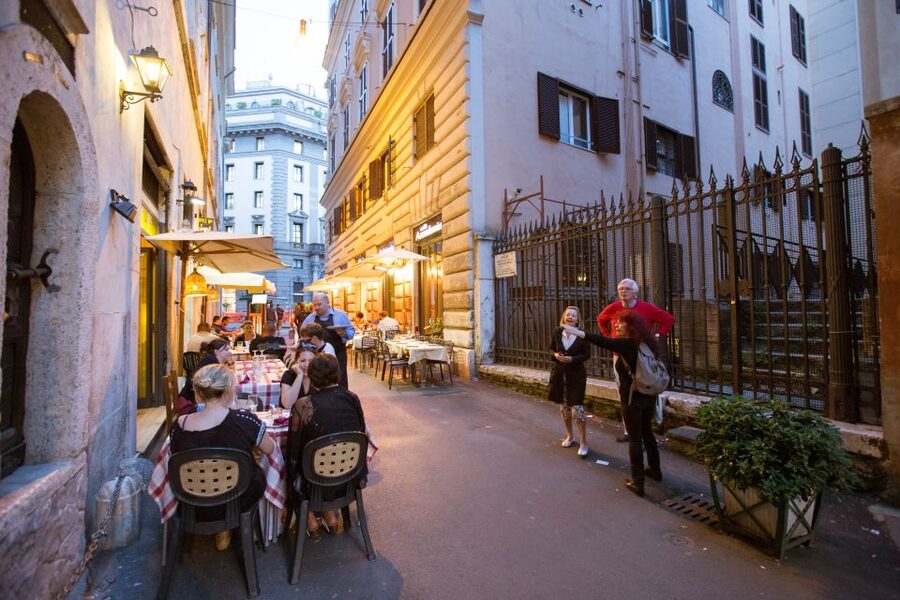
Today, Campo de’ Fiori serves as a morning market and an evening meeting place. The tour ends here, leaving you in a useful part of central Rome with plenty of options for continuing your night.
This ending is practical. You can stay in the square, look for a restaurant, or walk back toward another part of the center. Guides have sometimes offered restaurant suggestions along the way, and the area is well suited to making plans after the formal tour ends.
Do not expect the guide to escort you back to your hotel. Hotel pickup and drop-off are not included, so you need to arrange your own way to the starting point and your own return afterward.
The guide matters more than the route
The sights are famous, but the guide determines how much you get from them. The strongest guides on this route have been described as friendly, clear, funny, and able to answer questions beyond the monument directly in front of the group.
Several guide names appear in past bookings, including Andrada, Carolina, Marzia, Ava, Ghil, Juliano, Elida, Rosa, and Karolina. Marzia, for example, brought an archaeology background, while Andrada was praised for connecting history and architecture in a way that was easy to follow. Carolina and Ava were also noted for energy, warmth, and strong storytelling.
Guide assignments can change, so you should not book on the assumption that one particular person will lead your walk. The useful point is that this experience depends on live interpretation, not a recorded script. A good guide can make a familiar fountain feel new and can adjust explanations when the group asks questions.
The tour is in English. Headsets are used when needed, which is helpful around fountains, traffic, and busy squares.
Walking pace, comfort, and group expectations
You will walk for the full three hours with no scheduled break. One past participant called the pace fast, while others found it gentle and well judged. That difference likely reflects group size, guide style, weather, and your own walking speed.
Wear comfortable shoes and light clothing suited to the weather. You will encounter pavement, steps, and the uphill approach to Pincio Terrace. This tour is not suitable for wheelchair users, and it is a poor fit if you need frequent seated breaks.
Families can bring children, and children aged five and younger go free. Older children who enjoy stories about fountains, artists, churches, and ancient buildings may do well, but the continuous walking can be tiring for young legs.
The route is more enjoyable when you resist the urge to hurry ahead for photographs. Stay close enough to hear the guide, especially at Trevi Fountain and Piazza Navona. Save the longer photo sessions for after the explanation.
Is $46 a fair price?
At $46 per person, this is not the cheapest way to walk around Rome, since you could visit every square on your own. You are paying for the route, the three-hour structure, an English-speaking guide, historical explanation, and the chance to ask questions as you go.
I consider the price fair if you are new to Rome or short on time. Seeing these places independently is easy enough, but understanding what you are seeing takes research, planning, and a willingness to stop and read while crowds press around you.
The value is strongest on your first evening. You get a broad introduction without committing half a day to one museum or archaeological site. The walk can also prevent a common Rome mistake: spending your whole trip moving from famous monument to famous monument without understanding how the center fits together.
The value is weaker if you already know Rome well, have visited these sights with a guide, or want interior visits. The Pantheon is seen from outside, and the route does not include entry to the churches or other monuments.
Free cancellation is available up to 24 hours before the activity for a full refund, and you can reserve now and pay later. Those terms make it easier to place the walk early in your schedule while keeping some flexibility.
Who should book this evening walk?
I would choose this tour for a first or second night in Rome, especially if you arrive early enough to reach Piazza del Popolo and want an organized introduction. It is also useful for a short visit, since it covers several major center-city sights in one evening.
It suits couples looking for a scenic night walk, solo visitors who want a clear route, and families with children old enough to manage three hours on foot. It also works well for people who care about art and architecture but do not want to spend the first evening inside a museum.
I would skip it if you want a slow photographic walk, need regular rest stops, use a wheelchair, or have already spent substantial time with these monuments. I would also avoid booking it on an evening when you need to be somewhere else soon afterward, since the walk covers a lot of ground and ends away from the starting point.
Should you book Rome: Guided City Center Evening Sightseeing Walking Tour?
Book it if you want a well-planned introduction to Rome after the heat of the day. The sunset at Pincio Terrace, the Baroque fountains, and the walk through Piazza Navona give the evening a pleasing rhythm, while the guide supplies the context that many first-time visitors miss.
Treat it as an overview, not a complete tour of every monument. You will see the Pantheon from outside, walk continuously, and share busy public spaces with other people. If you accept those limits and wear good shoes, $46 buys a useful first map of central Rome and several ideas for where to return.
FAQ
How long is the walking tour?
The tour lasts three hours.
What language is the tour conducted in?
The live tour guide speaks English.
Where does the tour meet?
Meet in Piazza del Popolo, in front of Santa Maria del Popolo Church, next to the Leonardo da Vinci Museum. Look for a guide holding a Rome Your Way sign.
Where does the tour end?
The walk ends at Campo de’ Fiori.
Does the tour include hotel pickup and drop-off?
No. Hotel pickup and drop-off are not included.
Which major sights are included?
The route includes Pincio Terrace, the Spanish Steps, Bernini’s Barcaccia Fountain, the Trevi Fountain, Piazza della Rotonda, the exterior of the Pantheon, Piazza Navona, Bernini’s Four Rivers Fountain, and Campo de’ Fiori.
Do I enter the Pantheon?
The tour includes an exterior view of the Pantheon. Interior entry is not listed as part of the activity.
Is the tour suitable for wheelchair users?
No. The activity is not suitable for wheelchair users.
Are children allowed on the tour?
Yes. Children aged five and younger go free.
Can I cancel the booking?
Yes. You can cancel up to 24 hours in advance for a full refund. You can also reserve now and pay later.
Just added in Rome
- Civitavecchia Private Transfer: From the Port to Rome Airport★ 5.0 · 309 reviews
- Civitavecchia Shore Excursion: Best of Rome Private Tour★ 5.0 · 247 reviews
- Civitavecchia Private Transfer from ship to FCO airport or Rome★ 5.0 · 245 reviews
- Food Tasty and History Tour in Civitavecchia★ 5.0 · 256 reviews
- Palatine Hill and Roman Forum Tour with Fast-Track Entrance★ 4.2 · 417 reviews
- Tivoli: Villa D’Este & Villa Adriana Pass & App Audioguide★ 4.4 · 364 reviews
- Tivoli: Villa D’Este Entry Ticket and App Audio Guide★ 4.3 · 191 reviews
- Vatican Museums & Sistine Chapel Skip-the-Line Guided Tour★ 4.6 · 254 reviews
Walking Tours, compared.
Guided Walking Tour & Last Supper Visit with Ticket
Read our review →
Rialto Bridge & Offbeat Unusual Venice Walking Tour
Read our review →
Private 3 hrs Venice Tour: St Mark’s, Walking tour & Boat tour
Read our review →
Skip the line: Uffizi and Accademia Small Group Walking Tour
Read our review →Browse the lists this tour appears in