
Reviewed · VATICAN & SISTINE CHAPEL TOURS
Vatican Museums, Sistine Chapel Tour and Basilica Access
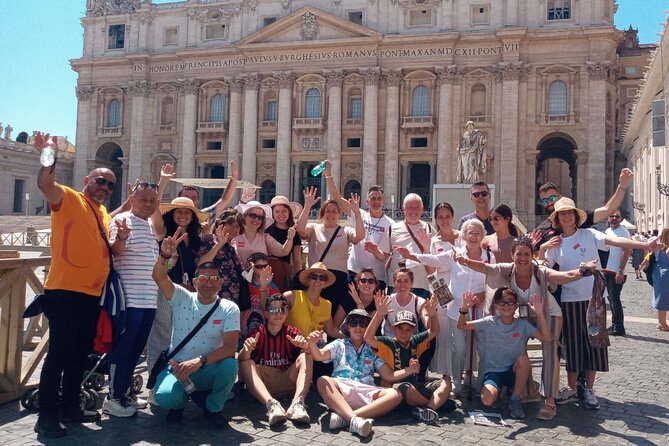
The main appeal here is simple: you can cover the Vatican’s biggest sights in about three hours without spending your morning in the ticket line. You’ll move through grand galleries, ancient sculpture, Raphael’s rooms, and Michelangelo’s Sistine Chapel with a guide explaining what deserves your attention.
I like the skip-the-ticket-line museum entry, especially in high season, and I like the supplied headset, which lets you hear the guide over the crowd. The catch is pace. This is a highlights tour, not a quiet art study, and St. Peter’s Basilica access is conditional, with its own security rules and possible closures.
Key points before you book
- Michelangelo and Raphael share the spotlight: The tour explains the rivalry between the two Renaissance masters and connects their nearby working spaces.
- Three hours covers the famous route, not every gallery: Expect the Maps, Tapestries, Candelabra, Raphael Rooms, ancient sculpture, and Sistine Chapel.
- The group may have up to 20 people: That is manageable with headsets, but the Vatican crowds can still make it hard to stay close.
- Basilica entry needs careful reading: It is available only with the selected option, is not always guided, and can require a separate security wait.
- Arrive early and dress properly: Late arrivals may be refused without a refund, and shoulders and knees must be covered.
- Guide quality can shape the day: Guides such as Antonio, Lora, Laura, Patrick, and Patricio have been praised, but your assigned guide will vary.
What this three-hour Vatican tour really delivers
The Vatican Museums are too large for a single visit, so a short tour has to make choices. This one follows the famous route toward the Sistine Chapel, stopping for the rooms and artworks most people hope to see. That makes it useful for a first visit, especially if you want a clear path through a confusing complex.
You are not getting a slow, specialist-led examination of every painting. You are getting a guided introduction to major works, with enough background to help you understand why the rooms matter. That distinction is important when you compare this $74.70 price with longer private tours or simple admission tickets.
The price includes a licensed guide, required headsets, assistance at the meeting point, and skip-the-ticket-line entry to the Vatican Museums and Sistine Chapel. Free Wi-Fi is available at the meeting point. Hotel pickup and drop-off are not included, so you make your own way to Via Vespasiano, 26 or 28.
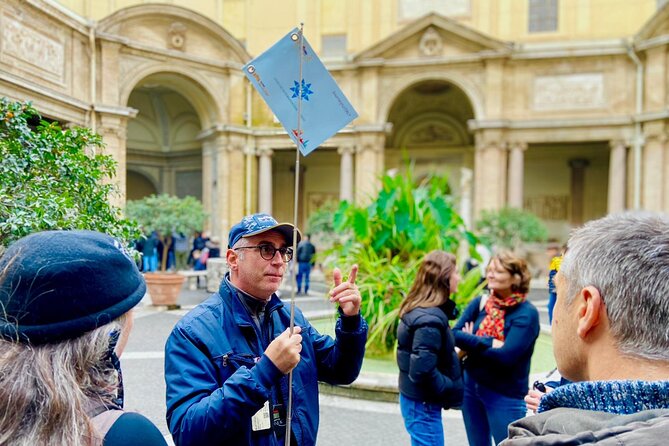
Groups can reach 20 people. That is not an intimate private tour, but it is small enough to work reasonably well if everyone stays together. The headset is especially useful in the Vatican, where marble corridors, tour groups, and general noise can swallow a guide’s voice.
Other ways to see the Vatican:
- Vatican: Museums & Sistine Chapel Entrance Ticket
★ 4.5 · 144,003 reviews - Vatican Museums & Sistine Chapel Tour with Optional Basilica
★ 4.3 · 67,413 reviews - Vatican Museums, Sistine Chapel & St Peter’s Basilica Guided Tour
★ 4.5 · 39,149 reviews
Meeting at Via Vespasiano and getting inside
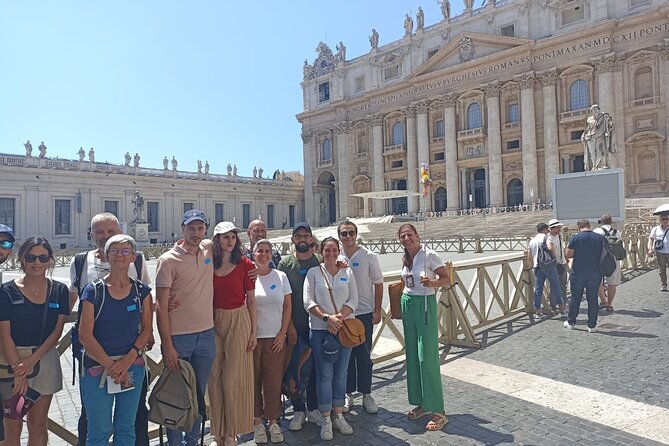
The meeting point is on Via Vespasiano, near public transportation and within the Vatican area. Team members assist with check-in, and the start is intended to be orderly. Still, I would arrive early, not exactly at the scheduled time.
The Vatican enforces strict entry slots. If you arrive late, you may not be admitted, and the terms state that no refund is provided for late arrivals or no-shows. Bring a photo ID for the security check, and make sure the phone number on your booking includes the correct country code in case the operator needs to reach you.
Skip-the-line does not mean skip security. Every person still passes through Vatican security, and peak-season lines can form there. You may also need to collect the compulsory Vatican headset, which can add time when visitor numbers are high.
Wear shoes suited to a long walk on hard floors. The route includes stairs and a fair amount of standing, and some people find the pace tiring. If you have limited mobility or another special need, note it when booking so the operator can arrange appropriate help and free entry where applicable.
Vatican Museums, from ancient sculpture to painted maps
The museum portion is scheduled for about two hours. Your guide leads you through a selected sequence of rooms rather than letting you wander wherever you wish. That saves time and prevents the classic first-visit problem of getting lost, but it also means you need to accept the group’s pace.
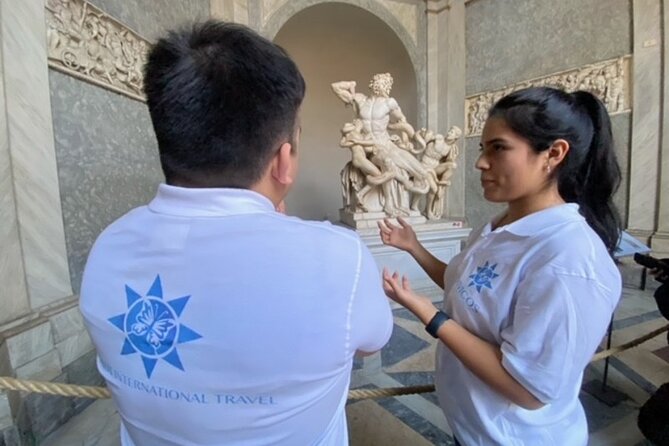
The route can include the Pine Court, the Pio Clementine Museum, the Apollo Belvedere, Laocoön, Nero’s bathtub, and the Room of the Muses. These stops give you a useful mix of ancient sculpture, Roman collecting, and the Vatican’s taste for displaying art on a grand scale.
The Apollo Belvedere is one of the museum’s best-known ancient statues, while Laocoön is famous for its dramatic figures locked in struggle. A guide can help you spot the details that are easy to miss when a crowd gathers around the same object. The point is not just to see old marble, but to understand why particular works became central to European art.
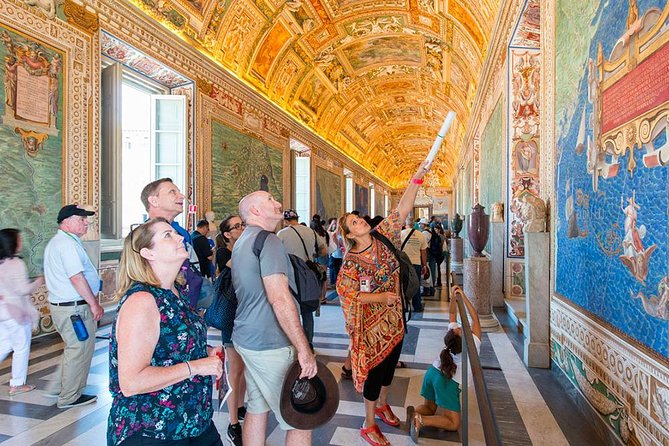
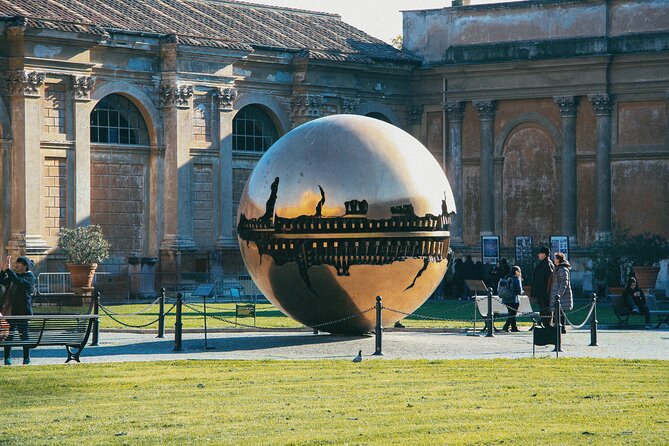
The Cortile della Pigna offers a brief change of mood. This courtyard pairs classical architecture and greenery with the large bronze Pinecone sculpture at its center. It is a useful place to pause, orient yourself, and catch your breath before entering the long galleries.
Do not expect long stretches of silence or empty rooms. The Vatican route is crowded, especially during holidays and peak months. One guide may stop often for explanations, while another may keep moving to stay on schedule. This is where the quality and personality of your assigned guide matter most.
Several guides have drawn strong praise for clear storytelling and lively explanations. Antonio, for example, has been described as an unusually engaging guide who connects facts with memorable stories. Lora and Laura have also been praised for making complicated art and history easier to follow. These names are examples from past departures, not a promise that one of them will lead your tour.
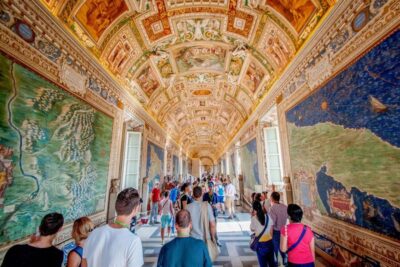
The Gallery of Candelabra and Gallery of Maps
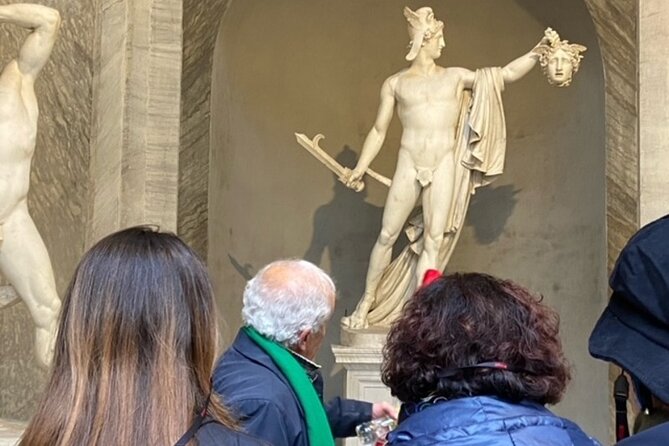
The Gallery of Candelabra is one of the route’s grand visual stretches. Large marble candelabra line a corridor filled with ancient sculpture and sarcophagi, beneath painted vaulted ceilings and classical columns. It is a place where the room itself competes with the objects on display.
You may be tempted to walk quickly through it because the corridor seems to go on forever. Try to look upward as well as sideways. The ceiling decoration, architectural rhythm, and marble pieces work together, and a guide’s comments can help you separate the important details from the visual overload.
The Gallery of Maps is another major stop. Its walls carry hand-painted maps of Italy, creating a long pictorial record of how the peninsula was understood and represented. You are looking at geography, politics, decoration, and religious power at the same time.
This gallery is often one of the most memorable parts of the route because it is so easy to grasp visually. You do not need advanced art training to appreciate a painted map. Still, the stop can feel rushed if the group is late or the corridors are unusually crowded. If you want time to examine every map, a longer or self-guided visit would suit you better.
Other museums and galleries in Rome:
- Rome: Vatican Museums, Sistine Chapel & Basilica Tour
★ 4.3 · 13,872 reviews - Vatican Museums & Sistine Chapel Skip-the-Line Entry Ticket
★ 4.4 · 13,838 reviews - Rome: Vatican Museums, Sistine Chapel & Basilica Tour
★ 4.7 · 13,217 reviews - Rome: Vatican Museums & Sistine Chapel Guided Tour
★ 4.3 · 12,117 reviews
Raphael’s rooms and the Renaissance rivalry
The Raphael Rooms bring the tour into the High Renaissance. Raphael and his workshop decorated these rooms for the papal apartments, and the paintings show why his work became a model of balance, movement, and human expression.
The nearby presence of Michelangelo gives the guide a natural story to tell. The tour sets Raphael’s work beside Michelangelo’s Sistine Chapel ceiling and explains the rivalry between the two artists, who worked only a short distance apart. That context makes the transition from one area to the next more interesting than treating each room as an isolated stop.
You will not receive a full academic lecture on Renaissance art. The guide’s job is to identify key works, explain the people and ideas behind them, and keep the group moving. The strongest guides make this feel like a coherent story. A weaker guide may reduce the visit to a quick list of names and dates.
If you care deeply about Raphael, the short format may leave you wanting more. The tour is designed for orientation and major sights, not exhaustive study. I would consider returning another day with a museum map and more time if the Raphael Rooms are your main reason for visiting.
Entering the Sistine Chapel
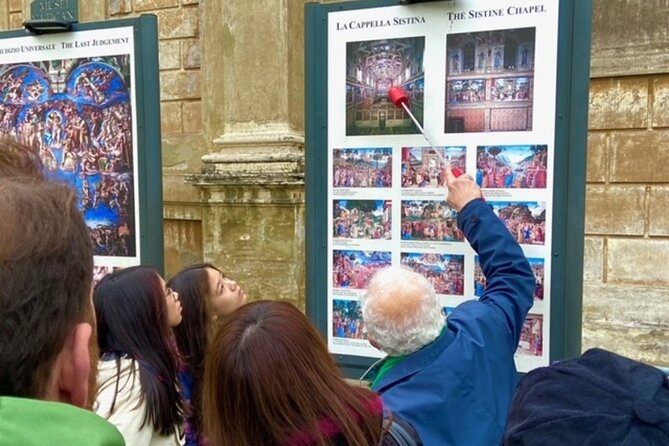
The Sistine Chapel is the emotional center of the experience. Once inside, you will see Michelangelo’s ceiling frescoes and have a short period to take them in. The tour explains the ceiling’s importance and places it in the setting of the Vatican, Raphael’s nearby rooms, and the larger Renaissance contest between artistic styles.
The chapel is not a normal gallery. Visitors are expected to follow strict rules, and talking and photography restrictions apply under Vatican control. Your guide may explain the artwork before you enter, then you continue inside according to the chapel’s rules.
Ten minutes is listed for the stop, though the real time can depend on crowd flow and Vatican operations. That can feel brief when you are trying to look from the Creation scenes on the ceiling down to the Last Judgment. Use the explanation before entering to decide what you most want to see.
There is also a real risk of last-minute closure. The Sistine Chapel may close without warning, in which case the guide provides another section of the Vatican Museums instead. One afternoon closure described by the operator forced groups to move quickly through the museum in an attempt to reach the chapel before the doors shut. That kind of disruption is outside the tour company’s control, but it can change the entire feel of the visit.
What happens with St. Peter’s Basilica
Basilica access is the part that requires the most careful reading. You must select the option that includes it. The tour information also makes clear that Basilica access can be restricted, and the Basilica is closed on Wednesdays and certain religious holidays.
The Basilica may close for religious ceremonies with no advance notice. In addition, the connecting door between the Vatican Museums and St. Peter’s Basilica can be closed in the afternoon and on Wednesdays. If that happens, you can still go to the Basilica on your own through St. Peter’s Square, subject to security.
Most important, skip-the-line entry advertised for the Vatican Museums and Sistine Chapel does not automatically remove the Basilica security wait. St. Peter’s Basilica has mandatory security screening, and long lines can develop during busy periods. Basilica access may also be independent rather than a guided extension of the museum tour.
This matters if you are booking the experience mainly for St. Peter’s. You might receive access but still spend substantial time in a security queue. You might also find that the guide no longer accompanies you inside. Read the selected option and the current conditions closely before paying extra for Basilica access.
Pace, crowds, and the group size
The most common practical issue is pace. A three-hour route through the Vatican is efficient by necessity. You walk, stop, listen, look, and move again. If you are fit and want the main sights, this can be a good use of time. If you want to sit quietly before individual works, you may feel hurried.
The group limit of 20 is a reasonable middle ground. It is smaller than a large coach group, and headsets let you hear explanations even when you are not standing directly beside the guide. Yet the Vatican itself can be so crowded that the group may stretch out.
Stay alert when moving between rooms. Keep the guide in sight and avoid lingering behind to take photographs. One past departure ended with part of the group separated near the Sistine Chapel, and that created problems for the Basilica visit and for a later timed attraction. If you have another reservation that day, leave a generous buffer.
The physical demand is moderate, but do not underestimate the walking. Older visitors and anyone with knee or balance problems should ask about assistance before booking. The route is not ideal for someone hoping for a relaxed morning with frequent rests.
Is $74.70 a fair price?
At $74.70 per person, the value depends on what you want to buy. You are paying for timed museum access, a licensed guide, audio equipment, check-in support, and a clear route through a very large complex. During busy periods, avoiding the public ticket queue can save hours and reduce a lot of uncertainty.
The price is less attractive if you only want admission and prefer to read about the art yourself. It is also less attractive if you expect a private tour, a slow pace, or a guaranteed Basilica visit. The guided portion is built around famous highlights, not every room and object.
For a first Vatican visit, I think the cost is reasonable when your time is limited. The guide helps you understand why the Apollo Belvedere, Laocoön, Raphael Rooms, Maps, and Sistine Chapel matter. You also avoid planning a route through a maze of galleries.
For a second visit, or for a serious art enthusiast, I would compare it with a longer specialist tour or a self-guided museum visit. The three-hour format gives you a strong introduction, but it cannot offer depth everywhere.
Who should book this Vatican experience?
I would choose this tour if you want the Vatican’s greatest hits, prefer having a guide explain the art, and need to fit the visit into a packed Rome schedule. It is also useful if the thought of navigating the Museums alone feels tiring or confusing.
Families may appreciate the organized route, but young children can struggle with the walking and strict timing. The same is true for anyone who wants to stop whenever they like. Couples and solo visitors who value structure will likely get more from it.
Book only if you can arrive early, follow the group, and accept that Basilica access may change. Avoid treating the title as a promise of guaranteed, skip-the-line Basilica entry. That is the main source of disappointment.
Cancellation is free up to 24 hours before the start time. Changes or cancellations inside that window are not refunded, and late arrival is treated separately from cancellation.
FAQ
How long does the Vatican tour last?
The tour lasts approximately three hours.
What places are included in the main tour?
The main tour includes the Vatican Museums and Sistine Chapel. It may include St. Peter’s Basilica if you select the option with Basilica access.
Is skip-the-line entry included?
Skip-the-ticket-line entry is included for the Vatican Museums and Sistine Chapel. Security screening still applies.
Is St. Peter’s Basilica always included?
No. Basilica access is included only if you select the appropriate option, and access can be restricted or cancelled because of ceremonies, holidays, or Vatican operating decisions.
Can I enter St. Peter’s Basilica through the museum?
The connecting door may be closed in the afternoon and on Wednesdays. If it is closed, you can enter the Basilica independently through St. Peter’s Square.
What should I wear?
Your shoulders and knees must be covered. Sleeveless tops, shorts, miniskirts, and low-cut clothing are not allowed.
Do I need photo identification?
Yes. All participants must bring a photo ID for the security check.
How many people can be in the group?
The maximum group size is 20 people.
What happens if the Sistine Chapel closes?
If the chapel closes without notice, the guide provides a tour of other sections of the Vatican Museums instead.
Should you book it?
Book this tour if you want a guided introduction to the Vatican’s major rooms and Michelangelo’s chapel without wasting time in the main museum ticket line. The best value comes from the guide’s explanations, the organized route, and the chance to see famous works in a short visit.
Choose another option if you want a quiet, detailed art tour, guaranteed Basilica access, or complete control over your pace. Before booking, check the time, dress correctly, bring identification, and treat the Basilica as conditional. With those limits understood, this is a practical first Vatican visit rather than an all-day museum study.
Just added in Rome
- Civitavecchia Private Transfer: From the Port to Rome Airport★ 5.0 · 309 reviews
- Civitavecchia Shore Excursion: Best of Rome Private Tour★ 5.0 · 247 reviews
- Civitavecchia Private Transfer from ship to FCO airport or Rome★ 5.0 · 245 reviews
- Food Tasty and History Tour in Civitavecchia★ 5.0 · 256 reviews
- Palatine Hill and Roman Forum Tour with Fast-Track Entrance★ 4.2 · 417 reviews
- Tivoli: Villa D’Este & Villa Adriana Pass & App Audioguide★ 4.4 · 364 reviews
- Tivoli: Villa D’Este Entry Ticket and App Audio Guide★ 4.3 · 191 reviews
- Vatican Museums & Sistine Chapel Skip-the-Line Guided Tour★ 4.6 · 254 reviews
Vatican & Sistine Chapel Tours, compared.
Vatican: Museums & Sistine Chapel Entrance Ticket
Read our review →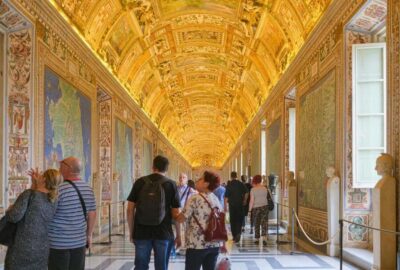
Vatican Museums & Sistine Chapel Tour with Optional Basilica
Read our review →
Vatican Museums, Sistine Chapel & St Peter’s Basilica Guided Tour
Read our review →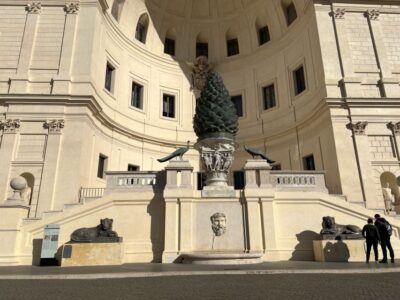
Vatican Museums & Sistine Chapel Skip-the-Line Entry Ticket
Read our review →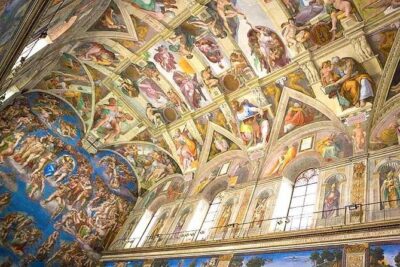
Skip-the-Line Group Tour of the Vatican, Sistine Chapel & St. Peter’s Basilica
Read our review →Browse the lists this tour appears in