
Reviewed · VATICAN & SISTINE CHAPEL TOURS
Vatican Museums & Sistine Chapel Skip-the-Ticket-Line Tour
The best reason to book this tour is simple: you get past the Vatican’s long ticket queue and spend your limited time looking at art instead of standing on the street. Inside, your guide leads you through the Belvedere Courtyard, Gallery of Maps, Raphael Rooms, Vatican Museums, and Sistine Chapel before the route finishes at St. Peter’s Basilica.
I like the 20-person maximum, which makes it easier to hear the guide, and I like the supplied Vatican headsets, especially in crowded galleries. Guides such as Rita, Roberta, Luisa, Sylvia S, and Alicia have been praised for clear explanations, patience, humor, and strong storytelling. The main drawback is the pace: three hours is useful for a first look, but the Vatican can feel packed and the route may feel rushed.
Key points to know before you book
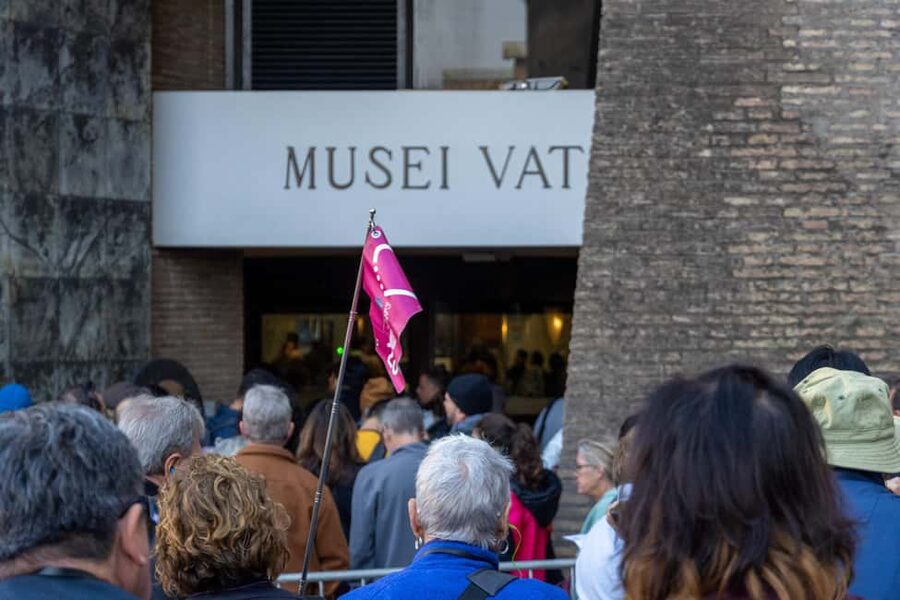
- Save two to three hours: Partner entrance access avoids the regular ticket queue.
- See the major highlights: The route includes the Gallery of Maps, Raphael Rooms, Michelangelo’s Sistine Chapel, and a finish at St. Peter’s Basilica.
- Small-group format: Groups can include up to 20 people, with headsets to help you follow the guide.
- Expect a fast pace: You cover a great deal of art and religious history in three to three and a half hours.
- Dress carefully: Shorts, short skirts, hats, and sleeveless shirts are not allowed.
- Plan for restrictions: The tour is not suitable for wheelchair users, and some Vatican areas may close during Jubilee ceremonies.
Why skip-the-line access matters at the Vatican
The Vatican Museums are one of Rome’s great time traps. The regular queue can stretch for hours, particularly at the busiest times of day. At $130.05 per person, this is not a budget admission ticket, but the price pays for more than entry. It buys a reserved place, a guide, and a faster route through one of Europe’s most crowded attractions.
The separate partner entrance is the practical heart of the experience. It does not mean the museum will be quiet once you are inside. The galleries can still be packed, and you will share the route with other groups. It does mean you avoid spending a large part of your morning or afternoon waiting outside.
I see this as good value if your time in Rome is short, you want context for the art, or you would rather not work out the Vatican’s vast layout alone. If you already know the collection well and prefer to wander slowly, a standard entry ticket may suit you better.
The tour lasts three to three and a half hours. That is long enough to visit the main rooms and hear the major stories, but not long enough to examine every gallery. Think of it as a guided introduction, not a complete survey of the Vatican Museums.
Other ways to see the Vatican:
- Vatican: Museums & Sistine Chapel Entrance Ticket
★ 4.5 · 144,003 reviews - Vatican Museums & Sistine Chapel Tour with Optional Basilica
★ 4.3 · 67,413 reviews - Vatican Museums, Sistine Chapel & St Peter’s Basilica Guided Tour
★ 4.5 · 39,149 reviews
Meeting the guide and getting inside
Your starting point depends on the option you book. Some options include hotel pickup, while others require you to reach a meeting point yourself. If hotel pickup applies, you are asked to be ready 45 minutes before departure in the lobby, or 60 minutes before departure if your hotel is outside the central coverage area.
That early pickup time matters. It gives the operator time to collect people from different hotels before the museum visit begins. If your hotel is not covered, ask reception or contact the booking office to check the service area and meeting instructions.
Bring a passport or identity card. Dress as if you are visiting a working church, not just an art museum. Shorts, short skirts, sleeveless shirts, and hats are not permitted. Baby strollers are also listed among the items not allowed.
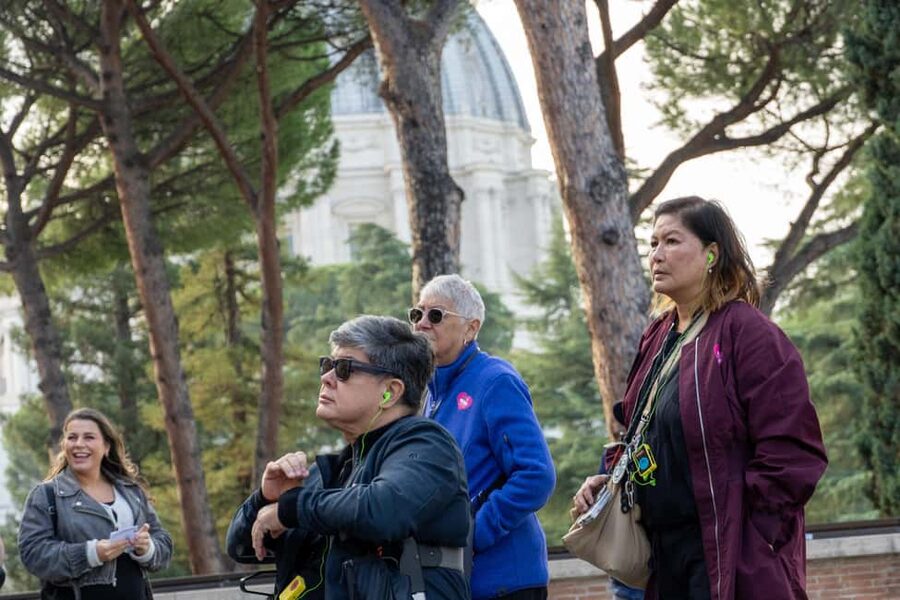
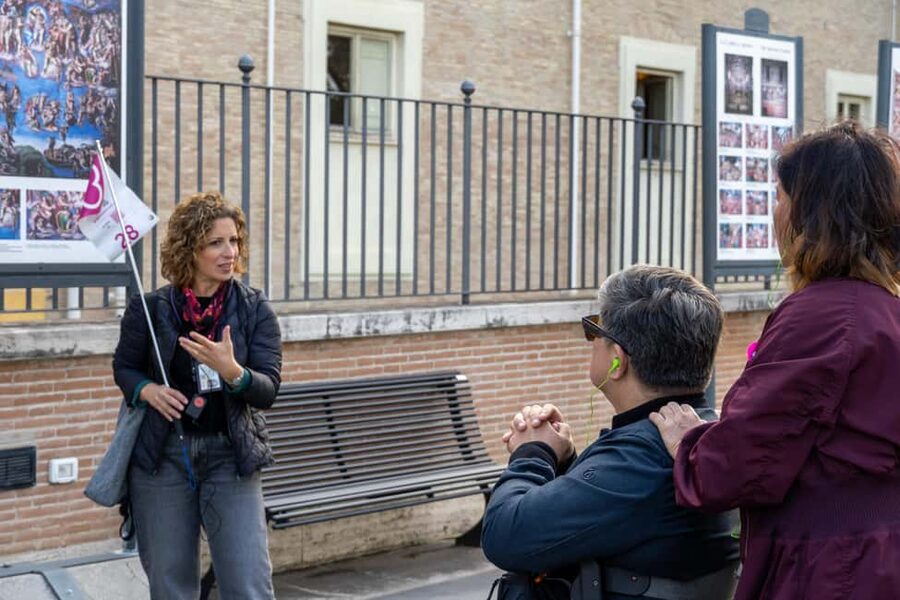
The guide uses official Vatican Museums headsets. This is a useful detail rather than a flashy extra. In a crowded corridor, you can move a few steps away to see a sculpture or painting and still hear the explanation. Guides are available in English, Portuguese, and Spanish.
Cortile del Belvedere: a useful first stop
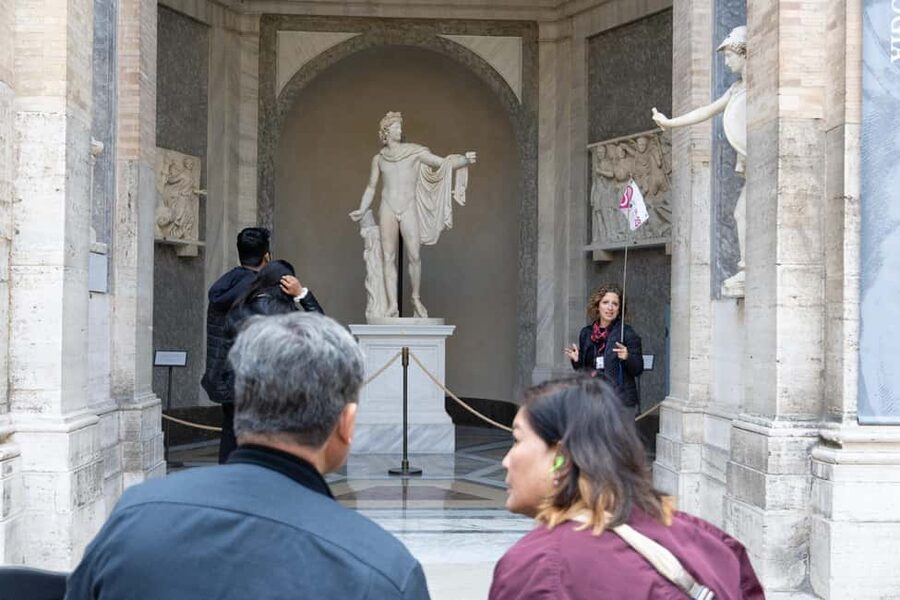
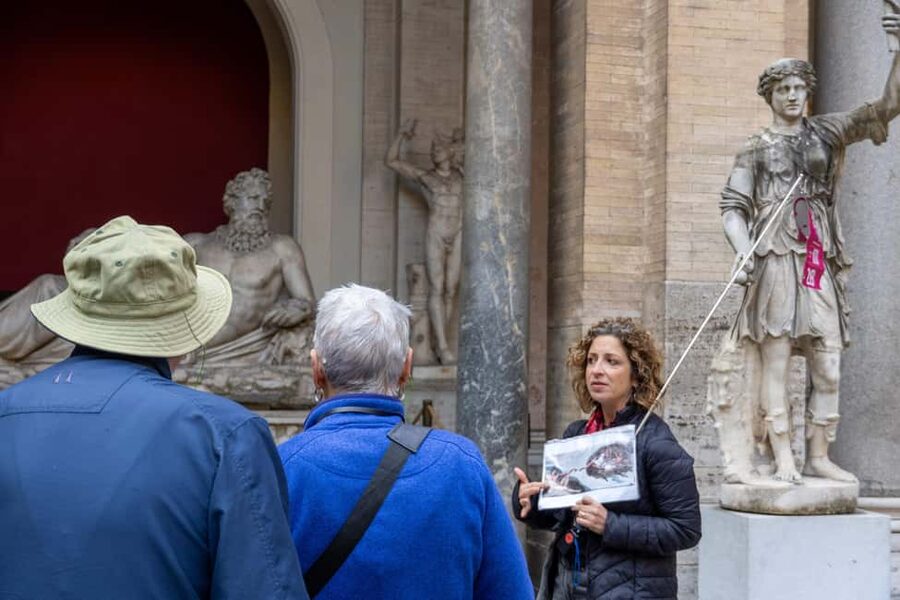
The tour begins inside the Vatican Museums at the Cortile del Belvedere, or Belvedere Courtyard. This opening area gives your guide a natural place to explain the Vatican collection and the way popes gathered art over the centuries.
A courtyard is also a sensible place to start because the Vatican Museums are not arranged like a simple line from entrance to exit. The buildings, courtyards, galleries, and chapels connect in ways that can be confusing on your own. A guide helps you understand where you are and why the route moves in a particular direction.
Do not expect a quiet pause here. The Vatican is a working religious site and a major sightseeing stop, so groups may be gathering around you. The guide’s headset helps, but you still need to stay close and watch for the group’s movement.
This is where a good guide can make the biggest difference. Rita was praised for knowing the Vatican route well. Mara was noted for keeping the group together despite the crowds, while other guides were appreciated for answering questions rather than simply reciting facts.
Gallery of Maps: detail on a grand scale
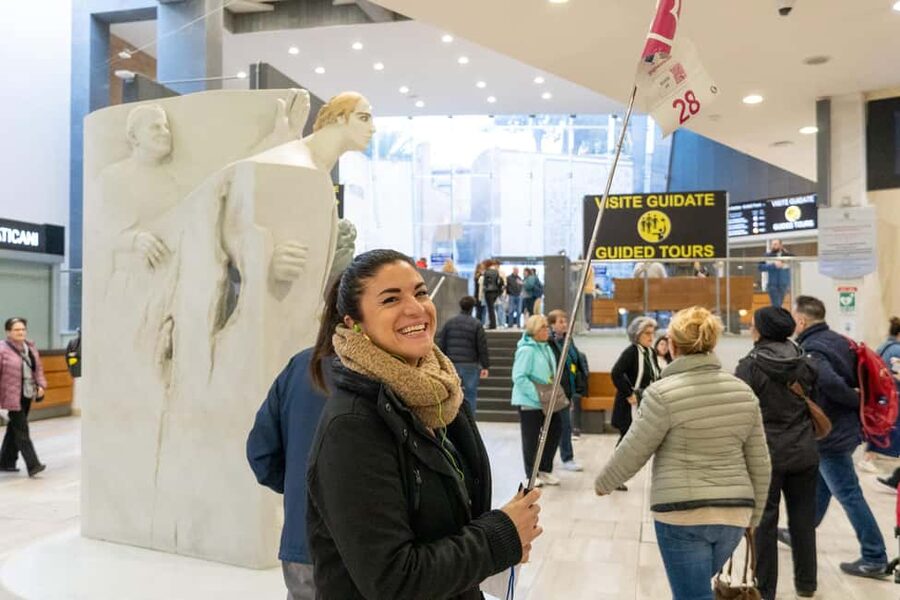
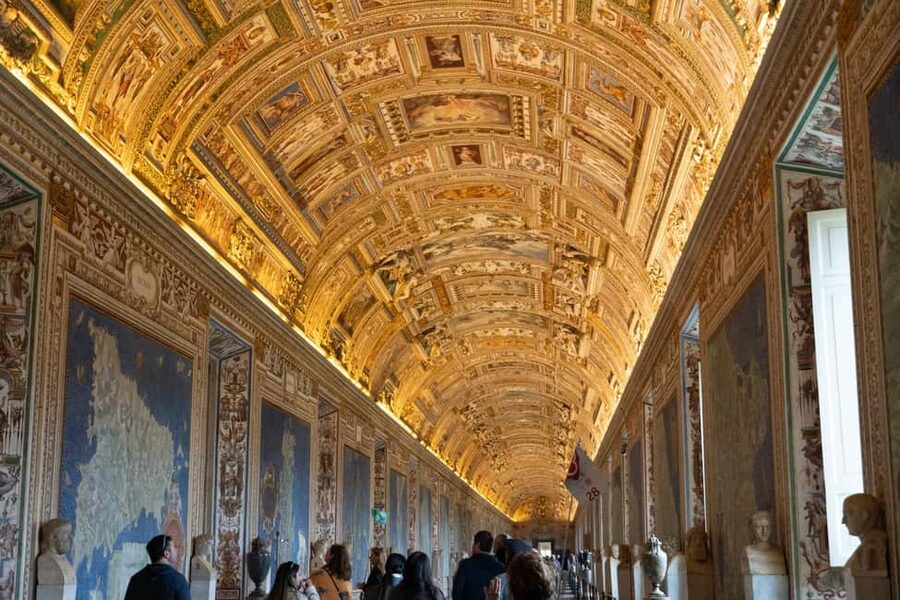
The Gallery of Maps is one of the route’s most memorable corridors. Its walls are covered with large painted maps of Italy, and the long perspective makes the space feel grand even when people are moving through it shoulder to shoulder.
Your guide explains how the maps fit into the Vatican’s larger program of art and power. You get more from the gallery when you understand what you are seeing, rather than treating it as a pretty hallway on the way to the Sistine Chapel.
This stop also shows the tradeoff of a fixed tour. You will likely pause for an explanation, look at a few details, and continue. You will not have time to study every map in depth. If cartography or decorative painting is a major interest, you may want to return on another visit with more time.
The corridor can be crowded, so stay alert when the group moves. The headset lets you hear while standing slightly to one side, but this is not the place for a long private photo session.
Other museums and galleries in Rome:
- Rome: Vatican Museums, Sistine Chapel & Basilica Tour
★ 4.3 · 13,872 reviews - Vatican Museums & Sistine Chapel Skip-the-Line Entry Ticket
★ 4.4 · 13,838 reviews - Rome: Vatican Museums, Sistine Chapel & Basilica Tour
★ 4.7 · 13,217 reviews - Rome: Vatican Museums & Sistine Chapel Guided Tour
★ 4.3 · 12,117 reviews
Vatican Museums: choosing the right highlights
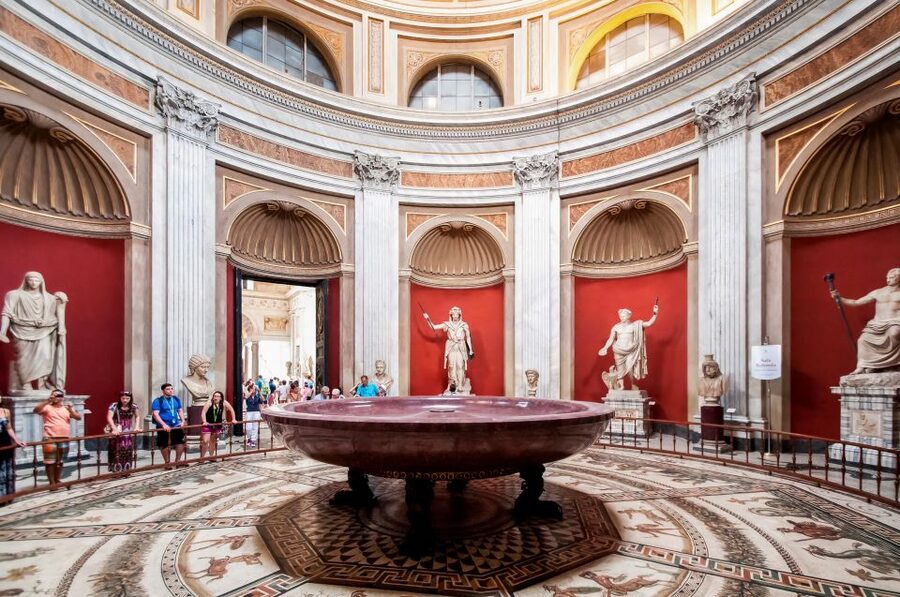
The Vatican Museums hold far more than you can see in one visit. The route brings you through important collections of sculpture, painting, and Renaissance art, with attention to artists including Raphael, Giotto, Leonardo da Vinci, Caravaggio, and Michelangelo.
That list gives you a sense of the tour’s focus. You are not simply being taken to the most famous room for a quick photograph. The guide uses selected works to explain how religious art, papal collecting, and Renaissance patronage fit together.
The strongest guides add human detail to the art. Roberta was praised for extensive subject knowledge and for answering questions in detail. Luisa was valued as a good storyteller, and Alicia was praised for her enthusiasm for art history. Those qualities matter because the Vatican can become a blur of marble, painted ceilings, and passing groups without a clear narrative.
The downside is sensory overload. You will see a great deal in a short time, and not every collection receives equal attention. One useful approach is to decide in advance that you will remember a few key works rather than try to retain everything.
Some people also want more time with collections from outside Italy. The route focuses on the Vatican’s major artistic highlights, so it is best for first-time visitors who want the classic sights and a clear explanation of their importance.
Raphael Rooms and the School of Athens
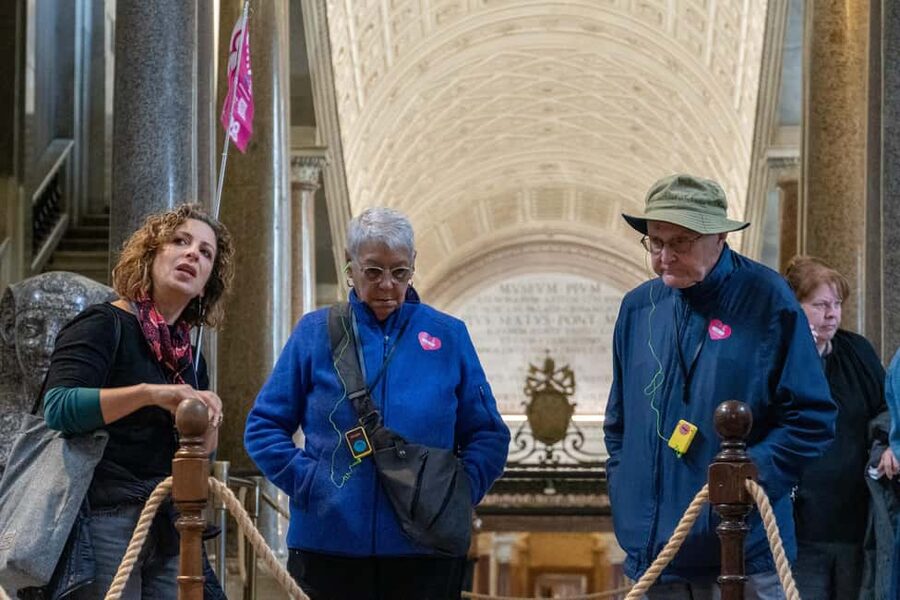
The Raphael Rooms are a major reason to choose a guided visit. These rooms contain frescoes made by Raphael and his workshop, including the celebrated School of Athens.
The School of Athens is more rewarding when someone points out the figures, gestures, and architectural setting. Your guide can explain how the fresco presents ancient philosophers and how Raphael placed famous thinkers within a Christian papal setting. It is a compact lesson in Renaissance ideas, not just a famous wall to photograph.
Expect people to stop here for the same reason you do. The rooms may feel crowded, and you will need patience while the guide finds a spot where the group can hear. The 20-person limit helps, though it cannot remove the crowds created by many tour groups moving through the same rooms.
This part of the tour suits you if you want to understand why Raphael matters. If you are mainly interested in Michelangelo, it still earns its place because it gives you a useful comparison between two great Renaissance artists.
The Sistine Chapel and Michelangelo’s ceiling
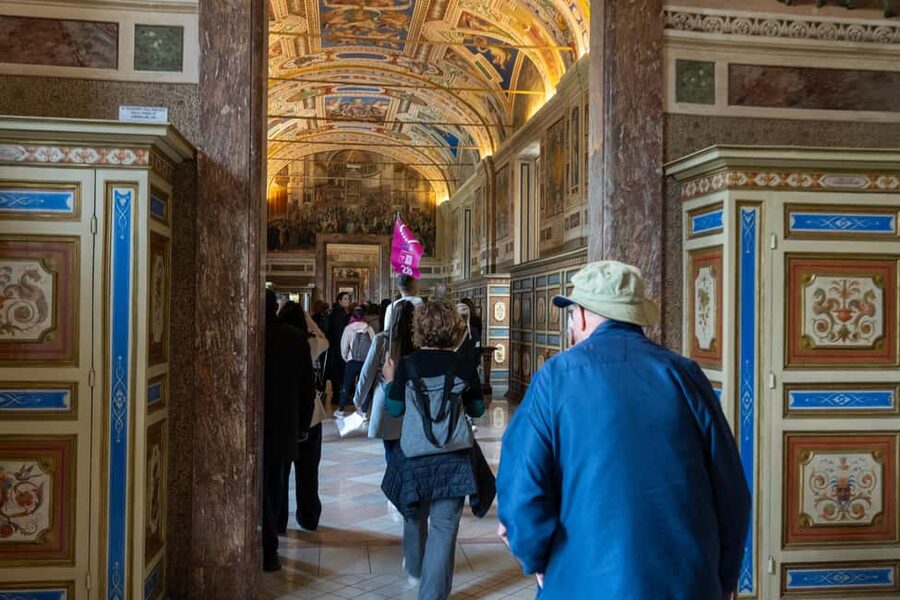
The Sistine Chapel is the emotional center of the tour. Michelangelo’s ceiling, including the Creation of Adam, is the image most people carry with them before arriving. Seeing the full ceiling in person gives you a stronger sense of its size and complexity than any reproduction can provide.
The guide explains the chapel’s religious purpose, the paintings, and Michelangelo’s work. You should expect strict rules inside, including silence and limits on photography. The chapel is a place of worship as well as a major cultural sight, so follow the staff instructions and listen carefully before entering.
The priority entrance is especially valuable here because the chapel is one of the main reasons people come to the Vatican. Even with faster access, the room may feel crowded. You may need to stand among other groups rather than find a quiet position directly beneath your favorite scene.
A significant condition applies: if the Sistine Chapel is closed for reasons outside the operator’s control, there is no partial refund. During the Jubilee Year, religious ceremonies may also make parts of the Vatican Museums inaccessible. These are important risks to understand before paying the higher tour price.
Finishing at St. Peter’s Basilica
The stated route finishes at St. Peter’s Basilica. This makes the tour more useful than a museum-only visit because you can continue directly into one of Rome’s most important churches rather than crossing the city to see it later.
Several guides have included time in the basilica, with special attention to the mosaics. The basilica is a powerful change of mood after the galleries and chapel. The scale is enormous, and the decoration rewards a slower look if the route and crowd conditions allow it.
The exact experience can depend on access rules and the timing of the visit. The tour information includes priority access for the Sistine Chapel, while the itinerary finishes at the basilica. Read the specific option details when booking so you know what kind of access is included.
Do not assume the entire basilica can be covered in detail during the same visit. Three hours already includes several museum sections, the Raphael Rooms, and the Sistine Chapel. Treat St. Peter’s as a valuable final stop and plan a separate return if you want to spend more time there.
Pace, group size, and guide quality
The group maximum is 20 people. That is small enough for a more personal feel than a large coach tour, but it is not a private visit. At busy points, the group can still bunch up, and you need to keep an eye on the guide.
The headsets are important. You can hear explanations while standing near a painting or sculpture, and the guide can keep moving without shouting. This also helps when the guide stops to answer questions.
The strongest part of this experience is the guide-led interpretation. Guides praised by name include Rita, Roberta, Luisa, Sylvia S, Alicia, Litzia, Alexandra, Mara, and Martha. The recurring strengths are clear speech, patience, humor, passion for the subject, and the ability to answer questions.
Guide quality can vary from one departure to another. The available languages are English, Portuguese, and Spanish, but the individual guide is assigned rather than selected by you. A good guide makes the crowded route feel organized. A less engaging guide would leave you with admission and access, but less understanding.
Who will get the most from this tour
I would choose this tour if you are visiting Rome for the first time, have only one Vatican morning or afternoon, or want someone else to handle the route. It also suits you if art history is not your strong point but you want more than a silent walk through famous rooms.
Families with older children may appreciate the faster route and the storytelling. The Vatican contains a lot of visual detail, so a guide who keeps the explanations focused can help younger visitors stay involved.
It is less suitable if you use a wheelchair, need a slow pace, dislike crowded indoor spaces, or want hours for quiet viewing. The activity is not suitable for wheelchair users, and the itinerary covers a lot of ground in a short period.
Hotel pickup can add convenience, but it also requires an early lobby wait. If you prefer to make your own way, book the meeting-point option and allow time to arrive before departure.
Is $130.05 a fair price?
At $130.05, this tour costs far more than basic museum admission. The useful comparison is not simply ticket price versus tour price. You are paying for skip-the-ticket-line entry, a live guide, headsets, a small-group format, and a planned route through the museum complex.
For a short Rome visit, saving two or three hours can justify the cost. A missed morning in a queue can cost more than the price difference, especially if you have other reservations or only a few days in the city.
The value is weaker if you have plenty of time, enjoy reading museum information on your own, or can arrange another reliable timed entry. You also need to accept that the tour will not show every gallery and may feel fast.
Free cancellation is available up to 24 hours before the activity, and reserve-now, pay-later booking is offered. Those policies help if your Rome plans are still shifting, but they do not remove the risk of chapel closures or ceremony-related restrictions.
Should you book the Vatican Museums and Sistine Chapel tour?
Book it if your priorities are saving time, seeing the major Vatican highlights, and getting clear explanations from a guide. The Raphael Rooms, Gallery of Maps, Sistine Chapel, and finish at St. Peter’s Basilica give you a strong first visit in one organized outing.
Skip it if you want a slow museum day or need wheelchair access. Also think twice if $130.05 feels high for a three-hour visit and you are comfortable navigating the Vatican without help.
For most first-time visitors with limited time in Rome, the separate entrance and the guide are the main reasons to choose it. Go in with realistic expectations: the Vatican will still be crowded, the pace will be brisk, and the chapel may close for reasons beyond the operator’s control. But with the right guide, you get past the worst wait and leave with a much clearer sense of what you saw.
FAQ
How long does the Vatican tour last?
The tour lasts approximately three to three and a half hours. Starting times vary, so check availability for the date you want.
What places are included?
The route includes the Cortile del Belvedere, Gallery of Maps, Vatican Museums, Raphael Rooms, Sistine Chapel, and a finish at St. Peter’s Basilica.
Does the tour skip the ticket line?
Yes. You enter through a separate partner entrance rather than the regular ticket line. This can save two to three hours of waiting.
What languages are available?
Live guides are available in English, Portuguese, and Spanish.
Is hotel pickup included?
Hotel pickup depends on the option selected. If your hotel is not within the service area, you must travel to the meeting point yourself.
What should I bring?
Bring a passport or identity card. You should also dress appropriately for a religious site.
What clothing is not allowed?
Shorts, short skirts, sleeveless shirts, and hats are not allowed. Baby strollers are also listed as prohibited.
Can wheelchair users join the tour?
No. The activity is not suitable for wheelchair users.
Just added in Rome
- Civitavecchia Private Transfer: From the Port to Rome Airport★ 5.0 · 309 reviews
- Civitavecchia Shore Excursion: Best of Rome Private Tour★ 5.0 · 247 reviews
- Civitavecchia Private Transfer from ship to FCO airport or Rome★ 5.0 · 245 reviews
- Food Tasty and History Tour in Civitavecchia★ 5.0 · 256 reviews
- Palatine Hill and Roman Forum Tour with Fast-Track Entrance★ 4.2 · 417 reviews
- Tivoli: Villa D’Este & Villa Adriana Pass & App Audioguide★ 4.4 · 364 reviews
- Tivoli: Villa D’Este Entry Ticket and App Audio Guide★ 4.3 · 191 reviews
- Vatican Museums & Sistine Chapel Skip-the-Line Guided Tour★ 4.6 · 254 reviews
Vatican & Sistine Chapel Tours, compared.
Vatican: Museums & Sistine Chapel Entrance Ticket
Read our review →
Vatican Museums & Sistine Chapel Tour with Optional Basilica
Read our review →
Vatican Museums, Sistine Chapel & St Peter’s Basilica Guided Tour
Read our review →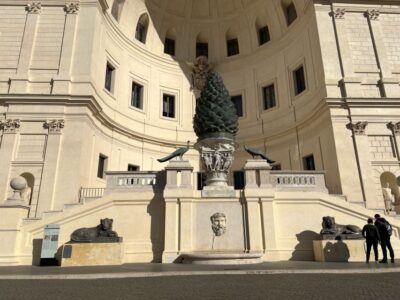
Vatican Museums & Sistine Chapel Skip-the-Line Entry Ticket
Read our review →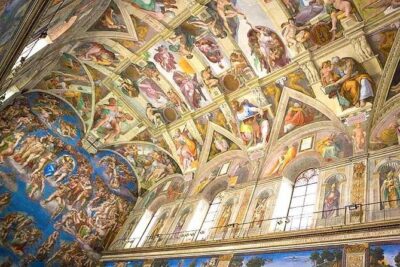
Skip-the-Line Group Tour of the Vatican, Sistine Chapel & St. Peter’s Basilica
Read our review →Browse the lists this tour appears in