
Reviewed · WINE TOURS
Small-Group Barolo Wine Tasting, Alba & UNESCO Piedmont Hills
Barolo is the star here, but the real pleasure is the full Piedmont day: medieval Alba, vineyard roads, a family cellar, and Grinzane Cavour Castle. You taste at least six Langhe DOC and DOCG reds, including Barolo, while guides such as Stefano, Monica, Oleg, and Amato add stories and practical help along the way.
I like the small-group format, capped at 19 people, and the way the tour gives you free time in Alba instead of rushing from one tasting room to another. I also like the family-run winery, where you hear about Nebbiolo, hill-by-hill differences, and aging rules directly in the cellar.
The tradeoff is simple: this is a long day from Milan, about 10 and a half hours, with only one winery visit. If your main goal is to compare several producers, a private custom tour may fit better.
Key points to know before booking
- Alba gives the day its food-and-town character: Walk among medieval towers, visit the Cathedral of San Lorenzo, shop for hazelnut cream, and choose a Piedmontese lunch.
- The tasting is serious but approachable: Expect at least six red wines, often seven, with Barolo at the center.
- The winery is family-run: You visit the cellar and learn how Nebbiolo becomes Barolo under strict production and aging rules.
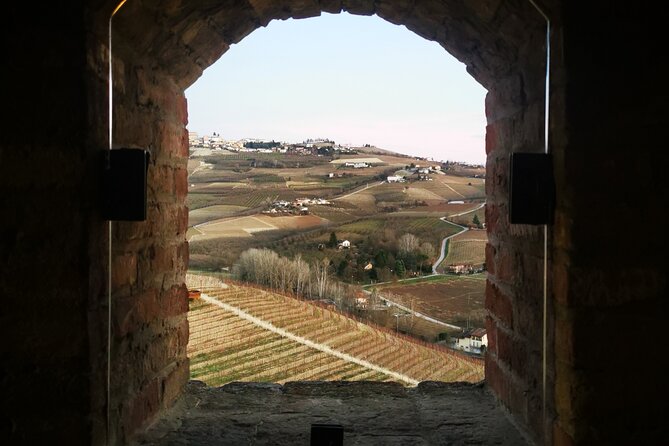
- The castle stop adds context: Grinzane Cavour links Barolo with Camillo Benso, Count of Cavour, and offers broad views over the Langhe hills.
- Small-group travel matters: The maximum is 19 people, and the air-conditioned van is far more personal than a large coach.
- Tuesdays are different: Grinzane Cavour Castle is closed, so the tour uses a panoramic stop in La Morra instead.
Why this Barolo day trip from Milan works
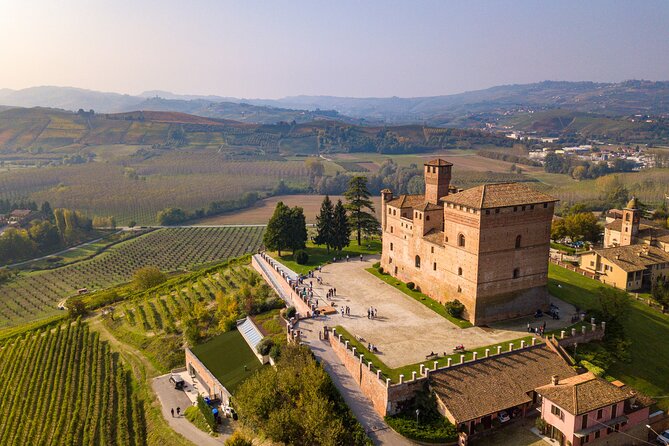
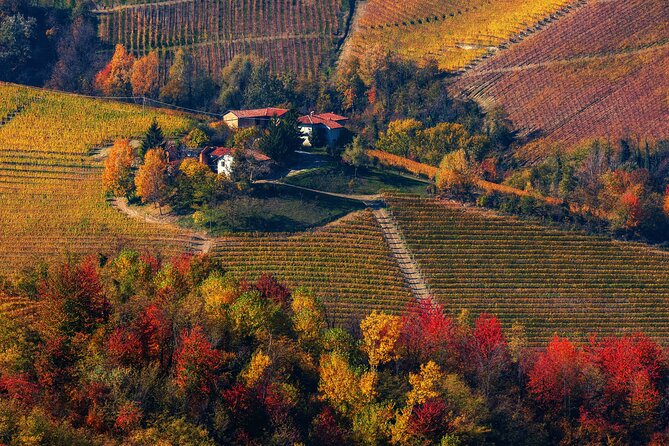
Piedmont feels a world away from Milan, even though you can reach it on a day trip. The Langhe and Roero hills roll out in orderly rows of vines, with hilltop villages, old castles, and farm roads connecting the wine country.
This tour gives you three different ways to understand the region. Alba shows you the food and town life. The winery explains the wine itself. Grinzane Cavour supplies the history and the big views. That mix is what keeps the day from becoming a string of tastings.
You leave Milan at 9:00 am and return to the same meeting point. Travel time is part of the roughly 10-hour-30-minute schedule, so bring patience as well as an appetite. The air-conditioned private van helps, especially on warm days, but this remains a full day on the road.
The group can reach 19 people. That is not a private tour, but it is small enough for a guide to speak with everyone and for the day to feel less like a bus transfer. Several guides lead this experience, including Stefano, Monica, Oleg, Amato, and others. The strongest pattern is clear: the guide makes a large difference, especially when explaining local food, wine, and history.
Other cellars and estates near Milan:
- Tuscany Day Trip from Florence: Siena, San Gimignano, Pisa and Lunch at a Winery
★ 5.0 · 21,634 reviews - Florence: Chianti Wineries Tour with Wine Tasting
★ 4.5 · 8,301 reviews - Small-Group Wine Tasting Experience in the Tuscan Countryside
★ 5.0 · 7,392 reviews
Alba: medieval streets and a proper Piedmont lunch
Alba is the first major stop, with about two hours to explore. It is known for medieval towers, excellent food, and its White Truffle Fair, held on weekends in October and November.
The town is a good place to begin because it gives you room to set your own pace. You can walk through the historic center, see the Cathedral of San Lorenzo, browse food shops, or sit down for lunch. The tour does not include lunch, but the guide offers local recommendations.
This is where the trip feels less programmed. You are not simply handed a plate and moved along. You can choose a small traditional restaurant and look for Piedmont specialties such as fresh egg pasta or veal with tuna sauce. Hazelnut cream is another local buy, and it travels well if you want an edible reminder of the region.
Truffle season can change the feel of Alba. During the October and November festival weekends, the town is much busier, and lunch planning becomes more important. Stefano has arranged a group table during especially crowded festival days, helping everyone avoid losing the whole stop while searching for food.
If you want a long, leisurely lunch and extensive shopping, two hours may feel tight. The same applies if you hope to see every tower and church. I would treat Alba as a focused introduction, not a full city tour. Get your bearings, visit the cathedral, eat well, and leave room for the winery.
The family winery and a tasting built around Barolo
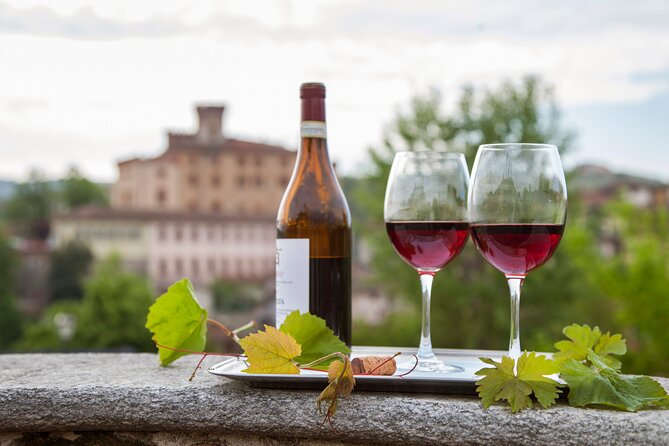
The winery visit is the heart of the experience. You enter a family-run cellar in a panoramic setting surrounded by vines, then taste at least six Langhe DOC and DOCG red wines. Seven wines are sometimes served.
The tasting includes Barolo, a wine made only from Nebbiolo grapes under strict rules. Vineyard location, production methods, aging, and classification all matter. That structure gives the guide plenty to explain, but you do not need prior wine knowledge to follow along.
The most useful idea is that Barolo is not one uniform flavor. Each hill and vineyard has its own name and character. Soil, exposure, and position affect the wine’s aroma, structure, and ability to age. At the table, you can begin to notice these differences instead of treating every red as simply good or bad.
The winery is family-run, and that personal setting is important. You are not just tasting bottles in a shop. You visit the cellar and hear about local production from people connected to the work. One winery associated with the experience, Monteribaldi, is described as a five-generation family establishment, though the exact winery can vary.
I like that the tasting focuses on quality, local tradition, and the expression of the vineyards. It has more substance than a quick tasting of one famous label. At the same time, wine taste is personal. A prestigious Barolo will not automatically suit every palate, and one less-loved bottle does not make the whole tasting poor.
The main limitation is the single-winery plan. You do not compare several estates in one afternoon. That is deliberate: adding more wineries would make Alba, lunch, and the castle feel rushed. If you want breadth above all else, choose the private upgrade and ask about a customized schedule.
Grinzane Cavour Castle and the story behind the wine
The castle stop lasts about an hour and brings the wine into a larger historical setting. Grinzane Cavour is a medieval castle listed as a UNESCO World Heritage Site, with views over the Langhe hills and vineyards.
Inside, you visit the historic wine shop, considered the oldest in Piedmont. The castle is also linked to Camillo Benso, Count of Cavour, a major figure in the development of Barolo. Cavour encouraged modern winemaking methods and helped turn Barolo from a local product into an internationally respected wine.
This background makes the earlier tasting easier to understand. Barolo is not famous only because it tastes good. Its reputation grew through place, rules, careful production, and people who pushed the wine beyond its local roots.
The castle is also a welcome change of pace after sitting in the van and tasting wine. You can step outside for the views and see how the vineyards fit together across the hills. Bring a camera, but give yourself time to simply look. The broad view is one of the day’s best rewards.
There is one practical catch. The castle is closed on Tuesdays. On that day, the tour substitutes a panoramic viewpoint in La Morra, known for some of the best vineyard views in the Barolo area. You lose the castle interior and its connection to Cavour, but you still get a strong view of the wine country.
Some people may find the castle’s interior more focused on wine than on medieval life. If you expect a large museum with rooms full of dramatic historical displays, adjust your expectations. The value here is the combination of setting, wine history, and scenery.
Other eating and drinking in Milan:
- Milan’s Authentic Street Food tour: A Gourmet Experience
★ 4.5 · 717 reviews - Milan: Guided Street Food Walking Tour with Food Tasting
★ 4.8 · 654 reviews - Milan: Italian Cooking Class with Food and Wine
★ 4.7 · 509 reviews - Milan: Navigli Food & Drinks Tour with Eating Europe
★ 5.0 · 394 reviews
Guides, van comfort, and the small-group advantage
The guide is a major part of this day. Stefano is described as organized, warm, and full of historical context. Monica is especially good at helping visitors get more from Alba and explaining wine to people who know little about it. Oleg is associated with strong local connections, including an occasional truffle tasting during the season. Amato and other guides have also been praised for mixing humor with useful information.
That variety means the tone can differ by departure. Still, the format gives the guide room to respond to the group. A guide may suggest a restaurant, help with a festival crowd, or point out a food shop worth your time.
One point deserves balance. Historical commentary can sometimes touch on political subjects, including the Italian Resistance and anti-fascist movement. Most of the time this adds context, but if you prefer a strictly nonpolitical tour, you may want to tell the guide early that you would rather keep discussion centered on wine, food, and local history.
The air-conditioned van is another practical strength. A full day in Piedmont involves a lot of road time, and the smaller vehicle feels more comfortable than a large coach. The group limit of 19 keeps the ride more personal, though a full van will still feel like a group outing rather than a private drive.
Hotel pickup and drop-off are not included. The tour begins and ends at its stated meeting point near public transportation. Check the exact meeting instructions carefully, especially if you are leaving from a Milan hotel outside the central area.
Is $216.46 a fair price?
At $216.46 per person, this is not a budget excursion. The price covers the air-conditioned vehicle, an English-speaking licensed guide, the family winery visit, cellar access, and a guided tasting of at least six Langhe DOC and DOCG reds.
You also receive transport to and from Milan, walking time in Alba, and the castle or La Morra viewpoint. Those transfers matter. Renting a car would require you to manage the long drive, parking, navigation, and a designated driver. A group tour also lets everyone take part in the tasting.
Lunch is extra, as are gratuities. You should budget for a Piedmont meal, and perhaps for hazelnut products or truffle items in Alba. The tour’s value is strongest if you want a complete day with wine, food, scenery, and history rather than a wine-only outing.
It is less compelling for someone who wants to buy a large amount of wine, visit several producers, or control every hour. That person should consider the private option, which can include pickup from your Milan address and a more tailored plan.
Who should book this Piedmont experience?
I would choose this tour if you want to see the Barolo area without renting a car and you like variety. It suits couples, friends, and solo visitors who want an English-speaking guide and prefer a smaller group to a large bus.
It is also a good fit for curious beginners. You can learn why Nebbiolo matters, how the DOC and DOCG systems shape production, and how individual hills influence a wine’s character without needing a wine qualification.
Food lovers should pay attention to the Alba portion, especially during the White Truffle Fair in October and November. The truffle festival can add a memorable seasonal layer, but it also makes the town more crowded. A guide who helps with lunch planning is especially useful then.
I would hesitate if your priority is quantity. One winery and six or seven wines offer focus, not a full survey of Piedmont producers. The long Milan transfer may also feel tiring if you have only a few days in Italy.
Booking details worth knowing
The tour is offered in English and is generally suitable for most people. Confirmation is provided when you book, and the experience is available with mobile tickets.
You can cancel for a full refund up to 24 hours before the start time. Changes or cancellations inside that 24-hour window are not accepted for a refund. The experience depends on good weather and a minimum number of participants. If poor weather or low enrollment forces cancellation, you are offered another date or experience, or a full refund.
The tour is often booked well ahead, with an average booking lead time of about 58 days. That is worth noting if you want a particular date, especially during the October and November truffle season.
Should you book the Barolo tour from Milan?
Book it if you want a well-rounded Piedmont day with one focused winery visit, a food-oriented stop in Alba, and a castle or viewpoint framed by vineyard scenery. The small van, English-speaking guides, and thoughtful lunch advice add real value to a long day outside Milan.
Skip it if you want several wineries or a private wine itinerary. For everyone else, the combination is hard to beat: Barolo in the cellar, Alba on foot, and the Langhe hills from a castle terrace or La Morra viewpoint.
FAQ
Where does the tour begin?
The tour starts at 9:00 am at the designated meeting point in Milan and ends back at that same meeting point.
How long does the experience last?
The tour lasts approximately 10 hours and 30 minutes, including travel time between Milan and Piedmont.
How many people can join the tour?
The group has a maximum of 19 participants.
Is hotel pickup included?
Hotel pickup and drop-off are not included. A private upgrade with pickup from your Milan address is available.
Is lunch included?
No. Lunch is not included, but the guide provides recommendations for local restaurants in Alba.
How many wines will I taste?
The guided tasting includes at least six Langhe DOC and DOCG red wines, including Barolo. Sometimes seven wines are served.
Do I need prior wine knowledge?
No. The tasting explains Barolo production, Nebbiolo grapes, aging rules, vineyard locations, and differences between hills in a way intended for general visitors.
What happens when Grinzane Cavour Castle is closed?
The castle is closed on Tuesdays. On those days, the tour replaces the castle visit with a stop at a panoramic viewpoint in La Morra.
Is Alba’s White Truffle Fair included every day?
No. The White Truffle Fair takes place on weekends in October and November, so it is only part of the experience when your tour date matches the festival schedule.
Can I cancel for a refund?
You can cancel at least 24 hours before the start time for a full refund. Cancellations or changes made less than 24 hours before the start time are not accepted for a refund.
Just added in Milan
- Highlights and hidden gems of Milan Bike Tour★ 5.0 · 491 reviews
- Milan Gourmet Tour: A Premium Tasting Experience by Do Eat Better★ 5.0 · 241 reviews
- Private Milan Food Walking Tour of Brera★ 5.0 · 217 reviews
- Da Vinci’s Last Supper and Santa Maria delle Grazie Church Tour★ 4.5 · 218 reviews
- Learn to Cook Italian Recipes with an Italian Chef★ 5.0 · 283 reviews
- Leonardo3 The World of Leonardo: Tickets for the Interactive Exhibition★ 4.0 · 220 reviews
- La Scala Theatre and Museum guided experience★ 4.5 · 664 reviews
- La Scala Theatre and Museum Tour in Milan With Private Guide★ 3.5 · 384 reviews
Wine Tours, compared.
Tuscany Day Trip from Florence: Siena, San Gimignano, Pisa and Lunch at a Winery
Read our review →
Tuscany & Montepulciano Day Trip with Lunch & Wine Tasting
Read our review →
SMALL-GROUP Wine Safaris: Tuscan Wine Tasting Tours from Florence
Read our review →
Winner 2025 Florence Sunset Food & Wine Tour by Eating Europe
Read our review →
Siena, San Gimignano, Pisa & Lunch at Winery
Read our review →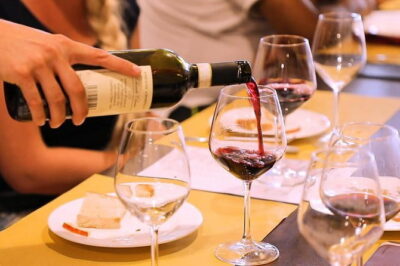
San Gimignano, Siena, Monteriggioni, Chianti Day Trip with Lunch & Wine Tasting
Read our review →
Browse the lists this tour appears in