
Reviewed · ITALY
Siena: Palazzo Pubblico Entry Ticket
Siena’s Palazzo Pubblico is not just a museum stop. It is the old civic heart of the city, filled with painted rooms that show how Siena’s rulers viewed faith, power, and good government. The highlight is Simone Martini’s Maestà, a graceful Gothic masterpiece in the vast Sala del Mappamondo.
I like the ticket’s low price and the freedom to move at your own pace. I also like that it includes the Loggia dei Nove, where you can look across the Sienese countryside from the building itself. The main catch is that the famous Allegory and Effects of Good and Bad Government by Ambrogio Lorenzetti may be closed for restoration, so check its status before booking if that is your main reason for coming.
Key points
- Simone Martini’s Maestà: See one of Siena’s most important Gothic paintings in the Sala del Mappamondo.
- Frescoed civic rooms: Walk through halls decorated by Spinello Aretino, Martino di Bartolomeo, Taddeo di Bartolo, and Domenico Beccafumi.
- Loggia dei Nove views: Step outside for broad views of the countryside behind Palazzo Pubblico.
- Low-cost entry: At $7 per person, this is a strong-value way to see major Sienese art.
- Voucher exchange required: Enter the Cortile del Podestà and visit the ticket office before going to the museum.
- Tower not included: Torre del Mangia requires a separate ticket purchased at the venue.
Why Palazzo Pubblico Matters in Siena
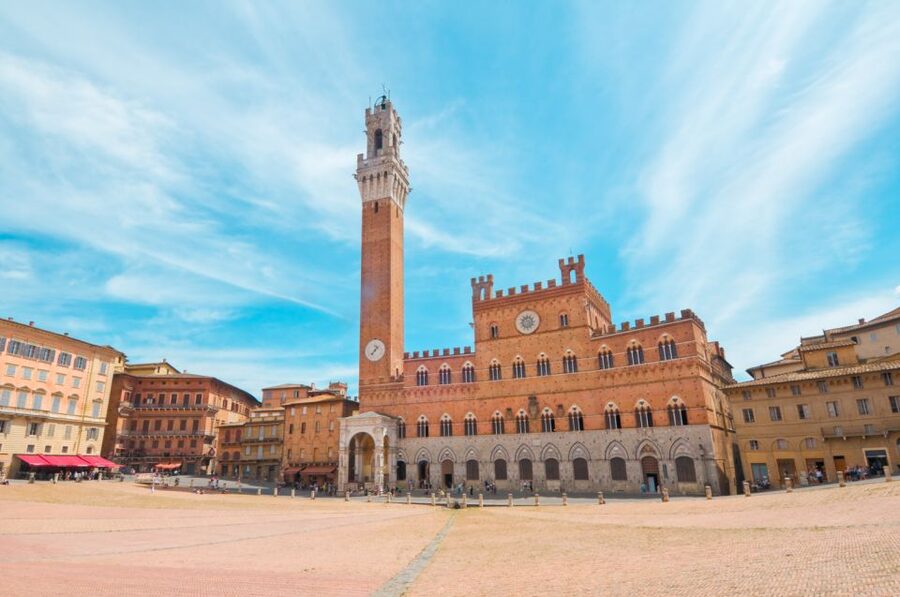
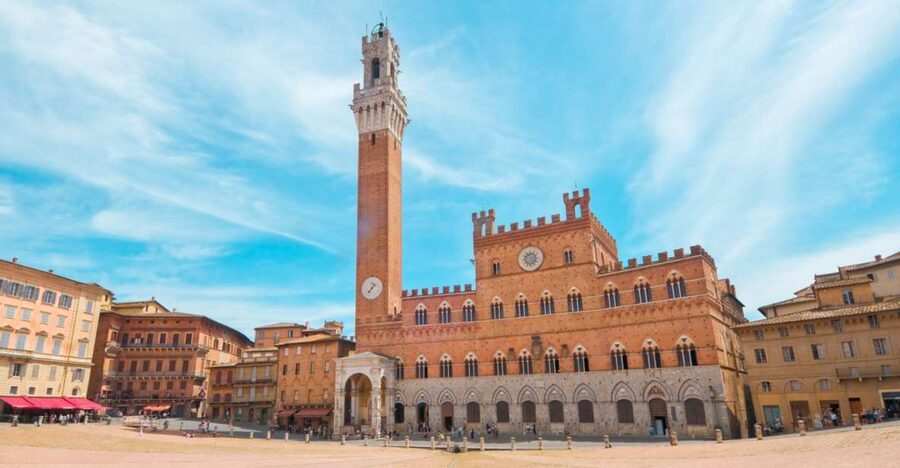
Palazzo Pubblico rises from Piazza del Campo, Siena’s great shell-shaped square. It was built as a center of government in the late 13th century, and the Civic Museum occupies part of this old palace.
That setting matters. You are not looking at paintings in a neutral gallery. You are walking through rooms designed for councils, cardinals, officials, and rulers. The art was made for public life, and much of it was meant to teach those in power how to govern.
The museum visit gives you a compact look at Siena’s civic identity. Religious subjects appear often, but so do kings, councils, political ideals, and symbols of authority. I find this mix more revealing than a standard collection of paintings because the building explains why the artworks were made.
At $7, the admission is modest for a major historic building with original frescoes and a scenic terrace. You do not receive a guide or audio guide, so the value is strongest if you enjoy looking closely and reading the available information at your own pace.
A few more things to do in Italy
- Vatican: Museums & Sistine Chapel Entrance Ticket
★ 4.5 · 144,003 reviews - Milan: Cathedral and Duomo’s Terraces Entrance Ticket
★ 4.6 · 61,054 reviews - Venice: Doge’s Palace Reserved Entry Ticket
★ 4.6 · 42,716 reviews
Starting in the Cortile del Podestà
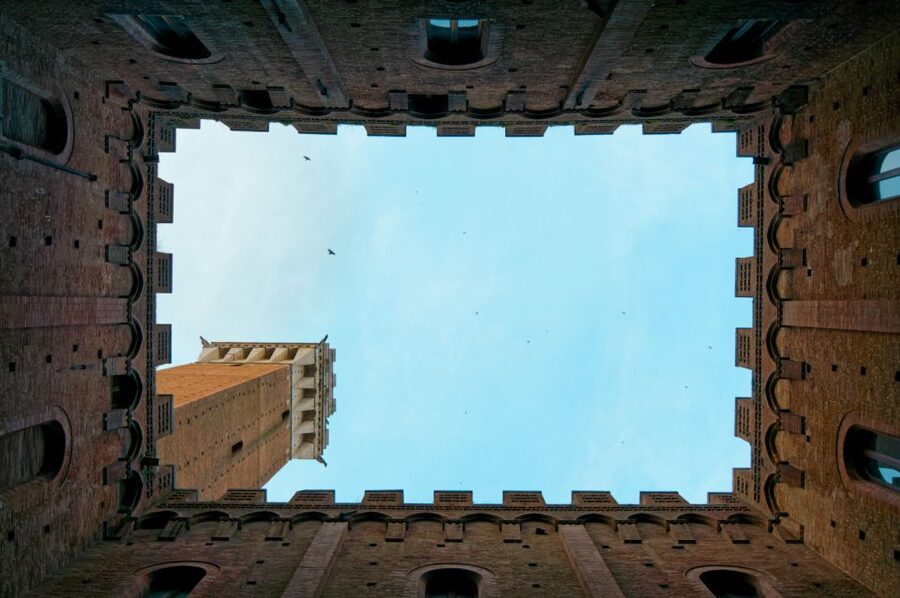
The practical detail most likely to cause confusion is the entrance. Go inside the Cortile del Podestà to find the ticket office and exchange your voucher for an entry ticket.
Do not simply wait outside on Via di Salicotto. Map directions can lead you to the exterior of the palace, while the ticket desk is inside the courtyard. Allow at least 10 minutes before your booked time, especially if you are unfamiliar with the building.
You need to show a passport or ID card. Large bags and luggage are not allowed, and flash photography is prohibited. These rules are easy enough to follow, but knowing them ahead of time helps you avoid a delay at the door.
After exchanging the voucher, you proceed through the museum without a guide. The visit is scheduled for about one hour, though the exact time you spend in each room depends on how closely you study the frescoes.
Sala del Risorgimento and Siena’s Italian Story
The visit begins in the Sala del Risorgimento. Its frescoes depict the life of Vittorio Emanuele II, the first king of Italy.
This room shifts the focus away from medieval Siena and toward the creation of modern Italy. It is a useful opening because it reminds you that Palazzo Pubblico continued to serve public and political purposes long after its medieval rooms were built.
The subject matter is different from the religious and civic imagery elsewhere in the museum. If you prefer medieval art, you may find this room less immediately gripping than the halls that follow. Still, it gives the palace a longer timeline and shows how its decorative program changed with Italy’s political story.
Take a moment to notice the contrast between the room’s historical theme and the older architecture around it. The palace is not one frozen period. It is a working civic building that accumulated layers over time.
Sala di Balìa and Painted Medieval Walls
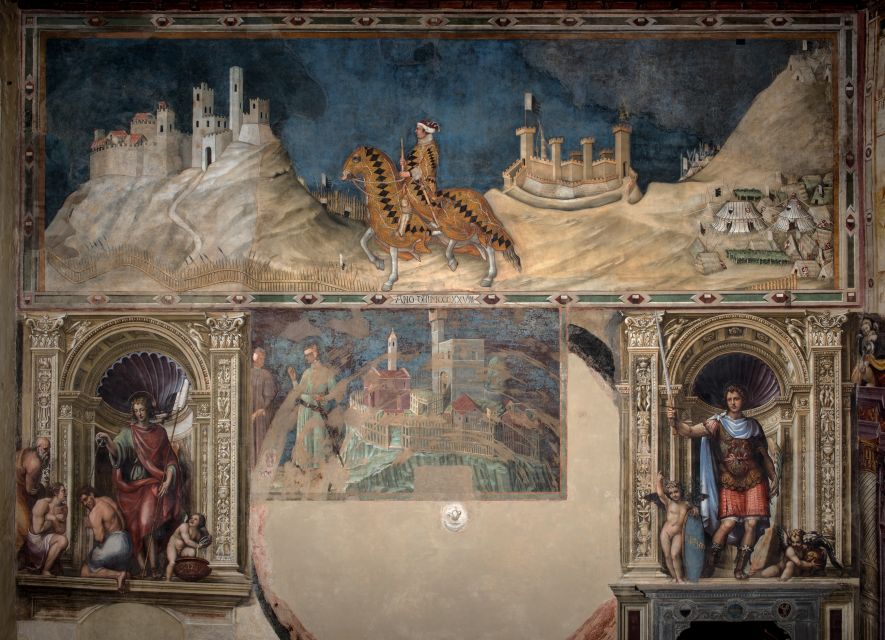
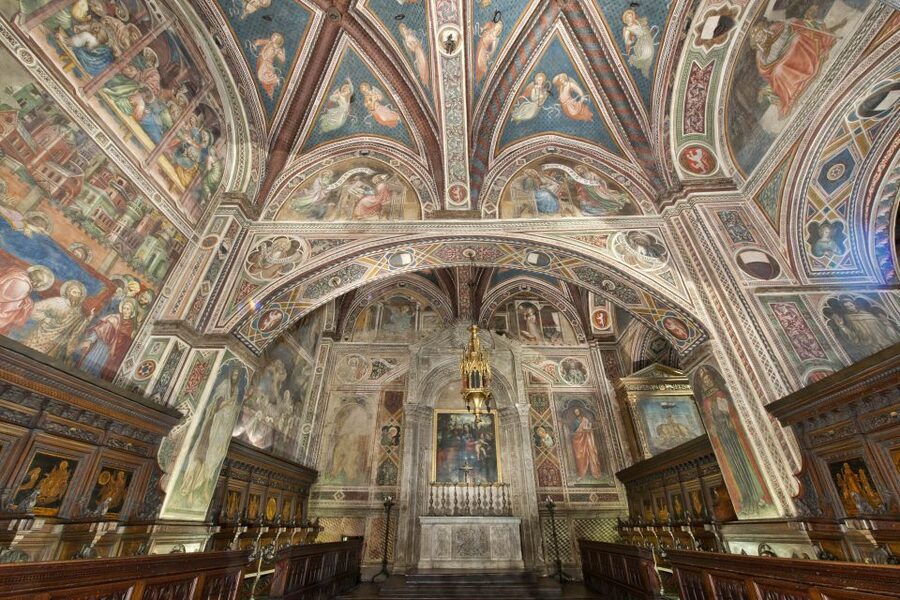
Next comes the Sala di Balìa, decorated with 15th-century wall paintings by Spinello Aretino and Martino di Bartolomeo.
This is where the building begins to feel especially full. The art is not presented as a few isolated pictures on white walls. The decoration covers the room, drawing your attention across walls, ceilings, borders, and architectural details.
Spinello Aretino and Martino di Bartolomeo worked within Siena’s strong tradition of devotional and civic painting. Their frescoes reward a slower look. You might first notice the overall color and pattern, then pick out individual figures, gestures, and decorative details.
The one-hour schedule is enough for a good first visit, but not for a close study of every painted surface. If you care about medieval painting, you should resist spending too long in the first rooms. The most famous works still lie ahead.
Same base, a different kind of day:
- Vatican Museums & Sistine Chapel Tour with Optional Basilica
★ 4.3 · 67,413 reviews - Colosseum, Roman Forum & Palatine Guided Tour
★ 4.7 · 63,148 reviews - Vatican Museums, Sistine Chapel & St Peter’s Basilica Guided Tour
★ 4.5 · 39,149 reviews - Rome: Colosseum, Palatine Hill and Roman Forum Guided Tour
★ 4.8 · 32,814 reviews
Sala dei Cardinali and the Carved Coffers
The Sala dei Cardinali offers a different pleasure. Here, precious carved coffers hold reliquaries.
The room adds three-dimensional objects to the painted decoration. Instead of looking only at frescoes, you also see crafted containers connected with religious devotion and ceremony.
I like this change of pace. Palazzo Pubblico can feel visually intense, with one decorated hall following another. The carved coffers give your eyes something solid and detailed to study. They also show how art, storage, ritual, and government overlapped inside an important medieval palace.
Because no audio guide is included, you may not receive a long explanation of each artifact. Still, the objects make sense as part of the larger story. Siena’s public buildings were designed to communicate status and belief through every surface and object.
Beccafumi’s Vault in the Sala del Concistoro
The Sala del Concistoro is known for its vault by Domenico Beccafumi. You will need to look up, and that is not a minor suggestion. The ceiling is one of the room’s main attractions.
Beccafumi is an important Sienese painter, and his work brings a later artistic style into a palace whose foundations are medieval. The vault demonstrates how the decoration of Palazzo Pubblico developed over several centuries.
The adjoining Cappella, painted by Taddeo di Bartolo in the 15th century, adds another religious space to the route. Its smaller scale differs from the broad civic halls, and that change helps you understand how the palace served both public administration and ceremonial worship.
In rooms like these, the best approach is simple: step back first, then move closer. From a distance, you see how the paintings fit the architecture. Up close, you can examine faces, clothing, borders, and the fine work around the edges.
The Sala del Mappamondo and Simone Martini’s Maestà
The largest room in Palazzo Pubblico is the Sala del Mappamondo, once used by the General Council. This is the museum’s central stop.
The room’s size makes sense when you remember its civic purpose. It was not merely a place to display art. It was where political decisions were discussed and made. The decoration gave those decisions a moral and religious setting.
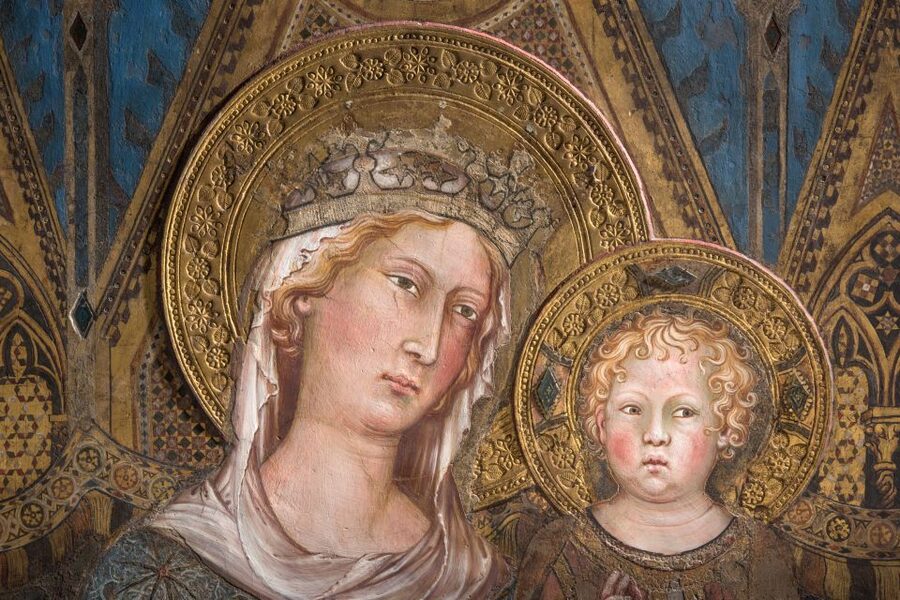
Here you see Simone Martini’s Maestà, one of the great Gothic paintings associated with Siena. The work presents the Virgin Mary in majesty, surrounded by saints and angels. Its elegant lines, refined figures, and rich decorative character show the sophistication of Sienese painting in the early 14th century.
I especially like seeing the Maestà in its original civic setting. In a gallery, it would still be beautiful. Inside this room, it feels tied to Siena’s public identity and to the people who once gathered here.
This is the point where you may wish for an audio guide. The ticket includes no guide, so you will need to bring your own background knowledge or use the museum’s posted information. That is not a serious problem for a one-hour visit, but it does mean the experience is more visual than explanatory.
The Missing Lorenzetti Frescoes
One important caution concerns Ambrogio Lorenzetti’s Allegory and Effects of Good and Bad Government. This celebrated cycle is one of Siena’s most famous works, and many people plan their visit around it.
At the time described here, the paintings were under renovation and unavailable. That can be a real disappointment, especially if you have read about the frescoes or come specifically to see them. Check the current display status before you reserve.
Even without Lorenzetti’s cycle, the museum still contains Simone Martini’s Maestà, Beccafumi’s vault, Taddeo di Bartolo’s Cappella, and several decorated rooms. I would not cancel a Siena visit solely because the Lorenzetti frescoes are closed, but I would adjust my expectations and allow less time if they are the only works you want to see.
The restoration itself is a reminder that historic art has an afterlife. Frescoes need care, and access can change. A short check before your visit can save you from an avoidable surprise.
Loggia dei Nove and the Countryside View
The ticket also includes access to the 14th-century Loggia dei Nove. This is a valuable part of the visit because it takes you outside the decorated rooms and gives you a view behind the palace.
From the loggia, you can look across the countryside around Siena. The view is especially welcome after several rooms of concentrated art. It gives you a better sense of the palace’s position above and around the city.
Some visitors describe the terrace at the top as a highlight, but do not confuse this access with Torre del Mangia. The tower is not included in this ticket. You can buy a separate Torre del Mangia ticket directly at the venue if you want the tower experience as well.
The Loggia dei Nove is the better choice for a quick visit if you want a scenic pause without adding another major attraction. It also helps connect the palace to the setting that made Siena powerful: a hill town surrounded by open Tuscan countryside.
Is One Hour Enough?
One hour works for a brisk, focused visit. You can pass through the principal rooms, see the major artworks, and reach the loggia without treating the museum like a race.
If you want to study every fresco, the allotted time may feel short. The wall-to-wall decoration invites close attention, and the absence of a guide means you may spend extra time making sense of what you see.
For the best use of the hour, keep moving through the early rooms, then reserve more time for the Sala del Mappamondo and Maestà. Look briefly at the Sala del Risorgimento, Sala di Balìa, Sala dei Cardinali, Sala del Concistoro, and Cappella, then slow down when you reach the largest hall.
The small-group designation is limited to 10 participants, but this is not a guided tour. You should think of it as a timed museum entry rather than a personal group tour.
Accessibility and Practical Limits
The museum is wheelchair accessible. The elevator door is 69 centimeters wide and the elevator is 83 centimeters deep, so check those measurements against your mobility equipment before booking.
Access can be suspended during extraordinary events, and opening hours may change. That is worth remembering if your Siena schedule is tight.
The voucher must be exchanged at the ticket office before entry. You cannot simply assume that showing the voucher on your phone will take you straight inside. Bring your passport or ID card, leave large bags elsewhere, and avoid flash photography.
The activity ends back at the meeting point. There is no transportation included, and no guided commentary or audio guide is part of the ticket.
Who Should Buy This Siena Ticket?
I recommend it for anyone who wants a short, affordable introduction to Siena’s art and government history. It suits independent sightseers who prefer to set their own pace and do not need a guide explaining every room.
It is particularly good for:
- First-time visitors who want to understand Piazza del Campo from inside the palace.
- Art lovers interested in Simone Martini, Beccafumi, and Sienese fresco painting.
- Visitors who want a countryside view without committing to a longer excursion.
- People looking for a low-cost cultural stop lasting about one hour.
- Anyone combining the museum with other sights in central Siena.
You may want another plan if you need a detailed art-history explanation, if the Lorenzetti frescoes are your main goal while they are closed, or if you want access to Torre del Mangia included in the same ticket.
Cancellation is free up to 24 hours before the scheduled time, and you can reserve now and pay later. Those options are useful when your Siena day depends on changing weather or an uncertain arrival time.
Should You Book the Palazzo Pubblico Entry Ticket?
Yes, if you want a compact and inexpensive look at Siena’s most important civic building. The $7 price is easy to justify for the frescoed rooms, Simone Martini’s Maestà, historic objects, and the Loggia dei Nove view.
Book it with realistic expectations. This is an unguided museum visit, not a full explanation of Siena’s art. Confirm whether Lorenzetti’s Allegory and Effects of Good and Bad Government is open, and buy a separate tower ticket if Torre del Mangia matters to you.
For most people, the best plan is to exchange the voucher early, spend about an hour inside, focus on the Maestà and Beccafumi’s vault, then pause at the loggia before returning to Piazza del Campo.
FAQ
Where is the Civic Museum located?
The Civic Museum is inside Siena’s Palazzo Pubblico in Tuscany, overlooking Piazza del Campo.
How much does the entry ticket cost?
The listed price is $7 per person.
How long does the visit take?
The stated duration is one hour. Starting times depend on availability.
Is this a guided tour?
No. A guided tour is not included, and no audio guide is included.
Do I need to exchange my voucher?
Yes. Enter the Cortile del Podestà and exchange your voucher at the ticket office before entering the museum.
How early should I arrive?
Arrive at the ticket office 10 minutes before your booking time.
Is Torre del Mangia included?
No. Access to Torre del Mangia is not included. Separate tickets can be purchased directly at the ticket office.
Can I see Simone Martini’s Maestà?
Yes. The Maestà is displayed in the Sala del Mappamondo.
Is the museum wheelchair accessible?
Yes. The museum is wheelchair accessible. The elevator door is 69 centimeters wide, and the elevator is 83 centimeters deep.
Can I bring luggage or take flash photographs?
Large bags and luggage are not allowed. Flash photography is also prohibited.
Just added in Italy
- Highlights and hidden gems of Milan Bike Tour★ 5.0 · 491 reviews
- Milan Gourmet Tour: A Premium Tasting Experience by Do Eat Better★ 5.0 · 241 reviews
- Private Milan Food Walking Tour of Brera★ 5.0 · 217 reviews
- Leonardo3 The World of Leonardo: Tickets for the Interactive Exhibition★ 4.0 · 220 reviews
- Da Vinci’s Last Supper and Santa Maria delle Grazie Church Tour★ 4.5 · 218 reviews
- Learn to Cook Italian Recipes with an Italian Chef★ 5.0 · 283 reviews
- La Scala Theatre and Museum guided experience★ 4.5 · 664 reviews
- La Scala Theatre and Museum Tour in Milan With Private Guide★ 3.5 · 384 reviews