

Reviewed · PANTHEON & TREVI FOUNTAIN TOURS
Rome: Trevi Fountain District Underground Domus Guided Tour
Nine meters below Rome’s Trevi District, the Vicus Caprarius archaeological site reveals a side of the city most people miss. Ancient water channels, a Roman domus, coins, amphorae, and fragments of luxurious decoration show how daily life once worked beneath today’s streets.
I like the clear link between the underground site and the Trevi Fountain above it, and I like having an archaeologically trained guide explain details you might otherwise walk past. Guides including Erica, Naomi, Alessia, and Michelle have earned strong praise for their storytelling and patience. The main catch is simple: this is not a private tour beneath the actual fountain, and the fountain area can be extremely crowded.
Key points to know before booking
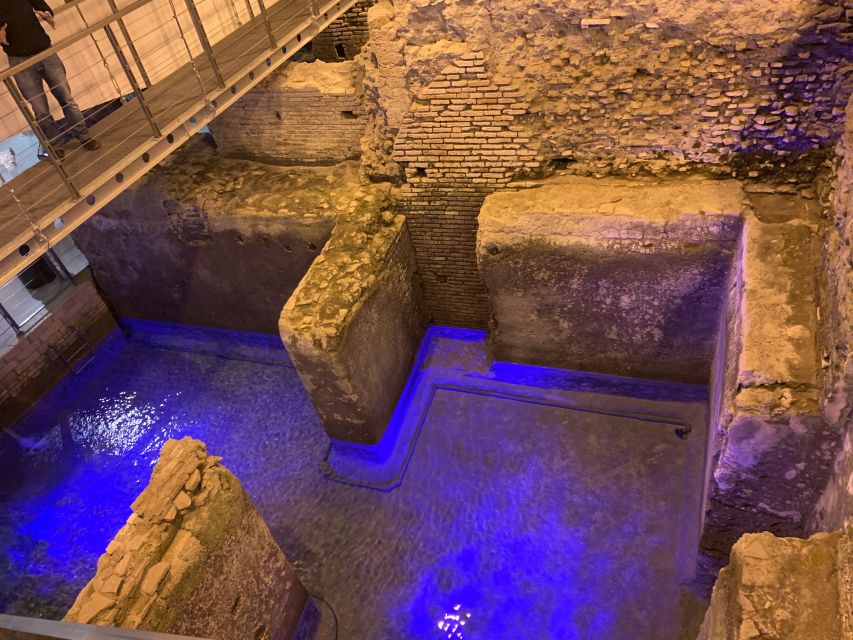
- Nine meters below the Trevi District: Visit Vicus Caprarius, an archaeological site built around ancient Roman structures and water channels.
- A working water story: See how water from the spring associated with Trevi moved through old masonry and supplied pools and pipes.
- Small objects, big clues: Ancient coins, African amphorae, polychrome marble, and a head of Alessandro Helios help explain Roman life.
- A strong guide makes the difference: Erica, Naomi, Alessia, Noemi, and other English-speaking guides are praised for clear explanations, humor, and patience.
- Only 45 minutes: About 40 minutes take place underground, followed by roughly five minutes at the fountain.
- The fountain is not private: Entry to the Trevi Fountain area is free, and this tour does not include skip-the-line access or a visit beneath the actual fountain.
What you see beneath Trevi Fountain
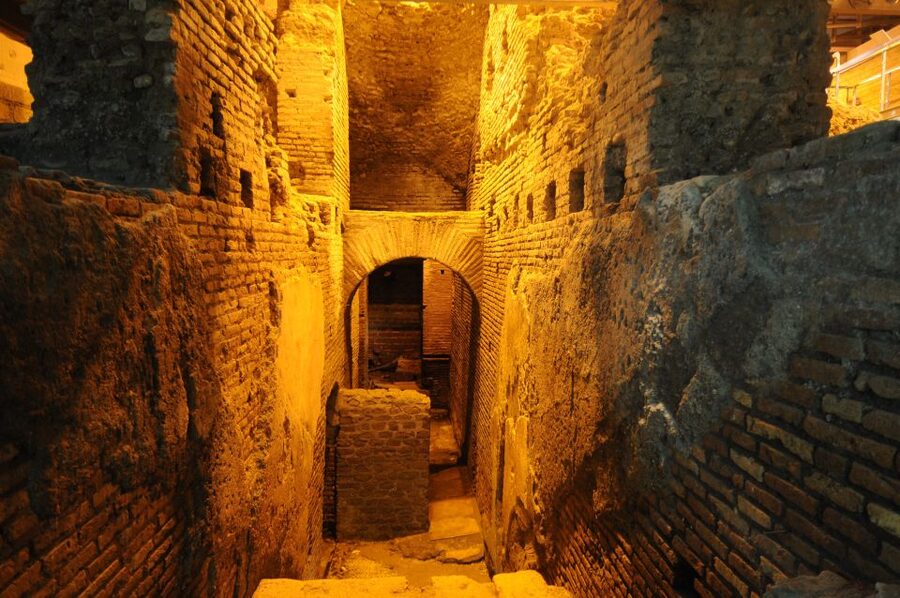
The tour begins at Vicolo del Puttarello 25, at the entrance to Vicus Caprarius. This is a practical meeting point, but it is easy to miss in the tight streets around Trevi, so give yourself time to find the doorway rather than arriving at the last minute.
Once inside, you go down about nine meters. That change in level is the first small surprise. Rome is not simply an ancient city with ruins scattered above ground. Its earlier streets, homes, pipes, and water systems often remain below the modern city, layered beneath shops, restaurants, and famous monuments.
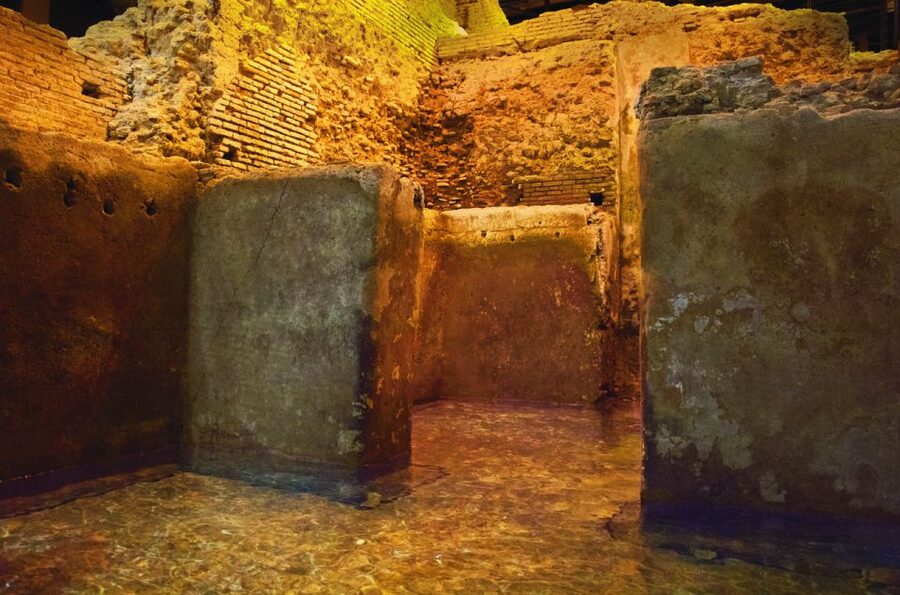
Vicus Caprarius is arranged in three sections. The underground rooms show parts of a luxurious domus residence, later building phases, and the water system that made the area useful. The space is not huge, so this is a close, focused archaeological visit rather than a grand underground complex with broad chambers.
That smaller scale works well with a guide. You can stand close to the masonry and hear how the structures fit together. It also means the site may feel crowded when more than one group is inside, especially since tours in different languages can share the same area.
More Underground Tours in Rome
- Colosseum: Underground and Ancient Rome Tour
★ 4.7 · 12,691 reviews - Rome: Crypts and Catacombs Underground Tour with Transfers
★ 4.6 · 5,341 reviews - Expert Guided Tour of Colosseum Arena OR Underground, and Forum
★ 4.5 · 5,041 reviews
Following Rome’s ancient water system
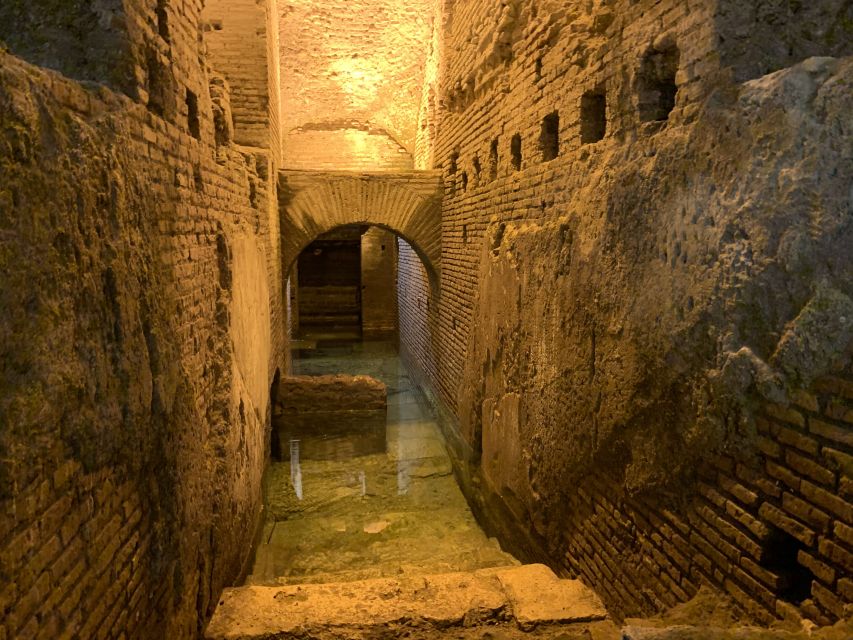
The best part of the experience is the way it connects engineering with ordinary life. The water associated with the Trevi Fountain did not simply appear in the Baroque basin above ground. It followed channels and pipes through the city, and the underground remains show how water was managed long before modern plumbing.
Your guide traces the route through ancient masonry. The water once helped supply the domus, including its pools and pipes. This gives the ruins a useful purpose. You are not only looking at old walls. You are seeing the infrastructure that supported comfort, status, and public life in Rome.
The Roman water system is also a good reminder that ancient cities depended on careful planning. The engineering is impressive, but the tour keeps the focus on what you can actually see: channels, construction, water flow, and the relationship between the underground rooms and the fountain district above.
A guide with archaeological training adds real value here. Without explanation, some walls and channels may look like a confusing collection of stone. With context, you can follow the route and understand why the site matters. Guides such as Erica and Naomi have been praised for making complex material easy to follow, while Alessia and Noemi are noted for enthusiasm and a lively style.
The domus and the objects that tell its story

The site is not only about water. The remains of the domus point to a more comfortable and decorated Roman home. Polychrome marble hints at the quality of the interior, while the pools and water pipes suggest that the residence was designed around more than basic shelter.
You also see objects that connect the site to trade and daily life. Hundreds of ancient coins were found here, along with African amphorae used to transport oil. These are modest objects compared with a monumental statue, but they often tell a more practical story. Coins suggest movement, payment, and activity. Amphorae point to goods arriving from elsewhere in the Roman world.
The head of Alessandro Helios adds another memorable detail. It is the sort of object that helps break up a long explanation about masonry and water channels. Your guide can use these finds to move between architecture, trade, decoration, and the people who occupied the area.
I would not book this expecting a museum-sized collection or a long list of dramatic artifacts. One useful point to keep in mind is that parts of the site depend on archaeological interpretation. Some evidence is fragmentary, and not every question has a definite answer. That is normal for an excavation, but you may prefer the Colosseum or Roman Forum if you want large-scale ruins and instantly recognizable monuments.
Why the archaeologist guide matters
The underground rooms are compact and the tour lasts only 45 minutes, so the quality of the explanation matters more than the number of stops. You spend about 40 minutes at Vicus Caprarius, and the guide does most of the work of connecting the physical remains to Rome’s past.
The strongest guides use questions, humor, and stories rather than giving a dry list of dates. Erica is repeatedly praised for her energy and clear explanations. Naomi is known for a friendly style and good storytelling. Other guides, including Michelle, Federica, and Alessia, have also been singled out for making the material accessible and answering questions carefully.
You may receive a small radio system so you can hear the guide in a busy or enclosed area. That is a useful detail in a tight underground site, especially when another group is nearby. It also helps if you prefer to look closely at the ruins while still following the explanation.
The tour works best if you ask questions. One guide was praised for handling many questions, and another for allowing time for photos. The clock is still running, so a long private discussion is not guaranteed, but a good guide can add much more than you would get from walking through the site alone.
Other landmarks within a walk in Rome:
- Rome: Pantheon Fast-Track Ticket and Official Audio Guide
★ 4.3 · 21,008 reviews - Pantheon Reserved Entry Ticket with Audio Guide
★ 4.0 · 4,486 reviews - Rome: Pantheon Timeless Marvel Guided Tour with Entry Ticket
★ 4.9 · 4,002 reviews - Rome: Pantheon Priority Entry Ticket & Audio Guide App
★ 4.1 · 3,234 reviews
The final stop at the Trevi Fountain
After the underground visit, the tour finishes at the Trevi Fountain. The formal guided portion here is short, about five minutes, so think of it as a useful orientation rather than a full fountain tour.
Your guide points out the connection between the fountain, the ancient water supply, and the underground remains. This makes the Baroque monument easier to understand. You have just seen the hidden water infrastructure, and now you can look at the grand public expression of that same long water story above ground.
The practical limitation is crowding. The fountain can be packed, and you should not expect an empty viewing area or special private access. The included fountain ticket does not mean skip-the-line entry, because access to the fountain area is free. You may still need to wait or work your way through the crowd to get close.
This distinction matters because the tour title can sound as if you will go underneath the actual Trevi Fountain. You do not. You visit a separate archaeological site next to the fountain district, then finish at the famous monument. That is still a worthwhile pairing, but you should book it for the underground domus and water system, not for exclusive access to the fountain.
Allow extra time afterward if you want photographs or a quiet look. The tour itself ends at the fountain, but you can remain in the area on your own.
Is $50 a fair price for 45 minutes?
At $50 per person, this is not the cheapest way to spend 45 minutes in Rome. You can see the Trevi Fountain for free, and the underground site is compact. The value comes from the reserved entry and, above all, from the live explanation.
I think the price makes sense if you enjoy archaeology and want to understand what lies below the famous sights. A guide can show how the water system worked, explain the domus, identify the objects, and connect the site to the city above. That context is difficult to reproduce by simply entering the archaeological area on your own.
The value is weaker if you want a long tour, many major monuments, or a private view of Trevi Fountain. The underground visit is concentrated, and the final fountain stop is brief. You are paying for specialist interpretation rather than a large number of attractions.
Some bookings may offer an ice cream option with a voucher for a shop near Trevi Fountain. If that option is available to you, it can add a pleasant treat after the tour, but it does not change the basic sightseeing experience.
The free cancellation window extends to 24 hours before the tour, and you can reserve now and pay later. Those policies are useful when your Rome schedule is still changing, though they do not alter the central question: do you want a short archaeological visit with a guide?
Who will enjoy this underground Rome tour?
I would recommend it to anyone who has already seen Rome’s major monuments and wants a different angle on the Trevi District. It is especially useful early in a Rome visit, because the water system and Roman building methods can help you understand other ruins you see later.
It suits adults and older children who enjoy history, engineering, and close-up archaeological remains. You do not need specialist knowledge, but you should be willing to listen for much of the 40-minute underground portion.
The tour is also a good choice in hot weather. The underground site is cooler than the streets, and that brief break can be welcome during a packed day. Still, comfortable shoes matter, and the site is not suitable for wheelchair users or people with mobility impairments.
I would skip it if your main goal is to go below the actual fountain, avoid crowds entirely, or spend several hours at one site. The underground rooms are smaller than some people expect, and the experience depends on your interest in the explanation as much as on the visible remains.
Practical details for a smooth visit
Meet at Vicolo del Puttarello 25, at the entrance to Vicus Caprarius. Do not wait at the fountain itself, since the tour begins at the archaeological site.
Wear comfortable shoes. The underground setting involves a descent and movement through an archaeological space, and the tour is not suitable for wheelchair users or people with mobility impairments.
The tour is offered in English with a live guide. A small group may be available, which can make it easier to hear the explanation and ask questions. Group sizes and starting times depend on availability.
Plan the fountain visit separately in your mind. The tour ends there, but the fountain area is free and crowded, and no skip-the-line access is included. If you want photos, stay afterward rather than expecting the five-minute guided portion to provide much quiet time.
Should you book it?
Book this tour if you want to understand the water engineering beneath Rome and prefer a focused site with a strong human guide. The connection between the domus, ancient channels, imported oil jars, coins, and the fountain above gives you more than a quick photo stop.
Do not book it expecting to enter beneath Trevi Fountain itself. You will visit Vicus Caprarius nearby, then receive a short explanation at the crowded fountain. For the right audience, $50 is fair because the guide supplies the context that makes a small archaeological site meaningful. For a first-time visitor choosing between this and Rome’s biggest ancient monuments, I would treat it as an add-on, not a replacement.
FAQ
Where does the tour begin?
Meet your guide at the entrance to Vicus Caprarius archaeological area at Vicolo del Puttarello 25.
How long does the experience last?
The full tour lasts 45 minutes. About 40 minutes are spent at Vicus Caprarius, followed by about five minutes at Trevi Fountain.
Does the tour go underneath the actual Trevi Fountain?
No. The tour visits the nearby underground Vicus Caprarius archaeological site and then continues to Trevi Fountain. It does not provide access beneath the fountain itself.
Is entry to Trevi Fountain skip-the-line?
No. The fountain area is free to enter, and skip-the-line access is not included. The area can be very crowded.
What language is the tour offered in?
The live guided tour is offered in English.
Is the tour suitable for wheelchair users?
No. The experience is not suitable for wheelchair users or people with mobility impairments. Comfortable shoes are recommended.
Just added in Rome
- Civitavecchia Private Transfer: From the Port to Rome Airport★ 5.0 · 309 reviews
- Civitavecchia Shore Excursion: Best of Rome Private Tour★ 5.0 · 247 reviews
- Civitavecchia Private Transfer from ship to FCO airport or Rome★ 5.0 · 245 reviews
- Food Tasty and History Tour in Civitavecchia★ 5.0 · 256 reviews
- Palatine Hill and Roman Forum Tour with Fast-Track Entrance★ 4.2 · 417 reviews
- Tivoli: Villa D’Este & Villa Adriana Pass & App Audioguide★ 4.4 · 364 reviews
- Tivoli: Villa D’Este Entry Ticket and App Audio Guide★ 4.3 · 191 reviews
- Vatican Museums & Sistine Chapel Skip-the-Line Guided Tour★ 4.6 · 254 reviews
Pantheon & Trevi Fountain Tours, compared.

Pantheon Fast-Track Ticket and Official Audio Guide
Read our review →
Pantheon Reserved Entry Ticket with Audio Guide
Read our review →
Pantheon Timeless Marvel Guided Tour with Entry Ticket
Read our review →
Pantheon Priority Entry Ticket & Audio Guide App
Read our review →
Pantheon Elite Guided Tour – Rome’s Iconic Ancient Temple
Read our review →
Pantheon Small-Group Guided Tour with Entry Ticket
Read our review →
Opera Concert at Palazzo Poli – Fontana di Trevi
Read our review →Browse the lists this tour appears in