
Reviewed · BORGHESE GALLERY TOURS
Rome: Skip-the-Line Borghese Gallery Guided Tour
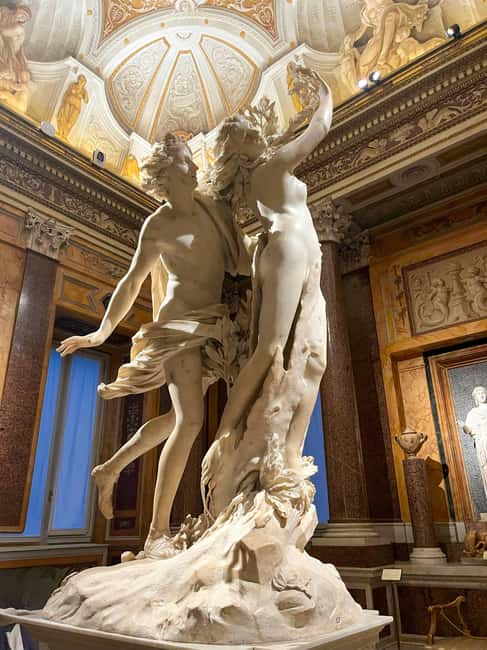
The best reason to book this tour is the art itself, especially Bernini’s marble sculptures. Apollo and Daphne and The Rape of Proserpina reward close looking, and a good guide helps you notice how stone can suggest movement, skin, hair, and emotion.
I like the priority entry and the focused two-hour-plus visit. I also like the way guides such as Simona, Suzanne, Alexandra, and Lorena connect the paintings to the artists, popes, and Borghese family. The main drawback is pace: with so much to see, you may wish for more time with the paintings, and some detailed explanations can feel long.
- Bernini’s marble drama: See Apollo and Daphne and The Rape of Proserpina with context that makes their movement and emotion easier to read.
- Caravaggio and Raphael: Study major paintings including Boy with a Basket of Fruit, David with the Head of Goliath, and The Deposition.
- A guide-led visit: English and Spanish tours use earphones, making it easier to follow explanations in busy rooms.
- A compact schedule: The 135-minute visit gives you a solid introduction without taking up an entire day.
- Villa Borghese setting: Add a walk through the gardens and continue to the Pincio Terrace for views toward Rome.
- Useful practical details: Meet at Piazzale del Museo Borghese, arrive 10 minutes early, and leave backpacks in the wardrobe.
Why the Borghese Gallery Deserves Your Morning
Rome has no shortage of museums, but the Borghese Gallery is unusually concentrated. In a relatively short visit, you can move from ancient sculpture to Renaissance painting, Baroque theater, and elegant Neoclassical work. The collection feels less like a long parade of rooms and more like a carefully assembled display of major works.
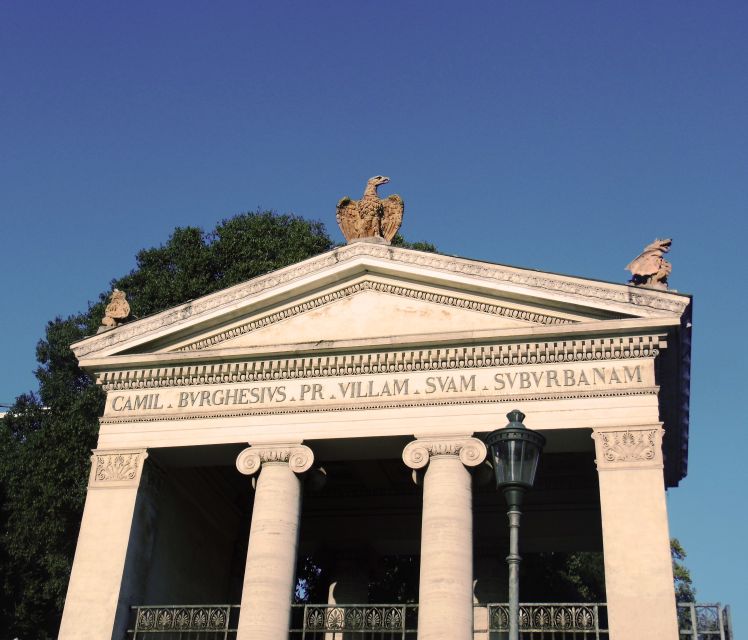
The building is in Villa Borghese Gardens, away from the thickest crowds around the Colosseum and Trevi Fountain. That setting matters. You enter through a park, spend time among sculpture and painting, then can return to trees, fountains, open space, and a broad city view.
The gallery’s finest moments are often three-dimensional. Bernini’s sculpture asks you to walk around it. From one angle, Daphne is still a fleeing woman. From another, her fingers become leaves and her body begins to change. The Rape of Proserpina has the same theatrical force, including the famous impression of fingers pressing into marble flesh.
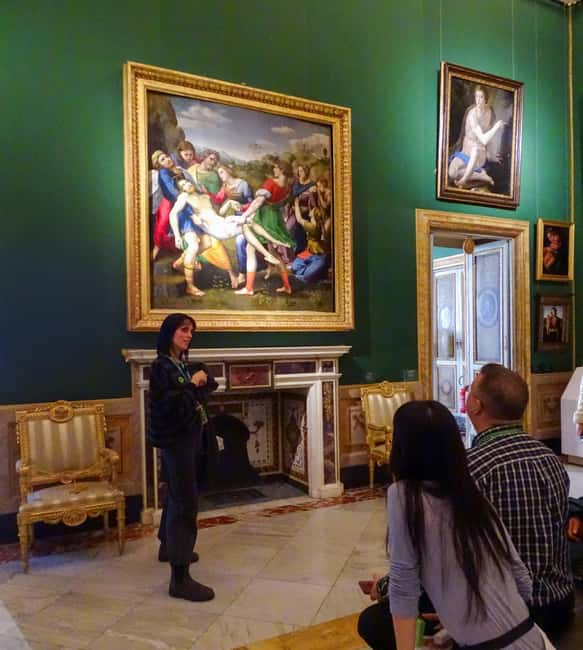
A guide gives these works a human scale. Instead of simply hearing dates and names, you learn how a sculpture tells its story through a turn of the body, a glance, or a fold of fabric. That is particularly useful if you do not usually spend much time in art museums.
Meeting at Piazzale del Museo Borghese
The meeting point is at the entrance of the Borghese Gallery in Piazzale del Museo Borghese. Look for the guide holding a Tourismotion sign. Arrive about 10 minutes early, since a late arrival can be especially stressful when your entry is tied to a timed visit.
The directions deserve attention. Barberini is the closest listed metro station, but it is about a 20-minute walk away. Bus routes 83 and 223 are also listed as options. The Spagna metro stop is not considered convenient for this meeting point, so do not assume it is the easiest choice simply because the Spanish Steps are nearby.
Wear comfortable shoes. You will be on your feet for most of the 135-minute experience, and you may want to walk through Villa Borghese afterward. Backpacks and bags must be left in the wardrobe, so bring only what you need inside.
The tour supplies single-use earphones. You can use your own earphones instead if you prefer to reduce waste, though the important point is that you will be able to hear the guide while standing in large rooms or moving with a group.
Other galleries worth booking ahead in Rome:
- Rome: Borghese Gallery and Gardens Guided Small-Group Tour
★ 4.6 · 2,783 reviews - Rome: Borghese Gallery Guided Tour with Skip-the-Line Entry
★ 4.8 · 2,649 reviews - Rome: Borghese Gallery Skip-the-Line Tickets with Audioguide
★ 4.6 · 2,562 reviews
The Ground Floor: Bernini Takes Center Stage
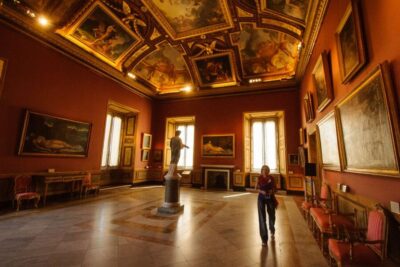
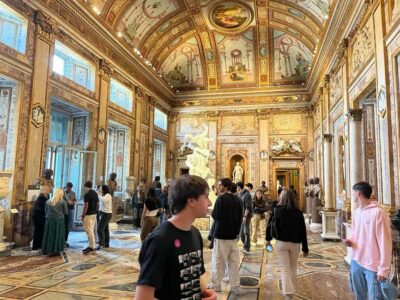
The ground-floor sculpture rooms are the emotional heart of the visit. This is where the tour spends much of its time, and that is a sensible choice. Bernini’s works need room for close inspection, and the guide can direct your attention to details you might otherwise pass without seeing.
Start with Apollo and Daphne, Bernini’s account of the moment Daphne escapes Apollo by transforming into a laurel tree. The sculpture seems to change as you walk around it. Apollo’s pursuit, Daphne’s alarm, and the first leaves appearing from her hands all form one continuous piece of action.
Then consider The Rape of Proserpina, which depicts Pluto carrying Proserpina into the underworld. The subject is disturbing, but the sculpture is also a display of technical skill and theatrical timing. A guide can explain the myth and point out how Bernini makes hard marble appear soft and responsive.
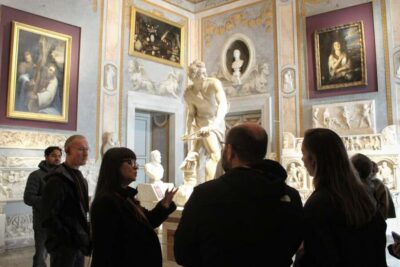
You will also see David, another work in which Bernini captures a moment rather than a calm pose. David is not resting after the battle. He is twisting into action, with his body turned toward an unseen Goliath. The effect is more immediate than the formal statues many people expect from older art.
These are not pieces to rush past. The schedule gives you a guided route, but you may have only short pauses to take photographs or examine a detail on your own. One practical tip is to save your own extended viewing for the end of the guide’s explanation, then look closely while the group moves to the next work.
Paintings by Caravaggio, Raphael, and Titian
The paintings provide a welcome change after the sculptural drama. Caravaggio’s Boy with a Basket of Fruit shows his interest in ordinary subjects, strong light, and the physical presence of fruit, skin, and fabric. It is an inviting painting, but it also raises questions about beauty, youth, and decay.
David with the Head of Goliath is darker and more personal in mood. The harsh light pulls the figures from the black background, while the severed head creates a grim focal point. A guide can help you compare this painting with the energy of Bernini’s David, turning two familiar biblical figures into very different artistic statements.
Raphael’s The Deposition offers another kind of power. Its organized movement and emotional restraint differ from Caravaggio’s sharp contrasts and Bernini’s physical action. The work is useful for seeing how Renaissance balance gives way to the more dramatic qualities associated with the Baroque.
Titian’s Sacred and Profane Love is more open to interpretation. Its allegorical meaning is not as straightforward as a mythological scene with a clear action. This is one place where a guide’s explanation adds real value, since you can look at the figures, clothing, setting, and gestures while hearing how the painting has been understood.
The collection also includes Pauline Bonaparte as Venus Victrix by Antonio Canova. This polished Neoclassical sculpture is very different from Bernini’s charged movement. Pauline reclines with controlled elegance, and the work invites you to compare two ways of presenting the human body: Bernini’s sudden action and Canova’s idealized calm.
What the Guides Add to the Art
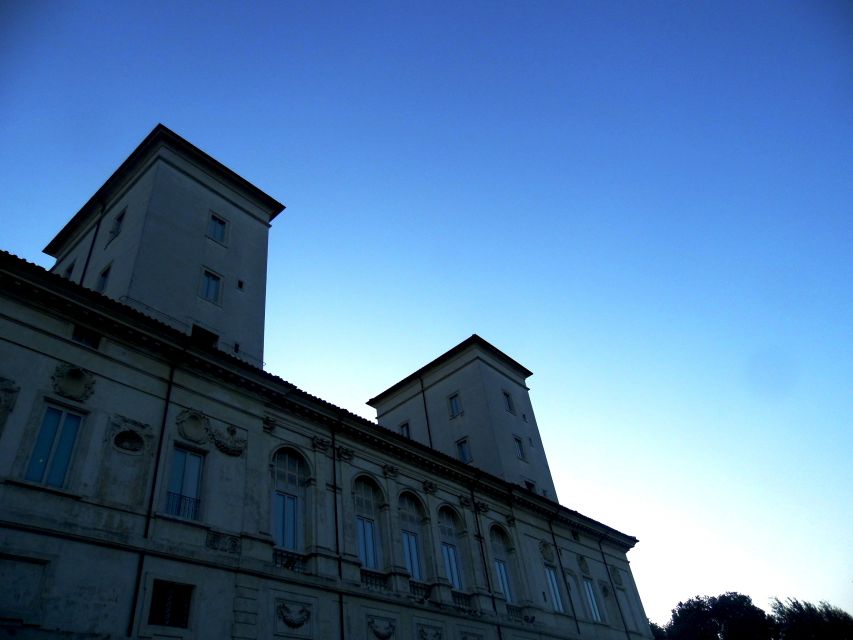
The strongest part of this experience is the explanation. The guides are not simply there to point out famous names. Their role is to connect the objects to the people and politics around them.
The Borghese family was one of Rome’s powerful dynasties, and its patronage shaped the collection. Understanding that background helps explain why the gallery contains such an impressive mix of works and why Bernini’s sculptures are so prominent.
Guides named Simona, Suzanne, Alexandra, and Lorena have received especially warm praise for their passion and clear storytelling. Alessandra was described as particularly effective at making complex art history easy for newcomers to follow, while Simona has been praised for an energetic, clear presentation. These names do not guarantee who will lead your particular departure, but they show the level of personal engagement you can expect from the guiding team.
The approach suits people who want stories, not just labels. You may hear about the artists’ working lives, the culture of their time, and the relationship between wealthy Roman families and the papacy. That context makes a painting or sculpture easier to remember after you leave.
There is one small caution. Some guides speak with a strong Italian accent, and long background explanations can occasionally delay the main point. The earphones help with volume, but not every language issue. If you need a slower pace, ask questions during the short pauses.
Other museums and galleries in Rome:
- Vatican: Museums & Sistine Chapel Entrance Ticket
★ 4.5 · 144,003 reviews - Vatican Museums & Sistine Chapel Tour with Optional Basilica
★ 4.3 · 67,413 reviews - Vatican Museums, Sistine Chapel & St Peter’s Basilica Guided Tour
★ 4.5 · 39,149 reviews - Rome: Vatican Museums, Sistine Chapel & Basilica Tour
★ 4.3 · 13,872 reviews
A 135-Minute Visit With a Clear Focus
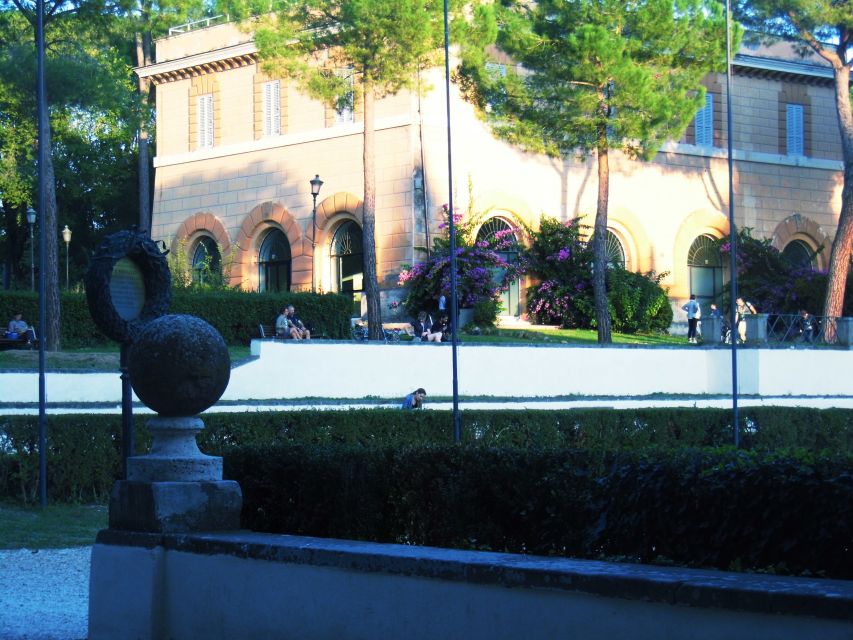
The advertised duration is 135 minutes, or two hours and 15 minutes. The route begins and ends at the gallery meeting point, with the ground-floor sculptures and the rest of the Borghese Gallery forming the main visit.
That length works well for a first introduction. You get enough time to see major works without spending half a day in one museum. It also leaves room for lunch, another Rome sight, or a walk through the park.
The tradeoff is that you cannot study every painting at length. One visitor wanted more time with the paintings, and that is a fair concern. If you already know the collection well or want to sketch, photograph, or read every label, an unguided visit might give you more freedom. If you want a strong route through the best-known works, the guide-led format is more efficient.
The experience is offered in English or Spanish. Earphones are included, and pre-booked priority tickets mean you do not have to deal with the standard ticket line. That does not mean you can ignore the meeting time. Be there early, follow the guide’s instructions, and allow time to find the entrance.
A $100.09 Ticket: Is the Cost Justified?
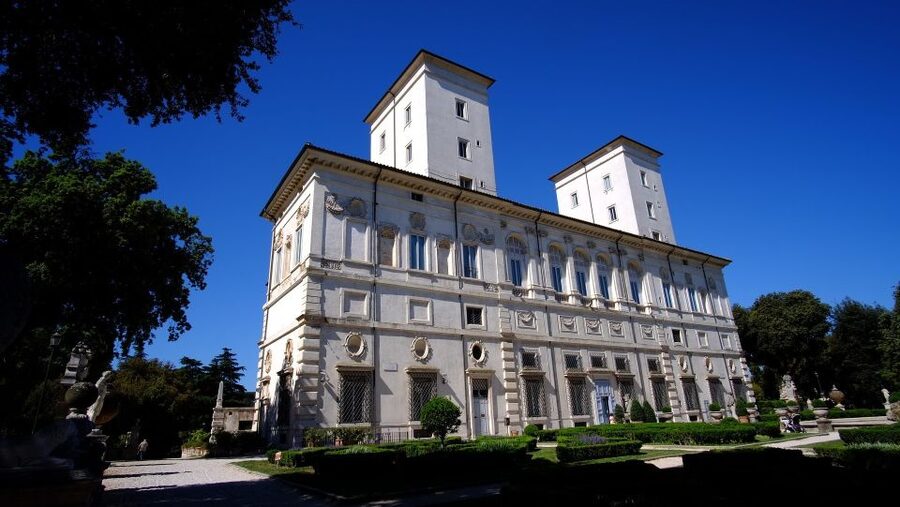
At $100.09 per person, this is not a cheap museum entrance. You are paying for more than access: the package includes a pre-booked priority ticket, a live guide, earphones, and assistance from the operator.
The value depends on how you visit museums. If you are comfortable identifying the major works and reading labels on your own, the added cost may not suit your budget. If the Borghese is one of your main Rome priorities, the guide can make the visit much more rewarding by explaining why the works matter and showing details that are easy to miss.
For many people, the best value comes from the concentration of the collection. You do not spend hours wandering through a huge museum hoping to find the highlights. In a limited time, you receive an organized introduction to Bernini, Caravaggio, Raphael, Titian, and Canova, along with the story of the Borghese family.
The free cancellation option, available up to 24 hours before the activity, adds useful flexibility. You can also reserve now and pay later, which helps if your Rome schedule is still changing.
Add Villa Borghese Gardens After the Gallery
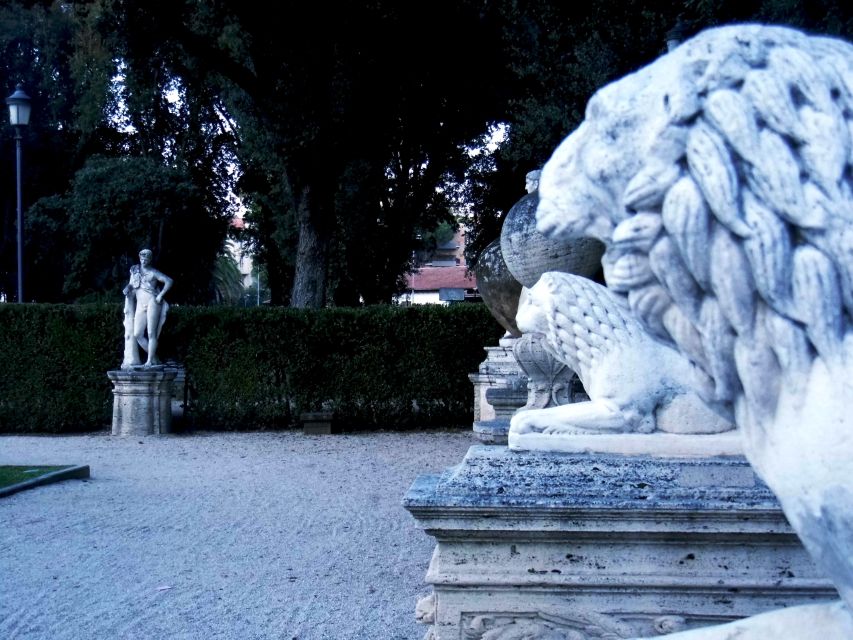
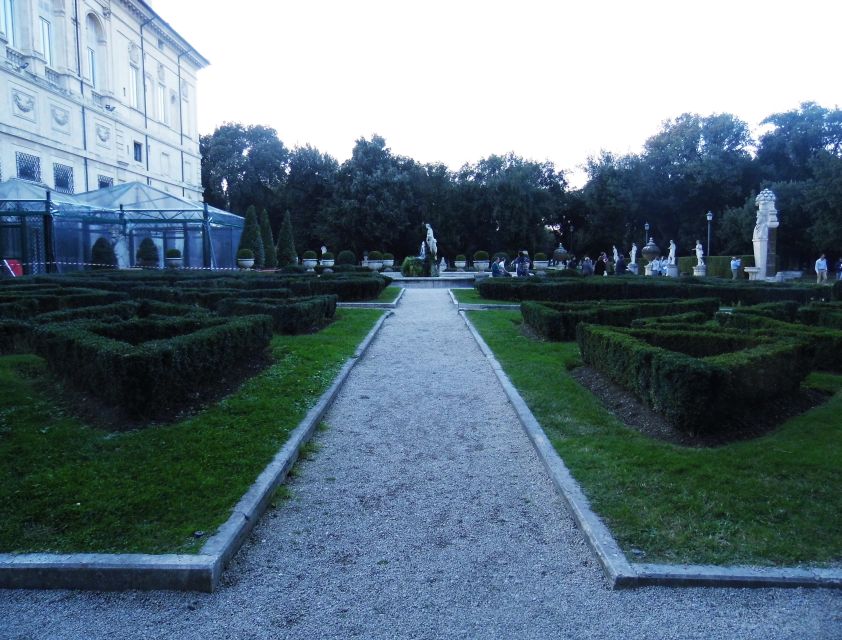
The gallery visit ends where it began, but your Rome outing does not need to stop there. Villa Borghese Gardens offer a calmer follow-up to the intense concentration of the museum.
Take time among the trees, fountains, and outdoor sculptures. The park gives you space to reset after two hours of looking closely at art. It also makes the gallery feel connected to the city rather than isolated from it.
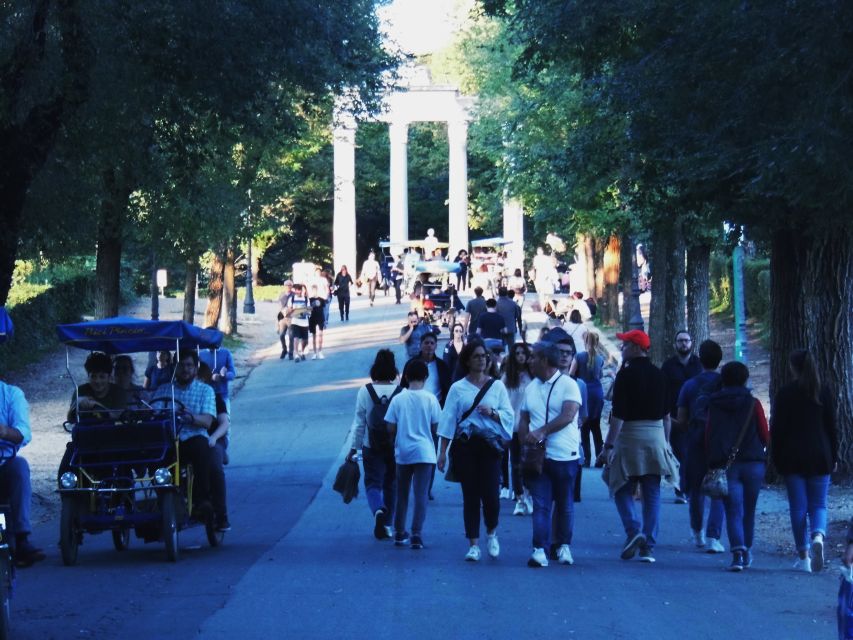
The Pincio Terrace is a worthwhile goal. From there, you can look across Rome toward landmarks including St. Peter’s Basilica. The gardens can also lead you toward Piazza del Popolo and the Spanish Steps, making the museum a useful part of a wider walking route.
The garden walk is not described as a separate guided portion of the activity, so treat it as your own time after the gallery. Wear shoes suitable for both the museum and the park, and check your energy before adding a long walk.
Who Should Book This Gallery Tour?
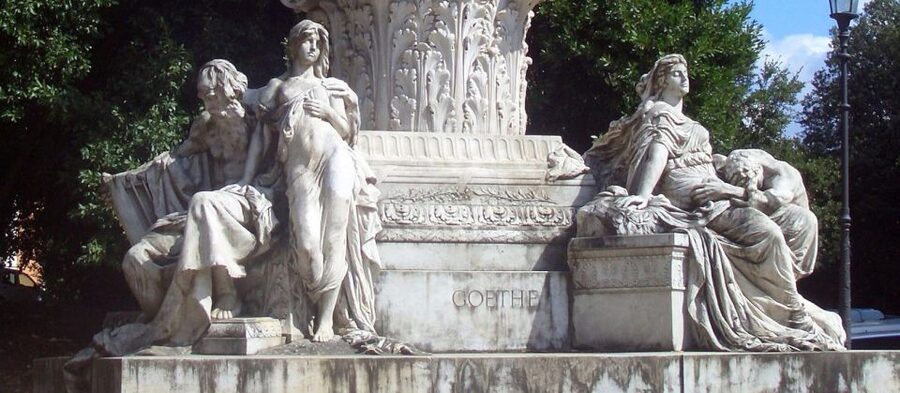
I would recommend it to first-time visitors who want an art-filled morning or afternoon but do not want to prepare a museum route themselves. It is also a strong choice for couples, families with older children, and anyone who enjoys stories about artists, patrons, and Roman power.
It suits art beginners particularly well. You do not need to know the difference between Renaissance, Baroque, and Neoclassical art before arriving. The guide gives you a framework, then uses individual works to make those periods understandable.
It may be less suitable for visitors using wheelchairs or pushchairs, since the activity is specifically listed as unsuitable for both. It is also not ideal if you want to move independently at your own pace or spend a long time with only one painting.
Should You Book the Borghese Gallery Tour?
Book it if you want the Borghese Gallery’s major works explained by an enthusiastic guide, especially if Bernini and Caravaggio are high on your Rome list. The priority entry, organized route, and 135-minute length make good sense for a first visit.
Skip it if $100.09 feels too high for a guided museum visit, or if you prefer quiet, independent viewing. If you do book, arrive early, bring identification, leave your backpack at the wardrobe, and reserve time afterward for Villa Borghese Gardens and the Pincio Terrace.
FAQ
How long does the Borghese Gallery tour last?
The activity lasts 135 minutes, or two hours and 15 minutes. Check availability for the starting time offered on your chosen date.
What languages are available?
The live tour guide is available in English or Spanish.
Where do I meet the guide?
Meet at the entrance of the Borghese Gallery in Piazzale del Museo Borghese. The guide will hold a Tourismotion sign.
Which public transport option is closest?
Barberini is the closest listed metro station, about a 20-minute walk from the gallery. Bus routes 83 and 223 are also listed. The Spagna metro stop is not advised for this meeting point.
Does the tour include priority entry?
Yes. Pre-booked priority tickets are included, allowing you to skip the standard ticket line.
Do I need to bring identification?
Yes. A passport or ID card is listed as something to bring.
Can I bring a backpack into the gallery?
No. Backpacks and bags must be left in the wardrobe.
Are food and drinks included?
No. Food and drinks are not included in the activity.
Is the tour suitable for wheelchairs or pushchairs?
No. The activity is listed as unsuitable for wheelchairs and pushchairs.
Just added in Rome
- Civitavecchia Private Transfer: From the Port to Rome Airport★ 5.0 · 309 reviews
- Civitavecchia Shore Excursion: Best of Rome Private Tour★ 5.0 · 247 reviews
- Civitavecchia Private Transfer from ship to FCO airport or Rome★ 5.0 · 245 reviews
- Food Tasty and History Tour in Civitavecchia★ 5.0 · 256 reviews
- Palatine Hill and Roman Forum Tour with Fast-Track Entrance★ 4.2 · 417 reviews
- Tivoli: Villa D’Este & Villa Adriana Pass & App Audioguide★ 4.4 · 364 reviews
- Tivoli: Villa D’Este Entry Ticket and App Audio Guide★ 4.3 · 191 reviews
- Vatican Museums & Sistine Chapel Skip-the-Line Guided Tour★ 4.6 · 254 reviews
Borghese Gallery Tours, compared.
Borghese Gallery and Gardens Guided Small-Group Tour
Read our review →
Borghese Gallery Guided Tour with Skip-the-Line Entry
Read our review →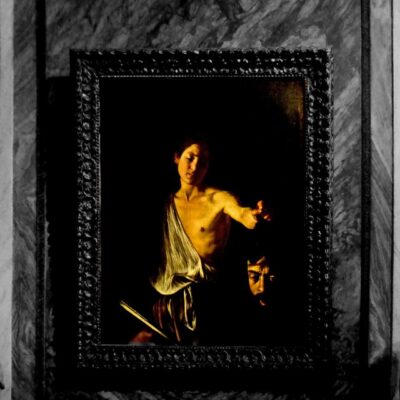
Borghese Gallery Skip-the-Line Tickets with Audioguide
Read our review →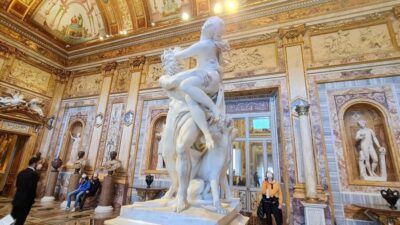
Borghese Gallery Entry Ticket & Optional Guided Tour
Read our review →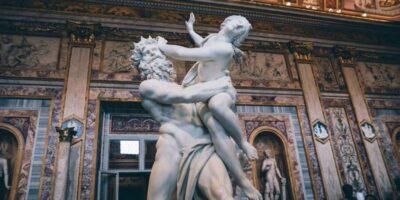
Borghese Gallery Guided Tour with priority entrance
Read our review →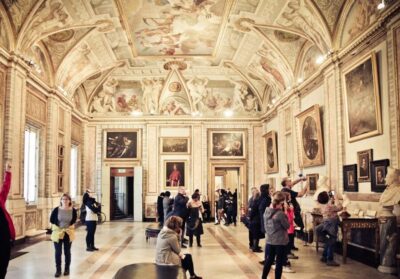
Browse the lists this tour appears in