
Reviewed · CATACOMBS & UNDERGROUND TOURS
Rome: Navona Square Underground Ticket with Audio Guide
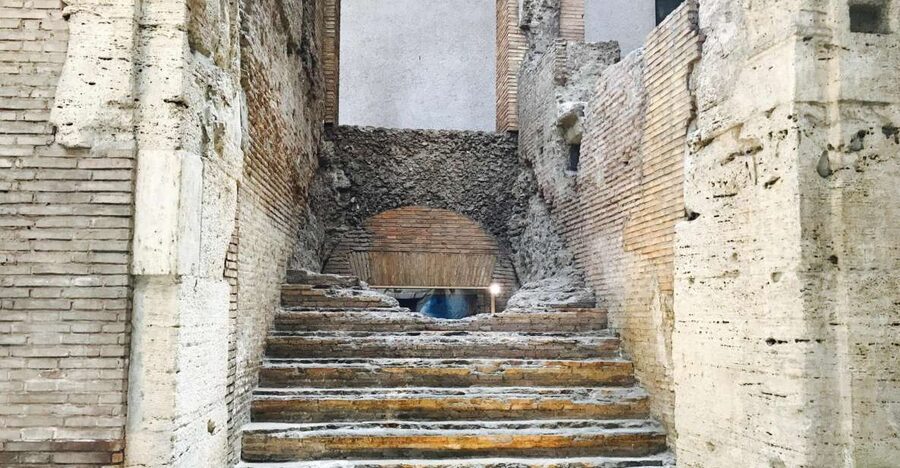
Five meters beneath Piazza Navona, Rome keeps an arena that most people miss while admiring Bernini’s fountains above. The Stadium of Domitian was built for public games and could hold as many as 30,000 spectators. Its surviving walls, travertine blocks, brickwork, and marble entrance details give you a close look at how ancient Rome entertained a crowd.
I like two things here. First, the audio guide turns a relatively small archaeological site into a clear story about sport, emperors, and the growth of Piazza Navona. Second, the displays add old photographs, films, and 3D reconstructions, so you are not left staring at half-buried stones and guessing what the stadium once looked like.
The main consideration is size. This is not another Colosseum-scale visit. Most people need roughly 45 minutes to an hour, and some numbered audio stops can be confusing. If this is your first day in Rome, you may prefer the city’s major sights first. If you have already seen the big monuments, this makes a smart, compact addition.
Key Points Before You Book
- Five meters below Piazza Navona: Reach the ancient stadium from the heart of one of Rome’s most famous squares.
- A small but unusual archaeological site: You walk through the remains of the only masonry-built stadium of its kind in Ancient Rome.
- Audio guide in seven languages: Choose Spanish, English, French, German, Italian, Russian, or Portuguese.
- Helpful visual material: Panels, unpublished photographs, films, and 3D images show how the arena looked in its prime.
- Optional food and drink: Add one cocktail with snacks, or a tasting of two wines with a traditional appetizer board.
- Allow about an hour: The visit is easy to fit between Piazza Navona, the Pantheon, and other central Rome sights.
What Lies Beneath Piazza Navona
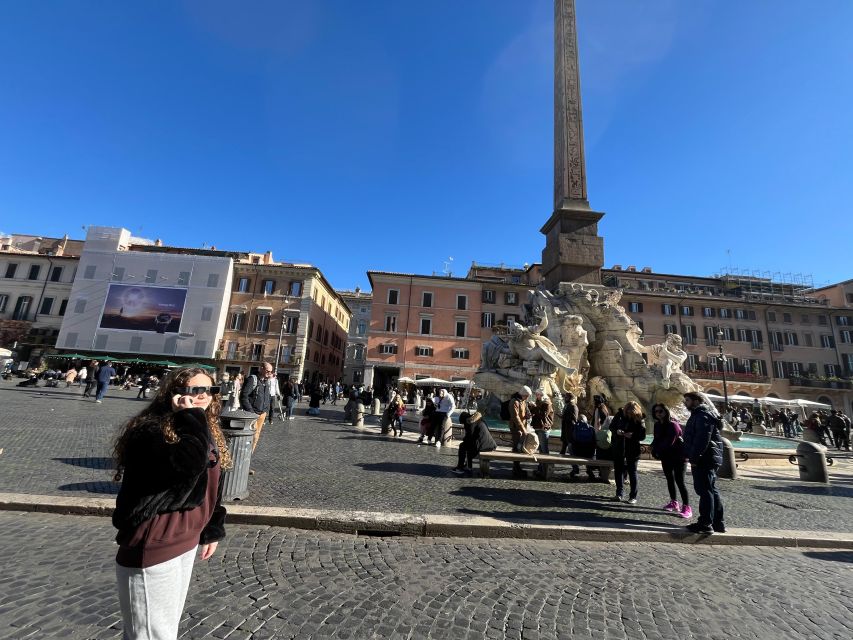
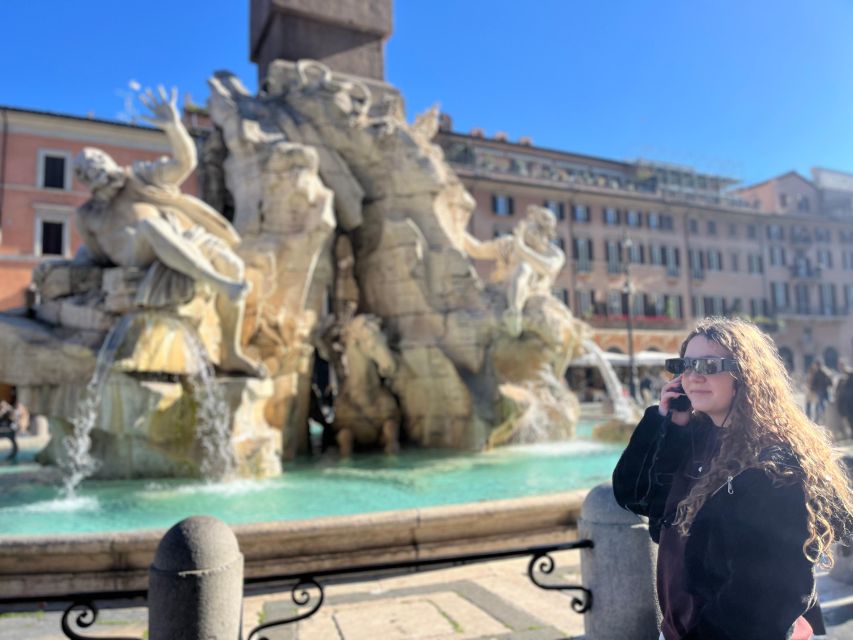
Piazza Navona is one of Rome’s great outdoor rooms. Above ground, you see fountains, church façades, cafés, artists, and the steady flow of city life. Below it, you find the remains of a vast Roman stadium that once hosted athletic contests and public spectacles.
This change in setting is the real reason to visit. You begin with a familiar modern piazza, then descend below street level and see its ancient predecessor. The contrast helps explain that Rome is not simply a city with old monuments placed around it. Its present streets often sit directly on top of earlier buildings.
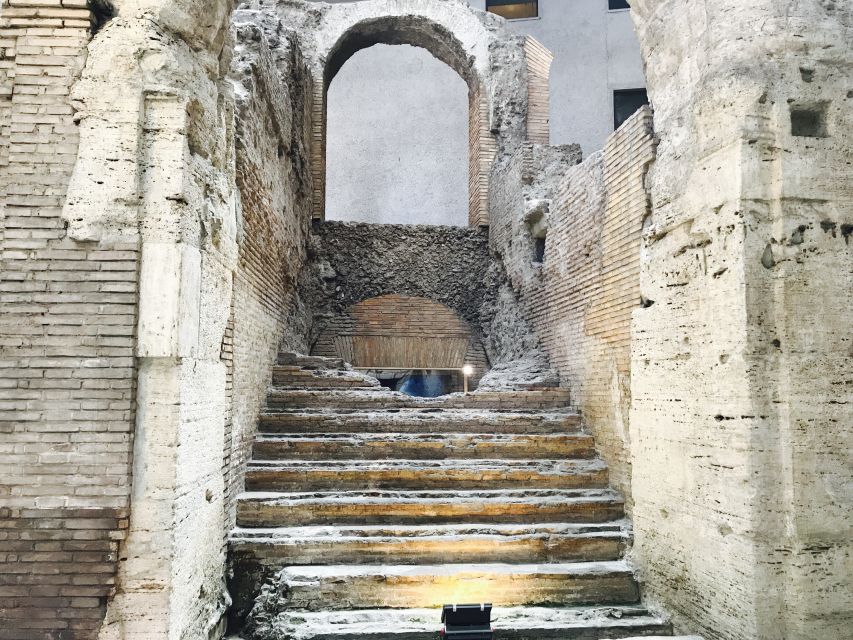
The Stadium of Domitian was the first and only stadium in Ancient Rome built entirely from masonry. That construction method gave the arena a more permanent form than a temporary wooden venue. The archaeological remains show parts of its structure, including travertine blocks, brickwork, marble columns, and details from the principal entrances.
You do not walk around the entire original arena. The accessible remains form a compact underground exhibition area. That is important to understand before booking. The experience gives you a close look at selected surviving sections, not a full-size reconstruction or a long archaeological walk.
More Underground Tours in Rome
- Colosseum: Underground and Ancient Rome Tour
★ 4.7 · 12,691 reviews - Rome: Crypts and Catacombs Underground Tour with Transfers
★ 4.6 · 5,341 reviews - Expert Guided Tour of Colosseum Arena OR Underground, and Forum
★ 4.5 · 5,041 reviews
Following the Audio Guide Through the Ruins
The audio guide is the main way you make sense of the site. It explains the stadium’s design, the development of Roman sports, and how spectators were arranged. Up to 30,000 people could be divided around the arena, so the commentary helps you picture the order and scale behind the public events.
I would use the guide carefully rather than rushing from one point to the next. Several numbered stations explain different parts of the ruins, but the numbering has occasionally felt unclear. The audio does not always line up perfectly with the pictures, and one part of the route can be hard to follow if you move ahead too quickly.
The content itself is generally easy to understand and informative. English is available, along with Spanish, French, German, Italian, Russian, and Portuguese. A self-guided format also gives you freedom to pause at the sections that interest you most. You can spend extra time examining the masonry or move faster through material you already know.
Families have an extra reason to consider this visit. A children’s audio guide is available, and one five-year-old found the audio pen and map engaging. The underground area is small enough that an adult may find it easier to keep track of a child than in a huge open monument, though the site was described as not pram-friendly.
Seeing the Stadium Through Films and 3D Reconstructions

Bare ruins can be difficult to read. A broken wall does not automatically tell you where the seats were, how the entrances worked, or what the arena looked like during a public event. This exhibition deals with that problem through visual material.
You see informative panels and a selection of unpublished photographs. A video show and 3D renderings help fill in the missing architecture. These displays are especially useful because much of the original stadium is no longer visible above ground.
The visual material also explains the later development of Piazza Navona. The current square grew from the shape and footprint of the ancient stadium, so the visit links the underground remains with the busy public space overhead. Afterward, you can look across the piazza with a better sense of what lies beneath its paving.
The displays are a strong part of the visit, but they also reinforce the fact that the site is a museum rather than a vast open ruin. If you want long stretches of standing walls and broad views across ancient architecture, you may find the experience short. If you enjoy seeing a place explained through models and images, the added context is worth the ticket.
Reading the Stonework Up Close
The most direct part of the visit is walking beside the surviving remains. Look for the different materials used in the structure. Travertine blocks show the strength of the main construction, while brickwork and traces of marble help you understand how the building was finished and organized.
The entrance details are particularly useful. The audio commentary gives you more information about the main entrances and the materials around them, so take time to study what is left rather than treating the ruins as a quick photo stop.
The site is not enormous, and you may be through it in about 45 minutes if you listen to every audio item. With the displays, photographs, video, and gift shop, an hour is a comfortable estimate. That makes it easy to pair with other central Rome sights without giving up half a day.
Street sounds can remain part of the experience. Because the excavation is below an active piazza and includes a street-level viewing point, you may hear traffic and city noise while listening. I would not expect the quiet of a remote archaeological site. The urban setting is also part of the appeal: you are seeing ancient Rome directly beneath one of modern Rome’s busiest public spaces.
Other things to see below Rome:
- The Original Roman Crypts and Catacombs Tour with Transfers
★ 4.5 · 4,896 reviews - Rome: Colosseum Underground Small Group Guided Tour
★ 4.7 · 4,844 reviews - Rome: St. Peter’s Basilica, Dome Climb, and Underground Tour
★ 4.8 · 3,404 reviews - Rome: Colosseum Underground, Arena & Forum Tour
★ 4.7 · 3,272 reviews
How Piazza Navona Changed Over Time
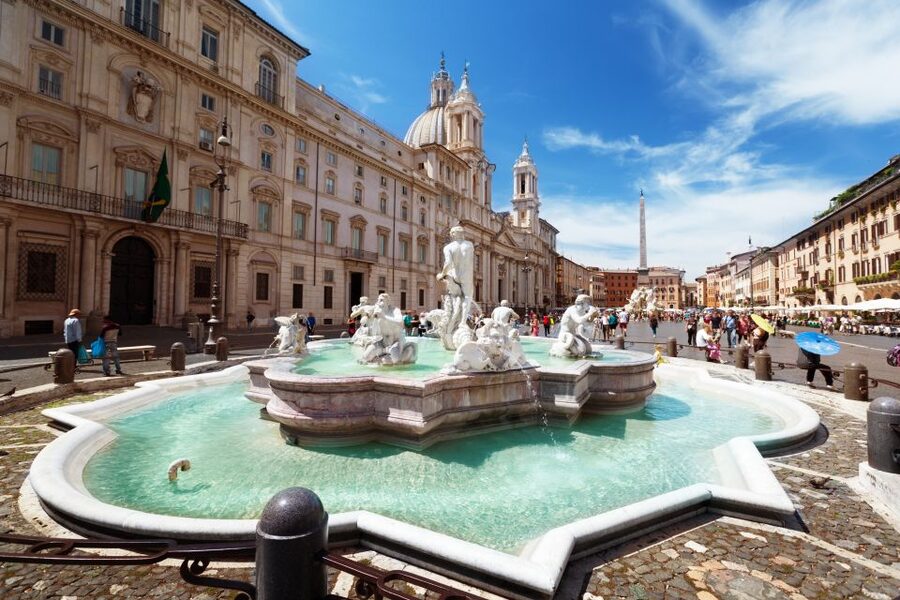
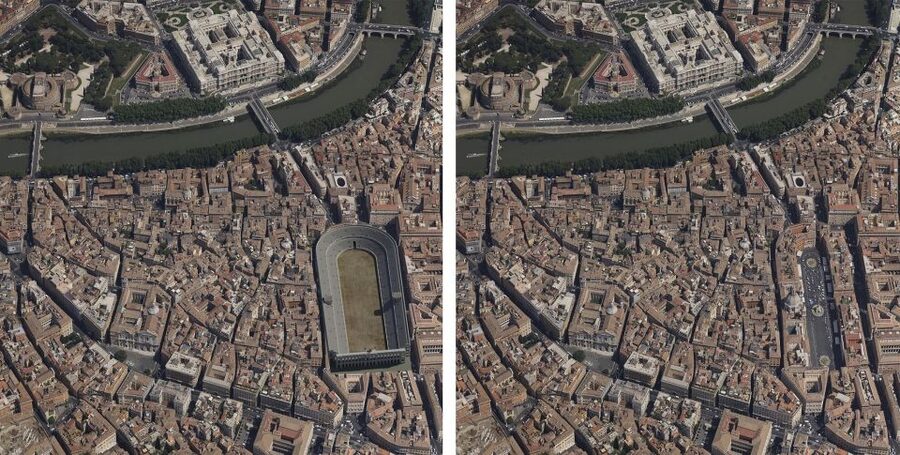
The stadium is not just a story about Roman sports. It also explains why Piazza Navona has its distinctive elongated form.
The audio guide connects the ancient arena with the later making of the piazza. That connection gives the visit extra value, because you can continue the lesson as soon as you return outside. Look at the shape of Piazza Navona and think of the stadium below it. The modern square is not random. Its outline preserves the memory of the earlier building.
The visit also puts Roman entertainment in a wider setting. The commentary covers the evolution of ancient sports and the role of rulers in public spectacles. You learn about the audience as well as the building, including how such a large crowd was divided around the arena.
This is a useful stop for anyone curious about daily life in Ancient Rome. The Colosseum often gets all the attention, but Roman public entertainment took place in more than one kind of venue. The Stadium of Domitian shows a different side of that culture, with an emphasis on athletic events and the way a purpose-built stadium handled a mass audience.
The Optional Aperitif or Wine Tasting

You can book the underground entry with an optional aperitif. That includes one cocktail and snacks at a viewpoint in the heart of Rome. Staff reserve your table at the meeting point, so the food and drink add-on gives you a simple way to end the visit without arranging a separate stop.
There is also a wine tasting option. It includes two wines paired with a traditional appetizer board. This makes sense if you want the archaeological visit to become part of a longer food and sightseeing break rather than a stand-alone museum stop.
I would choose the add-on based on your schedule, not because the underground site requires it. The ruins themselves take about an hour, and Piazza Navona has plenty of places to eat and drink. The included aperitif is most useful if you value convenience and a reserved table, while the wine option suits you if sampling Italian wines is already part of your Rome plans.
Check which option you are selecting at booking. The basic entry includes the Stadium of Domitian ticket and audio guide, while the cocktail, snacks, or wine tasting are only included with the relevant option.
Price, Time, and Practical Value
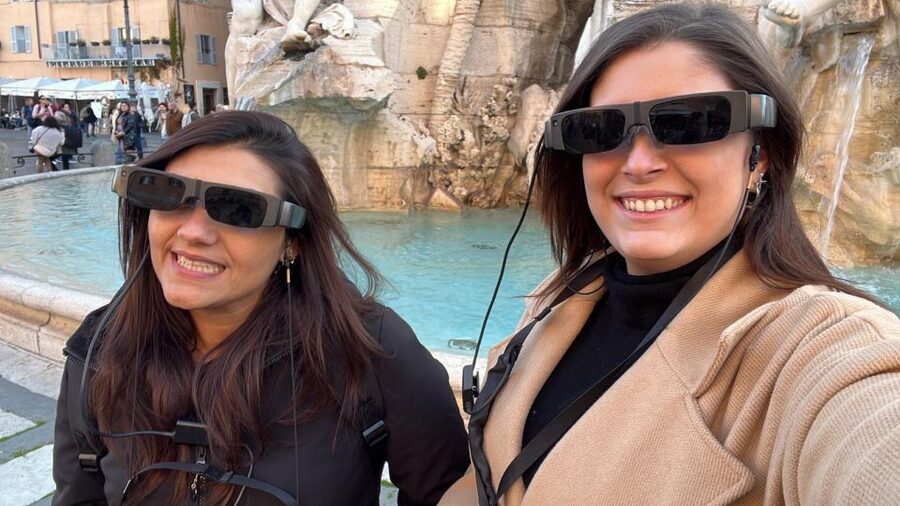
At $18 per person for the basic experience, this is a moderate-cost archaeological stop in central Rome. The value depends on what you want from a museum visit.
You get a short, focused visit with an audio guide, visual displays, and a rare chance to see an ancient stadium below Piazza Navona. You are paying for interpretation as much as for the ruins themselves. Without the reconstruction images and commentary, the compact remains would be harder to appreciate.
The ticket is good for one day, with starting times subject to availability. There is no transportation included, and you make your own way to Piazza Navona. That is not a problem for most visitors because the site is already in a central sightseeing area, but you should build in time to find the exact meeting point.
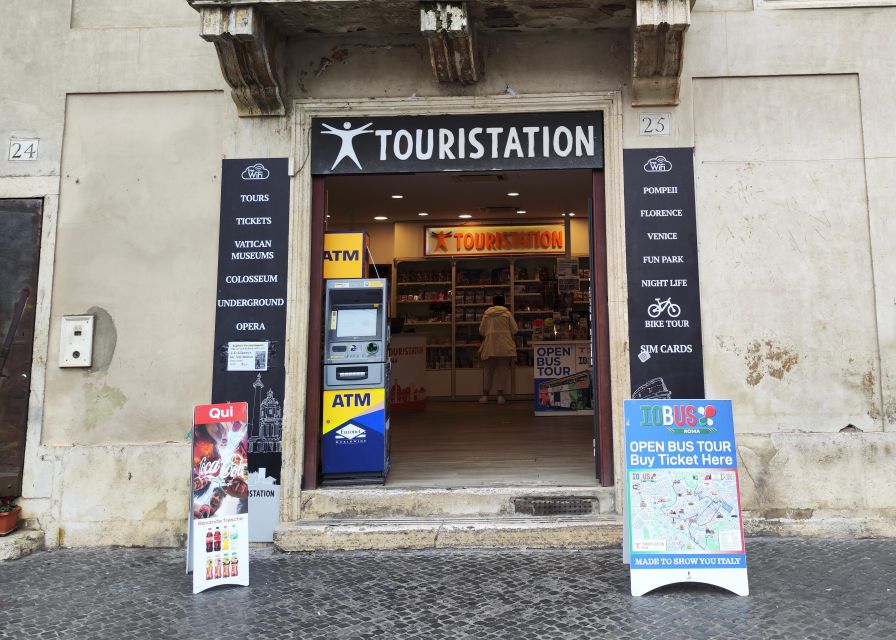
Redeem your voucher at the tourist point in front of the main fountain at Piazza Navona, 25. Allow a little extra time here. The entry process has occasionally involved exchanging a phone voucher at a ticket office a short walk away, then returning to the entrance with a printed ticket. Staff are helpful, but the extra step can be confusing if you arrive just before your planned start time.
The activity allows cancellation up to 24 hours before the visit for a full refund, and you can reserve now and pay later. The site is listed as wheelchair accessible. One family found it unsuitable for a pram, so parents with small children should check the current conditions if stroller access matters.
Who Will Get the Most From This Visit
I would recommend this experience to you if you enjoy archaeology but do not want another large, tiring monument. It is also a good choice after you have seen Rome’s headline sights and want something less familiar.
History fans will appreciate the connection between the stonework, Roman sports, crowd organization, and the present shape of Piazza Navona. Families may like the child-focused audio material and the manageable size. Independent visitors who prefer moving at their own speed will also find the self-guided format convenient.
You may want to skip it if your Rome schedule is very tight and you have not yet visited the Colosseum, Roman Forum, Pantheon, or other major sights. The site is interesting, but it is not as visually grand as those monuments. Some people also find the underground area smaller than expected, and a few feel that sections of the ruins can be seen from the street-level viewpoint.
For the best experience, arrive with realistic expectations. Think of this as a compact museum and archaeological walk, not a full underground expedition. Listen to the audio, watch the reconstruction material, and then spend a few minutes outside matching the stadium’s ancient shape with the modern piazza.
Should You Book the Stadium of Domitian Ticket?
Book it if you want a well-explained look at a lesser-known Roman site in a place you are probably visiting anyway. The audio guide, films, 3D reconstructions, and surviving masonry give the visit more substance than its small size suggests.
I would not make it a top priority on a first-time Rome itinerary with only a day or two available. But if your main monuments are covered, this $18 stop offers a useful change of pace and a better understanding of Piazza Navona. Choose the basic ticket for archaeology and history, or add the aperitif or wine tasting if you want a convenient food break afterward.
FAQ
Where is the Stadium of Domitian entrance?
Redeem your voucher at the tourist point in front of the main fountain at Piazza Navona, 25.
How far below Piazza Navona is the archaeological site?
The ruins are about 5 meters below street level.
How long does the visit take?
Most people can see the site in about 45 minutes to one hour, depending on how much time they spend with the audio guide and displays.
Is a guided tour included?
No. The ticket includes a self-guided audio guide, not a live guided tour.
Which audio guide languages are available?
The audio guide is available in Spanish, English, French, German, Italian, Russian, and Portuguese.
Does the ticket include food or drinks?
The basic ticket does not. Selected options include either one cocktail with snacks or a tasting of two wines with a traditional appetizer board.
Can I cancel the booking?
Yes. You can cancel up to 24 hours in advance for a full refund. You can also reserve now and pay later.
Just added in Rome
- Civitavecchia Private Transfer: From the Port to Rome Airport★ 5.0 · 309 reviews
- Civitavecchia Shore Excursion: Best of Rome Private Tour★ 5.0 · 247 reviews
- Civitavecchia Private Transfer from ship to FCO airport or Rome★ 5.0 · 245 reviews
- Food Tasty and History Tour in Civitavecchia★ 5.0 · 256 reviews
- Palatine Hill and Roman Forum Tour with Fast-Track Entrance★ 4.2 · 417 reviews
- Tivoli: Villa D’Este & Villa Adriana Pass & App Audioguide★ 4.4 · 364 reviews
- Tivoli: Villa D’Este Entry Ticket and App Audio Guide★ 4.3 · 191 reviews
- Vatican Museums & Sistine Chapel Skip-the-Line Guided Tour★ 4.6 · 254 reviews
Catacombs & Underground Tours, compared.
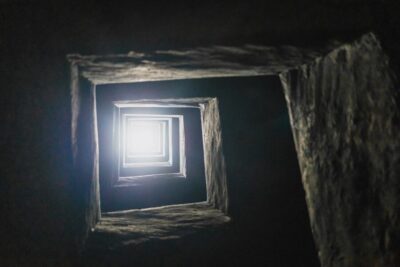
Naples Underground Entry Ticket and Guided Tour
Read our review →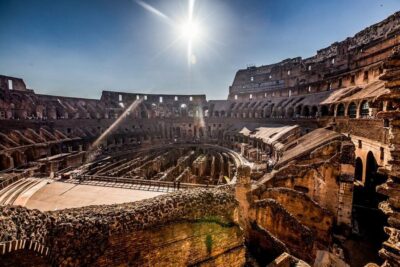
Colosseum: Underground and Ancient Rome Tour
Read our review →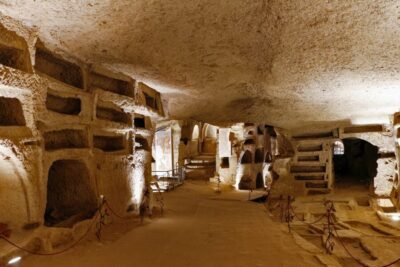
Catacombs of San Gennaro Entry Ticket & Guided Tour
Read our review →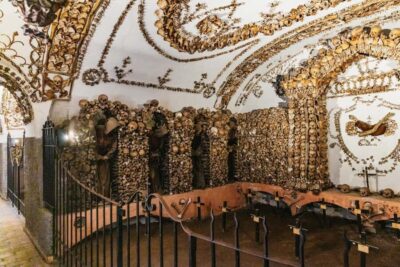
Crypts and Catacombs Underground Tour with Transfers
Read our review →
Expert Guided Tour of Colosseum Arena OR Underground, and Forum
Read our review →
The Original Roman Crypts and Catacombs Tour with Transfers
Read our review →
Colosseum Underground Small Group Guided Tour
Read our review →Browse the lists this tour appears in