
Reviewed · TOURS IN MILAN
Rome: Leonardo Da Vinci Experience Entry Ticket
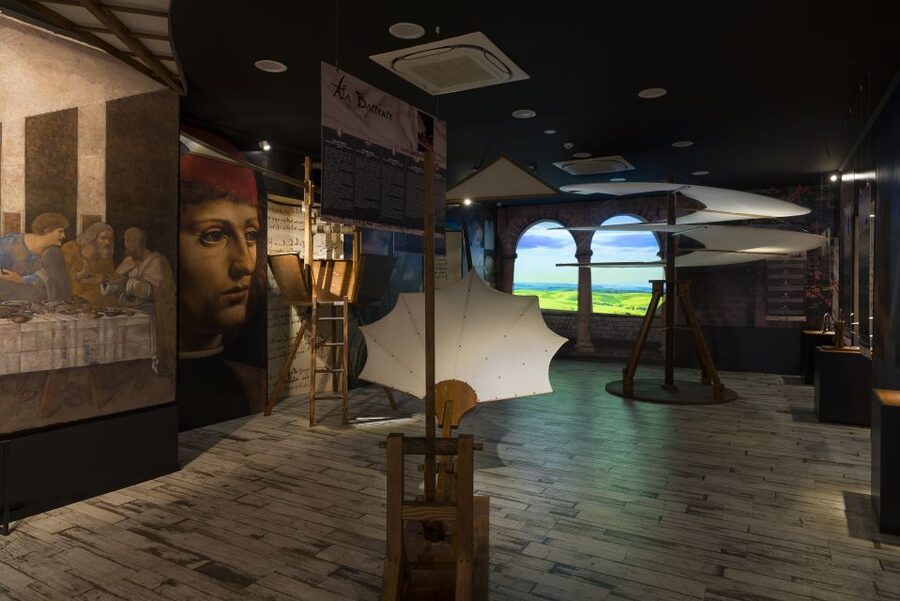
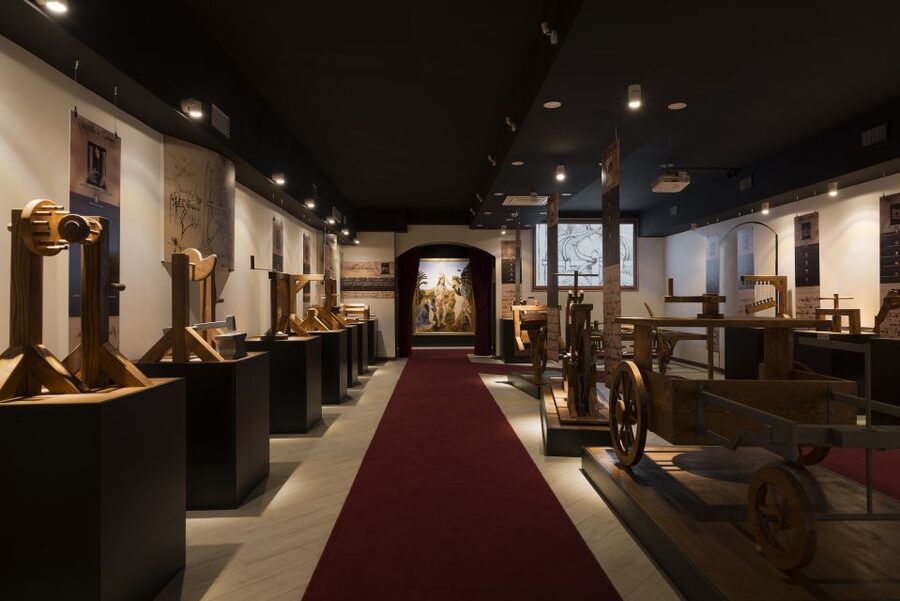
Leonardo da Vinci’s imagination feels surprisingly practical here. In five exhibition halls, you can handle working models of his flying machines, bridge designs, war engines, lifting devices, and other inventions, then see how some ideas connect to machines still used today. The hands-on displays make this more than a room of drawings.
I like the freedom to move at your own pace, and I like the audio guide, which explains both the inventions and the paintings in eight languages. The air-conditioning is another welcome touch near the Vatican, especially in Rome’s hot months. The main drawback is size: this is a compact museum, and some people finish in under an hour, while others spend two or three hours testing every model.
Key points to know before you go
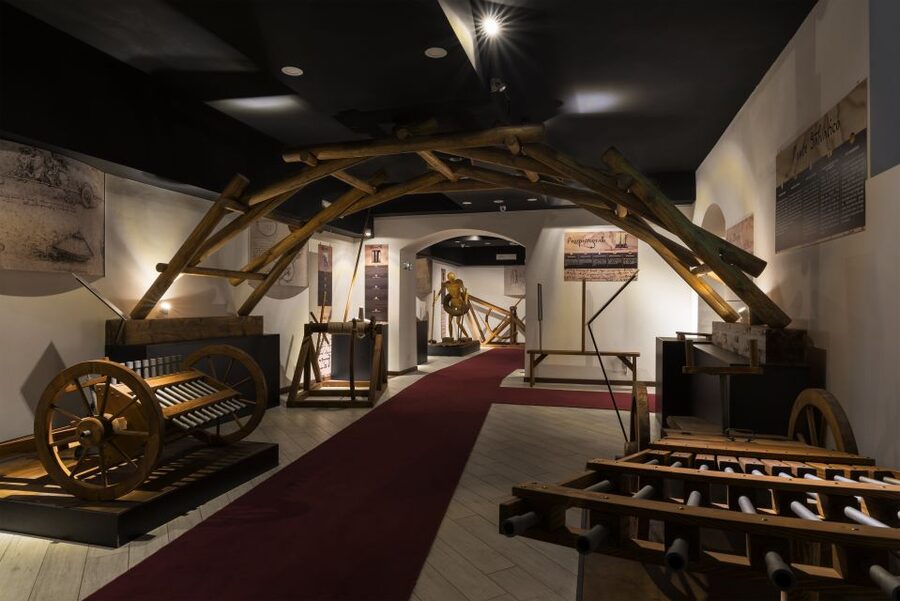
- Try around 50 reconstructed inventions: Selected machines can be touched, tested, or moved, giving you a better sense of how Leonardo’s ideas worked.
- See five themed exhibition halls: Flying machines, war machines, engineering devices, optics, and other designs are spread through the visit.
- Use the self-guided audio tour: Commentary is available in English, Italian, French, German, Spanish, Portuguese, Russian, and Chinese.
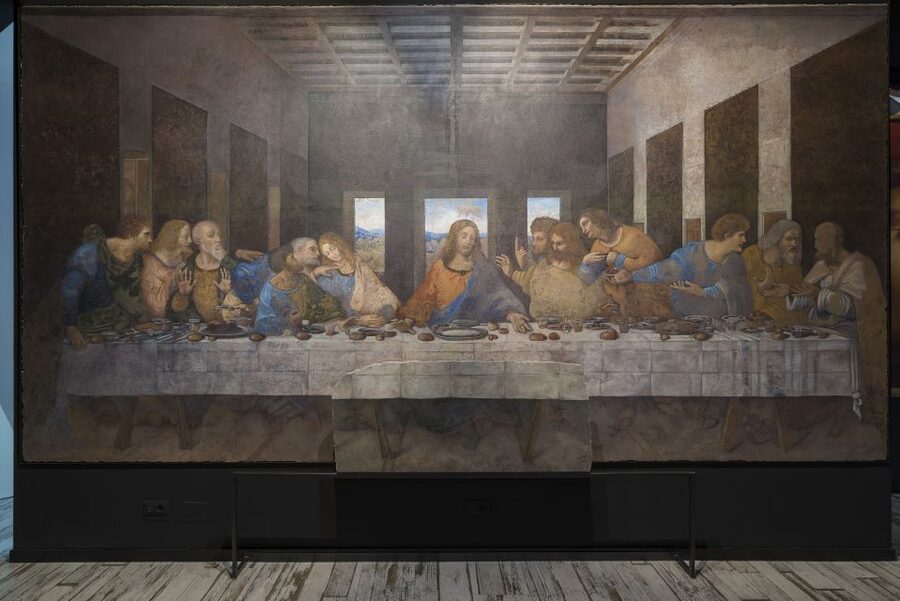
- Compare famous paintings: The gallery includes reproductions of The Last Supper, both versions of The Virgin of the Rocks, and Lady with an Ermine.
- Step into the Room of Mirrors: This small section connects Leonardo’s study of light with later photography and projection.
- Plan it beside a Vatican visit: The entrance is on Via della Conciliazione, about 150 meters from St Peter’s Square.
Why this small Rome museum is worth your time
Rome is full of grand churches, ancient ruins, and museums that can consume half a day. The Leonardo da Vinci Experience offers a different kind of stop: compact, interactive, and easy to fit between larger sights.
The focus is not on original Leonardo manuscripts or original paintings. Instead, you see models built from his drawings and carefully made reproductions of his art. That distinction matters. If you expect a major fine-art collection, the museum may feel modest. If you want to understand how Leonardo thought, the working machines are the real reason to come.
I find the practical side especially effective. A sketch of a machine can look mysterious on a page. A physical model shows the gears, levers, balance, or wing shape in a way that makes the idea easier to grasp. Several displays invite you to operate them, and children can experiment rather than simply look at objects behind glass.
The museum also works well for adults who know Leonardo mainly through the Mona Lisa or The Last Supper. His range was far wider. Here, you encounter the engineer, military designer, student of light, architect, and mechanical thinker alongside the painter.
A few more things to do in Milan
- Milan: Cathedral and Duomo’s Terraces Entrance Ticket
★ 4.6 · 61,054 reviews - Milan Cathedral: Duomo Terraces Ticket (No Church Access)
★ 4.6 · 6,111 reviews - Milan: Guided Walking Tour & Last Supper Visit with Ticket
★ 4.7 · 5,409 reviews
Starting near St Peter’s Square
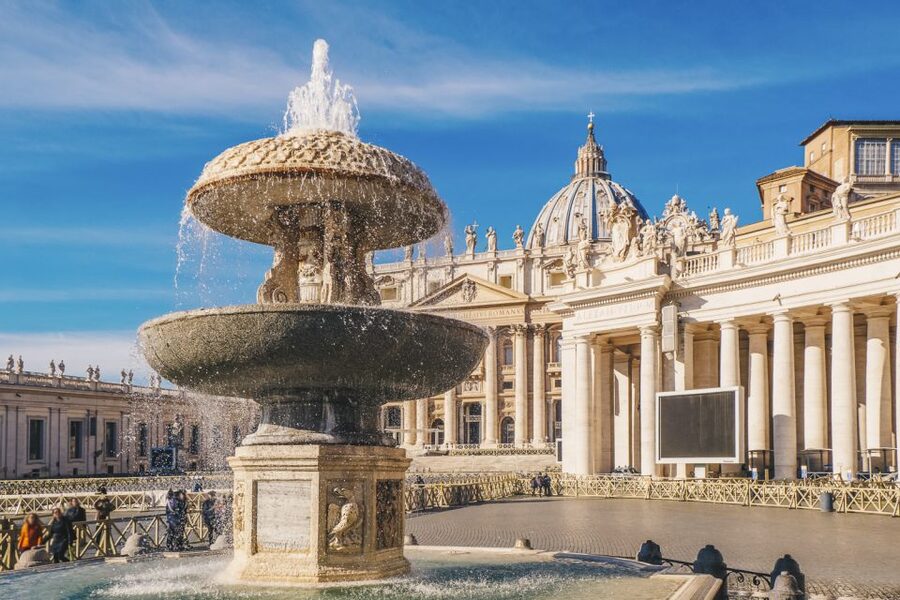
The museum is at Leonardo da Vinci Experience, Via della Conciliazione 19, roughly 150 meters from St Peter’s Square. That location makes it simple to pair with St Peter’s Basilica, the Vatican Museums, or a walk along Via della Conciliazione.
Do not treat the address as proof that the museum is part of the Vatican Museums. It is a separate attraction with its own entrance and ticket. That is useful, not a problem. You can visit it when you have a spare hour without committing to another major museum reservation.
The entrance area provides the audio guide, and the visit is self-guided. You are not tied to a group or a fixed spoken tour. That lets you pause at the machines that interest you and move quickly past displays that do not.
Bring headphones. This is the most practical tip for the visit. The audio equipment is supplied, but your own headphones can make listening more comfortable and avoid holding the guide close to your ear. The audio content is available in English, Spanish, French, Italian, German, Portuguese, Russian, and Chinese.
The building is fully air-conditioned and has restrooms. Free WiFi is included. These are small details, but they matter when you are coming in from a hot Roman street or fitting the museum into a long sightseeing day.
Five halls of machines, models, and experiments
The main display is arranged through five exhibition halls. The exact pace is up to you, but the visit moves from Leonardo’s mechanical and engineering ideas to his artistic work.
You can expect models of flying machines, war machines, lifting equipment, digging devices, and other designs. Some are large enough to make a strong photo backdrop, including a helicopter model and an armored tank. The models are built in line with Leonardo’s designs, though they are modern reconstructions rather than inventions personally built by Leonardo.
The flying machines are an obvious crowd-pleaser. Leonardo studied birds and flight long before powered aviation existed. Seeing a full-size reconstruction helps you understand both the boldness and the limits of those ideas. You can take photos beside the helicopter model, which gives the section a playful edge.
The war machines show another side of his work. Leonardo designed weapons and military devices, including a machine gun concept and armored vehicles. The displays let you consider his technical skill without turning the visit into a simple celebration of the artist. He was curious about machines that could build, lift, move, defend, and destroy.
The engineering displays may be the most useful for understanding his influence. You can encounter designs linked to bridges, water movement, lifting, digging, and construction. The unsupported suspension bridge is a memorable example of how Leonardo approached a basic problem with a clear, elegant solution.
Some activities let you build or operate parts of the designs. One particularly useful hands-on task is building a version of Leonardo’s bridge. You do not need an engineering background to follow it, and the activity gives children a reason to stay engaged while adults listen to the explanation.
You can also find models related to the bicycle, water skis, sewing machine, solar-energy machinery, submarines, and underwater breathing equipment. The point is not that Leonardo created modern versions of these objects in the form we know today. The value is seeing how early he explored similar problems: how to move through water, transport a person, use energy, or make repetitive work easier.
The Room of Mirrors and Leonardo’s study of light
The Room of Mirrors is one of the museum’s most distinctive stops. It connects Leonardo’s interest in light and vision with the later development of photography and projection.
This is a good place to slow down with the audio guide. It is easy to glance at mirrors and move on, but the section works best when you consider how observation shaped Leonardo’s art and scientific studies. His paintings depend on light, shadow, proportion, and the way the eye reads a face or body.
The room also provides a popular photo opportunity. It is not a large exhibit, so it can feel crowded when several people want pictures. Still, it adds variety to a visit otherwise centered on machines and painted copies.
Same base, a different kind of day:
- Milan: Da Vinci’s Last Supper Guided Tour
★ 4.7 · 10,143 reviews - Milan: Science and Technology Leonardo da Vinci Museum Entry
★ 4.5 · 7,169 reviews - Milan: City Sightseeing Hop-On Hop-Off Bus with Audio Guide
★ 4.0 · 6,256 reviews - Milan: Milan Cathedral Direct Entrance – Terrace Excluded
★ 4.5 · 5,782 reviews
The painting gallery, from The Last Supper to Lady with an Ermine
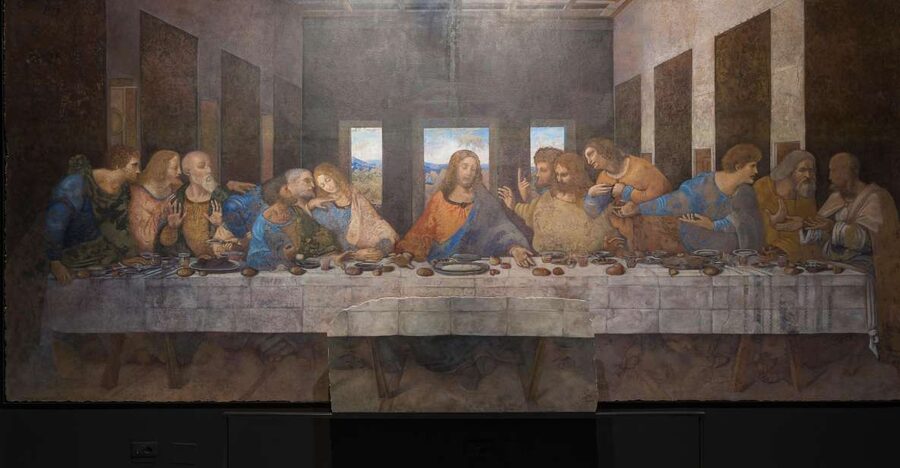
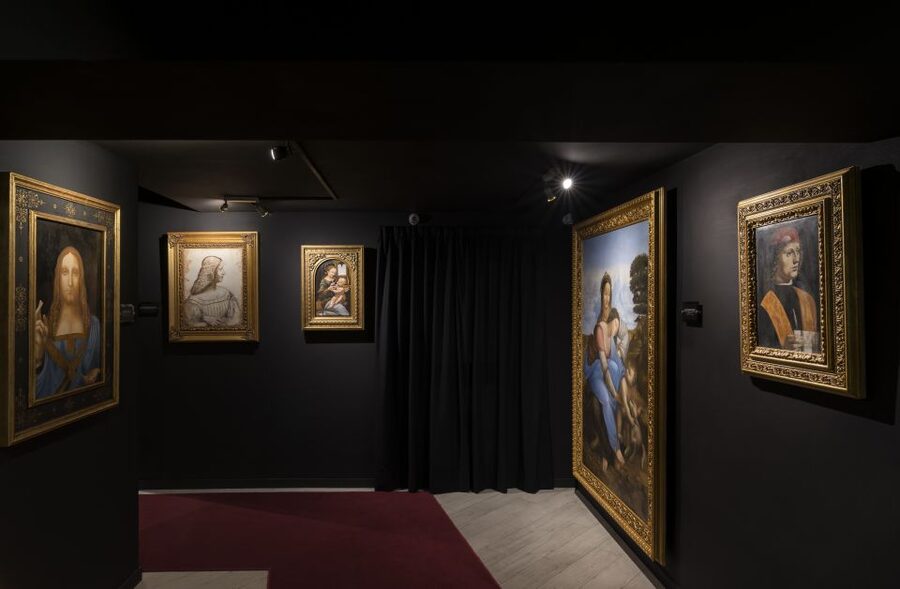
Leonardo’s art receives its own attention in the Exhibition Gallery. You can see around 20 certified reproductions painted by prominent Vatican Museum restoration artists.
The most famous image is the full-sized reproduction of The Last Supper. The original mural is in Milan, so this copy gives you a chance to study the composition while in Rome. The painting also has a strong connection to popular culture through Dan Brown’s The Da Vinci Code, which helped make its supposed mysteries familiar to a wide audience.
The audio guide provides context for the painting rather than asking you to admire it as a giant decoration. You can listen to explanations of the figures, arrangement, and artistic choices. The reproduction cannot replace seeing the original, but its size helps you understand the power of the scene.
The gallery also includes both versions of The Virgin of the Rocks. The originals are held at the Louvre in Paris and the National Gallery in London. Seeing the two versions together in reproduction allows you to compare them without crossing two countries.
Lady with an Ermine gives you another view of Leonardo’s artistic development. The painting helped change traditional portraiture by giving the subject a stronger sense of movement and personality. It is worth listening to the commentary here, even if you came mainly for the inventions.
This part of the museum is less interactive than the machine halls. That is a benefit if you want a quieter change of pace, but it may feel less exciting to young children. I would let children handle the machines first, then use the paintings as a shorter second section.
How long the visit really takes
The ticket is valid for one day, but the actual museum visit is usually much shorter. Plan on about an hour if you move steadily and listen to selected audio sections. Allow 90 minutes if you want to hear most of the commentary and try the interactive displays.
You can spend two or even three hours here if your group wants to test every machine, take photos, and listen carefully to the art explanations. That range is useful when planning. This is not a full-day museum, but it can comfortably fill a gap between Vatican-area plans.
I would not save it for the end of an exhausting sightseeing day if you want to get the most from it. Tired visitors can still enjoy the displays, but the engineering explanations take more attention than a quick photo stop. A morning visit or a mid-day air-conditioned break is a better fit.
One practical point: arriving early may help reduce waiting. The museum can become busy, and one visitor found that an early start avoided a long delay. The exhibits are indoors, so the air-conditioning helps, but it does not make a crowded room feel spacious.
What the $18 price buys you
At about $18 per person, the ticket is reasonable if you treat the visit as an interactive museum near the Vatican. You receive admission, the audio guide, WiFi, air-conditioning, and restroom access. There is no separate guided tour included.
The value depends on your expectations. The museum is not huge, and the number of original objects is limited because the displays are reconstructions and reproductions. If you only glance at the exhibits, the price can feel high for a visit of 20 or 30 minutes.
If you use the audio guide and try the working models, the calculation improves. You are paying for an accessible explanation of Leonardo’s ideas, not just a room of static copies. Families can also get more value because children have things to touch and test.
You may find the ticket cheaper at the museum entrance than through an online booking platform. The online option can still be useful if you value advance planning, flexible cancellation, or reserving now and paying later. Cancellation is free up to 24 hours before the visit, according to the stated terms.
Best for families, curious adults, and Vatican-area itineraries
Families are a strong match for this attraction. Children can experiment with the machines, build a bridge, and see familiar ideas presented as physical objects. The visit also gives parents a way to introduce art and science without asking children to stand quietly in front of paintings for hours.
Teenagers may appreciate the engineering and war-machine sections more than a conventional art gallery. The photo opportunities beside the helicopter, tank, and mirror room add a modern, informal element.
Adults who enjoy invention, design, or the history of technology should allow extra time. I particularly like how the museum corrects the narrow image of Leonardo as only the painter of the Mona Lisa. His notes covered an astonishing range of problems, and the models make that range clear.
It is also useful for anyone staying near the Vatican who wants a shorter indoor activity. You can visit without giving up an entire day. The gift shop sells books, models, and child-friendly building sets, so families may want to leave a few minutes for that.
It is less suitable if your priority is original Renaissance art. You should visit the Vatican Museums, the Louvre, London’s National Gallery, or Milan’s refectory for original works. This museum is best understood as an educational exhibit built around Leonardo’s designs and painted reproductions.
Small drawbacks to keep in mind
The compact size is the clearest limitation. One person may finish in about 20 minutes, while another spends several hours. That difference comes down to how much you use the audio guide and interact with the models.
The museum can also feel less polished when the room is busy. The displays are hands-on, so several people may want to use the same device at once. Going early can help.
The audio guide is useful, but it may take a little time to understand how the system works. Bring your own headphones if possible, and allow a few minutes at the beginning to get comfortable with it.
Finally, do not confuse reproduction with original artwork. The gallery is valuable for comparison and explanation, but it cannot offer the same experience as standing before Leonardo’s original paintings. The museum succeeds on its own terms when you come to explore ideas, mechanisms, and artistic technique.
Should you book the Leonardo da Vinci Experience?
I would book it if you are near St Peter’s Square, traveling with children, or curious about Leonardo’s inventions beyond his famous paintings. The interactive machines, multilingual audio guide, mirror room, and air-conditioned setting make it an easy addition to a Rome itinerary.
I would skip it if your schedule is already packed with major art museums or if you want only original masterpieces. For most people, one to two hours is enough, and the $18 price makes the visit worthwhile when you take time to operate the models and listen to the explanations.
Think of it as a focused, hands-on introduction to Leonardo’s working mind. It is small, but it gives you something the grand museums often do not: a chance to see how an idea might move, lift, fly, or float.
FAQ
Where is the Leonardo da Vinci Experience in Rome?
It is at Via della Conciliazione 19, about 150 meters from St Peter’s Square.
How long does the visit take?
A quick visit can take about an hour or less. If you listen to the audio guide, try the interactive machines, and study the paintings, you might spend 90 minutes to three hours.
Is an audio guide included?
Yes. The audio guide is included with admission and is available in English, Italian, French, German, Spanish, Portuguese, Russian, and Chinese.
What can I see inside the museum?
You can see five exhibition halls with around 50 reconstructed inventions, including flying machines, war machines, bridge designs, lifting devices, water-related machines, and other engineering models. There is also a Room of Mirrors and a gallery of around 20 painted reproductions.
Is The Last Supper an original painting?
No. The museum displays a full-sized reproduction of The Last Supper. The gallery also includes reproductions of both versions of The Virgin of the Rocks and Lady with an Ermine.
What should I bring?
Bring headphones for the audio guide. The museum also provides free WiFi, air-conditioning, and restrooms.
Just added in Milan
- Highlights and hidden gems of Milan Bike Tour★ 5.0 · 491 reviews
- Milan Gourmet Tour: A Premium Tasting Experience by Do Eat Better★ 5.0 · 241 reviews
- Private Milan Food Walking Tour of Brera★ 5.0 · 217 reviews
- Leonardo3 The World of Leonardo: Tickets for the Interactive Exhibition★ 4.0 · 220 reviews
- Da Vinci’s Last Supper and Santa Maria delle Grazie Church Tour★ 4.5 · 218 reviews
- Learn to Cook Italian Recipes with an Italian Chef★ 5.0 · 283 reviews
- La Scala Theatre and Museum guided experience★ 4.5 · 664 reviews
- La Scala Theatre and Museum Tour in Milan With Private Guide★ 3.5 · 384 reviews
Tours in Milan, compared.
Cathedral and Duomo’s Terraces Entrance Ticket
Read our review →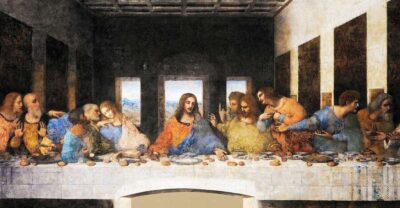
Science and Technology Leonardo da Vinci Museum Entry
Read our review →
City Sightseeing Hop-On Hop-Off Bus with Audio Guide
Read our review →
Milan Cathedral: Duomo Terraces Ticket (No Church Access)
Read our review →
Milan Cathedral Direct Entrance – Terrace Excluded
Read our review →
Guided Walking Tour & Last Supper Visit with Ticket
Read our review →
Fast-Track Milan Cathedral and Terraces Guided Tour
Read our review →Browse the lists this tour appears in