
Reviewed · OPERA & CLASSICAL CONCERTS
Rome: La Traviata at St. Paul’s Within the Walls
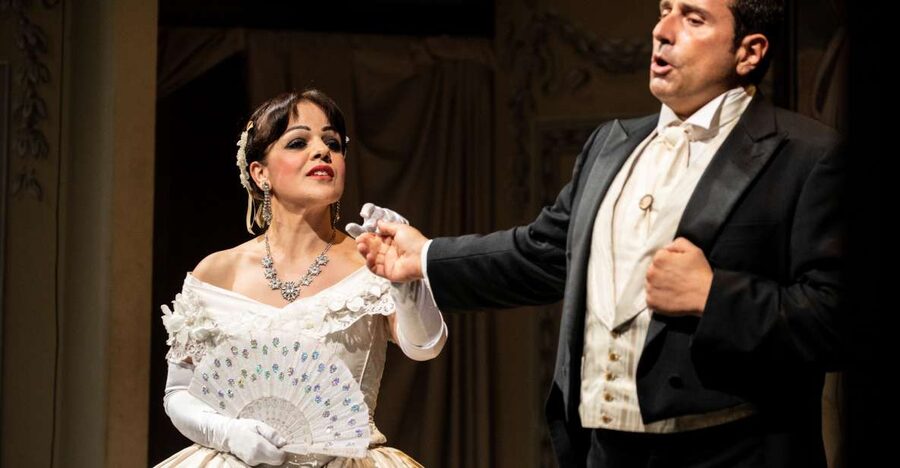
Verdi’s La Traviata gets an unusual Roman setting here: St. Paul’s Within the Walls, a grand church rather than a conventional opera house. You hear the full three-act work with singers, costumes, scenes, lighting, and the Orchestra I Virtuosi dell’opera di Roma, all inside a historic-looking space near the heart of Rome.
I like two things right away. The singers and musicians provide a proper operatic performance, not a short collection of famous arias. I also like the church itself, where the architecture and strong acoustics give the evening a close, intimate feel. The $47 starting price is a fair way to hear a major Italian opera without paying traditional opera-house prices.
The main catch is the seating. The chairs and benches sit on a flat floor, so people in the back or at the sides may have a hard time seeing the performers. Front and VIP seating can make a real difference, and the seats may feel firm during a 130-minute performance.
Key points before booking
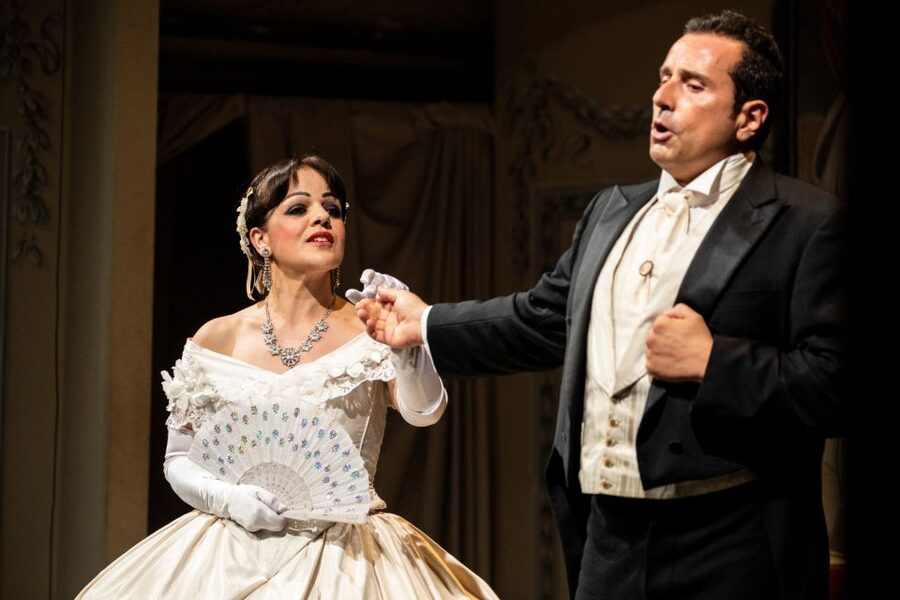
- A complete La Traviata in three acts: You get the full story of Violetta and Alfredo, rather than only a handful of famous numbers.
- A church with powerful acoustics: St. Paul’s Within the Walls creates a memorable setting, though its reverberation can soften some vocal detail.
- Front seats are worth considering: A flat floor means sightlines are weaker from the back, and a piano or other equipment may block some views from certain side seats.
- Professional Italian ensemble: The Orchestra I Virtuosi dell’opera di Roma is made up of professors from leading Italian conservatories.
- A good first opera: The familiar love story, visual staging, and emotional music make this approachable even if you do not speak Italian.
- Allow two hours and ten minutes: The performance is long enough to feel like a full evening out, with breaks between acts.
Why La Traviata works so well in Rome
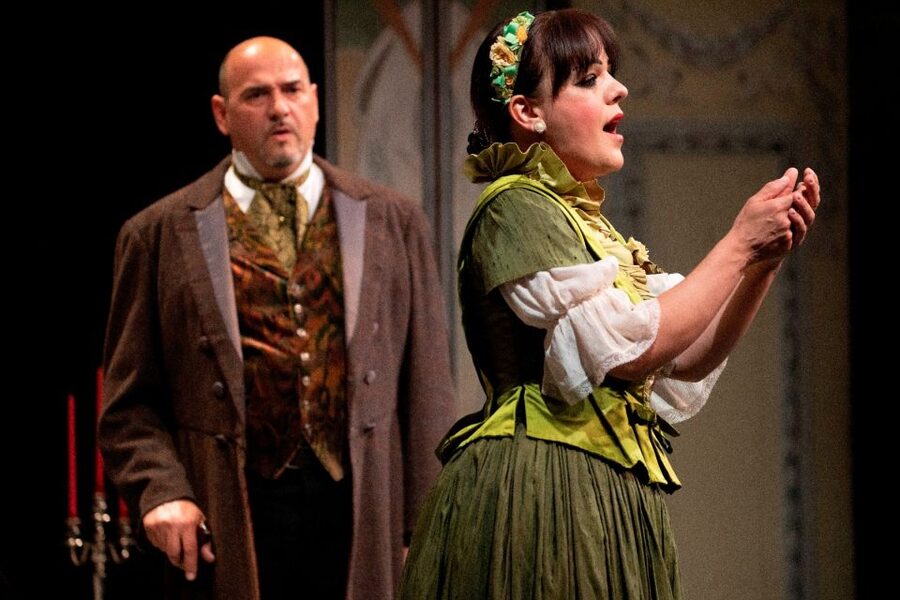
La Traviata is one of the easiest operas to approach for a first visit. Verdi gives you memorable melodies, clear emotional stakes, and a plot that needs little background explanation.
The story follows Violetta, a well-known Parisian courtesan, and Alfredo, a young nobleman. Their love is genuine, but social pressure, illness, and sacrifice push the relationship toward tragedy. The opera is set in Paris in the mid-1800s, but the themes are direct enough to cross language and time.
You will hear the performance in Italian. Even without understanding every word, you can follow much of the action through the singing style, costumes, movement, lighting, and the familiar shape of the story. It helps to read a short plot outline before arriving, especially because no English-language presentation details are provided.
The complete version matters. A shorter concert might give you the big tunes and leave out the quieter scenes that explain why the characters make painful choices. Here, the three-act structure gives the story room to build, pause, and turn tragic.
More Opera and Classical Concerts in Rome
- Rome: “The Most Beautiful Opera Arias” Concert
★ 4.3 · 2,495 reviews - Rome: Opera Concert at Palazzo Poli – Fontana di Trevi
★ 4.7 · 1,026 reviews - Rome: The Three Tenors at St. Paul’s Church Concert Ticket
★ 4.7 · 699 reviews
Entering St. Paul’s Within the Walls
St. Paul’s Within the Walls gives this production much of its character. The church provides a setting with height, stone, and formal architectural details, so the evening feels different from sitting in a standard theater.
That setting is both a strength and a limitation. The acoustics can make the singers sound strikingly powerful, and the lighting adds atmosphere. Several performances have been praised for the way the church turns the opera into a more intimate event.
The sound is not always perfectly crisp. Church reverberation can blur fast musical passages, and a few sections may leave the orchestra sounding stronger than the singers. This is most likely to matter if you are focused on every word rather than the overall musical effect.
The venue also lacks the full theater machinery and polished stage separation of a major opera house. You may find the scenes simpler, with the church itself doing much of the visual work. I see that as a fair trade for the unusual setting, but it is worth knowing what you are buying.
What happens during the 130-minute performance
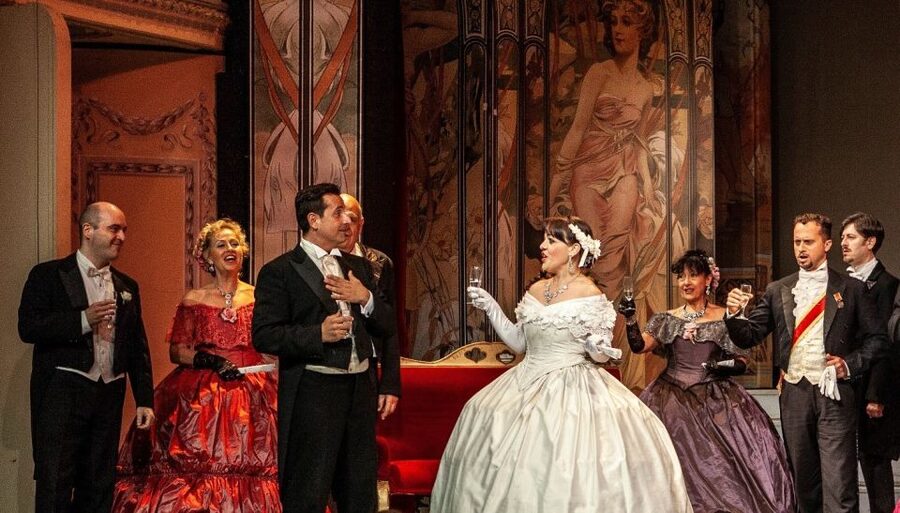
The performance presents La Traviata in three acts, with professional singers, orchestra, costumes, and scenes. It is not simply a recital. You get the dramatic progression from the first meeting of Violetta and Alfredo through the final act.
The orchestra is the Orchestra I Virtuosi dell’opera di Roma. The ensemble specializes in the Italian lyrical tradition and is formed by professors from prestigious Italian conservatories. That background gives the musical side of the evening a serious foundation.
The singers carry the drama. Strong projection is important in a church, and the cast is expected to perform without the kind of amplification you might find in a modern venue. The best moments come when the voices, orchestra, costumes, and lighting work together.
You should expect pauses between acts. One performance was described as having too many breaks and feeling long, especially in a warm room. For most people, the 130-minute length is manageable, but it is not a quick one-hour cultural stop between dinner and another attraction.
The emotional range is broad. La Traviata can move from lively social scenes to tender romance and then to heartbreak. That variety helps hold your attention, even when the language is unfamiliar.
Seating: the most important practical choice
The seating layout deserves more attention than the ticket categories alone. The church floor is not sloped like a theater, and seats are generally arranged on one level. A tall person in front of you, or someone moving their head to find a clear angle, can affect your view.
If seeing the singers clearly matters to you, choose the best category you can afford. Front-row and VIP tickets repeatedly receive praise for giving a better view of faces and stage action. They also let you watch the musicians more closely, which adds another layer to the evening.
The front is not perfect in every position. A piano or other equipment may obstruct part of the view from a front corner seat, so being near the stage does not guarantee a clear sightline from every angle. A central seat is likely to be more useful than a far-side seat, though the exact layout can vary.
Arrive early enough to exchange your voucher at the St. Paul’s Within the Walls ticket counter and get oriented within your seating zone. Early arrival is especially sensible if your ticket does not assign a specific chair or if you want the clearest possible view.
The seats are a practical weakness. Wooden benches or firm cushions may become uncomfortable during two hours, particularly after a full day of walking around Rome. Take that into account when comparing a cheaper rear section with a better category.
Other evenings out in Rome:
- Rome: The Four Seasons by Vivaldi
★ 4.7 · 595 reviews - Rome: Italian Opera Concert and Traditional Dinner
★ 4.1 · 453 reviews - Rome: Giuseppe Verdi’s “La Traviata” Live Performance
★ 4.3 · 435 reviews - Rome: St. Paul’s Within the Walls Church Opera Arias Ticket
★ 4.6 · 312 reviews
Sound, singing, and the church acoustics
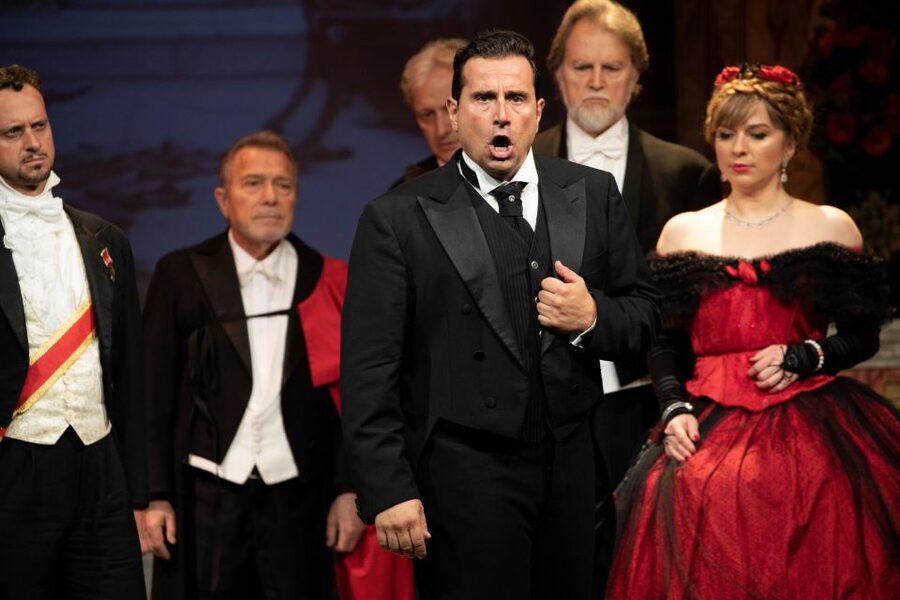
The strongest part of this experience is the vocal performance. The singers are professional, technically trained, and asked to fill a large church with sound. Even people attending their first opera can recognize the skill involved in sustaining long phrases and projecting high notes without losing control.
The acoustics can be thrilling. The church gives voices and instruments a full sound, and the setting adds a sense of occasion that a small modern room may not provide.
The same acoustics can also work against clarity. Reverberation sometimes makes the words less distinct, and the orchestra may cover the singers during certain passages. If you care most about hearing every line clearly, a standard opera house may offer better balance.
Your seat affects sound as well as sight. A central forward position should give you a more direct experience, while side or rear seats may make the sound feel less balanced. The exact result depends on the performance and the placement of the orchestra.
This is a live performance, so small differences from night to night are part of the experience. The attraction here is not technical perfection. It is the combination of strong voices, live instrumental music, and a Roman church that changes the feel of the opera.
Cost and what the $47 ticket delivers
At about $47 per person, this is a sensible cultural purchase for Rome. The ticket includes entrance to the opera, and the price covers a full 130-minute performance with singers, orchestra, costumes, and scenes.
The value becomes clearer if you compare it with the alternatives. You are not paying only for a famous tune in a pretty church. You receive a complete work by Verdi, performed by a dedicated ensemble in an atmospheric venue. For a first opera, it offers a substantial evening without the cost of a high-end production.
The different seating categories complicate the price question. The lowest fare may be excellent if you mainly want the sound and setting. If you want to follow facial expressions and stage movement, paying extra for the front or VIP area may be the smarter use of your money.
Food and drinks are not included. There is no promise of a bar service, so plan your meal before or after the performance. One practical note from the evening experience is that you may be able to bring your own drink, but you should not count on refreshments being available inside.
You can reserve now and pay later, and cancellation is available up to 24 hours before the start for a full refund. Those policies make it easier to fit the opera into a changing Rome schedule.
Tips for first-time opera visitors
You do not need to be an opera expert to enjoy this performance. A little preparation will make the night much easier.
- Read the story of La Traviata before you go. Knowing who Violetta and Alfredo are helps you follow the drama when the words move quickly.
- Choose a front or central seat if visual detail matters to you.
- Arrive early to exchange your voucher at the ticket counter and settle into your seating area.
- Plan for the full 130 minutes, including pauses.
- Wear something comfortable enough for firm seating.
- Keep your phone away during the performance. Flash photography and video recording are not allowed, and staff may need to remind people of that rule.
- Consider the temperature. The church can feel warm, and air circulation may not always be enough for everyone.
- Bring patience for the acoustics. Some passages may sound less sharply defined than they would in a modern concert hall.
The production is in Italian. That is no barrier for many people, but it does mean that preparation matters more if you want to follow the dialogue and plot details closely.
Who will enjoy this experience most
I would recommend this to anyone who wants an accessible first taste of opera in Rome. The famous story, recognizable music, and visual staging give you plenty to follow, even if you have never attended an opera before.
It also suits people who value atmosphere as much as polish. The church is the point. You get a distinctive Roman setting and a close relationship with the performers, not the grand machinery and formal distance of a major opera house.
Music lovers will appreciate the live orchestra and trained singers. Returning visitors may also find it worthwhile, especially if they want to hear La Traviata again in a smaller and more personal setting.
This may not suit you if comfortable seating and perfect sightlines are essential. The flat floor, firm benches, warm conditions, and occasional sound imbalance can interfere with the evening. A person with mobility needs should note that the activity is listed as wheelchair accessible, but the seating arrangement is still worth confirming when booking.
Families with young children may find the length difficult, though the opera itself has enough drama and visual action to hold the attention of older children. Pets are not allowed.
Should you book La Traviata at St. Paul’s Within the Walls?
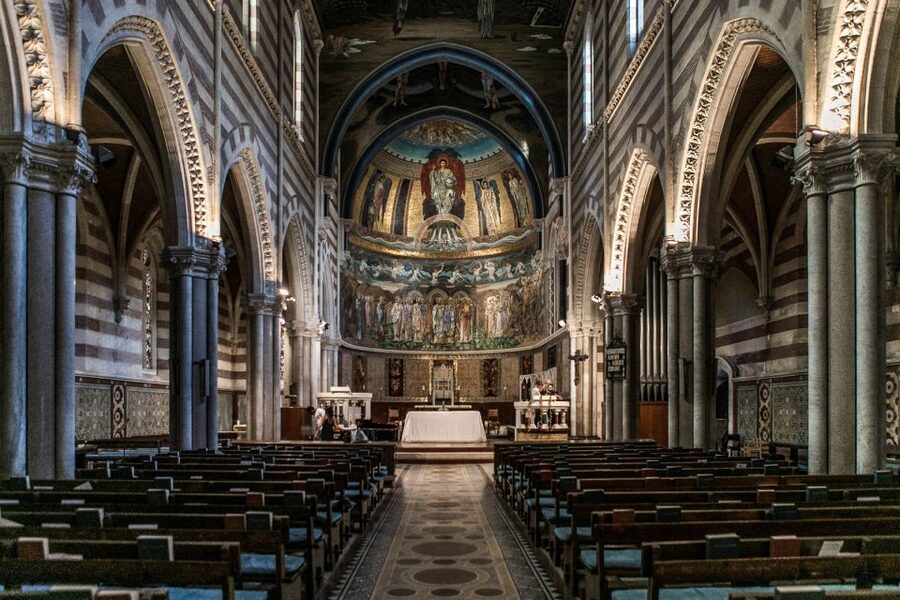
Book it if you want a reasonably priced, full-length Verdi opera in an atmospheric Roman church. The best reasons are the quality of the singing, the live Italian orchestra, and the unusual setting. Those elements create an evening that feels far more personal than a quick concert of opera highlights.
Choose a better seating category if the budget allows, and aim for a central forward position. If you are happy to trade some visibility for a lower price, the rear sections still give you the music, costumes, and church atmosphere, but your view may be limited.
I would skip it only if you need theater-style seating, cool air, and exact vocal clarity. For everyone else, this is a strong-value way to spend a Roman evening, especially as a first opera experience.
FAQ
Where is La Traviata performed?
The opera is performed at St. Paul’s Within the Walls in central Rome, in the Lazio region of Italy.
How long does the performance last?
The stated duration is 130 minutes, or about two hours and ten minutes.
What is included in the ticket?
The ticket includes entrance to the La Traviata performance. Food and drinks are not included.
Is the opera performed in Italian?
Yes. The activity language is Italian, and the host or greeter is also listed as Italian.
Is the venue wheelchair accessible?
Yes, the activity is listed as wheelchair accessible.
How do I use my voucher?
You must exchange your voucher at the St. Paul’s Within the Walls ticket counter before the performance begins.
Just added in Rome
- Civitavecchia Private Transfer: From the Port to Rome Airport★ 5.0 · 309 reviews
- Civitavecchia Shore Excursion: Best of Rome Private Tour★ 5.0 · 247 reviews
- Civitavecchia Private Transfer from ship to FCO airport or Rome★ 5.0 · 245 reviews
- Food Tasty and History Tour in Civitavecchia★ 5.0 · 256 reviews
- Palatine Hill and Roman Forum Tour with Fast-Track Entrance★ 4.2 · 417 reviews
- Tivoli: Villa D’Este & Villa Adriana Pass & App Audioguide★ 4.4 · 364 reviews
- Tivoli: Villa D’Este Entry Ticket and App Audio Guide★ 4.3 · 191 reviews
- Vatican Museums & Sistine Chapel Skip-the-Line Guided Tour★ 4.6 · 254 reviews
Opera & Classical Concerts, compared.
La Fenice Opera House Entry Ticket with Audio Guide
Read our review →
Milan’s Must See: Half-Day Tour of Last Supper, Duomo & La Scala
Read our review →
Interpreti Veneziani Concert at Church of San Vidal
Read our review →
Santa Monaca Church Italian Opera Concert Ticket
Read our review →
Vivaldi’s Four Seasons Live Classical Music Concert
Read our review →
Vivaldi’s Four Seasons Concert & Music Museum Visit
Read our review →Browse the lists this tour appears in