
Reviewed · WALKING TOURS
Rome: Ghostly Nighttime Walking Tour
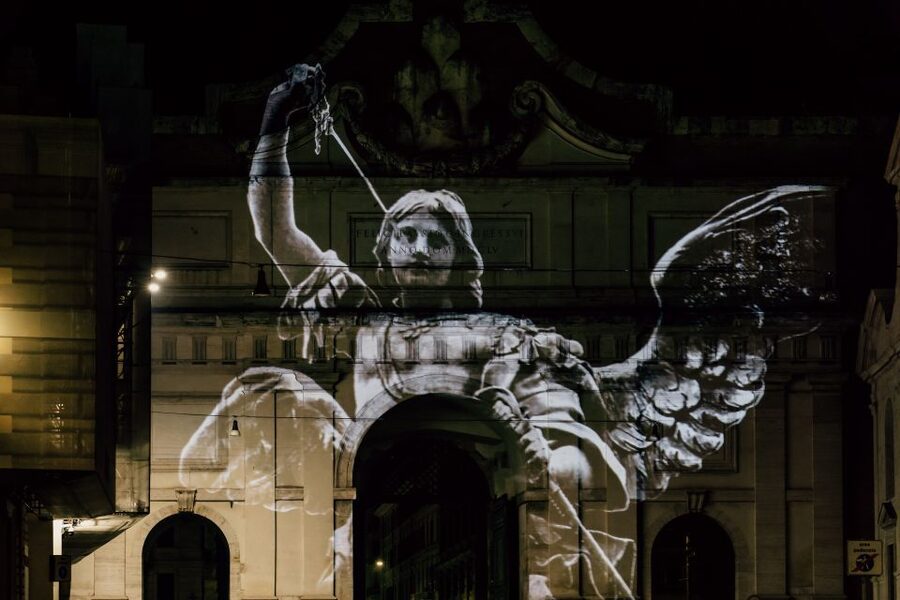
Rome’s dark side is most effective after sunset. On this two-hour walk, you pass candlelit squares, old churches, bridges, and narrow streets while hearing about ghosts, executions, murders, and sinister popes. The stories give familiar sights a sharper edge, especially Campo de’ Fiori and Castel Sant’Angelo.
I like the way the tour mixes famous places with overlooked corners, and I like the guides’ lively style. Maham, Dinara, Sarah, Diletta, Domenica, and Cayie are praised for clear storytelling, humor, energy, and good answers to questions. The main drawback is that the tour can feel more historical than supernatural, so do not book it expecting a full haunted-house show.
Key points to know before you book
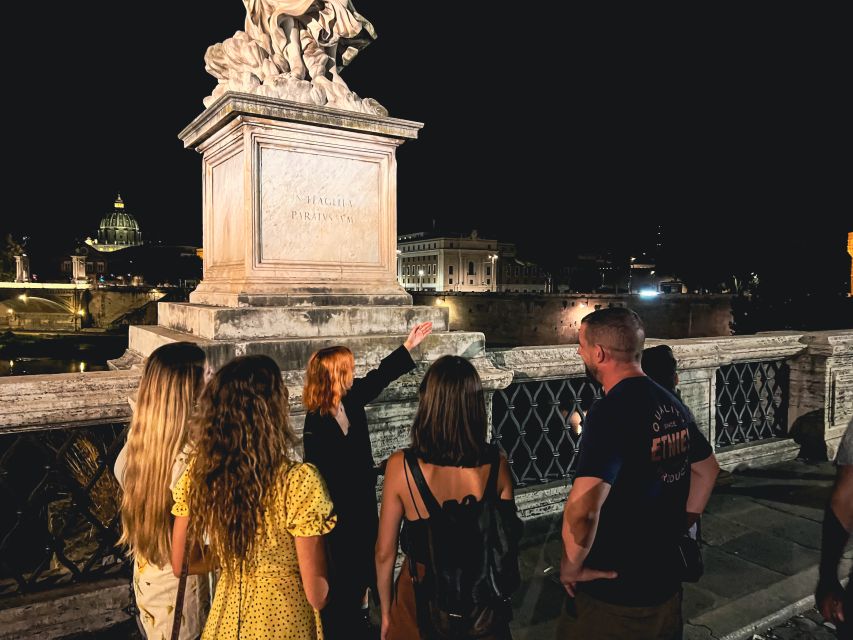
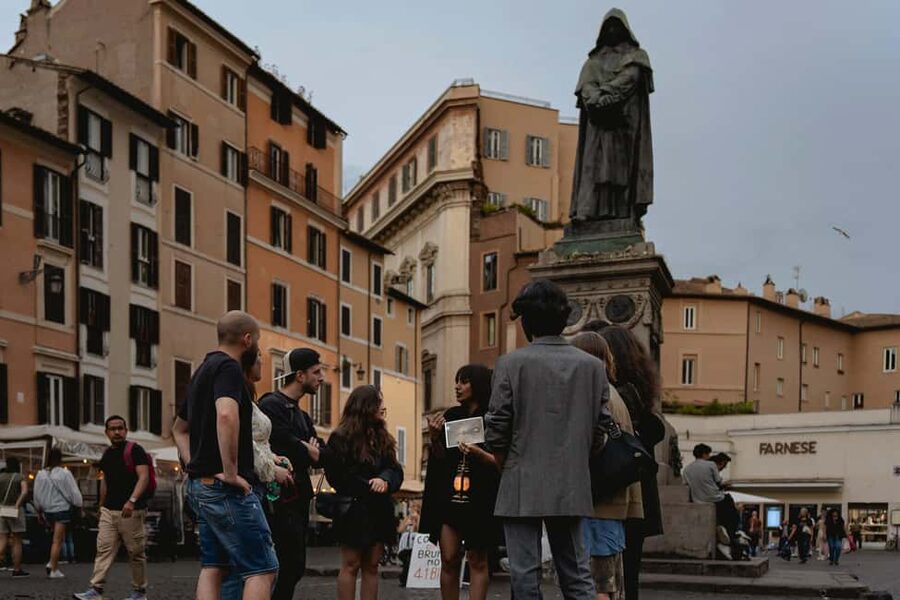
- Start beneath Giordano Bruno’s statue: Meet directly in the center of Campo de’ Fiori, where the guide holds an iPad or red sign.
- A dark-history route through central Rome: The walk includes Piazza Farnese, Ponte Sisto, Via Giulia, the Fountain of the Mask, two churches, and Castel Sant’Angelo.
- The stories matter more than special effects: Expect spoken tales about executions, famous ghosts, crime, religious figures, and disturbing local customs.
- Strong guide-led experience: Maham, Dinara, Sarah, Diletta, Domenica, and Cayie are praised for energy, clear English, and engaging delivery.
- Good evening value at $28: You get two hours of guiding and nighttime sightseeing without paying for an attraction admission.
- Comfortable shoes are essential: You will be walking between several stops, often outdoors, after dark.
Why Rome’s ghost stories work best after sunset
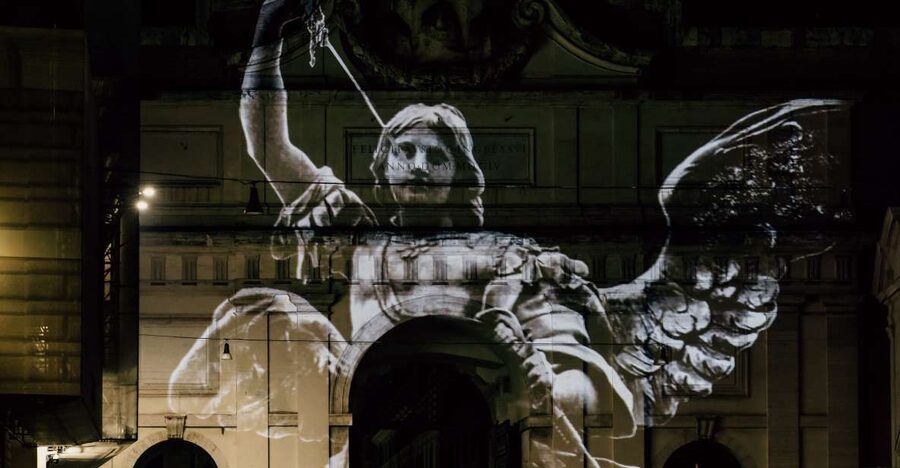
Rome can feel familiar in daylight. You see the fountains, churches, grand palaces, and bridges as a series of photo stops. At night, the same places take on a different mood. Shadows deepen, crowds thin, and a guide can connect each square to the city’s grim past.
That is the real appeal here. This is not a tour built around actors jumping from behind a wall. It is a storytelling walk through real places, using Rome’s long record of violence, religion, punishment, and political power as its material.
The tone sounds lively rather than relentlessly frightening. Guides such as Sarah and Diletta are praised for being upbeat and interactive, while Dinara is noted for strong English and vivid storytelling. Maham is often praised for charisma and enthusiasm, and one guide brought a book with pictures to help explain the stories.
You should expect a mix of fact, local legend, and eerie atmosphere. The tour is a good match if you enjoy learning why a place feels unsettling. It is less suitable if you want paranormal investigations, special effects, or a very frightening experience.
Other walks around Rome:
- Rome: Trastevere & Campo de Fiori Street Food Walking Tour
★ 4.9 · 2,768 reviews - Rome: Paranormal Night Walking Tour & Secret Backstreets
★ 4.9 · 1,921 reviews - Rome by Night Walking Tour – Legends & Criminal Stories
★ 4.5 · 1,003 reviews
Campo de’ Fiori and Giordano Bruno set the mood
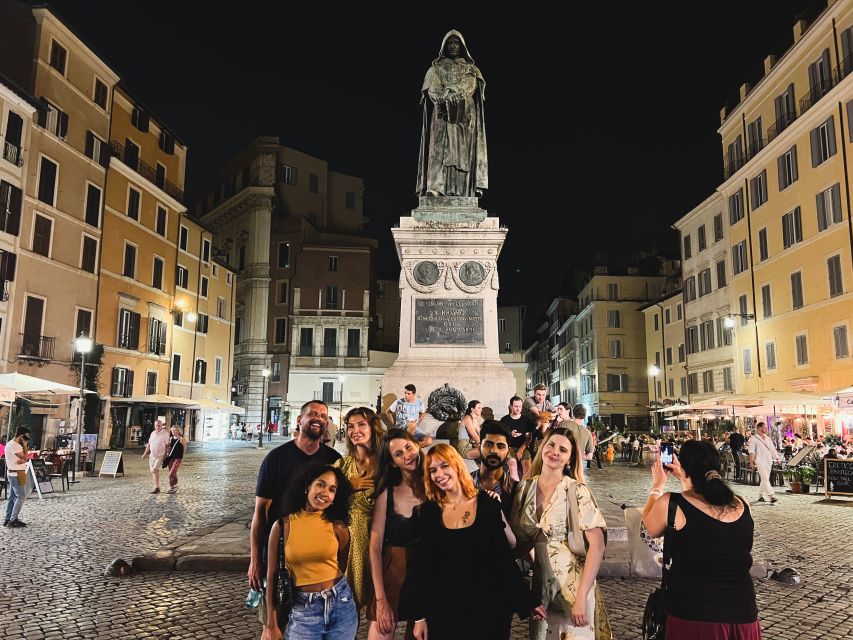
The meeting point is the statue of Giordano Bruno in the center of Campo de’ Fiori. Look for a guide holding an iPad or red sign. Arrive with enough time to find the statue, since the square has several entrances and can be busy before the walk begins.
Starting here is a smart choice. The statue itself carries a serious tone, and the square is one of Rome’s best-known public spaces. By night, its open shape and surrounding buildings provide a strong setting for stories about belief, punishment, and public spectacle.
The guide spends about 15 minutes at the statue and surrounding area. You are not simply being shown a monument. You are being asked to view a familiar square through the darker events connected with it.
This opening also gives you a chance to settle into the group. The guides are expected to keep the walk interactive, and several are praised for making it easy to ask questions. If you want the most from the tour, speak up when something catches your interest. A good question can turn a short stop into a fuller explanation.
Piazza Farnese brings Rome’s powerful families into view
From Campo de’ Fiori, the route moves to Piazza Farnese. This is a handsome square, but the tour uses it for more than architecture. The stories place Rome’s grand public spaces in the context of powerful popes, artists, and political figures.
The stop lasts about 15 minutes and includes walking and guided sightseeing. That timing is enough for a focused story, but not for an extended architectural lecture. You will get the darker angle rather than a complete explanation of every building around the square.
I like this part of the walk because it shows how the tour works. You see a polished, elegant part of Rome, then hear about the human behavior that took place behind the formal facades. The contrast is often more effective than visiting a supposedly haunted location in isolation.
If you have already taken a standard Rome sightseeing tour, this stop can add a new layer. If you have not, it still gives you a useful introduction to how religion, art, power, and violence overlap in the city’s past.
Small Madonnas and the less obvious corners of Rome
The route then passes a Madonna della Pietà, one of the small Madonna images known as madonnelle. These small religious images are easy to miss when you walk through Rome on your own. In a guided setting, they become part of the city’s visual and spiritual fabric.
This is one of the quieter moments of the tour. You are not stopping at a famous monument with a large crowd around it. Instead, you are being directed toward a smaller detail that can disappear into the streetscape.
That matters because the experience is not only about the biggest landmarks. It shows you how Rome’s stories can be attached to corners, images, doorways, and local traditions. The mood here may be more atmospheric than frightening, but it helps break up the larger historical stories.
Keep your camera ready, as photography is listed among the things to bring. Night photography can be tricky, so do not expect every picture to come out perfectly. The point is to notice the setting, not to turn the walk into a photo session.
Same base, a different kind of day:
- Vatican: Museums & Sistine Chapel Entrance Ticket
★ 4.5 · 144,003 reviews - Vatican Museums & Sistine Chapel Tour with Optional Basilica
★ 4.3 · 67,413 reviews - Colosseum, Roman Forum & Palatine Guided Tour
★ 4.7 · 63,148 reviews - Vatican Museums, Sistine Chapel & St Peter’s Basilica Guided Tour
★ 4.5 · 39,149 reviews
Ponte Sisto and the Fountain of the Mask
Ponte Sisto is one of the route’s major outdoor stops. The bridge gives you a chance to see Rome after dark from a more open viewpoint, while the guide continues the walk’s themes of death, crime, and unsettling local events.
The tour also reaches the Fountain of the Mask. Its unusual name fits the mood, but the value comes from the explanation around it. This is the kind of stop that benefits from a guide because the story gives the object a reason to matter.
Both stops are listed as guided walks of about 15 minutes. That means you should be ready to listen while standing outdoors, then move on when the story ends. There is no indication that the route includes time to sit, eat, or enter attractions, so plan accordingly.
The bridge and fountain also help vary the pace. After the darker material at the opening stops, you get more walking, open-air views, and time to see Rome at night. The route avoids the heat and daytime crowds, which is especially useful during warm months.
The church of bones and the church of the dead
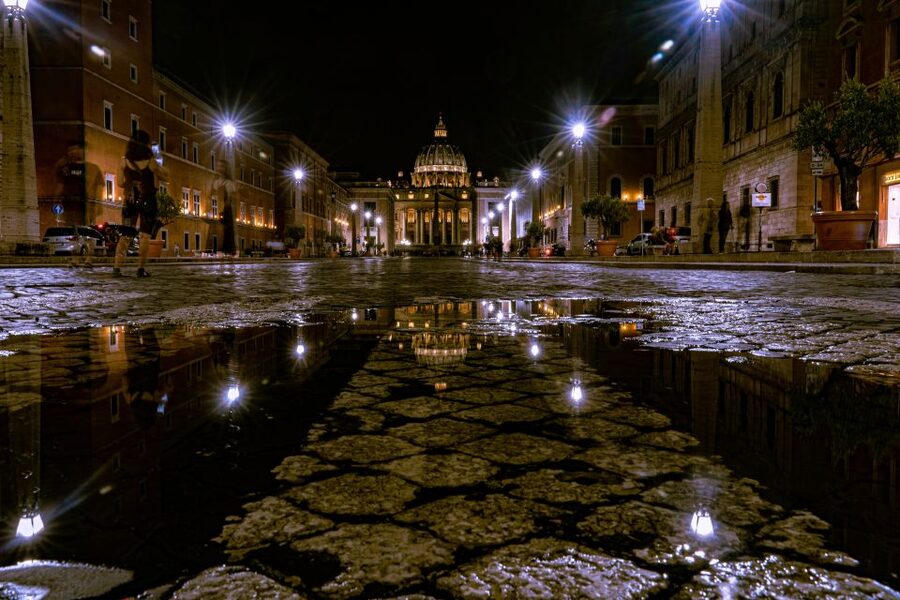
The most distinctive part of the route is the Church of Santa Maria dell’Orazione e Morte. The tour describes a chapel decorated with human bones, giving you one of the clearest examples of Rome’s macabre religious imagery.
This is likely to be the moment that best suits the tour’s title. The setting is not just a street corner connected to a story. It is a place where death is part of the visual design. If you are sensitive to bones, executions, or grim religious material, keep that in mind before booking.
The route also visits Santa Maria in Monserrato degli Spagnoli. Together, these churches show two sides of the walk: one strongly tied to death imagery, and the other part of Rome’s network of historic religious spaces.
The stops are described as visits with guided sightseeing, each lasting about 15 minutes. The supplied details do not promise interior access at every point, so you should think of the tour as an outdoor walking experience with selected visits rather than a church-entry tour.
The guide’s delivery matters here. A dry presentation could make the material feel like a list of grim facts. Guides such as Diletta and Maham are praised for making their explanations interactive, while Sarah is praised for bringing strong energy to the group. That style helps keep the subject interesting without making it needlessly heavy.
Castel Sant’Angelo gives the walk its strongest finish
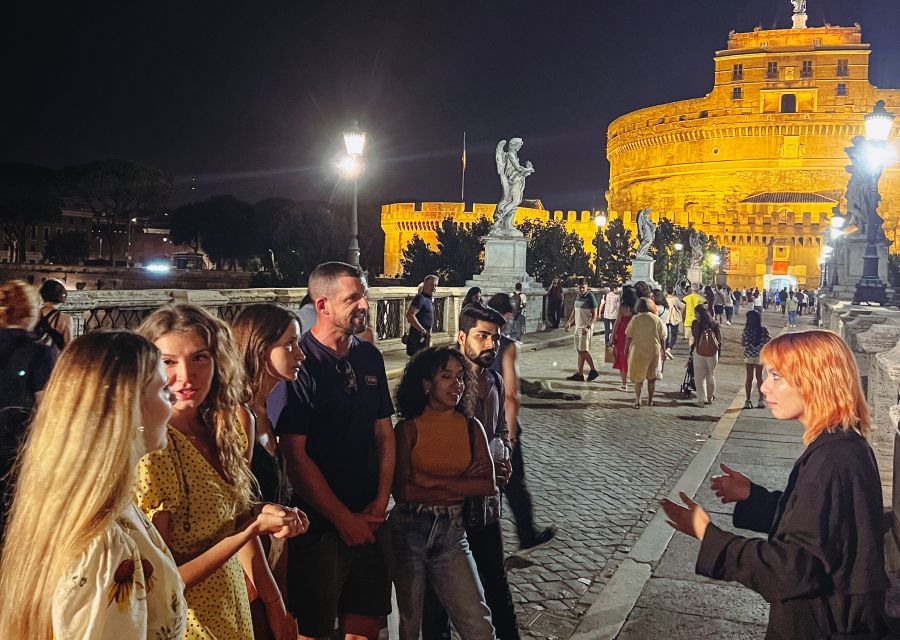
The route ends at Castel Sant’Angelo, one of Rome’s most dramatic nighttime sights. The fortress-like building is already associated with power, imprisonment, death, and religious history, so it makes a fitting final setting for a ghost walk.
The stop includes guided sightseeing and walking for about 15 minutes. You will see the exterior as part of the evening route and hear the darker stories tied to the area. The tour does not include entry to the castle, so do not expect an interior visit.
This finish also gives you a strong final view of Rome. After hearing stories about famous figures, executions, and paranormal activity, you reach a landmark that looks suitably severe after dark. It is a good place to pause and take in the atmosphere before heading on.
There is one practical detail to clarify. The route information identifies Castel Sant’Angelo as the finish, while the meeting details also say the activity ends back at the meeting point. Confirm the exact end point when you book, especially if you have dinner reservations or a late train.
What the $28 price gets you
At $28 per person, this is fairly priced for a two-hour guided walk in central Rome. You are paying for a live English-speaking guide, a planned route through several historic areas, and stories that would be difficult to assemble on your own.
The value is strongest if you already plan to see Campo de’ Fiori, Ponte Sisto, or Castel Sant’Angelo. The tour changes how you look at those places without asking you to pay separate admission fees. It also fills an evening slot, which can be useful after museums close or during hot days when midday sightseeing is tiring.
The price is less compelling if you want a formal academic tour or a full paranormal investigation. The experience depends heavily on the guide’s delivery, and the subject matter can lean toward historical storytelling. The high rating and repeated praise for guides such as Maham, Dinara, Sarah, and Diletta suggest that the human side of the tour is a major part of its value.
Private groups are available. That option may suit you if you want a more personal pace or prefer asking more questions, but the supplied information does not give a separate private-group price.
How to prepare for the two-hour walk
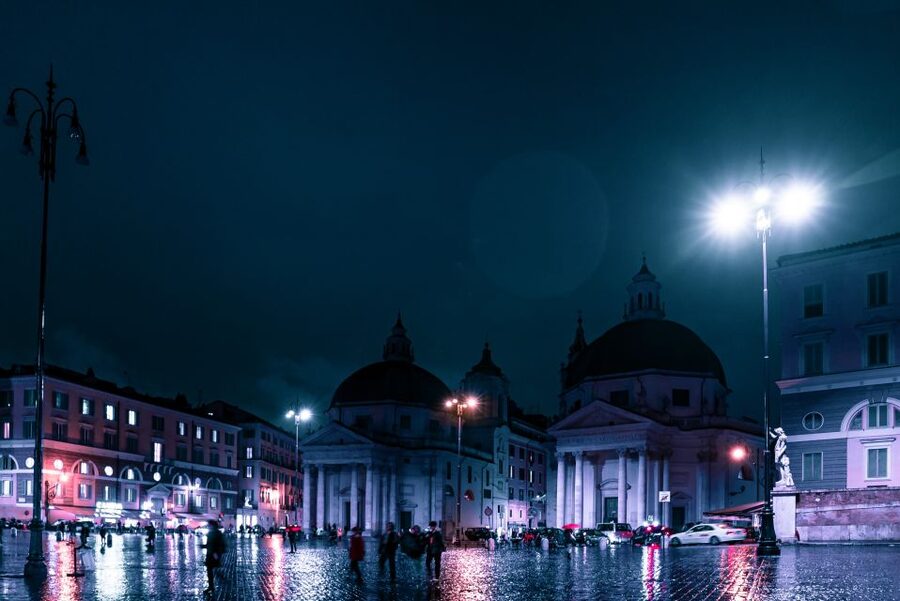
Wear comfortable shoes. The route includes several stops spread across central Rome, with walking between Campo de’ Fiori, bridges, churches, and Castel Sant’Angelo. Even though the tour is only two hours, you will spend much of it on foot and outdoors.
Bring a camera, but treat it as an evening stroll rather than a photo tour. You will want to capture the mood of the squares and bridges, though low light may limit the results.
The tour is offered in English with a live guide. Reviews praise clear speech, strong storytelling, and an ability to answer detailed questions. Guides are also praised for keeping groups together, which matters on Rome’s busy streets.
You can cancel up to 24 hours before the activity for a full refund, and you can reserve now while paying later. Starting times vary, so check availability for the date you want. The experience lasts two hours.
Who should book this Rome ghost walk?
I would recommend it to you if you enjoy unusual history, atmospheric night walks, and familiar landmarks seen from a less polished angle. It is especially useful for a first or last evening in Rome, when you want something social, active, and different from another museum.
It also suits repeat visitors. You may already know the main sights, but the route introduces smaller religious details and darker stories that standard sightseeing often skips.
Families with older children may enjoy it, though the material includes murders, executions, ghosts, and human bones. The supplied information does not give a minimum age, so use your judgment based on your group.
You should skip it if you dislike walking at night, prefer a strictly chronological history lesson, or want guaranteed supernatural activity. The tour’s strength is its blend of real places, unsettling stories, and lively guiding, not theatrical scares.
Should you book it?
Book this tour if you want Rome after dark, a guide-led walk through several central sights, and stories that make the city feel stranger and more human. At $28, it offers solid value for two hours, especially when the guide is as engaging as Maham, Dinara, Sarah, Diletta, Domenica, or Cayie.
Go in expecting dark history with ghostly touches, not a horror production. Wear good shoes, confirm the exact finish point, and choose it for the storytelling and nighttime atmosphere. That is where the experience earns its price.
FAQ
How long does the Rome Ghostly Nighttime Walking Tour last?
The tour lasts two hours.
How much does the tour cost?
The listed price is $28 per person.
What language is the tour offered in?
The tour is conducted in English with a live guide.
Where does the tour start?
Meet directly in front of the statue of Giordano Bruno in the center of Campo de’ Fiori.
How will I find the guide?
The guide will be holding an iPad or a red sign.
Which places are included on the route?
The route includes Giordano Bruno’s statue, Piazza Farnese, a Madonna della Pietà, Ponte Sisto, the Fountain of the Mask, Santa Maria dell’Orazione e Morte, Santa Maria in Monserrato degli Spagnoli, and Castel Sant’Angelo.
Does the tour visit a chapel decorated with human bones?
The tour includes Santa Maria dell’Orazione e Morte, described as a church with a chapel decorated with human bones.
Is a private group available?
Yes. A private group option is available.
Can I cancel for a full refund?
Yes. You can cancel up to 24 hours in advance for a full refund.
Just added in Rome
- Civitavecchia Private Transfer: From the Port to Rome Airport★ 5.0 · 309 reviews
- Civitavecchia Shore Excursion: Best of Rome Private Tour★ 5.0 · 247 reviews
- Civitavecchia Private Transfer from ship to FCO airport or Rome★ 5.0 · 245 reviews
- Food Tasty and History Tour in Civitavecchia★ 5.0 · 256 reviews
- Palatine Hill and Roman Forum Tour with Fast-Track Entrance★ 4.2 · 417 reviews
- Tivoli: Villa D’Este & Villa Adriana Pass & App Audioguide★ 4.4 · 364 reviews
- Tivoli: Villa D’Este Entry Ticket and App Audio Guide★ 4.3 · 191 reviews
- Vatican Museums & Sistine Chapel Skip-the-Line Guided Tour★ 4.6 · 254 reviews
Walking Tours, compared.
Guided Walking Tour & Last Supper Visit with Ticket
Read our review →
Rialto Bridge & Offbeat Unusual Venice Walking Tour
Read our review →
Private 3 hrs Venice Tour: St Mark’s, Walking tour & Boat tour
Read our review →
Skip the line: Uffizi and Accademia Small Group Walking Tour
Read our review →Browse the lists this tour appears in