
Reviewed · CATACOMBS & UNDERGROUND TOURS
Rome: Domus Aurea, Nero’s Golden House guide tour
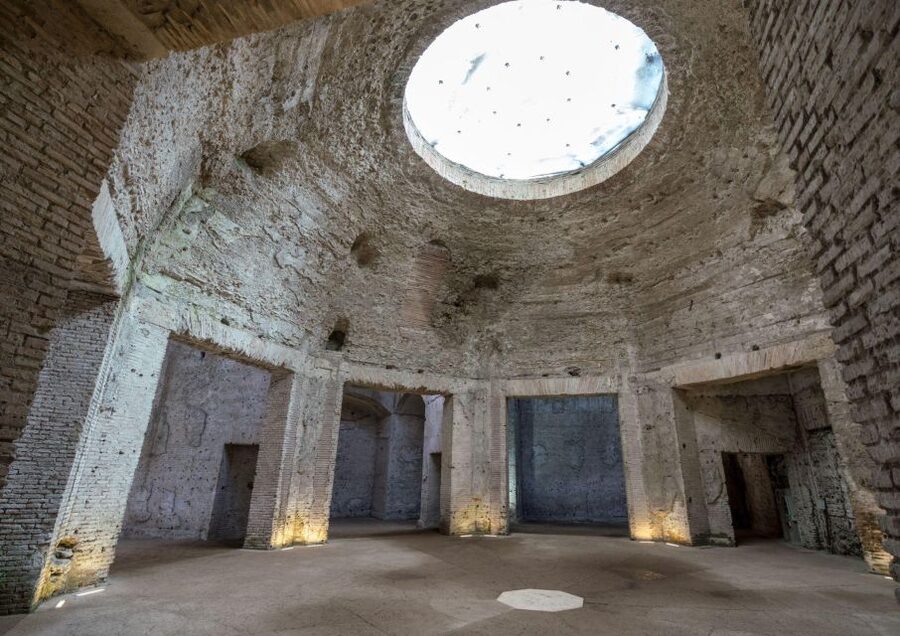
Nero’s Golden House is one of Rome’s strangest ancient sights: a huge palace now buried beneath the Oppian Hill, with dark corridors, fading frescoes, and rooms that once formed part of an extravagant imperial residence. The VR reconstruction is the clever part. It helps you picture marble, color, light, and decoration that the surviving brick walls can no longer show.
I like two things here. First, the scale of the complex is startling even in its ruined state. Second, the guide adds context that turns bare rooms into a story about Nero, later Roman building, and the artwork that influenced Renaissance and Baroque decoration. The main drawbacks are the cold interior, occasional audio problems, and meeting-point instructions that may require extra care.
Key points at a glance
- The VR headset recreates Nero’s palace: You see a digital version of the rooms as they may have looked 2,000 years ago.
- The underground site is chilly: The temperature inside is around 10 degrees Celsius, so bring a jacket, and consider a hat or gloves.
- Guides make a real difference: Claudia, Simone, and Nico have received especially warm praise for clear explanations and lively storytelling.
- The tour lasts 90 minutes: That is enough time for a focused visit without taking over your day in Rome.
- The palace is more than a ruin: Its size, surviving frescoes, and later influence help explain why this site matters.
- The logistics need attention: Bring your ID, provide every participant’s first and last name, and check the exact meeting point for your booking.
Why the Domus Aurea feels different from Rome’s other ruins
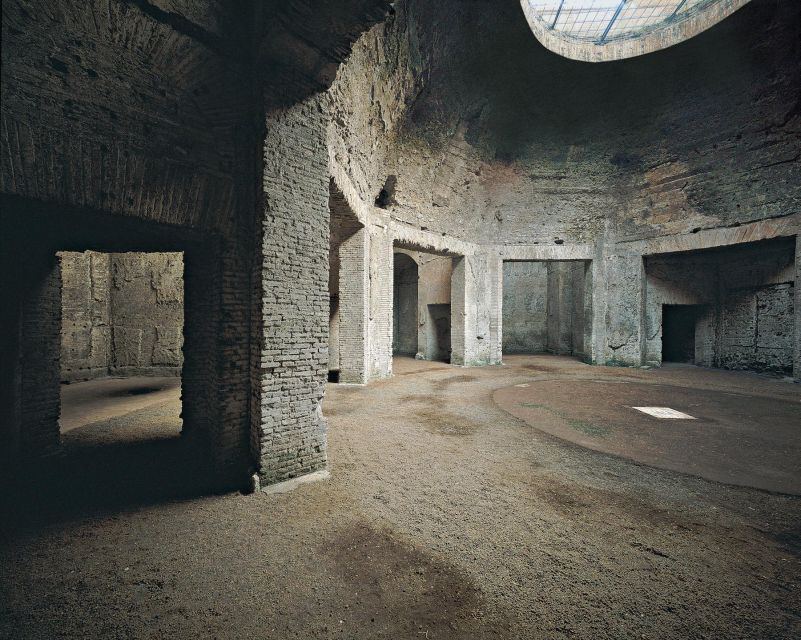
The Domus Aurea, or Golden House, was built for Emperor Nero after the great fire of Rome in AD 64. The name suggests glittering gold, and the original complex was lavish, but what you see today is mostly a buried and carefully protected set of rooms.
That contrast is part of the appeal. You are not walking through a restored palace with complete walls and bright decoration. You are moving through an archaeological site where the surviving structure gives only part of the picture. The guide and the digital presentation fill in the missing pieces.
The scale is the first surprise. Even with only sections open to the public, the rooms and corridors suggest an enormous imperial residence. The experience becomes more powerful when you remember that later buildings were placed over much of Nero’s palace, helping bury and preserve parts of it.
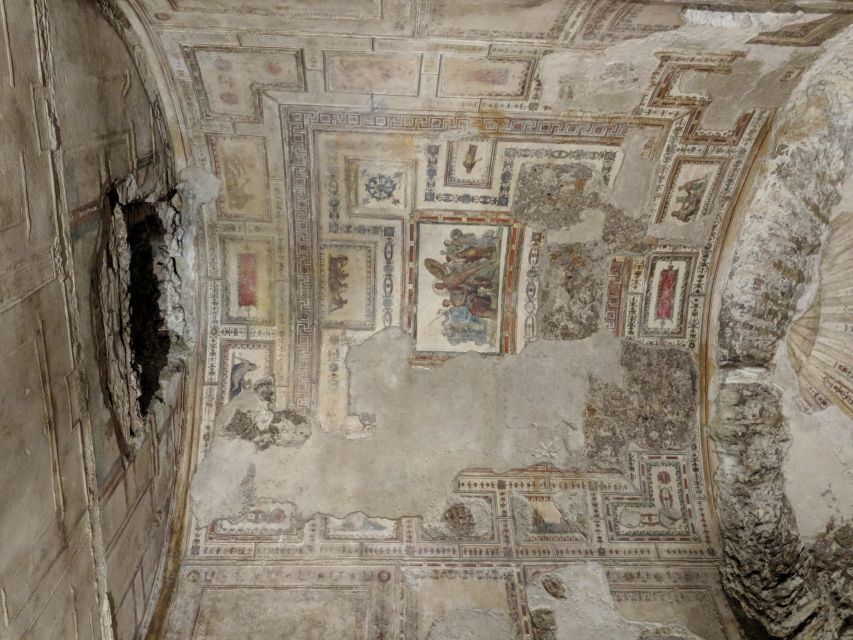
The site also helps you read Roman and later European art. The frescoes and ceiling designs found here influenced the decorative style rediscovered during the Renaissance. A visit to the Domus Aurea can sharpen your eye at other Roman and Baroque sites, where similar motifs appear in brighter, more finished surroundings.
More Underground Tours in Rome
- Colosseum: Underground and Ancient Rome Tour
★ 4.7 · 12,691 reviews - Rome: Crypts and Catacombs Underground Tour with Transfers
★ 4.6 · 5,341 reviews - Expert Guided Tour of Colosseum Arena OR Underground, and Forum
★ 4.5 · 5,041 reviews
Starting at Via delle Terme di Tito
The tour has two possible starting options, both listed at Via delle Terme di Tito. Your exact meeting point depends on the option you book, so do not rely on a general map pin alone.
This is the part of the experience that needs the most practical care. Some people have found the meeting instructions hard to follow, and one useful tip is that the meeting point may be up the steps from the Metro station. Check the message sent by the operator, keep your phone available, and allow enough time to find the guide.
The staff may contact you by email or WhatsApp, so provide an address or number you will actually use in Rome. The meeting arrangements are not a reason to skip the tour, but they are a reason not to arrive at the last minute.
Your full first and last name must be provided for every participant. Bring the same identification used for the booking, since the guard can refuse entry if the required names or ID are missing.
Entering Nero’s buried palace
Once inside, the guided walk lasts about 90 minutes. The pace is generally suited to looking closely rather than racing from room to room. You will see the structure as an archaeological site, with walls, vaults, fragments of decoration, and evidence of the restoration work that keeps the rooms open.
The darkness and low temperature are part of the setting. The interior is around 10 degrees Celsius, even when Rome outside feels hot. Bring a jacket throughout the year. Several people have found a heavier layer, hat, or gloves useful, and comfortable shoes are important on the ancient floors and walking route.
The restoration is one of the quiet strengths of the visit. Modern additions have been designed to protect the ancient structure without overwhelming it. Details such as doors and windows have been handled with care, allowing you to see the site without turning it into a theme park.
Your guide explains what is original, what has been restored, and how archaeologists interpret the remains. That matters here because the palace is not self-explanatory. Without help, you may see a sequence of bare rooms. With the right explanation, you can begin to understand their purpose, decoration, and place within a much larger complex.
The guides bring the rooms back to life
The tour is offered in English, Italian, Spanish, and French. The strongest guide reports name Claudia, Simone, and Nico, with Claudia receiving repeated praise for her storytelling, friendly manner, humor, and ability to keep the group moving at a comfortable pace.
A good guide is especially important at the Domus Aurea because the evidence is incomplete. You need someone who can explain Nero’s building program without turning the visit into a lecture. The best approach combines archaeology, politics, architecture, and a little human drama.
Claudia has been praised for making the site feel alive while keeping her explanations clear. Simone has been described as warm and effective, while Nico led a tour that visitors found engaging from beginning to end. These names do not guarantee your assigned guide, but they give you an idea of the standard this operator can provide.
There is one important caution. Some groups have had trouble hearing the guide, especially when the group was large or the audio equipment was weak. One group reported about 25 people, which can make it difficult to see exactly what the guide is pointing toward. If you have hearing difficulties, stay near the guide and ask to move closer when needed.
Accent and sound quality can also affect how much you catch. Reading a little about Nero and the Domus Aurea before you go will help you follow the explanations and get more from the visual material.
Other things to see below Rome:
- The Original Roman Crypts and Catacombs Tour with Transfers
★ 4.5 · 4,896 reviews - Rome: Colosseum Underground Small Group Guided Tour
★ 4.7 · 4,844 reviews - Rome: St. Peter’s Basilica, Dome Climb, and Underground Tour
★ 4.8 · 3,404 reviews - Rome: Colosseum Underground, Arena & Forum Tour
★ 4.7 · 3,272 reviews
What the VR presentation adds
The VR section is the tour’s most memorable feature for many people. Wearing the headset, you see a digital reconstruction of the palace in Nero’s time. The technology gives you a sense of the lost colors, decoration, furnishings, and finished surfaces that the ruins cannot provide.
This is not a replacement for the archaeological site. It works because you first see the real rooms, then compare them with the digital version. The contrast creates a useful mental picture: bare masonry in front of you, then a palace filled with the visual richness expected of an imperial residence.
The VR experience can feel surprisingly absorbing. You may find yourself looking around to compare the reconstructed room with the actual space beneath your feet. It is not simply a film watched from a seat. The headset places the reconstruction around you, making scale and decoration easier to understand.
The technology also gives younger visitors a reason to pay attention, although the site itself is more suited to adults and older children than to small children. The history, cold conditions, and slower pace may not hold every child’s interest.
One suggestion has been to place the VR section in the octagonal room, which is often singled out as one of the most striking spaces. That is a matter of personal preference, but it shows how strongly the digital portion shapes the visit.
Restoration, frescoes, and the palace’s later influence
The Domus Aurea is valuable not just because Nero lived here. It also shows how ancient decoration was rediscovered and reused in later centuries.
The surviving frescoes and ceiling designs helped inspire Renaissance artists after the rooms were found and entered. The decorative style influenced the grottesche patterns seen in churches and palaces across Rome and beyond. The exact details are best explained on site, where you can look at the designs while hearing how later artists responded to them.
The restoration work deserves close attention. You will see a site that is still being studied and cared for rather than presented as a finished monument. Visitors who returned after several years noticed major changes, which tells you that the conservation program continues to affect what can be seen.
That ongoing work can also mean that conditions are not polished or predictable. Some spaces may feel stark, and the ancient decoration is fragile. The reward is a more honest encounter with the remains, rather than a reconstruction that hides uncertainty.
Is the $59 price good value?
At $59 per person, this is not the cheapest way to spend 90 minutes in Rome. The price includes the entrance ticket, a professional guide, taxes, and the VR device. You are paying for a timed archaeological visit with a guide and technology, not simply admission to a ruin.
I think the value is strongest if you care about Roman history, architecture, archaeology, or visual art. The guide helps you understand a site that would otherwise be difficult to read, and the VR presentation adds something you cannot get from photographs.
The value is less clear if you prefer to wander independently or are trying to keep every attraction inexpensive. The tour is short, and the palace is not filled with complete rooms or restored furnishings. You may leave feeling that the visit was fascinating but brief.
Book early if price matters, since a busy departure can cost more. Also remember that the activity is non-refundable. Make sure your Rome schedule, names, ID, and meeting details are settled before paying.
Who will enjoy this tour most
You are likely to enjoy the Domus Aurea if you:
- Like ancient Rome beyond the Colosseum and Forum
- Want an archaeological site with fewer obvious crowds and complete monuments
- Enjoy guided explanations of architecture and art
- Are interested in how digital tools can explain a ruined building
- Can walk comfortably and tolerate a cold interior
- Prefer a focused 90-minute visit
This may not suit you if you use a wheelchair, have significant mobility limitations, or need step-free access. The activity is specifically not suitable for wheelchair users or people with mobility impairments.
It is also not the best pick for anyone expecting a warm, bright, fully reconstructed palace. You will see a protected archaeological site, not a movie set. Food, drinks, luggage, and large bags are not allowed inside, so arrive with only what you need.
Practical tips for a smoother visit
Wear comfortable shoes and bring a warm jacket even in summer. The interior stays cold, and you move slowly enough for the temperature to become noticeable.
Carry your ID and make sure the operator has the full first and last names of everyone in your party. Keep your confirmation and contact details easy to access.
Pay close attention to the meeting-point instructions. If you are coming by Metro, look for the steps near the station rather than assuming the guide will meet you at street level. Contact by WhatsApp can be useful if the operator offers it for your booking.
Do not bring food, drinks, luggage, or a large bag. These restrictions are easy to overlook when you are spending a full day sightseeing in Rome.
If your guide is difficult to hear, move closer early rather than waiting until the end. A group of 25 can make it hard to see gestures and hear commentary, so your position matters.
Should you book the Domus Aurea tour?
Book it if you want a guided look at one of Rome’s most unusual ruins and like the idea of seeing the missing palace through VR. The combination of real archaeology and digital reconstruction works well, especially when the guide explains how the surviving rooms relate to Nero’s larger residence.
Skip it if you need accessible routes, dislike cold underground spaces, or want a long, unhurried visit. For history fans, art lovers, and repeat Rome visitors, $59 is a reasonable price for the ticket, guide, and technology, provided you prepare for the meeting-point issues and bring warm clothing.
FAQ
How long does the Domus Aurea tour last?
The tour lasts 1.5 hours, or 90 minutes.
What languages are available?
The live guide is available in English, Italian, Spanish, and French.
Is the VR headset included?
Yes. A VR device is included with the entrance ticket and professional guide.
What should I wear?
Bring a jacket and wear comfortable shoes. The temperature inside the Domus Aurea is around 10 degrees Celsius, and warm clothing such as a hat or gloves may be useful.
Do I need to bring identification?
Yes. You must bring your ID. The full first and last names of all participants must also be provided, or entry may be refused.
Can I bring food, drinks, luggage, or a large bag?
No. Food, drinks, luggage, and large bags are not allowed inside.
Is the tour suitable for wheelchair users?
No. The activity is not suitable for wheelchair users or people with mobility impairments.
Just added in Rome
- Civitavecchia Private Transfer: From the Port to Rome Airport★ 5.0 · 309 reviews
- Civitavecchia Shore Excursion: Best of Rome Private Tour★ 5.0 · 247 reviews
- Civitavecchia Private Transfer from ship to FCO airport or Rome★ 5.0 · 245 reviews
- Food Tasty and History Tour in Civitavecchia★ 5.0 · 256 reviews
- Palatine Hill and Roman Forum Tour with Fast-Track Entrance★ 4.2 · 417 reviews
- Tivoli: Villa D’Este & Villa Adriana Pass & App Audioguide★ 4.4 · 364 reviews
- Tivoli: Villa D’Este Entry Ticket and App Audio Guide★ 4.3 · 191 reviews
- Vatican Museums & Sistine Chapel Skip-the-Line Guided Tour★ 4.6 · 254 reviews
Catacombs & Underground Tours, compared.
Naples Underground Entry Ticket and Guided Tour
Read our review →
Colosseum: Underground and Ancient Rome Tour
Read our review →
Catacombs of San Gennaro Entry Ticket & Guided Tour
Read our review →
Crypts and Catacombs Underground Tour with Transfers
Read our review →
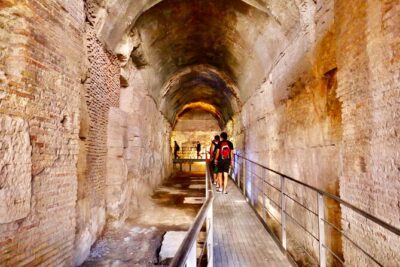
Expert Guided Tour of Colosseum Arena OR Underground, and Forum
Read our review →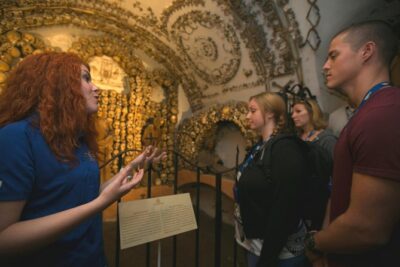
The Original Roman Crypts and Catacombs Tour with Transfers
Read our review →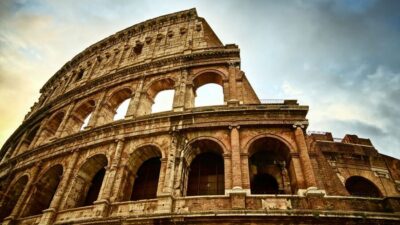
Colosseum Underground Small Group Guided Tour
Read our review →Browse the lists this tour appears in