
Reviewed · CATACOMBS & UNDERGROUND TOURS
Rome: Domus Aurea Guided Tour and Virtual Reality Experience
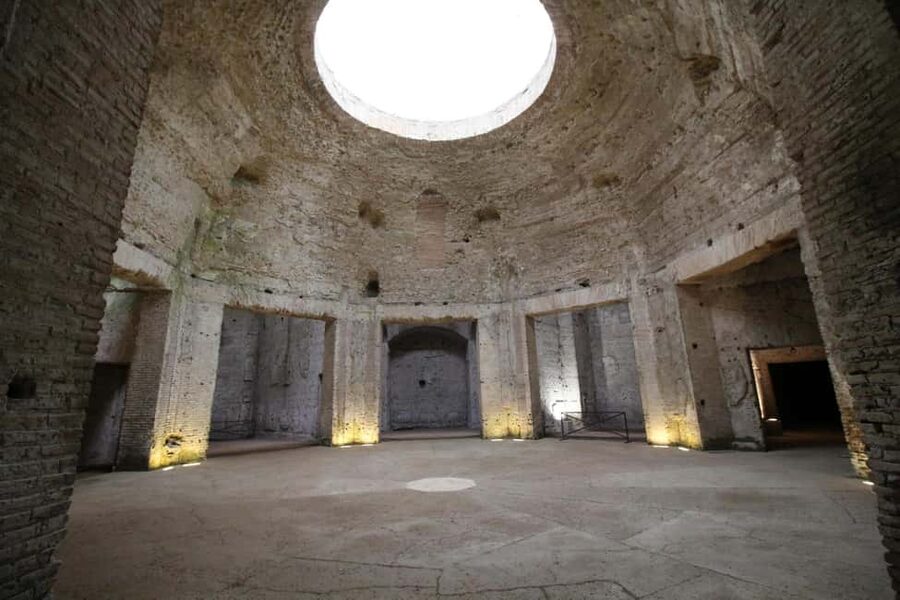
Nero’s Domus Aurea is best understood through contrast: you see dark, excavated rooms today, then use virtual reality to picture the palace covered in light, color, and lavish decoration. The short Oculus presentation gives the ruins a clear visual frame without asking you to rely on imagination alone.
I like the way the tour pairs the famous Octagonal Hall and painted rooms with the practical story of Roman concrete. I also like its small time commitment, about 90 minutes including the walk from the meeting point, though cool temperatures, narrow spaces, and poor acoustics can make the visit less comfortable for some people.
Key points to know before booking
- The Golden Vault comes alive through Oculus virtual reality, showing how the room may have looked during Nero’s reign.
- The 70-minute guided visit covers major spaces, including the Octagonal Hall, Cryptoporticus, and Hall of Birds.
- The palace is underground and cool, with an indoor temperature of about 10 C, so bring a jacket.
- The guide adds the political story, explaining Nero’s plan to link the Palatine residences with the Esquiline gardens.
- English, Italian, French, and Spanish are available, both for the live guide and the included audio support.
- The site is not suitable for wheelchairs, people with mobility limits, or people with claustrophobia.
Why Nero’s Golden House is different from other Rome sights
The Domus Aurea is not a complete palace waiting for you behind polished doors. It is an archaeological complex, much of it below ground, where only sections of Nero’s enormous residence remain. That makes the visit feel less like a standard museum tour and more like a careful reconstruction job.
Nero built the palace after the great fire of Rome in AD 64. His plan was not simply to create a private home. He wanted a vast dynastic residence that joined the Palatine area with gardens on the Esquiline, along with space for court life and useful activities. The scale followed the grand royal residences of the Hellenistic world.
That ambition helps explain why the Domus Aurea still matters. You are not just looking at an emperor’s dining room. You are seeing a statement about power, land, money, and the way Nero wanted Rome to revolve around him.
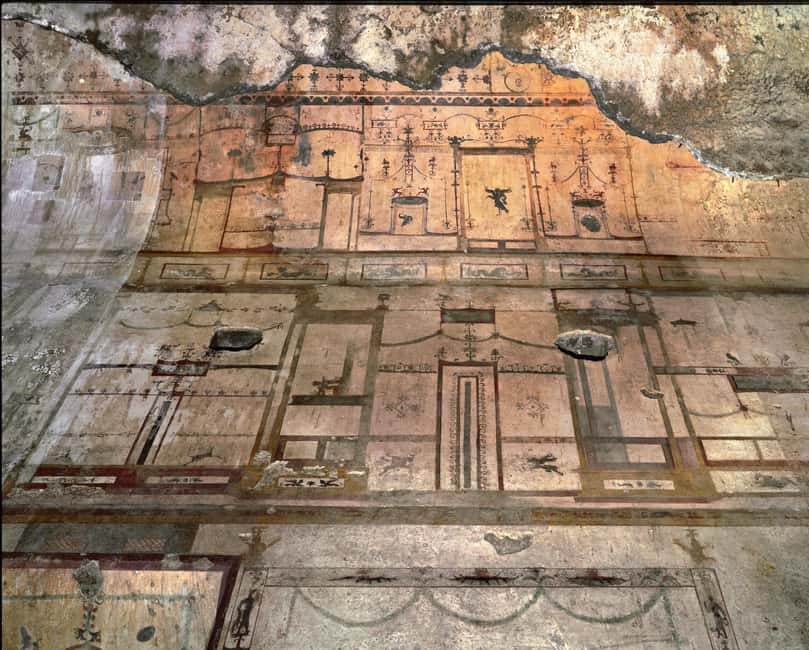
The name means Golden House because gold decoration was part of the palace’s image. Yet the surviving rooms are especially important for their wall paintings and decorative schemes. The art here is among the most interesting examples of Roman painting, with ornamental designs that later influenced Renaissance artists.
The guide gives you the context needed to read the rooms. Without that help, it is easy to see bare brick, fragments of plaster, and shadowy corridors without grasping what once filled the space.
More Underground Tours in Rome
- Colosseum: Underground and Ancient Rome Tour
★ 4.7 · 12,691 reviews - Rome: Crypts and Catacombs Underground Tour with Transfers
★ 4.6 · 5,341 reviews - Expert Guided Tour of Colosseum Arena OR Underground, and Forum
★ 4.5 · 5,041 reviews
Meeting at Colosseo Metro and reaching the ruins
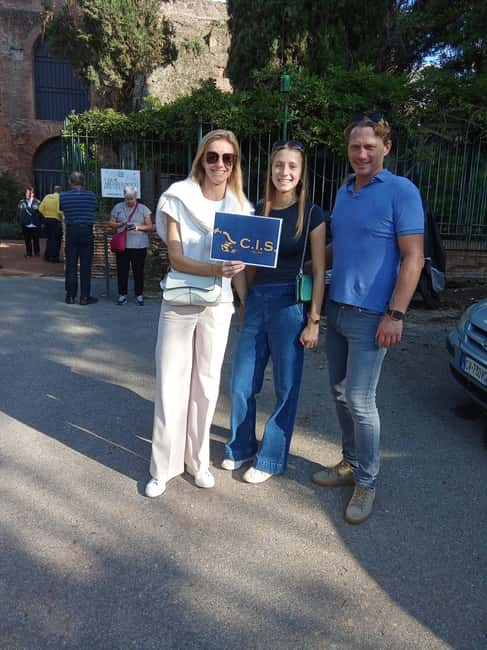
The meeting point is in front of the Colosseo Metro station, at the lower floor or street level near the green kiosk. Look for the C.I.S. Tours staff member holding a C.I.S. Tours sign.
Arrive 20 minutes before your booked time. This matters because the meeting point can be busy, and the staff member may not be immediately obvious. One practical note is worth taking seriously: the sign may be held in a pocket or at the person’s back, so look carefully for the company name rather than waiting for a large flag.
The activity begins near the Colosseum, but this is not a Colosseum tour. You will move from the meeting point to the Domus Aurea for the guided visit. The entrance process is arranged with a skip-the-ticket-line admission, which saves you from handling the site entry on your own.
Bring the passport or identity document used for the booking. Tickets are nominative, and the names of all participants are required. Children also need a passport or identity card.
The 70-minute route through Nero’s palace
The main guided visit lasts about 70 minutes. That is long enough to cover the important rooms without turning this into an all-day archaeological lecture.
The route focuses on the remaining architectural spaces and the evidence of how the palace was built and decorated. You will learn about Roman concrete, a building material that helped create large, ambitious structures with unusual shapes and open spaces.
That building story is one of the tour’s most useful features. Ancient Roman architecture can look almost effortless when you see it from the outside. Inside the Domus Aurea, you get a clearer sense of how engineering made grand imperial designs possible.
The tour also explains how later emperors and Romans dealt with Nero’s controversial palace. After his death, much of the complex was covered over and reused. The burial of the rooms helped protect some of the paintings, even though it also left the building hidden for centuries.
Expect uneven archaeological surfaces and enclosed passages. This is not the easiest place for anyone who needs smooth flooring, broad access routes, or plenty of open air. Food and drinks are not allowed inside, and large bags or luggage should be left behind.
The Octagonal Hall and the power of concrete
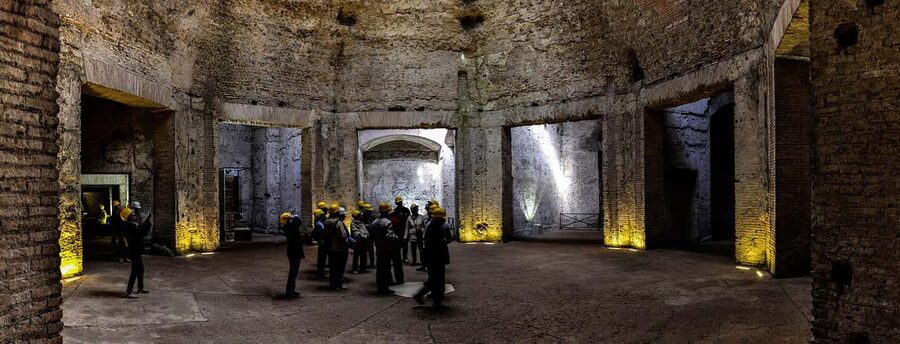
The Octagonal Hall is one of the most memorable spaces on the route. Its design shows that the palace was not made from a simple sequence of square rooms. Nero’s architects experimented with geometry, light, and movement through the building.
The hall also gives the guide a useful place to explain concrete construction. Roman concrete allowed builders to form large vaults and complex structures that would have been difficult to create with cut stone alone.
I find this part especially useful if you have already seen the Colosseum or the Pantheon and want to understand the practical side of Roman building. The Domus Aurea connects the engineering you see in better-known monuments with the personal extravagance of an emperor’s residence.
The room is more powerful when you understand its original setting. It was not an isolated art object. It belonged to a massive residence designed to impress visitors and reinforce Nero’s authority.
Other things to see below Rome:
- The Original Roman Crypts and Catacombs Tour with Transfers
★ 4.5 · 4,896 reviews - Rome: Colosseum Underground Small Group Guided Tour
★ 4.7 · 4,844 reviews - Rome: St. Peter’s Basilica, Dome Climb, and Underground Tour
★ 4.8 · 3,404 reviews - Rome: Colosseum Underground, Arena & Forum Tour
★ 4.7 · 3,272 reviews
The Cryptoporticus and the palace’s hidden circulation
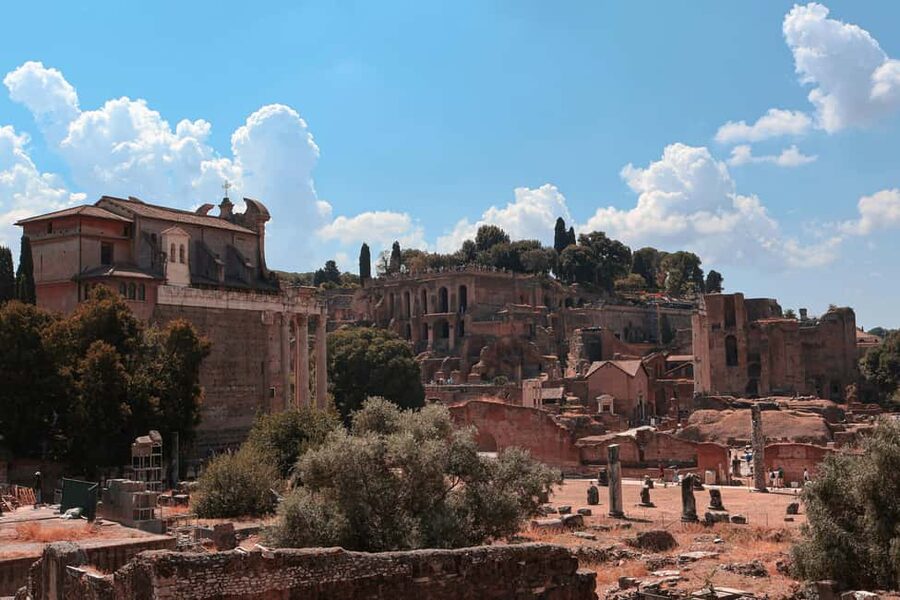
The Cryptoporticus is an enclosed passage that helps you picture how people moved through the complex. These corridors were not merely service routes. They connected rooms and gardens while giving the palace a controlled, private quality.
Here, the enclosed nature of the site becomes more noticeable. If you dislike tight spaces, you should think carefully before booking. The Domus Aurea is not recommended for people with claustrophobia, and the cool underground environment can feel more intense in narrow sections.
The guide’s explanation helps turn the passage from a dark corridor into part of the palace plan. You begin to see how Nero’s residence was designed as a connected world, with courtly spaces, decorative rooms, and routes for people working behind the scenes.
The temperature inside is around 10 C. Even during Rome’s warmer months, bring a jacket or sweater. Comfortable shoes are also important because the visit takes place in an archaeological setting rather than on a smooth museum floor.
The Hall of Birds and Roman wall painting
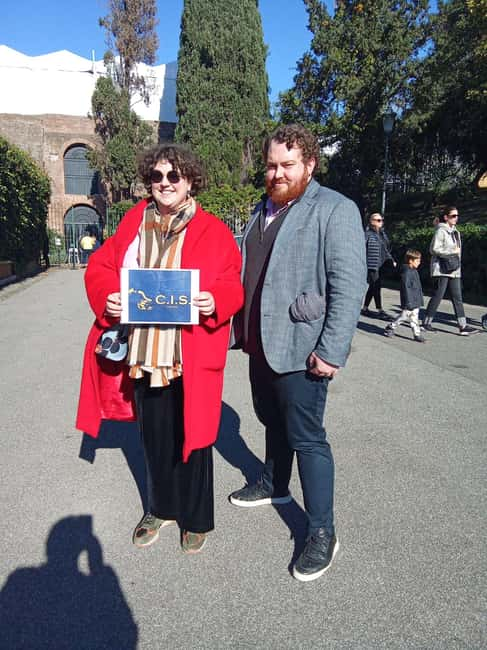
The Hall of Birds is one of the places where the decorative side of the Domus Aurea comes through most clearly. The paintings and ornamental details show why this complex is valued for more than its connection to Nero.
The surviving decoration is fragmentary, so you should not expect rooms covered in perfect color from floor to ceiling. Instead, you will see traces that the guide helps you interpret. This is where the visit rewards patience. Look closely at the surviving designs, then let the explanation fill in the missing sections.
Roman painting often used delicate motifs, imaginary architecture, animals, and small figures arranged across larger wall schemes. The Hall of Birds gives you a sense of the taste behind Nero’s palace, where decoration was meant to surprise guests as they moved from one space to another.
The site’s restoration work is also part of the story. You can see how archaeologists protect fragile rooms while making portions of the complex available to the public. This is an active conservation setting, not a finished reconstruction.
The Golden Vault through virtual reality
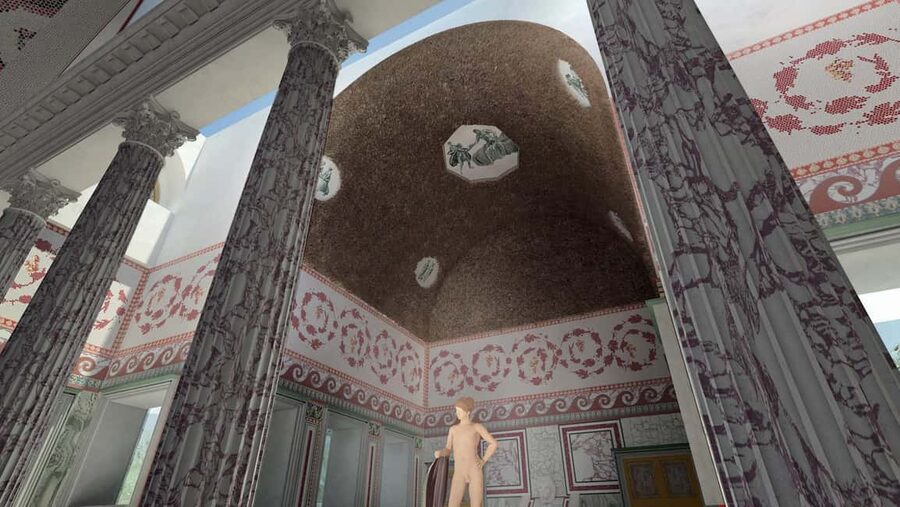
The virtual reality portion is the tour’s clearest advantage. With an Oculus headset, you can see the Golden Vault reconstructed as it may have appeared in Nero’s time.
The presentation is short, but it does a lot of work. The physical ruins show you what survives. The virtual view adds the missing surfaces, colors, decoration, and sense of scale. Together, the two experiences are far more useful than either one alone.
I especially like this approach for visitors who struggle to read ruins. A guide can describe a painted vault, but a visual reconstruction lets you see the likely effect of the room. It also makes clear how much has disappeared and how carefully historians must distinguish evidence from interpretation.
Keep in mind that the virtual presentation is a proposed reconstruction, not a film of the past. It shows how archaeologists and historians believe the palace may have looked. That distinction matters, and the guide’s explanation helps put the images in the right frame.
The presentation is also a multisensory storytelling project, adding a modern layer to a site that can otherwise feel difficult to access. It does not replace the real rooms. It gives you a better way to understand them.
The guide and language options
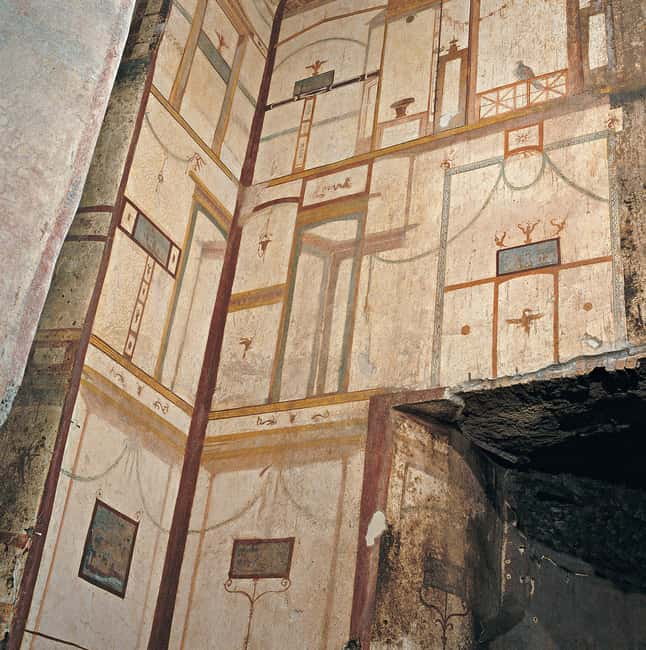
The tour includes a live guide in English, Italian, French, or Spanish. An audio guide is also available in those four languages.
The strongest part of the guiding is the explanation of the site’s purpose and construction. A good guide can connect Nero’s political image, the palace plan, Roman concrete, and the painted rooms without leaving you with a pile of disconnected facts.
Claudia has been singled out for clear, passionate explanations and for taking time with questions. You may not have Claudia on your departure, but the experience is designed around a live guide rather than a silent walk through the ruins.
Sound can be a weak point inside the Domus Aurea. The acoustics are not ideal, and a guide may be harder to hear in some areas. Stay close to the guide and use the audio support when needed. If you are traveling with a group, this is one reason to arrive early and position yourself well.
The tour is intended for adults and children who can manage the enclosed archaeological setting. Unaccompanied minors are not allowed.
Is $67 a fair price for 90 minutes?
At $67 per person, this is not the cheapest short activity in Rome. The price includes admission, the guided tour, the virtual reality experience, taxes, and fees, so you are paying for more than a basic entry ticket.
I think the price makes sense if you want help understanding the Domus Aurea rather than simply walking through it. The virtual reconstruction is difficult to reproduce on your own, and the guide provides the architectural and political context that the bare ruins cannot supply.
The value is weaker if you prefer to move slowly at your own pace or dislike technology in historic places. The visit is structured, the guided portion takes most of the time, and the VR presentation is central to the experience.
The 1.5-hour length is useful in a crowded Rome schedule. You can fit it around other major sights without giving up half a day. It also works well if you have already visited the Colosseum and want a nearby site that explores a different side of imperial Rome.
Who should book this experience?
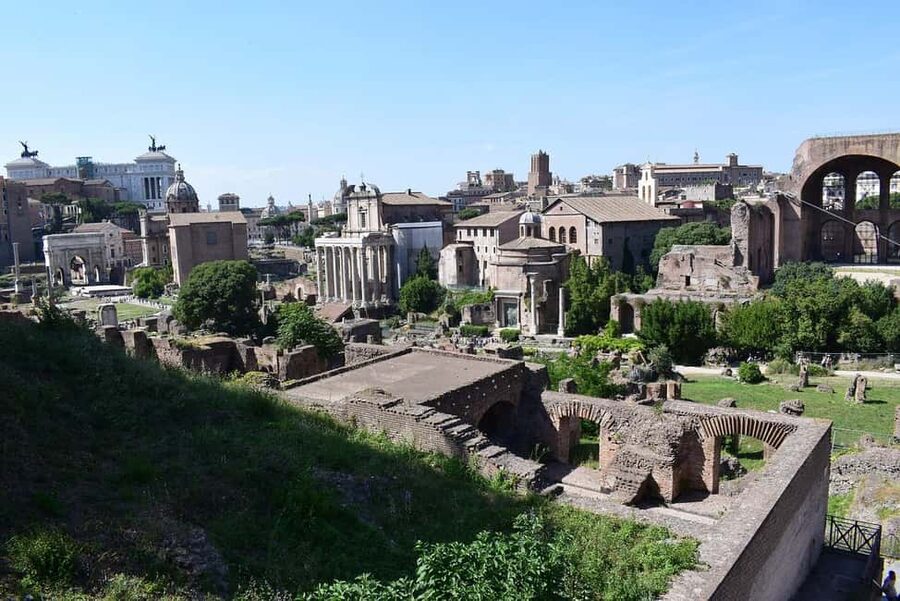
I would choose this tour if you have already seen Rome’s headline monuments and want something less obvious but still closely tied to the city’s imperial past. It is also a strong pick if you enjoy archaeology, Roman engineering, conservation, or visual reconstructions.
Families with older children may find the VR section especially helpful. It gives younger visitors a concrete picture of the palace instead of asking them to stare at dim fragments and imagine everything from scratch.
The tour is less suitable for anyone using a wheelchair or dealing with significant mobility limits. It is also a poor fit if enclosed corridors make you uncomfortable. The site is cool, dark, and not designed like a modern museum.
Wear comfortable shoes and bring a jacket. Do not bring food, drinks, luggage, or large bags. Give yourself enough time to find the green kiosk and the staff member before the starting time.
My verdict on the Domus Aurea tour
Book this experience if you want to understand what Nero was trying to build, not just see another set of Roman ruins. The combination of painted rooms, Roman concrete, a live guide, and the Golden Vault reconstruction gives you a clear sense of both the surviving evidence and the lost palace.
I would skip it if you need step-free access, open spaces, or a quiet self-guided visit. For everyone else, the $67 cost is reasonable because the virtual reality presentation solves the main problem of the Domus Aurea: the palace’s original grandeur is mostly gone, and you need skilled explanation and careful reconstruction to see it again.
FAQ
Where does the Domus Aurea tour meet?
Meet in front of the Colosseo Metro station at the lower floor or street level, near the green kiosk. Look for staff holding a C.I.S. Tours sign.
How early should I arrive?
Arrive 20 minutes before your booked starting time. This gives you time to find the meeting point and the tour staff.
How long does the experience last?
The full activity lasts about 1.5 hours. The guided visit inside the Domus Aurea lasts about 70 minutes.
What languages are available?
The live tour guide and audio guide are available in Italian, English, French, and Spanish.
Is virtual reality included in the ticket?
Yes. The ticket includes the Oculus virtual reality experience, which reconstructs the Golden Vault as it may have appeared in Nero’s time.
How cold is it inside the Domus Aurea?
The temperature inside is around 10 C. Bring a jacket or sweater, even if Rome is warm outside.
Can wheelchair users join the tour?
No. The experience is not suitable for wheelchair users or people with mobility impairments.
Can I cancel the booking?
You can cancel up to three days in advance for a 60 percent refund.
Just added in Rome
- Civitavecchia Private Transfer: From the Port to Rome Airport★ 5.0 · 309 reviews
- Civitavecchia Shore Excursion: Best of Rome Private Tour★ 5.0 · 247 reviews
- Civitavecchia Private Transfer from ship to FCO airport or Rome★ 5.0 · 245 reviews
- Food Tasty and History Tour in Civitavecchia★ 5.0 · 256 reviews
- Palatine Hill and Roman Forum Tour with Fast-Track Entrance★ 4.2 · 417 reviews
- Tivoli: Villa D’Este & Villa Adriana Pass & App Audioguide★ 4.4 · 364 reviews
- Tivoli: Villa D’Este Entry Ticket and App Audio Guide★ 4.3 · 191 reviews
- Vatican Museums & Sistine Chapel Skip-the-Line Guided Tour★ 4.6 · 254 reviews
Catacombs & Underground Tours, compared.
Naples Underground Entry Ticket and Guided Tour
Read our review →
Colosseum: Underground and Ancient Rome Tour
Read our review →
Catacombs of San Gennaro Entry Ticket & Guided Tour
Read our review →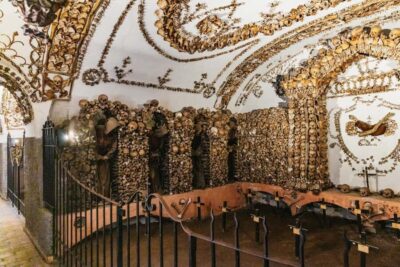
Crypts and Catacombs Underground Tour with Transfers
Read our review →
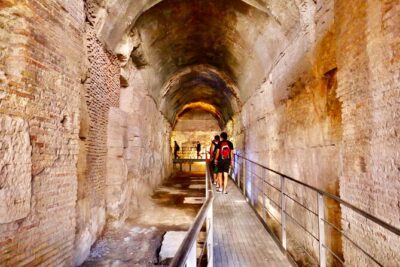
Expert Guided Tour of Colosseum Arena OR Underground, and Forum
Read our review →
The Original Roman Crypts and Catacombs Tour with Transfers
Read our review →
Colosseum Underground Small Group Guided Tour
Read our review →Browse the lists this tour appears in