
Reviewed · COLOSSEUM & ROMAN FORUM TOURS
Rome: Colosseum, Roman Forum and Palatine Hill Group Tour
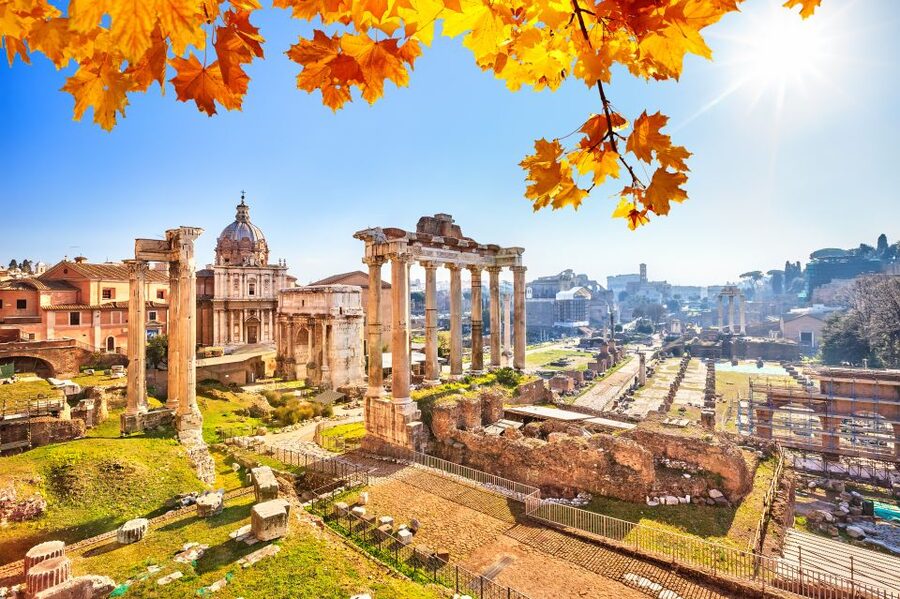
The best part of this Rome tour is the way it links three ancient sites into one walk: the Colosseum, the Roman Forum, and Palatine Hill. You move from gladiator games to imperial palaces, then down into the political center where Julius Caesar was cremated.
I like the fast-track entrance and the headset system, which helps you hear the guide over the noise of Rome and other tour groups. I also like the choice between a live guide and a self-guided audio tour, since you can either follow a lively storyteller such as George, Riccardo, Barbara, or Caterina, or set your own pace.
The main drawback is the tight schedule. Three hours is enough for the major sights, but not for every corner, and summer heat can shorten the route. Security checks can also take time, so arriving late is a serious problem.
Key points to know before booking
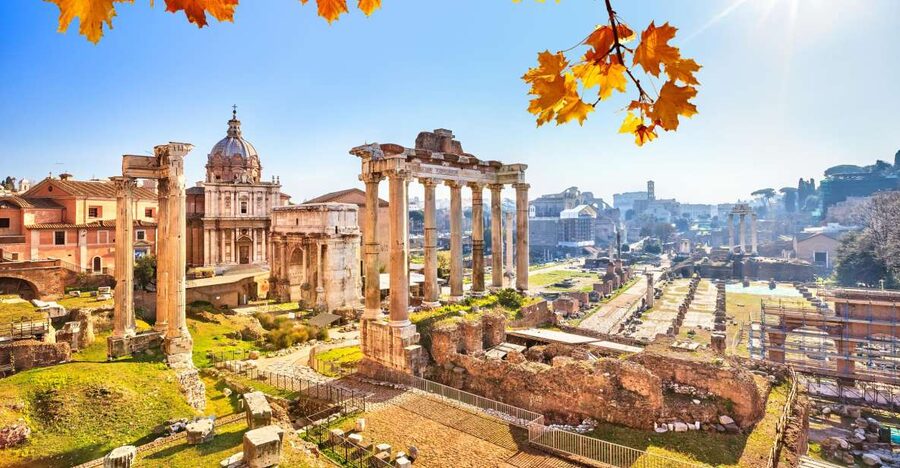
- Three ancient Rome icons in one visit: See the Colosseum, Roman Forum, and Palatine Hill on a single half-day outing.
- Fast-track does not mean no waiting: You use a separate entrance, but security checks and ID checks can still slow things down.
- Choose your style: Follow a licensed guide with a headset, or download a 44-stop audio tour to your phone.
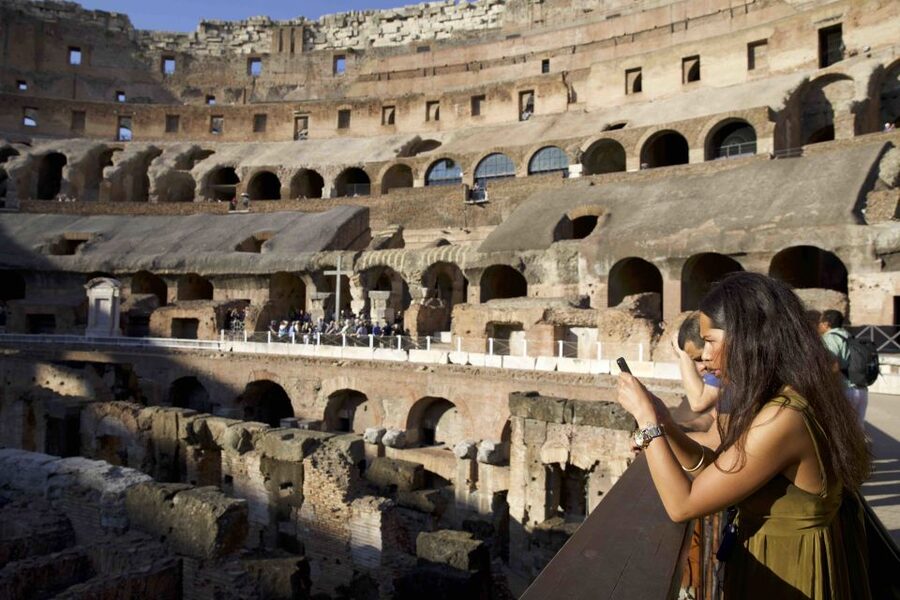
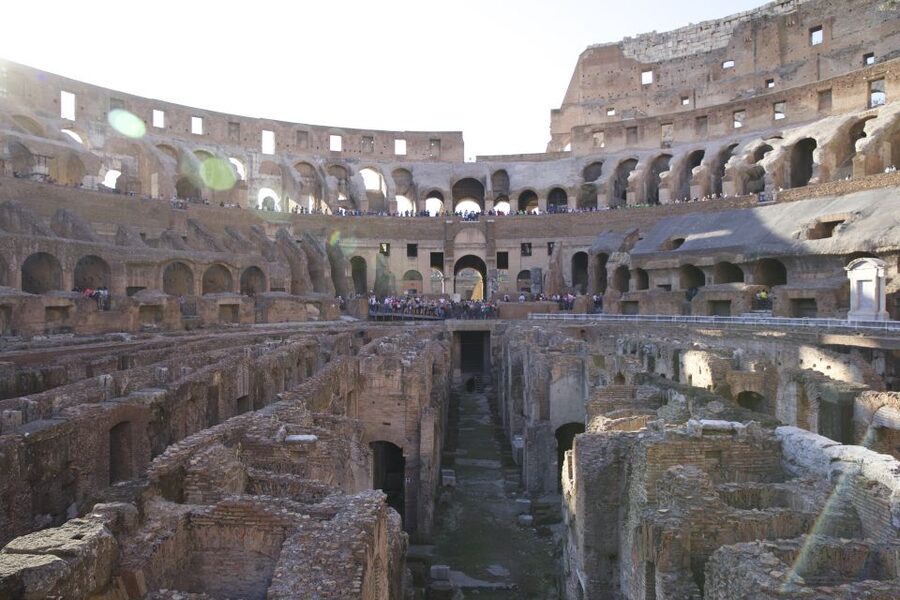
- The second tier offers the best Colosseum views: The route includes time to look across the arena and down into its working spaces.
- Expect walking and uneven ground: Palatine Hill and the Forum involve steps, slopes, and rough ancient paving.
- The $28 price is strong value: The adult admission alone costs 18 euros, with the balance covering the guide, equipment, staff, and taxes.
What this Rome tour actually covers
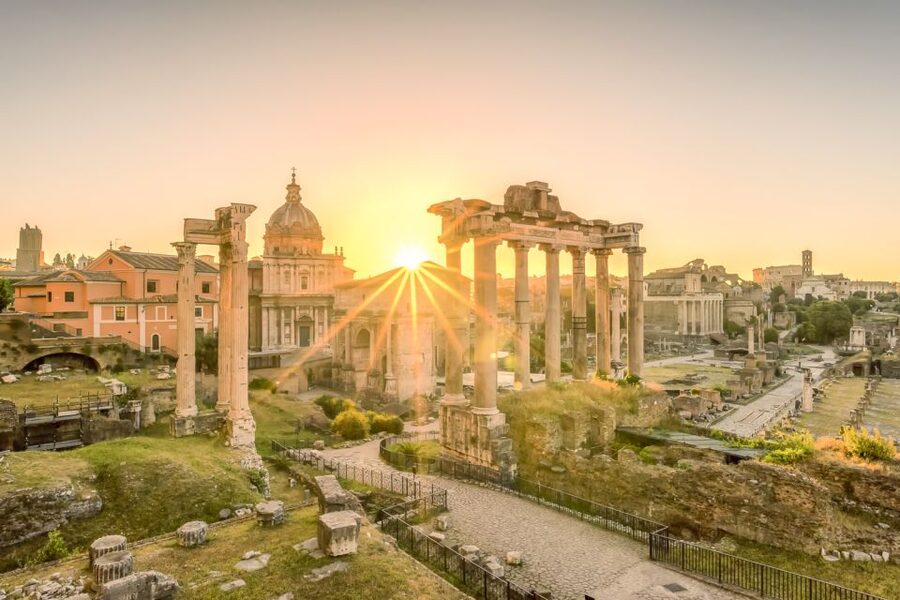
This is a compact tour of Ancient Rome, lasting about 2.5 to 3 hours. It begins at one of several possible meeting points near the Colosseum, including Piazza di San Clemente, Clivo Argentario, or Via Labicana 96. Your exact start point depends on the option you book, so check the confirmation carefully rather than simply heading to the Colosseum.
You can choose a live guided tour or a self-guided audio option. The guided version uses a professional, licensed guide and a headset system. That small device matters more than you might expect. The Colosseum area is crowded, and without a headset it is easy to lose the thread of an explanation while walking through a large group.
The self-guided option gives you more freedom. You download the audio material to your own smartphone and use a multilingual guide with 44 points of interest. English, Chinese, German, French, Italian, Spanish, and Portuguese are listed among the language choices. Bring your own charged phone and headphones, since neither is supplied.
Other ways into ancient Rome:
- Colosseum, Roman Forum & Palatine Guided Tour
★ 4.7 · 63,148 reviews - Rome: Colosseum, Palatine Hill and Roman Forum Guided Tour
★ 4.8 · 32,814 reviews - Rome: Guided Tour of Colosseum, Roman Forum & Palatine Hill
★ 4.7 · 27,897 reviews
Entering the Colosseum and understanding the games
The Colosseum receives about 75 minutes of the planned route. Before going inside, the guide gives you an explanation from the outside and points out the building methods that made this vast arena possible. This is useful because the exterior tells only part of the story. Arches, concrete, stone, and carefully planned circulation routes allowed Roman engineers to move large crowds through the building.
Inside, the focus turns to the entertainment staged for Roman audiences. You hear about gladiator combats, fights with wild animals, mock sea battles, trapdoors, cages for lions, and the mechanisms used to bring people and animals into the arena. These details help you picture the building as a working machine rather than simply a grand ruin.
The tour also explains the daring construction techniques behind the monument. That practical angle is one of the stronger parts of the experience. Instead of only hearing dates and names, you get a sense of how the arena functioned and how Roman engineers managed crowds, performers, animals, and scenery.
The route includes the second tier, which gives you broad views into the arena and across the surrounding ruins. It is a good place for photographs, though you should keep your camera time in check. The Colosseum is only one part of the visit, and spending too long here can leave you rushing through the Forum.
The guide-led version is best if you want the stories to unfold in a clear order. Guides such as Barbara and Gabriella have been praised for keeping the history lively, while Francis and George are noted for mixing detailed explanations with humor. Names and guides can change, so treat those examples as possibilities, not a promise.
Arch of Constantine and the walk into ancient Rome
After the Colosseum, the route pauses at the Arch of Constantine for roughly 10 minutes. This is a useful transition point. You can take photographs, look back toward the Colosseum, and hear how triumphal monuments helped Roman rulers display military success and political power.
The arch is close to the arena, so there is little wasted walking here. That is important on a short tour. You are already moving across a large archaeological zone, and the route keeps the principal monuments connected instead of sending you on a long detour.
From here, the group continues toward the Roman Forum. The walk is part of the experience, but it is not a smooth city-street stroll. Wear shoes that can handle uneven surfaces, slopes, and ancient paving. The site has little shelter, so sun and heat can change how comfortable the route feels.
Roman Forum: where public Rome took shape
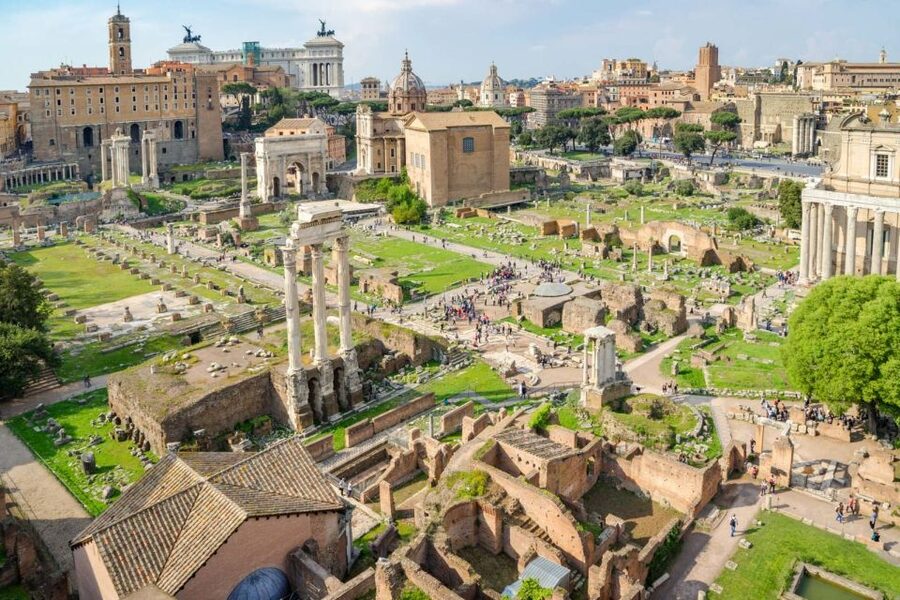
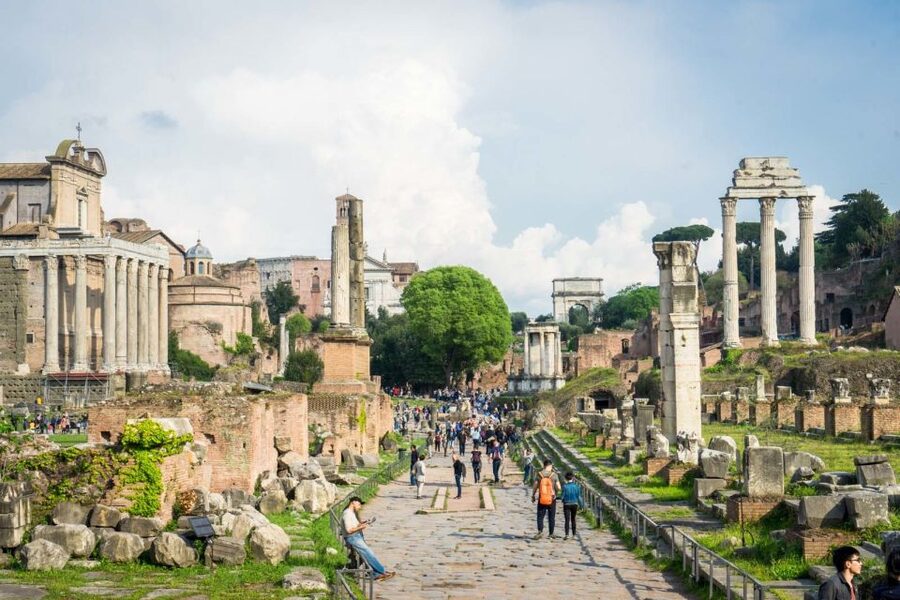
The Roman Forum receives about 30 minutes, though the guide continues through several specific monuments after that. This area was the civic heart of ancient Rome, and it can be confusing if you visit alone. Columns, broken walls, and partial foundations do not always explain their own purpose. A guide gives those fragments a place in the larger story.
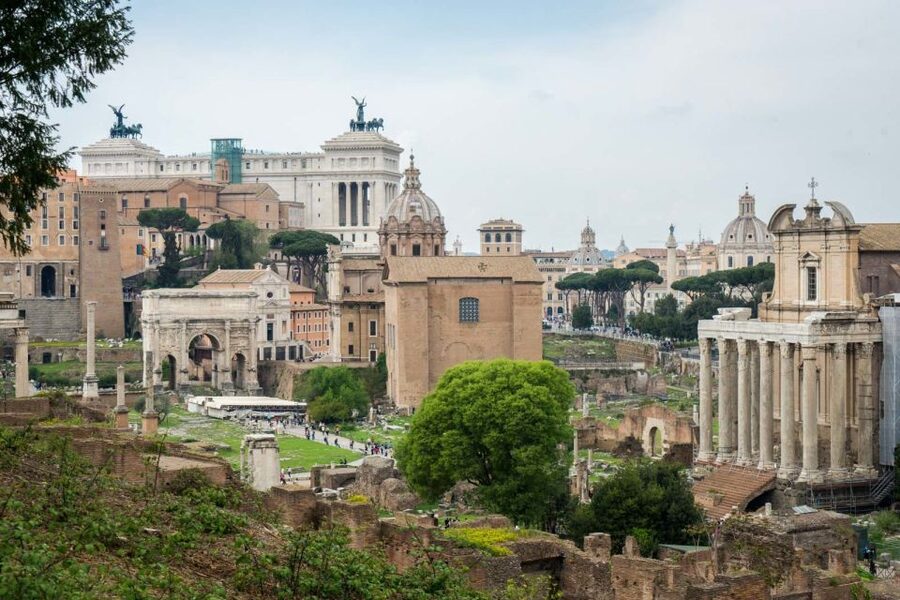
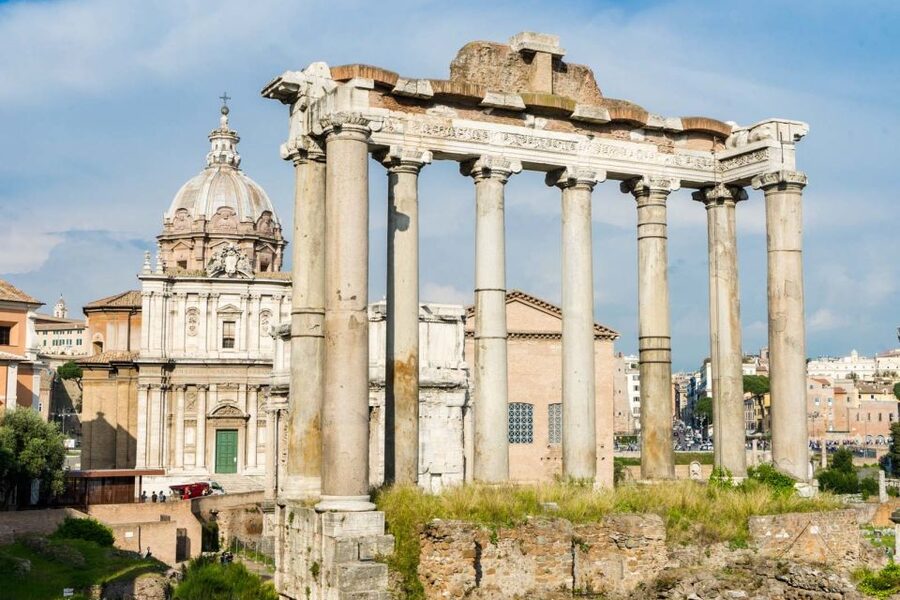
The route includes the Arch of Titus, the Basilica of Maxentius, the Temple of Antoninus Pius and Faustina, the Senate House, and the Arch of Septimius Severus. Each stop is brief, but together they show how many different functions once crowded into this valley: government, law, religion, public business, and imperial display.
The Arch of Titus is particularly easy to connect with the larger Roman story. The guide can place it within the succession of triumphal monuments and point out the relief work carved into the arch. The Basilica of Maxentius, by contrast, gives you a sense of scale. Its surviving structure shows how enormous Roman public buildings could be, even when much of the original complex has disappeared.
At the Temple of Antoninus Pius and Faustina, you see how later buildings and changing religious use shaped the Forum. The Senate House, or Curia, points to Rome’s political machinery. The Arch of Septimius Severus closes the Forum portion with another example of imperial propaganda in stone.
Do not expect a slow archaeological seminar at each monument. The tour has a lot of ground to cover, and the group keeps moving. That is the trade-off for seeing the three major sites in one booking. You receive a strong orientation and the main stories, but you will want extra time on another day if you hope to examine every inscription and foundation.
Same base, a different kind of day:
- Vatican: Museums & Sistine Chapel Entrance Ticket
★ 4.5 · 144,003 reviews - Vatican Museums & Sistine Chapel Tour with Optional Basilica
★ 4.3 · 67,413 reviews - Vatican Museums, Sistine Chapel & St Peter’s Basilica Guided Tour
★ 4.5 · 39,149 reviews - Rome: Colosseum & Forum with Audio Guide App -Optional Arena
★ 4.2 · 24,770 reviews
Palatine Hill and the views over Circus Maximus
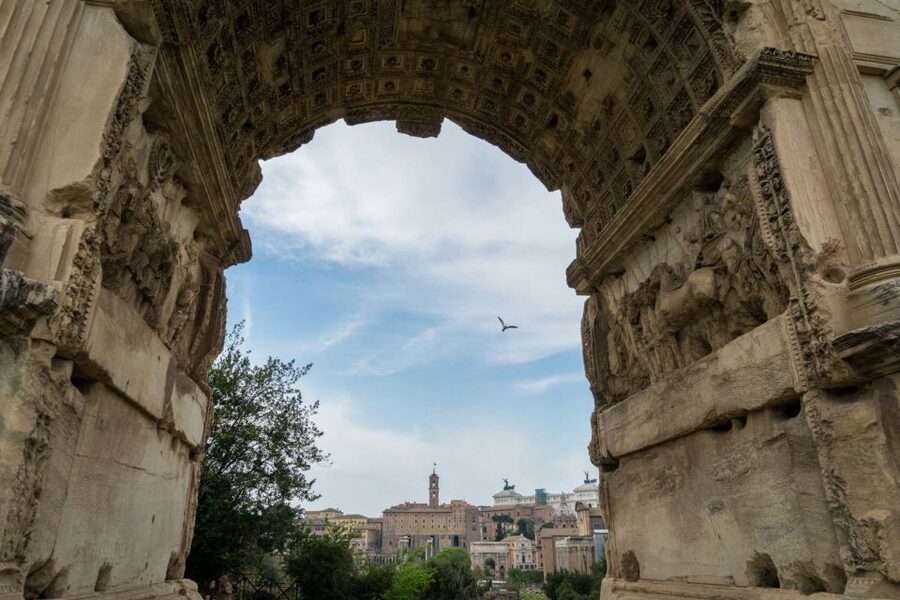
The final major section takes you up Palatine Hill for about 30 minutes. This is where the tour shifts from public Rome to imperial Rome. The hill is associated with the residences of elite Romans and emperors, and the guide explains how power moved from the Forum below to the private compounds above.
The climb adds physical effort, especially in hot weather. It also rewards you with views over the Circus Maximus on one side and the Roman Forum on the other. These views help you understand the layout of Ancient Rome far better than a map alone. From above, the Forum becomes a connected valley rather than a collection of separate ruins.
Palatine Hill is also one of the places where the tour can feel rushed. Thirty minutes gives you an introduction and several good viewpoints, but it is not enough for every palace area or garden. If the hill interests you most, choose the self-guided option only if you are willing to manage your time carefully, or plan a separate visit if admission rules allow during your ticket period.
The group generally finishes near Via dei Fori Imperiali or the Colosseum. This makes it easy to continue sightseeing on foot, but hotel transport is not included. You need to arrange your own way to the meeting point and your onward transport.
Guided tour or self-guided audio tour?
The live guide is the better choice if this is your first visit to Ancient Rome or if you want to ask questions. A good guide can adjust the explanation to the group, point out photo locations, slow down for important details, and explain why a broken wall matters. Several guides, including Riccardo and Caterina, have been praised for keeping the pace moving while allowing time for photographs.
The headset also lets you step slightly away from the guide without losing the explanation. This is helpful when the group gathers near a busy viewpoint. It can also make the experience less tiring because you are not constantly trying to stand shoulder to shoulder with everyone else.
The self-guided audio version suits independent visitors. You can pause, replay sections, and spend longer at a monument that catches your interest. It is also a sensible option if you dislike group movement or want to take photographs without waiting for an explanation to finish.
The trade-off is that you provide the equipment and the structure. You need a charged smartphone, headphones, and enough attention to follow the route. You also lose the chance to ask a guide why a particular ruin matters or to get help with the best viewing points. The audio option is flexible, but it demands more from you.
Is $28 good value?
At $28 per person, this is a strong price for a central Rome attraction. Adult admission to the Colosseum, Palatine Hill, and Roman Forum costs 18 euros. The remaining amount covers the professional guide or audio service, headset equipment for the guided option, staff, and taxes.
The value is clearest if you want an introduction rather than a specialist study visit. You receive entry to three major sites, a planned route, and historical context without having to work out how the monuments connect. The separate entrance can also save time, although it does not remove security checks.
A private tour would give you more control and perhaps more time at individual ruins, but it would cost far more. On the other hand, visitors who already know Ancient Rome well may prefer the cheaper self-guided option and spend longer at selected spots. The $28 price works best for first-time visitors, families with limited time, and anyone who wants a clear route through a very large site.
Timing, heat, bags, and practical limits
This tour operates in all weather. Rain does not automatically cancel the visit, and admission tickets cannot be changed because you would rather stay dry. Bring suitable clothing and shoes, and accept that the route may change because of weather or other site conditions.
July and August can be especially demanding. The tour may last only two hours during the hottest part of the season, and the route can change. If you have a choice of times, an earlier or later start is likely to be more comfortable, though the available times depend on the booking date.
Arrive early. The Colosseum checks names and identity documents, and security can take longer than expected. If you arrive after the group has left, you may not be able to join later or reschedule because the tickets cannot be amended or canceled.
Bring your passport or ID card, comfortable shoes, a charged smartphone if you choose the audio version, and headphones. Large bags, backpacks, luggage, selfie sticks, and pets are not allowed. The instructions also list sunscreen as not allowed, so check the current rules before packing and plan sun protection that meets the site requirements.
This is not a wheelchair-accessible tour and is not suited to people with mobility impairments. The route includes walking, steps, slopes, and uneven archaeological ground. Some guides may offer route choices when someone has difficulty with steps, but you should not book this assuming the full route will be accessible.
Who should book this Colosseum tour?
I would choose this tour if you have one morning or afternoon for Ancient Rome and want the major sights explained in a logical order. It is especially useful on a first visit, when the Forum’s scattered ruins can otherwise feel hard to read.
Families may like the stories of gladiators, animals, trapdoors, and arena machinery. The live guide option also helps younger visitors stay focused, provided they can manage several hours of walking. History fans will appreciate the route, but anyone seeking detailed archaeological study should plan more time than this tour allows.
The self-guided option is best for independent visitors who already know how they like to explore. The live version is the safer pick if you want help with orientation, photographs, history, and pacing. Guides such as George, Barbara, Riccardo, Francis, and Caterina have each been praised for clear explanations, humor, patience, and careful group management, though the assigned guide will vary.
Should you book it?
Book this tour if you want good coverage at a modest price, with entry to the Colosseum, Forum, and Palatine Hill in one efficient route. Choose the live guide for stories, questions, and help making sense of the ruins. Choose the audio option if independence matters more than conversation.
Skip it only if you need wheelchair access, dislike fixed meeting times, or want to spend a full day studying each monument. For most first-time visitors, the combination of fast-track entry, a clear route, and either a guide or a 44-stop audio tour makes this a practical way to meet Ancient Rome.
FAQ
How long does the Colosseum, Roman Forum, and Palatine Hill tour last?
The guided tour lasts about 2.5 to 3 hours. The self-guided audio option can take a different amount of time because you explore at your own pace. In July and August, the tour may last about two hours because of the heat.
What sites are included?
Admission includes the Colosseum, Roman Forum, and Palatine Hill. The route also includes the Arch of Constantine, Arch of Titus, Basilica of Maxentius, Temple of Antoninus Pius and Faustina, Curia of the Senate House, and Arch of Septimius Severus.
Is a tour guide included?
A professional, licensed, English-speaking guide is included with the guided option. The self-guided option does not include a live guide. It provides multilingual audio material that you download to your smartphone.
What languages are available?
The live tour is offered in English, Chinese, French, German, Italian, Spanish, and Portuguese, depending on the option and availability. The audio guide includes English, Chinese, German, French, Italian, Spanish, and Portuguese options.
Do I need to bring identification?
Yes. The Colosseum checks visitor names and identity documents. Bring your passport or ID card, and allow extra time for security and identity checks.
Can I bring a backpack or large bag?
No. Luggage, large bags, and backpacks are not allowed. Selfie sticks and pets are also prohibited. You should bring comfortable shoes, and you need a charged smartphone and headphones for the audio option.
Is the tour accessible for wheelchair users?
No. The tour is not suitable for wheelchair users or people with mobility impairments because the route includes steps, slopes, and uneven archaeological surfaces.
Just added in Rome
- Civitavecchia Private Transfer: From the Port to Rome Airport★ 5.0 · 309 reviews
- Civitavecchia Shore Excursion: Best of Rome Private Tour★ 5.0 · 247 reviews
- Civitavecchia Private Transfer from ship to FCO airport or Rome★ 5.0 · 245 reviews
- Food Tasty and History Tour in Civitavecchia★ 5.0 · 256 reviews
- Palatine Hill and Roman Forum Tour with Fast-Track Entrance★ 4.2 · 417 reviews
- Tivoli: Villa D’Este & Villa Adriana Pass & App Audioguide★ 4.4 · 364 reviews
- Tivoli: Villa D’Este Entry Ticket and App Audio Guide★ 4.3 · 191 reviews
- Vatican Museums & Sistine Chapel Skip-the-Line Guided Tour★ 4.6 · 254 reviews
Colosseum & Roman Forum Tours, compared.
Colosseum, Roman Forum & Palatine Guided Tour
Read our review →
Colosseum & Forum with Audio Guide App -Optional Arena
Read our review →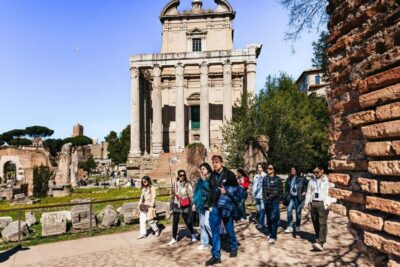
Colosseum, Forum & Palatine Hill Tour & Optional Arena
Read our review →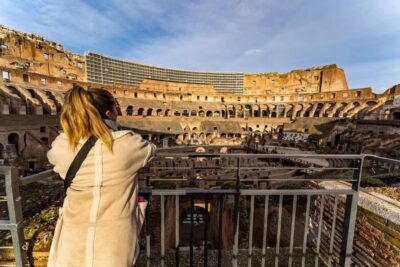
Colosseum, Roman Forum, Palatine with Multimedia Video
Read our review →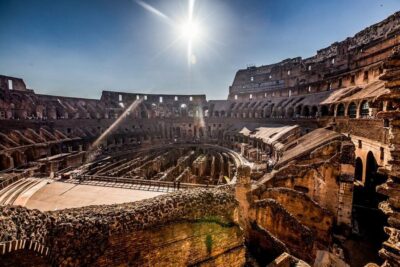
Colosseum: Underground and Ancient Rome Tour
Read our review →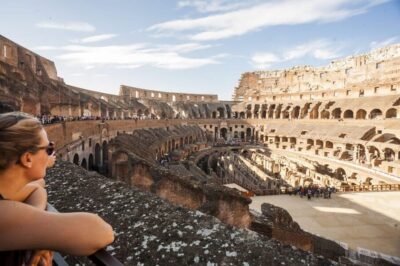
Colosseum, Forum, Palatine Hill Entry & Audioguide App
Read our review →Browse the lists this tour appears in