
Reviewed · BORGHESE GALLERY TOURS
Rome: Borghese Gallery & Gardens Small Group Guided Tour
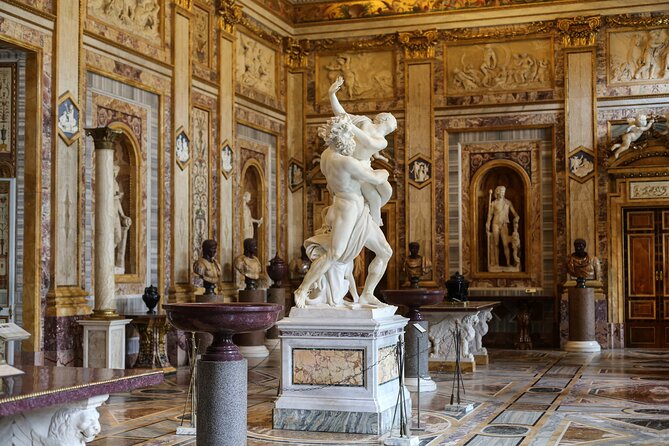
The Borghese Gallery is one of Rome’s finest small museums, and this tour gives you a useful way into its crowded rooms and tightly controlled admission system. You’ll see Bernini’s Apollo and Daphne, Canova’s Pauline Bonaparte as Venus Victrix, Caravaggio’s St. Jerome, and Raphael’s The Deposition with an English-speaking guide who explains what you are looking at and why it matters.
I like the small group of no more than 15 people, and I like the headsets, which help you follow the guide even when other groups are nearby. The main caution is timing: the gallery gets most of the attention, while the garden walk can feel brief or rushed, especially late in the day or in winter.
Key points to know before booking
- Bernini takes center stage: Expect close attention to Apollo and Daphne and other major sculptures.
- Advance entry matters: The gallery limits admissions, so a prebooked ticket removes a difficult part of planning.
- Small groups help: A maximum of 15 people makes it easier to hear the guide and ask questions.
- The tour ends at Pincio Terrace: You get fine views over Piazza del Popolo, but reaching the square means walking down a long flight of steps.
- Bring only what you need: Personal belongings must be left at the gallery reception, and backpacks are a particular concern.
- Budget about $47.16: That is fair if you want context and an arranged entry, less so if you prefer to look at art on your own.
Why the Borghese Gallery deserves a place on your Rome plan
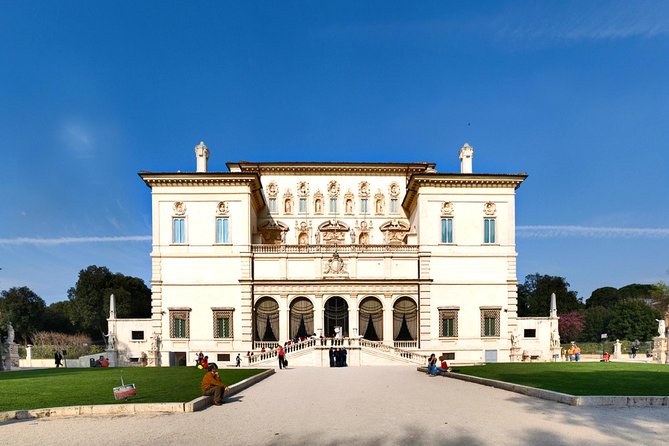
Rome has huge museums, grand churches, and ancient ruins that can wear you out. The Borghese Gallery offers a different experience. It is compact, tightly controlled, and filled with works chosen by one determined collector, Cardinal Scipione Borghese.
The building and collection belong together. Borghese commissioned the villa and acquired many of the sculptures and paintings inside it. Bernini, Caravaggio, Titian, Raphael, and Canova are not simply names on a museum map here. Their works were gathered for a specific setting, and the guide helps connect the art to the cardinal’s taste, ambition, and pursuit of prestige.
I especially like this museum for visitors who do not want to spend an entire day in a giant collection. The gallery portion lasts about 90 minutes, enough time to focus on major works without trying to absorb every painting and sculpture in the building.
That focus is also the tour’s main tradeoff. You cannot cover everything in detail during a short guided visit. One guide may spend more time on Bernini, while another may give more attention to paintings, politics, or the Borghese family. That is not necessarily a flaw, but you should expect a highlights tour rather than a complete survey.
Other galleries worth booking ahead in Rome:
- Rome: Borghese Gallery and Gardens Guided Small-Group Tour
★ 4.6 · 2,783 reviews - Rome: Borghese Gallery Guided Tour with Skip-the-Line Entry
★ 4.8 · 2,649 reviews - Rome: Borghese Gallery Skip-the-Line Tickets with Audioguide
★ 4.6 · 2,562 reviews
Getting inside without the usual ticket headache
The tour begins outside the Borghese Gallery at Piazzale del Museo Borghese. You meet the guide and group there, then enter with a prebooked admission ticket.
This matters because entry to the gallery is strictly controlled. The museum is not the sort of place where you can casually arrive and assume a ticket will be available. Booking about 50 days ahead is typical for this experience, which tells you something about demand. If the Borghese is a priority, do not leave it until the last part of your Rome planning.
The ticket is included, as is the guided visit. Hotel pickup and drop-off are not included, so you must make your own way to the meeting point. The gallery is near public transportation, but the information provided does not name a particular bus or metro route. Give yourself time to find Piazzale del Museo Borghese and locate the group before the start time.
There is also a strict bag rule. You must leave personal belongings at reception, and small backpack-style purses may need to be checked. I would arrive with as little as possible. This avoids a delay at the entrance and makes the beginning of the tour easier for everyone.
Inside the gallery, expect art with a story
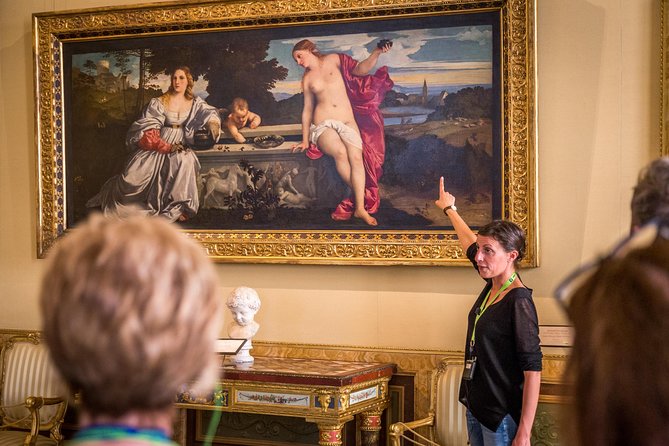
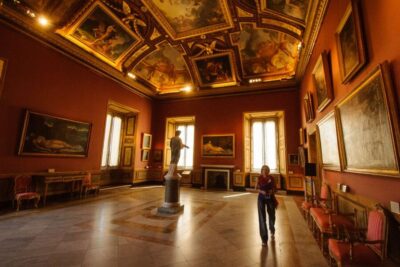
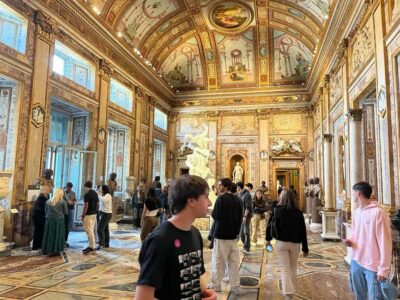
The guide leads you through the rooms for about an hour and a half. Headsets are provided, which is a practical advantage in a museum where several groups may be moving through the same spaces.
The strongest part of the experience is the interpretation. A good guide does more than identify a statue or painting. You hear how Cardinal Borghese built his collection, how artists worked for patrons, and how the pieces reflected the social and political world of their time.
Bernini’s movement in marble
Bernini is the major draw. His Apollo and Daphne is famous for the way hard marble appears to change from flesh and hair into bark and leaves. A guide can point out the details that are easy to miss when you are simply standing in front of the sculpture: the movement, the expressions, and the moment of transformation.
The tour also helps you understand why Bernini’s sculptures demand time. You are not looking at a single front-facing image. You need to move your eyes around the work, notice how the forms open up, and see how the composition changes from different angles.
Some guides focus heavily on Bernini, and that can be a very good choice. His works are among the gallery’s most memorable pieces, and a clear explanation makes them easier to appreciate. The tradeoff is that you may spend less time with the paintings.
Other museums and galleries in Rome:
- Vatican: Museums & Sistine Chapel Entrance Ticket
★ 4.5 · 144,003 reviews - Vatican Museums & Sistine Chapel Tour with Optional Basilica
★ 4.3 · 67,413 reviews - Vatican Museums, Sistine Chapel & St Peter’s Basilica Guided Tour
★ 4.5 · 39,149 reviews - Rome: Vatican Museums, Sistine Chapel & Basilica Tour
★ 4.3 · 13,872 reviews
Canova’s polished illusion
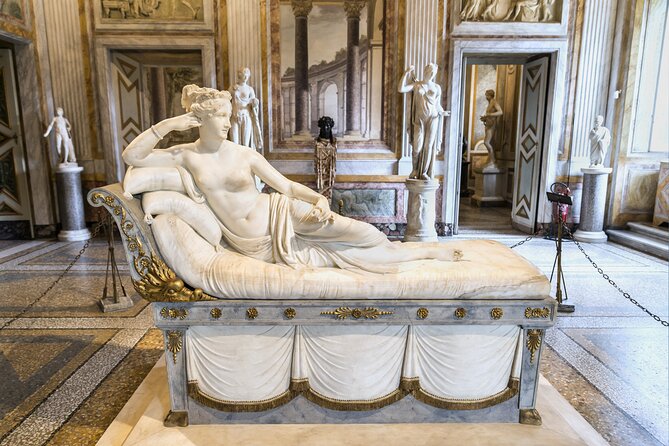
Canova’s Pauline Bonaparte as Venus Victrix offers a different kind of spectacle. Pauline is shown reclining as the Roman goddess Venus, combining portraiture, classical mythology, and political display.
This is the sort of work that benefits from context. The sculpture is beautiful at first glance, but the pose, identity, and subject tell you much more about power and image-making in the early nineteenth century. A guide can explain the tension between a recognizable woman and an idealized goddess.
Caravaggio, Raphael, and the paintings
Caravaggio’s St. Jerome brings a darker and more direct mood. His figures often feel close enough to touch, and his use of light turns a religious scene into something immediate and human.
Raphael’s The Deposition adds a different voice to the collection. You can compare its order, balance, and graceful figures with Caravaggio’s sharper drama and Bernini’s physical motion. The guide’s job is to keep these comparisons clear without burying you in art-history terms.
Titian is also represented, along with many other works. You will not have time to study every room at length, but the guide can help you identify the important stops and understand how the collection fits together.
Several guides named in the feedback, including Federica, Lorenzo, Francesco, Sal, Eddy, Eric, and Barbara, were praised for clear explanations, lively storytelling, and strong command of the art. Guide quality can vary, of course, but the pattern is clear: the value of this tour depends heavily on the person leading it. The best guides ask if everyone is ready before leaving a room, explain details you might overlook, and adjust the pace when the group has questions.
The headsets are useful, but check the sound
The supplied headsets are meant to keep the guide audible while you look at the art. This is especially useful when the group spreads out around a sculpture or when the rooms are full.
In most cases, the equipment adds real value. You can stand at a reasonable viewing distance instead of crowding around the guide. You can also keep looking at a painting while listening to the explanation.
One experience with the audio equipment was poor, with muffled sound making the guide difficult to understand. That appears to be an exception rather than the usual pattern, but it is worth knowing. If the sound is unclear at the start, say so immediately. A headset is only helpful if the audio is crisp.
The guide’s English matters, too. The tour is offered in English, and most feedback describes the explanations as easy to follow. Still, accents and microphone quality can affect comprehension. Do not hesitate to ask for a point to be repeated.
Villa Borghese Gardens: a pleasant change of pace
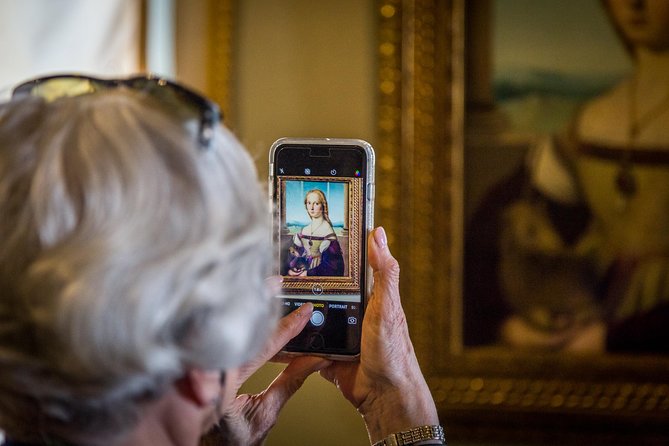
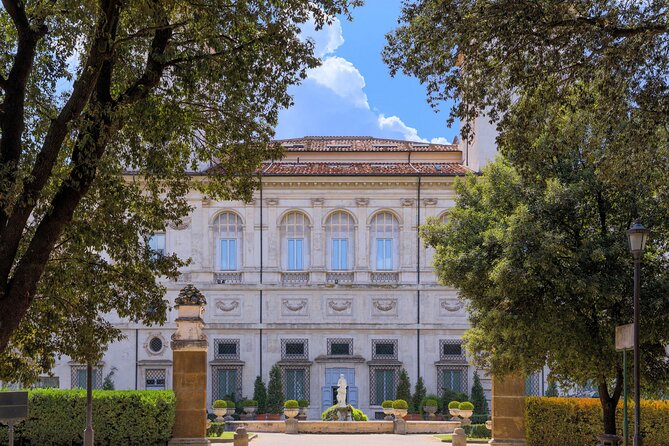
After the gallery, the tour continues into Villa Borghese Gardens for about an hour. This was once Cardinal Borghese’s private park. Today, it is a public place where people walk, relax, and enjoy the greenery, sculptures, fountains, and open views.
The garden visit gives your eyes a rest after the museum’s concentrated art. It also helps you understand the scale of the estate. The gallery was not an isolated building. It formed part of a grand private setting designed to display wealth, taste, and control.
The garden portion can vary more than the gallery visit. In good daylight, it is a pleasant walk with room to breathe and views toward Rome. In winter or near sunset, the visit may feel shorter and less rewarding. One version of the tour offered only about 15 minutes in the gardens because of fading light, so the advertised hour should not always be understood as a leisurely garden stroll.
If the outdoor portion is important to you, choose a daytime departure when possible. Wear comfortable shoes, since the tour involves walking and you should expect a moderate level of physical activity.
Ending at Pincio Terrace above Piazza del Popolo
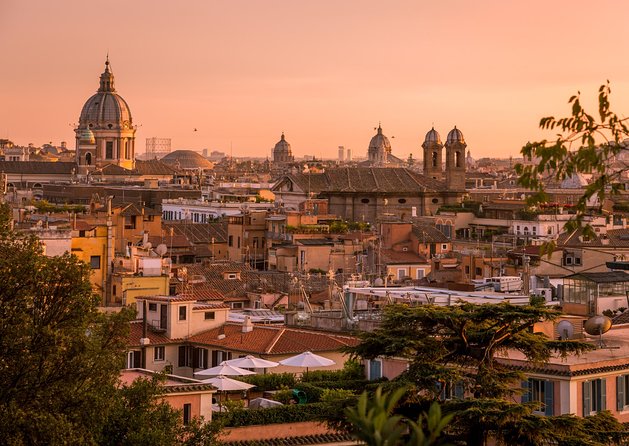
The tour finishes at the Pincio Terrace, overlooking Piazza del Popolo. This is a smart ending point because it gives you a broad city view after the close-up intensity of the gallery.
From the terrace, Piazza del Popolo and its nearby metro stop are about a five-minute walk away. The catch is that reaching the square requires descending a long flight of steps. If stairs are difficult for you, plan for this before booking and ask the guide about the best way to finish.
The end point also gives you freedom. You can continue into Piazza del Popolo, use public transportation, or keep walking through central Rome. Since there is no hotel drop-off, the tour’s final location is part of your onward plan.
Is $47.16 a fair price?
At about $47.16 per person, this is not the cheapest way to see the gallery. It is also not an unreasonable price for a timed museum entry, an English-speaking guide, headsets, and a small group capped at 15 people.
The real value comes from two things: access and explanation. The advance ticket helps with one of Rome’s more difficult museum reservations. The guide then turns a beautiful but potentially confusing collection into a short, focused visit.
The price is easier to justify if you want to understand Bernini, Caravaggio, Canova, and the Borghese family rather than simply take photographs. It is less compelling if you already know the collection well, prefer to move alone, or mainly want the gardens.
I would also compare the cost with your schedule. Two and a half hours is a manageable block in a busy Rome itinerary. You get a major museum, an outdoor walk, and a city viewpoint without giving up an entire day.
Who should book this tour?
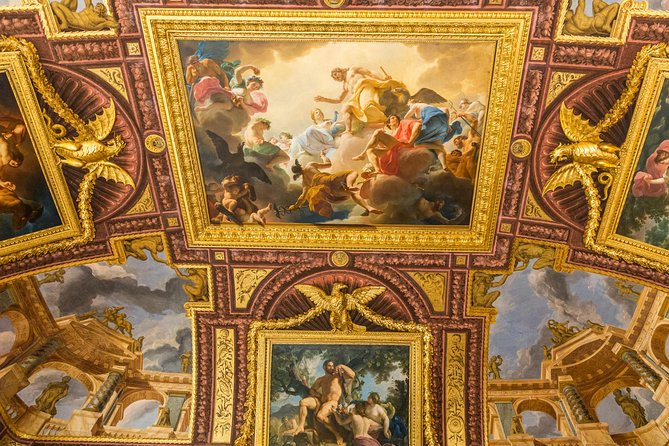
I would recommend it to first-time visitors who want a clear introduction to the Borghese Gallery. It suits couples, families with older children, and adults who enjoy art but do not want a long academic lecture.
It is also useful for repeat visitors. Several people who had already seen the gallery found that a guide added new context and helped them notice details they had missed before.
This is not the best fit for anyone needing a stroller, since pushchairs and strollers cannot be accommodated on the group tour. It may also be less comfortable for visitors who need frequent rest or have trouble with stairs, the outdoor walking, or the final descent from Pincio Terrace.
Booking, cancellation, and practical details
Confirmation is provided at the time of booking, and cancellation is free up to 24 hours before the start time. Changes or cancellations made less than 24 hours before the tour are not refunded.
The experience requires a minimum number of participants. If that minimum is not reached and the tour is canceled, you are offered another date or experience, or a full refund.
Arrive ready to walk, carry minimal belongings, and keep the meeting point details close at hand. The group may include up to 15 people, so arriving early helps you find the guide before the museum visit begins.
Should you book the Borghese Gallery and Gardens tour?
Yes, if you want the Borghese Gallery to be a planned highlight of your Rome visit rather than a gamble at the door. The advance entry and expert commentary make the price worthwhile, especially for Bernini’s sculptures and the stories behind Cardinal Borghese’s collection.
Book it for the gallery first, and treat the gardens as a pleasant extra. Choose a daylight time if the outdoor walk matters to you, bring very little with you, and expect a focused tour rather than a complete look at every object. For most visitors, the combination of rare art, a small group, and a finish above Piazza del Popolo is a strong use of two and a half hours.
FAQ
How long does the tour last?
The experience lasts approximately two hours and 30 minutes. About 90 minutes are spent in the Borghese Gallery, followed by about an hour in Villa Borghese Gardens.
Is admission to the Borghese Gallery included?
Yes. The entry ticket to the Borghese Gallery is included in the tour price.
Is the tour conducted in English?
Yes. The tour is offered in English and includes an English-speaking guide.
How large is the group?
The group has a maximum of 15 people.
Are headsets provided?
Yes. Headsets are provided so you can hear the guide while moving through the gallery.
Where does the tour begin and end?
It begins at Piazzale del Museo Borghese, outside the gallery. It ends at the Pincio Terrace overlooking Piazza del Popolo.
Are hotel pickup and drop-off included?
No. You must make your own way to the meeting point, and the tour ends at Pincio Terrace.
Can I bring a stroller or backpack?
Pushchairs and strollers cannot be accommodated on the group tour. Personal belongings must be left at the gallery reception, and backpack-style bags may need to be checked.
Just added in Rome
- Civitavecchia Private Transfer: From the Port to Rome Airport★ 5.0 · 309 reviews
- Civitavecchia Shore Excursion: Best of Rome Private Tour★ 5.0 · 247 reviews
- Civitavecchia Private Transfer from ship to FCO airport or Rome★ 5.0 · 245 reviews
- Food Tasty and History Tour in Civitavecchia★ 5.0 · 256 reviews
- Palatine Hill and Roman Forum Tour with Fast-Track Entrance★ 4.2 · 417 reviews
- Tivoli: Villa D’Este & Villa Adriana Pass & App Audioguide★ 4.4 · 364 reviews
- Tivoli: Villa D’Este Entry Ticket and App Audio Guide★ 4.3 · 191 reviews
- Vatican Museums & Sistine Chapel Skip-the-Line Guided Tour★ 4.6 · 254 reviews
Borghese Gallery Tours, compared.
Borghese Gallery and Gardens Guided Small-Group Tour
Read our review →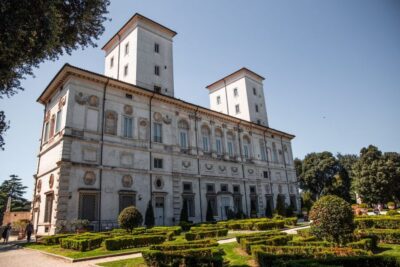
Borghese Gallery Guided Tour with Skip-the-Line Entry
Read our review →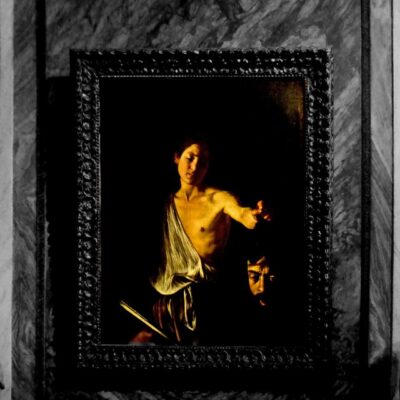
Borghese Gallery Skip-the-Line Tickets with Audioguide
Read our review →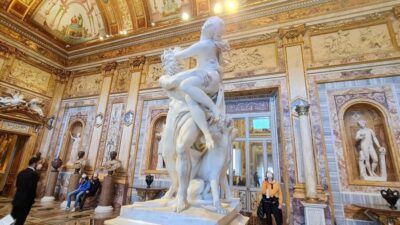
Borghese Gallery Entry Ticket & Optional Guided Tour
Read our review →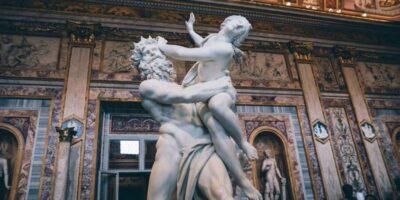
Borghese Gallery Guided Tour with priority entrance
Read our review →
Browse the lists this tour appears in