
Reviewed · FOOD TOURS
Naples: Street Food Experience With 6 Stops
Naples’ oldest open-air market is the setting for this two-hour food walk, and that matters more than any single snack. At La Pignasecca, you hear vendors calling, smell frying oil and coffee, and see where locals shop as you move from one small food stop to the next. The route starts at Piazza Carità and finishes near Armando Scaturchio, with six tastings along the way.
I like the way the tour turns foods you might overlook, such as frittatina and tarallo, into the stars of the day. I also like the generous amount of food: a welcome spritz, savory bites, seafood, dessert, and a final drink can easily replace a meal. The main thing to consider is that you should arrive hungry, wear good walking shoes, and be ready for a lively market rather than a quiet sit-down meal.
Key points to know before you book
- Six substantial tastings: Expect mozzarella and cold cuts, tarallo, frittatina, a ragù meatball, fried seafood, and dessert or gelato.
- Pignasecca is the real backdrop: You walk through Naples’ oldest open-air market instead of visiting a string of polished restaurants.
- Strong value at $33: The food and drinks add up to a full meal, while the guide helps you find stops you might miss on your own.
- Small shared groups: The maximum is 15 people, with private group bookings also available.
- Guides set the tone: Miri, Barbara, Serena, Roberta, Stefano, and others have led tours in English, French, Italian, and Spanish.
- Plan for weather and food limits: The walk operates in all weather, is not wheelchair accessible, and requires advance notice for allergies or dietary needs.
Why Pignasecca makes a better food classroom than a restaurant
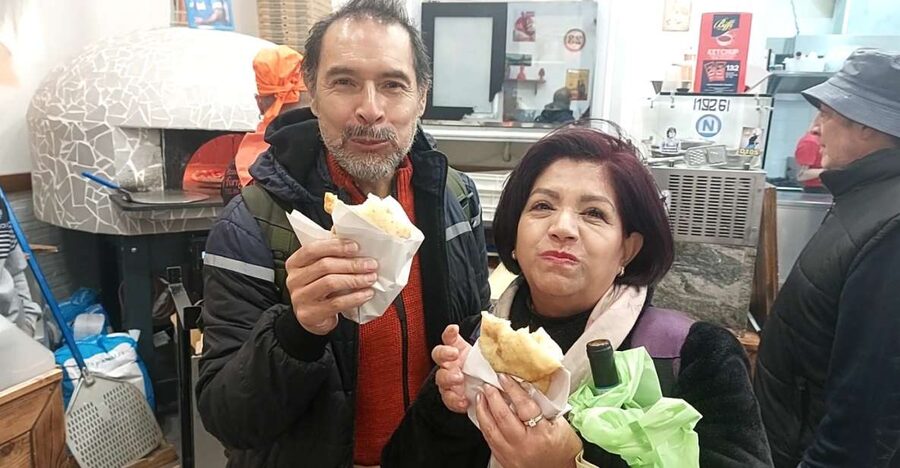
A restaurant can serve you a fine plate of Neapolitan food. Pignasecca shows you how food fits into everyday Naples.
The market sits within a short walk of the starting point at Piazza Carità, 12, just outside the entrance of the Church of San Liborio alla Carità. From there, your guide leads you into streets filled with produce stalls, food shops, bakeries, and small vendors. The walk itself is part of the meal. You are not simply waiting for courses to arrive. You are moving through the place where many of the ingredients and snacks belong.
This is especially useful if Naples is new to you. The city’s street food can look simple, quick, and hard to decode. A folded fried snack may have a name you have never heard. A seafood cone may be easy to spot but harder to judge. A guide gives you the backstory and helps you order with more confidence later in your trip.
The group size helps here. Fifteen people is not truly intimate, but it is small enough for a guide to keep the walk together and answer questions. Some departures may be much smaller. One tour with Stefano had only two participants, while other guides have handled mixed-language groups with English and French or English and Italian at the same time.
More Food Tours in Naples
- Naples: Street Food Walking Tour with Local Guide
★ 4.8 · 4,256 reviews - Authentic Naples Street Food Tour With Local Expert Guide
★ 5.0 · 2,402 reviews - Authentic Naples Food Tour with 8+ Tastings of Pizza, Wine & More
★ 5.0 · 824 reviews
The opening spread: spritz, mozzarella, and local cold cuts
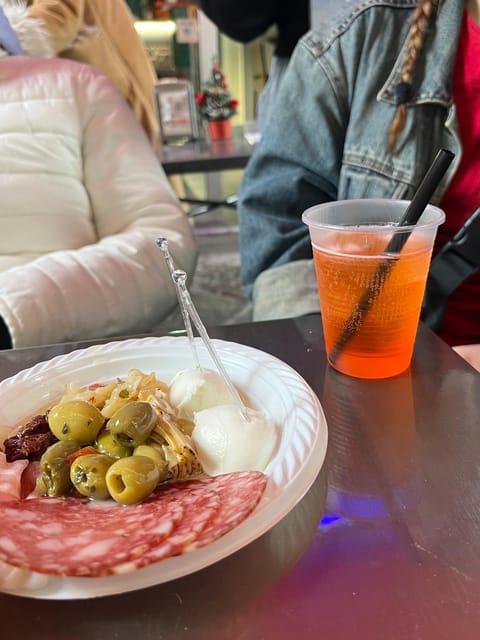
The first tasting eases you into the pace with a welcome spritz and a platter of mozzarella and local cold cuts. It is a useful opening because it gives you time to meet the guide and the rest of the group before the more hurried market stops begin.
The mozzarella is a good introduction to Campania’s produce. You get a chance to focus on freshness and texture rather than treating cheese as an afterthought. The cold cuts add salt and richness, while the spritz makes this feel like an aperitivo rather than a formal first course.
A practical note: this is already more than a token sample. Several stops offer generous portions, so do not think of the opening plate as a small preview before dinner. If you have a late lunch planned, schedule it for another day or keep it very light.
Your guide also uses this first stop to explain the foods ahead. Guides such as Barbara, Miri, Serena, and Roberta are repeatedly praised for making room for questions and sharing tips for other places to eat in Naples. That advice can be one of the most useful parts of the afternoon, especially if you have several days left in the city.
Tarallo at a historic bakery
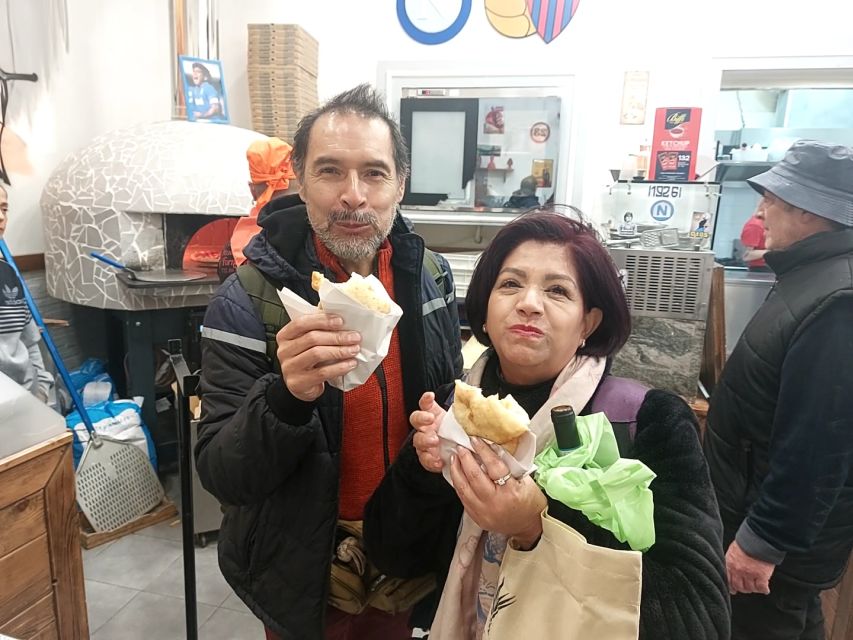
Next comes the Neapolitan tarallo, a warm, crunchy baked snack. Taralli are easy to dismiss if you see them packaged on a shop shelf, but a fresh version from a historic bakery gives you a better idea of why they remain part of local snacking culture.
The texture is the point. Expect something crisp and savory, with enough character to hold its own between the softer mozzarella and the fried foods still ahead. It also provides a welcome change in texture during a tour built around rich bites.
This stop shows one of the strengths of a guided food walk: you taste a local staple in the right setting rather than buying a generic version at a supermarket. The guide can explain how the food is eaten and why it belongs in the daily life of Naples.
Do not expect a long bakery visit or a chance to sit down for coffee here. The format is a walking route, and the stop is designed around tasting and explanation. You eat, listen, and continue through the market.
Frittatina and the case for fried pasta
The frittatina is one of the most distinctive stops. This deep-fried pasta snack is compact, crisp on the outside, and substantial enough to surprise anyone expecting a light nibble. It is exactly the kind of food many people would walk past without a guide.
I like this stop because it captures Naples’ practical approach to food. Pasta becomes a portable snack, wrapped in a crisp shell and served hot. It is filling, inexpensive in spirit, and built for eating on the move.
Some descriptions of the route also mention fried pizza among the foods served, but the core experience centers on frittatina and the other six planned tastings. The exact food at a vendor can vary, so you should focus on the style of the stop rather than expect an identical plate at every departure.
This is also where the amount of food starts to become clear. If you are a light eater, share when possible. The portions are intended to add up to a full meal, not merely a sampling menu.
Other eating walks in Naples:
- Exclusive Naples Private Food Tour: 6 or 10 Tastings
★ 5.0 · 596 reviews - Naples: Guided Street Food Tour with Spritz
★ 4.9 · 492 reviews - Winner 2025 Rome Twilight Trastevere Food Tour by Eating Europe
★ 5.0 · 5,157 reviews - Rome: Trastevere or Jewish Quarter Street Food Tour
★ 4.8 · 3,839 reviews
Ragù meatball and Naples in a single bite
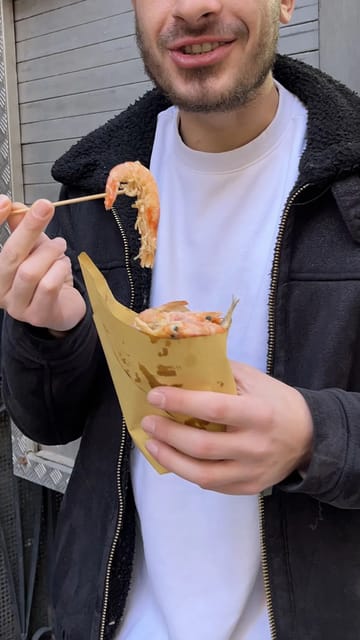
The meatball with slow-cooked Neapolitan ragù brings a softer, more familiar note to the route. After the crunchy tarallo and fried pasta, the tender meat and rich sauce give you a different sense of Campanian cooking.
The value of this stop is the explanation around it. A meatball is hardly an exotic food, but local preparation, sauce, and serving style tell you more than the label alone. Your guide connects the dish with home cooking and the way familiar ingredients become part of Naples’ food identity.
This is one reason I would take the tour early in a Naples visit. You are not only eating. You are collecting a short list of foods to look for again, along with a better feel for the city’s portions and flavors.
If you have a strong dislike of heavy food, note the sequence. Mozzarella, cold cuts, fried pasta, ragù, fried seafood, and dessert make a hearty combination. The tour is not designed around delicate portions or a low-fat menu.
The seafood cuoppo, the most market-minded stop
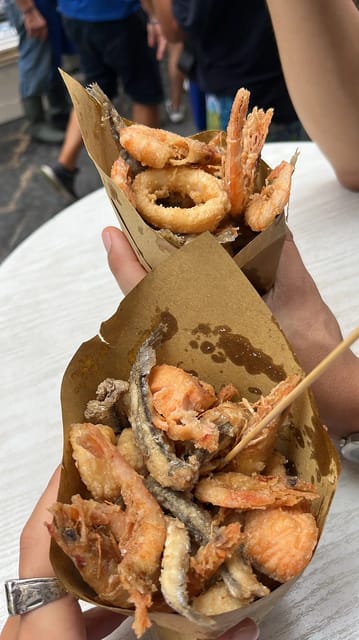
The mixed seafood fritter cone, called a cuoppo, is likely to be the most atmospheric tasting. Freshly fried seafood arrives in a paper cone, making it easy to carry through the market and eat while standing.
The cuoppo suits Naples because it is casual and direct. You do not need a table, a long explanation, or special equipment. You get hot, crisp seafood in a paper serving and continue walking through the city.
This stop can also be the most useful for people who want to eat seafood but feel unsure about choosing a casual vendor alone. You can see how the food is served and ask the guide about local habits. If you have seafood allergies, tell the operator when booking and remind the guide at the start.
The tour runs in all weather, so the cuoppo and the rest of the route are not reserved for sunny days. Bring comfortable shoes and dress for the forecast. Rain does not cancel the experience, and wet market streets can make the walk less comfortable.
Dessert at Armando Scaturchio
The final food stop shifts from savory to sweet. You choose among a traditional babà, sfogliatella, or artisanal gelato, then finish with limoncello or a strong Neapolitan espresso. The end point is Armando Scaturchio.
The choice gives you some control over the final course. Babà is soaked and soft, sfogliatella is flaky and layered, and gelato offers a colder, lighter finish. Your guide can help you decide if you are unfamiliar with the options.
The drink pairing is a nice local touch. Limoncello gives the finish a bright citrus note, while espresso offers a sharper ending. The tour includes one of these choices, but extra drinks are not included, so keep that in mind if you want wine, beer, or another coffee.
By this stage, most people will not need dinner right away. The food is plentiful enough that you may want to save a little room for the sweet course. One useful detail from the tour format is that guides have sometimes allowed couples to take unfinished portions with them, though you should not count on that at every stop.
What the guides add to the food
The food is the reason to book, but the guide determines how much you get from it. The best part of the format is the running commentary: stories about dishes, local legends, practical food advice, and explanations of ingredients.
Miri has led tours in English and French, with a warm and energetic approach. Barbara has guided mixed English and Italian groups while making each person feel included. Serena has been praised for explaining both the food and its cultural setting, while Roberta, Stefano, Manuela, and others have helped people find restaurants and dishes for later in the trip.
Language support is available in English, French, Italian, and Spanish. If your group contains several languages, the pace may include explanations in more than one language. That can make the tour longer at individual stops, but it also lets mixed-language groups share the experience.
The route is not a formal history tour of Naples. You will hear useful context about the market and food culture, but the strongest focus stays on what you are eating. If you want an in-depth architectural or political history walk, choose a different tour or add one separately.
Is $33 a fair price for two hours?
At $33 per person, the tour offers good value if you treat it as lunch or dinner plus a guided introduction to Pignasecca. Six tastings, a welcome spritz, and a final limoncello or espresso would cost a substantial amount if you bought comparable items separately.
The real savings are in the route and the judgment behind it. You could walk through Pignasecca alone, but you might choose the wrong shops or miss the stops that make the market useful for a first visit. A guide also removes the guesswork when menus and food names are unfamiliar.
The value is lower if you are looking only for a quick snack or if you already know the market well. It is also not the best choice for someone who wants a seated meal, a slow wine tasting, or a low-cost walk with only a few bites.
For most food-focused visitors, the price is sensible. You get a full stomach, a short introduction to a key Naples market, and suggestions for what to eat next.
Who should book this Naples food walk?
I would recommend it to first-time visitors who want to understand Naples through food rather than through a standard sightseeing route. It also suits couples, friends, solo visitors, and people arriving without a firm restaurant plan.
Solo participants should feel comfortable joining a shared group. The guides make an effort to include people who are traveling alone, and the format gives you an easy way to meet others without requiring a full-day commitment.
Vegetarian, vegan, and other dietary needs can be supported, but you must provide the information when booking. Since several core tastings involve cheese, meat, seafood, and fried food, do not wait until the first stop to mention an allergy.
The walk is not wheelchair accessible. It also requires comfortable shoes and weather-ready clothing. The route is only two hours and involves limited walking compared with a full city tour, but market streets and old urban lanes may still be difficult for some visitors.
Should you book the Pignasecca food tour?
Book it if you want a filling introduction to Naples’ everyday food, enjoy eating while walking, and prefer local vendors to formal restaurants. The combination of frittatina, cuoppo, tarallo, ragù, sweets, and market atmosphere gives you a useful first taste of the city.
Skip it if you need a quiet, seated meal, avoid fried food, or have strict dietary limits that the operator cannot confirm in advance. Also skip it if your main goal is a detailed sightseeing tour.
For everyone else, I would take it near the start of a Naples stay. Arrive hungry, use the guide’s restaurant tips afterward, and treat the two hours as both a meal and a practical lesson in how to eat around Naples.
FAQ
Where does the Naples street food tour meet?
Meet at Piazza Carità, 12, just outside the entrance of the Church of San Liborio alla Carità.
How long does the tour last?
The experience lasts two hours.
How many food tastings are included?
Six tastings of traditional Neapolitan and Campanian food are included.
What foods are served?
The planned tastings include mozzarella and local cold cuts, a Neapolitan tarallo, deep-fried pasta called frittatina, a meatball with Neapolitan ragù, a mixed fried seafood cone called cuoppo, and a traditional dessert or artisanal gelato.
Is a drink included?
Yes. The tour includes a welcome spritz and either limoncello or authentic Neapolitan espresso. Extra drinks are not included.
What languages are available?
The tour is available in English, French, Italian, and Spanish.
Can dietary restrictions be accommodated?
Vegetarian, vegan, and other dietary needs can be supported. Tell the activity provider about allergies or dietary restrictions when booking so they can make suitable arrangements.
More food to try in Naples
- Winner 2025 Florence Sunset Food & Wine Tour by Eating Europe
★ 5.0 · 5,015 reviews - Florence: Cinque Terre Park Day Trip with Optional Street Food
★ 4.5 · 3,593 reviews - Rome Food Tour: Unlimited Tastings with Fine Wine & Barolo
★ 5.0 · 3,365 reviews - Eat Like a Local: Venice 3-Hour Small-Group Food Tasting Tour
★ 5.0 · 3,137 reviews
More eating and drinking in Naples
- From Naples: Wine Tasting Tour on Vesuvius Slopes with Lunch
★ 4.5 · 330 reviews - Florence: Chianti Wineries Tour with Wine Tasting
★ 4.5 · 8,301 reviews - Small-Group Wine Tasting Experience in the Tuscan Countryside
★ 5.0 · 7,392 reviews - Rome: Tuscany & Montepulciano Day Trip with Lunch & Wine Tasting
★ 4.5 · 5,232 reviews
Just added in Naples
- Boat excursion with lunch on board to discover Ischia★ 5.0 · 474 reviews
- Tour of the island of Ischia in schooner★ 5.0 · 208 reviews
- Vesuvius National Park Skip-the-Line Ticket★ 3.8 · 221 reviews
- Naples: The Holy Mile 3-Hour Guided Tour★ 4.9 · 711 reviews
- Procida: Boat Tour with Swimming Stops and Underwater Photos★ 5.0 · 322 reviews
- Pompeii and Vesuvius Full-Day Tour from Amalfi Coast★ 4.4 · 319 reviews
- From Naples: Pompeii and Herculaneum Tour with Lunch★ 4.3 · 444 reviews
- From Naples: Pompeii & Herculaneum with Archaeologist Guide★ 4.8 · 665 reviews
Food Tours, compared.
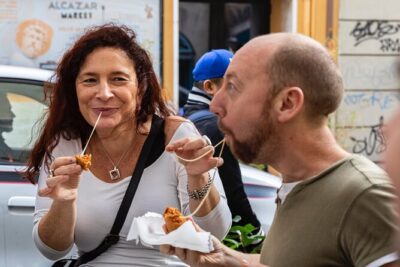
Winner 2025 Rome Twilight Trastevere Food Tour by Eating Europe
Read our review →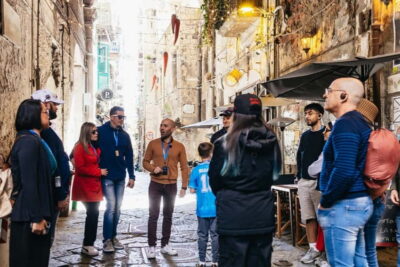

Trastevere or Jewish Quarter Street Food Tour
Read our review →
Cinque Terre Park Day Trip with Optional Street Food
Read our review →
Rome Food Tour: Unlimited Tastings with Fine Wine & Barolo
Read our review →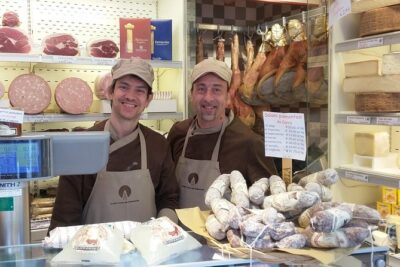
Eat Like a Local: Venice 3-Hour Small-Group Food Tasting Tour
Read our review →
Trastevere Food tour with Free-Flowing Fine Wine
Read our review →
Trastevere & Campo de Fiori Street Food Walking Tour
Read our review →Browse the lists this tour appears in