
Reviewed · TOURS IN MILAN
Milan: Pinacoteca Ambrosiana and San Sepolcro Crypt Ticket
Milan’s Pinacoteca Ambrosiana packs an extraordinary number of famous names into a manageable visit. You can see Leonardo da Vinci’s portrait of a musician, Raphael’s full-size Cartoon for the School of Athens, Caravaggio’s Basket of Fruit, and Brueghel’s flamboyant flowers without spending an entire day in a vast museum.
I especially like two things here: the quiet pace, which lets you study important works without a tour group pushing you along, and the chance to step from paintings and drawings into the old San Sepolcro Crypt. The main drawback is that the crypt is small and reached through architectural barriers, so this combined ticket is not suitable for wheelchair users or people with major mobility limits.
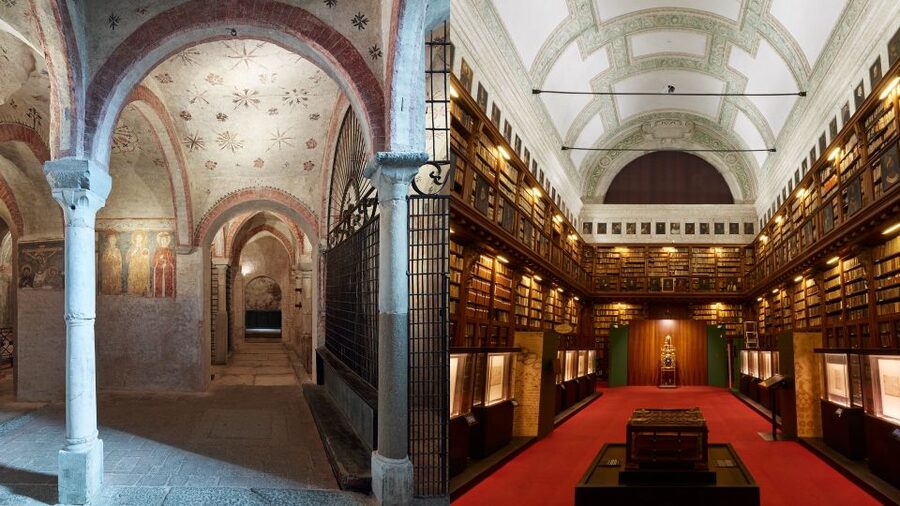
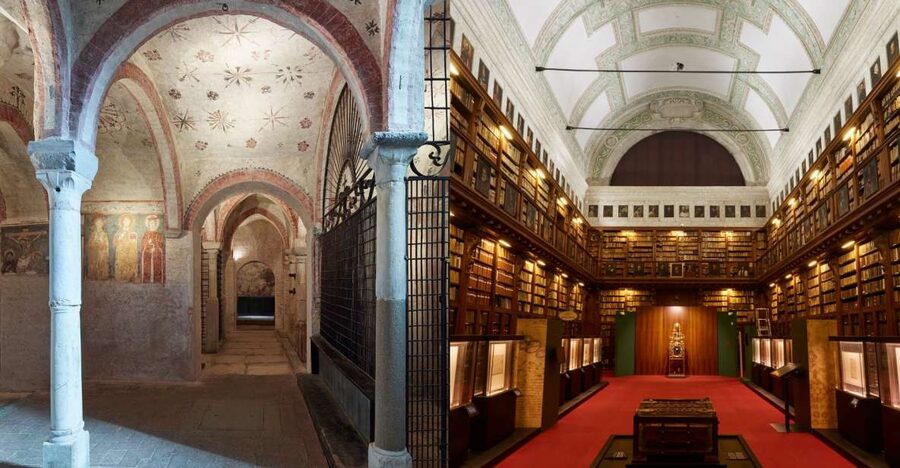
- Leonardo’s Codex Atlanticus: See original drawings in the Ambrosiana’s 17th-century reading room.
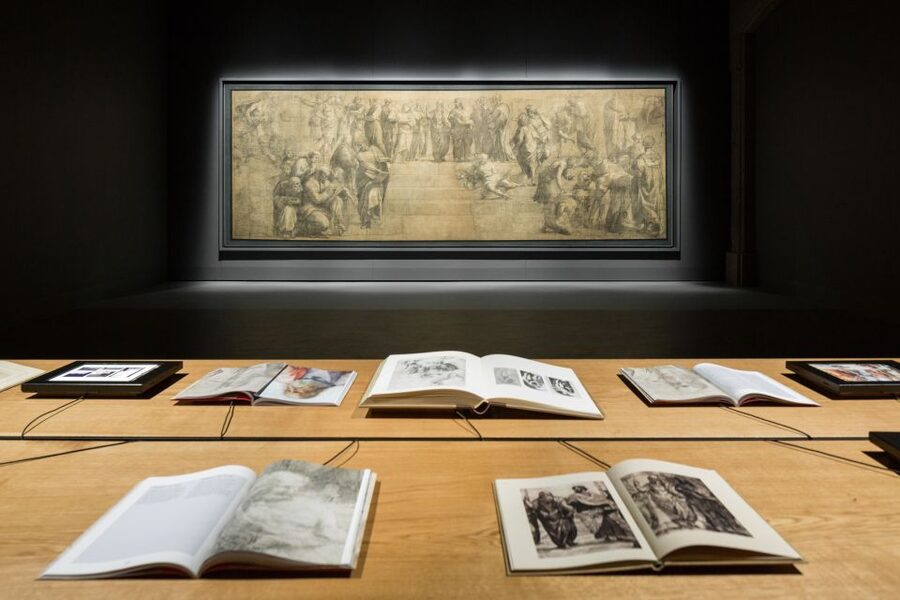
- Raphael’s cartoon: Study the enormous preparatory drawing for the School of Athens.
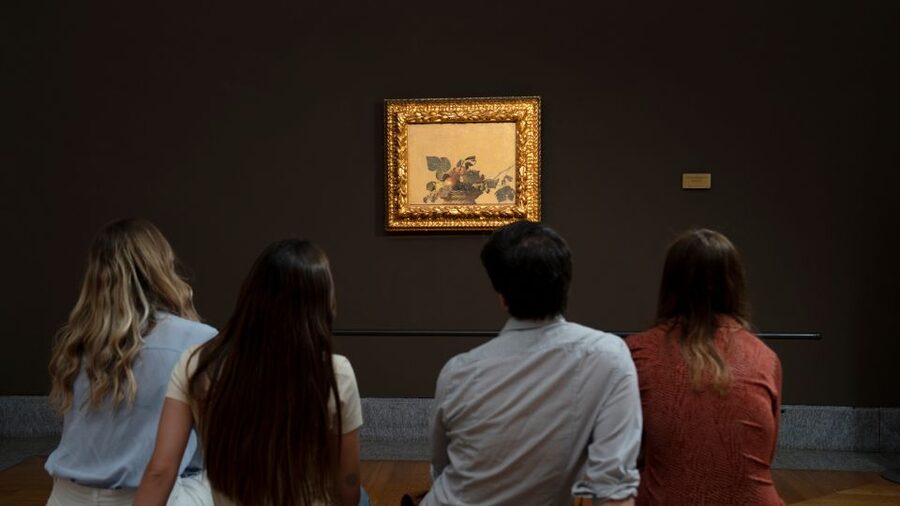
- Caravaggio’s Basket of Fruit: One of the museum’s essential stops.
- Ancient Milan below ground: The crypt floor uses stones from Roman Mediolanum.
- Self-guided freedom: Take roughly 1.5 hours in the gallery, or stay longer with the artworks.
- Two-part visit: Finish at the crypt in Piazza San Sepolcro, only a short walk from the museum entrance.
Why the Ambrosiana deserves a place beside Milan’s bigger museums
Milan is famous for the Duomo, La Scala, and Leonardo’s Last Supper. The Ambrosiana is easier to overlook, partly because its collection is smaller than the city’s major headline attractions. That is exactly part of its appeal.
You do not need to commit half a day to a giant museum. The usual visit takes about 1.5 hours, though you can easily spend two hours or more if you stop for the drawings, read the labels, and use the audio material. The display moves through centuries of Italian and Flemish art, with enough variety to keep the visit from feeling like a single narrow lesson.
I would put this near the top of your list if you like old master painting, Renaissance drawing, libraries, or unusual historic interiors. It also makes good sense on a rainy afternoon or during the hottest part of the day. The building offers shade, seats, and a calm change from Milan’s busy central streets.
The ticket costs about $25 per person. That is a fair price if you plan to see both sites, especially because the ticket combines an established art collection with a separate historic crypt. It is less compelling if you only want a quick look at one small underground church.
Start with Leonardo, Raphael, and Caravaggio
Your visit begins at the Pinacoteca Ambrosiana, at Piazza Pio XI 2. This is the main attraction and deserves most of your time.
The collection is not arranged as a theatrical parade of only the most famous pictures. Instead, you move through rooms containing paintings, drawings, sculptures, and historical objects. That gives you a better sense of how Cardinal Federico Borromeo’s collecting interests shaped the institution. The Ambrosiana was founded as a place for art and learning, not simply a picture gallery.
Begin with the museum’s best-known works, then slow down. Caravaggio’s Basket of Fruit is a small but powerful painting. Its appeal comes from the simple subject: fruit arranged in a basket. Look closely at the marks of age and the imperfect leaves. Caravaggio turns ordinary produce into a sharp study of nature, time, and decay.
Raphael’s Cartoon for the School of Athens is a very different experience. This large preparatory drawing shows Raphael planning one of the most celebrated frescoes in the Vatican. You can study the figures, gestures, and architectural structure more directly than you can in the finished wall painting. It is one of the main reasons to visit the Ambrosiana even if your time in Milan is limited.
The scale matters. This is not a small sketch you glance at behind glass. The cartoon gives you a strong sense of the planning behind a monumental Renaissance composition. Give it a few quiet minutes rather than treating it as another item on a checklist.
A few more things to do in Milan
- Milan: Cathedral and Duomo’s Terraces Entrance Ticket
★ 4.6 · 61,054 reviews - Milan Cathedral: Duomo Terraces Ticket (No Church Access)
★ 4.6 · 6,111 reviews - Milan: Guided Walking Tour & Last Supper Visit with Ticket
★ 4.7 · 5,409 reviews
Leonardo’s musician and the drawings in the library
Leonardo appears in several forms here, and the contrast is part of what makes the museum work.
The Portrait of a Musician presents Leonardo as a painter of people. The identity and expression of the sitter have prompted much discussion, but you do not need to solve the mystery to appreciate the work. The face is controlled and serious, while the musical reference adds another layer to the portrait.
Then the collection shifts from finished art to working thought. The Ambrosiana holds pages from Leonardo’s Codex Atlanticus, the enormous body of drawings and notes assembled from his papers. The display includes studies and original sheets in the library’s 17th-century reading room.
This room is one of the most memorable parts of the visit. The setting matters: you are looking at Leonardo’s ideas inside a historic library rather than in a plain modern gallery. The drawings reveal a mind moving between art, mechanics, science, observation, and design.
You may also encounter material associated with other major figures, including Michelangelo. The collection’s value is not only the famous names on the wall. You get to see how artists recorded thoughts, adjusted plans, and worked through problems before a finished painting existed.
If you use the downloadable app or audio material, this is a good place for it. A self-guided explanation can help you understand why a technical-looking page matters. Some ticket holders have paid about €4 for an audio guide, so check what is included with your booking and what requires an additional charge. One useful feature of the app is that you can listen on your own device and return to the material after the visit.
Brueghel’s flowers and the pleasure of looking slowly
The Ambrosiana is not simply a Leonardo and Raphael stop. Brueghel’s Vase of Flowers gives the collection a different mood.
The picture is packed with color, tiny details, and carefully observed botanical forms. It rewards close looking, especially after the more serious religious and intellectual subjects in other rooms. Take time to compare the flowers, insects, and textures. The painting is decorative at first glance, but the close attention required to make it is part of its appeal.
You will also find works by Caravaggio, Botticelli, Tiepolo, Luini, Mengs, and other Italian and Flemish painters. The quality is not identical in every room, and some displays may feel more important than others. That is normal for a collection built over many centuries. The reward comes from the strong highlights and the chance to encounter less familiar works between them.
The museum is generally manageable rather than overwhelming. There are seats in some areas, which helps if you want to sit and study a painting. Lighting has received mixed reactions, so a few pictures may not be shown under ideal conditions. Still, the building, the library, and the star works make the visit worthwhile even if every room does not hold a masterpiece.
Moving from the museum to the San Sepolcro Crypt
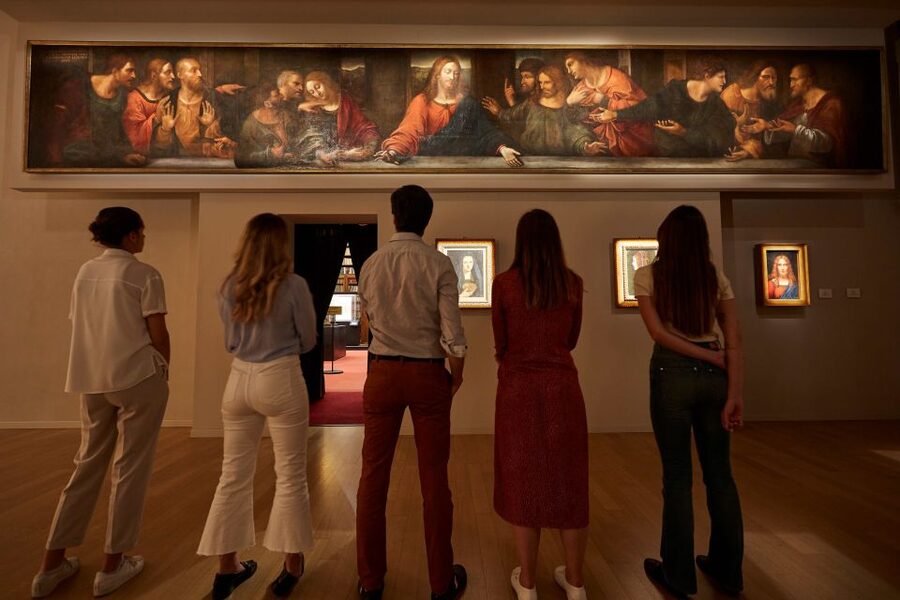
The ticket is designed as a connected route. You enter the Ambrosiana in Piazza Pio XI, complete the gallery visit, and leave onto Piazza San Sepolcro. The crypt entrance is there, so you do not need transport between the two sites.
Allow about 30 to 40 minutes for the crypt, though the actual time may be shorter if you simply walk through. The last admission is at 5:30 PM, and the crypt closes at 6:00 PM. This is the key scheduling point. Do not start the museum late in the afternoon and assume you can visit the crypt afterward.
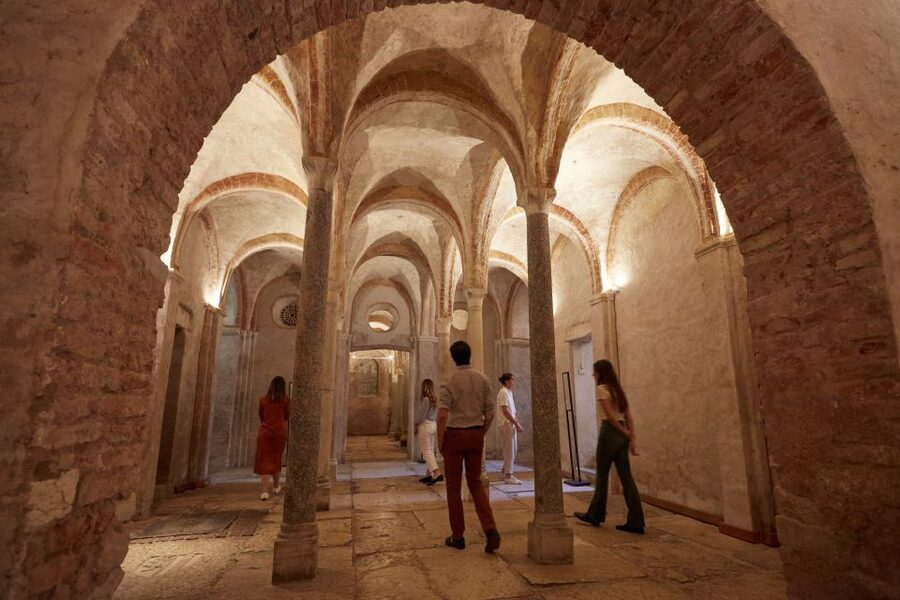
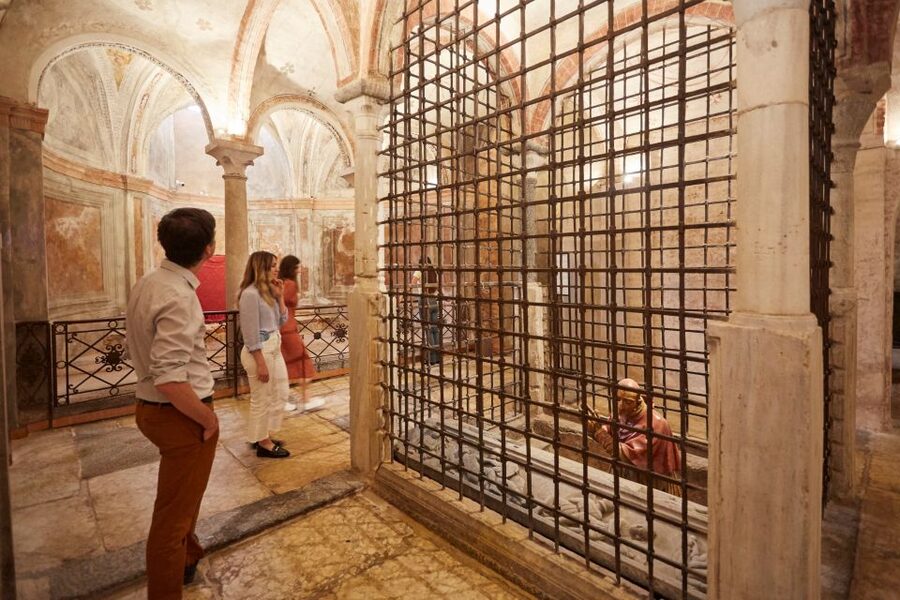
San Sepolcro is a medieval underground church built over the area of Milan’s ancient Roman forum. Its pavement uses stones from the old city of Mediolanum. That physical foundation gives the visit its strongest idea: you are standing below modern Milan on material connected with the city’s Roman past.
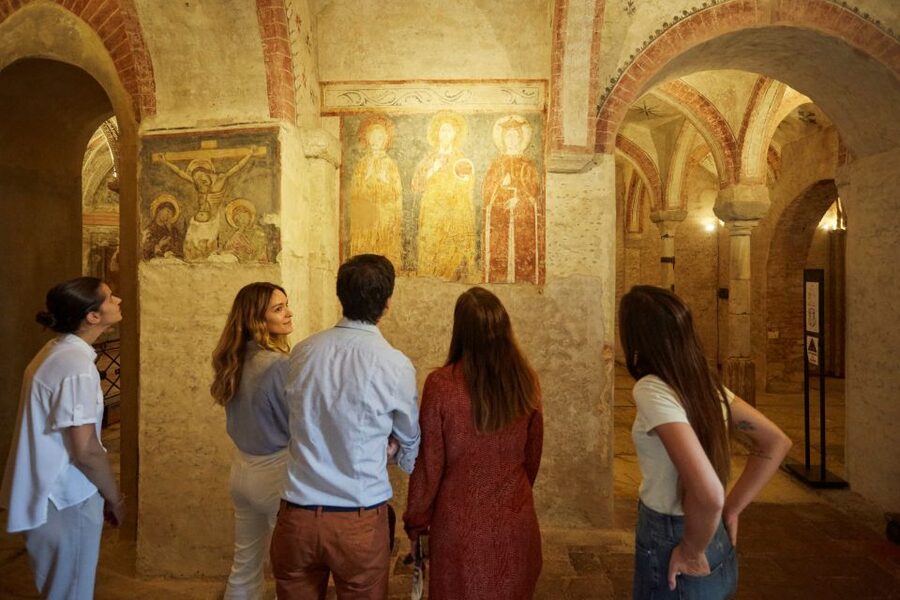
The room is modest. If you expect a huge underground complex, you may find it underwhelming. The crypt is small, and without explanation it can look like a plain basement with old stonework. Its value comes from the layers of history and the location beneath the present-day city.
Look up at the ceiling as well as down at the floor. The space has architectural details that are easy to miss if you hurry. The experience works best when you treat it as a short historical stop rather than a second major museum.
A VR experience may be available for an extra payment at the crypt. If you want more context about Milan’s Roman and medieval development, this can help the room make sense. Without that added interpretation, bring your own patience and read the information provided on site.
Same base, a different kind of day:
- Milan: Da Vinci’s Last Supper Guided Tour
★ 4.7 · 10,143 reviews - Milan: Science and Technology Leonardo da Vinci Museum Entry
★ 4.5 · 7,169 reviews - Milan: City Sightseeing Hop-On Hop-Off Bus with Audio Guide
★ 4.0 · 6,256 reviews - Milan: Milan Cathedral Direct Entrance – Terrace Excluded
★ 4.5 · 5,782 reviews
How to plan the timing
The full visit normally takes around two hours:
- Pinacoteca Ambrosiana: about 1.5 hours
- Walk to the crypt entrance: a few minutes within the connected route
- San Sepolcro Crypt: about 30 to 40 minutes
Some people move through the museum in about an hour and a half. Others spend three hours, especially if they enjoy drawings and want to listen to the audio material. You control the pace, since this is an admission ticket rather than a standard guided group tour.
I would schedule the Ambrosiana earlier than the crypt, leaving a generous cushion before 5:30 PM. Starting around midafternoon can work if you are focused, but it gives you less room for a long stop at the Codex Atlanticus or Raphael’s cartoon.
The location is convenient for a central Milan itinerary. The museum is about a five-minute walk from the Duomo area, according to the practical directions supplied for the experience. You can pair it with the cathedral district without spending time crossing the city.
Large bags, backpacks, luggage, and baby strollers are not allowed. Leave those items elsewhere before you arrive. This matters most if you are visiting between hotels or arriving with day luggage.
Is the visit accessible?
Most of the Pinacoteca’s exhibition rooms are wheelchair accessible, but the complete combined experience is not. The crypt has architectural barriers and is not suitable for wheelchair users or people with significant mobility impairments.
If accessibility is essential, book the Pinacoteca alone rather than this combined ticket. That lets you enjoy the paintings, library, and Leonardo material without paying for a site you cannot enter.
The crypt also involves an underground setting, so anyone who finds stairs or uneven historic spaces difficult should plan carefully. The ticket information specifically lists the activity as unsuitable for people with mobility impairments.
Who will get the most from this ticket?
I would recommend it most strongly to:
- People who want major Renaissance names without a huge museum commitment
- Anyone interested in Leonardo’s drawings and working methods
- Visitors who enjoy historic libraries and old interiors
- Families with older children who can spend time looking at details
- Art lovers searching for a quieter alternative to Milan’s busiest sights
- Anyone who wants a short Roman and medieval history stop near the Duomo
You do not need to be an art specialist. The famous works provide clear anchors, and the museum is small enough to approach without a study plan. An audio guide or app adds useful context if you want to understand the stories behind the pictures.
I would be more cautious if your priority is a large archaeological site, a fully guided experience, or a crypt with dramatic underground architecture. San Sepolcro is intimate, not grand. The Ambrosiana is a compact collection with several outstanding works, not a replacement for every major museum in Milan.
The practical value of a self-guided visit
The ticket’s main advantage is freedom. You can stand in front of Raphael for five minutes or fifteen. You can pause in the library, skip a room that does not interest you, and return to a favorite picture without waiting for a group.
That freedom also means you need to supply some of the structure. The experience does not automatically provide a personal guide explaining each room. Download the app if it is part of your booking, or consider the paid audio guide if you want a clearer route. The self-guided format works particularly well here because the collection is compact and the main works are easy to identify.
The combined ticket gives the visit a useful rhythm. First comes painting, drawing, and collecting. Then comes archaeology and religious architecture. The crypt is not a major attraction on the same scale as the gallery, but it changes the subject and lets you see Milan below its polished central streets.
The cancellation terms are also practical: you can cancel up to 24 hours in advance for a full refund, and the reserve-now-pay-later option keeps your plans flexible. These terms are useful if your Milan schedule may change, though the main decision should still be whether both sites interest you.
Should you book the Ambrosiana and crypt ticket?
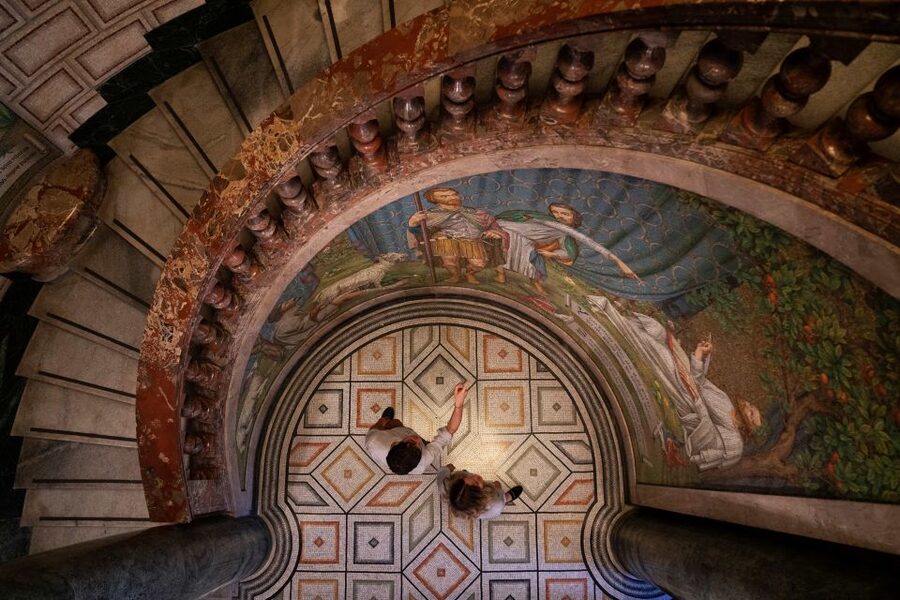
Book it if you want a compact, art-heavy visit with Leonardo, Raphael, and Caravaggio in one place. The Ambrosiana is especially strong for the Codex Atlanticus display, Raphael’s cartoon, and the chance to look at important works without the scale and pressure of a giant museum.
Add the crypt because you enjoy layers of city history and unusual interiors, not because you expect a vast underground monument. It is a short, atmospheric finish, and the ancient stones beneath the floor give Milan’s past a physical presence.
Skip the combined ticket if you use a wheelchair, carry luggage or a backpack, or only have time for a very quick stop before closing. For most art-minded visitors staying near the Duomo, though, the $25 price is sensible. Plan two hours, protect the crypt’s final admission time, and let the museum’s strongest works do the heavy lifting.
FAQ
Where does the visit begin?
You begin at the Pinacoteca Ambrosiana at Piazza Pio XI 2 in Milan.
Where does the visit finish?
You leave the Pinacoteca onto Piazza San Sepolcro, where the entrance to the Crypt of San Sepolcro is located. The activity ends in Piazza San Sepolcro.
How long does the complete visit take?
The Pinacoteca normally takes about 1.5 hours. The crypt takes about 30 to 40 minutes, so plan roughly two hours overall, with extra time if you study the works or use the audio material.
What are the main artworks at the Pinacoteca?
Highlights include Caravaggio’s Basket of Fruit, Raphael’s Cartoon for the School of Athens, Brueghel’s Vase of Flowers, and Leonardo da Vinci’s Portrait of a Musician.
Can I see Leonardo da Vinci’s Codex Atlanticus?
Yes. The visit includes the library’s 17th-century reading room, where original drawings from Leonardo da Vinci’s Codex Atlanticus are displayed.
What time does the crypt close?
The last admission to the crypt is at 5:30 PM, and it closes at 6:00 PM. Finish your Pinacoteca visit in time to reach the crypt entrance.
Are backpacks and luggage allowed?
No. Luggage, large bags, backpacks, and baby strollers are not allowed.
Is the combined experience wheelchair accessible?
No. Most Pinacoteca exhibition rooms are wheelchair accessible, but the crypt has architectural barriers. People who use wheelchairs or have mobility impairments should consider booking the Pinacoteca alone.
Just added in Milan
- Highlights and hidden gems of Milan Bike Tour★ 5.0 · 491 reviews
- Milan Gourmet Tour: A Premium Tasting Experience by Do Eat Better★ 5.0 · 241 reviews
- Private Milan Food Walking Tour of Brera★ 5.0 · 217 reviews
- Leonardo3 The World of Leonardo: Tickets for the Interactive Exhibition★ 4.0 · 220 reviews
- Da Vinci’s Last Supper and Santa Maria delle Grazie Church Tour★ 4.5 · 218 reviews
- Learn to Cook Italian Recipes with an Italian Chef★ 5.0 · 283 reviews
- La Scala Theatre and Museum guided experience★ 4.5 · 664 reviews
- La Scala Theatre and Museum Tour in Milan With Private Guide★ 3.5 · 384 reviews
Tours in Milan, compared.
Cathedral and Duomo’s Terraces Entrance Ticket
Read our review →
Science and Technology Leonardo da Vinci Museum Entry
Read our review →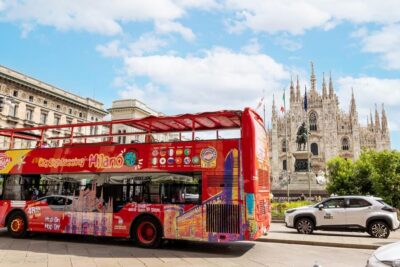
City Sightseeing Hop-On Hop-Off Bus with Audio Guide
Read our review →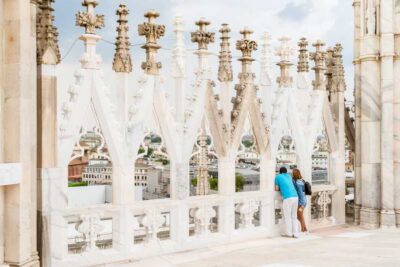
Milan Cathedral: Duomo Terraces Ticket (No Church Access)
Read our review →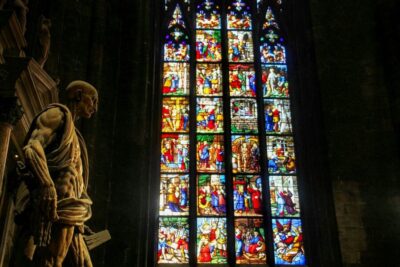
Milan Cathedral Direct Entrance – Terrace Excluded
Read our review →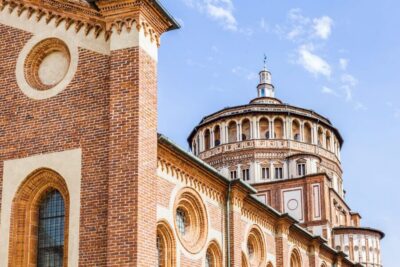
Guided Walking Tour & Last Supper Visit with Ticket
Read our review →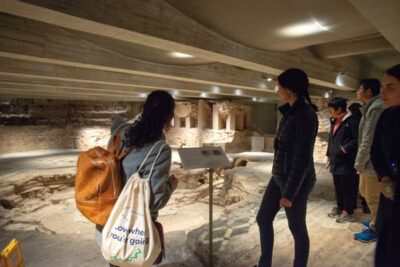
Fast-Track Milan Cathedral and Terraces Guided Tour
Read our review →Browse the lists this tour appears in