
Reviewed · CYCLING TOURS
Milan: Guided Bike Tour
Milan’s grand center makes more sense from a bicycle seat. In three hours, you can connect Sforza Castle, the Roman columns, La Scala, and the Duomo without spending your whole day walking between them. The route also slips into places many first-time visitors miss, including the old canal lock, Darsena, Via Brisa, and Piazza Affari.
I like the small group of no more than eight and the guides’ personal approach. Emilio is praised for his easy manner, strong English, and feel for history, art, and culture, while Katharine is noted for allowing time at each stop instead of hurrying everyone along. The main thing to consider is that this is an active city ride, so comfortable shoes, suitable clothing, and confidence on a bicycle matter.
Key points at a glance
- Eight riders maximum: A small group makes it easier to hear the guide and ask questions.
- Milan’s major sights in one loop: The route links Sforza Castle, La Scala, the Galleria, and the Duomo with less familiar corners of the city.
- Mostly bike paths and quieter streets: The ride is described as comfortable, though you still need to pay attention in an urban setting.
- Strong guide-led storytelling: Emilio and Katharine are singled out for clear explanations, relaxed pacing, and a warm style.
- Three hours for $55.80: Bikes, helmets, and guiding are included, making this useful for a first look at Milan.
- Useful booking limits: The tour is not suitable for pregnant women, people over 254 pounds, or unaccompanied minors.
Why a bike is a smart way to see central Milan
Milan’s headline sights are spread across a broad central area. You can walk between many of them, but the distances add up, especially when you want to include the castle, the canals, the Roman remains, and the Duomo in one morning or afternoon.
A bicycle gives you a better sense of how the city fits together. You move from the monumental center to old neighborhoods, waterworks, Roman traces, modern finance, and contemporary art without treating each sight as a separate stop. I like that this route is not limited to the postcard landmarks.
The format is also more personal than a large bus tour. With a maximum of eight participants, you should be able to hear the guide and get answers without shouting across a crowd. The group size does not make the ride private in the usual one-party sense, but it does keep the experience intimate.
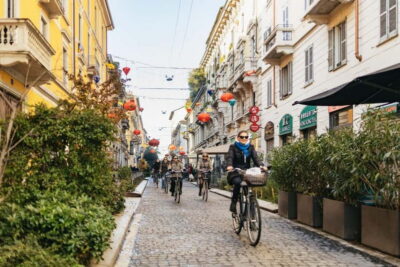
The route has been described as comfortable, with much of the riding on bike paths and uncrowded streets. That is a useful advantage in Milan, though you should still expect normal city riding, crossings, and the need to stay alert. A helmet is provided, and you should bring comfortable shoes rather than anything stiff, slippery, or dressy.
Other rides around Milan:
- Milan: Hidden Gems Guided Bike Tour
★ 4.8 · 1,040 reviews - Milan: Highlights and Hidden Gems Guided Bike Tour
★ 4.7 · 498 reviews - Highlights and hidden gems of Milan Bike Tour
★ 5.0 · 491 reviews
Starting at Sforza Castle and Arco della Pace
The ride begins at the Cargo bike store, where you meet the guide and receive your bicycle and helmet. Hotel pickup is not included, so you need to make your own way to the meeting point. The exact starting time depends on the date you choose.
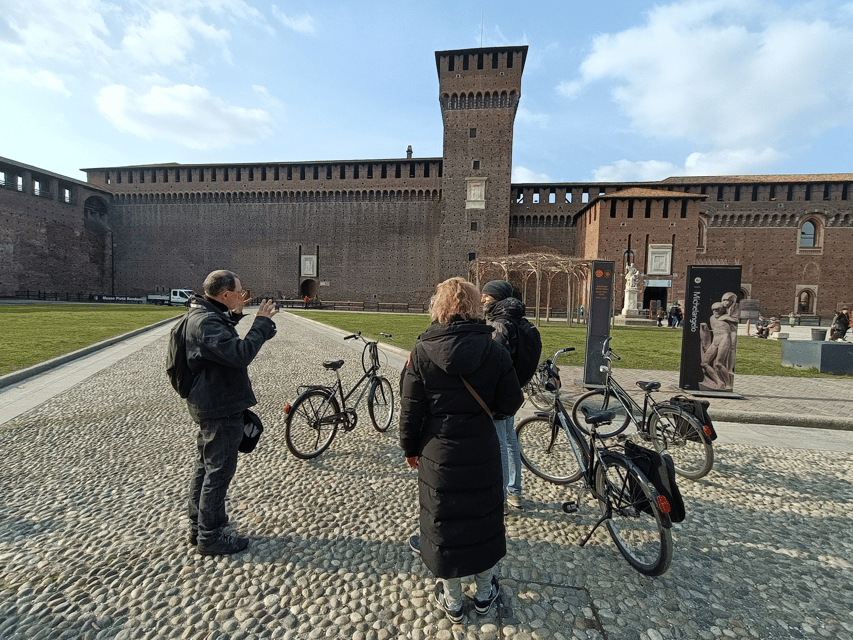
The first major stop is Sforza Castle. You cycle to the outside of this large fortress complex, then enter its inner courtyards for an explanation of its art and history. The courtyards give you a useful introduction to Milan’s changing identity, from defensive stronghold to a major cultural landmark.
You will not be taking a full museum tour here. The focus is on the monument, its courtyards, and the story your guide can tell while keeping the group moving. That makes the stop well suited to a first visit, especially if you want context without spending several hours inside a museum.
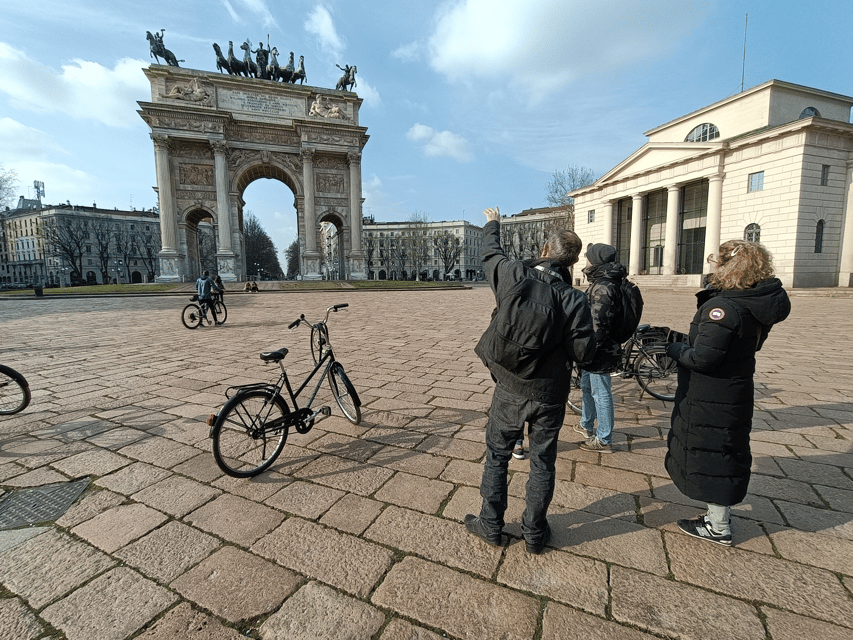
From the castle, the route continues toward Arco della Pace, the Peace Arch. This is one of the city’s most striking monumental views, and it gives you a natural pause for photographs. You can take pictures with your own camera, but the stop is brief, so have it ready before you arrive.
This early section helps you get your bearings. You see one of Milan’s grand historic complexes, then shift toward an open urban setting and the city’s wider network of streets and public spaces.
Canals, Darsena, and Milan’s quieter side
The canal section is one of the more distinctive parts of the route. Milan is not usually the first Italian city people associate with waterways, yet its canals played an important role in moving goods and shaping the city’s growth.
At Darsena, you stop to look at the basin and surrounding canals. The atmosphere here is different from the formal squares near the Duomo. You get water, old infrastructure, and a more relaxed setting, which gives the tour a change of pace.
The route also includes the old canal lock. This is the kind of detail that can disappear if you only follow Milan’s main shopping streets. Your guide explains what you are seeing, so the lock becomes more than an old piece of masonry. It helps show how practical systems supported the city’s development.
You should not expect a long waterfront visit or a leisurely meal stop. The canal section is part of a moving sightseeing route, with time for photos and a short explanation before you return to the bicycles. Still, it adds variety and gives you something different from the usual castle, church, and opera-house circuit.
Rain does not necessarily ruin the ride, but it can make the experience less comfortable. One person completed the tour in wet weather and still found it worthwhile because the bicycle made it possible to see corners of Milan that would have been harder to reach on foot. I would still check the forecast and dress sensibly.
Roman Milan at San Lorenzo and Via Brisa
After the canals, you ride toward San Lorenzo and its Roman columns. These columns are among the clearest reminders that Milan has a much older story than its famous nineteenth and twentieth-century buildings suggest.
The stop lets you connect the modern city with its Roman past. Instead of seeing ancient remains in isolation, you encounter them in the middle of everyday Milan. That contrast is part of the appeal: archaeological fragments sit beside streets, trams, churches, and active city life.
The route then reaches the Basilica of Sant’Ambrogio, one of Milan’s key religious landmarks. The tour is designed around an outside visit and guide commentary rather than a full formal church tour. You should listen for the explanation of the basilica’s place in Milan’s religious and civic story.
Via Brisa adds another layer with its Roman ruins. This is a quieter historical stop than Sforza Castle or the Duomo, but it rewards attention. You may not recognize its importance at first glance, which is exactly why a guide helps here.
This part of the itinerary is especially useful if you enjoy history but do not want to spend your entire day indoors. The ride links visible remains, streets, and buildings into a simple timeline. You keep moving, but you are not simply ticking off landmarks.
A few more things to do in Milan
- Milan: Da Vinci’s Last Supper Guided Tour
★ 4.7 · 10,143 reviews - Milan: City Sightseeing Hop-On Hop-Off Bus with Audio Guide
★ 4.0 · 6,256 reviews - Milan: Guided Walking Tour & Last Supper Visit with Ticket
★ 4.7 · 5,409 reviews - Milan: Fast-Track Milan Cathedral and Terraces Guided Tour
★ 4.7 · 5,240 reviews
Piazza Affari and Milan’s modern face
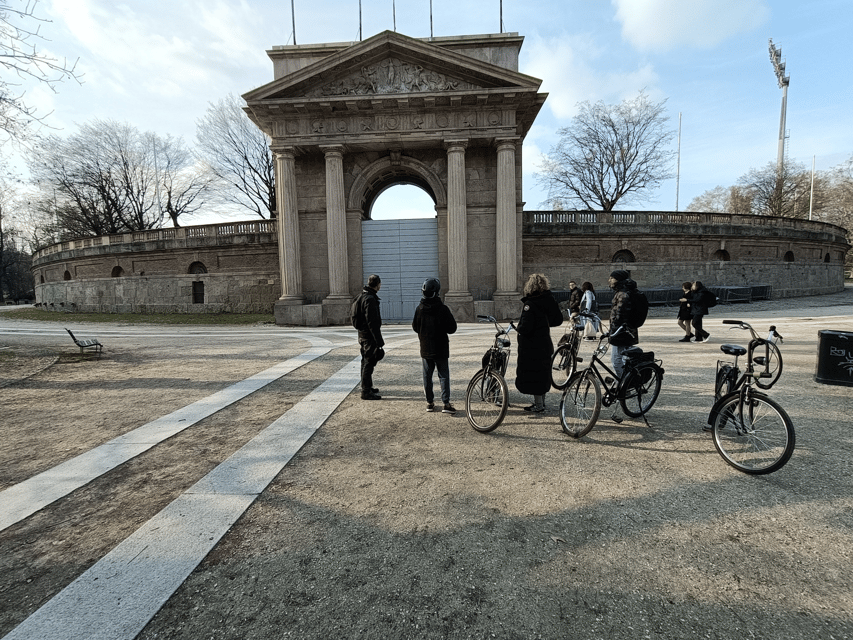
The next stop is Piazza Affari, Milan’s financial district square. Here you see L.O.V.E., Maurizio Cattelan’s contemporary art installation, and pause for photographs.
The work brings a jolt of modern attitude to a route otherwise filled with castles, churches, and Roman remains. It also gives the guide a chance to explain how Milan’s artistic identity reaches beyond Renaissance and religious art.
You do not need to be an art expert to enjoy this stop. The installation is direct, unusual, and easy to discuss. It is also a reminder that Milan is not preserved only as an old city. It continues to make room for sharp, modern public art.
The photo stop is short, so this is another place where you should keep your camera handy. The tour is not built around long visits at every attraction. Instead, it gives you a brisk set of encounters, with enough explanation to make each one meaningful.
Mercanti Square, La Scala, and the Galleria
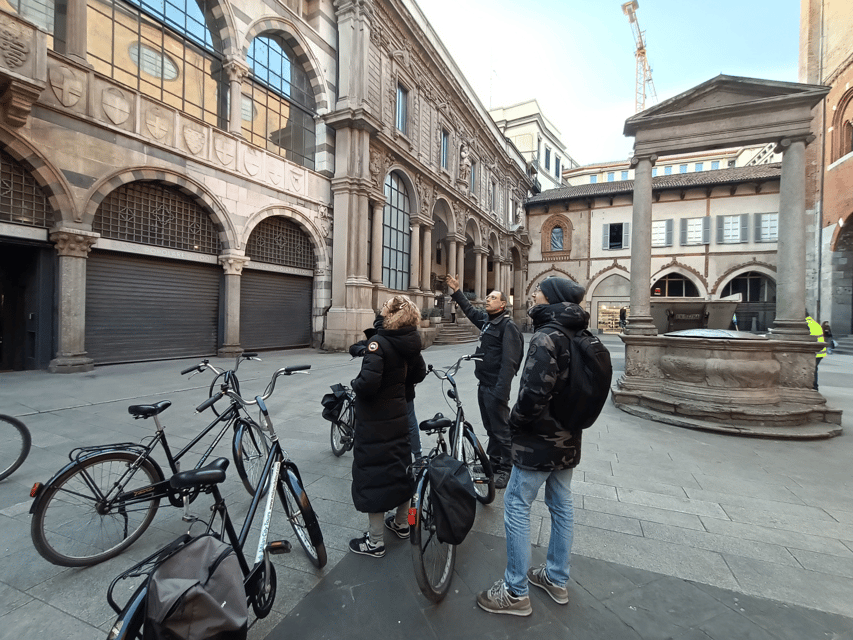
Mercanti Square brings you back toward the historic core. Its enclosed urban form and medieval character feel different from the broad space around the castle or the financial district. It is a good example of how quickly Milan’s architectural mood can change from one block to the next.
From there, you continue to La Scala Square and the Teatro alla Scala. This is one of the world’s best-known opera addresses, and even a short exterior stop gives you a sense of its role in Milan’s cultural life.
You should not expect an opera performance or an interior theater visit as part of this bicycle tour. The value here is the guide’s explanation and the chance to place La Scala within the city center rather than visiting it as a stand-alone attraction.
The route then reaches Galleria Vittorio Emanuele II. Its glass roof, elegant arcades, and polished public space make it one of Milan’s most recognizable settings. Cycling will stop before you enter the pedestrian areas, so you will walk the bicycle through or leave it as directed by the guide.
This is one of the busiest parts of the itinerary, particularly because the Galleria connects La Scala with Piazza del Duomo. The small group helps, but you should be prepared for people on foot and a slower pace near the main sights.
Finishing at Piazza del Duomo
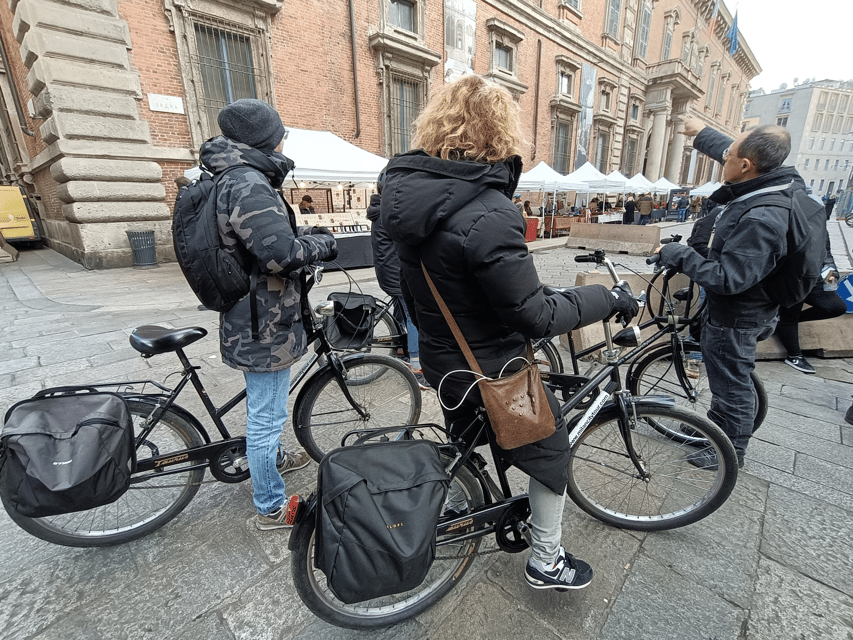
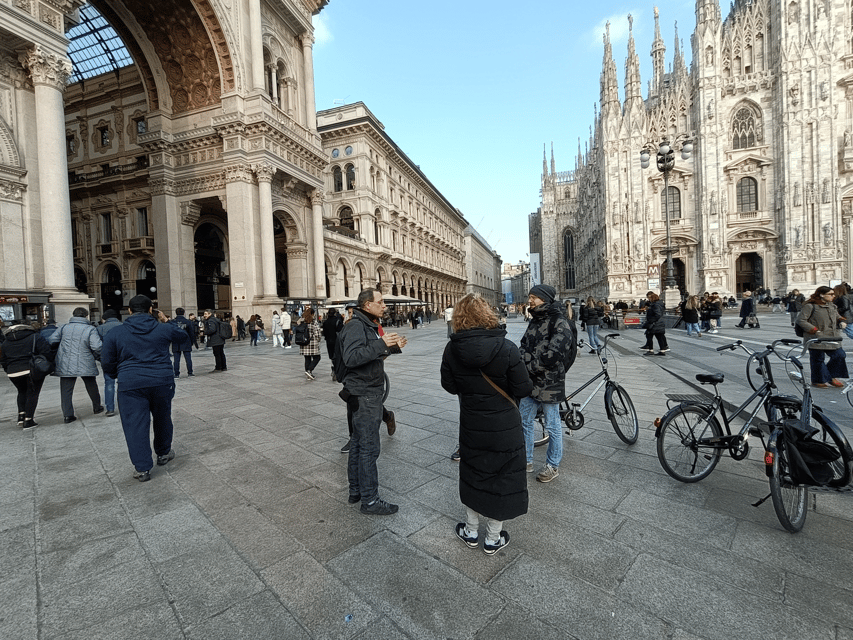
The final major stop is Piazza del Duomo, where you have another short session for photographs. The cathedral, open square, and surrounding buildings provide the natural finale to the route.
Arriving here by bicycle gives the square a satisfying place in the wider story of the ride. You have already seen the castle, canals, Roman remains, church, opera house, and shopping arcade. The Duomo is not simply an isolated photograph at the end. It becomes the center point of a city that has changed many times.
The tour does not include entry into the cathedral or a guided interior visit. If you want to see the Duomo from inside or climb to the rooftop terraces, plan that separately. The bicycle tour works best as an overview and orientation, not as a substitute for Milan’s indoor sights.
After the Duomo stop, you cycle back to the original meeting point. Since the activity ends where it starts, you do not need to arrange a separate ride back to your hotel. You will need to allow time afterward if you have a timed museum booking or train departure.
Guide style and group size
The guide can make or break a city bike tour, and this one receives its strongest praise for its human touch. Emilio is noted for a relaxed manner, strong English, and the ability to answer questions about Milan’s art, culture, and past. He is also described as passionate about his work without making the ride feel formal.
Katharine is praised for her broad explanations and for not rushing the group during stops. That matters because a three-hour route can easily turn into a race if the guide treats every landmark as a quick photo opportunity.
The guides speak English and French. If you have a particular interest in architecture, Roman Milan, public art, or local culture, ask questions during the ride. A group capped at eight gives you a better chance of having a real exchange than a large sightseeing tour.
The pace sounds relaxed rather than athletic. Still, you are riding for three hours, so this suits people who are comfortable staying on a bicycle for that length of time. The tour is not suitable for pregnant women, people over 254 pounds, or unaccompanied minors. Anyone under 18 must ride with a legal guardian.
Is $55.80 a fair price?
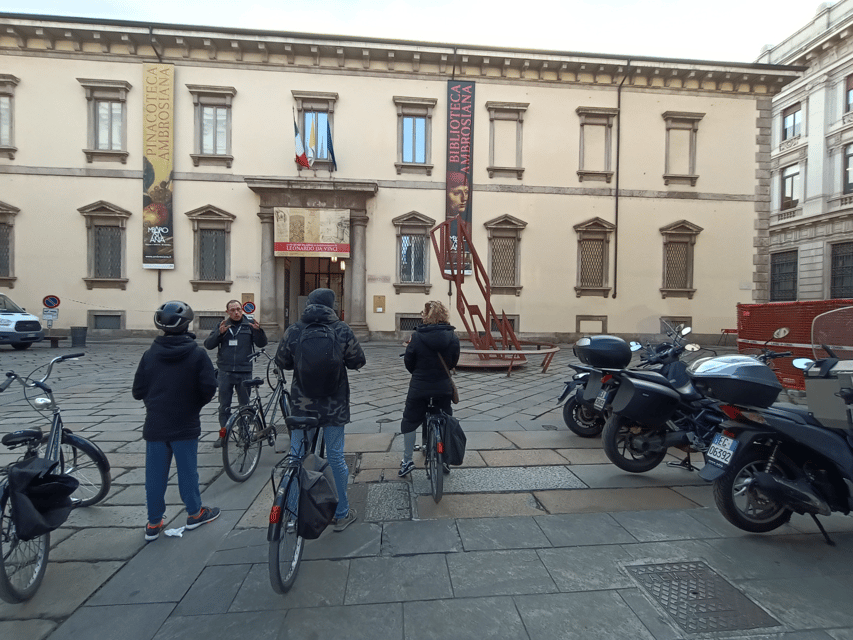
At $55.80 per person, the tour is priced above a simple bicycle rental, but you are paying for more than the bike. The fee includes a guide, bicycle, and helmet, and the route covers a wide section of central Milan in three hours.
The value is strongest if you are visiting Milan for a short stay or want an orientation early in your trip. You see the city’s main monuments and several less obvious locations in one outing, then can decide which places deserve a longer return visit.
It is less useful if you already know central Milan well or prefer to set your own pace. You will not have unlimited time at each sight, and the route is designed to keep moving. It also does not include hotel transfers, museum admissions, or food.
Free cancellation up to 24 hours before the activity gives you some flexibility, and the reserve-now, pay-later option can help if your plans are still shifting. Bring an ID card and a copy of your payment or voucher if you booked online.
What to bring and how to prepare
Wear trainers or other comfortable shoes, along with clothing suitable for cycling. Large bags and luggage are not allowed, so pack lightly. A small personal camera or phone is useful for the repeated photo stops.
You should arrive ready to ride rather than dressed only for sightseeing. The route includes historic streets and busy central areas, and suitable clothing will make the three-hour outing easier.
The activity is offered in English and French. Check the available starting times when booking, since the schedule can vary. The tour begins and ends at the Cargo bike store.
Who will enjoy this Milan bike tour?
I would recommend it most strongly to first-time visitors, short-stay visitors, and anyone who wants a clear introduction before exploring Milan on foot. It is also a good fit if you like hearing the story behind a building instead of collecting photographs with no context.
You will appreciate it if you enjoy a mix of major sights and smaller historical details. The route does not stop at the Duomo and Galleria alone. It adds canals, Roman ruins, Sant’Ambrogio, Piazza Affari, and L.O.V.E., giving you a broader picture of Milan.
Families with teenagers may find the format appealing, provided everyone meets the age and guardian rules and is comfortable cycling. It is not suitable for unaccompanied minors, pregnant women, or anyone above the stated weight limit.
I would choose another format if you need extensive time inside churches, museums, or the Duomo. This is a city overview on two wheels, not an indoor art tour.
Should you book it?
Book this tour if you want to cover a lot of Milan in three hours, prefer a small group, and enjoy guide-led stories along with your sightseeing. The combination of Sforza Castle, canals, Roman remains, La Scala, the Galleria, and the Duomo gives you a useful first map of the city.
Skip it if cycling is uncomfortable for you, if you need a slow, highly detailed visit at each monument, or if your Milan plans are already built around indoor admissions. For most active first-time visitors, though, $55.80 is a sensible price for a guided introduction with bikes, helmets, and a route that reaches well beyond the standard postcard stops.
FAQ
How long does the Milan guided bike tour last?
The tour lasts three hours. Starting times vary, so check availability for your chosen date.
Where does the tour start and finish?
You meet at the Cargo bike store. The tour ends back at the same meeting point.
What languages are available?
The live guide speaks English or French.
How many people can join the tour?
The group is limited to eight participants.
Are bicycles and helmets included?
Yes. The tour includes use of a bicycle and a helmet.
Does the tour include hotel pickup and drop-off?
No. Hotel pickup and drop-off are not included.
What should I bring?
Bring comfortable shoes, suitable clothing for cycling, an ID card, and a copy of your payment or voucher if you booked online.
Can children join the tour?
Participants under 18 must be accompanied by a legal guardian. Unaccompanied minors are not allowed.
Just added in Milan
- Highlights and hidden gems of Milan Bike Tour★ 5.0 · 491 reviews
- Private Milan Food Walking Tour of Brera★ 5.0 · 217 reviews
- Milan Gourmet Tour: A Premium Tasting Experience by Do Eat Better★ 5.0 · 241 reviews
- Leonardo3 The World of Leonardo: Tickets for the Interactive Exhibition★ 4.0 · 220 reviews
- Da Vinci’s Last Supper and Santa Maria delle Grazie Church Tour★ 4.5 · 218 reviews
- Learn to Cook Italian Recipes with an Italian Chef★ 5.0 · 283 reviews
- La Scala Theatre and Museum guided experience★ 4.5 · 664 reviews
- La Scala Theatre and Museum Tour in Milan With Private Guide★ 3.5 · 384 reviews
Cycling Tours, compared.

Rome EBike Tour: Appian Way, Catacombs & Roman Aqueducts
Read our review →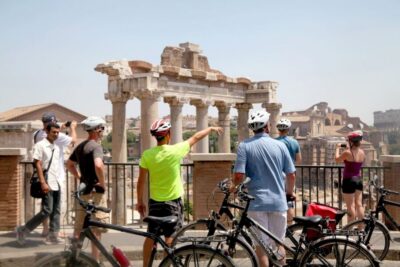
Top Highlights & Hidden Gems Tour by Cannondale E-Bike
Read our review →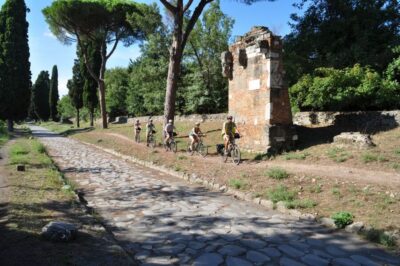
Appian Way, Catacombs, & Roman Aqueducts E-bike Tour
Read our review →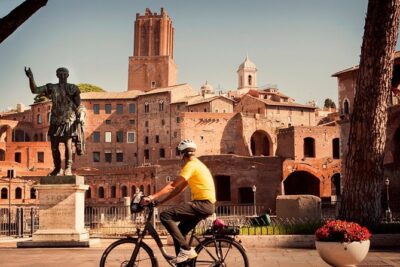
Rome City Small Group Bike Tour with quality Cannondale EBike
Read our review →
Tuscany Bike Tours Through the Chianti Hills with Wine Tasting
Read our review →
Browse the lists this tour appears in