
Reviewed · FOOD & DRINK
From Carrara: Marble Quarries Jeep Tour with Lardo Tasting
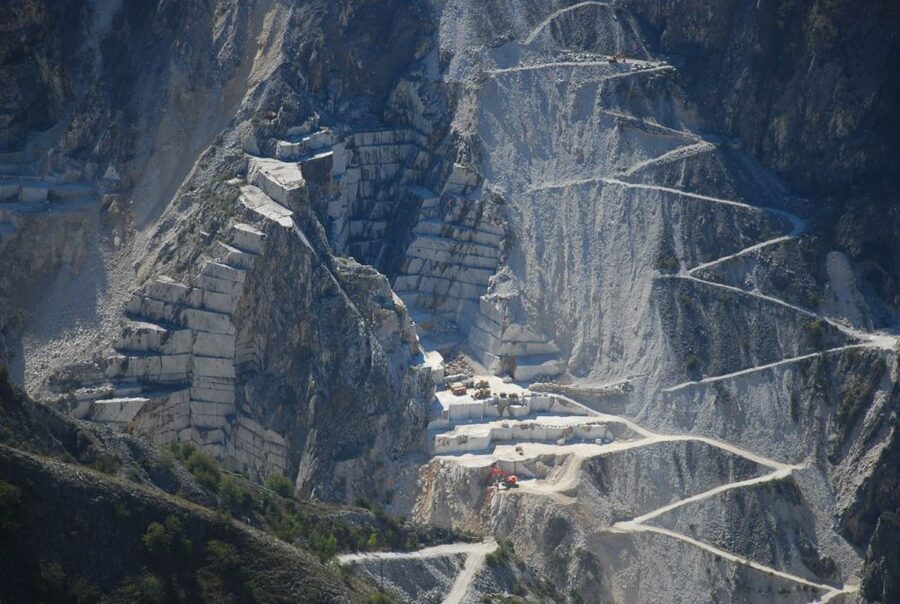
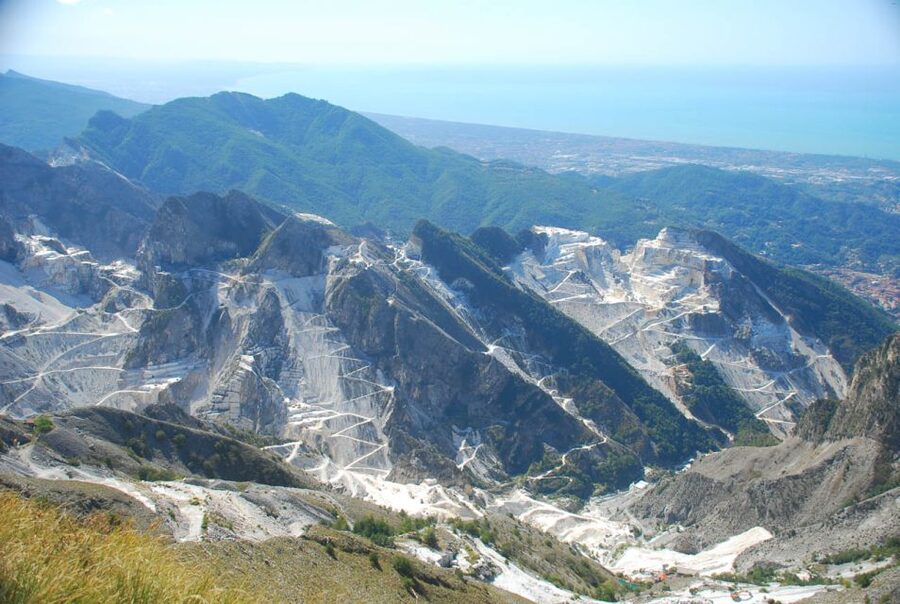
Carrara’s marble quarries are not a polite museum display. They are huge working cuts in the mountains, bright white against the dark rock, with roads climbing toward places where Michelangelo selected stone for his sculptures. I like that this tour takes you inside an actual quarry as well as out to mountain viewpoints, so you see both the grand scale and the gritty work.
I also like the small group of up to eight people and the mix of industry, art, scenery, and food. Guides such as Luca, Lucca, Beatrice, Manuela, and Lavinia have earned praise for clear explanations and confident driving. The main consideration is the jeep itself: passengers in the back may have a harder time hearing, and a three-hour tour leaves limited time for extra photo stops.
Key points to know before you book
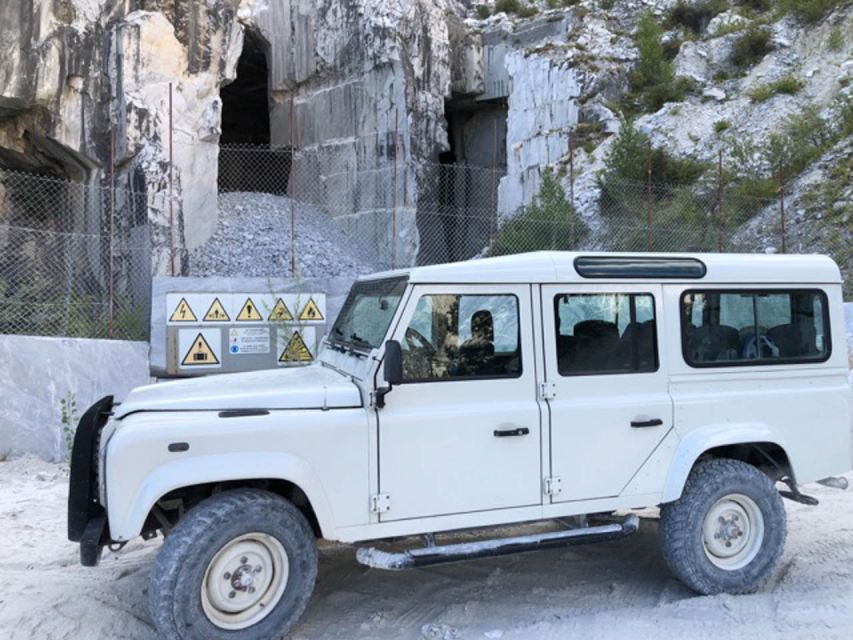
- The quarries reach about 1,000 meters above sea level, with striking views over Carrara’s marble country.
- You visit indoor and outdoor quarry areas, including a cave cut into the mountain.
- The tour explains Roman, historic, and modern extraction methods, giving context to the stone’s role in art.
- Lardo di Colonnata is part of the experience, served at a local lard factory rather than treated as an afterthought.
- Small groups are limited to eight people, which makes questions and conversation easier.
- The meeting point is in Piazza Vittorio Veneto, at the stadium, with morning and afternoon departures.
Why Carrara marble is worth seeing in person
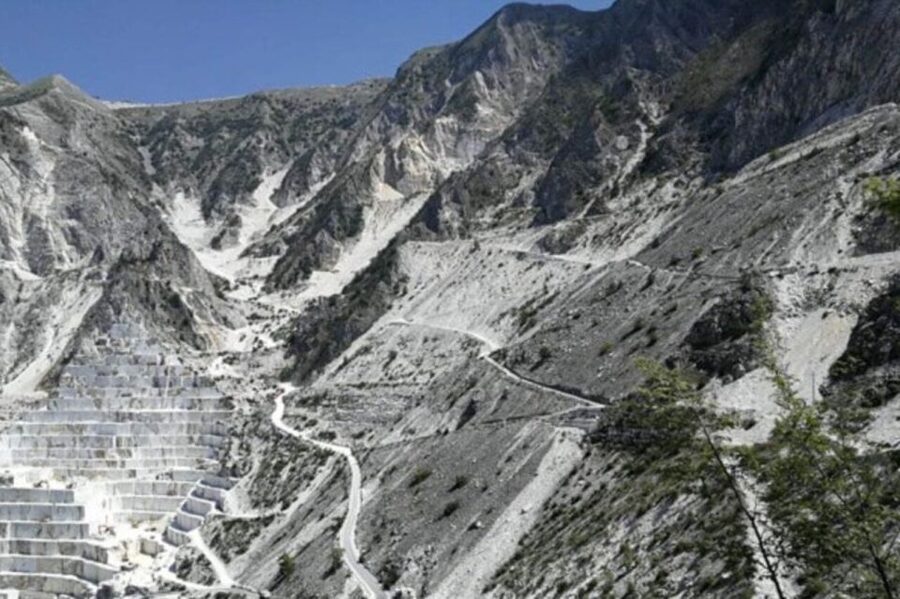
You may know Carrara marble from museums, churches, sculpture studios, or photographs of Michelangelo’s David. At the quarry, the stone makes more sense. You see that this famous material is not simply a white block waiting to become art. It is part of an enormous mountain, cut from steep slopes by workers, machines, roads, wire saws, and careful planning.
The quarries around Carrara have supplied marble for centuries. Roman builders used the stone, and Michelangelo personally chose blocks for important sculptures. The tour connects those artistic uses with the working reality of extraction today. That link is the heart of the experience: you are not only looking at beautiful rock, you are learning how a mountain became part of European art and architecture.
I find this a welcome change from the usual Tuscan route of churches, piazzas, and vineyards. The quarry country feels more industrial and raw. It also shows a side of Tuscany that many visitors miss, one shaped by miners, drivers, cutters, sculptors, and food producers.
Other eating and drinking in Italy:
- Florence: Chianti Wineries Tour with Wine Tasting
★ 4.5 · 8,301 reviews - Small-Group Wine Tasting Experience in the Tuscan Countryside
★ 5.0 · 7,392 reviews - Rome: Tuscany & Montepulciano Day Trip with Lunch & Wine Tasting
★ 4.5 · 5,232 reviews
Meeting your guide in Carrara
The tour begins at 9:30 a.m. or 2:30 p.m. in Piazza Vittorio Veneto, in front of Carrara’s stadium. The listed coordinates are 44.06465148925781, 10.074934005737305. Arrive with enough time to locate the meeting point without rushing.
The off-road vehicle is important here. The quarries sit high above town, and the tour uses a jeep to reach the steep roads and quarry areas. Several guides have also provided pickups at the train station, and some have helped cruise passengers return to the port, but those arrangements should not be assumed unless confirmed in advance.
Groups are capped at eight. That is a useful size for a quarry tour because the guide can stop for questions and adjust explanations to the group. The tour operates in English, Italian, and French. If several languages are mixed together, explanations may take longer or become shorter. One passenger specifically found that sitting in the back made it harder to hear when the guide spoke Italian to another person, so choose a front seat if clear audio matters to you.
The jeep climb into the Apuan mountains
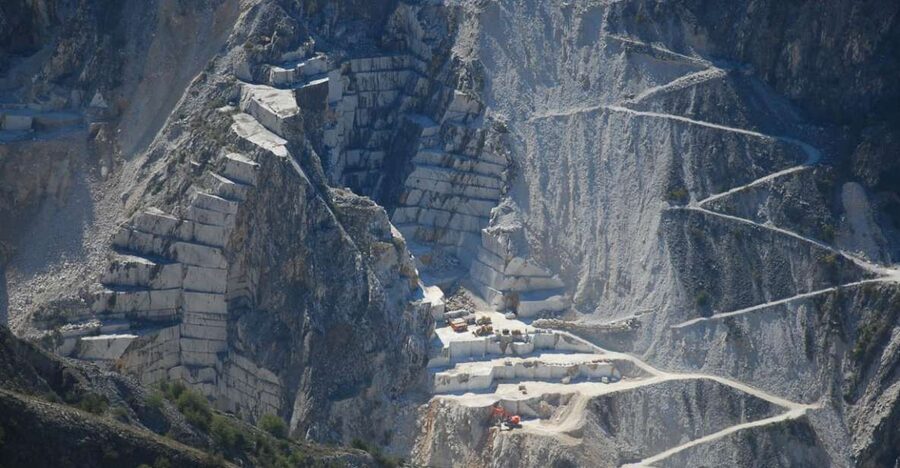
The ride is part of the attraction, not just transport. You leave the town and climb toward the marble workings, with the vehicle handling roads that lead into the high quarry area. The elevation reaches roughly 1,000 meters, giving you a sense of how much stone is being removed from the mountains above Carrara.
Your guide explains the quarry system as you go. The best guides, including Luca and Lucca, are praised for combining local stories with practical details about excavation. Questions about mining in other parts of the world can also lead to useful comparisons. One group discussed connections with excavation work in the United States, including the Crazy Horse monument.
You should expect a lively ride rather than a quiet scenic drive. The road climbs into an active working area, and the jeep gives the outing a rugged feel. Wear comfortable clothing, as requested, and choose practical shoes. The provided information does not specify a dress code or footwear rule, but marble dust and rough quarry surroundings make formal clothes a poor choice.
Outdoor quarry viewpoints and working marble
At the outdoor stops, you get the broadest sense of Carrara’s marble production. The mountains are cut open in enormous stepped sections, and the white stone can look startlingly bright in strong sunlight. This is where the scale of the work becomes clear. A small sculpture made from Carrara marble may fit in a studio, but the source is a mountain being worked in sections.
The guide explains how extraction has changed from Roman times to the present. That comparison adds value because it prevents the visit from becoming a simple photo stop. You learn to look for the marks of different methods and to understand why modern quarrying can reach stone inside the mountain as well as on its exposed face.
Views are a major part of the tour, and they can be impressive from the higher roads. I would still set expectations correctly: this is not a dedicated photography tour. One participant wished there had been time for more photo stops. The three-hour schedule has to fit the climb, quarry visits, explanations, and tasting, so take pictures when the vehicle stops rather than expecting long scenic pauses.
Same base, a different kind of day:
- Vatican: Museums & Sistine Chapel Entrance Ticket
★ 4.5 · 144,003 reviews - Vatican Museums & Sistine Chapel Tour with Optional Basilica
★ 4.3 · 67,413 reviews - Colosseum, Roman Forum & Palatine Guided Tour
★ 4.7 · 63,148 reviews - Milan: Cathedral and Duomo’s Terraces Entrance Ticket
★ 4.6 · 61,054 reviews
Inside the marble mountain
The indoor quarry is often the most memorable part. Instead of seeing only a cut face from outside, you enter a space carved into the mountain. The white stone surrounds the road and walls, and the enclosed scale gives you a better idea of how marble is extracted from within the rock.
This section can feel more immediate than the outdoor viewpoints. From above, you see the size of the quarry. Inside, you notice the surfaces, cuts, and darkness around the bright marble. One passenger described the indoor site as not claustrophobic, but you should still be comfortable entering a working quarry environment.
Some outings have included a close look at marble being cut and a roadside demonstration of a diamond saw. These details can depend on quarry activity and operating conditions, so do not treat them as guaranteed performances. The main indoor quarry visit is the dependable feature, and it is the part that makes this more than a mountain drive.
The quarries may not operate normally during holiday shutdowns. A winter outing took place during a New Year break, when the mine was not operating, but the group could still enter and see the site. That means the visit retains value outside the busiest working periods, although active cutting activity cannot be promised every day.
From Michelangelo to modern excavation
The Michelangelo connection gives the tour an easy starting point, but the experience goes well beyond one artist. You learn why the marble became so prized, how artists selected stone, and how the material moved from quarry to sculpture or building project.
If you are a sculptor or a serious Michelangelo fan, this connection will likely carry extra weight. One sculptor described the visit as a dream experience, and that makes sense. You are looking at the source of a material that shaped some of Europe’s most famous works.
For everyone else, the practical explanation is just as worthwhile. The guide helps you understand the difference between a block admired in a gallery and the difficult work required to remove it safely and accurately. The quarry becomes a place of labor and engineering, not just a backdrop for an art story.
The strongest guides make this accessible without turning the tour into a lecture. Luca, Lucca, Beatrice, Manuela, and Lavinia have all been singled out for friendly, clear, and engaging presentations. Guide assignments can change, but the small-group format gives you a good chance to ask about the parts that interest you most.
Lardo di Colonnata and the cavers’ traditional food
After the quarry visit, the tour turns from stone to food with a stop at a lard factory. The featured product is Lardo di Colonnata, a specialty associated with Colonnata and traditionally linked to the diet of quarry workers.
Lardo is cured pork fat, usually served in thin slices. Its texture and flavor are very different from the lean cured meats found on many Italian antipasto plates. The tasting gives you a direct connection to the people who worked in the quarries, rather than adding a random food sample at the end of the outing.
The tasting is not the longest stop, but it is a useful part of the three-hour design. You have time to try the product, order a drink, and shop for souvenirs. Lardo also travels home more easily than a large marble object, and it is described as a relatively inexpensive souvenir for people who enjoy it.
This is the one part of the tour where personal taste matters most. If you already like cured pork products, you will probably find the tasting a natural extension of the quarry story. If you are unsure about lardo, treat it as a chance to try a local specialty rather than a meal. The supplied information does not present the tasting as a full lunch.
Timing, comfort, and the small-group tradeoff
Three hours is a sensible length for this experience. It is long enough to reach the quarries, see indoor and outdoor areas, hear the explanation, and visit the lard factory without turning the day into an exhausting expedition. It is also short enough to fit into a broader Carrara visit or a cruise-port schedule.
The tradeoff is pace. You will not have unlimited time at every viewpoint, and the tour may feel full if you want long photo sessions or extended shopping. The group size helps, but the vehicle still has limited seating. Sitting near the guide is a sensible choice if hearing every explanation matters.
Comfortable clothes are the only stated packing advice. I would follow it closely. You are going into a working quarry area and riding in an off-road vehicle, so clothes that can handle dust and movement are more suitable than anything delicate.
The tour has free cancellation up to 24 hours before departure, and you can reserve now while paying later. Those terms make it easier to fit the activity around changing Tuscan plans. Check the current departure availability before building your day around the 9:30 a.m. or 2:30 p.m. start.
Is the tour good value?
No price is provided here, so I cannot judge the exact cost against the current market. I can judge what the fee covers. You are paying for a guide, the off-road ride into the mountains, access to quarry areas, explanations of marble extraction and culture, and a tasting at a lard factory.
Compared with visiting a viewpoint alone, the guided format adds real value. Without explanation, a quarry can look like a giant white hole in the mountain. With a good guide, you understand the Roman connection, Michelangelo’s choices, modern cutting methods, and the workers’ food culture.
The small group also matters. A private tour would give you more control, but a group limited to eight keeps the setting personal without requiring a fully private booking. The main value is strongest for visitors who would not otherwise know how to reach or interpret the quarries.
Who should book this Carrara quarry tour?
I would choose this tour if you want a break from standard Tuscan sightseeing, care about sculpture or architecture, or enjoy seeing how local products are made. It is also a strong choice for cruise passengers and people staying near Carrara who want a focused half-day activity.
It suits adults and older children who can manage a mountain ride and quarry setting. Art fans will appreciate the Michelangelo connection, while food-minded visitors get a distinctly local tasting. You do not need to be an expert in marble to enjoy it, since the guide supplies the background.
I would think twice if you want a slow, highly polished sightseeing trip with long stops and lots of independent time. The ride is active, the schedule is compact, and the back seats may not be ideal for hearing. Also, if lardo is not appealing, the food portion will be less important to you, though the quarry visit remains the main event.
FAQ
Where does the Carrara marble quarry tour meet?
Meet your guide at 9:30 a.m. or 2:30 p.m. in Piazza Vittorio Veneto in Carrara, in front of the stadium. The listed coordinates are 44.06465148925781, 10.074934005737305.
How long does the tour last?
The tour lasts three hours.
How high do you travel into the mountains?
The off-road vehicle travels to quarry areas as high as about 1,000 meters above sea level.
What languages are available?
The live tour guide service is available in English, Italian, and French.
How many people are in each group?
The group is limited to eight participants.
Is Lardo di Colonnata included?
The itinerary includes a visit to a lard factory where you taste Lardo di Colonnata, a traditional product associated with the quarry workers’ diet.
Can I cancel the booking?
You can cancel up to 24 hours in advance for a full refund. A reserve-now, pay-later option is also available.
Should you book it?
Book this tour if you want to see Carrara as a working mountain town rather than just a name connected with Michelangelo. The combination of high quarry roads, indoor marble caves, extraction stories, and Lardo di Colonnata gives you a clear sense of the area’s art, labor, and food.
Choose a front seat, wear comfortable clothes, and leave room in your schedule for a compact but active three hours. If that sounds better than another afternoon of churches and piazzas, this is one of the more distinctive excursions in the Carrara area.
Just added in Italy
- Highlights and hidden gems of Milan Bike Tour★ 5.0 · 491 reviews
- Milan Gourmet Tour: A Premium Tasting Experience by Do Eat Better★ 5.0 · 241 reviews
- Private Milan Food Walking Tour of Brera★ 5.0 · 217 reviews
- Leonardo3 The World of Leonardo: Tickets for the Interactive Exhibition★ 4.0 · 220 reviews
- Da Vinci’s Last Supper and Santa Maria delle Grazie Church Tour★ 4.5 · 218 reviews
- Learn to Cook Italian Recipes with an Italian Chef★ 5.0 · 283 reviews
- La Scala Theatre and Museum guided experience★ 4.5 · 664 reviews
- La Scala Theatre and Museum Tour in Milan With Private Guide★ 3.5 · 384 reviews
Food & Drink, compared.
Tuscany & Montepulciano Day Trip with Lunch & Wine Tasting
Read our review →
Winner 2025 Rome Twilight Trastevere Food Tour by Eating Europe
Read our review →
SMALL-GROUP Wine Safaris: Tuscan Wine Tasting Tours from Florence
Read our review →
Winner 2025 Florence Sunset Food & Wine Tour by Eating Europe
Read our review →
San Gimignano, Siena, Monteriggioni, Chianti Day Trip with Lunch & Wine Tasting
Read our review →
Mount Etna Morning or Sunset Day Trip with Tasting
Read our review →Browse the lists this tour appears in