

Reviewed · MUSEUMS
Florence: Timed Entrance Ticket to San Marco Museum
San Marco Museum gives you something Florence’s grander museums often cannot: a quiet look at a working Dominican convent. Fra Angelico’s frescoes, the plain friars’ cells, and the small cloisters make the art feel tied to daily religious life rather than displayed on a distant museum wall. I especially like the peaceful Cloister of St. Anthony and the chance to see Girolamo Savonarola’s cell, a modest room linked to one of Florence’s most fiery preachers.
I also like the timed entry, which takes the guesswork out of arrival, and the museum’s compact scale. You can see a great deal without giving up half a day. The main consideration is that this is an unguided visit. Some rooms may be closed, and English explanations are not available beside every artwork, so readers who want detailed art history may need to do some preparation.
Key points to know before visiting
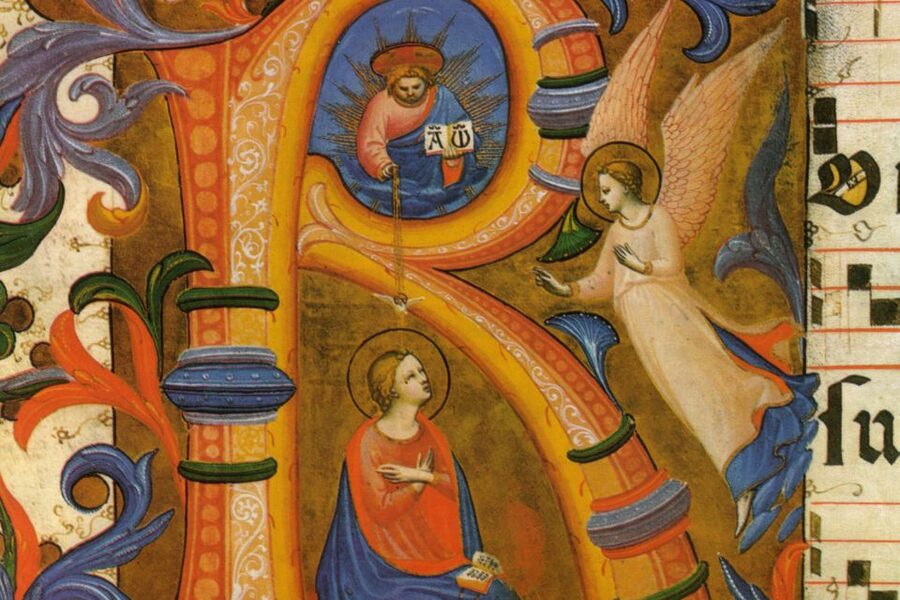
- Fra Angelico’s Annunciation: This famous painting alone gives the visit a strong reason to go.
- A real Dominican setting: Friars still live in the convent, giving the building a more serious, lived-in feeling than a standard gallery.
- Savonarola’s cell: See the small room associated with the preacher who challenged clerical corruption and later died at the stake.
- Michelozzo’s architecture: The 15th-century convent was renovated by one of the leading architects of Renaissance Florence.
- A quieter museum choice: San Marco is more intimate than the Uffizi or Accademia, with frescoes and monastic spaces rather than crowded superstar galleries.
- Timed entry matters: Your chosen date and time are binding, and you can be refused entry if you arrive outside the allotted slot.
Why San Marco feels different from Florence’s major museums

Florence has no shortage of famous museums. The Uffizi brings Botticelli and Leonardo. The Accademia brings Michelangelo’s David. San Marco offers a different kind of reward, one built around silence, devotion, and the original setting of the art.
From Piazza San Marco, the museum’s exterior looks formal and imposing. Inside, the building combines a church with a 15th-century Dominican convent. The convent was commissioned by Cosimo de’ Medici and renovated by Michelozzo, a leading Renaissance architect. You are not simply walking through a room filled with paintings. You are moving through a religious complex designed for prayer, study, meals, and monastic routine.
That setting changes how you read the art. Fra Angelico, also called Beato Angelico, painted for a religious community. His work was not created only to impress a wealthy collector. It was meant to support prayer and reflection. In San Marco, the paintings remain close to the corridors, cells, and chapels for which they were made.
I find this makes the museum especially good for people who enjoy atmosphere as much as individual masterpieces. The rooms can feel austere. The art is overwhelmingly religious. But the combination of bare architecture, faded surfaces, small rooms, and carefully placed frescoes gives the visit a clear sense of purpose.
Other museums and galleries in Florence:
- Florence: Skip-The-Line Uffizi Gallery Timed Entry Ticket
★ 4.5 · 27,832 reviews - Florence: Leonardo Interactive Museum Entry Ticket
★ 4.5 · 11,763 reviews - Florence Accademia Gallery Tour with Entrance Ticket Included
★ 4.5 · 6,148 reviews
Starting at Piazza San Marco, 3
The entrance is at the ticket office inside the museum at Piazza San Marco, 3, in Florence. You need to redeem or present your ticket there before entering. The location is straightforward, and the ticket office is inside the museum rather than at a separate city-center office.
Your entry time is not a loose suggestion. The date and time slot selected during booking are binding. Arrive with enough time to find the entrance, since missing the assigned slot can mean refused entry. This matters even more if you are fitting San Marco between the Duomo, Accademia, and other fixed reservations.
The ticket is valid for one day, but that does not mean you can arrive at any hour. The booking page shows the available starting times, and your selected slot controls admission. Once inside, you can take the visit at your own pace.
The experience ends back at the museum, with no transport or separate meeting point involved. Since this is an entrance ticket rather than a walking tour, you do not need to keep up with a group or remain on a fixed route.
The Cloister of St. Anthony and the convent setting

The Cloister of St. Anthony is one of the first spaces that helps you understand San Marco. Its orderly design, old doors, and decorated surfaces create a calm transition from the busy city outside.
Look closely at the age-old doors and frescoes before moving onward. Their condition and simplicity are part of the appeal. This is not a polished modern gallery. The building shows its age, and that worn quality helps you picture generations of Dominican monks moving through the same corridors.
The Dominican community still lives in part of the convent. You will not be wandering through every monastic room, but the continuing religious use gives the complex a serious, restrained character. Earlier friars lived in small cells, and the museum preserves the sense of that compact way of life.
I would not choose this visit if you want grand halls and dramatic decoration at every turn. The beauty here is controlled and quiet. You get plain walls, small spaces, and religious images designed for contemplation rather than spectacle.
Fra Angelico’s frescoes and the Annunciation
The central artistic reason to come is Fra Angelico. The Dominican monk is one of the most important painters of the Florentine Renaissance, and San Marco holds a remarkable group of his works.
The museum includes an old hall filled with works by Angelico, but the frescoes in the friars’ cells are just as important. Each small room turns into a private chapel, with an image positioned for prayer and meditation. The scale is intimate. You stand close to paintings that were made for a handful of religious viewers rather than a public crowd.
The Annunciation is the work I would put first on your list. It is frequently singled out as a must-see, and it gives you a quick sense of Angelico’s calm, precise style. Do not rush past it simply because the museum contains many other religious paintings. Spend a few minutes with the arrangement of the figures, the quiet architectural setting, and the restrained mood.
You should also expect the art to be presented without the level of interpretation found in some larger Florence museums. Not every label has both Italian and English text. There is information for English speakers, but some displays may require patience or outside reading.
That limitation matters if you want to understand the biblical scenes, Dominican symbolism, and artistic choices in detail. If you are happy to look carefully and absorb the setting, the lack of constant explanation may actually help keep the visit peaceful.
A few more things to do in Florence
- Florence: Timed Entrance Ticket to Michelangelo’s David
★ 4.6 · 16,983 reviews - Florence: Michelangelo’s David Skip-the-Line Entry Ticket
★ 4.5 · 12,764 reviews - Florence: Cathedral & Brunelleschi’s Dome Ticket & Audio App
★ 4.4 · 6,973 reviews - Florence: Michelangelo’s David Priority Ticket & Audio App
★ 4.4 · 6,812 reviews
Savonarola’s cell and Florence’s religious conflict
San Marco is also connected with Girolamo Savonarola, the Dominican friar whose preaching shook Florence in the late 15th century. You can visit the cell where he lived.
Savonarola preached against corruption and the moral decay of the clergy. His influence grew powerful, but his career ended brutally. He was hanged and burned at the stake in Piazza della Signoria.
The cell itself is modest. That is the point. It is not a theatrical reconstruction or a grand memorial hall. The small room places his public drama against the plain life of a friar. After seeing Florence’s palaces and political monuments, this simple space gives the city’s religious and political conflicts a more personal scale.
If you have already visited Piazza della Signoria, the cell adds another layer to that familiar square. The execution site is part of Florence’s public memory, while San Marco shows the religious world Savonarola came from.
The Great Refectory, kitchen, and Fra Bartolomeo
The visit continues beyond Angelico’s cells and cloisters. You can see the Great Refectory, the old kitchen, and service areas that reveal how the convent functioned.
These spaces are useful because they move the museum away from a single-artist display. You get a sense of meals, work, and practical monastic life alongside painting and worship. The building becomes easier to understand as a community rather than a series of art rooms.
The Great Refectory includes paintings by Fra Bartolomeo, another important painter and Dominican monk who lived at San Marco in the early 16th century. His presence connects the convent to a later stage of Florentine Renaissance art.
I like this part of the visit because it breaks up the sequence of cells and devotional frescoes. It also helps you see how artistic work circulated within religious communities. The friars were not only praying in these buildings. Some were painters, teachers, preachers, and administrators.
A small warning: access to all display areas is not guaranteed on every visit. Two rooms have been closed at times, so you should allow for the possibility that the full route may not be open.
How long to allow and how to pace the visit

The ticket is valid for one day, but the experience does not come with a stated tour duration. Since there is no guided schedule, you control the pace.
I would allow enough time to visit the cloister, Angelico’s works, the cells, Savonarola’s room, and the refectory without rushing. The museum is more intimate than Florence’s largest collections, so it does not require the stamina of the Uffizi or Accademia.
A fast visit can work if you are concentrating on the Annunciation, the convent architecture, and Savonarola’s cell. A slower visit makes more sense if you want to read labels, study the frescoes, and notice the difference between the formal museum rooms and the small monastic spaces.
The timed entry is most useful when your day is tightly planned. It guarantees a scheduled attempt at admission, but it does not turn the museum into a guided experience. You still need to decide how much time each room deserves.
Is the $15 ticket good value?
At $15 per person, this is a reasonable Florence museum purchase, especially if you value art in its original setting. The price includes the timed entrance ticket and booking fee, with no separate museum admission charge listed.
The value is strongest for three kinds of visitors. First, art lovers who want to see Fra Angelico’s work beyond a single painting. Second, people who prefer a quiet convent to a packed blockbuster museum. Third, anyone interested in the religious and political forces behind Renaissance Florence.
The value is less clear if you want a guided lesson with extensive English commentary. A guide is not included, and the self-guided format means you must bring your own context. Some English-language information is available, but not every exhibition label is bilingual.
The booking also includes 10 percent discounts at the Hard Rock Shop and Hard Rock Cafe on Via dei Brunelleschi, 1, near Piazza della Repubblica. The shop discount excludes limited-edition and charity items. The restaurant discount applies to the a la carte menu but excludes alcohol. These extras should not determine your decision, though they may be useful if those stops already fit your plans.
Accessibility and practical booking details
The museum is wheelchair accessible according to the activity information. You should still pay close attention to the exact entry time when booking, since the slot cannot be treated as flexible.
Free cancellation is available up to 24 hours before the visit for a full refund. You can also reserve now and pay later, which helps if your Florence schedule is still changing.
Anyone accompanying the ticket holder must have an admission ticket too. Do not assume that a friend or family member can enter under one booking.
This is a self-guided museum visit, not a guided tour. Some individual experiences connected with San Marco may include a guide, but this ticket does not promise one. If detailed explanations are important to you, plan to read about Fra Angelico, Fra Bartolomeo, and Savonarola before arriving.
Who should book San Marco Museum?
I would recommend this ticket to you if you want Florence’s Renaissance to feel personal and local rather than grand and crowded. It is a particularly good choice after visiting the Uffizi or Accademia, since San Marco offers a slower, more focused contrast.
It suits adults and older children who can appreciate religious painting, architecture, and historical atmosphere. The visit may be less satisfying for anyone looking mainly for secular art, sculpture, or long English explanations.
Book it if Fra Angelico’s Annunciation interests you, if you want to see a Dominican convent still used by friars, or if Savonarola’s story has caught your attention. Skip it if your Florence schedule is already overloaded with major museums and you are unlikely to pause for small frescoes and plain monastic rooms.
Should you book this timed San Marco ticket?
Yes, if you want a short, thoughtful museum visit with a strong sense of place. The Fra Angelico frescoes, the Cloister of St. Anthony, and Savonarola’s cell give San Marco enough substance to earn its place beside Florence’s famous art museums.
The ticket is a good buy at $15, but remember what you are purchasing: reliable timed admission, not a guided tour. Arrive exactly when booked, take your time with the Annunciation and the friars’ cells, and accept that a few rooms or labels may not be available in the way you hoped.
FAQ
Where is San Marco Museum located?
The museum entrance and ticket office are at Piazza San Marco, 3, 50121 Firenze, Italy.
Is this a guided tour?
No. The ticket includes timed admission to San Marco Museum, but a guided tour is not included.
How long is the ticket valid?
The ticket is valid for one day, but you must enter during the date and time slot selected when booking.
Can I arrive at a different time?
No. The selected date and time are binding, and you may be refused entry if you do not respect the allotted entry time.
Is San Marco Museum wheelchair accessible?
Yes. The activity information states that the museum is wheelchair accessible.
Can I cancel the booking?
Yes. You can cancel up to 24 hours in advance for a full refund. You can also reserve now and pay later.
Just added in Florence
- Wine Tasting Experience in Ponte Vecchio: Best Tuscany selection!★ 5.0 · 197 reviews
- Walking Food Tour of Florence with Tastings and Wine★ 5.0 · 518 reviews
- Wine Experience In Chianti Hills from Florence★ 4.5 · 195 reviews
- Florence Sunset Food Tour with Wine & Dine at a Tuscan farmhouse★ 5.0 · 194 reviews
- Uffizi and Accademia Small Group Guided Tour★ 4.5 · 449 reviews
- Val d’Orcia Brunello Wine Tour with Montalcino and Montepulciano★ 4.5 · 359 reviews
- Uffizi Gallery Timed Entry Admission Tickets★ 4.0 · 392 reviews
- Uffizi Gallery Small Group Tour with Guide★ 4.5 · 879 reviews
Museums, compared.
Vatican: Museums & Sistine Chapel Entrance Ticket
Read our review →
Vatican Museums & Sistine Chapel Tour with Optional Basilica
Read our review →
Vatican Museums, Sistine Chapel & St Peter’s Basilica Guided Tour
Read our review →
Skip-The-Line Uffizi Gallery Timed Entry Ticket
Read our review →
Vatican Museums & Sistine Chapel Skip-the-Line Entry Ticket
Read our review →
Browse the lists this tour appears in