
Reviewed · ACCADEMIA & DAVID TOURS
Florence: Accademia Gallery David Entry & Audio Guide App
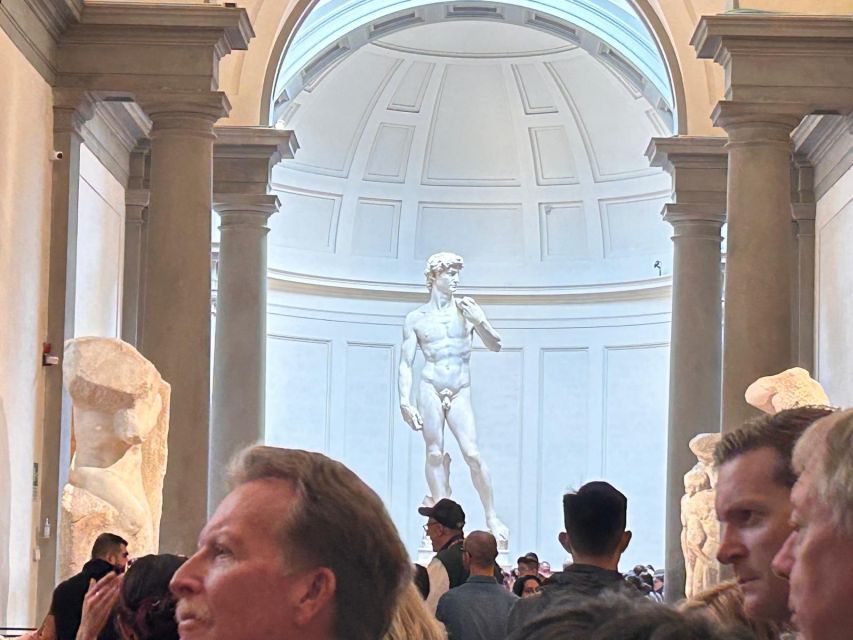
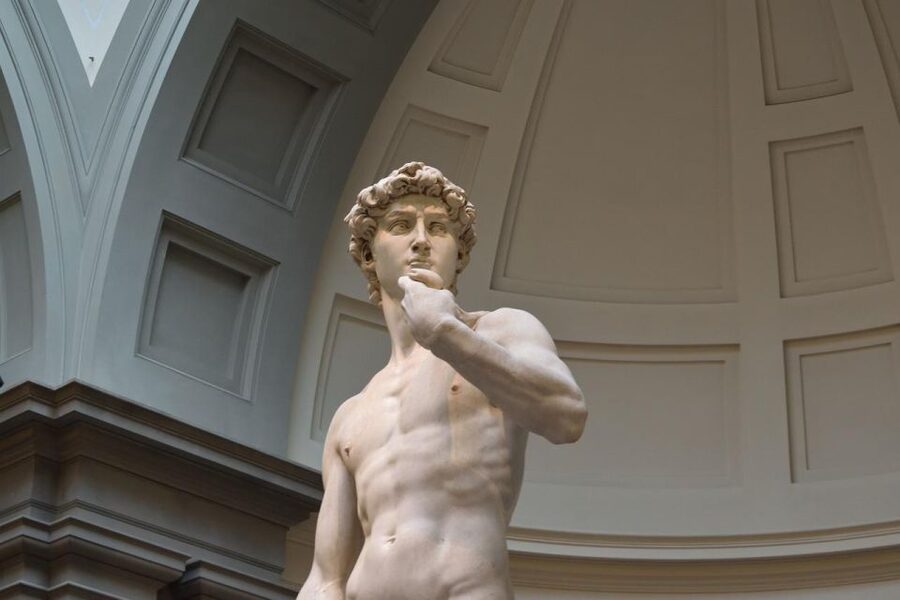
Michelangelo’s David is the star here, and rightly so. The huge marble figure is far more powerful in person than in photographs, but the Accademia is not only a one-statue stop. You’ll also find unfinished Michelangelo works, Renaissance paintings, old musical instruments, and plaster models from Florence’s sculpting tradition.
I like the reserved timed ticket, which saves you from the ticket-office line, and I like being able to explore at your own pace instead of following a group. The main catch is that skip-the-line does not mean walk straight in. You still collect a physical ticket from a host, join the proper entry queue, and may wait outside in heat or rain.
Key points at a glance
- David is the main event: See Michelangelo’s famous marble sculpture in the Accademia’s main hall.
- A self-guided visit: Use the POP Guide app and move through the museum at your own speed.
- More than Michelangelo: Find works linked to Giotto and Botticelli, Medieval altarpieces, and Renaissance paintings.
- A useful timed reservation: Avoid the ticket-office queue, though security and crowd limits can still cause delays.
- Unexpected collections: Visit the Gipsoteca and see Medici musical instruments, including three Stradivarius instruments.
- Bring the right kit: Download the app before meeting the host, and pack headphones, a charged phone, and internet access.
Why David is worth the trip
The Accademia Gallery is one of Florence’s most concentrated art visits. You can see its best-known work in less than an hour, but you can also spend longer if you want to examine the surrounding collections.
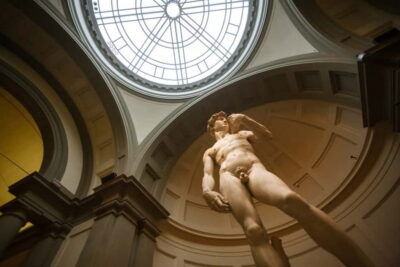
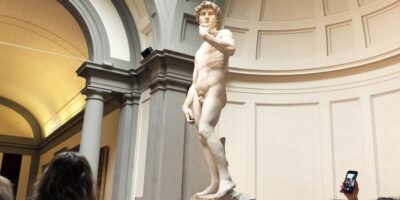
David occupies the main hall with the force of a stage performance. Michelangelo carved him from a single block of marble, showing the biblical hero before his fight with Goliath. The pose is tense rather than triumphant. David watches, thinks, and prepares. His oversized hands and alert expression make the statue feel less like a distant monument and more like a person caught in a decisive moment.
I recommend giving yourself time to walk around the sculpture instead of stopping only for a quick photograph. Look at the turn of the body, the veins in the hands, and the way Michelangelo creates movement from still stone. You can also compare David with the unfinished works nearby, often called Michelangelo’s Prisoners or Slaves. Their rough marble surfaces make the carving process easier to understand.
The contrast matters. David appears fully released from the stone, while the unfinished figures seem trapped inside it. That pairing gives the main hall more meaning than a single famous statue would provide.
Other sculpture and collections in Florence:
- Florence: Timed Entrance Ticket to Michelangelo’s David
★ 4.6 · 16,983 reviews - Florence: Michelangelo’s David Skip-the-Line Entry Ticket
★ 4.5 · 12,764 reviews - Florence: Michelangelo’s David Priority Ticket & Audio App
★ 4.4 · 6,812 reviews
Meeting the host at Via Ricasoli 115
Your first task is finding the meeting point in front of the Carrefour Express supermarket at Via Ricasoli 115. Look for the red street number and a staff member holding a white flag marked Enjoy Rome.
This is a busy part of Florence, close to the Accademia, and the entry arrangements can feel confusing at first. Arrive early enough to locate the host without rushing. The staff member exchanges your GetYourGuide voucher for the museum’s physical ticket, then directs you toward the correct entrance.
The English-speaking host is there to help with the handoff, not to lead a full museum tour. A host named Sakila received particularly warm praise for staying with visitors and helping them reach the entrance. Still, staffing can vary, so treat the meeting point as a ticket collection service rather than a promise of a personal guide inside.
This distinction is important. The experience includes the ticket and POP Guide audio app, but no licensed guide accompanies you through the galleries. If you want detailed explanations, lively stories, and help reading the paintings, a private or group guided tour may suit you better.
Does skip-the-line really skip the line?
It helps, but the phrase needs a little translation. You skip the ticket-buying line because your admission is reserved in advance. You do not necessarily skip every queue outside the museum.
At busy times, you may still wait for security, ticket checks, or the museum’s timed entry system. The Accademia limits the number of people inside, so even a prepaid ticket can be delayed if the galleries are full. Some visits have moved inside within minutes, while others have involved waits of about 30 minutes or more.
That is still much better than arriving without a reservation during a crowded period. The regular ticket line can stretch for hours, and the Accademia is too popular to treat casually. A timed booking gives you a much better chance of getting inside during a short Florence stay.
The entry area may feel chaotic, especially if several groups gather at once. Follow the host’s directions, stay aware of the scheduled time, and do not assume that arriving very early guarantees immediate entry. The museum controls the flow.
Using the POP Guide app
The POP Guide app is included, but it requires preparation. Download it from the App Store or Google Play before you reach the meeting point. The host provides your login details, and you need a charged smartphone and internet access.
Bring your own headphones. They are not included, and listening from a phone speaker would be awkward in a quiet gallery. A small power bank could also be useful, although the supplied information only specifically requires a charged phone.
The app lets you explore on your own. You can pause, skip sections, and spend extra time with David or a painting that catches your eye. This works well if your group has different interests or energy levels. One person can focus on sculpture while another moves ahead to the paintings.
There are two practical weaknesses. The audio guide may not work properly offline, so do not wait until the entrance to download everything. Also, the map can be confusing and may not match the museum layout clearly. If the app fails, you can still visit the museum, but you lose much of the added context you paid for.
The audio guide is also less immediate than a traditional museum handset. You may need to find the right section on your phone rather than entering a number beside an artwork. That takes a little more effort, but it gives you freedom to set your own pace.
Other museums and galleries in Florence:
- Florence: Skip-The-Line Uffizi Gallery Timed Entry Ticket
★ 4.5 · 27,832 reviews - Florence: Leonardo Interactive Museum Entry Ticket
★ 4.5 · 11,763 reviews - Florence Accademia Gallery Tour with Entrance Ticket Included
★ 4.5 · 6,148 reviews - Uffizi Gallery Small Group Tour with Guide
★ 4.5 · 4,923 reviews
The main hall and Michelangelo’s unfinished figures
Once inside, head toward the main hall and David. This is the part of the visit most people have planned around, so it makes sense to see it early, before your attention is pulled toward the rest of the building.
Do not rush past the unfinished Michelangelo sculptures. Their incomplete state offers a rare look at how a sculptor might work through a block of marble. The rough surfaces are not simply unfinished decoration. They show the contrast between the stone’s original mass and the human form emerging from it.
The main hall also helps explain why the Accademia can feel more intimate than Florence’s larger museums. Its best-known works are gathered in a relatively focused setting. You are not crossing a giant complex to find the central attraction.
If the room is crowded, wait for a clear view instead of pushing toward the front. David is tall and visible from several angles. You will get more from the visit by slowing down for a few minutes than by collecting a fast photograph and moving on.
The Gipsoteca and Florence’s sculptors
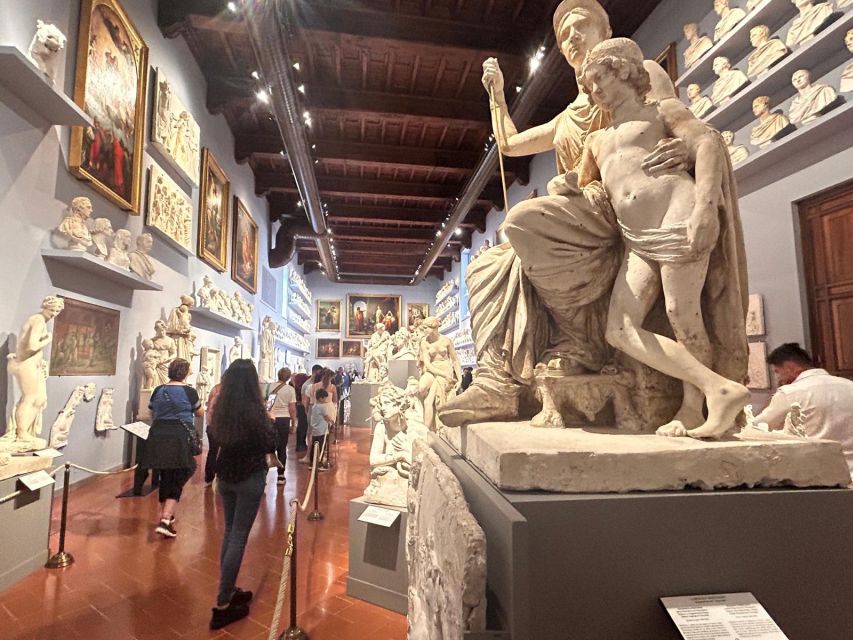
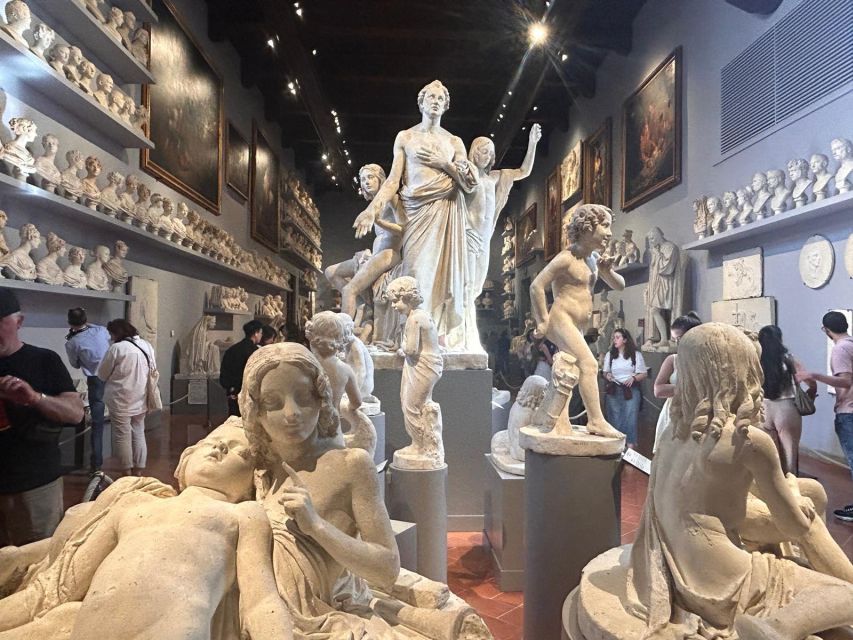
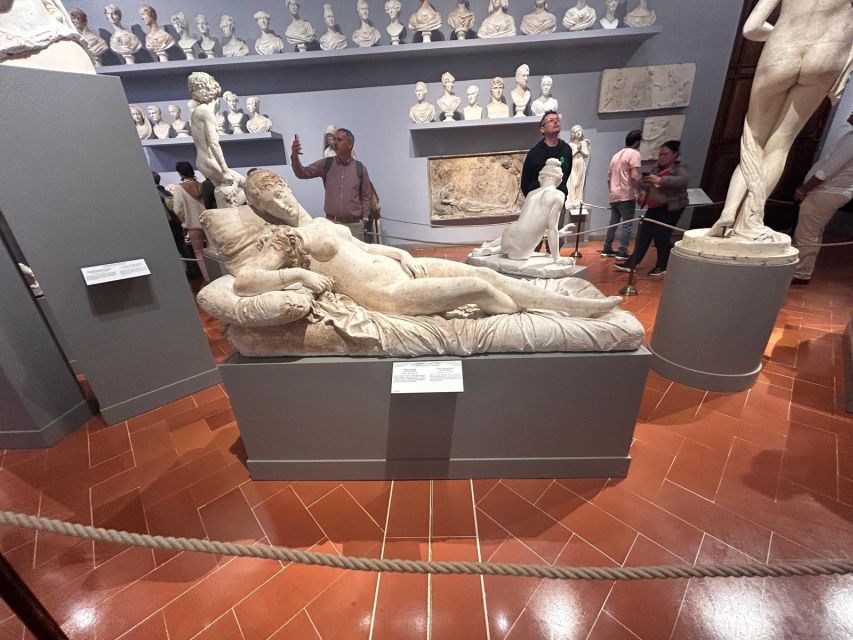
The Gipsoteca is one of the museum’s less famous but worthwhile sections. Here you can see original plaster models made by 19th-century Florentine sculptors.
These models help you understand how large sculptures were planned and developed. Marble can make a finished work seem almost effortless, but plaster studies show the practical side of the process. You see forms being tested before a final version was produced.
This section will appeal most if you enjoy sculpture beyond the familiar names. It also gives the Accademia a broader purpose. The museum is not only a container for David. It traces part of Florence’s continuing sculptural practice and shows how artists worked with different materials.
Allow extra time here if you are curious about technique. If your schedule is tight, you can make the Gipsoteca a shorter stop after seeing David and the main paintings.
Medici instruments and three Stradivarius violins
The musical instrument collection provides a pleasant change of pace from marble and painted panels. It includes original instruments from the Medici collection, among them three made by Stradivarius.
You do not need to be a serious music specialist to appreciate this room. The instruments connect art with court life, craftsmanship, and the Medici family’s patronage. Their presence also reminds you that Florence’s cultural legacy includes music and design as well as painting and sculpture.
This is an easy section to overlook if you enter focused only on David. I would make a point of finding it, especially if you are visiting with someone who does not want an entire museum visit devoted to religious paintings.
Medieval and Renaissance paintings
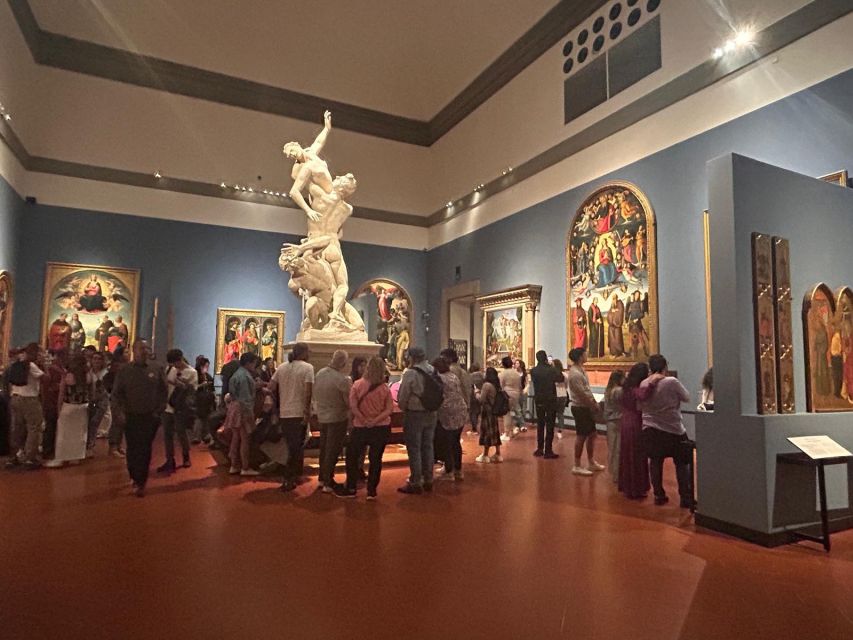
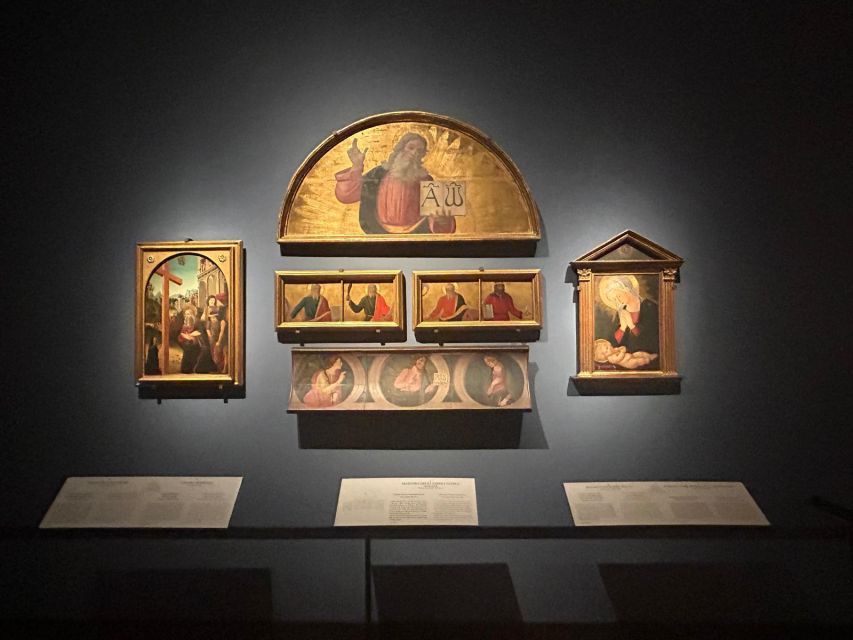
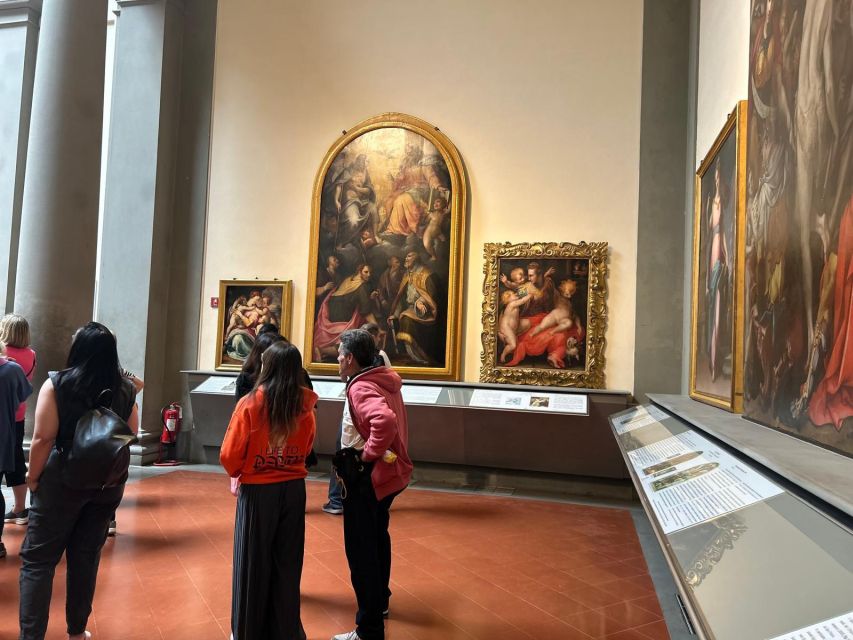
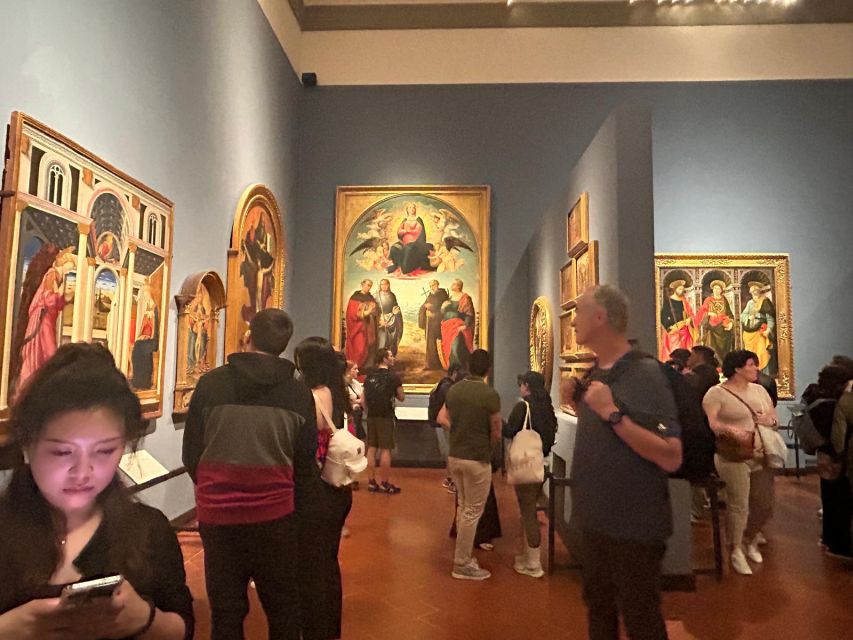
The painting galleries broaden the visit again. You can see works by Medieval and Renaissance artists, including paintings associated with Giotto and Botticelli.
The shift from sculpture to painting changes the rhythm of the museum. Medieval works may look more formal and symbolic, while Renaissance paintings show growing interest in natural poses, space, and human detail. The audio guide can help you notice those changes, though the quality of the experience depends on whether the app loads and whether you have a comfortable way to listen.
Look beyond the most famous names. Smaller panels and religious scenes can reveal how art served churches, civic spaces, and private devotion. The museum’s collection is not presented as a single story in every room, so the guide is useful for connecting periods and styles.
The upper floor contains impressive altarpieces. It is easy to finish your visit after David and miss them, especially if you are tired or pressed for time. If your schedule allows, continue upward before leaving. These large works show how paintings were designed for worship spaces, not just for a modern gallery wall.
How long should you plan?
The booking information describes the activity as lasting one day, but that refers to the validity of your selected visit date, not an all-day guided program. Your actual museum time depends on your entry slot and pace.
A quick visit focused on David can be fairly short. A more complete visit should include the main hall, unfinished Michelangelo works, Gipsoteca, instruments, painting galleries, and upper-floor altarpieces. Add time for the meeting point, ticket exchange, possible waiting, security, and app setup.
I would not schedule a tight lunch reservation immediately after your entry time. Delays can happen when the museum reaches its visitor limit, and the queue outside may move more slowly than expected. A little breathing room makes the whole experience calmer.
The building can also feel hot and tiring, especially while waiting outside. Bring water, but do not bring luggage or large bags. Pets are not allowed, and bags may be refused. Check your belongings before setting out.
Is $38 good value?
At $38 per person, this is a convenience purchase as much as an art ticket. You are paying for reserved admission, a host who helps you collect the physical ticket, and access to the audio guide app.
The value is strongest when Florence is busy and your time matters. Avoiding the ticket-office line can save hours, and missing the Accademia would be a serious loss if David is high on your list. The reservation also removes some uncertainty from planning a short stay.
The value is weaker if you expect a personal art expert. No guide accompanies you inside, and the app has had technical and navigation problems. If you prefer a human guide who can answer questions and explain the works in context, spend your money on a guided tour instead.
I would also think about your tolerance for phone-based touring. Some people like the freedom. Others find it annoying to manage login details, internet access, headphones, and a map while standing in a crowded entry area.
Who should book this Accademia visit?
This is a good fit if you want to see David at a fixed time, avoid the ticket office, and explore independently. It suits couples, families with older children, and art lovers who do not want to stay with a group.
It also works well for a first visit to Florence when your schedule is full. The museum is compact enough to combine with other central sights, but you still need to allow for possible entry delays.
You may want another option if you need a fully guided experience, dislike audio apps, or have a strict timetable after the museum. The reservation improves access but cannot control the museum’s security checks or crowd limits.
Children aged 6 to 17 need valid photo identification showing their birth date to receive the discounted ticket. Without it, the full adult price applies. The museum is wheelchair accessible, which makes this a practical choice for visitors who need step-free access, though entry delays can still affect everyone.
Should you book it?
Book this experience if David is a priority and you want a practical way to secure admission without buying a ticket at the museum. The host system is useful, and exploring at your own pace is a real advantage.
Go in with clear expectations. This is not a private tour, skip-the-line is not always instant, and the POP Guide app needs advance preparation. Download it before you leave, bring headphones and internet access, arrive early at Via Ricasoli 115, and leave room in your schedule for a possible wait.
For $38, I think the reservation is worthwhile during busy periods. If you want the finest art explanations rather than simple access, choose a licensed guided tour instead.
FAQ
Where do I meet the host?
Meet the host in front of the Carrefour Express supermarket at Via Ricasoli 115, marked by the red street number. Look for a staff member holding a white flag with Enjoy Rome written on it.
What does the ticket include?
The ticket includes admission to the Accademia Gallery and access to the POP Guide audio guide app.
Is a personal guide included?
No. A host helps you exchange your voucher for a physical ticket and reach the entrance, but a guide does not accompany you through the museum.
Do I need to download the audio guide before arriving?
Yes. Download the POP Guide app from the App Store or Google Play before reaching the meeting point. You receive login credentials from the host.
Do I need to bring headphones?
Yes. Headphones are not included, and bringing your own is recommended for using the audio guide comfortably.
Do I need internet access?
Yes. The instructions require internet access, and the audio guide may not work offline.
Can I bring luggage or a large bag?
No. Luggage and large bags are not allowed, so check your belongings before arriving.
Is the Accademia Gallery wheelchair accessible?
Yes. The activity information states that the museum visit is wheelchair accessible.
What identification do children need for a discounted ticket?
Children aged 6 to 17 need valid photo identification showing their birth date. Without it, they must buy the full adult ticket.
Just added in Florence
- Wine Tasting Experience in Ponte Vecchio: Best Tuscany selection!★ 5.0 · 197 reviews
- Walking Food Tour of Florence with Tastings and Wine★ 5.0 · 518 reviews
- Wine Experience In Chianti Hills from Florence★ 4.5 · 195 reviews
- Florence Sunset Food Tour with Wine & Dine at a Tuscan farmhouse★ 5.0 · 194 reviews
- Uffizi and Accademia Small Group Guided Tour★ 4.5 · 449 reviews
- Val d’Orcia Brunello Wine Tour with Montalcino and Montepulciano★ 4.5 · 359 reviews
- Uffizi Gallery Timed Entry Admission Tickets★ 4.0 · 392 reviews
- Uffizi Gallery Small Group Tour with Guide★ 4.5 · 879 reviews
Accademia & David Tours, compared.
Timed Entrance Ticket to Michelangelo’s David
Read our review →
Michelangelo’s David Skip-the-Line Entry Ticket
Read our review →
Michelangelo’s David Priority Ticket & Audio App
Read our review →
Florence Accademia Gallery Tour with Entrance Ticket Included
Read our review →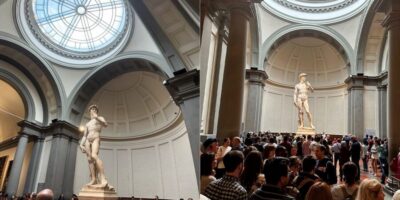
Timed Entry Ticket to Michelangelo’s David & eBook
Read our review →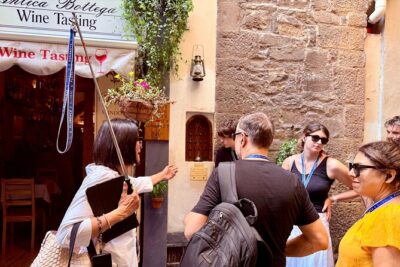
Skip the line: Uffizi and Accademia Small Group Walking Tour
Read our review →
Browse the lists this tour appears in