
Reviewed · UFFIZI GALLERY TOURS
Florence: Accademia and Uffizi Gallery Guided Tour
Michelangelo’s David is the star, but the real strength of this Florence tour is that it pairs him with Botticelli, Leonardo, Piero della Francesca, and other major artists in one long art-filled outing. You begin near Eataly on Via de’ Martelli, then visit the Accademia and Uffizi with reserved entry and a guide who points out what matters.
I like the time-saving entry at both museums, especially during Florence’s busiest months. I also like the range: Accademia gives you David and Michelangelo’s Florentine setting, while the Uffizi traces major changes in painting from the Middle Ages into the Renaissance. The main drawback is pace. Five hours on your feet, plus walking between museums and a stair climb at the Uffizi, can wear you down.
Key points to know before booking
- David gets proper attention: The Accademia visit centers on Michelangelo’s famous statue, with time for context and details that are easy to miss alone.
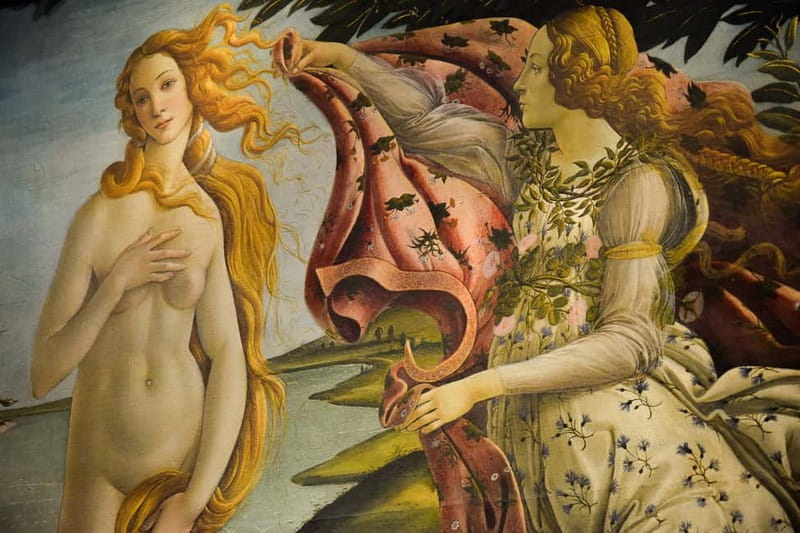
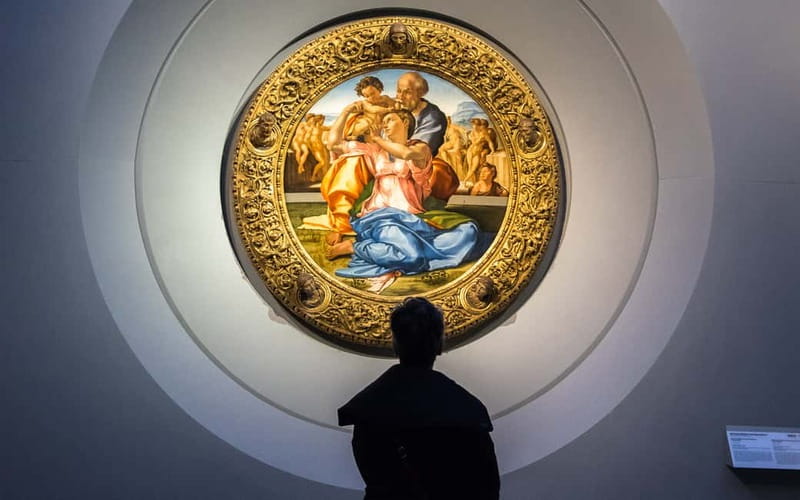
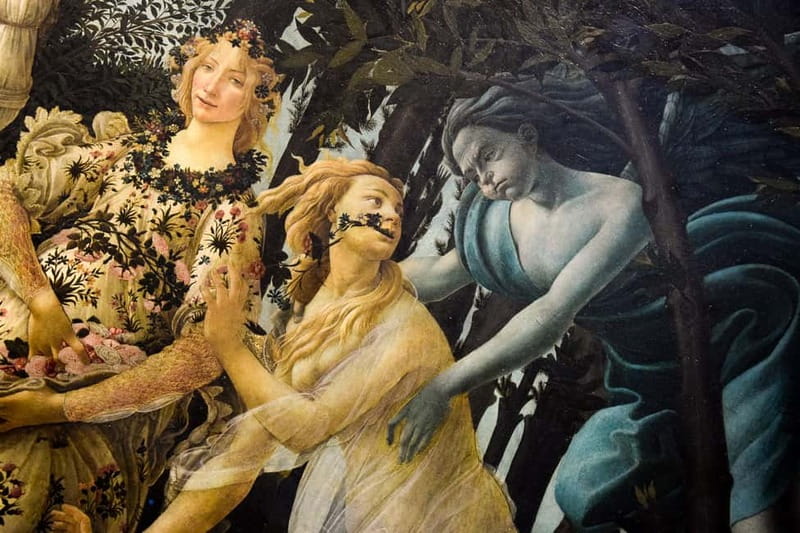
- The Uffizi covers major Renaissance art: Look for Botticelli’s Birth of Venus and Primavera, Leonardo’s Annunciation, Piero della Francesca’s Dukes of Montefeltro, and Michelangelo’s Tondo Doni.
- Skip-the-line does not mean no waiting: Reserved entry helps, but security lines can still form in peak season.
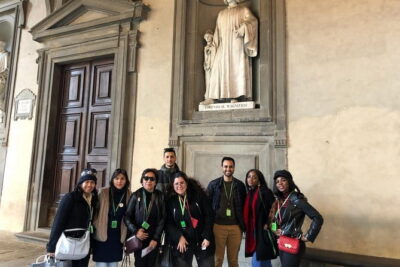
- Guides make a real difference: Julia, Rosa, Edoardo, Rachel, Isabella, and others have been praised for clear explanations, enthusiasm, and good storytelling.
- The museums are separated by a short walk: The route between them takes about 10 minutes, though the full outing may include a longer break or a change of guide.
- Plan for stairs at the Uffizi: The lifts are currently out of service, and exhibition rooms are two floors up.
Why this pairing works in Florence
Florence can feel like one enormous open-air museum. You turn a corner and find a church façade, sculpture, or painting tied to the same artists you have just read about. The trouble is deciding which indoor museums deserve your limited time. This tour solves that problem by joining the city’s two essential art collections in one scheduled visit.
The Accademia is compact compared with the Uffizi, but it carries enormous cultural weight because of David. The Uffizi then gives you a much wider view of Florentine painting and sculpture. Taken together, the museums show both the human scale of Renaissance art and the larger political and religious world that produced it.
I would not book this simply to rush through two buildings and collect a few famous photographs. The value comes from the guide’s interpretation. A good guide helps you see why David was made, how Renaissance painters handled space and emotion, and why Botticelli’s works remain so instantly recognizable.
The tour has a rating of 4.5 from 471 reviews, with especially strong praise for the guides. Names that come up often include Julia, Rosa, Edoardo, Rachel, Isabella, and Mary. You cannot count on receiving a particular guide, but the pattern is useful: the human part of this experience is often its strongest feature.
Other galleries to book ahead in Florence:
- Florence: Skip-The-Line Uffizi Gallery Timed Entry Ticket
★ 4.5 · 27,832 reviews - Florence: Uffizi Priority Ticket & Masterpieces Audio App
★ 4.2 · 6,402 reviews - Florence: Skip-the-Line Uffizi Small Group Tour
★ 4.6 · 5,926 reviews
Meeting near Eataly on Via de’ Martelli
The meeting point is in front of Eataly at Via de’ Martelli, 33r. This puts you near Florence’s central sights and within easy reach of both museums. Arrive with enough time to locate the guide and settle in before the group leaves.
The exact order can vary. The supplied plan places the Uffizi before the Accademia, while the general description presents the Accademia first. Some departures may also divide the museums into separate sessions, with a break between them. Check the schedule you receive at booking and listen carefully to the guide’s instructions at the first meeting.
This matters because the two galleries are not in the same building. The walk between them is listed as about 10 minutes, but crowds, street crossings, group organization, and security procedures can add time. One person who had a delayed start and a split schedule found the change made the day feel rushed, so I would avoid booking this on a tight train or airport timetable.
The activity ends back at the starting point. It is a walking tour, not a coach excursion, and the museums themselves require plenty of standing and moving from room to room.
Accademia: meeting David face to face
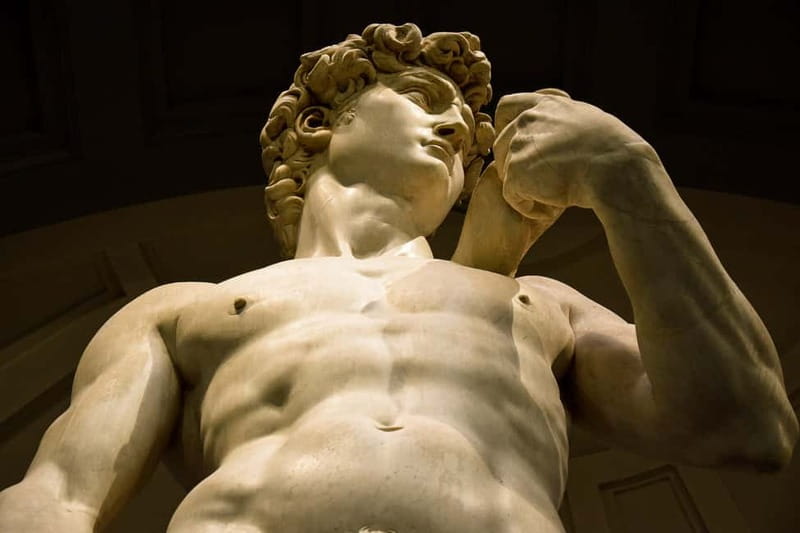
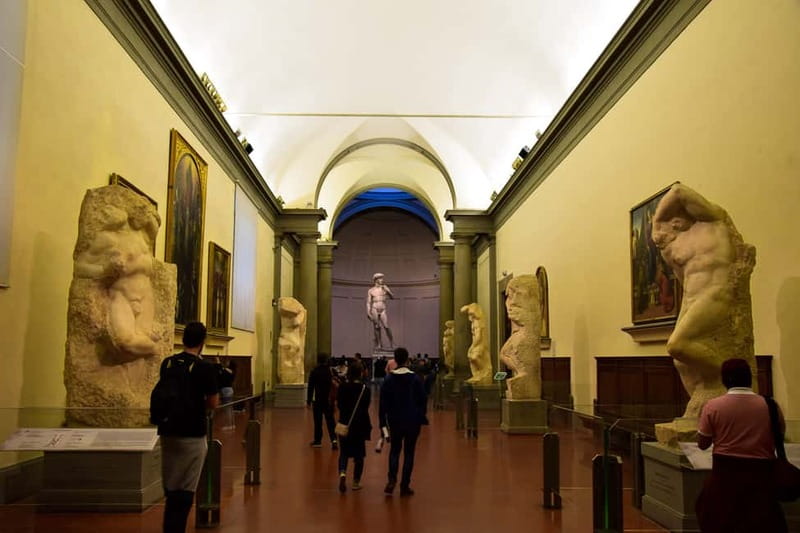
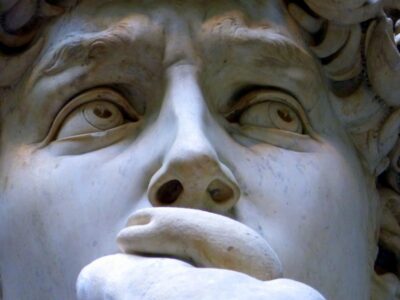
The Accademia is where the emotional high point arrives for most people. Michelangelo’s David is larger and more commanding than photographs suggest. The statue’s scale, polished marble, and focused expression are easiest to appreciate when you have room to look from different angles.
A guide can also add the context that a quick solo visit may miss. The tour is not only about saying that David is famous. It explains the sculpture, Michelangelo’s role, and the way the work fits into Florence’s artistic identity. Rosa has been praised for bringing out details that people would likely miss on their own, while Edoardo has been singled out for making art approachable even for a young visitor who normally dislikes museums.
The Accademia visit lasts about an hour according to the stated itinerary. That is enough for a guided highlight tour, but not enough for a slow inspection of every room. You will see a collection of Florentine paintings and sculptures, but the focus remains on the major works.
This is a good arrangement for first-time visitors. You get direction instead of wandering through every corridor, and you can return later if you decide that one hour was not enough. If you already know David well and want a detailed study of lesser-known works, a private tour or a separate longer visit may suit you better.
Uffizi: Botticelli, Leonardo, and the birth of Renaissance painting
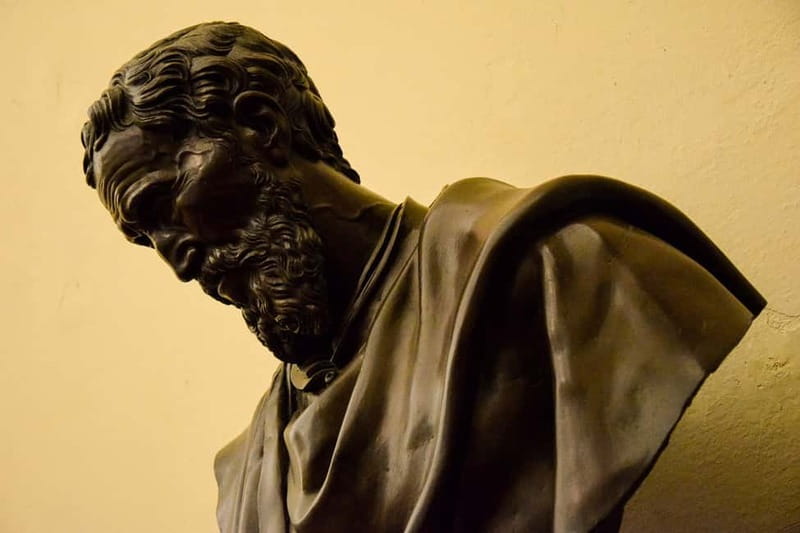
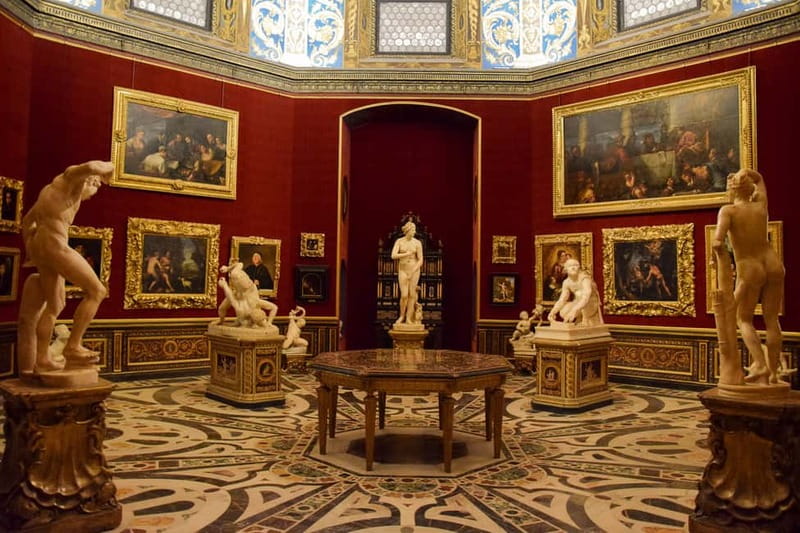
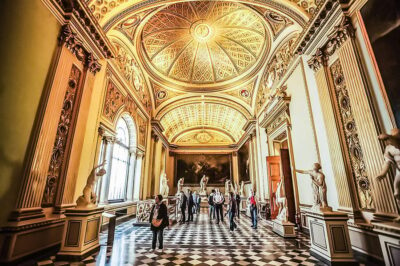
The Uffizi is the longer and more demanding part of the outing. Its collection moves through centuries of Italian art, with particular attention to Florentine painters and the Renaissance. You will not simply see a string of famous names. You will see changing ideas about religious scenes, human figures, space, movement, and portraiture.
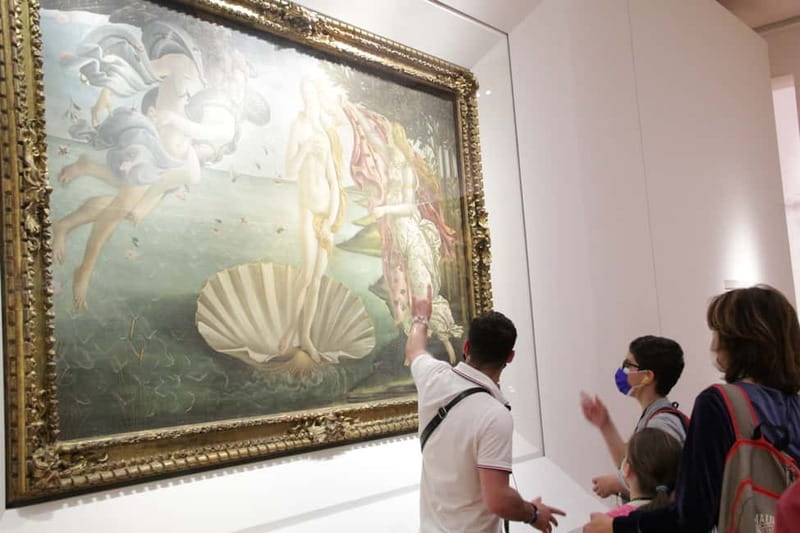
The main stops include Botticelli’s Birth of Venus and Primavera, Piero della Francesca’s Dukes of Montefeltro, Leonardo da Vinci’s Annunciation, and Michelangelo’s Tondo Doni. Each work offers a different reason to pause.
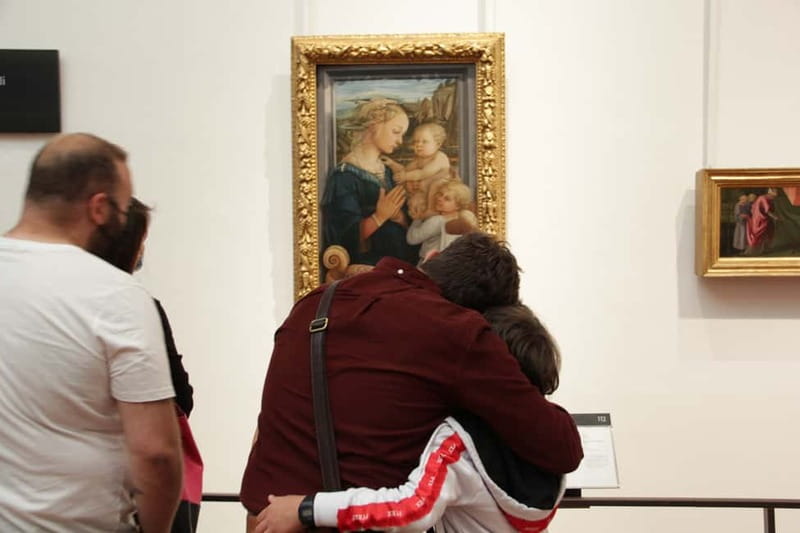
Botticelli gives you graceful line, symbolic detail, and instantly recognizable figures. Leonardo’s Annunciation rewards a closer look at landscape, gesture, and the arrangement of the scene. Piero della Francesca’s portraits are strikingly direct, with the Duke and Duchess shown in profile against a distant view. Michelangelo’s Tondo Doni reminds you that he was a painter as well as a sculptor.
A strong guide connects these works rather than treating them as isolated masterpieces. Julia has been praised for explaining the shift from medieval painting into the Renaissance, and Pamela for giving just enough information to help visitors appreciate both the art and Florence itself. That kind of structure is useful when your eyes are tired and the gallery begins to blur into one long procession of frames.
The Uffizi visit is listed at about 1.5 hours. That is a sensible length for a focused introduction. You will cover the essential rooms, but you should not expect to see every important painting in the building. The museum is too large for that, and trying to do so would turn the visit into a march.
Other sculpture and collections in Florence:
- Florence: Timed Entrance Ticket to Michelangelo’s David
★ 4.6 · 16,983 reviews - Florence: Michelangelo’s David Skip-the-Line Entry Ticket
★ 4.5 · 12,764 reviews - Florence: Michelangelo’s David Priority Ticket & Audio App
★ 4.4 · 6,812 reviews - Florence Accademia Gallery Tour with Entrance Ticket Included
★ 4.5 · 6,148 reviews
Skip-the-line entry and the reality of security checks
The tour includes reserved tickets for both galleries and entry through the express security process. This can save a substantial amount of time, especially when regular queues stretch along the street.
Still, skip-the-line is not a magic phrase. During peak periods, everyone must pass security, and the entrance area can become slow. The tour information specifically warns that a wait may still occur when visitor numbers are high. Arrive with patience and do not schedule a meal, train, or other fixed appointment immediately after the tour.
The reserved entry is most valuable when you have only one day in Florence. Cruise passengers and people on short city stays have found the combination useful because it covers both major museums without requiring them to manage separate tickets, queues, and opening procedures.
The tradeoff is that you give up some freedom. The group follows a fixed time and route, and you cannot linger indefinitely beside one painting while the rest of the party moves on. If you want to study art at your own speed, buy separate tickets and visit independently. If your priority is seeing the major works efficiently, the guided format makes better sense.
The five-hour pace, walking, and museum fatigue
The total duration is five hours. That includes the guided visits, movement between the museums, entry procedures, and any scheduled gap between sessions. The walking distance between the galleries is short on paper, but the full outing still involves extensive time standing.
The Uffizi currently has a major practical issue: its lifts are not working, so you must use the stairs to reach the exhibition halls, which are two floors up. The activity is marked wheelchair accessible, but the stair situation deserves direct attention. If you have difficulty with stairs or standing, contact the provider before booking and ask exactly how access will be handled on your date.
Comfortable shoes are a basic requirement. Bring water, but remember that museum security rules may limit what you can carry inside. The guide can point out toilets, exits, and cafés, which is useful during a long visit. Julia has been praised for making those practical details clear rather than leaving the group to figure them out.
The tour can be taken back to back, or you may have a break depending on the schedule. One group enjoyed doing both sessions consecutively, while another found that a long gap and a delayed start made the connection difficult. I would treat the timing as flexible rather than assuming a perfectly continuous five-hour block.
Shared or private: which format fits you?
The shared tour is the better value for most first-time visitors. At about $157.47 per person, the price is not low, but it includes two museum tickets, reserved entry, a live guide, and a structured route through works that are expensive in both time and attention to organize alone.
The price makes the most sense when Florence is a short stop. You are paying not only for admission, but also for a guide who chooses the important rooms and supplies the art background that turns a famous name into a memorable encounter.
A private group is available and may be worth considering for families, older relatives, or anyone who wants to ask many questions. Rosa has received especially warm praise for private visits, where the pace can feel more personal. A shared group is usually fine for adults who want a clear overview and do not mind following a set schedule.
Language choice is another useful feature. Tours are offered in English, German, Spanish, French, Italian, Russian, and Portuguese. Several guides have been praised for speaking clearly and keeping the group engaged, though one assessment found the English difficult to follow and another noted that a guide sometimes spoke quickly. If language clarity matters to you, state your preference clearly and ask the operator about the available guide for your departure.
What the best guides add
The guide is the part you cannot measure from the ticket price. A museum audio guide can name a painting and give dates. A live guide can change the order, answer a question, slow down for a child, or explain why two works belong together.
Edoardo has been praised for his energy and ability to keep a group together. Rachel has been described as both entertaining and well prepared, even after an unexpected delay outside the museum. Isabella has been appreciated for being helpful as well as clear, and Julia for bringing real feeling to the art and speaking excellent English.
That does not guarantee a particular style on your date. Some guides may be brisk and tightly organized. Others may tell more stories and allow more questions. The overall pattern suggests that the company has several strong art guides, but the experience can still vary with group size, language, crowd levels, and the guide assigned.
Families can make good use of this format. One guide made a point of involving an eight-year-old, and another helped turn a child’s dislike of art into interest. Parents should still expect a long stretch of walking and standing. The tour is family-friendly in spirit, but it is not a light activity.
Strengths and limitations at a glance
What I like most:
- You see David and the Uffizi’s top Renaissance paintings in one booking.
- Reserved entry cuts down the risk of losing hours in ticket queues.
- The guides add art context, stories, and useful museum orientation.
- Multiple languages and private departures make the tour easier to match to your group.
- The format works well for a short Florence visit or a cruise day.
What requires planning:
- Security delays can still happen in peak season.
- The Uffizi’s broken lifts mean a two-floor stair climb.
- The full schedule may include a gap or a change of guide.
- A rushed group may not have time for every room.
- The cost is high if you already know both museums and prefer to explore alone.
The cancellation information needs careful reading. The booking details state that you can cancel up to 24 hours ahead for a full refund, but they also say the tickets cannot be canceled or rescheduled. Because those statements conflict, confirm the exact terms that apply to your selected departure before paying.
Should you book this Florence museum tour?
Book it if you want a guided introduction to Florence’s two essential galleries and your time is limited. It is particularly useful for first-time visitors, cruise passengers, families who benefit from a clear route, and anyone who would rather hear the story behind David and the Renaissance than read labels alone.
Think twice if you dislike fixed schedules, need a quiet pace, have difficulty with stairs, or want to spend several hours studying a small number of paintings. The Uffizi can be tiring, and a five-hour museum program is a serious commitment.
For most people, the strongest reason to choose this tour is efficient coverage with a human guide. You will see the headline works, avoid the worst ticket queues, and gain a workable understanding of how Florence shaped Western art. Just confirm the order, break, language, and accessibility arrangements before you go.
FAQ
How long does the Florence Accademia and Uffizi tour last?
The activity lasts about five hours. The stated itinerary includes about 1.5 hours at the Uffizi, a 10-minute walk, and about one hour at the Accademia, with the remaining time covering movement, entry procedures, and possible scheduling gaps.
Where does the tour begin?
Meet the guide in front of Eataly at Via de’ Martelli, 33r. The activity ends back at the meeting point.
Which artworks are included?
The tour includes Michelangelo’s David at the Accademia, plus Botticelli’s Birth of Venus and Primavera, Piero della Francesca’s Dukes of Montefeltro, Leonardo da Vinci’s Annunciation, and Michelangelo’s Tondo Doni at the Uffizi.
Does skip-the-line entry guarantee immediate admission?
No. The tickets provide fast-track entry through express security, but a wait may still occur during peak periods because all visitors must pass security checks.
What languages are available?
The live tour guide may conduct the tour in German, Spanish, French, English, Italian, Russian, or Portuguese.
Is the tour wheelchair accessible?
The activity is listed as wheelchair accessible, but the Uffizi lifts are currently not working and visitors must take stairs to reach the exhibition halls two floors above. If you have mobility concerns, confirm the current access arrangements before booking.
More museums and galleries in Florence
- Florence: Leonardo Interactive Museum Entry Ticket
★ 4.5 · 11,763 reviews - Uffizi Gallery Small Group Tour with Guide
★ 4.5 · 4,923 reviews - Florence: Accademia Gallery Guided Tour
★ 4.6 · 4,156 reviews - Florence: Accademia Gallery Guided Tour with Entry Ticket
★ 4.6 · 2,253 reviews
Just added in Florence
- Wine Tasting Experience in Ponte Vecchio: Best Tuscany selection!★ 5.0 · 197 reviews
- Florence Sunset Food Tour with Wine & Dine at a Tuscan farmhouse★ 5.0 · 194 reviews
- Walking Food Tour of Florence with Tastings and Wine★ 5.0 · 518 reviews
- Wine Experience In Chianti Hills from Florence★ 4.5 · 195 reviews
- Uffizi and Accademia Small Group Guided Tour★ 4.5 · 449 reviews
- Val d’Orcia Brunello Wine Tour with Montalcino and Montepulciano★ 4.5 · 359 reviews
- Uffizi Gallery Timed Entry Admission Tickets★ 4.0 · 392 reviews
- Uffizi Gallery Small Group Tour with Guide★ 4.5 · 879 reviews
Uffizi Gallery Tours, compared.
Skip-The-Line Uffizi Gallery Timed Entry Ticket
Read our review →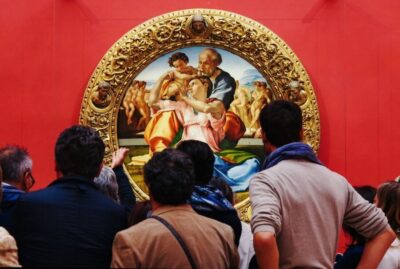
Uffizi Priority Ticket & Masterpieces Audio App
Read our review →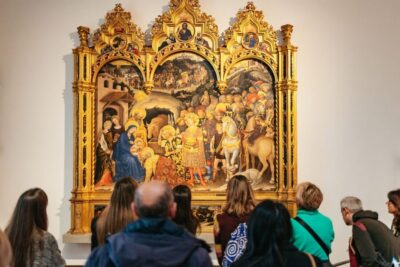
Uffizi Gallery and Accademia Gallery Guided Tour
Read our review →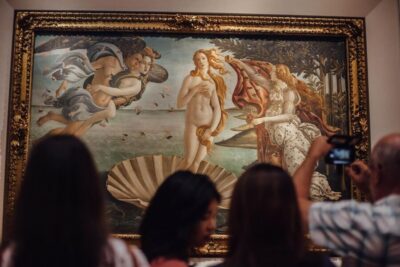
Uffizi Gallery Small-Group Guided Tour with Ticket
Read our review →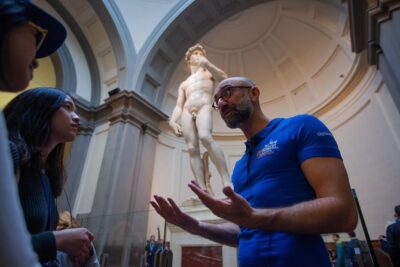
Michelangelo’s David, Accademia & Uffizi Small Group Tour
Read our review →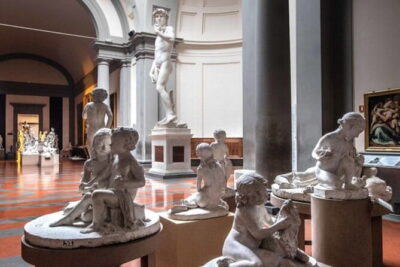
Accademia & Uffizi Museums: Small Group Tour with Optional Lunch
Read our review →Browse the lists this tour appears in