
Reviewed · ACCADEMIA & DAVID TOURS
Florence: Accademia and David Skip-the-Line Entry Ticket
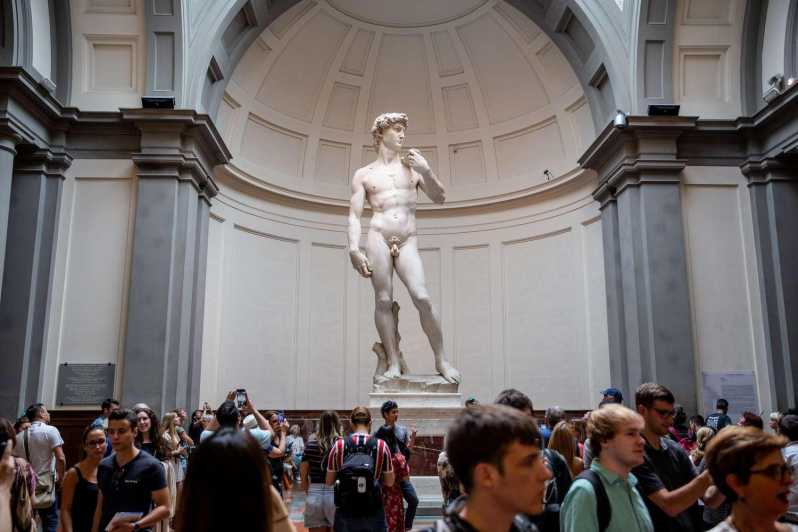
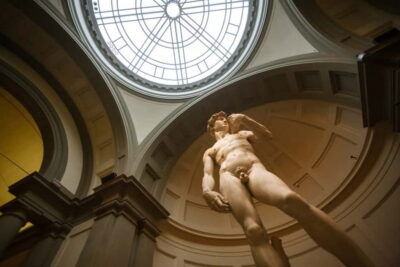
Michelangelo’s David is the reason most people come, and the first sight of the more than five-meter marble figure is genuinely powerful. This ticket gets you into the Accademia Gallery with help from a host, then lets you explore the museum at your own pace rather than following a fixed tour.
I like the separate entry queue, especially when the public line stretches down the street. I also like the freedom to spend extra time with the Prisoners, early Florentine paintings, Medici instruments, or the plaster casts. The catch is that you must first meet at the Via Guelfa office, and this is not a guided tour once you enter.
Key points to know before booking
- David is the main event: See Michelangelo’s famous marble sculpture in the Tribune, a hall designed to frame its scale and beauty.
- The host handles the entry process: Meet at Via Guelfa 12RED, then follow the representative to the appropriate queue.
- The ticket skips the main line, not security: You still pass through museum checks, and waits of 15 to 20 minutes can occur at busy times.
- You explore independently: A guide and audio guide are not included, so bring your own background notes if you want more context.
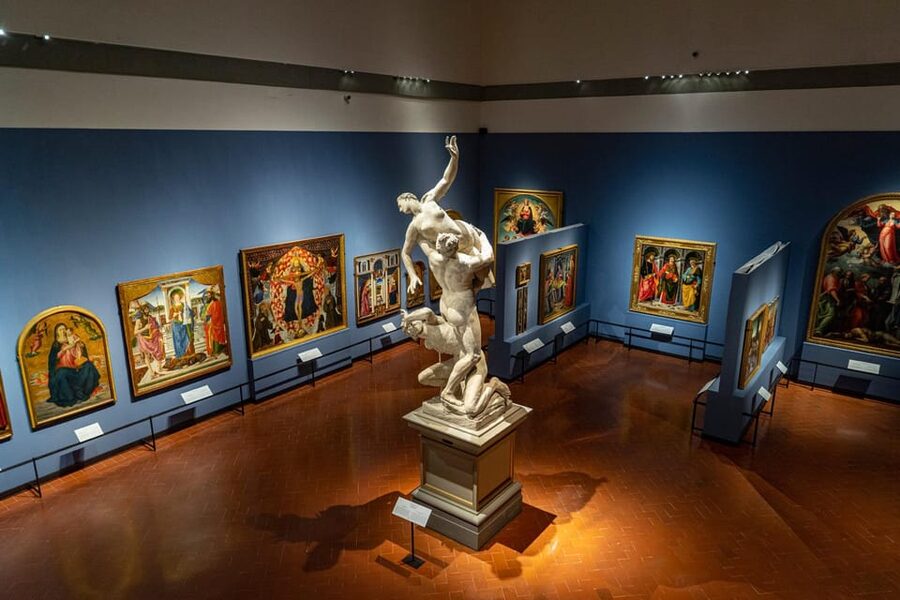
- The museum offers more than David: Look for Michelangelo’s Prisoners, paintings from the 13th to 16th centuries, Medici instruments, and plaster casts.
- The $36 price pays for time and access: It can be worthwhile on a busy morning, but less so if the public queue is short.
David deserves more than a quick photograph
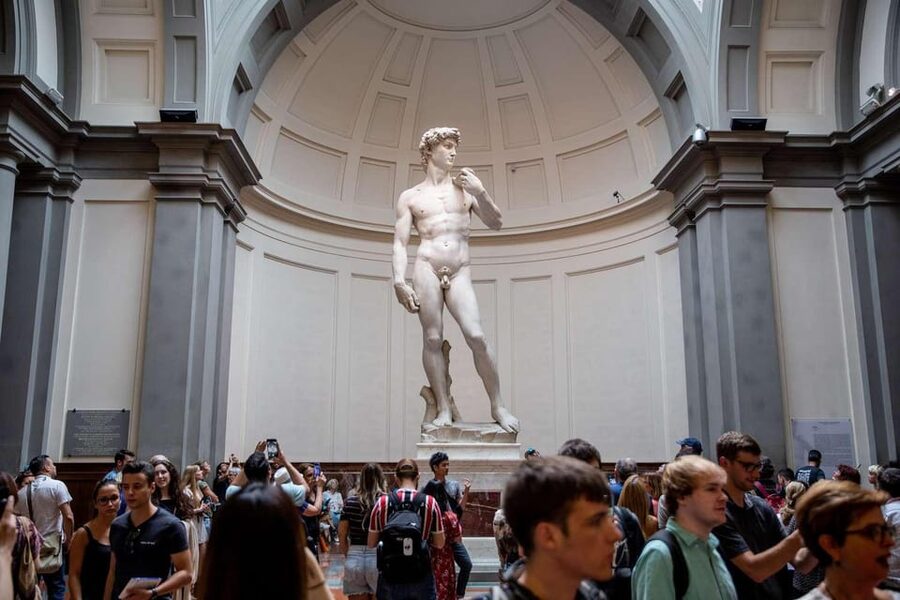
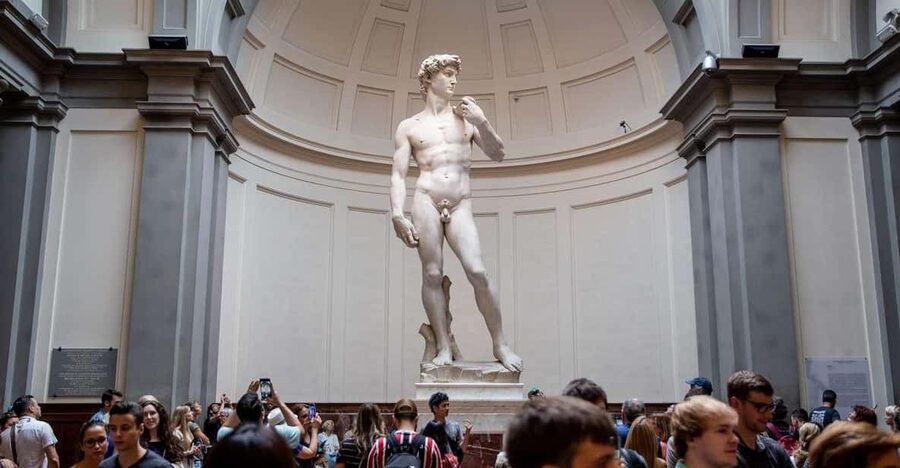
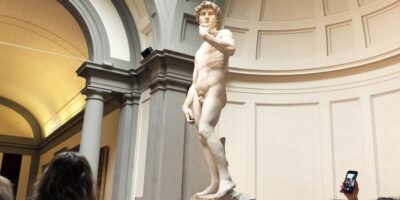
The Accademia Gallery is one of Florence’s smaller major museums, but Michelangelo’s David gives it unusual weight. Carved from a single block of marble between 1501 and 1504, the sculpture rises more than five meters in the Tribune. The room was made to direct your attention toward the figure, so you see him from several angles as you walk closer.
David is shown before his battle with Goliath, not after it. His alert expression, oversized hands, and tense posture suggest a young man preparing for action. You can look closely at the marble surface and notice how Michelangelo used tiny changes in the carving to suggest skin, muscle, hair, and concentration.
I recommend giving David more time than the usual quick stop. Walk around the Tribune, then return to the front for a longer look. The museum can feel crowded at popular times, and the sculpture is easy to rush past when people are waiting behind you.
The ticket does not provide a private viewing or a guide in the gallery. Its value is that it helps you get through the entry process more efficiently, leaving you free to study David at your own pace.
Other sculpture and collections in Florence:
- Florence: Timed Entrance Ticket to Michelangelo’s David
★ 4.6 · 16,983 reviews - Florence: Michelangelo’s David Skip-the-Line Entry Ticket
★ 4.5 · 12,764 reviews - Florence: Michelangelo’s David Priority Ticket & Audio App
★ 4.4 · 6,812 reviews
The meeting point is part of the experience
Before you see the museum, you must meet at the Florence and Global Tours Company office at Via Guelfa 12RED, in front of the Via Guelfa McDonald’s and next to Via Guelfa 2. This is around the corner from the Accademia, not at the museum entrance itself.
That detail matters. Some people find it confusing to collect a voucher away from the gallery, particularly if they arrive just before the selected time. I would build in enough time to locate the office, check in, and join the group heading toward the museum.
The process is generally simple. A host or representative confirms your booking, provides or collects the entry code, and guides you to the correct entrance. You then enter through a separate queue rather than joining the longest public line.
The host may speak Arabic, English, German, Italian, or Spanish. Once you are inside, the representative leaves and the visit becomes self-guided. This arrangement suits you if you want practical help with admission but do not want to spend an hour listening to a tour lecture.
What skip-the-line really means here
Skip-the-line access is useful, but it is not a magic key that removes every wait. You avoid the main ticket queue, yet you still face security checks and possible congestion at the reserved entrance.
At quiet times, entry can be very quick. At busy times, you may wait 15 to 20 minutes after receiving your entry code. That is still much better than facing a long line outside, but the wording matters if you are planning a packed day.
Early morning appears to be the best choice. An early time can make the gallery feel calmer, and an early arrival may reduce the time spent in the entry queue. Around 10 a.m., the public line can already be very long, making the $36 cost easier to justify.
If you arrive a few minutes late, the staff may still help you enter at a later time, but you should not count on that. One useful feature of this arrangement is the practical assistance at the meeting point, especially if you are unfamiliar with Florence’s ticket system.
Michelangelo’s other works deserve your attention
David is not Michelangelo’s only important work here. The Prisoners, also called the Slaves, are unfinished sculptures that appear to struggle out of their blocks of marble. Their incomplete surfaces let you see more of the carving process than you can in a polished statue.
That unfinished quality is the point. You can study how a figure gradually emerges from stone, with some parts clearly defined and others still locked inside the block. The effect gives you a direct sense of Michelangelo’s working method and the physical effort involved.
The museum also displays the St. Matthew, another unfinished work, and the Pietà of Palestrina. These pieces help broaden your view of Michelangelo beyond the single famous statue. If you arrive focused only on David, you might miss the chance to see how his approach changed from one work to another.
A self-guided visit works well here because you can pause at the pieces that interest you. The drawback is that no guide is present to explain attribution, debate, or artistic context. If those details matter to you, read about the works before arriving or consider purchasing the museum’s audio guide.
A few more things to do in Florence
- Florence: Skip-The-Line Uffizi Gallery Timed Entry Ticket
★ 4.5 · 27,832 reviews - Florence: Leonardo Interactive Museum Entry Ticket
★ 4.5 · 11,763 reviews - Florence: Cathedral & Brunelleschi’s Dome Ticket & Audio App
★ 4.4 · 6,973 reviews - Florence: Uffizi Priority Ticket & Masterpieces Audio App
★ 4.2 · 6,402 reviews
Florence’s earlier painters fill in the story
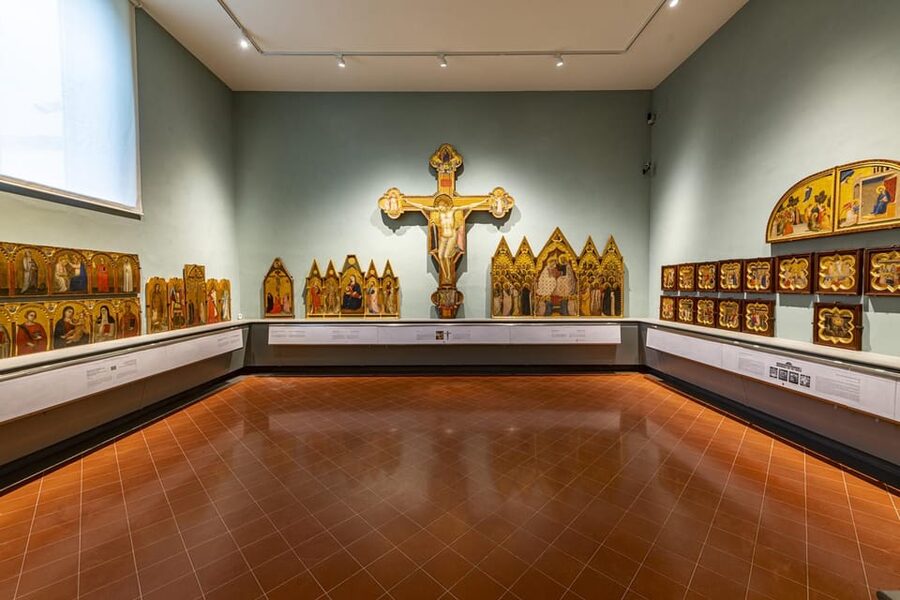
The Accademia also traces the development of Florentine painting from the 13th through the 16th century. Works by Cimabue, Giotto, Fra Angelico, Lorenzo Monaco, Botticelli, and Ghirlandaio show how religious art changed over several centuries.
The paintings are a useful counterweight to David’s physical drama. You move from medieval and early Renaissance images with formal compositions and gold backgrounds toward later works with greater attention to space, figures, and natural detail.
I find this part of the museum most rewarding when I slow down and compare the paintings rather than treating them as decoration on the way to the Tribune. You do not need to know every painter to see that Florentine art was changing over time.
Still, the collection may feel less immediately exciting than David. Many visitors arrive with one clear goal, and the paintings require more patience. If you have limited time, see David and Michelangelo’s unfinished sculptures first, then use the remaining time for the painting galleries.
The Medici instruments offer an unexpected stop
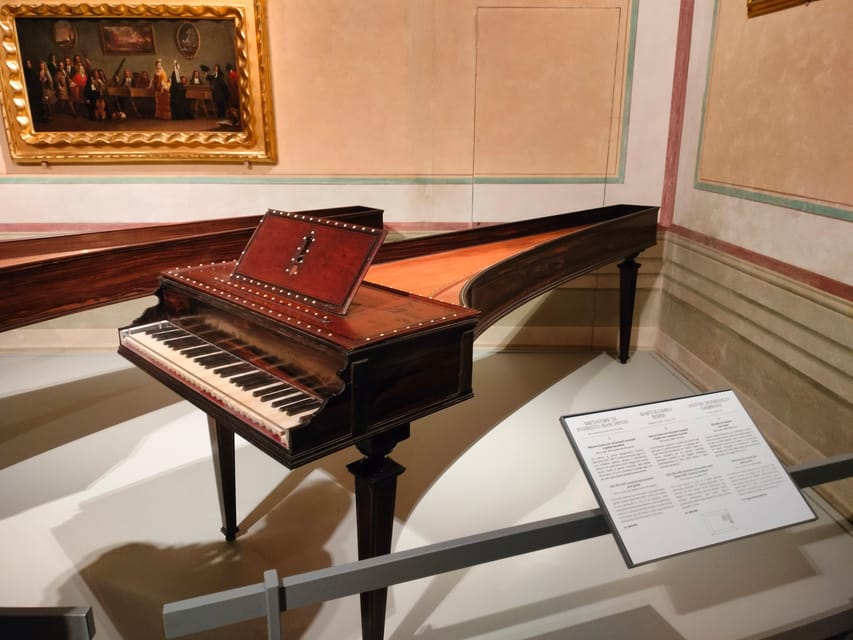
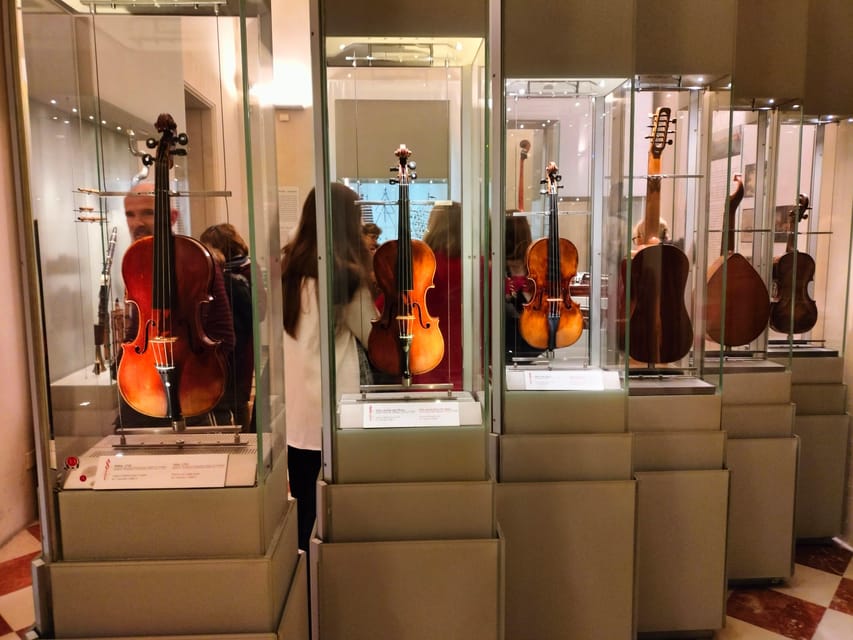
One of the museum’s less obvious sections presents rare instruments connected with the Medici family. The collection includes violins, harpsichords, and pianos dating from the 17th to the 19th century.
This room changes the pace of the visit. Instead of marble and painted panels, you see objects linked to music, court life, craftsmanship, and technology. The instruments also remind you that Florence’s cultural life was not limited to sculpture and painting.
The section is easy to skip if you are moving quickly toward David, so look for it on your museum route. It is especially useful if you are visiting with someone who enjoys music or design more than traditional art galleries.
The supplied ticket includes access to all sections of the museum, so you do not need to choose between David and the instrument collection. Your main limitation is time, not an extra admission charge.
The plaster cast gallery shows how artists learned
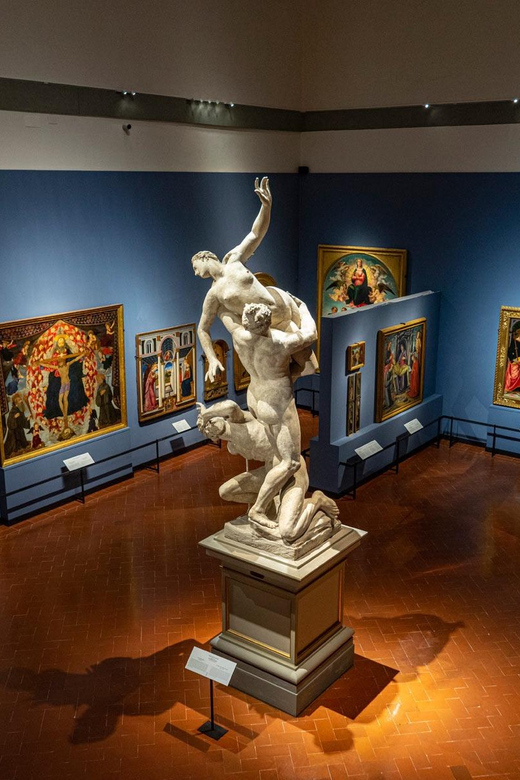
The plaster cast gallery contains copies of sculptures from antiquity through modern times. These casts were used as teaching tools for art students, giving young artists a chance to study proportion, anatomy, and sculptural form.
This section can feel very different from the original works in the Tribune. You are not looking at rare marble masterpieces in the same way, but the casts reveal how art education worked. They also give you a wider selection of forms than the Michelangelo rooms alone.
I would treat this as a bonus rather than the main reason to book. If you are interested in how artists trained, it is worth your time. If your priority is David and the Renaissance paintings, you can move through it more quickly.
How long you need inside the gallery
The activity is listed as lasting one hour, with starting times available when you book. The ticket also provides all-day access, so you have some flexibility once admitted. That combination is useful because one hour is enough for the main highlights, while extra time lets you see the paintings, instruments, and plaster casts without rushing.
For a quick visit, focus on:
- David in the Tribune
- The Prisoners
- St. Matthew
- The Pietà of Palestrina
- A selection of Florentine paintings
- The Medici instruments
You can finish the essential route in about an hour if you keep moving. I would allow more time if you want to read labels, compare paintings, or spend a quiet stretch with David.
The activity ends back at the meeting point in the formal description, but the actual museum visit is independent after entry. You should plan your wider Florence schedule around the gallery rather than expecting a guide to lead you onward.
Is $36 a fair price?
At $36 per person, this is not the cheapest way to enter the Accademia. You are paying a premium for advance arrangements, a host at the meeting point, and access through a separate queue.
That premium makes sense when Florence is crowded and your day is tightly planned. Losing an hour or more in line can cost more than the difference between a basic ticket and this one, especially if you have timed reservations elsewhere.
The value is weaker when demand is low or when you dislike meeting away from the museum. The ticket does not include a guided explanation, an audio guide, or special private access to David. It is best understood as an admission service with queue assistance.
The reserve-now-and-pay-later option also gives you some planning flexibility. You can cancel up to 24 hours before the activity for a full refund, according to the stated conditions. That is helpful if your Florence schedule is still changing.
Practical details for a smoother visit
Bring your booking information and arrive at the Via Guelfa office before your scheduled time. Do not walk straight to the Accademia expecting to collect the ticket there.
The host may escort you to the correct line, but you still need to pass security. Some people have reported water bottles being removed during bag checks, while others saw visitors carrying water inside. Since the enforcement appears inconsistent, check the current museum rules and avoid relying on a large bottle during hot weather.
The gallery is listed as wheelchair accessible. If you need a specific access arrangement, confirm the details when booking, since the provided information does not explain the route or facilities.
An audio guide can be purchased from the museum, but it is not included. You can also visit without one, though a little advance reading will help you understand why the unfinished sculptures matter and how the Florentine paintings fit together.
Who should book this Accademia ticket?
I recommend it for a first visit to Florence if David is high on your list and you want to protect your sightseeing time. It also suits independent visitors who prefer to wander alone after a quick handoff at the entrance.
Families may appreciate the short, flexible format. You can see the famous sculpture without committing to a long guided tour, then leave when younger children lose interest.
Art students and serious museum visitors may want more than this ticket provides. Since there is no guide or audio guide included, you will need to supply your own explanation or pay for the museum’s audio option.
I would be less enthusiastic if the Accademia is only a minor interest for you. Florence has many other major sights, and the $36 price is harder to defend if you are not especially interested in David, Michelangelo, or Florentine painting.
Should you book it?
Book this experience if you want to see David, your travel dates are busy, and the public line is likely to be long. Choose an early time if possible, arrive first at Via Guelfa 12RED, and remember that the host helps you enter but does not guide you through the museum.
Skip it if you want a full art lesson, a personal guide, or the lowest possible admission cost. For independent sightseeing with practical queue assistance, though, this is a straightforward way to reach one of Florence’s essential masterpieces.
FAQ
Where do I meet for the Accademia ticket?
Meet at the Florence and Global Tours Company office at Via Guelfa 12RED, in front of the Via Guelfa McDonald’s and next to Via Guelfa 2.
Is this a guided tour?
No. A host or greeter helps you collect the ticket and reach the appropriate entrance, but you explore the gallery independently after entry.
Is an audio guide included?
No. The audio guide is not included, though one is available to purchase from the museum.
What does the ticket include?
It includes skip-the-line entry to the Accademia Gallery and access to all sections of the museum.
Can I cancel the booking?
You can cancel up to 24 hours in advance for a full refund under the stated cancellation terms.
Is the Accademia Gallery wheelchair accessible?
Yes. The activity information lists the museum experience as wheelchair accessible.
Just added in Florence
- Wine Tasting Experience in Ponte Vecchio: Best Tuscany selection!★ 5.0 · 197 reviews
- Wine Experience In Chianti Hills from Florence★ 4.5 · 195 reviews
- Florence Sunset Food Tour with Wine & Dine at a Tuscan farmhouse★ 5.0 · 194 reviews
- Walking Food Tour of Florence with Tastings and Wine★ 5.0 · 518 reviews
- Uffizi and Accademia Small Group Guided Tour★ 4.5 · 449 reviews
- Val d’Orcia Brunello Wine Tour with Montalcino and Montepulciano★ 4.5 · 359 reviews
- Uffizi Gallery Timed Entry Admission Tickets★ 4.0 · 392 reviews
- Uffizi Gallery Small Group Tour with Guide★ 4.5 · 879 reviews
Accademia & David Tours, compared.
Timed Entrance Ticket to Michelangelo’s David
Read our review →
Michelangelo’s David Skip-the-Line Entry Ticket
Read our review →
Michelangelo’s David Priority Ticket & Audio App
Read our review →
Florence Accademia Gallery Tour with Entrance Ticket Included
Read our review →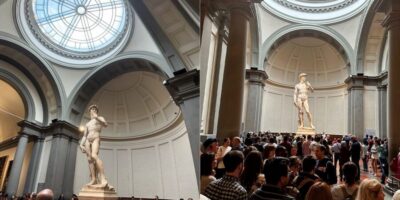
Timed Entry Ticket to Michelangelo’s David & eBook
Read our review →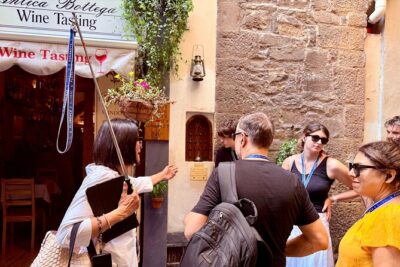
Skip the line: Uffizi and Accademia Small Group Walking Tour
Read our review →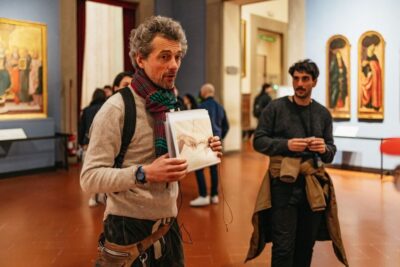
Browse the lists this tour appears in