
Reviewed · WALKING TOURS
Ferrara: City Highlights Walking Tour with Local Guide
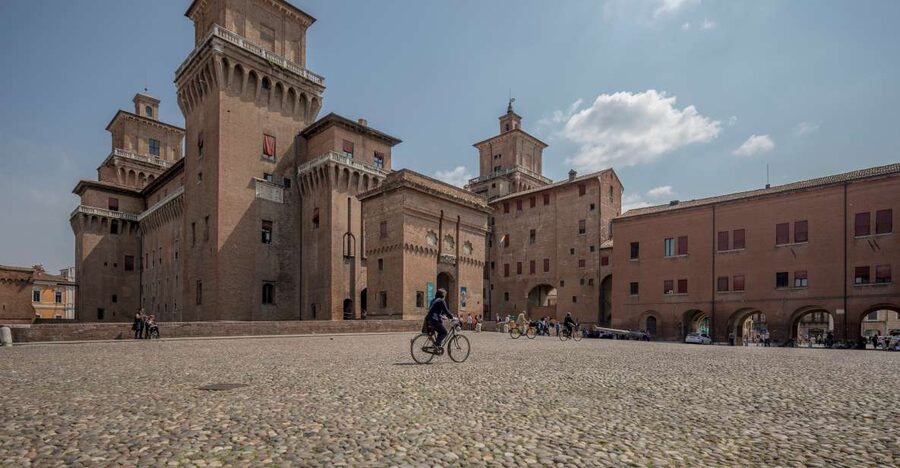
Ferrara’s appeal comes from the way its medieval court city and Renaissance expansion fit together in one manageable walk. You begin at Estense Castle, follow the grand axis of Corso Ercole I d’Este, and reach Palazzo dei Diamanti before the route opens into parks, a former Carthusian complex, and Piazza Ariostea. I like the clear story this route tells, and I like that it reaches quieter corners beyond the main castle square.
The price is a strong point at $17 per person, especially with an Italian-speaking guide and a two-hour route. Guides have been praised for being precise, punctual, friendly, and well prepared, with Maria Chiara receiving special mention. The main consideration is language: the live guide and audio support are in Italian, and entrance tickets are not included.
Key points at a glance
- The route explains Ferrara’s planned Renaissance expansion: Corso Ercole I d’Este leads through the Addizione Erculea, one of the city’s most important urban projects.
- You see more than the central castle: The walk continues to Palazzo dei Diamanti, Massari Park, San Cristoforo alla Certosa, and Piazza Ariostea.
- San Cristoforo includes an interior visit: The former Carthusian church is now part of a monumental cemetery complex.
- The guide is the main value: Recent feedback highlights clear, courteous, professional guides, including Maria Chiara.
- The tour remains practical and affordable: It lasts two hours, costs $17, and begins in the Estense Castle courtyard.
- Plan for Italian: The live commentary and included audio guide are listed in Italian only.
Why Ferrara makes a fine walking-tour city
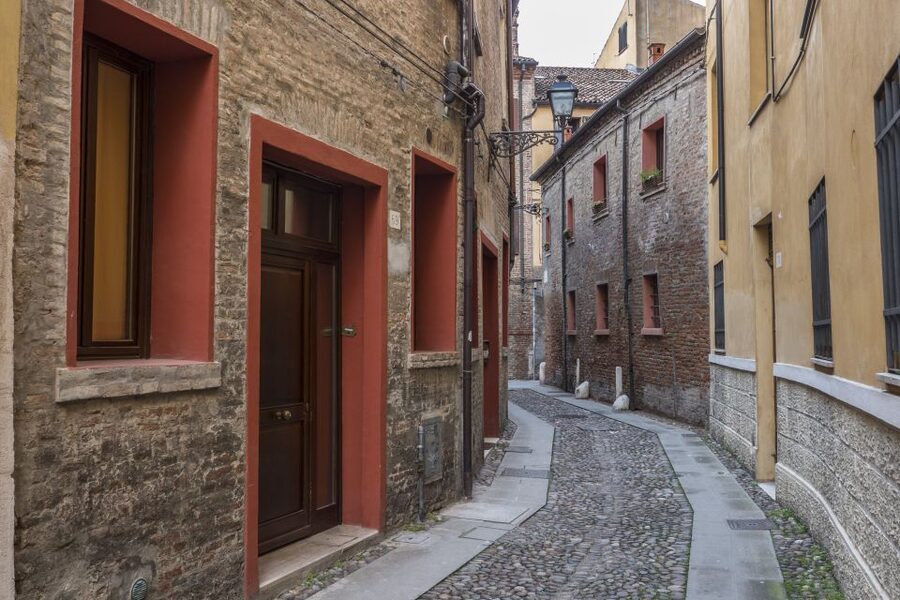
Ferrara is a good place to explore on foot because its important sights are linked by a simple historical idea. The old medieval center grew around the Este family’s castle and court. Later, Duke Ercole I d’Este ordered a large Renaissance extension to the north, planned by the Ferrarese architect Biagio Rossetti.
That expansion, called the Addizione Erculea, is the heart of this walk. Instead of hopping between isolated monuments, you move along streets and open spaces that show how the city changed. I find that useful because Ferrara can look calm and understated at first. A guide helps you notice that the broad roads, palaces, gardens, and church fronts were part of a deliberate plan.
The route also has a pleasant rhythm. You begin with the castle and grand city streets, pass an ornate palace, then move toward greenery and the quieter Certosa complex. Piazza Ariostea provides a relaxed final stop. It is a good choice if you want an introduction that covers Ferrara’s central symbols without spending an entire day indoors.
The two-hour length is another advantage. You get a solid orientation without giving up most of your day. You can schedule a museum, lunch, or a separate visit to the castle afterward. The walk does not try to cover every church and palace in Ferrara. Instead, it gives you a connected route and enough context to decide what deserves a closer look.
Other walks around Italy:
- Milan: Guided Walking Tour & Last Supper Visit with Ticket
★ 4.7 · 5,409 reviews - Naples: Street Food Walking Tour with Local Guide
★ 4.8 · 4,256 reviews - Venice Walking Tour and Gondola Ride
★ 3.5 · 3,630 reviews
Starting beneath the Estense Castle
The meeting point is in the courtyard of Estense Castle, near the loggia. This is a sensible place to begin. The castle is Ferrara’s most recognizable building, with towers, defensive walls, and the unmistakable presence of the Este rulers.
Your guide uses the castle as the opening chapter of the city’s story. The Este family governed Ferrara for centuries, and the tour focuses on the secrets and legends linked with that court. That subject gives the opening some character beyond a basic list of architectural dates.
The castle itself is also a useful orientation point. From here, you can understand how Ferrara’s political power shaped the surrounding streets. The tour does not include entrance tickets, so you should not assume that this walk covers the castle interiors. If you want to visit the castle rooms, arrange that separately and allow extra time.
I like this start because it puts you at the city’s symbolic center without wasting time on a transfer. You simply meet your guide and begin walking. The courtyard setting may be busy at certain times, so arrive with enough time to find the loggia and settle in before the start.
Walking Corso Ercole I d’Este
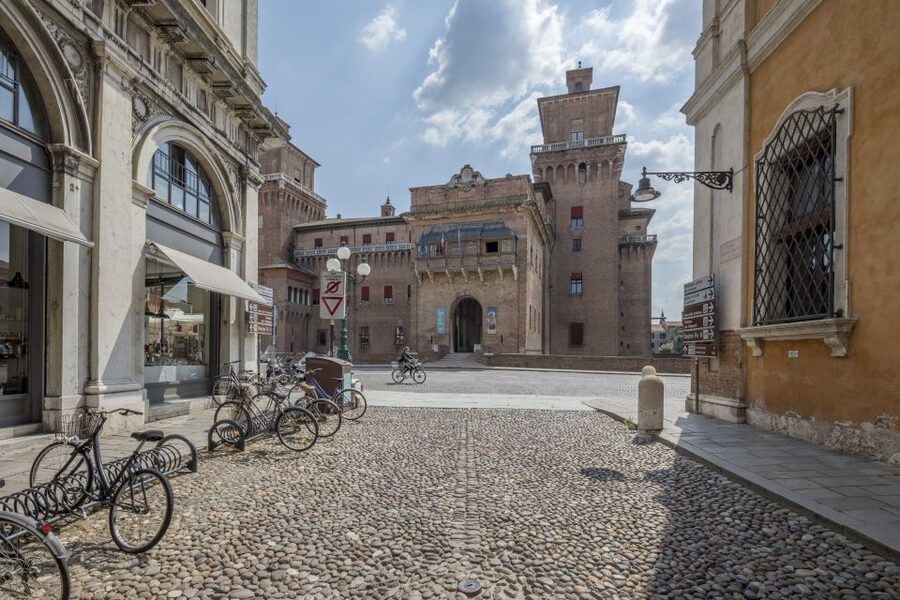
From the castle, the route follows Corso Ercole I d’Este. This road connects the castle with the northern gate of the walls and crosses the Addizione Erculea, the Renaissance extension ordered by Ercole I d’Este and planned by Biagio Rossetti.
This is one of the most valuable parts of the walk because the street itself is the lesson. You are not just being taken to a building. You are seeing how a ruler and an architect reshaped a city. The broad route, palaces, churches, and views make more sense when you understand that they belong to a planned addition rather than random growth.
The route also shows the contrast between Ferrara’s older medieval core and its later Renaissance order. That change is central to the city’s identity. The guide’s job here is to connect what you see with the ambitions of the Este court and the work of Rossetti.
Expect a walking experience rather than a stop-and-start museum tour. You will spend much of the time outdoors, looking at façades, streets, and urban views. Bring comfortable shoes and an umbrella if rain is possible. The practical advice to carry an umbrella matters in Ferrara because the route has no guarantee of shelter while you move between sights.
Palazzo dei Diamanti and the historic crossroads
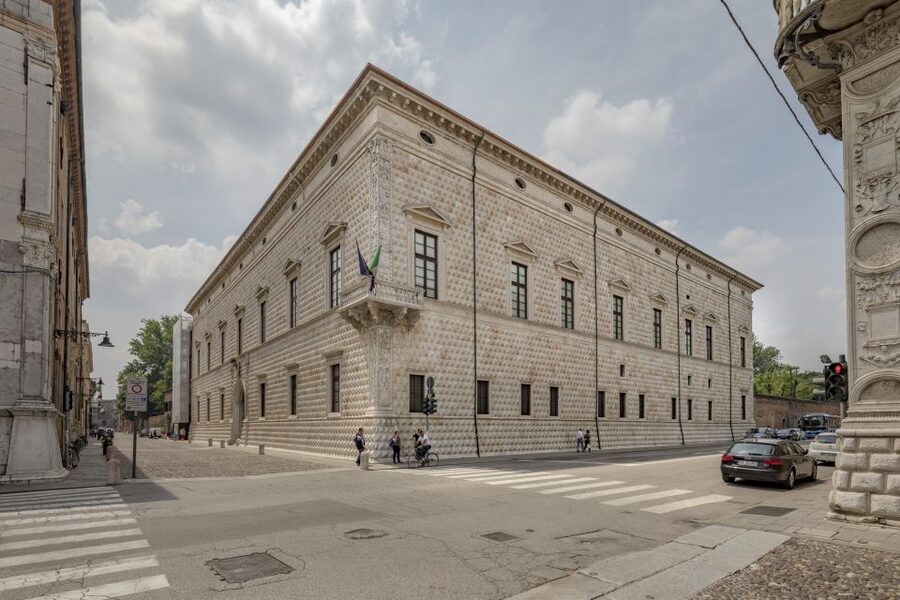
The walk reaches Palazzo dei Diamanti in the center of the Addizione Erculea. The name comes from the building’s unusual diamond-shaped stone details, which give the façade a pattern unlike the smoother fronts around it.
You do not need to be an architecture specialist to appreciate this stop. The palace offers a clear visual example of the Renaissance taste that shaped Ferrara’s northern expansion. It also gives the guide a natural place to explain how the city’s major streets and palaces fit together.
The route then continues from what is described as the historic crossroads. This transition matters. Rather than ending after the most famous palace, the walk moves into a greener part of the city. That choice helps the tour feel like an exploration of Ferrara as a whole, not only a quick circuit of postcard sights.
Because entrance tickets are not included, treat the palace as an exterior stop unless your guide explains otherwise. The value here comes from seeing its setting within the planned city and hearing the story attached to it. If you want to enter any attraction, confirm ticket arrangements before booking or plan a separate visit.
A few more things to do in Italy
- Colosseum, Roman Forum & Palatine Guided Tour
★ 4.7 · 63,148 reviews - Vatican Museums, Sistine Chapel & St Peter’s Basilica Guided Tour
★ 4.5 · 39,149 reviews - Rome: Colosseum, Palatine Hill and Roman Forum Guided Tour
★ 4.8 · 32,814 reviews - Rome: Guided Tour of Colosseum, Roman Forum & Palatine Hill
★ 4.7 · 27,897 reviews
Massari Park and a change of pace
From the historic crossroads, the route heads toward Massari Park. The park is known for its centuries-old cedars of Lebanon and thick plant growth facing the University Botanical Garden.
This portion gives your eyes a break from stone façades. After the castle, street views, and palace architecture, the trees create a softer setting. I appreciate this change of pace on a walking tour. Two hours can feel long if every stop is another formal building, but Ferrara’s parks keep the route varied.
The park also helps you see how the city’s Renaissance planning included open space and long views, not only grand residences. The nearby botanical garden adds another point of interest, although the tour information does not indicate an interior visit there.
Do not expect a long rest stop or a separate garden tour. The park is part of the route, not a replacement for one. You will still be walking and listening, but the surroundings become calmer and less formal. It is a pleasant section for anyone who prefers a city walk with trees and open air mixed into the architecture.
San Cristoforo alla Certosa and the Carthusian past
A short walk from the park brings you to San Cristoforo alla Certosa. Over time, this former Carthusian complex became a Monumental Cemetery. The square in front is framed by elegant arcades, creating a quiet and reflective setting.
This is one of the route’s more distinctive stops. Many introductory city walks stay with castles and central squares. Here, you reach a complex that connects religious life, architecture, and Ferrara’s later memorial use. The arcades give the square a strong sense of enclosure, while the cemetery setting changes the tone of the walk.
The tour includes an internal visit to the Renaissance church. San Cristoforo began as a church for Carthusian monks brought to Ferrara by Duke Borso d’Este in the mid-15th century. That background gives the building a clear place in the city’s Este-era story.
You should allow the church a little quiet attention rather than treating it as a quick photo stop. The interior visit is one of the stronger reasons to choose this route over a basic street orientation. At the same time, remember that entrance tickets are listed as excluded, so any charge connected with the interior or other sites is not covered in the $17 price.
The church and cemetery complex may appeal especially to you if you like religious architecture, historic urban spaces, and places with a calm atmosphere. If you want only the busiest central landmarks, this section may feel less immediate. That is also what makes it useful: the tour shows a side of Ferrara that a short castle-and-palace circuit would miss.
Finishing at Piazza Ariostea
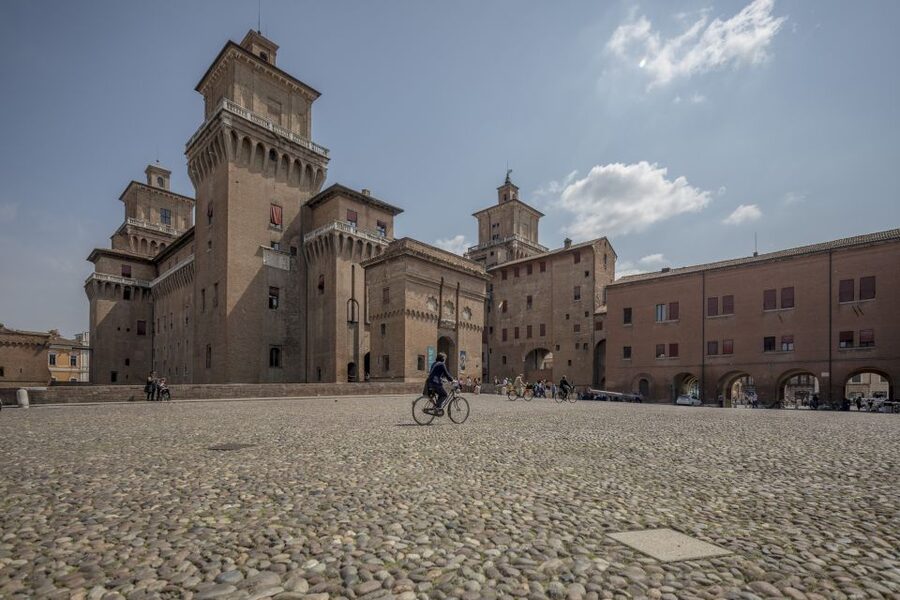
The final stop is Piazza Ariostea, a historic square named for the poet Ludovico Ariosto. His statue rises above the central column, making the literary connection easy to spot.
The square is a fitting end because it combines history with room to pause. The tour finishes under the loggia beside the green area, rather than in another tight street or crowded entrance. After the formal architecture of the castle and palace, the open square gives the walk a more relaxed finish.
Ariostea also reminds you that Ferrara was not only a seat of political power. It was a center of art and literature under the Este court. The poet’s presence connects the physical city with the cultural life that grew around the ducal family.
This final stop can help you plan the rest of your time. From here, you will have a better sense of Ferrara’s northern center and its relationship to the older city. The tour does not list a restaurant stop, shopping time, or museum visit, so you should make your own plans after the walk.
The Italian guide and what the praise means
The live guide is Italian-speaking, and the included audio guide is also in Italian. That detail should guide your booking decision. If you understand Italian, the format gives you both direct commentary and audio support. If you do not, the experience may be difficult to follow, since no other guide language is listed.
The strongest feedback focuses on the guides’ human qualities. The comments describe the guiding as passionate, prepared, empathetic, courteous, precise, professional, and punctual. Maria Chiara is named as an especially good guide. Those details matter because this route depends on explanation. The buildings are attractive on their own, but the connection between the Este family, Rossetti’s plan, and the city’s later religious sites is what gives the walk its shape.
You should not assume Maria Chiara will lead every departure. Her name appears in the feedback, but the booking details do not promise a specific guide. Think of her mention as a useful sign of the standard you may encounter, not a guarantee of assignment.
The rating is 4.6 from 219 reviews, which supports the picture of a well-received tour. I would still keep expectations practical. A guide can explain the exterior of a palace, but cannot turn a two-hour walk into a full museum visit. The value is in the route, commentary, and orientation.
Is $17 good value for two hours?
At $17 per person, this is a reasonably priced introduction to Ferrara. You receive a two-hour walking route, a live Italian-speaking guide, and Italian audio support. The route covers the castle area, Renaissance expansion, Palazzo dei Diamanti, parkland, the Certosa complex, the church interior, and Piazza Ariostea.
The low price is most useful if you are visiting Ferrara for the first time. A good orientation can help you choose which buildings to revisit on your own. It can also prevent you from spending your short stay looking only at the castle and missing the Addizione Erculea.
The price does not cover entrance tickets. That limits the value if you want a tour built around interiors. You will need to budget separately for any paid entry and check what is available on your chosen date.
I see this as a good-value city introduction, not a full cultural package. It works best when you want a guided framework and will explore one or two sites independently afterward. At $17, it is also a fairly low-risk way to add structure to a half-day in Ferrara.
Who should choose this Ferrara walk?
I would choose this tour if you want to understand how Ferrara’s medieval and Renaissance sections relate to each other. The route is especially suitable for:
- First-time visitors who want a clear orientation in two hours.
- Architecture fans interested in Rossetti, Palazzo dei Diamanti, churches, arcades, and Renaissance planning.
- History-minded visitors who want the Este family’s role explained.
- People who prefer walking to coach sightseeing, since the route links the sights on foot.
- Anyone looking for a modestly priced introduction before deciding which attractions deserve separate visits.
- Italian speakers who can make full use of the live guide and audio support.
You might choose something else if you need English commentary, want extensive time inside museums, or dislike outdoor walking in uncertain weather. The listing identifies the activity as wheelchair accessible, but it does not provide detailed information about surfaces, church access, or restroom arrangements. If you need specific access details, confirm them before booking.
The route also suits people who like a varied pace. You move from a castle courtyard to a grand avenue, then to a palace, park, church complex, and open square. It is not a single-theme architectural lecture. Its strength is the connection between different parts of the city.
Booking advice and small practical details
Meet in the courtyard of Estense Castle, near the loggia. Check the available starting times when you book, since the tour runs for two hours and the schedule can affect your plans for castle visits or meals.
Bring an umbrella if rain is possible. This is an outdoor walking route, and the advice is worth taking seriously. Comfortable footwear is also sensible, even though the provided information does not state the exact walking distance.
Free cancellation is available up to 24 hours before the tour for a full refund. You can also reserve now and pay later, which helps if your Ferrara plans are still shifting. These policies add flexibility, but they do not change the need to check the guide language and any separate entrance costs.
Should you book the Estense Castle walking tour?
Book it if you want a concise, affordable introduction to Ferrara’s medieval and Renaissance identity, and Italian commentary works for you. The route is well chosen, the guide feedback is notably strong, and the visit to San Cristoforo gives it more character than a basic castle-and-palace walk.
Skip it if you need English, want several paid interiors included, or prefer to explore entirely at your own pace. For everyone else, $17 is a sensible price for two hours of context, scenery, and orientation. Use the tour to understand Ferrara first, then return to the castle, Palazzo dei Diamanti, or another site that catches your interest.
FAQ
Where does the Ferrara walking tour meet?
The meeting point is in the courtyard of Estense Castle, near the loggia.
How long does the tour last?
The walking tour lasts two hours.
What language is the live tour in?
The live guide speaks Italian.
Is an audio guide included?
Yes. An Italian audio guide is included.
What sights are included on the walking route?
The route includes Estense Castle as the starting point, Corso Ercole I d’Este, Palazzo dei Diamanti, Massari Park, San Cristoforo alla Certosa, and Piazza Ariostea.
Does the tour include an interior visit?
Yes. The tour includes an internal visit to the Renaissance church of San Cristoforo. Entrance tickets are not included.
Is the tour wheelchair accessible?
The activity is listed as wheelchair accessible.
How much does the tour cost?
The listed price is $17 per person.
Can I cancel the tour for a refund?
Yes. You can cancel up to 24 hours in advance for a full refund. You can also reserve now and pay later.
Just added in Italy
- Highlights and hidden gems of Milan Bike Tour★ 5.0 · 491 reviews
- Milan Gourmet Tour: A Premium Tasting Experience by Do Eat Better★ 5.0 · 241 reviews
- Private Milan Food Walking Tour of Brera★ 5.0 · 217 reviews
- Leonardo3 The World of Leonardo: Tickets for the Interactive Exhibition★ 4.0 · 220 reviews
- Da Vinci’s Last Supper and Santa Maria delle Grazie Church Tour★ 4.5 · 218 reviews
- Learn to Cook Italian Recipes with an Italian Chef★ 5.0 · 283 reviews
- La Scala Theatre and Museum guided experience★ 4.5 · 664 reviews
- La Scala Theatre and Museum Tour in Milan With Private Guide★ 3.5 · 384 reviews
Walking Tours, compared.
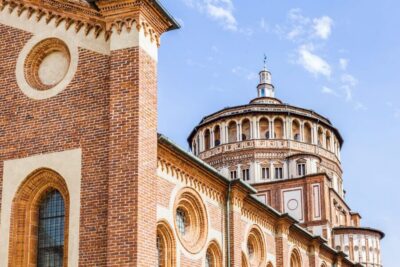
Guided Walking Tour & Last Supper Visit with Ticket
Read our review →
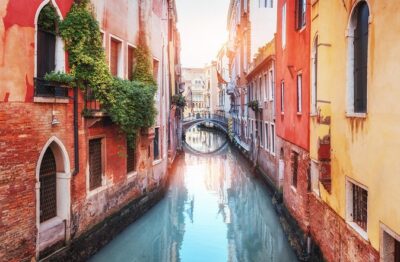
Rialto Bridge & Offbeat Unusual Venice Walking Tour
Read our review →
Private 3 hrs Venice Tour: St Mark’s, Walking tour & Boat tour
Read our review →
Skip the line: Uffizi and Accademia Small Group Walking Tour
Read our review →Browse the lists this tour appears in