
Reviewed · WALKING TOURS
Florence: Renaissance and Medici Tales Guided Walking Tour
Florence’s Renaissance story makes far more sense when you follow it on foot, from the Medici family’s church and palace to the Duomo, Palazzo Vecchio, Ponte Vecchio, and the Uffizi. This tour turns famous façades into scenes of ambition, rivalry, art, and family power. The Medici tales are the main attraction, but the walk also gives you a useful first look at central Florence.
I like the clear route and the way it links people to places. I also like the practical ending, where your guide can point you toward places to eat, drink, and shop. The main consideration is the free-tour pricing model: the booking price is very low, but you should plan to tip the guide, and the walk takes place in all weather.
Key points to know before you book
- Start under the green umbrella at San Lorenzo: The meeting point is in front of the stairs to the main entrance of the Basilica of San Lorenzo.
- Follow the Medici power trail: The route connects San Lorenzo, Palazzo Medici Riccardi, the Duomo, Palazzo Vecchio, and other places tied to the family.
- See Florence’s major sights from the outside: The focus is on stories, symbols, architecture, and orientation rather than interior visits.
- Expect a lively history lesson: Guides including Chiara, Michele, Glenda, Angela, Fabio, and others are praised for clear storytelling and humor.
- Finish near the Uffizi: You receive local suggestions for food, drinks, shopping, and further sightseeing.
- Bring practical walking gear: Wear comfortable shoes, carry water, and dress for rain or sun.
Why Florence makes a good walking classroom
Florence is compact, but its story is not simple. Roman roots, medieval politics, banking wealth, religious power, artistic ambition, and Medici control all meet in a few central streets. I like this tour because it gives those layers an order.
You begin near San Lorenzo and finish outside the Uffizi, moving through the historic center rather than sitting in one square for a lecture. That matters in Florence. A palace is easier to understand when you are standing in front of it, looking at its scale and position in relation to the church, market streets, and civic buildings around it.
The walk lasts about two hours, although the detailed schedule describes roughly two and a quarter hours. That is enough time for a useful introduction without taking up your whole day. You should still expect a steady walk through city streets, with stops for explanation rather than long periods inside museums.
The tone depends on the guide, but the pattern is clear: strong storytelling, answers to questions, and an effort to make the past easy to follow. Chiara is repeatedly praised for making information memorable, while Michele is noted for his humor, enthusiasm, and ability to keep a group interested. Glenda, Angela, Fabio, Ricardo, Antonio, and other guides also receive warm praise for bringing Florence’s past to life.
Other walks around Florence:
- Florence: Guided Walking Tour
★ 4.5 · 3,334 reviews - Skip the line: Uffizi and Accademia Small Group Walking Tour
★ 4.5 · 3,135 reviews - Florence: Guided Walking Tour
★ 4.6 · 1,602 reviews
Meeting at San Lorenzo and entering Medici territory
Look for the green umbrella in front of the stairs leading to the main entrance of San Lorenzo Church. This is a useful meeting point because the Basilica of San Lorenzo gives you an immediate lesson in Florence’s mixed architectural past.
The church combines Romanesque and Renaissance elements, and the surrounding area has long been linked with the Medici family. Your guide uses the basilica as the opening chapter: Florence before the Renaissance, the rise of wealthy merchant families, and the way the Medici turned money into influence.
I find this a better beginning than meeting at a generic street corner. You are introduced to Florence through a real building with political and artistic importance. It also helps you orient yourself near one of the city’s main central areas.
The drawback is that San Lorenzo can be crowded and noisy. If your group is large or the street is busy, staying close to the guide matters. Some guides use a microphone and earpieces, which can help in narrow or crowded streets, but equipment may vary by departure.
Palazzo Medici Riccardi and the family behind the city
From San Lorenzo, the route continues to Palazzo Medici Riccardi. This is where the Medici story becomes more personal and political. You hear how a banking family gained influence without always appearing to rule openly, and how power in Florence rested on alliances, reputation, wealth, and careful control.
The appeal here is not only the building itself. The palace represents the Medici habit of shaping the city through architecture, patronage, and public image. Your guide connects the different generations of the family with the buildings they commissioned or influenced.
I especially like this part for first-time visitors who know the name Medici but not the family’s role in Florence. The tour explains the family as people with rivalries, strategy, ambition, and complicated relationships, not just as distant names in an art textbook.
You should keep your expectations clear: this is a guided exterior visit. The tour does not include entry to Palazzo Medici Riccardi, and the same applies to the major museum sites along the route. If you want to see the interiors, plan separate tickets and time.
The Duomo, Giotto’s Bell Tower, and Brunelleschi’s Dome
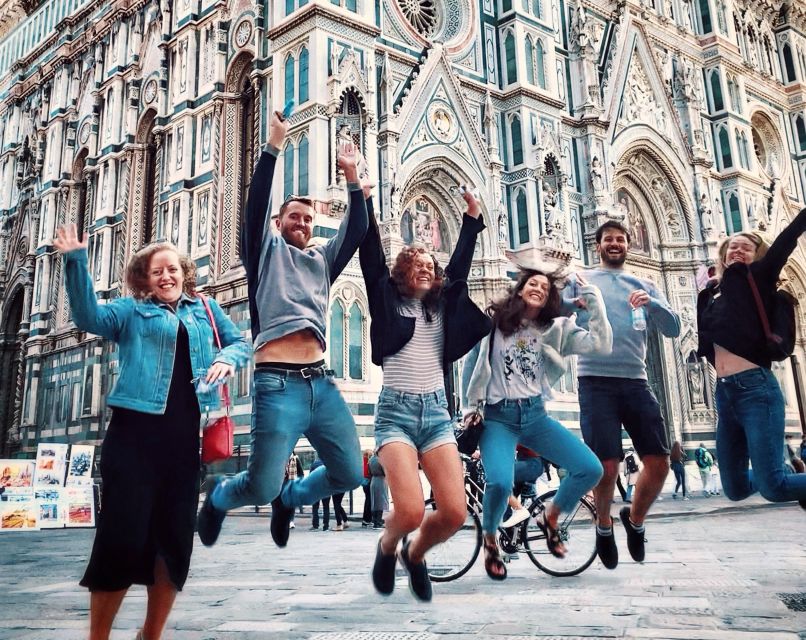
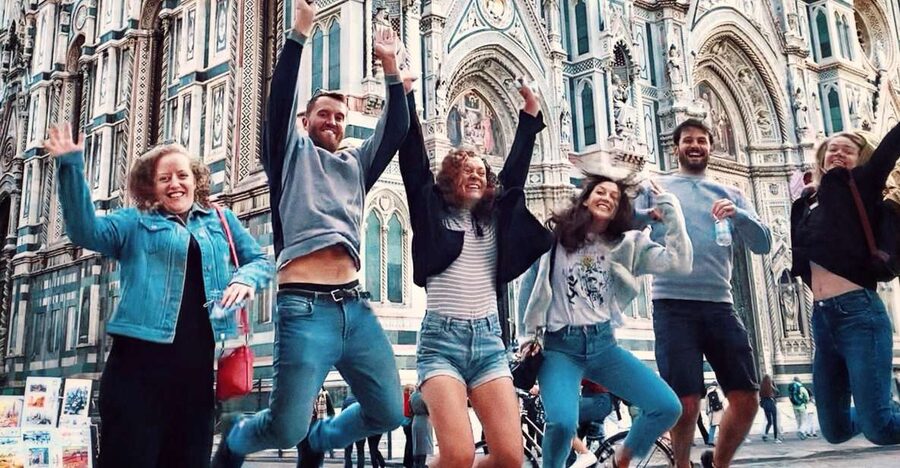
The Florence Duomo complex is the most visually dramatic stop. You see the Cathedral of Santa Maria del Fiore, Giotto’s Bell Tower, and Brunelleschi’s famous dome. Your guide explains how the buildings fit together and why the dome became such a major achievement.
The value here is context. At street level, the Duomo can feel like a single enormous work of art. A guide helps separate the cathedral, bell tower, and dome, then explains the ambition behind their design and construction.
Brunelleschi’s Dome receives special attention, as it should. You learn the story behind the structure and its place in Florence’s artistic and civic identity. The guide also points out symbols and details that are easy to miss when you are busy taking in the scale of the façade.
This stop can be hard for people who want a quiet look. The area is one of Florence’s busiest points, and the open square offers little shade. I suggest bringing water and keeping your phone or camera ready, but listening first. The best part of the stop is often the explanation, not the photograph.
The tour does not take you up into the dome or inside the cathedral. That is an important limit. If climbing Brunelleschi’s Dome is on your must-do list, arrange a separate timed visit. This walk helps you understand what you are seeing, but it is not a dome-access tour.
A few more things to do in Florence
- The Best tour in Florence: Renaissance & Medici Tales – guided by a STORYTELLER
★ 5.0 · 12,316 reviews - Florence: Duomo Cathedral Guided Tour
★ 3.9 · 5,970 reviews - Uffizi Gallery Small Group Tour with Guide
★ 4.5 · 4,923 reviews - Florence: Accademia Gallery Guided Tour
★ 4.6 · 4,156 reviews
Dante, symbols, and the stories beneath the façades
The stop connected with Dante adds a literary layer to the walk. The House of Dante helps place Florence in the world of medieval rivalries, civic conflict, and the life of one of Italy’s most important writers.
The guide also draws attention to symbols around the city. These may appear on buildings, coats of arms, sculptures, or decorative details. Learning how to read them changes the way you walk through Florence afterward. You begin to notice that the city is not simply decorated. It is full of messages about identity, faith, family, politics, and status.
This is one of the tour’s most useful ideas because it gives you a skill you can use after the group has ended. I prefer a guide who points out what to look for rather than simply listing dates, and this route is designed around that approach.
The Dante stop is brief and part of a wider walking circuit. You should not expect a full literary tour or an extended museum visit. Instead, it works as a short connection between Florence’s medieval past and its later artistic fame.
Palazzo Vecchio, Piazza della Signoria, and public power
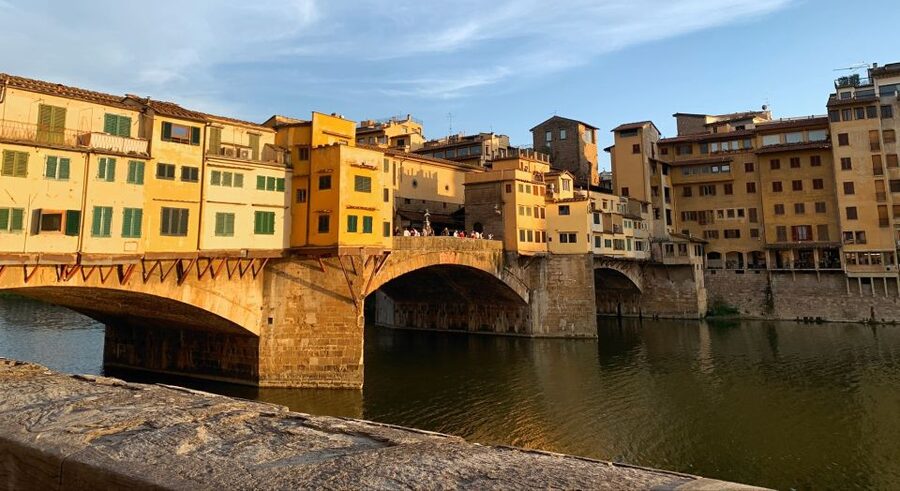
At Palazzo Vecchio and Piazza della Signoria, the story shifts from private family influence to public government. This is where the tour shows how Florence presented power in open view.
Your guide explains the importance of the palace, the square, and the sculptures around them. The setting helps you understand the tension between the Medici and Florence’s civic institutions. The route also shows how art was used to send political messages to anyone walking through the heart of the city.
The nearby Loggia dei Lanzi adds another strong stop. Its open-air sculptures are easy to visit without a ticket, and the setting makes it possible to study major works at street level. Your guide helps you look beyond the obvious pose or subject and consider why these works were placed here.
I like this stretch because it gives you a clean contrast with the Medici palace. San Lorenzo and Palazzo Medici Riccardi suggest family power. Piazza della Signoria presents authority as civic theater. Seeing both in one walk makes Florence’s political history easier to grasp.
The square is also a practical place to pause, but it can be crowded. Listen for the guide’s meeting instructions, especially if you stop to take photos. Large groups can spread out quickly in this part of the city.
Ponte Vecchio and the walk toward the Uffizi
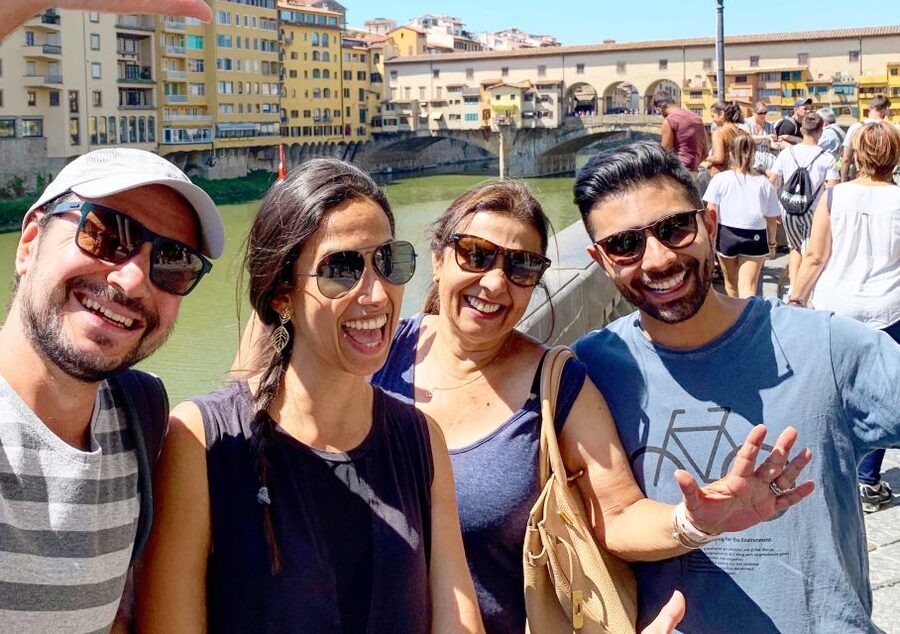
The route continues to Ponte Vecchio, Florence’s famous bridge over the Arno. The bridge is one of the city’s most recognizable sights, but the guide’s value is in explaining its role in the city rather than simply pointing it out.
You hear about the bridge’s place in Florence’s commercial and Medici story, then continue toward the Uffizi. The walk gives you a useful sense of how close many major sights are to one another. That orientation can save time later, especially if you plan to return for museum visits, river views, or shopping.
The bridge area is usually a poor place for long explanations if the street is packed, so stay near the guide and do not expect a quiet, extended stop. Still, it is a fitting late point on the route because it brings together commerce, architecture, politics, and the Arno.
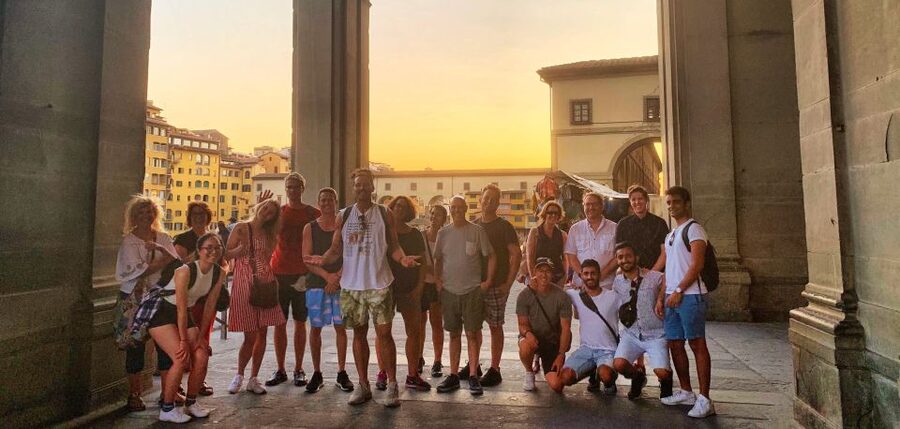
The tour finishes outside the Uffizi Gallery. This is a sensible ending. You are near one of Florence’s essential museums, yet you are free to continue with your own plans. If you have a Uffizi reservation, check the time before booking the walk. The tour does not include gallery entry.
The guides make the difference
A walking tour lives or dies by its guide. Here, the most praised quality is not the number of dates delivered. It is the ability to turn history into a story that works for adults, teenagers, and people arriving with little background.
Chiara is praised for clear explanations, memorable tales, patience, and skill at moving a group through narrow streets. Michele receives repeated praise for humor, warmth, excellent English, and his ability to connect Florence’s history with practical advice. Glenda is described as thorough and engaging, while Angela is noted for putting the Medici story into a wider view of Florence’s development.
Fabio, Ricardo, Antonio, Manuel, Gabriella, Autumn, and other guides are also named in strong feedback. That tells you the experience is not tied to one personality, but your exact style will depend on who leads your departure.
English and Spanish are offered. If English is important to you, confirm the language when selecting your time. The guide answers questions, and several people appreciated the chance to ask about subjects beyond the main route.
Price, tipping, and what you really receive
The advertised price is only $2.36 per person, which makes this look almost free. It follows the free-tour model: you reserve a place at a low cost and then tip the guide based on the experience.
You should not treat $2.36 as the complete expected cost. One person described paying €4.90 and then tipping according to satisfaction, while another advised bringing cash because a significant tip is expected. The exact amount is your choice, but I would budget for a proper tip rather than assume the small booking price covers the guide’s work.
For the money, the value is strong if you want orientation and historical context. You are not paying for museum admission, a dome climb, or transportation. You are paying for a guided introduction to the city’s main central sights and a chance to ask questions while you walk.
The flexible cancellation policy allows cancellation up to 24 hours before the tour for a full refund, and you can reserve now and pay later. These details are useful if your Florence schedule is still changing, but the main financial point remains simple: plan for the tip.
Who should take this Florence walk
I would choose this tour on my first day in Florence. It gives you a map in your head, explains the major names, and helps you decide which buildings deserve a later interior visit.
It suits:
- First-time visitors who want a clear introduction
- Families with teenagers who need stories rather than long lectures
- People interested in the Medici, Renaissance art, Dante, and architecture
- Visitors who want food, drink, and shopping suggestions from a local guide
- Anyone who prefers a short walking tour to a full-day commitment
It may be less suitable if you want extensive interior access, a specialist art lecture, or a quiet private visit. The route covers many famous places, so each stop is an overview. You will see a lot, but you will not study every building in detail.
Wear comfortable shoes. Bring water, a camera, and clothing suited to the forecast. The tour runs rain or shine, and Florence’s stone streets are not the place for flimsy footwear on a wet day. The route is wheelchair accessible, though crowded streets and group movement can still affect comfort.
Should you book it?
Book this tour if you want Florence’s famous sights to come with a storyline. The best parts are the Medici connections, the explanation of Brunelleschi’s Dome, the attention to civic symbols, and the practical advice at the end.
I would especially recommend it early in your stay. You finish near the Uffizi with a better sense of where you are and what you want to see next. Just remember that the low price works through tipping, the tour is outdoors, and the major interiors require separate plans.
FAQ
Where does the Florence walking tour begin?
Meet at Florence Free Tour-Tale, under the green umbrella in front of the stairs leading to the main entrance of San Lorenzo Church.
How long does the tour last?
The activity is listed as two hours, while the detailed route describes approximately two and a quarter hours.
Which languages are available?
The tour is offered in English and Spanish.
Is the tour wheelchair accessible?
Yes, the activity is listed as wheelchair accessible.
Does the tour enter the Duomo, Uffizi Gallery, or other buildings?
The provided details describe guided stops at the exteriors and do not include admission to the Duomo, Uffizi Gallery, Palazzo Medici Riccardi, or other interiors.
What should I bring?
Bring comfortable shoes, water, a camera, and clothing suitable for the weather.
What happens if it rains?
The tour takes place rain or shine, so dress for the forecast and be ready for outdoor walking.
Just added in Florence
- Wine Tasting Experience in Ponte Vecchio: Best Tuscany selection!★ 5.0 · 197 reviews
- Walking Food Tour of Florence with Tastings and Wine★ 5.0 · 518 reviews
- Wine Experience In Chianti Hills from Florence★ 4.5 · 195 reviews
- Florence Sunset Food Tour with Wine & Dine at a Tuscan farmhouse★ 5.0 · 194 reviews
- Val d’Orcia Brunello Wine Tour with Montalcino and Montepulciano★ 4.5 · 359 reviews
- Uffizi and Accademia Small Group Guided Tour★ 4.5 · 449 reviews
- Uffizi Gallery Timed Entry Admission Tickets★ 4.0 · 392 reviews
- Uffizi Gallery Small Group Tour with Guide★ 4.5 · 879 reviews
Walking Tours, compared.

Guided Walking Tour & Last Supper Visit with Ticket
Read our review →
Rialto Bridge & Offbeat Unusual Venice Walking Tour
Read our review →
Private 3 hrs Venice Tour: St Mark’s, Walking tour & Boat tour
Read our review →
Skip the line: Uffizi and Accademia Small Group Walking Tour
Read our review →Browse the lists this tour appears in