
Reviewed · MUSEUMS
Venice: Leonardo Da Vinci Museum Entrance Ticket
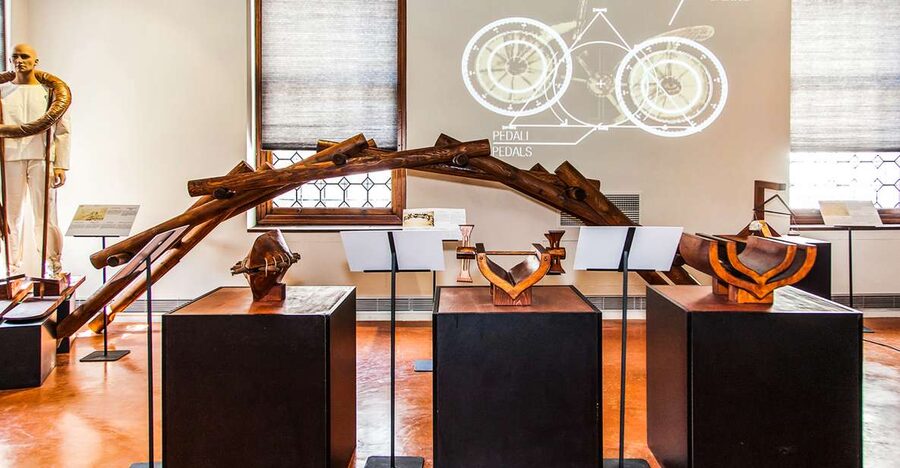
Leonardo da Vinci’s genius is easiest to understand when you can touch the ideas. At this small museum near San Rocco, you turn cranks, test wooden structures, study flight machines, and see how his sketches became working models. I like the hands-on design and the way it shows Leonardo as an engineer and anatomist, not only the painter of the Mona Lisa.
I also like the price, about $10 per person, and the flexible visit time. You can see the main displays in 30 to 60 minutes, or take closer to 90 minutes if you read everything and try each puzzle. The tradeoff is size: this is a compact exhibition, not a grand museum, and it can feel crowded when several families gather around the same machines.
Key points to know before you go
- Four themed sections: Explore inventions grouped under Earth, Water, Fire, and Air.
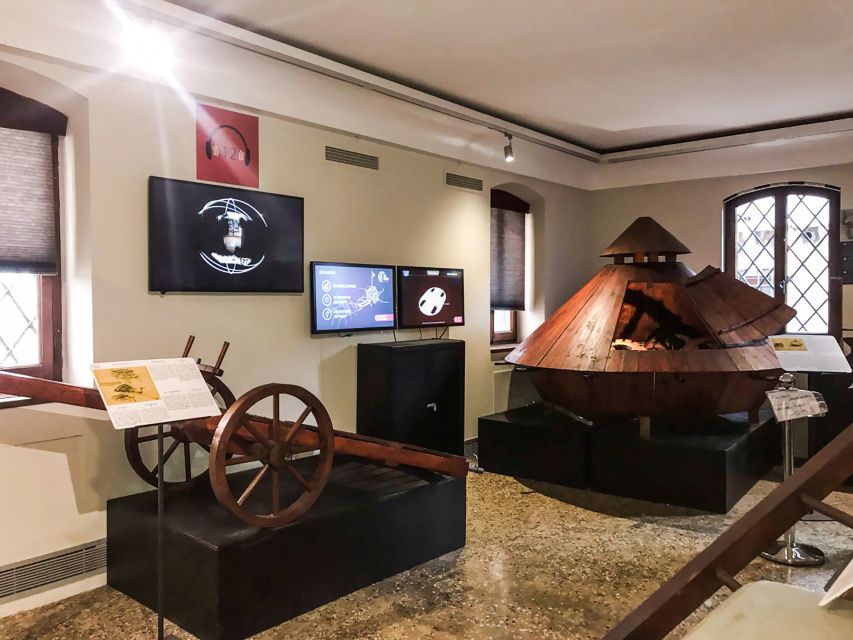
- Hands-on machines: Many reproductions can be operated, making the science easier to grasp.
- Compact visit: Allow 30 to 60 minutes for a quick look, or up to 90 minutes for a careful visit.
- Good family stop: Children and adults can work on puzzles, wooden structures, mirrors, and drawing activities.
- Useful location: Find it at Campo San Rocco, across from the Scuola Grande di San Rocco and behind the Frari church.
- Self-guided format: There is no guided tour, but explanations appear in Italian, English, French, German, Spanish, and Russian.
Why this small museum works in Venice
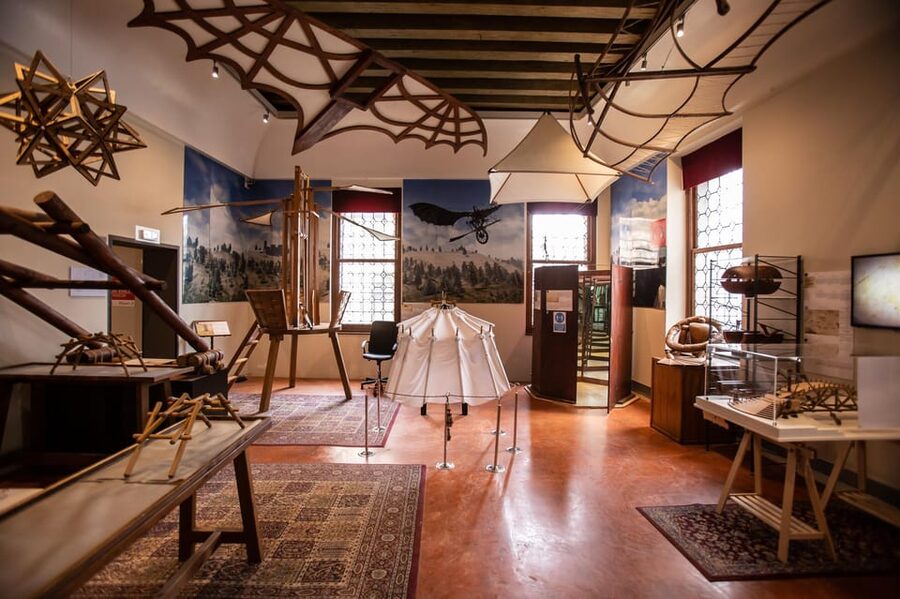
Venice is packed with churches, palaces, paintings, and narrow streets. After a morning of looking up at ceilings and facades, a museum where you can operate a machine offers a welcome change of pace.
The Interactive Leonardo da Vinci Museum focuses on the practical side of Leonardo’s work. You see how he studied movement, water, flight, construction, and the human body. His paintings matter here, but they share the room with diagrams, mechanical ideas, and models that invite you to test them.
That focus gives the museum a clear purpose. You are not simply looking at reproductions behind glass. You are asked to work out how a device moves or why a design might function. The experience suits curious adults, but it is especially useful for families because children can learn through action rather than long blocks of text.
The museum has earned a strong overall rating, and the reason is easy to understand. It offers an affordable, manageable stop that does not require half a day. You can fit it between the Frari church, San Polo, and other central sights without rebuilding your schedule.
Other museums and galleries in Venice:
- Venice: St. Mark Basilica Ticket, Audioguide+History Gallery
★ 3.9 · 4,780 reviews - Venice’s Best: Basilica, Doge’s Palace, Gondola & History Gallery
★ 4.5 · 2,478 reviews - Venice: Vivaldi’s Four Seasons Concert & Music Museum Visit
★ 4.8 · 2,065 reviews
Finding the museum at Campo San Rocco
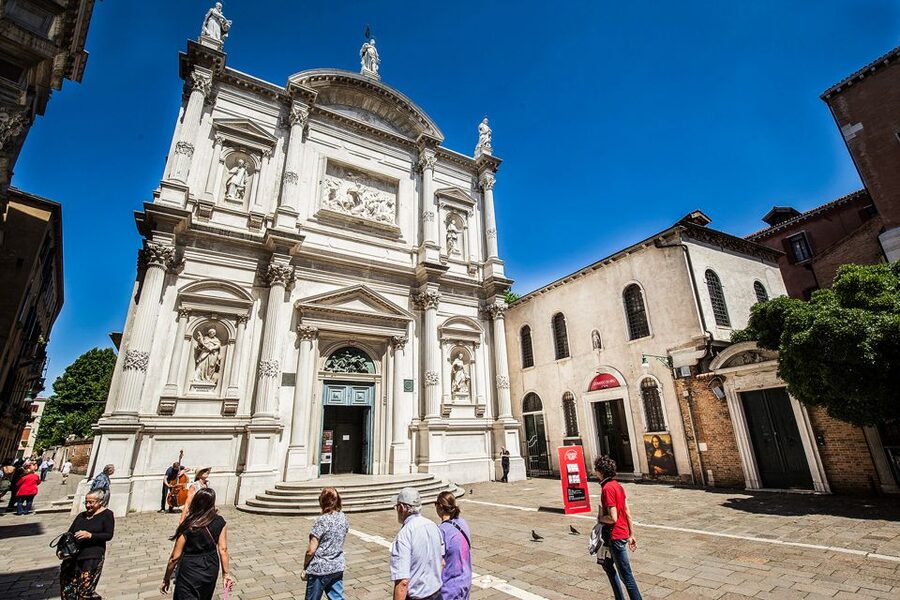
The meeting point is also the museum entrance: Leonardo da Vinci Interactive Museum, Campo San Rocco, 3052 Venezia. Look for the building called the Scolette di San Rocco, across from the Scuola Grande di San Rocco and behind the Church of the Frari.
This detail matters because the booking is for admission, not for a walking tour. There is no guide waiting in a square to lead you elsewhere. Present your ticket at reception and enter.
The area makes a good pairing with nearby sights. The Scuola Grande di San Rocco is known for its Tintoretto paintings, while the Frari is one of Venice’s major churches. I would visit one of those grand interiors first, then come here for a more active hour.
The museum is not presented as a huge institution with long galleries. It is a small, modern exhibition in a historic part of the city. That compact size is useful when you have limited time, though it also means that the busiest machines can create a bottleneck.
Earth, Water, Fire, and Air
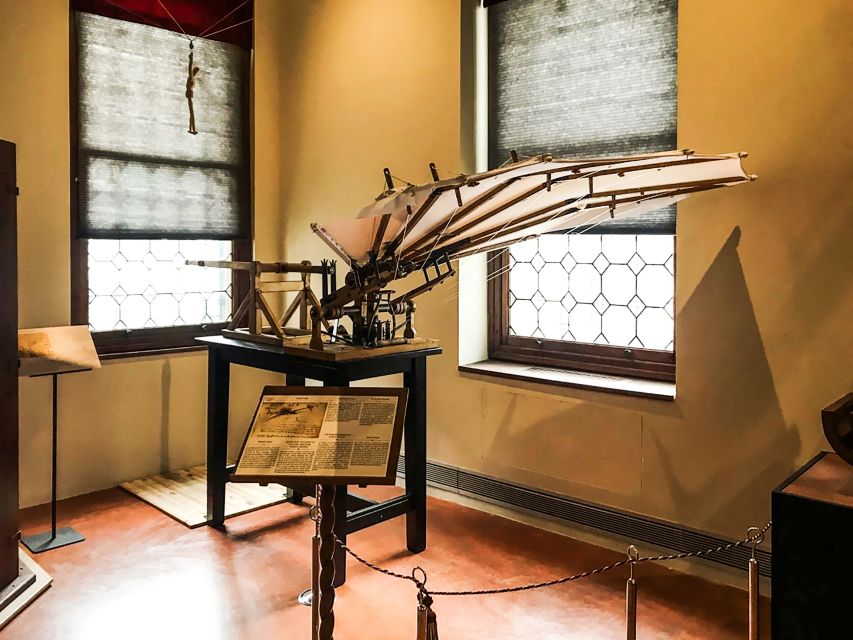
The exhibition is arranged around four elements. This gives the visit a simple path and connects Leonardo’s ideas to the natural forces he studied.
The Earth section deals with building, movement, and mechanical design. Wooden construction activities let you see how balance and structure work. One of the popular challenges is a wooden bridge puzzle. If you want to complete it, having a second person helps.
These activities may look simple, but they explain an important part of Leonardo’s thinking. He did not separate art, mathematics, engineering, and observation into tidy modern subjects. A bridge, a weapon, a machine, or a flying device all began with careful study of forces and materials.
The Water section shows how Leonardo thought about currents, channels, pumps, and movement. Working models make the subject less abstract. Instead of only reading about his interest in water, you can watch a mechanism respond when you operate it.
The Fire section presents machines linked to power and mechanical action. Some reproductions are built for visitors to handle, so you get a basic sense of how gears and moving parts cooperate.
The Air section is a natural favorite for anyone interested in flight. Leonardo studied birds and imagined ways people might rise into the air. His machines were far ahead of practical aviation, but the models help you see the questions he was asking.
The displays are reproductions rather than original Leonardo manuscripts or machines. They are rebuilt according to his designs, with changes made where the original proportions would not work for a modern exhibit. That distinction is worth keeping in mind. You are seeing interpretations based on his drawings, not surviving Renaissance machinery.
The machines are the main event
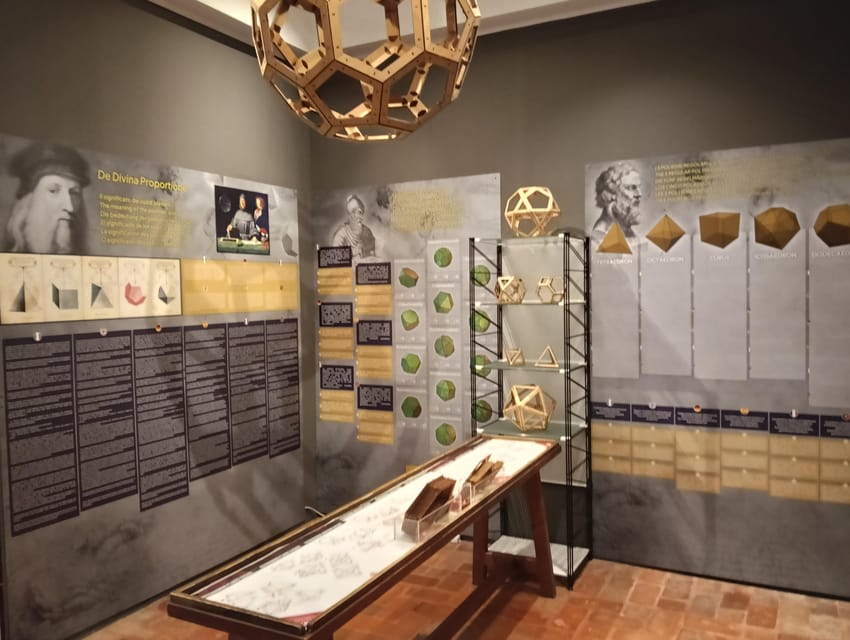
The strongest part of this museum is the chance to operate the inventions. You may turn a handle, move a lever, test a structure, or examine the motion of gears.
This matters because Leonardo’s sketches can be difficult to read. A drawing of a complicated machine may look beautiful but remain puzzling. A working model gives you the missing link between the page and the physical idea.
I would not rush through the machines. Try to understand what each one is meant to do before moving on. The museum is at its best when you slow down and let a child, teenager, or curious adult test an exhibit.
You may also find that some activities work better with two people. The wooden bridge is one example. A second person can hold, assemble, or test parts while you work out the design.
The hands-on approach is not limited to young children. Adults can enjoy the puzzles because they require a little patience and trial and error. The exhibit does not assume that an adult has a technical background. You learn by trying.
One practical warning: hands-on displays need considerate use. Children should be supervised so that the machines remain available to everyone and are not treated as toys. That is especially important in a small space, where one rough interaction can affect the next person’s visit.
A few more things to do in Venice
- Venice: Doge’s Palace Reserved Entry Ticket
★ 4.6 · 42,716 reviews - Venice: La Fenice Opera House Entry Ticket with Audio Guide
★ 4.6 · 11,742 reviews - Venice: St. Mark’s Basilica & Doge’s Palace Tour with Ticket
★ 4.7 · 3,375 reviews - Venice: Palazzo Contarini del Bovolo Entrance Ticket
★ 4.3 · 1,991 reviews
Leonardo the anatomist and artist
The machines get most of the attention, but the museum also explains Leonardo’s work in anatomy. His studies of the human body show the same habit of close observation that shaped his engineering.
This section helps correct the narrow image of Leonardo as simply a painter. You see how his interest in muscles, bones, proportion, and movement informed both his art and his scientific work.
High-resolution, backlit reproductions of his major paintings add an artistic side to the visit. They are not a substitute for seeing an original in a major collection, but they let you study details in a bright, accessible format.
The combination of anatomy, art, and invention is one of the museum’s best teaching points. Leonardo’s interests were connected. The way a shoulder moves could matter to an artist drawing a figure and to an engineer thinking about motion.
Short explanations and multimedia material provide background on his life and work. The text is available in Italian, English, French, German, Spanish, and Russian. That makes the visit easier for international families, and the visual demonstrations carry much of the experience even if you do not read every panel.
A film gives a concise account of his life. If you are visiting with children, it can provide a useful pause between the more active exhibits. If you are visiting alone and want to keep moving, you can spend less time here and focus on the machines.
Puzzles, mirrors, and activities for children
This is a museum where children have something to do. iPads let them draw in a Leonardo-inspired way, while puzzles and building activities turn the visit into a shared project.
The mirror box on the ground floor is another memorable feature. It lets you see reflections from different angles, creating a quick visual lesson in perspective and symmetry. It is one of those small activities that can hold the attention of children while adults read nearby.
The exhibition also includes a 360-degree mirror room. This is a good example of the museum’s general approach: use a simple physical experience to make an idea stick.
Families should plan for a little waiting at popular stations. Because the museum is compact, you cannot always move around a group using the same machine. A visit with children may last around an hour, while families who try everything and watch the film may stay closer to 90 minutes.
For teenagers, the museum can work better than a traditional art gallery because the displays give them a job. They can test, build, compare, and solve. One family found it especially appealing as a hands-on museum stop during a longer Italy trip.
How long should you plan?
You can see the museum quickly in about 30 minutes if you move through the rooms and sample only a few machines. Give it 60 minutes for a more satisfying first visit.
Allow 90 minutes if you are traveling with children, want to try most activities, watch the film, and read the displays. The museum is open for a full day of validity, so you are not locked into a long scheduled tour. Check the available starting times when booking, and remember that the last entry is one hour before closing.
The flexibility is useful in Venice. You can visit after lunch, before dinner, or during a hot part of the day when an indoor activity sounds better than another walk over sunlit stone.
Several visitors found the museum pleasantly calm at quieter times, including a Friday afternoon. Still, the exhibition’s size means that crowd levels can change the feel of the visit. If you want more room at the machines, avoid treating it as a rushed stop at the busiest part of the day.
Is the $10 ticket good value?
At about $10 per person, this is a reasonable purchase for a compact Venice activity. The value depends on your expectations.
If you want original masterpieces, a major research collection, or several hours of galleries, this is not the right ticket. The museum displays reproductions and focuses on interaction rather than rare objects.
If you want a short indoor visit that gives you something to do, the price works well. A couple or family can spend an hour learning about art, science, anatomy, and machines without committing to a long formal tour.
Children under three enter free. The bookshop offers a 10 percent discount with admission, and it sells Leonardo-themed gifts and books. That can be useful if you want a small educational souvenir rather than another generic Venice item.
Photography is allowed inside, so you can keep pictures of the machines and activities. Be mindful of other people using the exhibits, especially in the tighter rooms.
The ticket also includes free cancellation up to 24 hours before the visit and a reserve now, pay later option. Those terms help if your Venice schedule depends on weather, train times, or other timed sights.
Who should visit, and who should skip it?
I would recommend this museum to families with school-age children, teenagers, and adults who enjoy puzzles or practical science. It is also a good choice if you want to understand Leonardo beyond the famous paintings.
It suits a short Venice stay because the visit is manageable. You can pair it with the Frari church and the Scuola Grande di San Rocco, then continue through San Polo.
You may want to skip it if you are looking only for original art or expect a large museum with a full day of material. The exhibition is compact, and some visitors will feel that they have seen the main sections in under an hour.
Children under 15 must enter with an adult. That rule fits the exhibition because many activities work best when an adult helps explain, supervise, or solve them.
Should you book the Leonardo da Vinci Museum?
Book it if you want an affordable, self-guided museum with working reproductions and activities for different ages. The best reason to come is not simply to admire Leonardo’s reputation. It is to see how his questions about water, flight, anatomy, building, and movement can be tested with your own hands.
I would plan for one hour, add time if you are with children, and visit when you can give the machines some attention. Bring a second person for the wooden bridge puzzle, scan the audio guide QR code at the front if it is offered during your visit, and remember that there is no guide-led tour.
For a small museum, it packs in a useful lesson: Leonardo was not only a painter. He was a practical thinker who kept asking how the world worked.
FAQ
Where is the Leonardo da Vinci Museum in Venice?
The museum is at Campo San Rocco, 3052 Venezia, in the Scolette di San Rocco building. It is across from the Scuola Grande di San Rocco and behind the Church of the Frari.
Is this a guided tour?
No. The ticket provides entry to a self-guided interactive museum. There is no tour guide to meet at the entrance.
How long does a visit usually take?
You can see the museum in about 30 to 60 minutes. If you try most of the activities, watch the film, and read the displays, plan on about 90 minutes.
Is the museum suitable for children?
Yes. The exhibition includes hands-on machines, puzzles, wooden structures, iPad drawing activities, and mirror displays. Children under 15 must enter with an adult.
Do children under three need a ticket?
No. Children under three years old receive free admission.
Are the machines original Leonardo da Vinci inventions?
The machines are reproductions rebuilt according to Leonardo’s designs. Changes may have been made when the original proportions were not suitable for the exhibit.
What languages are used in the museum?
Descriptions and multimedia material are available in Italian, English, French, German, Spanish, and Russian.
Can I take photos inside?
Yes. Photography is included as part of the museum visit.
Is there a shop?
Yes. The museum has a bookshop with Leonardo-themed gifts and souvenirs. The admission includes a 10 percent discount on bookshop purchases.
What happens if I need to cancel?
You can cancel up to 24 hours before the visit for a full refund. A reserve now, pay later option is also available, subject to the booking terms.
Just added in Venice
- St Mark’s Basilica and Doge’s Palace Priority Entry Ticket★ 4.2 · 885 reviews
- Venice: Lords of the Night Prison’s Palace Cells & Tortures★ 4.0 · 1,067 reviews
- Venice: Hard Rock Cafe with Set Menu for Lunch or Dinner★ 4.4 · 1,102 reviews
- Venice: Doge’s Palace and St. Mark’s Basilica Guided Tour★ 4.6 · 458 reviews
- Venice: Walking tour, Doge Palace, & St. Mark’s Basilica★ 4.5 · 884 reviews
- Punta Sabbioni: Murano, Burano & Torcello Guided Boat Tour★ 4.3 · 236 reviews
- Murano: Glass Blowing Demonstration and Artistic Glass Gift★ 4.6 · 507 reviews
- Murano: Glass Blowing Demonstration with Optional Drinks★ 4.5 · 294 reviews
Museums, compared.
Vatican: Museums & Sistine Chapel Entrance Ticket
Read our review →
Vatican Museums & Sistine Chapel Tour with Optional Basilica
Read our review →
Vatican Museums, Sistine Chapel & St Peter’s Basilica Guided Tour
Read our review →
Skip-The-Line Uffizi Gallery Timed Entry Ticket
Read our review →
Vatican Museums & Sistine Chapel Skip-the-Line Entry Ticket
Read our review →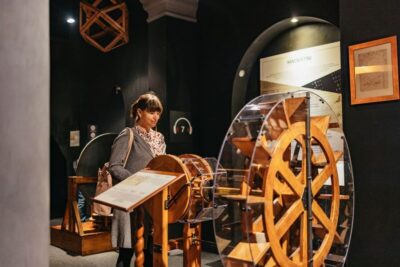
Browse the lists this tour appears in