
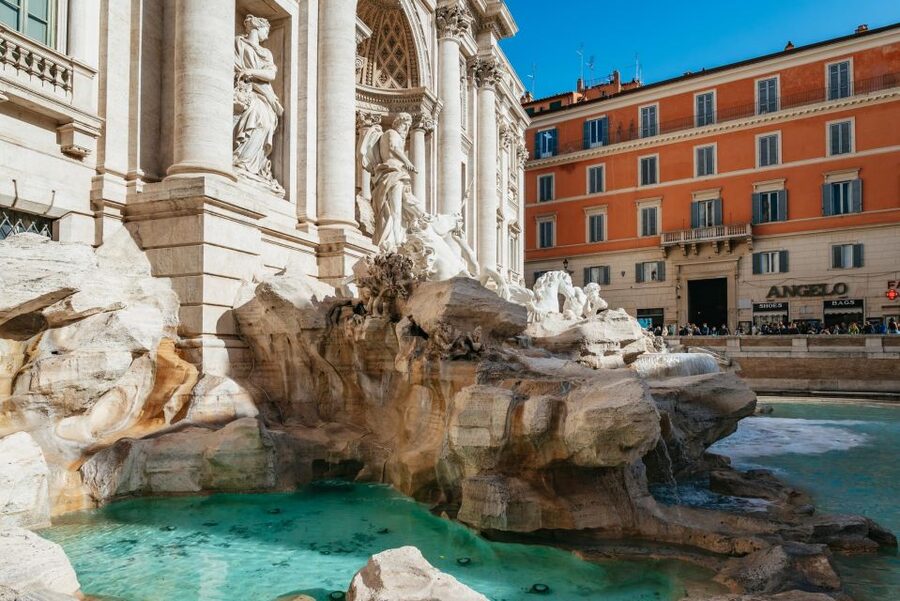
Reviewed · PANTHEON & TREVI FOUNTAIN TOURS
Rome: Trevi Fountain and Underground Guided Tour
Nine meters below Rome’s crowded streets, a working 2,000-year-old aqueduct still carries water toward the Trevi Fountain. That underground connection is the most interesting part of this short tour, though you should know that the archaeological site is nearby rather than directly beneath the fountain itself.
I like the clear two-part format: first, a focused explanation of the fountain, then a visit to Vicus Caprarius. I also like the short 40-minute length, which fits neatly into a day of sightseeing and gives you a cool break from Rome’s heat. The drawback is price. At $41 per person, this is not cheap for a brief visit, especially since the restricted basin area requires another €2.
Key points to know before you book

- The underground site is Vicus Caprarius, a nearby archaeological excavation, not a secret passage beneath the fountain basin.
- The aqueduct still functions, helping supply water to the Trevi Fountain above.
- The tour lasts 40 minutes, split into roughly 20 minutes at the fountain and 20 minutes underground.
- Guides make the difference, with Mario, Francesca, Vito, and Anestis among the guides praised for humor, patience, and strong storytelling.
- The fountain’s restricted basin area is not included, and access costs €2 extra.
- The tour is not suitable for wheelchair users, and stairs or uneven archaeological surfaces may make the underground visit difficult.
Meeting your guide beside the Trevi Fountain

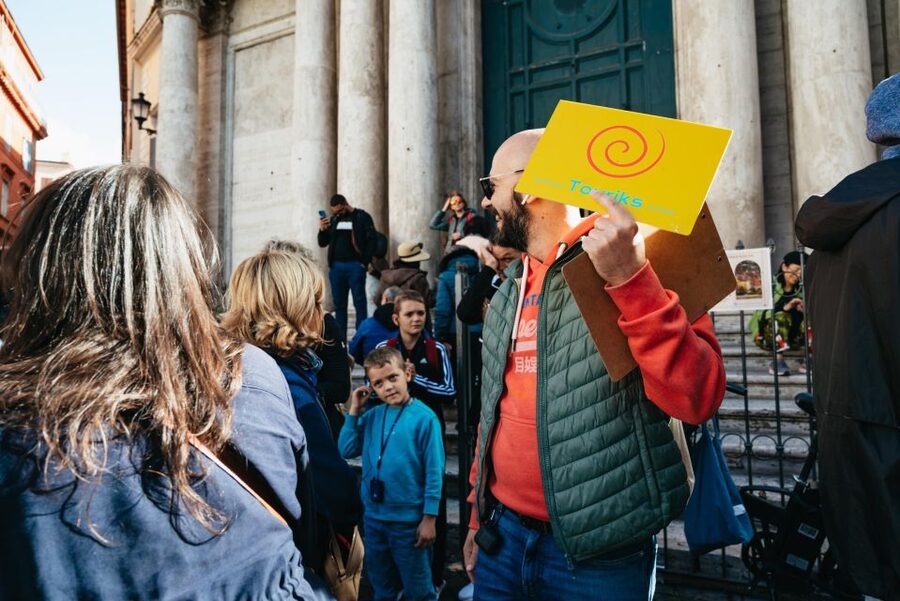
Your meeting point is Via del Lavatore 49, in front of the Santi Vincenzo e Anastasio a Fontana di Trevi Church. The church sits on the left corner of Piazza di Trevi. Look for a yellow TOURIKS label.
That last detail matters. Trevi Square can be crowded, and several tour groups gather around the fountain. Some visitors have had trouble spotting the correct guide in the crowd, while others received a call or text to help them find the meeting point. I would arrive early, stand near the church entrance, and keep an eye out for the yellow sign rather than waiting beside the fountain itself.
The tour includes headsets, which are useful here. The fountain area is loud, packed, and full of people taking photos. A headset lets you listen without standing shoulder to shoulder with the guide.
Guides vary, but the strongest reports name Mario and Francesca often, along with Vito and Anestis. You can expect a live guide in English, French, Spanish, Portuguese, German, or Italian. The style may differ from one guide to another, but the best guides keep the talk moving and adjust their explanations for children and adults alike.
More Underground Tours in Rome
- Colosseum: Underground and Ancient Rome Tour
★ 4.7 · 12,691 reviews - Rome: Crypts and Catacombs Underground Tour with Transfers
★ 4.6 · 5,341 reviews - Expert Guided Tour of Colosseum Arena OR Underground, and Forum
★ 4.5 · 5,041 reviews
Reading the Trevi Fountain before going underground
The first half of the tour focuses on the fountain itself. You get about 20 minutes of background on its origins, design, mythological figures, and dramatic stone scenes.
Most people first encounter Trevi Fountain as a grand photo stop. The guided explanation gives you a better way to read it. Instead of seeing only a huge wall of white stone and water, you learn how the figures, movement, and carved scenes fit together. The guide also explains the relationship between the fountain and the aqueduct that feeds it.
This is a quick presentation, not a full art-history lecture. That works well if you want orientation before moving on, but it may feel rushed if you hoped for a long look at every sculpture. The tour is designed to keep you moving through a crowded public square.
The public piazza offers the main viewing point. The restricted basin area, closer to the fountain, is not part of the standard price. You may pay an additional €2 for access, but the tour itself does not include that fee. The guide leads you to a strong view from the public level, so you can still see the full fountain without paying extra.
One practical point is easy to miss: if you want time at the fountain itself, plan to return after the tour. The tour finishes back at Via del Lavatore 49, and some visitors have found the crowd difficult to cross after leaving the underground site. If the fountain is a major goal, take your photos and enjoy the public view before or after the guided portion.
Vicus Caprarius and Rome nine meters below street level
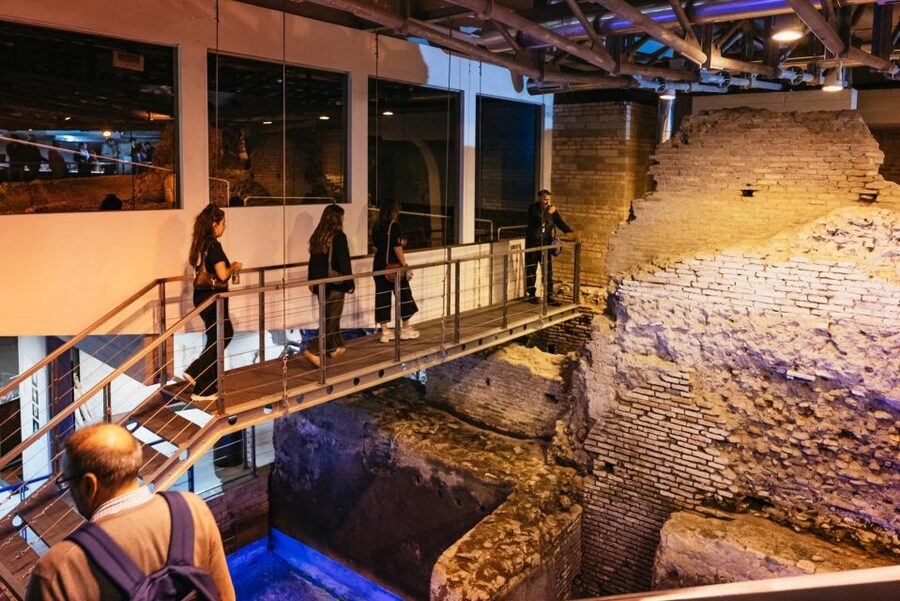
The second half takes you to Vicus Caprarius, an archaeological site about nine meters below modern Rome. This is where the tour earns its place in your schedule.
The excavation reveals the remains of an imperial Domus, or large Roman house, along with water channels and other traces of earlier construction. You can see how Rome was built up in layers, with modern streets sitting above ancient walls, rooms, and infrastructure.
The site is not the fountain’s basement. That distinction is important. The aqueduct supplies water to the fountain, but the excavation itself is a separate archaeological area nearby. If you book expecting to stand beneath the fountain basin, you may feel misled. If you arrive expecting a related Roman water system and an underground excavation, the visit makes much more sense.
The aqueduct is the star attraction. You can see part of the 2,000-year-old system and learn that it remains fully functioning. For anyone interested in Roman engineering, this is more than a dark room with old stones. It shows how ancient infrastructure still affects the city you see above ground.
I especially like this part because it changes the way you look at the fountain. Above ground, the fountain is theatrical and decorative. Below ground, the focus shifts to practical Roman engineering, water management, homes, and repeated construction over many centuries.
Why the short format works, and where it falls short
At 40 minutes, this is a compact tour. The itinerary gives roughly 20 minutes at the Trevi Fountain and 20 minutes at Vicus Caprarius. You will not spend half a day studying the site, and that is useful if your Rome schedule is already full.
The short length also makes this a good choice for families. Guides have kept children interested by offering simple facts first and adding more detail for adults. The format has enough movement to avoid a long lecture, while still giving you a clear account of the fountain and underground ruins.
The tradeoff is depth. You will get an introduction rather than an extended archaeological visit. If you want time to stop at every wall, ask many questions, or study the fountain’s artistic program in detail, you may find the pace brisk.
The price deserves a careful look. At $41, the tour costs more than simply viewing the fountain from the square. The underground entrance, guide, and headsets are included, and you gain access to a site you might not find easily on your own. Still, the entire experience lasts only 40 minutes, so the value depends on how much you care about guided context.
I would consider it fair value for someone who wants a focused explanation and does not want to arrange the archaeological visit alone. It is less convincing for someone who mainly wants fountain photos or a long, leisurely tour. One visitor described it as expensive for the amount of time, while still feeling the experience was worthwhile. That is a fair assessment.
Other landmarks within a walk in Rome:
- Rome: Pantheon Fast-Track Ticket and Official Audio Guide
★ 4.3 · 21,008 reviews - Pantheon Reserved Entry Ticket with Audio Guide
★ 4.0 · 4,486 reviews - Rome: Pantheon Timeless Marvel Guided Tour with Entry Ticket
★ 4.9 · 4,002 reviews - Rome: Pantheon Priority Entry Ticket & Audio Guide App
★ 4.1 · 3,234 reviews
Guides who turn old stone into a story

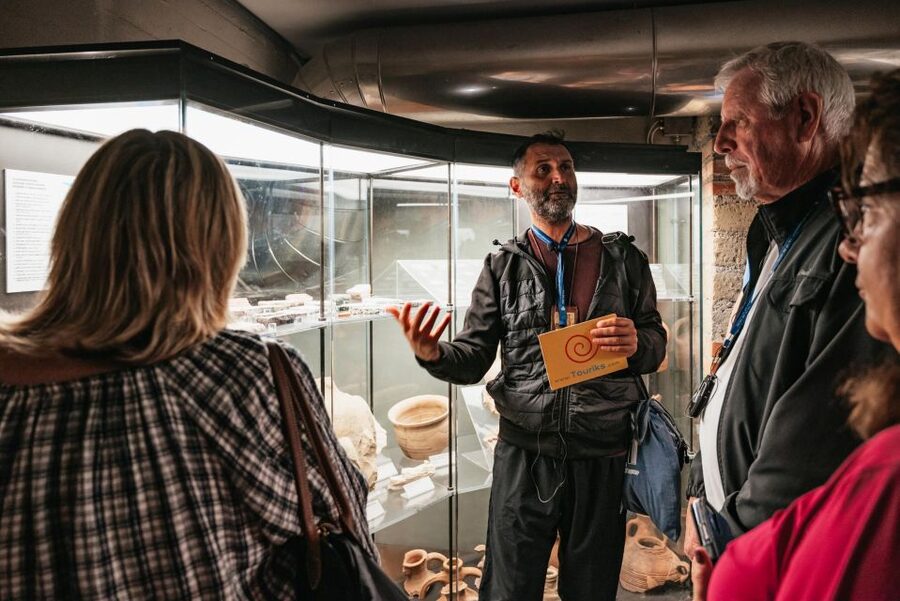
The guide is the most important part of this experience. The underground remains need explanation. Without context, you might see walls, channels, and stones without understanding how they relate to Rome’s development.
Mario has been praised for mixing humor with clear historical explanations. Francesca has received similar praise for her energy, patience, and enthusiasm for the fountain’s story. Vito and Anestis are also named as engaging guides. You may not receive one of these specific guides, but the pattern is clear: a good guide can make this brief tour feel lively rather than technical.
The best guides also handle questions well. That matters in a small archaeological site, where the details can be hard to interpret at first glance. Families may appreciate a guide who explains ideas in short, simple pieces. Adults interested in engineering or Roman urban planning can ask for more detail.
Headsets are included, and you should use them. They make it easier to hear over the noise at the fountain and keep you connected to the guide underground. The activity information suggests bringing headphones, though the tour also provides headsets. A reusable water bottle is useful, especially during warm months when the busy square can feel crowded and hot.
What to expect below the modern streets

The underground visit gives you a literal change of level. You leave the open piazza and enter an archaeological space where the city’s past is visible beneath the modern one.
You will see remains of an imperial Domus and the ancient aqueduct. The site also shows layers of construction accumulated over time. These layers are one of the most interesting parts of the visit because they make Rome’s age easier to understand. Ancient Rome is not only a collection of isolated monuments. It is a city built over itself again and again.
The aqueduct gives the tour a practical focus. Roman history can sometimes feel like a parade of emperors, battles, and monuments. Here, you get a lesson in the systems that made urban life possible. Water reached the city, was managed through channels, and still plays a role in feeding one of Rome’s best-known fountains.
The underground space also offers relief from the summer heat. Several visitors appreciated being below street level for a while, especially during hot weather. That is a small but real benefit when you have been walking around central Rome.
Do not expect a large museum or a vast network of tunnels. This is a compact excavation. The value comes from the guide’s explanation and the connection between the archaeological remains and the fountain above.
Who should book this Trevi Fountain tour
I would recommend it to first-time visitors who want more than a quick photo of the fountain. It gives you a useful introduction to one of Rome’s famous landmarks and adds an archaeological stop that many people would otherwise miss.
It also suits:
- Families who prefer short activities with plenty of movement
- Visitors interested in Roman water systems and engineering
- People who want a guided experience in English or another listed language
- Anyone looking for a cool indoor break near Trevi Fountain
- Visitors with limited time who want a focused activity rather than a long city walk
I would be more cautious if you have already visited Vicus Caprarius independently or mainly want access to the fountain basin. The €2 restricted-area fee is not included, and the public piazza view is the standard part of the tour.
You should also skip it if you use a wheelchair, since the activity is not suitable for wheelchair users. The underground setting may also be less comfortable for anyone who finds stairs, uneven ground, or confined archaeological spaces difficult, though no further access details are provided.
Timing, weather, and practical value

The tour is offered at various starting times, so check availability when booking. It returns to the same address where you meet the guide, which keeps the logistics simple.
There is no hotel pickup, and food and drinks are not included. That is no problem for most people because the tour is short, but you should arrive ready to walk and listen. Bring water, especially in warm weather.
The activity can be affected by weather conditions. If it is canceled, you receive the choice of another date or a full refund. You can also cancel up to 24 hours ahead for a full refund, and the reserve-now, pay-later option lets you hold a place without paying immediately.
Private groups are available. That may be worth considering if you want more time for questions or have a family group with different ages. A private booking costs more in many cases, but the provided information does not state the private-group price, so check before committing.
Should you book it?

Book this tour if you want to understand how the Trevi Fountain works and you enjoy seeing the practical side of Roman history. The aqueduct, underground Domus, and layers below modern Rome give you a more useful memory than a fountain photo alone.
Skip it if $41 feels high for 40 minutes, if you want only the fountain basin, or if you expect to enter a tunnel directly beneath the fountain. The underground site is nearby and connected by subject, not a secret chamber under the monument.
My advice is to treat this as a short orientation, not a major archaeological expedition. Take time at the fountain before or after, use the public viewing area, and listen closely underground. For the right visitor, the tour adds a smart second layer to one of Rome’s most crowded sights.
FAQ
How long does the Trevi Fountain and underground tour last?
The tour lasts 40 minutes. It includes about 20 minutes at the Trevi Fountain and 20 minutes at Vicus Caprarius.
Is the underground site directly beneath the Trevi Fountain?
No. The underground visit takes place at Vicus Caprarius, a nearby archaeological site. It includes a 2,000-year-old aqueduct connected to the fountain’s water supply, but it is not a passage directly beneath the fountain basin.
Is access to the Trevi Fountain basin included?
No. Access to the restricted basin area costs an additional €2. The guide takes you to a good viewing point at public piazza level as part of the tour.
What is included in the price?
The price includes a live guide, entrance to the underground excavations, and headsets so you can hear the guide. Food, drinks, hotel pickup, and hotel drop-off are not included.
Where do I meet the guide?
Meet at Via del Lavatore 49, in front of the Santi Vincenzo e Anastasio a Fontana di Trevi Church. The church is on the left corner of Piazza di Trevi. Look for a yellow TOURIKS label.
Is the tour suitable for wheelchair users?
No. The activity is listed as unsuitable for wheelchair users.
Just added in Rome
- Civitavecchia Private Transfer: From the Port to Rome Airport★ 5.0 · 309 reviews
- Civitavecchia Shore Excursion: Best of Rome Private Tour★ 5.0 · 247 reviews
- Civitavecchia Private Transfer from ship to FCO airport or Rome★ 5.0 · 245 reviews
- Food Tasty and History Tour in Civitavecchia★ 5.0 · 256 reviews
- Palatine Hill and Roman Forum Tour with Fast-Track Entrance★ 4.2 · 417 reviews
- Tivoli: Villa D’Este & Villa Adriana Pass & App Audioguide★ 4.4 · 364 reviews
- Tivoli: Villa D’Este Entry Ticket and App Audio Guide★ 4.3 · 191 reviews
- Vatican Museums & Sistine Chapel Skip-the-Line Guided Tour★ 4.6 · 254 reviews
Pantheon & Trevi Fountain Tours, compared.

Pantheon Fast-Track Ticket and Official Audio Guide
Read our review →
Pantheon Reserved Entry Ticket with Audio Guide
Read our review →
Pantheon Timeless Marvel Guided Tour with Entry Ticket
Read our review →
Pantheon Priority Entry Ticket & Audio Guide App
Read our review →
Pantheon Elite Guided Tour – Rome’s Iconic Ancient Temple
Read our review →
Pantheon Small-Group Guided Tour with Entry Ticket
Read our review →
Opera Concert at Palazzo Poli – Fontana di Trevi
Read our review →
Pantheon Small Group Tour and Skip-the-Line Ticket
Read our review →Browse the lists this tour appears in