
Reviewed · ACCADEMIA & DAVID TOURS
Florence: Accademia Gallery Guided Tour
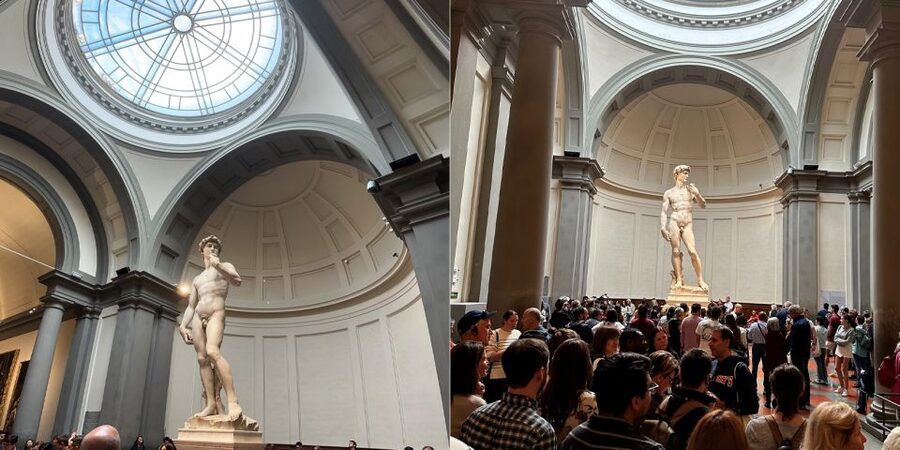
Michelangelo’s David is the reason most people come to Florence’s Accademia Gallery, and this tour gets you close to it without first spending hours in an entry queue. A historian guide adds the missing context: why David mattered to Florence, how Michelangelo worked, and how the Medici family shaped the city’s art.
I like two things here. First, the tour is short and focused, so you get the main sights without giving up half a day. Second, guides such as Elisa Raimondo, Claudio, Anna, Oxsana, and Elvis have earned strong praise for making the sculpture easier to understand rather than simply pointing at it. The main consideration is sound quality: one visitor found the headset fuzzy, and fast or accented English may be hard to catch through static.
Key points to know before you book
- David from several angles: The guide helps you notice Michelangelo’s unusual choices in the sculpture’s proportions, pose, and expression.
- A real time-saver: You use a separate entrance with guaranteed museum entry instead of joining the regular line.
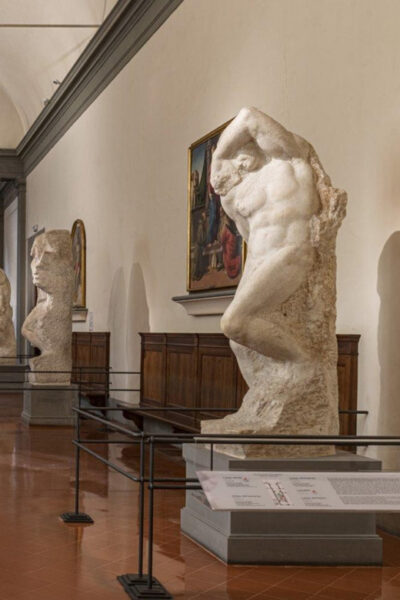
- More than one statue: The route includes Michelangelo’s unfinished Prisoners and paintings by Filippino Lippi and Domenico Ghirlandaio.
- A compact one-hour visit: This suits a busy Florence schedule, though the published itinerary also lists a 75-minute guided portion, so confirm the exact timing.
- Headsets are included: They help you follow the guide in a crowded gallery, though sound quality can vary.
- Easy to locate: Meet in Piazza delle Belle Arti, in the main square by the Accademia, beside a sign reading Florence with Elvis Guided Experience.
Why David deserves a guided look
You can walk into the Accademia, glance up at David, take a picture, and walk out feeling that you have seen the important thing. But this sculpture rewards a slower look. The guide gives you a way to read what you are seeing, from the turn of David’s head to the tension in his hands and the way Michelangelo made marble appear ready for action.
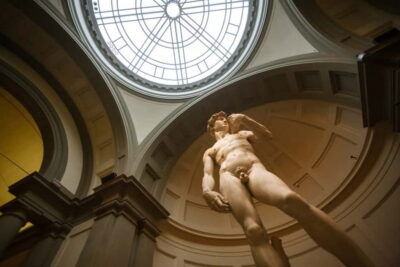
The statue is not hidden in a distant room. It is the clear center of the visit, and the route is arranged around it. You see David from different positions, which matters because a sculpture changes as you move. From one angle, the figure feels calm and controlled. From another, the oversized hands and head become much more apparent.
The tour also places David within Florence’s political story. The biblical hero became a symbol of the city, and the guide explains how the work connected to Florence’s identity and to the Medici family. That background turns the statue from a famous image into a piece of public history.
I especially like this approach for a first visit. You do not need a degree in art history. The guide supplies the basic story, then points out details that are easy to miss when the room is crowded.
Other sculpture and collections in Florence:
- Florence: Timed Entrance Ticket to Michelangelo’s David
★ 4.6 · 16,983 reviews - Florence: Michelangelo’s David Skip-the-Line Entry Ticket
★ 4.5 · 12,764 reviews - Florence: Michelangelo’s David Priority Ticket & Audio App
★ 4.4 · 6,812 reviews
Meeting at Piazza delle Belle Arti
The meeting point is Piazza delle Belle Arti, the main square beside the Galleria dell’Accademia. Look for the Florence with Elvis Guided Experience sign. This is useful because the area can be busy with people waiting for different tours and trying to find the correct entry point.
Arrive ready to identify yourself and keep your booking details close at hand. A passport or ID card is required, and a copy is accepted. Children also need identification.
Large bags and luggage are not allowed. That restriction is worth taking seriously, especially if you are arriving in Florence with suitcases between hotels or trains. Travel light for this visit. The tour is wheelchair accessible, which makes it a practical choice for many people with limited mobility, though the museum’s entry procedures still apply.
The experience is offered in English with a live guide. Headsets are included, so you can hear the commentary while standing a little away from the guide. That is important in a small museum where several groups may be discussing art at once.
Entering through the separate entrance
The strongest practical benefit is the skip-the-line entry. The tour includes guaranteed museum admission and uses a separate entrance, allowing you to avoid the regular queue.
The value depends on the day. At quieter times, paying $53 for a guided visit may feel like a luxury. At busy times, the time saved can make the price sensible, especially if the regular line stretches along the street. One booking described a wait of more than three hours outside while the tour group entered directly. That kind of delay can wreck a Florence day.
Skip-the-line access does not mean you bypass every museum procedure. You still go through security, and you need to follow the group’s entry instructions. Still, the route is much simpler than trying to guess which line is correct.
This is also useful for families. A family with two children under five and a double stroller found the group accommodating. The museum itself is not a playground, of course, but avoiding a long outdoor wait can make a big difference with young children.
Seeing Michelangelo’s David up close
David is the main event, and the guide usually builds the visit toward a careful look at the statue. You will have time to stand before it, listen, and then look again with the guide’s points in mind.
The strongest guides make the sculpture feel active. Elvis was praised for explaining the statue in a way that made the marble seem almost alive. Oxsana was described as a walking encyclopedia of information about Michelangelo and David. Claudio was repeatedly praised for his clear explanations and warm manner, while Elisa Raimondo was singled out for her passion for Renaissance art.
Guide quality can vary from departure to departure, but the pattern is clear: the best part of this tour is the interpretation. You are not just being led to the famous statue. You are given a set of questions to ask with your own eyes.
Look closely at David’s stance. The figure is not shown after the battle with Goliath, but before it. That choice gives the statue its alert, waiting quality. A guide can connect that moment to Florence’s use of David as a civic symbol and explain why the work carried such force in the city.
The group also considers the practical side of Michelangelo’s craft. The guide discusses how the artist worked in three dimensions and how difficult it was to shape a huge block of marble without modern technology. That makes the physical skill easier to appreciate.
Photography is part of the visit, and the guided route can help you find better positions for pictures. Still, your best photograph may not be your most important memory. The statue is much larger and more commanding in person than in a phone image, so give yourself time to put the camera down.
Other museums and galleries in Florence:
- Florence: Skip-The-Line Uffizi Gallery Timed Entry Ticket
★ 4.5 · 27,832 reviews - Florence: Leonardo Interactive Museum Entry Ticket
★ 4.5 · 11,763 reviews - Florence Accademia Gallery Tour with Entrance Ticket Included
★ 4.5 · 6,148 reviews - Uffizi Gallery Small Group Tour with Guide
★ 4.5 · 4,923 reviews
The unfinished Prisoners and Michelangelo’s working method
David gets the attention, but Michelangelo’s unfinished Prisoners add a second layer to the visit. These sculptures appear to be emerging from the stone, and they let you think about the process of carving rather than only the finished result.
A good guide explains how these works relate to Michelangelo’s ideas and working method. You may notice rough areas, incomplete limbs, and the contrast between the stone still being released from the block and the finished surface of David.
This part of the museum is valuable because it changes how you see the main sculpture. After looking at the Prisoners, David no longer seems like a miraculous object that appeared fully formed. You start thinking about the labor, planning, and physical decisions behind it.
The tour keeps this section focused. If you want to study every sculpture at length, you may find the one-hour format too brief. If you want a strong introduction to Michelangelo’s work, the balance is useful.
Paintings by Lippi, Ghirlandaio, and other Florentine artists
The Accademia is not only a Michelangelo museum. The tour includes paintings by Filippino Lippi, Domenico Ghirlandaio, and other artists connected to Florence’s Renaissance culture.
These works provide a wider frame for David. You get to see how painting and sculpture developed side by side, and how artists worked within the religious and political world of Renaissance Florence. The guide also shares stories about the artists, their patrons, and the people who shaped the city’s cultural life.
The paintings are important, but expect David and the Prisoners to receive the most attention. The tour’s purpose is not to cover every room in the museum. It is a focused introduction to the works that make the Accademia especially worthwhile.
That focus is a benefit if you have limited time. It is also a limitation if you are hoping for an exhaustive museum tour. You can ask questions, but the schedule is designed to keep the visit moving.
Medici power and the birth of the Renaissance
The tour uses art to explain Florence itself. You hear why the Renaissance took root here and why the Medici family mattered so much to artists, including Michelangelo.
This is not just background decoration. Patronage paid for buildings, paintings, sculpture, and public projects. Powerful families could decide which artists received work and which ideas appeared in prominent places. Understanding that system helps you see the Accademia as part of a larger Florentine story.
The Medici connection also gives Michelangelo’s career more shape. Instead of treating him as an isolated genius, the guide places him within the network of patrons, workshops, commissions, and political pressures that supported his work.
I find this especially helpful for people visiting Florence for the first time. The city can feel like a series of beautiful rooms and squares. A short explanation of patronage shows how those places fit together.
One hour, headsets, and the pace of the group
The advertised duration is one hour, making this easy to fit between other Florence sights. The published schedule also includes a 75-minute guided portion and separate one-hour entries for David and the Accademia, so the timing is not presented consistently. Check the starting time and expected length when you book.
The compact format keeps the visit from becoming tiring. You get the major works, the key historical setting, and a guide’s explanation without committing to a long museum afternoon.
The tradeoff is pace. You may not have much time to stop at every painting or return to David alone during the guided portion. One helpful detail is that some guides, including Claudio and Elvis, have allowed people to remain in the gallery afterward. That is not something to treat as a guaranteed part of every departure, but it can give you extra time to look around.
Headsets make it easier to follow a moving group. Most of the time, this should be an advantage. Still, one person found the radios fuzzy and had trouble understanding the guide through static. If you have hearing difficulties, stand close to the guide when possible and ask for a repeat if needed.
Is $53 a fair price?
At $53 per person, this is not the cheapest way to see David. You are paying for three things: museum entry, priority access, and a live English guide.
The entry advantage is the biggest part of the value. If the ordinary line is short, you may decide that a self-guided visit is enough. If the queue is long, the time saved can justify much of the price by itself.
The guide adds value if you want to understand the sculpture rather than simply photograph it. Several visitors found the tour more useful because it explained details of David, the Prisoners, Michelangelo’s life, and Florence’s connection to the work. That information is hard to recreate by wandering through the museum without preparation.
I would especially consider the price reasonable for a first-time visit, a short stay in Florence, or a high-demand travel period. Art lovers who already know the Accademia well may prefer to enter independently and spend longer with the collection.
Who should book this Accademia tour?
This tour suits you if you want a clear introduction to Michelangelo, prefer a guide to a museum app, or have only a small window in Florence. Families can also benefit from avoiding a long outdoor queue, and the one-hour format is easier for children than a full museum lecture.
It is a good match for people who like history explained through specific objects. The guide connects David to Florence, the Medici family, Michelangelo’s technique, and the wider Renaissance.
You may want another option if you dislike group tours, need a very slow pace, or want to inspect every gallery in detail. The experience is focused, and the quality of the commentary depends on the guide and the headset connection.
Cancellation is free up to 24 hours before the visit, and you can reserve now and pay later. Those terms are useful if your Florence schedule is still changing.
Final verdict: a smart shortcut to David
I would book this tour if David is high on your Florence list and you want more than a quick look. The separate entrance protects your time, the guide gives the sculpture a clear story, and the route includes enough of the Accademia to make the museum feel like more than a single-statue stop.
The best reason to choose it is the explanation of what you are seeing. The best reason to hesitate is the price and the limited time for exploring on your own. If you book, arrive at Piazza delle Belle Arti with identification, no large luggage, and realistic expectations about the one-hour format. You should leave with a stronger sense of Michelangelo, David, and the Florence that gave the work its meaning.
FAQ
How long does the Accademia Gallery guided tour last?
The activity is advertised as one hour. The published schedule also includes a 75-minute guided portion and separate one-hour entries, so check the exact timing when selecting your departure.
What language is the tour offered in?
The live guided tour is offered in English.
Does the tour include skip-the-line entry?
Yes. The tour includes guaranteed museum entry through a separate entrance, allowing you to avoid the regular line.
Where is the meeting point?
Meet in Piazza delle Belle Arti, in the main square of the Galleria dell’Accademia. Look for the Florence with Elvis Guided Experience sign.
What identification do I need?
You need a passport or ID card. A copy is accepted, and children also need identification.
Can I bring luggage or a large bag?
No. Luggage and large bags are not allowed. The activity is wheelchair accessible, and headsets are provided so you can hear the guide.
Just added in Florence
- Wine Tasting Experience in Ponte Vecchio: Best Tuscany selection!★ 5.0 · 197 reviews
- Walking Food Tour of Florence with Tastings and Wine★ 5.0 · 518 reviews
- Wine Experience In Chianti Hills from Florence★ 4.5 · 195 reviews
- Florence Sunset Food Tour with Wine & Dine at a Tuscan farmhouse★ 5.0 · 194 reviews
- Uffizi and Accademia Small Group Guided Tour★ 4.5 · 449 reviews
- Val d’Orcia Brunello Wine Tour with Montalcino and Montepulciano★ 4.5 · 359 reviews
- Uffizi Gallery Timed Entry Admission Tickets★ 4.0 · 392 reviews
- Uffizi Gallery Small Group Tour with Guide★ 4.5 · 879 reviews
Accademia & David Tours, compared.
Timed Entrance Ticket to Michelangelo’s David
Read our review →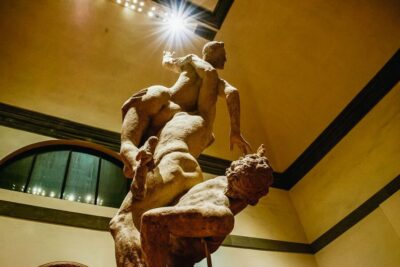
Michelangelo’s David Skip-the-Line Entry Ticket
Read our review →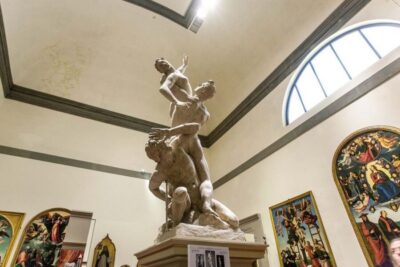
Michelangelo’s David Priority Ticket & Audio App
Read our review →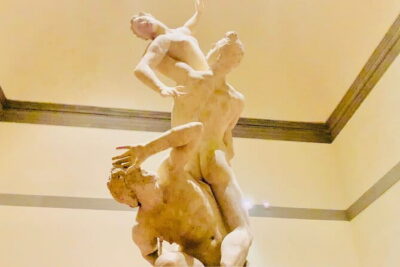
Florence Accademia Gallery Tour with Entrance Ticket Included
Read our review →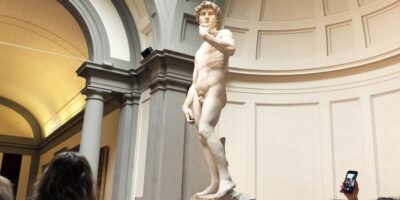
Timed Entry Ticket to Michelangelo’s David & eBook
Read our review →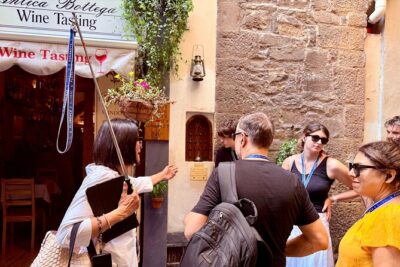
Skip the line: Uffizi and Accademia Small Group Walking Tour
Read our review →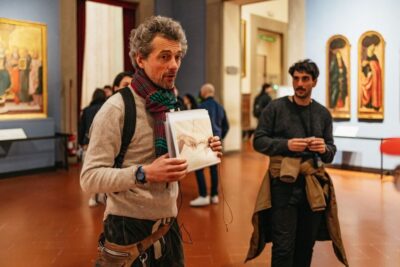
Accademia Gallery Guided Tour with Entry Ticket
Read our review →Browse the lists this tour appears in