
Reviewed · ACCADEMIA & DAVID TOURS
Florence: Michelangelo’s David Entrance Ticket and Audio App
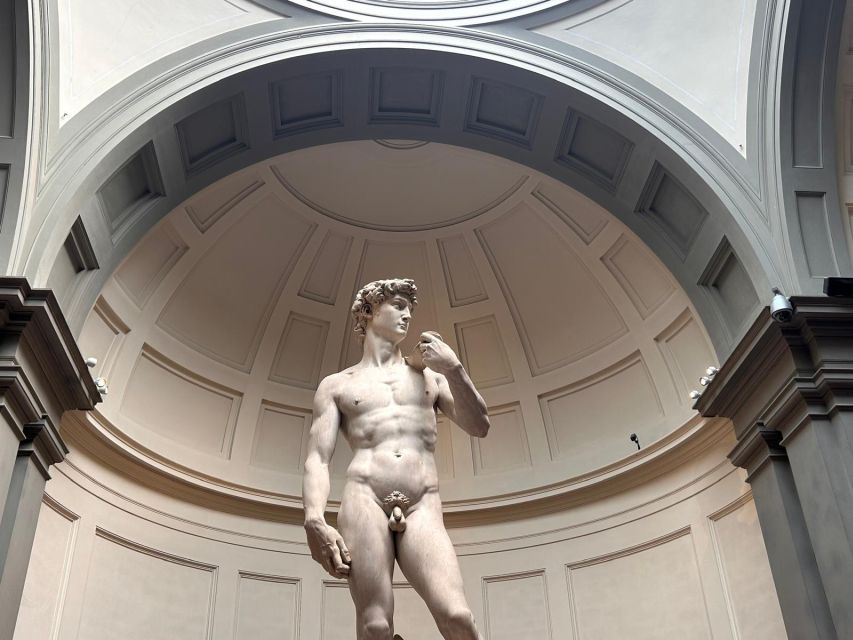
Seeing Michelangelo’s David in person is the clear reason to book this Accademia Gallery experience. The statue’s scale, posture, and finely carved details are difficult to grasp from photographs, and the reserved entry helps you avoid the museum’s often lengthy ticket-office queue.
I like the simple ticket handoff and the freedom to explore without being tied to a live guide. I also like that the visit includes more than David: you can see three Stradivarius instruments, plaster models from nineteenth-century Florence, and medieval altarpieces. The main caution is that the audio app can be uneven, and a timed ticket still requires punctuality and may involve a 15 to 20 minute wait.
Key points to know before booking
- David is the main event: Michelangelo’s 17-foot marble figure fills the central hall and deserves unhurried attention.
- Timed entry saves valuable Florence time: You collect a physical ticket from a host and join the correct entrance line instead of waiting at the ticket office.
- The visit is self-guided: The Pop Guide app supplies commentary, but there is no live museum guide accompanying you.
- The museum has worthwhile smaller collections: Look for unfinished Michelangelo sculptures, Medici musical instruments, Giotto, Botticelli, and medieval altarpieces.
- Prepare your phone before arrival: Download Pop Guide, charge your smartphone, and bring your own headphones.
- The meeting point is easy to miss if you rush: Find the Carrefour Express supermarket and look for the person holding a white ENJOY ROME flag.
Why David is worth making time for
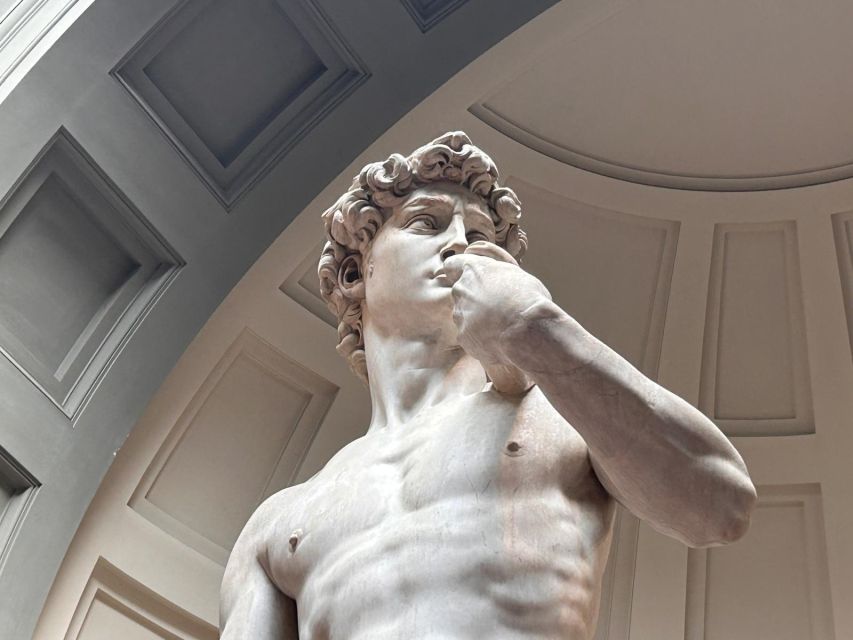
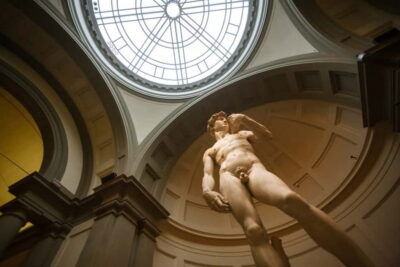
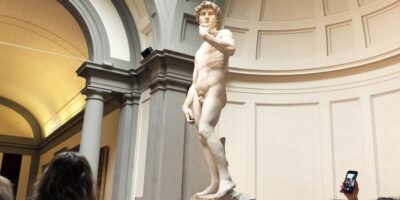
The Accademia Gallery is one of those places where a single artwork can dominate the visit. David is that artwork. Michelangelo carved the statue from a large block of marble in the early sixteenth century, presenting the biblical hero before his fight with Goliath rather than after it.
That choice gives the figure a watchful, tense quality. David is not celebrating victory. He is preparing for danger. From different angles, you can study his expression, oversized hands, strong feet, and the careful way Michelangelo turned a block of stone into a living human form.
Photographs often flatten the experience. In the gallery, you can walk around the sculpture and see how its proportions work from below and from the sides. The statue is about 17 feet tall, so the viewing position matters. Give yourself time to look up, then step back and examine the whole figure.
The room can be crowded, particularly in summer. You might not find a quiet spot directly in front of David, but the sculpture remains visible from several points around the hall. If you want a more thoughtful visit, do not rush straight out after taking your photograph. Watch the details change as you move around the room.
Other sculpture and collections in Florence:
- Florence: Timed Entrance Ticket to Michelangelo’s David
★ 4.6 · 16,983 reviews - Florence: Michelangelo’s David Skip-the-Line Entry Ticket
★ 4.5 · 12,764 reviews - Florence: Michelangelo’s David Priority Ticket & Audio App
★ 4.4 · 6,812 reviews
Meeting the host at the Carrefour Express
Your first task is not at the museum entrance. You meet the activity provider’s English-speaking host in front of the Carrefour Express supermarket. Look for a staff member holding a white flag marked ENJOY ROME, then exchange your voucher for the physical museum ticket.
This handoff is usually quick, but allow enough time to find the supermarket and identify the correct person. Florence has several busy streets and plenty of signs competing for your attention. Arriving at the meeting point shortly before your assigned time is safer than arriving at the museum door and trying to sort everything out there.
The host gives you the ticket and directs you to the appropriate entrance line. This is a useful service because the Accademia has several queues, and joining the wrong one can erase the time you saved by booking ahead.
The separate entrance is not a magic door straight into the gallery. Museum staff still control the flow inside, and entry can slow when the building is full. A wait of 15 to 20 minutes is possible, and extended delays can occur because of gallery operations. Even so, the timed ticket is a practical advantage on a busy Florence day.
What timed entry really saves you
The main value here is time, not luxury. A $38 ticket costs more than a basic museum admission, but it includes timed access, ticket pickup assistance, and the Pop Guide audio app. Several people have found the extra cost worthwhile when official tickets were sold out or when the regular line looked especially long.
That price makes the most sense if you are visiting Florence on a tight schedule. You may have only one morning for the Duomo, one afternoon for the Uffizi, and a short window for the Accademia. Losing hours in a ticket queue is a poor trade, especially in hot weather.
If you already have a museum ticket and only want a quick look at David, the package may offer more than you need. Some people do not use the audio app at all. In that case, you are mainly paying for the reserved entrance and the convenience of having the ticket arranged.
The ticket is strictly timed. Late arrival does not guarantee admission or a refund. Build in time for walking across Florence, finding the Carrefour Express, collecting the ticket, and reaching the assigned entrance. Do not schedule another activity immediately afterward.
The main hall and Michelangelo’s unfinished sculptures
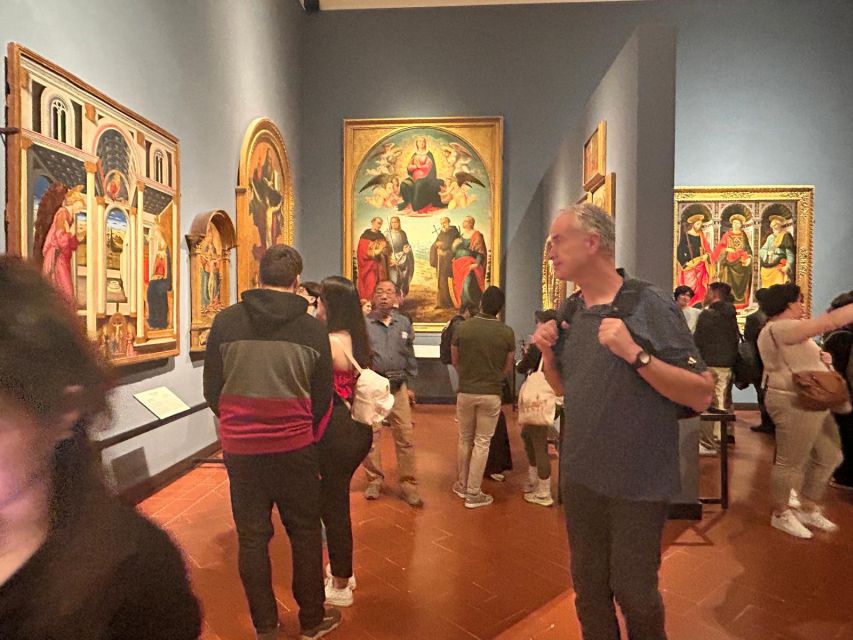
After entering, you reach the hall containing David and several unfinished Michelangelo works. These incomplete sculptures are sometimes called the Prisoners because the figures appear to be emerging from the marble.
They are especially useful for understanding Michelangelo’s carving method. Instead of seeing only a polished final product, you can compare rough stone with the parts that have been fully released. The unfinished surfaces retain the marks of the working process, making the sculptures feel direct and physical.
This section gives the visit more depth than a quick celebrity-art stop. David shows the finished ideal. The unfinished works show effort, resistance, and the relationship between the artist and the stone.
The hall is also where the crowd tends to gather. You may need patience to get a clear view, and personal space can be limited. Move slowly around the room and wait for openings rather than assuming the best view will appear immediately.
A few more things to do in Florence
- Florence: Skip-The-Line Uffizi Gallery Timed Entry Ticket
★ 4.5 · 27,832 reviews - Florence: Leonardo Interactive Museum Entry Ticket
★ 4.5 · 11,763 reviews - Florence: Cathedral & Brunelleschi’s Dome Ticket & Audio App
★ 4.4 · 6,973 reviews - Florence: Uffizi Priority Ticket & Masterpieces Audio App
★ 4.2 · 6,402 reviews
The Gipsoteca and nineteenth-century sculpture
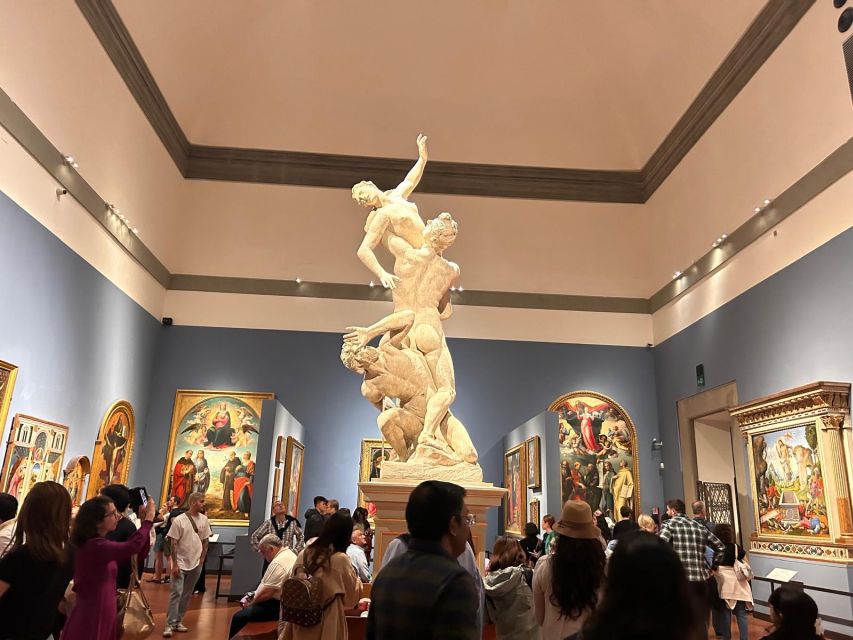
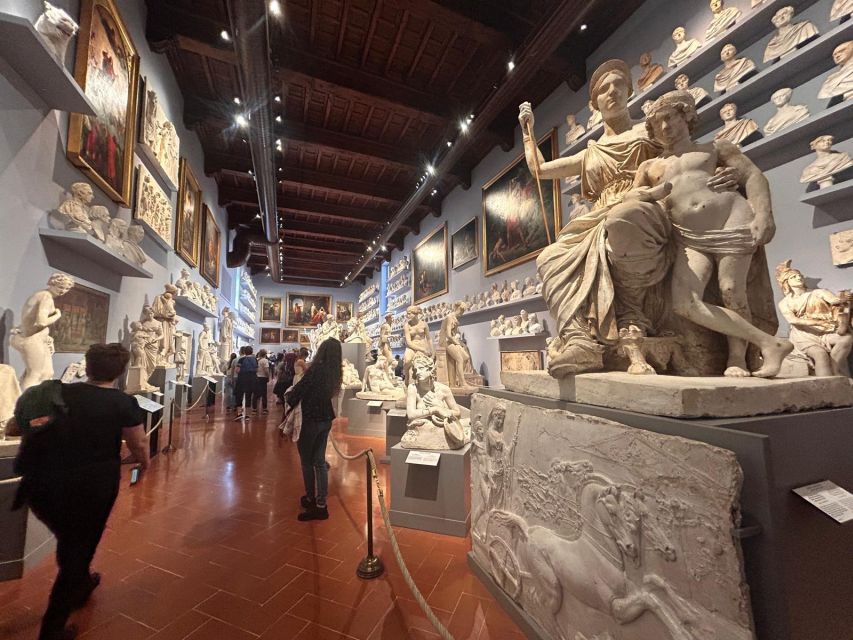
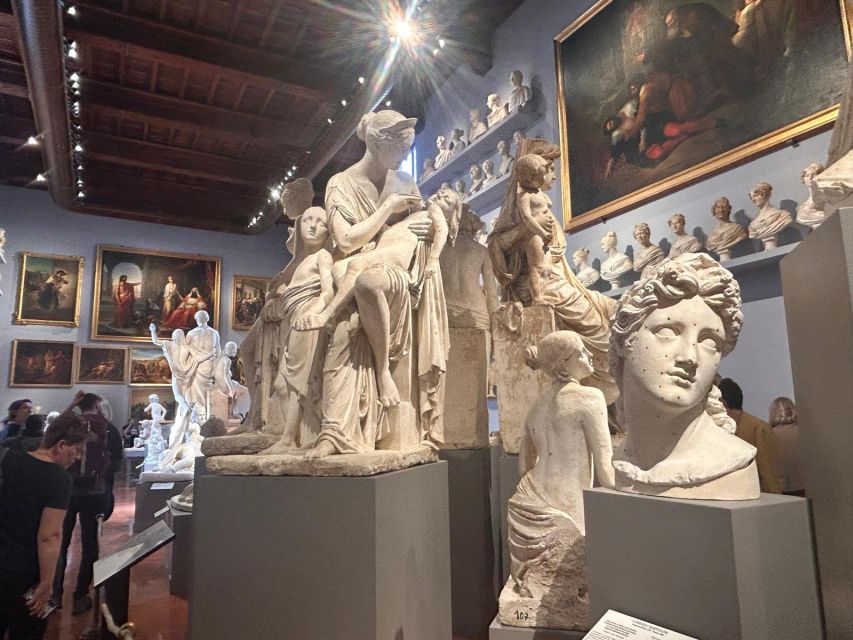
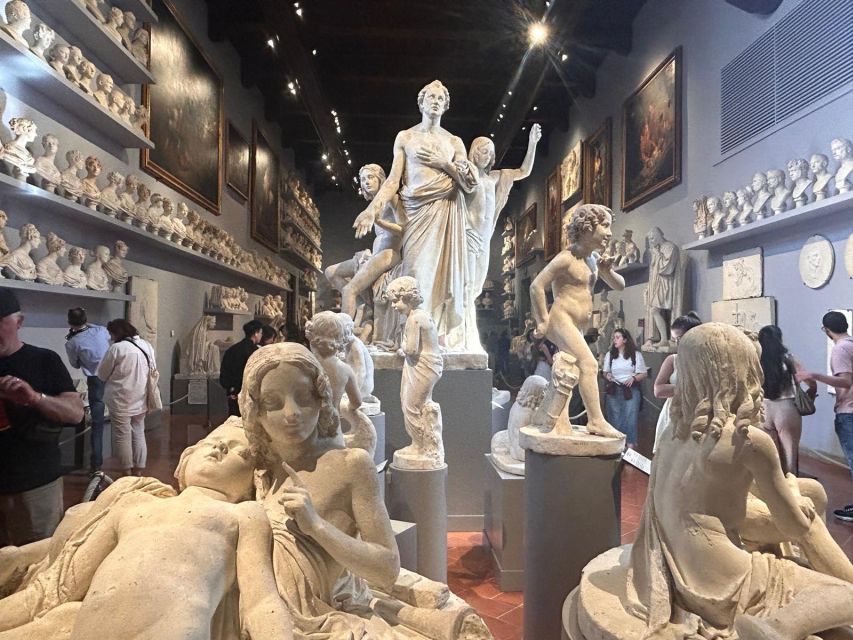
Continue to the Gipsoteca, a collection of original plaster models made by nineteenth-century Florentine sculptors. These works are less famous than David, but they explain how sculptors planned and developed large finished pieces.
Plaster models are valuable because they reveal scale and preparation. They are working objects, not just decorative displays. If your main interest is Renaissance art, this section may feel like a change of pace. Still, it gives you a look at a later period of Florentine sculpture and helps show that the city’s artistic life continued long after Michelangelo.
You can move through this area at your own speed. The self-guided format works well here because you can pause for pieces that catch your attention and spend less time on those that do not.
Medici instruments and three Stradivarius violins
The museum also displays musical instruments from the Medici collection. The most striking detail is the presence of three instruments made by Stradivarius.
This is an easy section to miss if you focus only on paintings and sculpture. The instruments add a different side of court life in Florence, where music and art were closely connected to Medici power and patronage.
You do not need to be a specialist in musical instruments to enjoy this room. Look for the craftsmanship, the materials, and the contrast between objects designed to be heard and sculptures designed to be seen. The audio app can provide useful context, though its coverage is not always complete.
Medieval and Renaissance paintings by Giotto and Botticelli
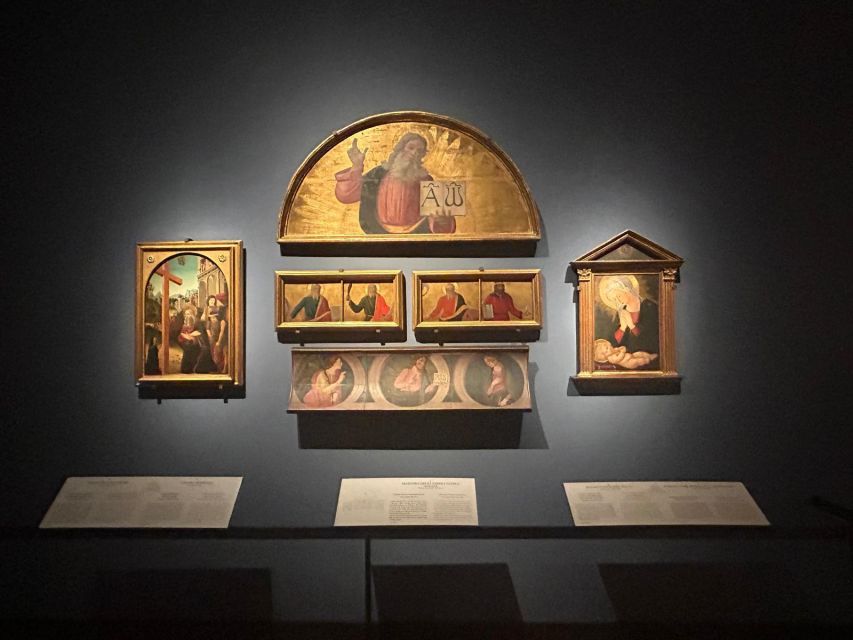
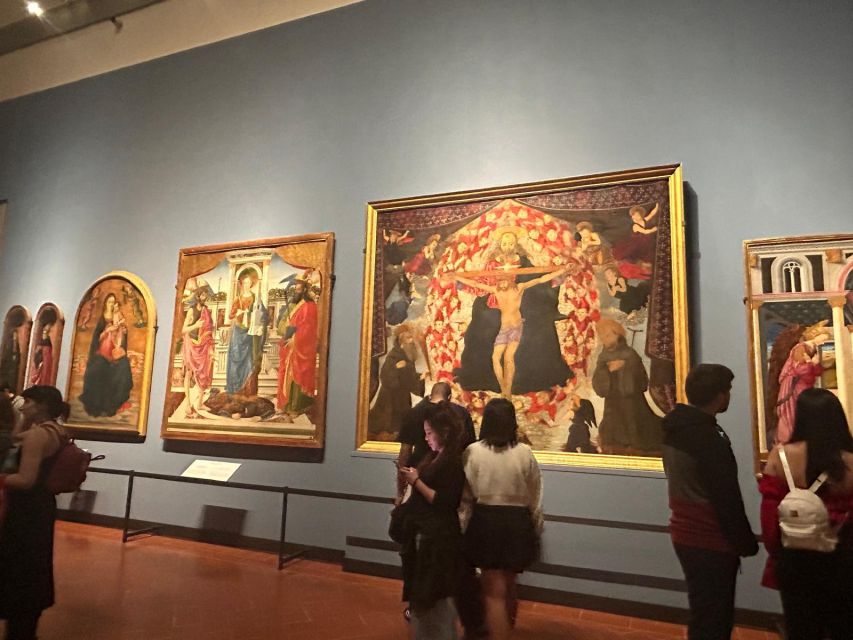
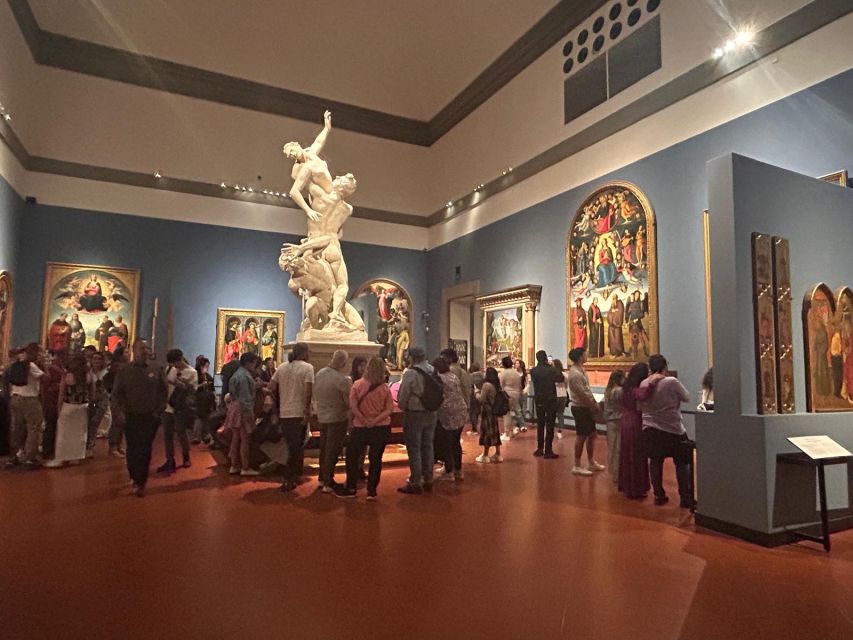
The painting galleries move you from sculpture into Florence’s medieval and Renaissance traditions. You can see work associated with artists such as Giotto and Botticelli, along with other religious paintings from the city’s long artistic development.
These rooms matter because they place Michelangelo within a wider story. Renaissance art did not appear out of nowhere. Earlier painters established approaches to expression, composition, sacred figures, and the human form that later artists developed in new ways.
The paintings may receive less attention from people who came specifically for David, but they reward a slower look. If the main hall feels crowded, the painting galleries can offer a more measured part of your visit.
The Pop Guide is intended to identify and explain works as you move around. Its commentary is described as informative but brief. Some sections are easier to match with the corresponding artwork than others, so keep the app’s map open and check the room layout before starting an explanation.
The top floor and medieval altarpieces
Finish on the top floor, where you can see medieval altarpieces. These large religious works often have a formal, arranged quality that differs sharply from the movement and physical presence of Michelangelo’s sculpture.
The altarpieces provide a fitting end to the visit because they show the religious setting that shaped much of Florence’s early art. Look closely at the panels, gold details, and repeated figures. Even if David remains your favorite, these works help explain how Florentine art changed over time.
Do not assume the top floor is an optional extra. It is part of what makes the Accademia more than a single-statue museum. The building is not enormous, so you can see the major areas in around two hours while still leaving time for David. The advertised duration is three hours, giving you room to move at a relaxed pace, use the audio app, or wait for a clearer view.
Using the Pop Guide audio app
The audio guide is delivered through the Pop Guide application rather than a traditional rented headset. You need to download the app on your phone before arriving. At the meeting point, you receive login details or access information.
Bring your own headphones. This is important. The package does not supply a personal headset, and holding your phone to your ear for the whole visit is awkward in crowded galleries.
The app suits people who prefer freedom. You can pause, skip sections, and walk at your own pace instead of staying with a group. It is also useful for families or couples with different interests, since each person can listen when convenient.
The drawbacks are worth noting. The commentary is brief, and not every artwork is covered. Some people have found the app difficult to match with the correct object, while others have found it clear and helpful. Treat it as a basic orientation tool rather than a full substitute for an art historian.
If you want detailed interpretation, a live guide would be better, but this activity does not include one. You are responsible for following the app and deciding how long to spend in each room.
Crowds, accessibility, and what to bring
The gallery is wheelchair accessible, though crowd levels can affect how easily you move through the rooms. A reserved ticket reduces the chance of wasting time outside, but it does not guarantee an empty museum. During busy periods, museum staff may slow entry to control the number of people inside.
Large bags and luggage are not allowed. Pets are also not permitted. Bring a passport or photo ID for children aged 6 to 17, especially if you are using a discounted child ticket. Without valid proof of age, the full adult price may apply.
Your short preparation list is simple:
- Download Pop Guide before you arrive.
- Charge your smartphone.
- Bring headphones.
- Carry the voucher used for ticket collection.
- Arrive early enough to find the Carrefour Express and host.
- Do not bring luggage or a large bag.
These details sound minor, but they can decide whether the timed entry feels easy or stressful.
Who should book this Accademia ticket?
I would choose this option for a first visit to Florence when David is a priority and official museum tickets are unavailable or inconvenient. It is also a good fit if you value independent touring and want to avoid being locked into a live group.
Families may appreciate the short ticket handoff and the ability to move at their own pace. Independent adults and couples can use the app selectively, listening to the sections that interest them without waiting for a guide.
Art students and serious museum fans may want more explanation than the app provides. You can still enjoy the gallery, but you may prefer a separate specialist tour or a detailed guidebook.
The experience also suits anyone trying to avoid a long queue in the sun. The separate entrance is the strongest practical feature, even though you should still expect possible delays at the assigned time.
Should you book it?
Book this experience if you want a dependable way into the Accademia, especially when direct museum tickets are sold out or when your Florence schedule is tight. The $38 price is reasonable when the reserved entry and audio access save you from a long queue and last-minute ticket hunting.
Do not book it expecting a full guided tour. You get a physical entry ticket, an English-speaking host at the meeting point, and a self-guided Pop Guide app. The app can be useful, but the quality of the visit depends on your preparation and your willingness to explore independently.
For most first-time visitors, David alone justifies the stop. The unfinished Michelangelo sculptures, Medici instruments, Giotto, Botticelli, and medieval altarpieces make the ticket more worthwhile. Arrive early, bring headphones, and give yourself at least two hours inside.
FAQ
Where do I meet the activity host?
Meet the provider’s staff in front of the Carrefour Express supermarket. Look for a person holding a white flag marked ENJOY ROME, then exchange your voucher for the physical museum ticket.
Is this a guided tour?
No. An English-speaking host helps you collect the ticket and reach the correct entrance, but no live guide accompanies you through the museum. The visit uses the Pop Guide audio app.
What does the ticket include?
It includes timed admission to the Accademia Gallery and access to the Pop Guide audio guide app.
Do I need to download an app before arriving?
Yes. Download the Pop Guide application on your smartphone before reaching the meeting point. You receive the login details there.
Do I need to bring headphones?
Yes. You must bring your own headphones, along with a charged smartphone.
Can children use a discounted ticket?
Visitors aged 6 to 17 need valid photo identification showing their date of birth to qualify for a discounted ticket. Without it, they must purchase the full adult ticket.
Can I arrive late for my timed entry?
Late arrival does not guarantee admission or a refund. Entry can also be delayed by 15 to 20 minutes, or longer if the museum is managing heavy crowds.
Just added in Florence
- Wine Tasting Experience in Ponte Vecchio: Best Tuscany selection!★ 5.0 · 197 reviews
- Walking Food Tour of Florence with Tastings and Wine★ 5.0 · 518 reviews
- Wine Experience In Chianti Hills from Florence★ 4.5 · 195 reviews
- Florence Sunset Food Tour with Wine & Dine at a Tuscan farmhouse★ 5.0 · 194 reviews
- Uffizi and Accademia Small Group Guided Tour★ 4.5 · 449 reviews
- Val d’Orcia Brunello Wine Tour with Montalcino and Montepulciano★ 4.5 · 359 reviews
- Uffizi Gallery Timed Entry Admission Tickets★ 4.0 · 392 reviews
- Uffizi Gallery Small Group Tour with Guide★ 4.5 · 879 reviews
Accademia & David Tours, compared.
Timed Entrance Ticket to Michelangelo’s David
Read our review →
Michelangelo’s David Skip-the-Line Entry Ticket
Read our review →
Michelangelo’s David Priority Ticket & Audio App
Read our review →
Florence Accademia Gallery Tour with Entrance Ticket Included
Read our review →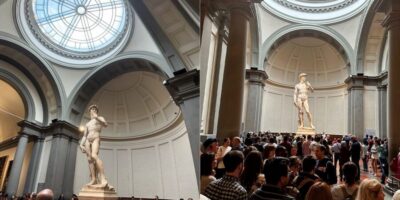
Timed Entry Ticket to Michelangelo’s David & eBook
Read our review →
Skip the line: Uffizi and Accademia Small Group Walking Tour
Read our review →
Browse the lists this tour appears in