
Reviewed · WORKSHOPS
Venice: Carnival Mask Workshop
Venice gives you plenty of souvenirs, but few are as personal as a mask you paint yourself. In this one-hour Carnival workshop, you choose the shape, colors, and finish, then take home a paper-mâché keepsake made with your own hands.
I like two things here: the direct help from Venetian mask makers, and the short history lesson woven into the craft. Giorgio, Nicolò, Petra, and other instructors have guided participants through the process with patience and personal stories. The main consideration is time. One hour is enough for a pleasing finished mask, but not for a slow, highly detailed masterpiece.
At a glance
- Choose your own mask form: Pick from several paper-mâché styles before painting.
- Learn hands-on techniques: Use paints, glitter, sprays, decorative colors, and pencil guides.
- Meet a working artisan: Instructors may include Giorgio, Nicolò, Petra, Francesco, or other local artists.
- Hear Carnival stories: The class explains how masks were used in Venice in earlier centuries.
- Take home your creation: Your finished mask becomes a personal souvenir, not a factory-made trinket.
- Expect a small-group feel: Some sessions are very small, though the setting and meeting point can vary.
Choosing a mask in a Venetian workshop
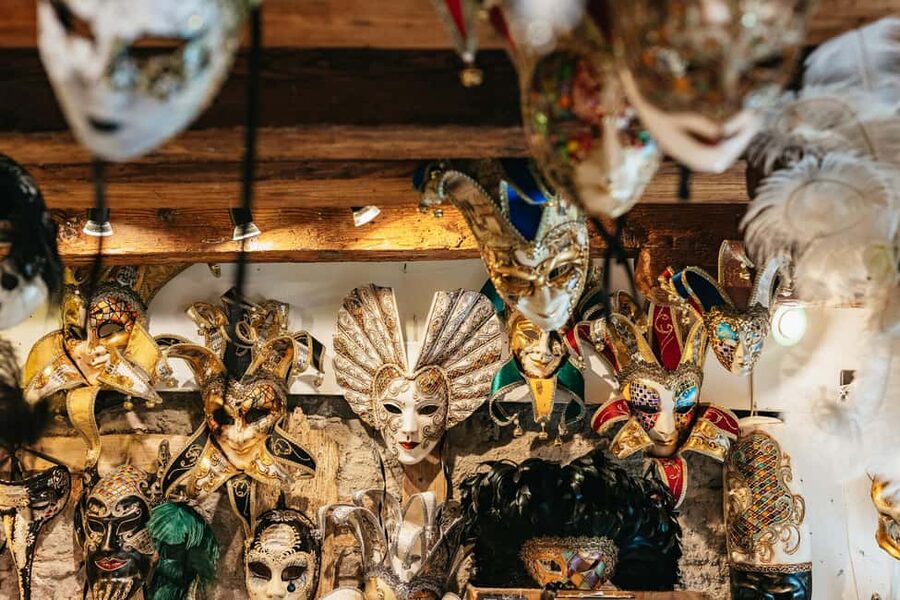
The session starts with a choice. You select one paper-mâché mask from the available forms, rather than being handed an identical blank like everyone else. The selection can include traditional shapes and playful designs, though a particular style shown in a display may not always be available.
That small choice matters. A simple face can suit bold blocks of color, while a more ornate shape may call for careful details and glitter. If you are painting with children, let them choose the form first. It gives them ownership before the brushes come out.
The masks are made from paper mâché, which is part of the point. Venice has no shortage of plastic masks aimed at hurried souvenir shoppers. Here, you are working with the material used in the craft itself, then learning how color and decoration change its character.
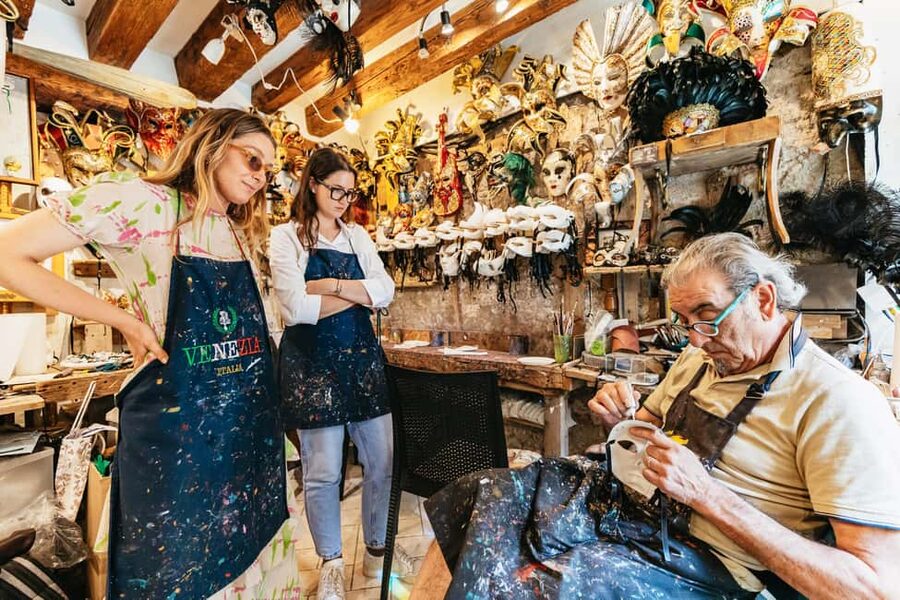
The exact room varies by booking. Some sessions take place in a small mask shop near San Marco. Others have been held in a historic prison setting beside the Doge’s Palace, where the workshop space is air-conditioned and participants may have access to museum exhibitions. Do not assume every booking includes the same surroundings. Check your confirmation for the meeting point and any entrance instructions.
Other things to learn to make in Venice:
- Create Your Glass Artwork: Private Lesson With Local Artisan
★ 5.0 · 556 reviews - Florence: Pasta Cooking Class with Unlimited Wine
★ 4.9 · 10,285 reviews - 3 in 1 Cooking Class near Navona: Fettuccine, Ravioli & Tiramisu
★ 5.0 · 7,376 reviews
Painting your mask, one layer at a time
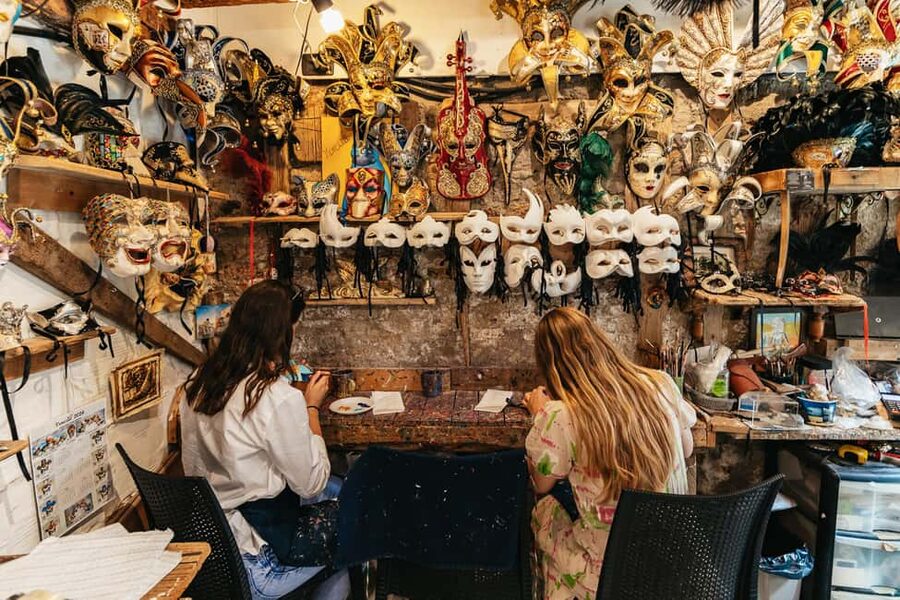
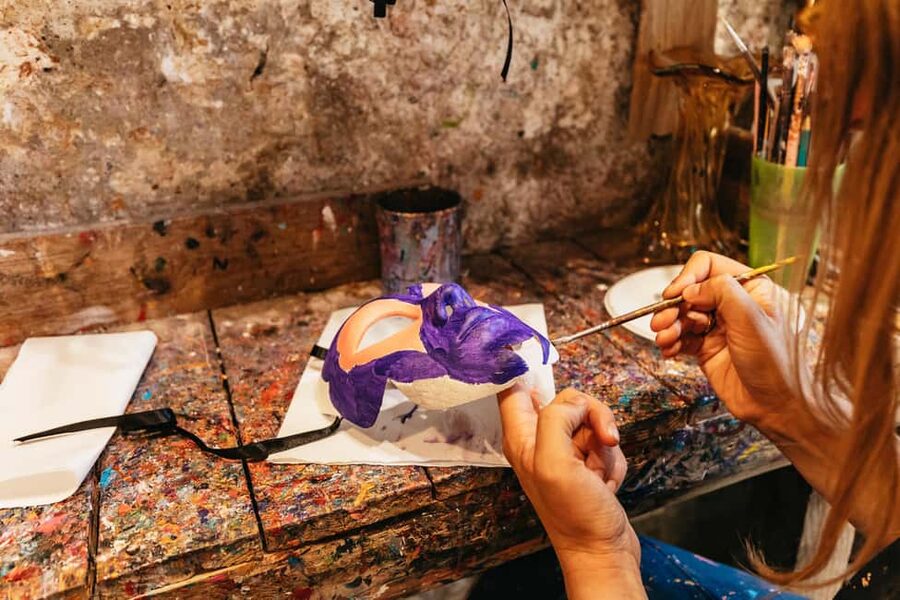
After you choose a mask, the instructor helps you plan the design. In some sessions, the artist lightly marks sections in pencil, showing where different colors can go. This is useful if you want a traditional look but do not feel confident drawing directly onto the mask.
You then apply the first coat of paint. The process is relaxed, but it is not simply free play with a box of crayons. The instructor can suggest color placement, show you how to build up the surface, and help you avoid muddy tones.
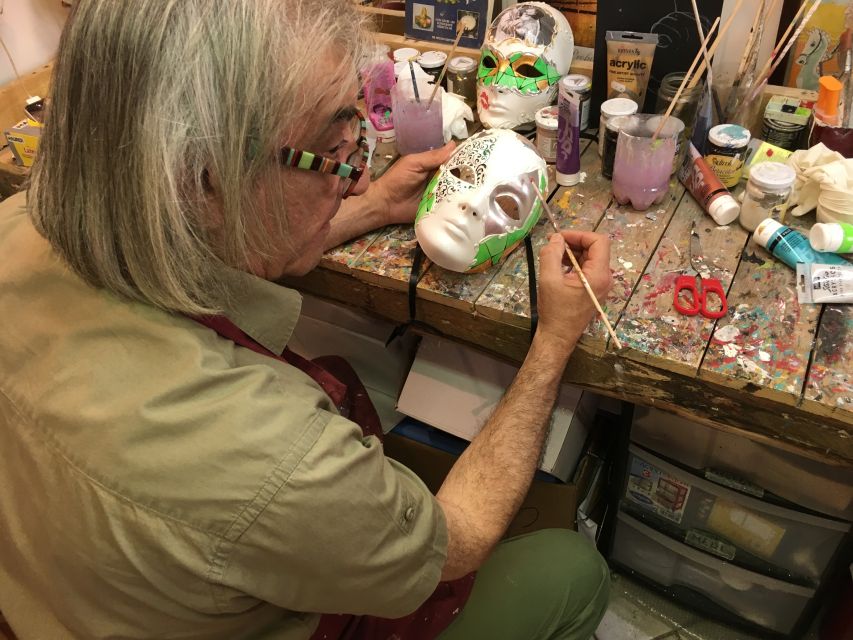
Drying is part of the rhythm. An instructor may use a heater to speed up the paint, allowing you to add another layer within the hour. You can then move on to glitter, sprays, three-dimensional paint, or other decorative supplies. The precise materials available may vary, but the workshops provide the paints and equipment you need.
The final details are often handled by the artisan. That might mean delicate filigree-style lines, extra decorative paintwork, or finishing touches that give the mask a more polished Venetian look. You still create the main design, but the professional finish helps the result look more complete than a child’s quick craft project.
That balance works well. Artistic beginners receive enough guidance to avoid feeling lost, while confident painters retain room to make their own choices. You are not expected to copy a model exactly.
The Carnival stories behind the paint
A good part of the experience happens while paint dries. The instructor explains Carnival and the older role of masks in Venetian life. The stories help you see the mask as more than a costume prop.
Venetian masks once allowed people to hide social identity and move through public life with a degree of anonymity. The tradition is tied to Carnival, but it also reflects Venice’s long fascination with secrecy, performance, and public ceremony.
The amount of history depends on the instructor and the group. Giorgio is described as sharing stories about Carnival, Venice, and his family mask-making business. Other artists have talked about their work, their training, and daily life in Venice. One instructor, Petra, was praised for clear instruction as a trained artist, while other sessions have been led by art students and family mask makers.
The workshop may be bilingual, even when you book in English. Instruction is offered in English, Italian, Spanish, and French. If your group includes more than one language, expect some explanations to be repeated or shared between languages. That can make the hour feel less formal, but the practical demonstration usually makes the process easy to follow.
I particularly like this mix of craft and local context. You are not sitting through a separate lecture, then being sent off to paint. The history arrives at the worktable, connected to the object you are creating.
A small class can make a big difference
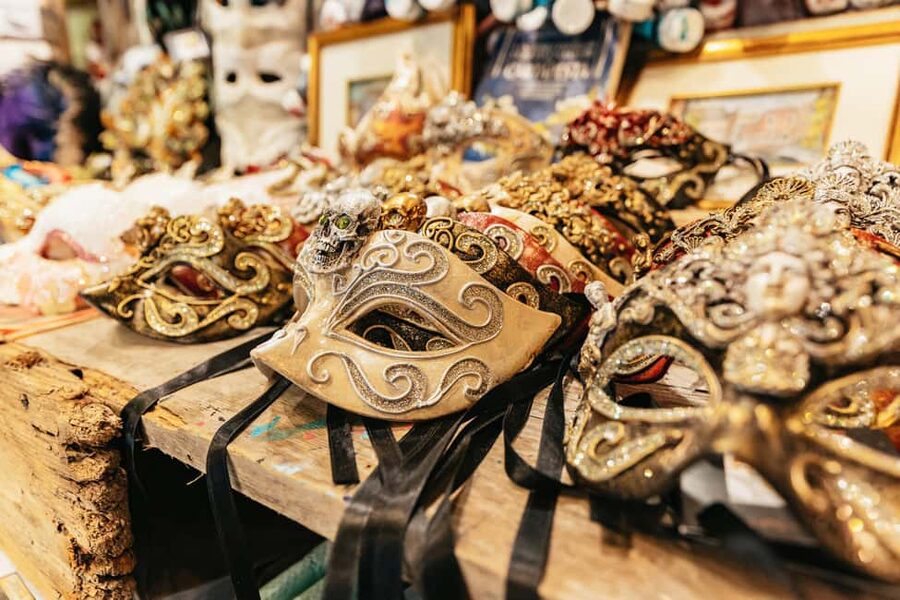
Group size affects the feel of the hour. A small group gives the instructor more time to help with color choices, answer questions, and add finishing details. Some bookings have had only three participants, and a few have been private by chance.
That is useful for families. Children can need help with paint, glitter, and drying time, while adults may want advice about a more restrained design. Several instructors have been described as patient with children as young as six, and older children around 11 to 15 have also enjoyed the activity.
Still, do not expect a private studio every time. The workshop can take place in an operating mask shop, with other people browsing nearby. That can add atmosphere, but it may also mean a less secluded workspace.
The activity suits couples particularly well. You can create matching masks, entirely different designs, or simply sit together with a shared project. It also works for grandparents and children, families, creative friends, and solo participants. One solo session received especially attentive instruction because the participant had the instructor’s full attention.
Same base, a different kind of day:
- Venice: Doge’s Palace Reserved Entry Ticket
★ 4.6 · 42,716 reviews - Venice: Grand Canal Gondola Ride with App Commentary
★ 4.1 · 18,908 reviews - Boat Trip: Glimpse of Murano, Torcello & Burano Islands
★ 4.3 · 15,699 reviews - Venice: Grand Canal by Gondola with Live Commentary
★ 4.1 · 13,681 reviews
What the finished mask is really worth
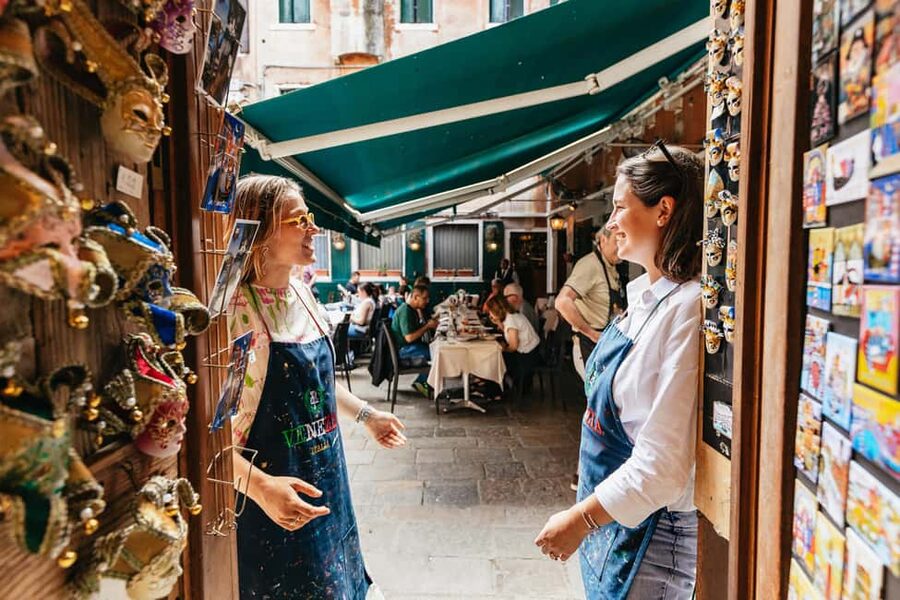
At $91 per person, this is not the cheapest one-hour activity in Venice. You are paying for the mask, supplies, an apron, instruction, and the artisan’s time. The value depends on what you want from a souvenir.
If you only want a decorative mask to hang on a wall, you may find ready-made options for less. But a shop-bought mask does not carry the same memory. You choose the design, paint it yourself, and watch an artisan finish it. The object becomes a record of your time in Venice rather than a purchase made in five minutes.
The price also makes more sense for families and couples who want an activity, not just an item. A museum visit can be more substantial, but it does not give you something to keep. A mask shop can sell more elaborate professional pieces, but those may cost more and do not involve you in the making.
Keep your expectations sensible. The mask you take home will be your creation, helped along by an artist. It will not necessarily look like a professional mask made entirely by the artisan. That is part of its charm. The decorative finishing work adds polish, but the color choices and hand marks remain yours.
A practical hour from arrival to departure
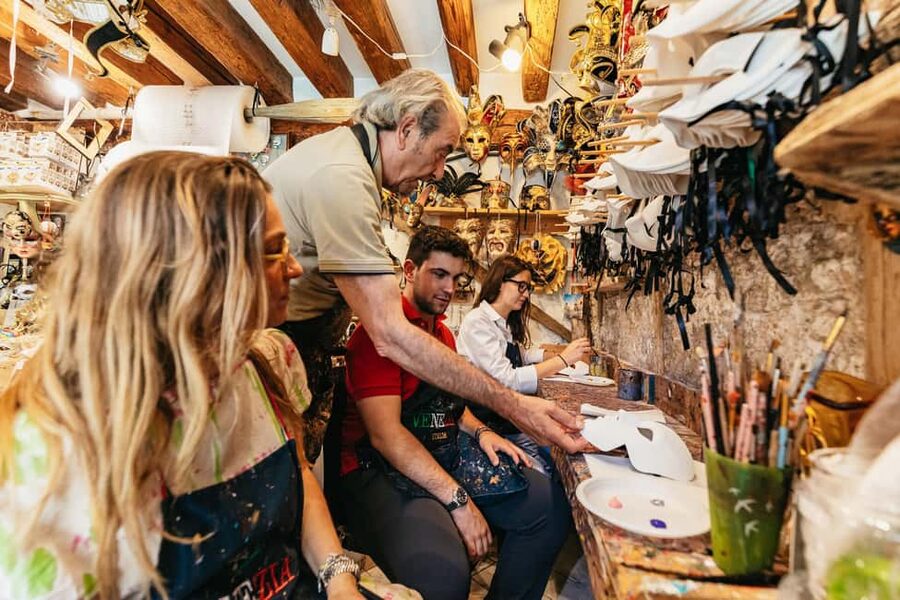
Allow a few minutes to find the location. One session was reported as difficult to locate, while another was easy to find. Meeting points can change by option, and a workshop inside a museum or prison setting may require you to show your ticket at the entrance.
Once inside, the usual flow is straightforward:
- Choose a mask shape.
- Hear an explanation of Carnival and mask traditions.
- Plan colors, sometimes with pencil guidance.
- Paint the main sections.
- Dry the layers and add further color.
- Apply glitter or other decoration if desired.
- Let the artisan add final details.
- Take the completed mask home.
An hour passes quickly when paint needs to dry and several people need help. If you want a highly intricate design, work efficiently from the beginning. Do not spend half the session trying to decide between colors.
Wear clothing suitable for painting. An apron is supplied, but paint workshops are not the place for your best white shirt. Pets are not permitted.
The mask should be ready to take with you at the end, but handle it with care while transporting it. The activity description promises a mask to take home, though it does not specify special packaging or shipping. Bring a bag with room for an awkward, fragile souvenir.
The location can change the experience
A small atelier near San Marco offers the most intimate version of the class. You may see finished masks on display, talk with the maker, and watch the shop continue its normal work around you. This setting connects the activity to the craft trade of central Venice.
The prison setting offers a different experience. It places the painting session beside the Doge’s Palace and may include access to prison exhibitions. That gives the hour extra historical atmosphere, though you should verify the ticket procedure before arriving.
Do not book based only on a photograph of one room. The meeting point may vary, and the exact setting depends on the option selected. If location is important to you, read the booking details carefully and allow extra time for Venice’s winding streets.
The activity is not fully accessible for wheelchair users or people with walking difficulties. The practical limitations are not described in detail, so contact the provider before booking if you have mobility needs.
Who will get the most from this activity
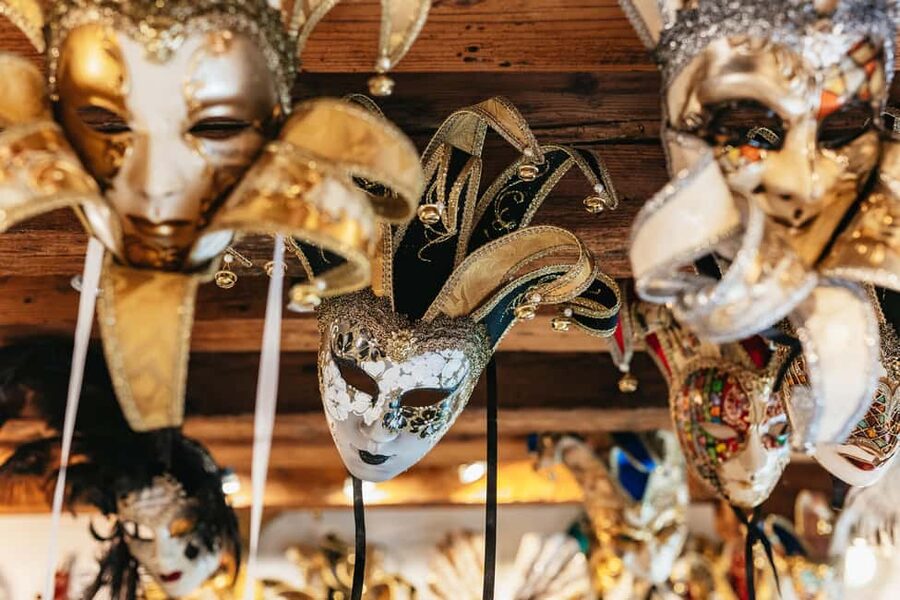
This is a good pick if you want a hands-on break from churches, bridges, and crowded sightseeing streets. It gives you a quiet creative task and a souvenir with a clear connection to Venetian tradition.
Families should consider it seriously. Children can paint their own masks, and the instructors have been patient and helpful with young participants. The one-hour length is also easier for children than a long museum tour.
Couples can use it as a relaxed shared activity. It is especially suitable if one of you enjoys art and the other prefers a light, social experience rather than a formal class.
Solo visitors are not left out. A small group can feel welcoming, and a solo booking may result in unusually personal guidance. People who already make decorative masks may also enjoy seeing an experienced artisan work and learning how the craft is handled in Venice.
This is less suitable if you want a serious technical course in paper-mâché construction. You decorate a prepared mask. You do not make the underlying mask from raw materials during this one-hour session.
Timing, cancellation, and high-water concerns
The class lasts one hour, although some sessions have run longer, especially when conversation or extra viewing was involved. Starting times depend on availability, so choose a slot that does not place pressure on your next reservation.
You can cancel up to 24 hours before the activity for a full refund. A reserve-now, pay-later option is also available, which helps if your Venice schedule is still changing.
Exceptional high tide can stop the workshop from operating. In that case, the activity may be postponed to a later day or refunded. Venice weather and water conditions can affect plans, so avoid scheduling this immediately before a train or airport transfer.
The workshop is offered in English, Italian, Spanish, and French. It may be bilingual, and the small-group option can provide more personal help.
Should you book the Venice Carnival Mask Workshop?
Book it if you want a personal souvenir, enjoy making things, or need a family activity that is easy to fit into a busy Venice schedule. The artisan guidance, Carnival stories, and final decorative touches make it more meaningful than simply buying a mask from a street stall.
Think twice if $91 feels high for a one-hour class, if you need full wheelchair access, or if you want to build a mask from the paper-mâché stage onward. Also check the exact meeting point, since the shop, atelier, and prison-museum setting can differ.
For most people who value a memory over a bargain, this is a worthwhile hour. You leave with a mask that may not be perfect, but it will be unmistakably yours.
FAQ
How long does the mask workshop last?
The scheduled duration is one hour. Some sessions may run a little longer if the group needs extra time or conversation continues.
What is included in the price?
The activity includes the paper-mâché mask, paints and other necessary supplies, an apron, instruction, and the finished mask to take home.
Can I choose the mask design?
Yes. You choose a mask from the available styles before decorating it. A particular design shown in a display may not always be available.
Which languages are available?
Instruction is available in English, Italian, Spanish, and French. The class may be bilingual.
Is the workshop suitable for children?
Yes. Children have taken part in the activity, and instructors have helped participants as young as six. Adult supervision and appropriate painting clothes are sensible.
Where does the workshop take place?
The meeting point varies depending on the option booked. Sessions may take place in a mask shop near San Marco, an artisan studio, or a historic prison setting near the Doge’s Palace.
Is the activity accessible for wheelchair users?
No. The activity is not fully accessible for wheelchair users or people with walking difficulties.
What happens if high tide prevents the workshop?
In exceptional high tide, the workshop may be postponed to a later day. If it cannot be rescheduled, the activity will be refunded.
Just added in Venice
- St Mark’s Basilica and Doge’s Palace Priority Entry Ticket★ 4.2 · 885 reviews
- Venice: Lords of the Night Prison’s Palace Cells & Tortures★ 4.0 · 1,067 reviews
- Venice: Hard Rock Cafe with Set Menu for Lunch or Dinner★ 4.4 · 1,102 reviews
- Venice: Doge’s Palace and St. Mark’s Basilica Guided Tour★ 4.6 · 458 reviews
- Venice: Walking tour, Doge Palace, & St. Mark’s Basilica★ 4.5 · 884 reviews
- Punta Sabbioni: Murano, Burano & Torcello Guided Boat Tour★ 4.3 · 236 reviews
- Murano: Glass Blowing Demonstration and Artistic Glass Gift★ 4.6 · 507 reviews
- Murano: Glass Blowing Demonstration with Optional Drinks★ 4.5 · 294 reviews
Workshops, compared.
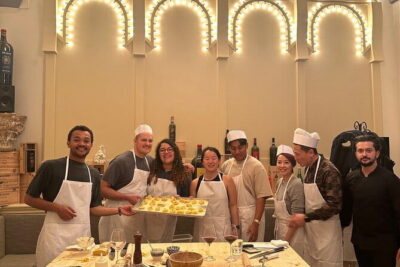
3 in 1 Cooking Class near Navona: Fettuccine, Ravioli & Tiramisu
Read our review →
Florence Pizza or Pasta Class with Gelato Making at a Tuscan Farm
Read our review →
Pizza-Making Workshop with Drink and Appetizer
Read our review →
Pasta & Tiramisu Class with Fine Wine by the Vatican
Read our review →
Authentic Pizza Making Class in Naples with Appetizers and Drink
Read our review →
Pasta Making Class with Wine, Limoncello, and Dessert
Read our review →
Browse the lists this tour appears in