
Reviewed · ITALY
Ravenna: UNESCO Mosaics Entry Tickets
Ravenna’s mosaics are the main event here: tiny colored tiles turn churches into glowing picture books of emperors, saints, prophets, and the life of Christ. This 7-day ticket gives you time to see the sights without racing from one doorway to the next.
I like the freedom to return to the town’s major monuments at your own pace, and I like the value of the five-monument option if you plan to see everything. The main drawback is that no guide is included, so you will need to bring your own context or arrange a separate guided visit.
Key points at a glance
- San Vitale’s Justinian and Theodora mosaics: See one of Ravenna’s great Byzantine interiors inside an unusual octagonal basilica.
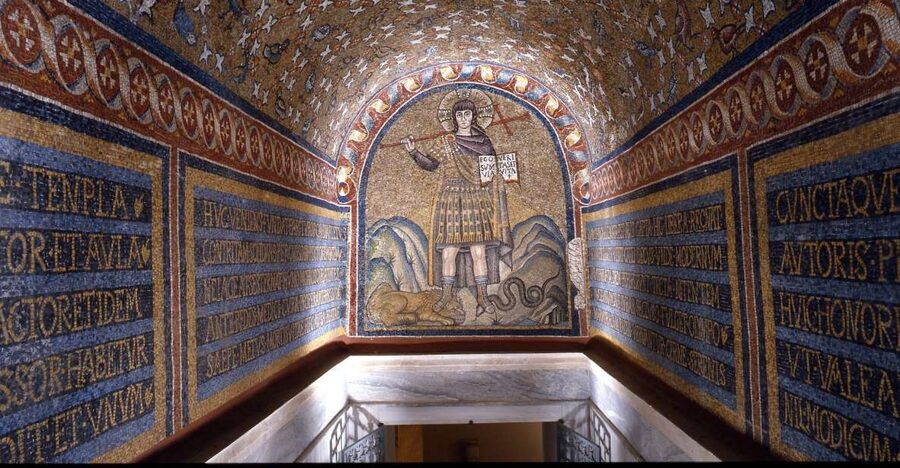
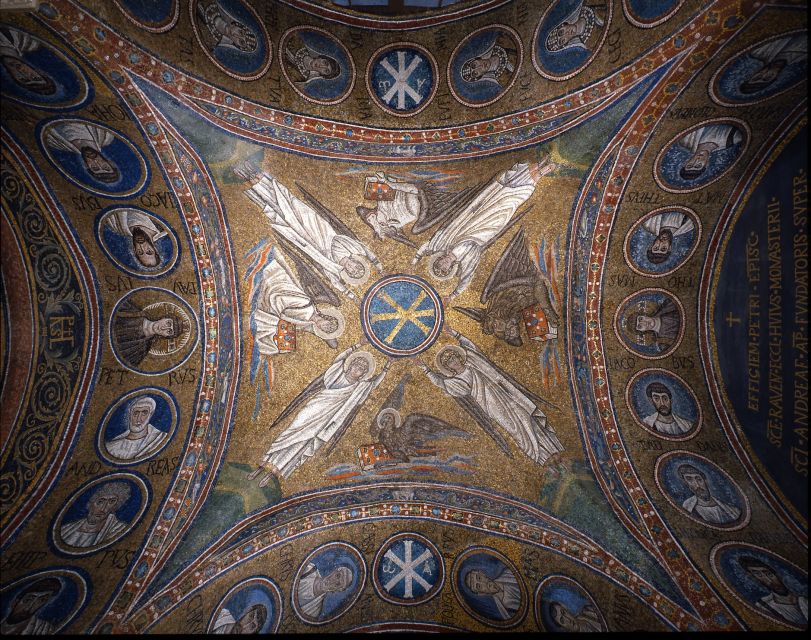
- St. Andrew’s Chapel: Visit a private bishops’ chapel filled with mosaics, inscriptions, cathedral treasures, and an ivory throne.
- Optional Galla Placidia Mausoleum: Add one of Ravenna’s most atmospheric early Christian interiors with the five-monument ticket.
- Sant Apollinare Nuovo: Follow an early mosaic cycle connected with the life of Christ.
- Seven days to use the ticket: Visit each included monument once, rather than squeezing everything into one afternoon.
- 20 percent bookshop discount: Useful if you want a guidebook or a closer look at Ravenna’s art and church history.
Why Ravenna’s mosaics deserve your time
Ravenna can look modest at street level. Its great treasures are often hidden behind plain brick walls and quiet entrances. Step inside, though, and the mood changes quickly. Gold backgrounds catch the light, processions stretch across the walls, and faces made from tiny glass and stone pieces still look remarkably alive after many centuries.
This ticket is designed for people who want to see Ravenna’s central monuments without buying separate admissions. The core combination includes San Vitale, Sant Apollinare Nuovo, the Archiepiscopal Museum, and St. Andrew’s Chapel. If you choose the five-monument option, you also get the Mausoleum of Galla Placidia and the Neonian Baptistery.
The monuments are within walking distance of one another, which matters. You do not need a complicated transport plan, and you can place the visits around lunch, a coffee stop, or a stroll through Ravenna’s center. The ticket remains valid for seven days, with one visit allowed at each monument, so you have a useful amount of breathing room.
I would give Ravenna at least a full day for the core sights. If you care about art, church history, or the transition from Roman to Byzantine culture, two days will feel more comfortable. The seven-day validity helps if Ravenna is part of a longer stay in Emilia-Romagna.
A few more things to do in Italy
- Vatican: Museums & Sistine Chapel Entrance Ticket
★ 4.5 · 144,003 reviews - Milan: Cathedral and Duomo’s Terraces Entrance Ticket
★ 4.6 · 61,054 reviews - Venice: Doge’s Palace Reserved Entry Ticket
★ 4.6 · 42,716 reviews
San Vitale and the imperial court in mosaic
Begin with San Vitale if you want the strongest first impression. This sixth-century basilica has an octagonal design that combines Roman building traditions with Byzantine ideas. The architecture is unusual before you even look upward, but the mosaics are what hold your attention.
The walls carry scenes from the Old Testament, assembled from thousands of small tiles. Look closely at the color changes, the folds of clothing, and the way figures seem to float against gold backgrounds. This is not quick, decorative work. The mosaics were built to make the church feel like a place outside ordinary time.
The most famous panels show Emperor Justinian I and Empress Theodora with their attendants. These are not casual portraits. They present imperial power, religious authority, and ceremony in a single image. Justinian holds a sacred vessel, while Theodora appears with an elaborate procession of attendants and a jeweled robe.
You will want time here. A hurried ten-minute visit lets you see the gold, but not the detail. Since the ticket is valid for a week, you can return to San Vitale if your first visit feels too short. That flexibility is especially useful when the church is busy or when your attention starts to fade after several mosaic-filled rooms.
The Mausoleum of Galla Placidia, if you choose five monuments
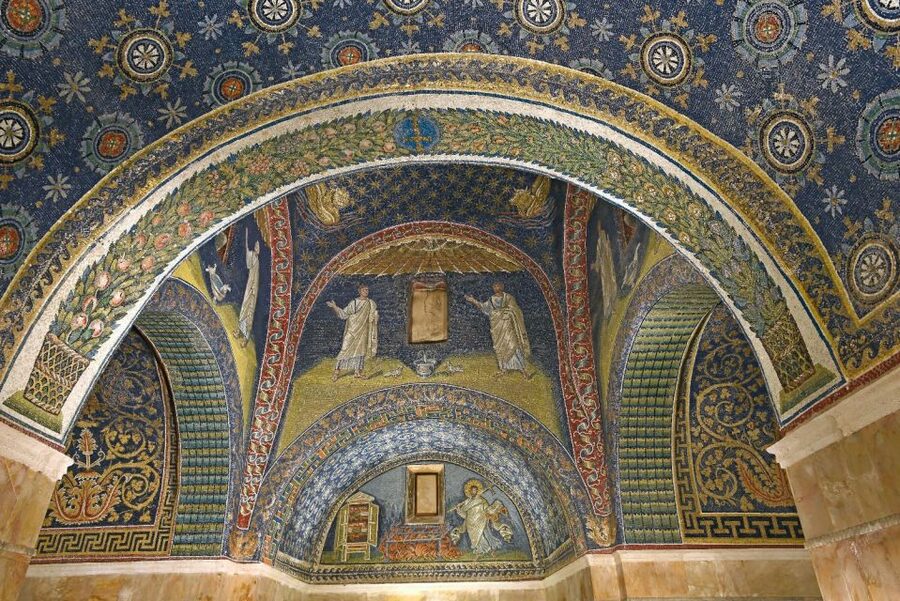
The Mausoleum of Galla Placidia is close to San Vitale and can be added with the five-monument ticket. It dates from the first half of the fifth century and offers a different mood from the larger basilicas.
The building is small, but its interior is covered with early Christian mosaics. The contrast between the plain exterior and the richly decorated inside is part of the experience. You enter a compact space, look upward, and find a starry ceiling and carefully arranged religious imagery.
This is one of the places where a few quiet minutes matter more than a fast checklist. The space is limited, and the atmosphere can change quickly when several people enter at once. If you choose this option, try to visit when you are not already tired from several churches.
The five-monument ticket costs $14 per person according to the supplied booking details. That makes the expanded option appealing if you intend to see both Galla Placidia’s Mausoleum and the Neonian Baptistery. The exact price can depend on the option selected, so check that you have chosen the five-monument version before booking.
Sant Apollinare Nuovo and its long mosaic procession
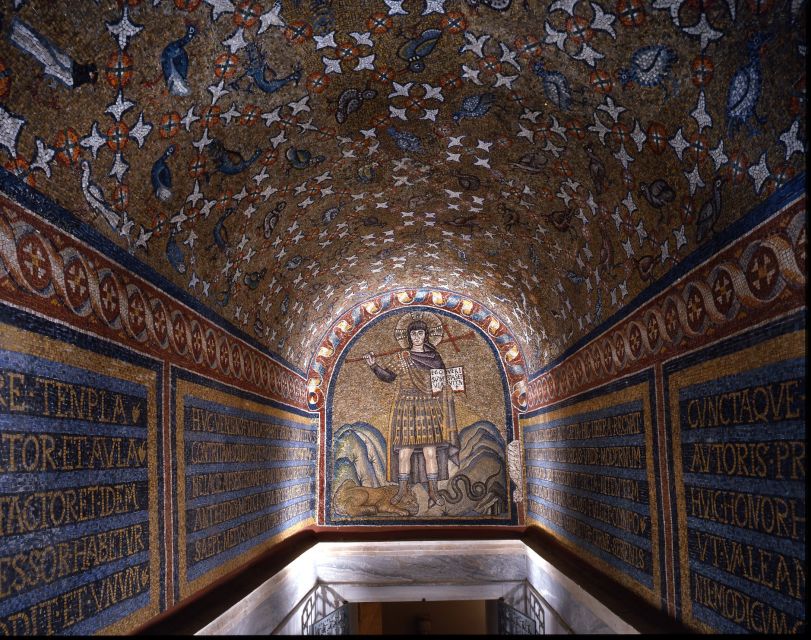
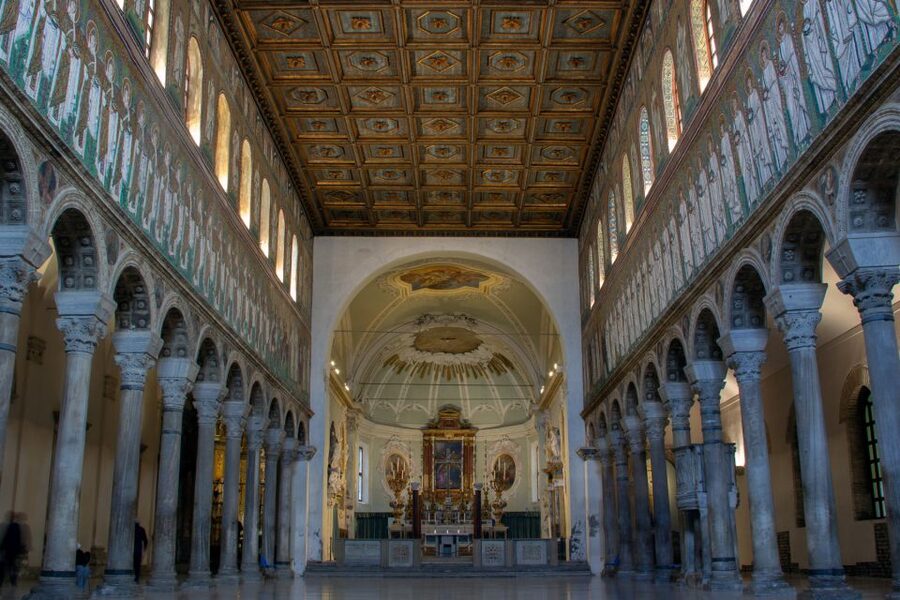
Sant Apollinare Nuovo was built in the sixth century by Ostrogoth king Theodoric the Great. From the outside, it is relatively restrained. Inside, the long nave is lined with Byzantine mosaics that reward a slow walk from one end to the other.
The church is known for its floor-to-ceiling decoration and for an early mosaic cycle connected with the life of Christ. The panels are not simply isolated pictures. They create a sequence, so your visit works best if you move along the walls and give yourself time to follow the scenes.
Parts of the decoration were altered over the centuries. Some mosaics were painted black under Pope Gregory the Great, apparently to keep worshippers focused on prayer. The church was also reconstructed after damage during World War I. Those details help you read the building as a changing place of worship rather than a perfectly untouched museum piece.
I like Sant Apollinare Nuovo as a second or third stop because it gives you a different scale from San Vitale. San Vitale feels concentrated and imperial. Sant Apollinare Nuovo stretches the story across a broad interior, letting you compare how artists handled space, movement, and religious figures.
Take comfortable shoes. You will spend much of the day on foot, and the ticket encourages you to see several monuments rather than one isolated church.
Same base, a different kind of day:
- Vatican Museums & Sistine Chapel Tour with Optional Basilica
★ 4.3 · 67,413 reviews - Colosseum, Roman Forum & Palatine Guided Tour
★ 4.7 · 63,148 reviews - Vatican Museums, Sistine Chapel & St Peter’s Basilica Guided Tour
★ 4.5 · 39,149 reviews - Rome: Colosseum, Palatine Hill and Roman Forum Guided Tour
★ 4.8 · 32,814 reviews
St. Andrew’s Chapel and the Archiepiscopal Museum
The Archiepiscopal Museum includes St. Andrew’s Chapel, one of the quieter parts of the visit. It was the private chapel of Ravenna’s bishops, and its small scale gives the mosaics a more personal feel than the grand basilicas.
The chapel also provides evidence of the religious disputes that shaped the early Byzantine period. Mosaics here refer to important people and places connected with Ravenna, and the room gives you a closer look at how belief and political power were presented together.
The museum also contains inscriptions, the cathedral treasure, and an ivory throne associated with Bishop Maximian. These objects add useful context to the wall mosaics. Instead of seeing only glowing surfaces, you get a sense of the church officials, ceremonies, and material culture connected with them.
This is the stop most likely to reward a guide or a good printed explanation. The ticket does not include a guided visit, and the visual impact is easier to grasp than the historical argument behind it. If you enjoy working things out for yourself, take your time with the displays. If you want every symbol explained, consider booking a separate guide.
One practical point: the Archiepiscopal Museum and St. Andrew’s Chapel are part of the included visit, not an optional extra in the core ticket. Make sure you do not skip them simply because the basilicas receive more attention.
The Neonian Baptistery for the five-monument option
The Neonian Baptistery is another extra with the five-monument selection. It was named after Bishop Neon, who continued its construction after his predecessor Ursus.
The dome mosaic is the key reason to enter. The decoration dates to the time of Bishop Neon and presents the baptism of Christ at the center, surrounded by an organized circular design. The structure is older and more compact than the large basilicas, so the dome can feel especially close and immediate.
You may find that your time inside is controlled more tightly than at the larger monuments. Plan your visit with that in mind, since one booking account wished for more time in the baptistery. Look carefully from the moment you enter instead of assuming you can linger indefinitely.
If your main aim is the major basilicas, the four-monument option may be enough. If you want the complete set and are interested in early Christian architecture, the five-monument ticket is the better buy.
Self-guided freedom, with a tradeoff
This is an admission ticket, not a guided tour. That distinction affects the whole experience. You can move at your own speed, pause for photographs without holding up a group, and return on another day during the seven-day validity period. You also avoid spending part of your day listening to a long introduction when you would rather look quietly.
The tradeoff is interpretation. The mosaics are full of biblical scenes, imperial symbols, saints, and references to church disputes. Without a guide, you may recognize the famous panels but miss why certain figures, gestures, or objects matter.
A separate guided visit can help. One guide named in the supplied information is Cinzia, who was praised for offering an informative and accommodating explanation of the works. That comment concerns a guided experience rather than this self-guided ticket, so do not expect Cinzia or another guide to accompany you automatically.
You can also use the 20 percent discount in the bookshops at the sites. If you want more background, this is a good reason to buy a small art or history guide after seeing the first monument. The discount will not replace a live guide, but it can make self-guided sightseeing more rewarding.
What the $14 price really buys you
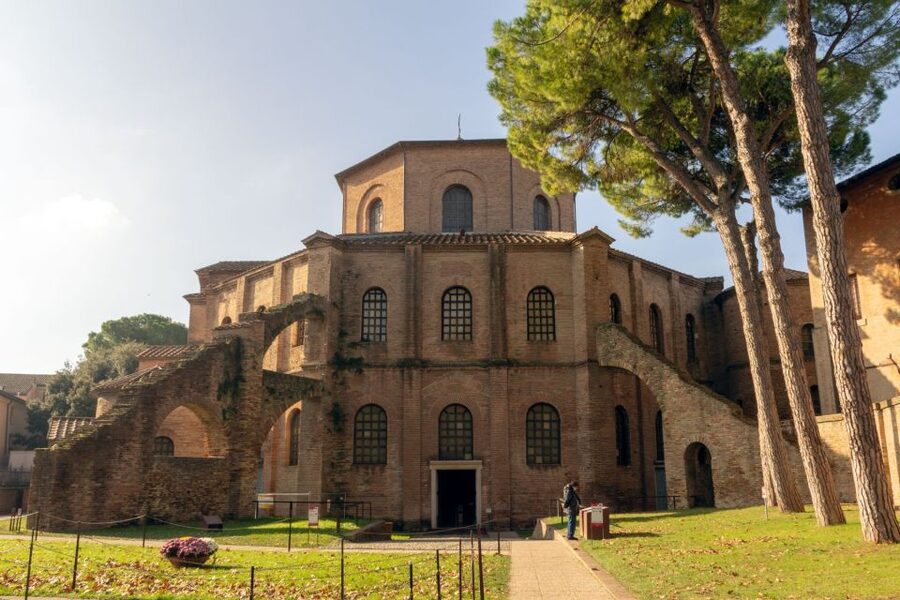
At $14 per person, the ticket offers strong value if you visit most of the included monuments. San Vitale alone is worth planning around, and adding Sant Apollinare Nuovo, the Archiepiscopal Museum, and St. Andrew’s Chapel gives you a fuller picture of Ravenna’s art.
The value improves with the five-monument option, provided you actually visit Galla Placidia’s Mausoleum and the Neonian Baptistery. Buying the larger ticket simply to collect access is less sensible if you have only a short stop and prefer a relaxed pace.
The seven-day validity is the key feature. You are not paying only for one afternoon. You can split the visits across several days, which makes the ticket a better choice for anyone staying in Ravenna rather than passing through for a few hours.
There is one administrative warning. An entry ticket has caused problems at a door before, with the issuer not immediately recognized. Bring the official ticket from the separate email and show it at the attraction entrance. If an entrance does not accept it right away, you may need to return to the ticket office to sort it out. That is inconvenient, so save the email and keep the ticket easy to open on your phone.
Dress rules, access, and useful planning
Dress modestly for the religious buildings. Your knees and shoulders must be covered, and clothing with rips, holes, or transparent material is not allowed. This is worth planning before you leave your hotel, especially in warm weather.
Flash photography is prohibited. You can take in the mosaics without flash, but follow the rule carefully to protect the interiors and avoid disturbing others.
The activity is wheelchair accessible. Since the monuments are spread through the city, allow yourself enough time between entrances and do not turn the visit into a race.
The ticket is valid for seven days, but each monument can be visited only once. Check the date and the selected option before setting out. The activity does not have a conventional meeting point or group departure. You begin by showing the official ticket at each attraction entrance, and the visit ends at the monument rather than returning you anywhere.
Who should buy this ticket
I recommend it most to independent visitors who like to set their own pace and want to see Ravenna’s major mosaic sites without committing to a guided group. It also suits art lovers, church-history enthusiasts, and anyone who would rather split sightseeing across two days.
Families may appreciate the freedom to leave a church when attention fades and continue later. The same flexibility helps visitors who need more time on foot or who want to rest between monuments.
I would think twice if you have only a very short stop and do not plan to see at least three of the included places. I would also choose a guided option instead if you want every scene explained as you go. The buildings are spectacular without commentary, but their meaning is easier to grasp with context.
Should you book Ravenna’s mosaic ticket?
Book it if you want Ravenna’s major early Christian and Byzantine monuments on a flexible schedule. The five-monument version is the strongest choice for a full visit, especially if you have time for the Mausoleum of Galla Placidia and the Neonian Baptistery.
Choose the smaller option if your time is limited or your main priorities are San Vitale, Sant Apollinare Nuovo, and St. Andrew’s Chapel. Either way, wear comfortable shoes, cover your shoulders and knees, and give yourself more than a quick glance at the mosaics. Ravenna’s best work is in the details.
FAQ
How long is the ticket valid?
The ticket is valid for seven days. You can visit each included monument once during that period.
Which monuments are included?
The core ticket includes San Vitale Basilica, Sant Apollinare Nuovo Basilica, the Archiepiscopal Museum, and St. Andrew’s Chapel. The five-monument option also includes the Mausoleum of Galla Placidia and the Neonian Baptistery.
Is a guide included?
No. This is an admission ticket and does not include a guided visit.
Can I visit the Mausoleum of Galla Placidia?
Yes, if you select the five-monument option. It is not included with the smaller selection.
Is the ticket wheelchair accessible?
Yes, the activity is listed as wheelchair accessible.
What should I wear?
Your knees and shoulders must be covered. Clothing with rips, holes, or transparent material is not allowed. Comfortable shoes are recommended.
Is photography allowed?
Flash photography is prohibited. The ticket information does not provide a separate general photography rule, so do not use flash inside the monuments.
Can I cancel the ticket?
You can cancel up to 24 hours in advance for a full refund.
Just added in Italy
- Highlights and hidden gems of Milan Bike Tour★ 5.0 · 491 reviews
- Private Milan Food Walking Tour of Brera★ 5.0 · 217 reviews
- Milan Gourmet Tour: A Premium Tasting Experience by Do Eat Better★ 5.0 · 241 reviews
- Leonardo3 The World of Leonardo: Tickets for the Interactive Exhibition★ 4.0 · 220 reviews
- Da Vinci’s Last Supper and Santa Maria delle Grazie Church Tour★ 4.5 · 218 reviews
- Learn to Cook Italian Recipes with an Italian Chef★ 5.0 · 283 reviews
- La Scala Theatre and Museum guided experience★ 4.5 · 664 reviews
- La Scala Theatre and Museum Tour in Milan With Private Guide★ 3.5 · 384 reviews