
Reviewed · CATACOMBS & UNDERGROUND TOURS
Rome: Catacombs of St. Callixtus Entry Ticket & Guided Tour
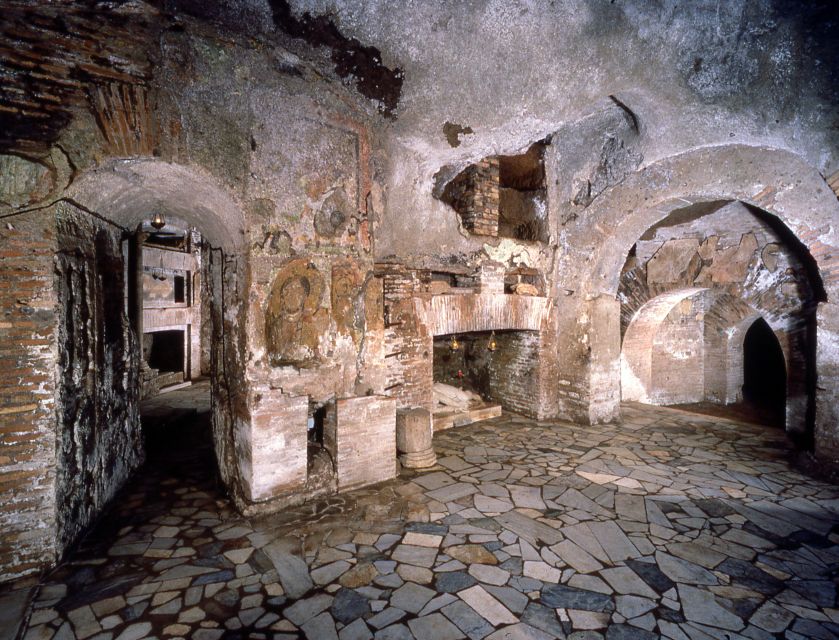
The most striking part of this experience is the setting: you leave modern Rome and walk below the Appian Way through narrow burial passages cut into the earth. The Catacombs of St. Callixtus once served a huge Christian community, and the Crypt of the Popes gives the visit a clear focus. I like the small price of $16 and the way a live guide turns bare corridors into a story about martyrs, bishops, families, and burial customs. I also like that the tour stays short, making it easy to fit into a busy day.
The main drawback is getting there. The catacombs sit outside central Rome, and public transport takes planning. The visit is also fully guided, photography is forbidden, and you will not see piles of bones or open skeletons. If you want a quiet history lesson in a cool underground setting, this is a fine choice. If you dislike enclosed spaces or need step-free access, choose another Roman sight.
Key points to know before you book
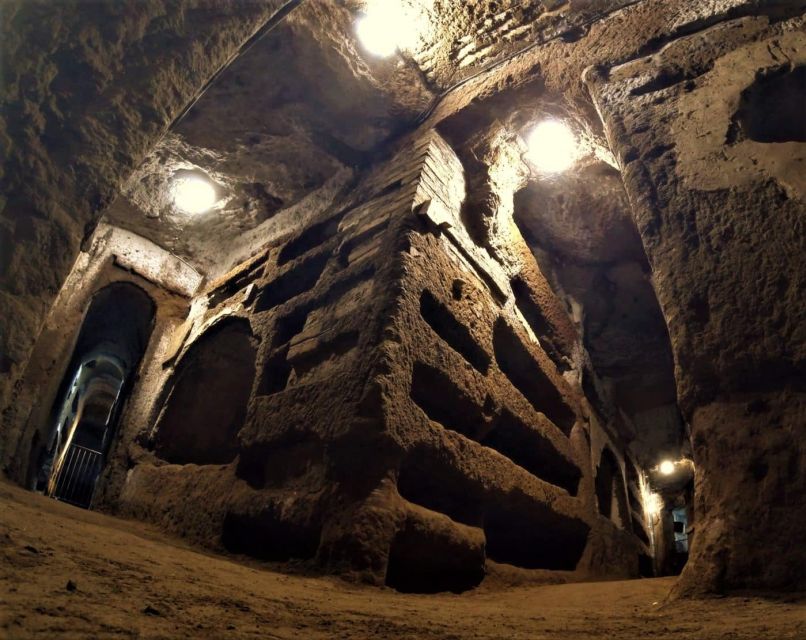
- The Crypt of the Popes is the tour’s central stop: Nine popes and three bishops were buried in this important chamber.
- The visit lasts about 30 minutes: It is short, but guides pack in a good deal of information.
- The catacombs are cool underground: Bring a light jacket or sweater, even in Rome’s summer heat.
- You stay with the group: This is not a self-guided wander, and photography is not allowed inside.
- Public transport works, but allow extra time: Bus connections from Termini or the Colosseum area are useful, though a taxi or rideshare may be simpler.
- Guides make a real difference: Guides including Francesca, Sam, Fr. Peter, Comfort, and Arishba have been praised for clear explanations and friendly delivery.
What the Catacombs of St. Callixtus reveal about Rome
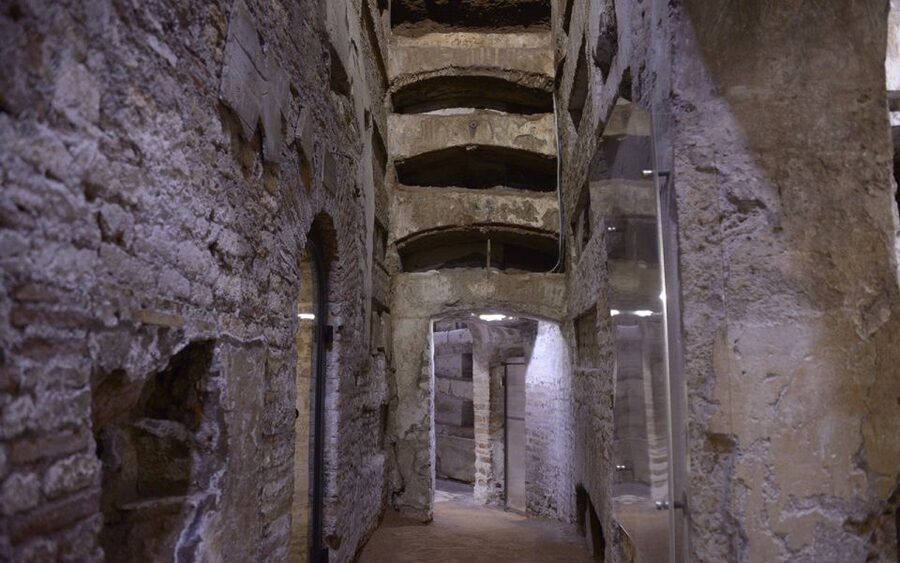
Rome is famous for marble temples, grand churches, and imperial ruins. The Catacombs of St. Callixtus show a quieter side of the city. Here, the focus is not on emperors or public monuments, but on ordinary Christian communities and the ways they cared for their dead.
The site is regarded as the oldest official cemetery of Rome’s Christian community. It grew into one of the city’s largest underground burial complexes, extending through a wide network of passages and chambers. The full system is associated with the burial of an estimated half a million Christians over time.
That number is hard to picture from ground level. Underground, you see only a guided section, not the entire complex. Even so, the close walls and repeated burial spaces make the scale clear. You begin to understand that this was not a single family tomb or a secret hideaway. It was a large cemetery used by a structured and growing community.
The name comes from Callixtus, a church leader associated with the administration of the cemetery. Your guide explains this background while leading you through the passageways. That personal connection helps turn a name on a sign into part of the site’s story.
More Underground Tours in Rome
- Colosseum: Underground and Ancient Rome Tour
★ 4.7 · 12,691 reviews - Rome: Crypts and Catacombs Underground Tour with Transfers
★ 4.6 · 5,341 reviews - Expert Guided Tour of Colosseum Arena OR Underground, and Forum
★ 4.5 · 5,041 reviews
Reaching the catacombs from central Rome
The meeting point is the catacomb ticket office, not a hotel or central meeting location. Go directly to the ticket office and show your voucher at least 10 minutes before the scheduled start. Allow extra time to locate the correct entrance and exchange your voucher for the entry ticket.
From Termini Station, take Metro A toward Anagnina to San Giovanni. From there, take bus 218 toward Ardeatina and get off at Fosse Ardeatine. The catacomb entrance is in front of you.
Another route begins on Metro B. Travel toward Laurentina and get off at Colosseo or Circo Massimo. From the nearby Terme Caracalla or Porta Capena bus stop, take bus 118 toward Appia or Villa Dei Quintili. Get off at Catacombe di San Callisto.
The exact trip depends on traffic and bus timing. One visitor needed to wait about 20 minutes for a bus, and several people found the location less straightforward than the central Roman sights. I would not cut this close to the start time. For a solo visit or a tight schedule, a taxi or rideshare may be worth the extra cost, especially for the return trip.
The area around the catacombs is peaceful and green, which makes a welcome change from central Rome’s crowded streets. You are not simply stepping from a bus into an underground tunnel. The site has open grounds around the entrance, so give yourself a moment to get oriented before checking in.
The guided route underground
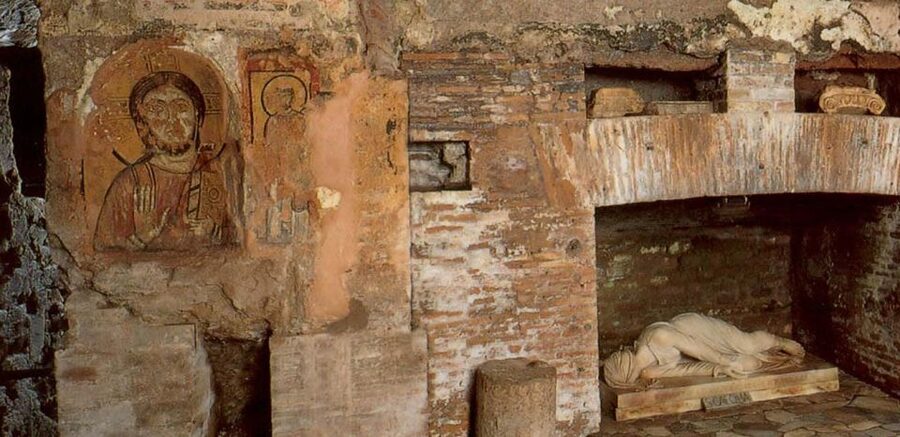
Once your group is assembled, the guide leads you below ground. This is a structured visit, not a ticket that lets you wander off alone. Stay with the group and listen carefully, since the meaning of each chamber depends on the explanation.
The underground temperature is around 15 degrees Celsius according to one detailed account. In hot weather, that cool air feels wonderful. In cooler months, it can feel chilly, so pack a light jacket or sweater. Wear comfortable shoes and practical clothing. The route is not suited to people with mobility impairments, and anyone with claustrophobia should think carefully before booking.
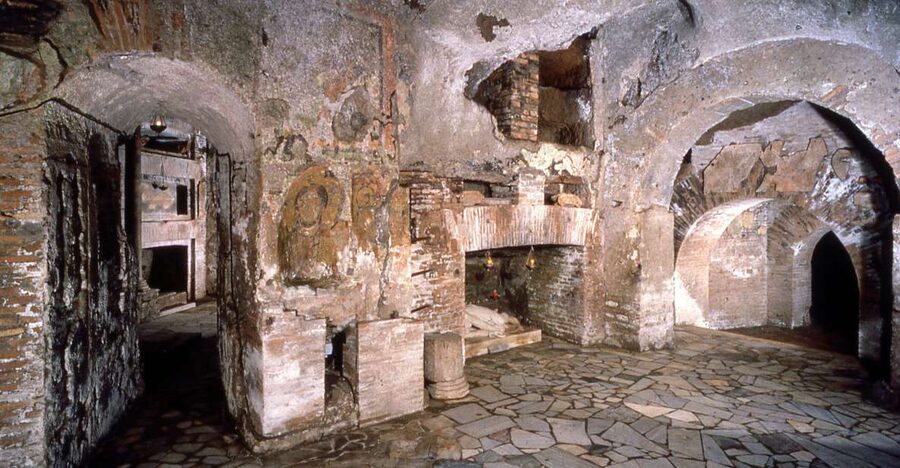
The passages are plain and powerful. You see cut walls, burial spaces, small chambers, and traces of decoration rather than grand architecture. The lack of spectacle is part of the point. This is a place of burial and prayer, and the atmosphere calls for quiet attention.
Your guide explains the work involved in creating and maintaining the catacombs, along with the customs of early Christian communities. The best guides use humor lightly but keep the tone respectful. Sam, Francesca, Fr. Peter, Comfort, Arishba, and several other guides have been singled out for making the short route easy to follow and engaging for both adults and older children.
The quality of delivery matters here. Without a guide, the corridors could seem repetitive. With one, the chambers become evidence of how people lived, worshipped, organized their communities, and honored their dead.
The Crypt of the Popes
The Crypt of the Popes is the strongest historical stop on the route. Nine popes and three bishops were laid to rest here, giving the room unusual importance in the story of early Christianity in Rome.
The chamber is not a lavish papal tomb in the later Renaissance sense. Its power comes from its age, purpose, and connection to the early Christian church. The room reminds you that Christian leaders were buried in a community cemetery, close to other members of the faith.
Your guide explains who was buried here and why the crypt matters. This is where the tour moves beyond a general look at underground tombs. You are seeing a place tied directly to the leadership and development of Rome’s early Christian community.
Do not expect a dramatic display of remains. The burial places are preserved, but the tour does not present exposed bones or skeletons. If that is what you came to see, you may find the experience more restrained than expected. If you are interested in archaeology, religious history, and the physical traces of old communities, the chamber is far more rewarding.
Other things to see below Rome:
- The Original Roman Crypts and Catacombs Tour with Transfers
★ 4.5 · 4,896 reviews - Rome: Colosseum Underground Small Group Guided Tour
★ 4.7 · 4,844 reviews - Rome: St. Peter’s Basilica, Dome Climb, and Underground Tour
★ 4.8 · 3,404 reviews - Rome: Colosseum Underground, Arena & Forum Tour
★ 4.7 · 3,272 reviews
The Crypt of St. Cecilia
The adjoining Crypt of St. Cecilia introduces a different kind of story. Cecilia was a Roman matron remembered for helping ensure that many Christian martyrs received proper burial.
The guide explains her place in the tradition and points out the connection between individual devotion and the wider cemetery. Her story helps you see the catacombs as more than rows of tombs. They also reflect the work of people who cared for the dead, protected burial customs, and maintained links among members of the community.
This part of the route is brief, but it adds a human scale. The Crypt of the Popes represents church leadership. The Crypt of St. Cecilia brings attention to a respected laywoman and her role in caring for others. Together, the two chambers give the tour more range than a simple list of names and dates.
Frescoes and the Cubicles of the Sacraments
The catacombs contain some of the oldest frescoes found in Rome’s underground burial sites. Their condition varies, but several wall paintings remain clear enough to appreciate. Your guide places them in the context of early Christian art and burial traditions.
You also visit Area I, where the Cubicles of the Sacraments are located. These rooms are especially useful for understanding how burial spaces could be organized for families or groups. They show that the catacombs were not just long corridors. The complex included distinct chambers with different uses and meanings.
Look closely, but do not expect museum-style lighting or a long pause at every detail. The tour moves at a steady pace, and the group must remain together. One practical suggestion is to stand where you can hear the guide clearly. Some visitors have wished for brighter lighting in darker corners and near steps, particularly for older people.
Photography is not permitted inside. That rule may disappoint you, especially when you see old frescoes that would make memorable photographs. It also helps keep the visit focused and respectful. Take in the details while you are there, and use the grounds outside for photographs.
Is 30 minutes enough?
Thirty minutes sounds brief, and it is. You will not see every section of a complex of this size. Still, the route covers the most important highlights: the burial passages, the Crypt of the Popes, the Crypt of St. Cecilia, old frescoes, and Area I.
The short format works well for families with older children and teenagers. One family booked the tour for two adults and two older teenagers who were not especially interested in ancient history, yet everyone found the visit worthwhile. That is partly because the guide keeps the information moving and answers questions at the end.
The tour may also run a little longer than the advertised 30 minutes, depending on the guide and the group. Do not count on this, though. Plan your day around the stated duration.
I would pair the catacombs with other sights along the Appian Way or nearby historic areas if you want a fuller outing. The catacombs alone may not fill half a day, but the trip out from central Rome takes enough time that combining nearby stops can make the journey more efficient.
The $16 price and what you receive
At $16 per person, this is one of Rome’s more affordable guided historical experiences. The price includes the catacombs entry ticket and a live tour in English, Italian, French, or German. Food, drinks, hotel pickup, and hotel drop-off are not included.
The value comes from the guide. You are not paying just to walk through an underground site. You are paying for the explanation of the burial customs, the people connected with the chambers, and the meaning of the artwork. A clear guide can make the difference between a fascinating visit and a confusing walk through dark passages.
The low price does not remove the practical costs. You still need to reach the site, and a taxi may be more convenient than public transport. The tour also has limits: no photography, no independent exploration, and no access for people with mobility impairments.
Free cancellation is available up to 24 hours before the scheduled visit, and you can reserve now and pay later. Those policies help if your Rome plans are still shifting, but the main decision should be based on your interest in the subject and your comfort underground.
Who should book this experience?
I would recommend it to adults interested in early Christianity, archaeology, Rome’s lesser-known sites, or the customs surrounding death and burial. It also works well for families with older children and teenagers who can manage a short, focused history visit.
The tour suits hot summer days particularly well. The cool underground air offers relief after walking through Rome, though you should bring a sweater rather than assume the temperature will feel comfortable for everyone.
I would not recommend it to anyone with claustrophobia or significant mobility limits. It is also not ideal if you want to photograph every stop or see visible skeletons. The catacombs are preserved burial chambers, not a horror attraction.
Book this tour if you want a short, affordable way to see a serious and unusual side of Rome. The trip requires more planning than a central attraction, but the Crypt of the Popes, early frescoes, and clear guiding give the visit real substance. Skip it only if the travel time, enclosed setting, or no-photo rule would outweigh your interest in the history.
FAQ
How long does the Catacombs of St. Callixtus tour last?
The scheduled duration is 30 minutes. Depending on the guide and group, the visit may last a little longer.
What is included in the ticket?
The price includes entry to the Catacombs of St. Callixtus and a guided tour. Food, drinks, hotel pickup, and hotel drop-off are not included.
Which languages are available?
Guided tours are available in English, Italian, French, and German.
Where do I meet the guide?
Go directly to the catacomb ticket office. Show your voucher at least 10 minutes before the scheduled tour time.
Can I take photographs inside?
No. Photography is not allowed inside the catacombs.
Will I see skeletons or human bones?
The tour shows burial places and explains their history, but it does not include exposed skeletons or piles of bones.
Is the tour suitable for people with mobility impairments?
No. The experience is not suitable for people with mobility impairments.
How do I reach the catacombs by public transport?
From Termini, take Metro A to San Giovanni, then bus 218 toward Ardeatina and get off at Fosse Ardeatine. From the Colosseum or Circo Massimo area, take bus 118 toward Appia or Villa Dei Quintili and get off at Catacombe di San Callisto. Allow extra time for the journey.
Just added in Rome
- Civitavecchia Private Transfer: From the Port to Rome Airport★ 5.0 · 309 reviews
- Civitavecchia Shore Excursion: Best of Rome Private Tour★ 5.0 · 247 reviews
- Civitavecchia Private Transfer from ship to FCO airport or Rome★ 5.0 · 245 reviews
- Food Tasty and History Tour in Civitavecchia★ 5.0 · 256 reviews
- Palatine Hill and Roman Forum Tour with Fast-Track Entrance★ 4.2 · 417 reviews
- Tivoli: Villa D’Este & Villa Adriana Pass & App Audioguide★ 4.4 · 364 reviews
- Tivoli: Villa D’Este Entry Ticket and App Audio Guide★ 4.3 · 191 reviews
- Vatican Museums & Sistine Chapel Skip-the-Line Guided Tour★ 4.6 · 254 reviews
Catacombs & Underground Tours, compared.
Naples Underground Entry Ticket and Guided Tour
Read our review →
Colosseum: Underground and Ancient Rome Tour
Read our review →
Catacombs of San Gennaro Entry Ticket & Guided Tour
Read our review →
Crypts and Catacombs Underground Tour with Transfers
Read our review →
Expert Guided Tour of Colosseum Arena OR Underground, and Forum
Read our review →
The Original Roman Crypts and Catacombs Tour with Transfers
Read our review →
Colosseum Underground Small Group Guided Tour
Read our review →Browse the lists this tour appears in