
Reviewed · ANCIENT RUINS & TEMPLES
Syracuse: Neapolis Archaeological Park Small Group Tour
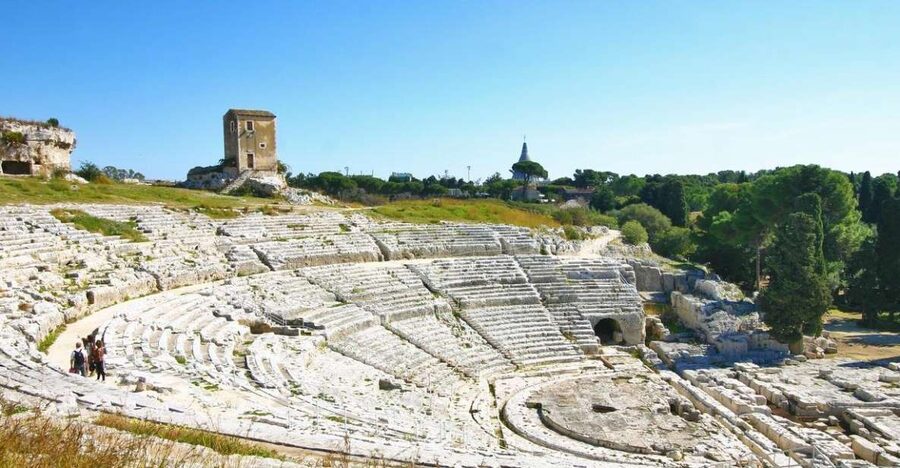
Syracuse’s Neapolis Archaeological Park packs Greek theaters, Roman ruins, a stone quarry, and the famous Ear of Dionysius into one walk. The ancient theater, cut into Temenite Hill, is the star: from its upper levels, you get broad views toward the bay while standing in a place built for drama more than two thousand years ago.
I like the way this tour connects separate ruins into one story, and I like the small-group format, which makes it easier to hear the guide and ask questions. Guides such as Eva and Federica are often praised for clear explanations and a lively approach. The main drawback is the brisk 90-minute schedule. You see a lot, but this is an introduction rather than a slow archaeological study.
Key points to know before you book
- The Greek Theater is the main event: Cut into the rock of Temenite Hill, it combines impressive engineering with views over Syracuse’s bay.
- The Ear of Dionysius is more than a strange-shaped cave: Your guide explains the quarry’s role and the grotto’s unusual echo.
- You cover both Greek and Roman Syracuse: The route includes the Altar of Hieron and the Roman amphitheater, not just the theater.
- Small groups make a real difference: Groups of about 10 have been reported, while radio receivers are available for large shared groups.
- The tour is short but full: Expect roughly 1.5 hours, with about 15 minutes at several stops and 30 minutes at the Greek Theater.
- Check the language carefully: The activity information lists Italian as the tour language, and in rare small groups the explanation may be given in two languages.
Why Neapolis deserves a guided visit
Neapolis means new city, but the remains here are anything but simple. Syracuse was one of the most important Greek settlements in the Mediterranean, and this park brings together the civic, theatrical, religious, and practical sides of ancient life.
I find archaeological parks much easier to understand when someone explains how the pieces relate. On your own, you can admire the stonework and take good photographs, but it is harder to grasp why a quarry sits beside a theater, how the altar fit into the ancient city, or why Roman builders later used the same area.
This tour gives you that framework without taking up half a day. The guide walks with you from the quarries to the theater, then on to the altar and amphitheater. That order gives the visit a natural flow, moving from cut stone and local geology to public entertainment, religious ceremony, and Roman engineering.
The certified guides named in past bookings include Eva, Federica, Galina, Anne-Marie, and Carmine. Eva is especially associated with clear storytelling, good pacing, and answers to questions. Federica is noted for making Greek and Roman culture easy to follow. Your guide can vary, but the strongest part of this experience is the human explanation rather than simply being escorted from one monument to the next.
Other ruins to walk round near Sicily:
- Agrigento: Valley of the Temples Skip-the-Line Sunset Tour
★ 4.5 · 1,512 reviews - Agrigento: Valley of the Temples Ticket & App Audioguide
★ 4.3 · 1,160 reviews - Agrigento: Valley of the Temples E-Scooter Tour
★ 4.6 · 557 reviews
Latomie del Paradiso, where the park begins below ground
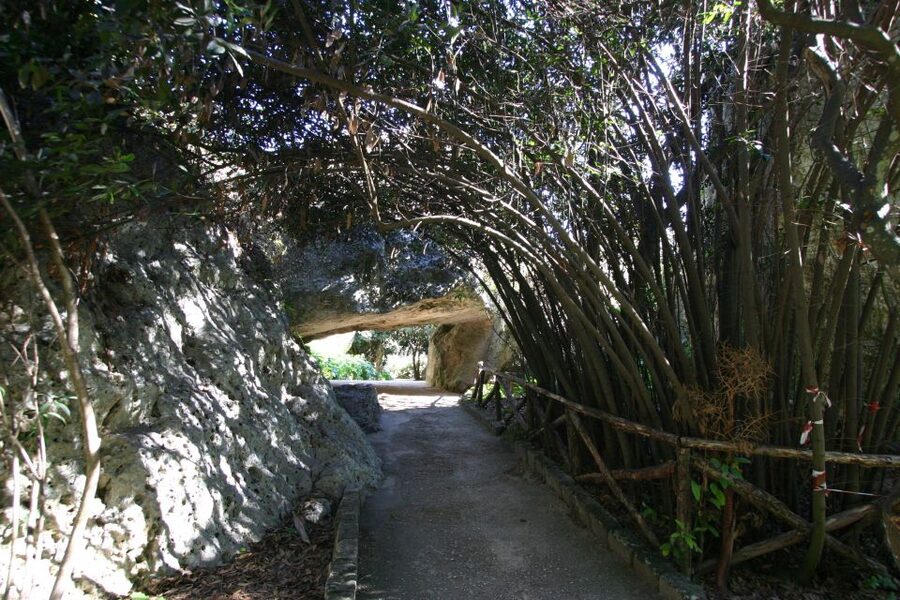
The visit starts at the entrance gate near Largo Anfiteatro, 2, although the exact meeting point can vary by booking option. From there, you enter the Latomie del Paradiso, an ancient stone quarry now softened by plants and open air.
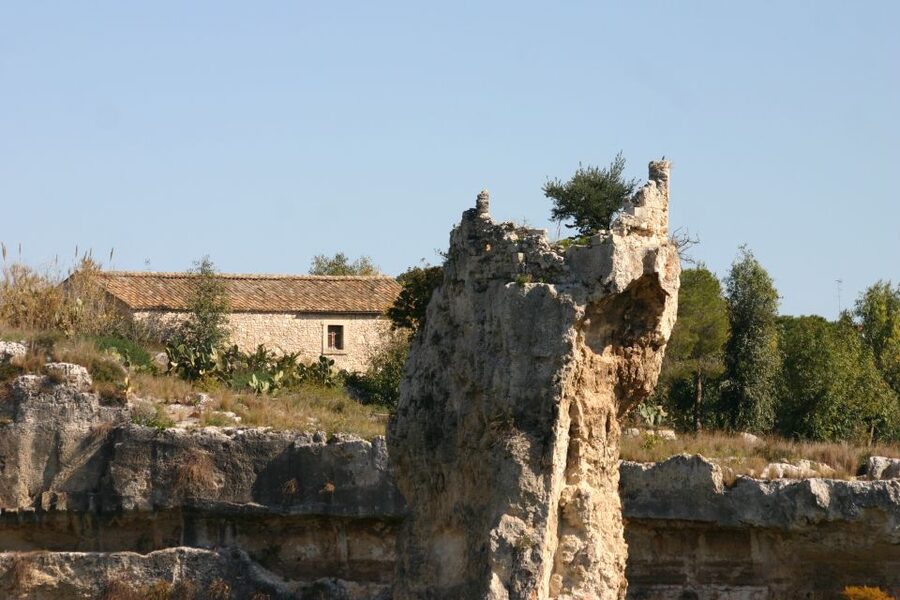
A latomia was a quarry cut into the rock. In Syracuse, these excavated spaces were important sources of building stone and also became linked with darker chapters of the city’s past. Your guide helps you read the walls as working spaces rather than seeing them as random cliffs.
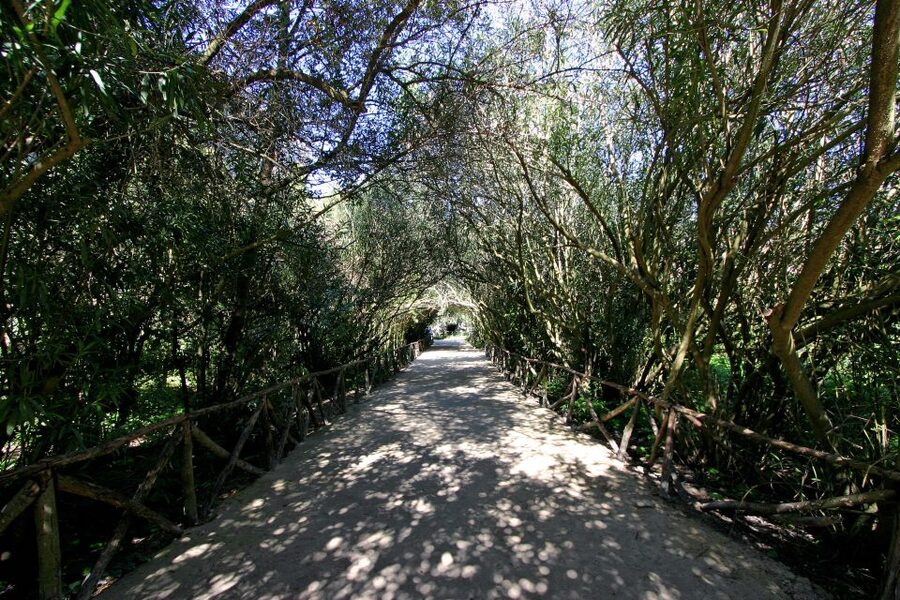
The setting is one of the first pleasant surprises. The quarry is not bare rock from end to end. Local flora grows through the site, and spring visitors may find orange and lemon blossom adding scent to the walk. It is a good reminder that this is an archaeological park, not a collection of isolated monuments in a dry museum yard.
The scheduled explanation here lasts about 15 minutes. That is enough for the basic story, though anyone fascinated by ancient quarrying may want more time than the group schedule allows.
Grotta dei Cordari and the Ear of Dionysius
The route continues to Grotta dei Cordari, another quarry space, with about 15 minutes of guided attention. The name is tied to rope makers who used the grotto in later times, and the stop helps show how these large excavated spaces continued to serve local purposes long after the Greek period.
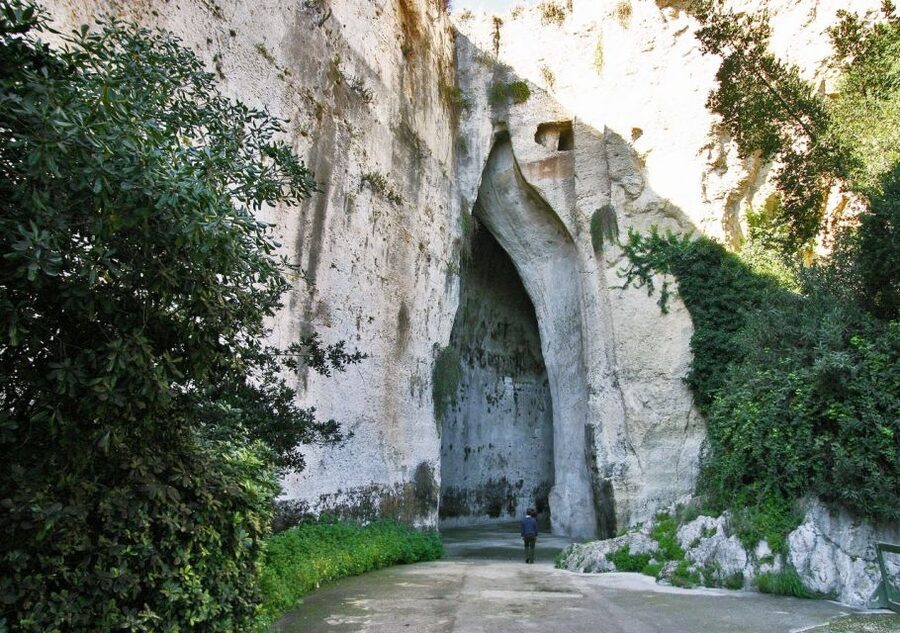
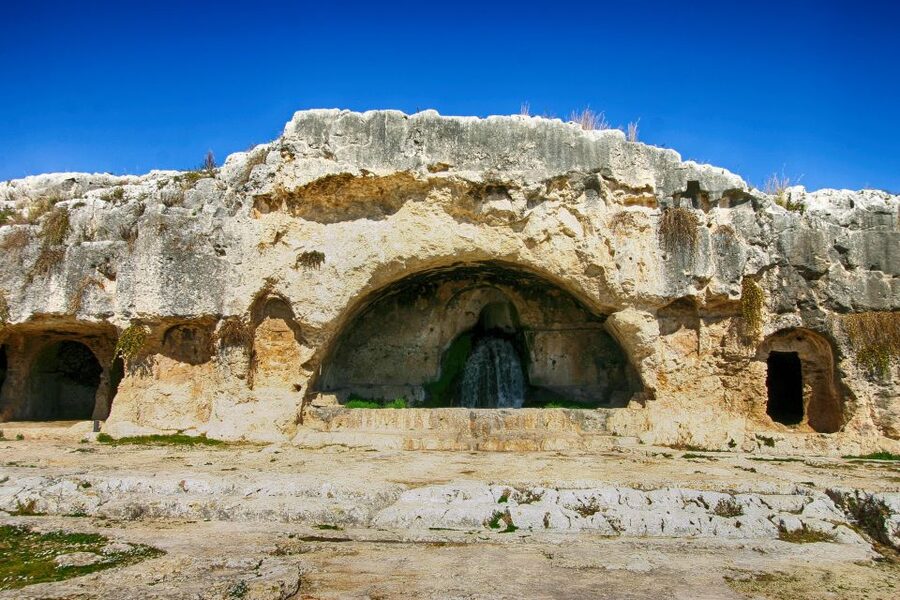
Then comes the park’s most memorable oddity, the Ear of Dionysius. This tall, curved grotto is famous for its shape and its echoing acoustics. The name is connected with the tyrant Dionysius, though the story surrounding the grotto has been repeated and embellished over time. Your guide can separate the physical features of the site from the legend attached to it.
Inside, the shape does much of the work. The walls rise in a narrow curve, and sound behaves in an unusual way. You do not need a long lecture to understand why this became one of Syracuse’s best-known sights, but the explanation adds useful context.
Allow around 15 minutes here. You will have time to look closely and take photographs, but this is not a private exploration of every corner. The group keeps moving, and the surface underfoot may not feel as easy as a city sidewalk.
The Greek Theater and the view toward the bay
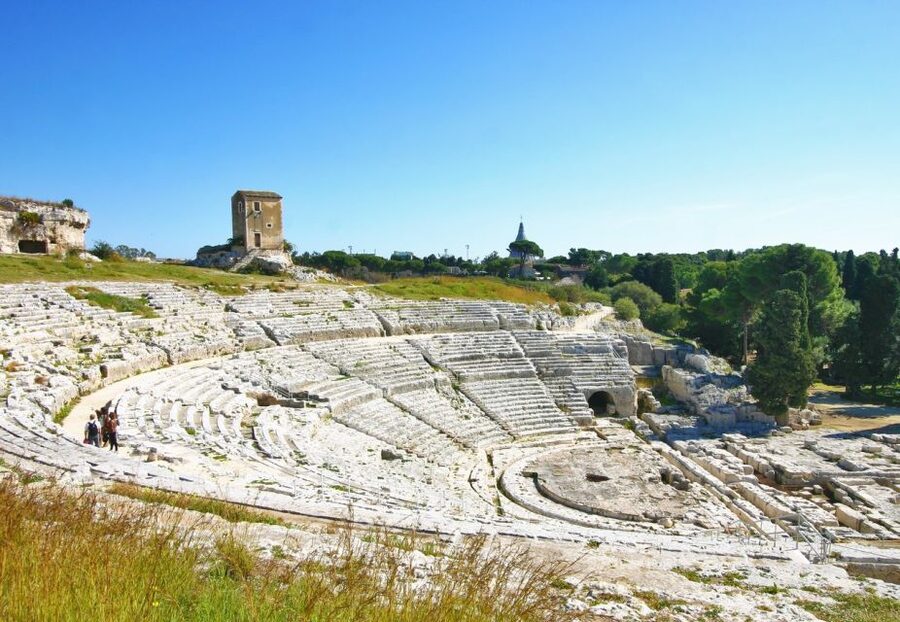
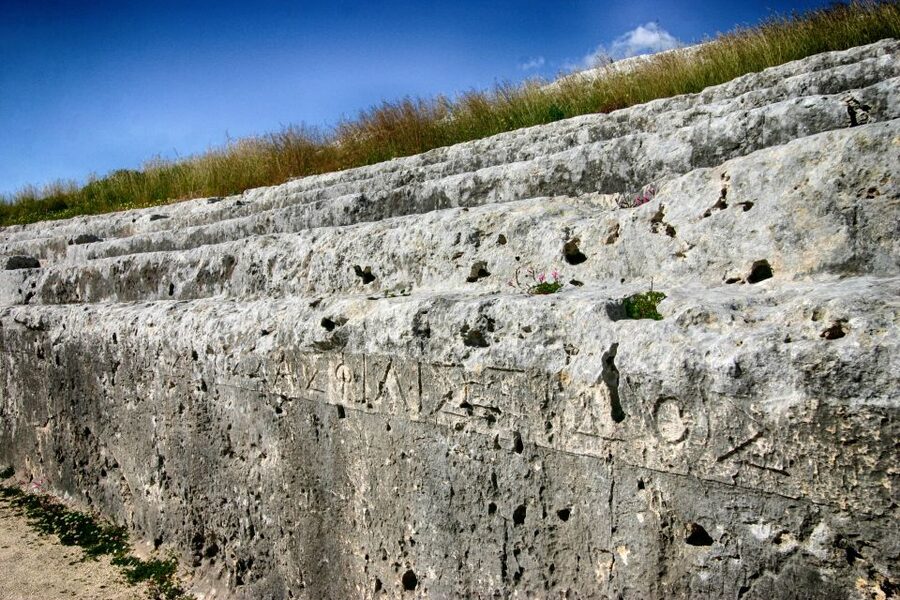
The Greek Theater receives the longest stop, about 30 minutes, and rightly so. It is cut directly into Temenite Hill, using the slope as a natural seat bank. That choice gives the theater both its remarkable form and its commanding outlook.
I like this part of the tour because the site makes sense even before the guide begins speaking. You can see how the rows curve around the performance space and imagine the scale of an audience gathered here. Then the guide explains what you are looking at, how the theater fit into Greek public life, and why Syracuse mattered in the ancient world.
The view is part of the experience. From the theater, you look across the surrounding area toward the town’s bay. It is not only a pretty photograph. The position helps you understand why the hill was useful, and it gives the ruins a sense of connection to the modern city.
Several people with children and teenagers have found the explanations accessible, which matters at a site where dates and rulers can quickly become a blur. The best guides use stories and comparisons rather than reciting a list of names. Eva, in particular, is noted for adjusting the pace and content for families.
You will have time for photos, but do not expect a long period to sit quietly in the theater. If you are a serious ancient theater enthusiast, plan to return independently if your schedule allows. The guided visit gives you the essentials; it does not replace an unhurried look.
Same base, a different kind of day:
- From Milazzo: Panarea and Stromboli Boat Trip by Night
★ 4.2 · 1,605 reviews - From Trapani: Day Cruise to Favignana & Levanzo with Lunch
★ 4.3 · 1,483 reviews - Stromboli: Sunset Trekking at Sciara del Fuoco
★ 4.6 · 1,372 reviews - From Milazzo: Lipari and Vulcano Day Trip
★ 4.3 · 1,166 reviews
The Altar of Hieron II and Syracuse’s public scale
After the theater, the tour moves to the Altar of Hieron II, with about 10 minutes of explanation. The altar is a useful stop because it shifts your attention from performance to ceremony and public power.
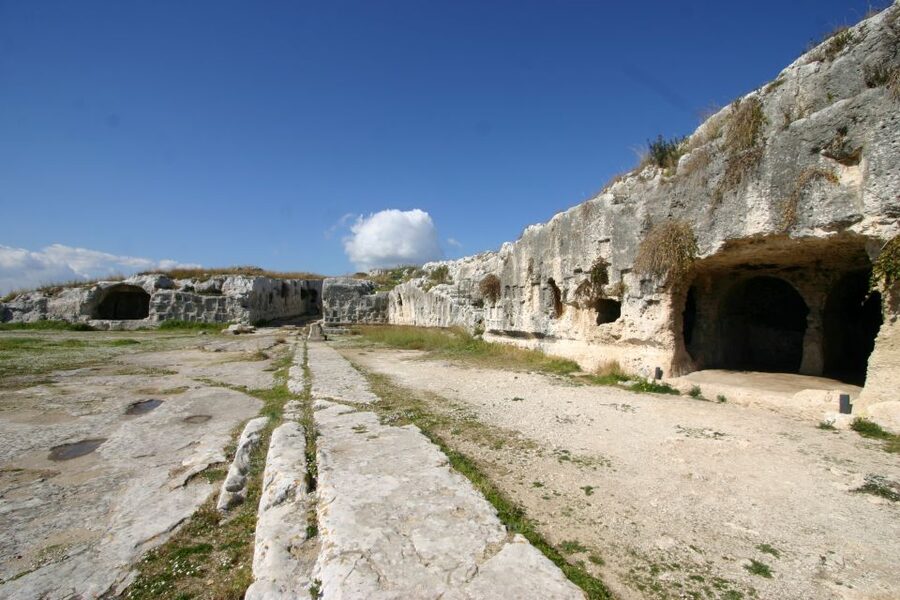
Even if the remains are less immediately dramatic than the theater, the scale helps you think about the resources available to Syracuse’s rulers. Your guide places the monument within the city’s Greek period and explains its role in public religious life.
This is one of those stops that benefits greatly from a guide. A standing wall or broad foundation may not explain itself. With a few clear details, you can see the site as part of a major civic complex rather than just another pile of ancient stone.
The short timing is also practical. By this point, you have already walked through quarries and climbed around the theater area. Ten focused minutes keeps the visit moving without leaving you worn out.
The Roman Amphitheater closes the historical loop
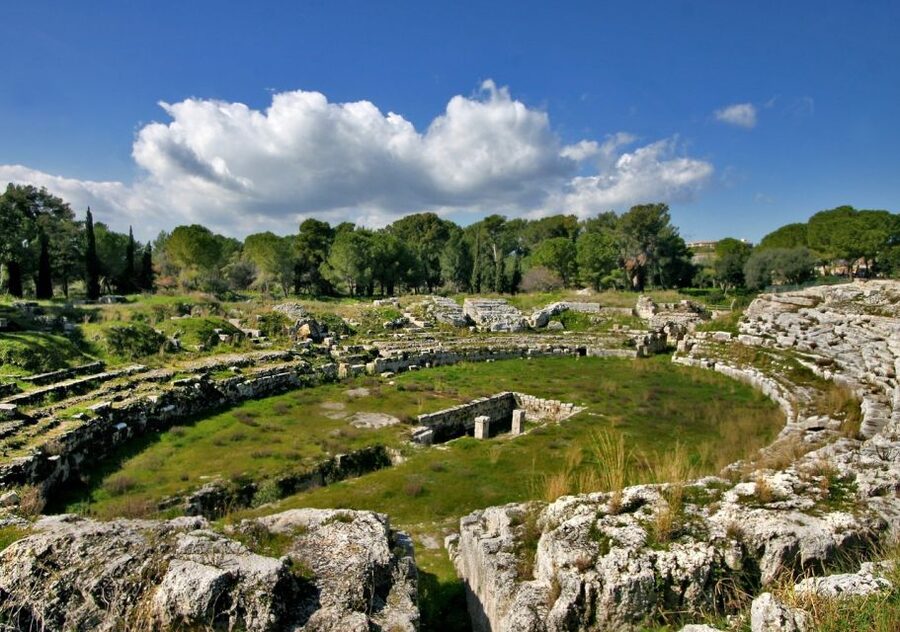
The final major stop is Syracuse’s Roman amphitheater, with about 15 minutes of guided attention. This brings a later period into the picture and shows how the area continued to matter after Greek Syracuse gave way to Roman rule.
I value this change of period because it prevents the park from becoming a single Greek-history lesson. The Roman amphitheater has a different purpose and feel from the Greek Theater. Seeing both helps you compare public entertainment, architecture, and the way successive powers reshaped the city.
Access to the amphitheater can be affected by closing arrangements. On one occasion, a guide had to advocate for the group when that section was being closed early, so it is worth understanding that the exact order or access can sometimes depend on site operations. This is not a reason to avoid the tour, but it is a reminder that ancient ruins remain working public sites with opening rules.
The tour finishes back near Largo Anfiteatro, 2, with drop-off arrangements depending on the option booked. You leave with the main monuments covered, rather than ending deep inside the park with no clear direction.
Is $26 good value for 90 minutes?
At about $26 per person, this is a fair price if you want the park explained rather than simply entered. A separate visit on your own may offer more freedom, but you would need to supply the historical context yourself. At Neapolis, the difference between seeing stones and understanding a city is substantial.
The value is strongest for first-time visitors, families, and anyone who does not already know Greek and Roman Syracuse. The guide points out details you might otherwise pass, answers questions, and ties the theater, quarries, altar, and amphitheater together.
Check the booking choice carefully because entry tickets are included only if that option is selected. The activity description also lists radio receivers for the large shared-group option, which can help when the group grows. Smaller groups of around 10 have the advantage of a more personal feel and usually make it easier to hear without equipment.
A private tour costs more than a shared tour in many sightseeing settings, though the supplied price is stated per person rather than broken down by option. The benefit is control over pace and questions. A private visit has also worked well for families, including one adjusted for an eight-year-old child.
Timing, heat, and walking comfort
Ninety minutes is an efficient length for a major archaeological park. You cover the headline sites without spending an entire morning among ruins. Still, the route involves walking between quarries, theater spaces, and open archaeological areas, so comfortable shoes are sensible.
Summer heat matters. One July booking worked especially well in the evening because the daytime conditions were very warm. If starting times are available, check the forecast and consider a later slot during hot months.
The park is listed as wheelchair accessible, but the experience remains a walking tour through an archaeological site. The supplied information does not specify which paths are easiest, so if access is important for your party, confirm the meeting point and route with the provider before booking.
Bring a passport or identity card. Cancellation is free up to 24 hours before the tour, and the reserve-now, pay-later option can help if you are still arranging a Sicily itinerary.
Who will get the most from this tour?
I would choose this experience if you want the main story of Neapolis in one organized visit. It is particularly suitable for:
- First-time visitors to Syracuse
- Families who want history explained in a way children can follow
- Anyone interested in both Greek and Roman remains
- Cruise or short-stay visitors with limited time
- People who prefer asking questions instead of reading every sign
- Visitors who want a shared group but not a huge all-day excursion
Independent explorers may prefer to buy entry and walk at their own pace. You will have more time for photographs, quiet corners, and repeat visits to the theater. The tradeoff is that the quarries, altar, and amphitheater can be harder to interpret without help.
Language deserves special attention. The activity information lists Italian as the tour language, and in rare cases a very small shared group may receive explanations in two languages. Because many past bookings describe guides speaking clearly to international groups, it is still wise to confirm the language offered for your date rather than assume it.
My verdict on Neapolis Archaeological Park
I would book this tour if you want a clear, compact introduction to Syracuse’s ancient monuments. The Greek Theater and Ear of Dionysius provide the visual drama, while the altar and Roman amphitheater give the visit useful historical range.
The experience is not designed for an archaeologist who wants every layer explained. The 1.5-hour schedule moves steadily, and the occasional site-access change may affect the final stop. But for $26, a licensed guide, and a route that covers the park’s essential monuments, it offers strong value.
Book it when you want the ruins to make sense. Skip it only if you prefer complete independence, already know the site well, or need a much slower visit for photography and close study.
FAQ
How long does the Neapolis Archaeological Park tour last?
The tour lasts about 1.5 hours. The Greek Theater receives the longest visit at around 30 minutes, while several other stops take about 10 to 15 minutes.
What monuments are included?
The route includes Latomie del Paradiso, Grotta dei Cordari, the Ear of Dionysius, the Greek Theater, the Altar of Hieron II, and the Roman amphitheater.
Where does the tour meet?
The listed starting location is Largo Anfiteatro, 2, but the meeting point may vary depending on the option booked.
Is the entrance ticket included?
Entry tickets are included if you select the option that includes them. Check the exact booking choice before paying.
Is this a private tour or a shared tour?
You can choose between a shared group tour and a private tour. The shared option may be a small group, while radio receivers are available for the large shared-group option.
What language is the tour in?
The activity information lists Italian as the tour language. In rare cases involving a very small shared group, the explanation may be given in two languages.
Is the tour wheelchair accessible?
Yes, the activity is listed as wheelchair accessible.
What should I bring?
Bring a passport or identity card. Comfortable footwear is also sensible for a walking tour through the archaeological park.
Can I cancel the tour?
Yes. You can cancel up to 24 hours in advance for a full refund. The reserve-now, pay-later option lets you hold a place without paying immediately.
Just added in Sicily
- Taormina and Castelmola Tour from Messina★ 5.0 · 645 reviews
- 2,5-Hour Messina Walking Tour★ 4.5 · 291 reviews
- From Messina : Taormina-Castelmola, dreamlike views!★ 5.0 · 204 reviews
- Full Day Taormina and Castelmola Tour with Messina Shore Excursion★ 4.5 · 237 reviews
- Private Tour explore Vulcano Island by Kayak & Coasteering★ 5.0 · 338 reviews
- Wine tasting THE CLASSICS★ 5.0 · 287 reviews
- Stromboli: sunset trekking to Sciara del Fuoco – Ashàra★ 4.5 · 270 reviews
- Quad Tour Excursion from the Castle to the Sea★ 5.0 · 194 reviews
Ancient Ruins & Temples, compared.
Archaeological Park Tour with Ticket on request
Read our review →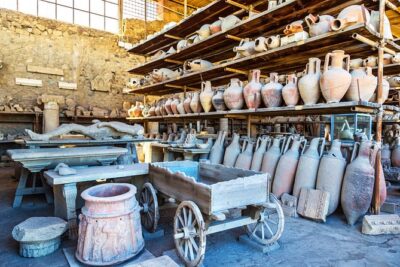
Discover the Ancient Ruins of Pompeii: Day Trip from Rome
Read our review →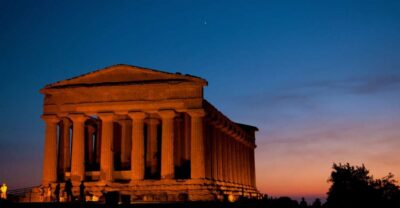
Agrigento: Valley of the Temples Skip-the-Line Sunset Tour
Read our review →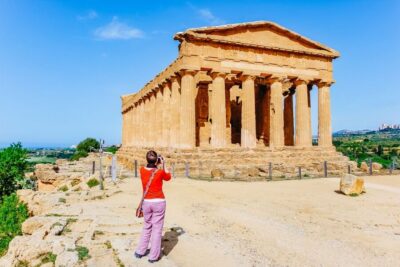
Agrigento and the Valley of the Temples Day Tour
Read our review →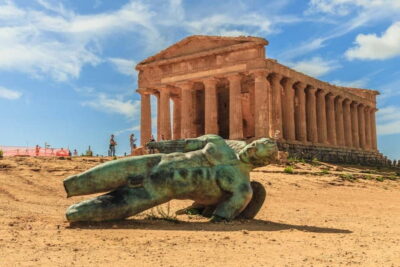
Agrigento: Valley of the Temples Ticket & App Audioguide
Read our review →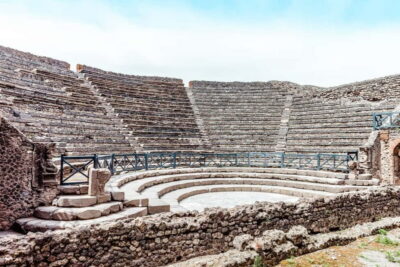
Pompeii Ruins Private Tour with Optional Skip-the-Line Entry
Read our review →
National Archaeological Museum Ticket & Audio App
Read our review →Browse the lists this tour appears in