
Reviewed · VATICAN & SISTINE CHAPEL TOURS
Sistine Chapel and Vatican Museums Skip-the-line Ticket
The prize here is simple: faster entry to the Vatican Museums, followed by the freedom to set your own pace. Once inside, you can see Michelangelo’s Sistine Chapel ceiling, the frescoes of Botticelli, Perugino, and Rosselli, and grand rooms filled with art from many centuries.
I like two things especially. First, a host meets you near the entrance, handles the ticket handoff, and gets you to the correct entry point. Second, you are not tied to a guided group once inside, so you can linger in the Gallery of Maps or move quickly through rooms that interest you less.
The catch is important: this is not a guided tour. At about $62.63 per person, you are paying mainly for access and time saved, not for interpretation, St. Peter’s Basilica, food, or transportation. Meeting points can also be confusing, so read your voucher carefully.
Key points to know before booking
- Fast-track entry saves time: In favorable conditions, the host can get you from the meeting point to the museum entrance in about 10 minutes, even when a long queue is forming.
- You explore on your own: The English-speaking host or greeter helps you enter but does not provide a full museum tour.
- Major Vatican rooms are included: You can visit the Gallery of Maps, Belvedere and Pinecone Courtyards, Raphael Rooms, Pio Clementino Museum, and Sistine Chapel.
- The Sistine Chapel is the main event: Expect Michelangelo’s famous ceiling, along with frescoes by Botticelli, Rosselli, and Perugino.
- St. Peter’s Basilica is not included: Do not assume that a Vatican Museums ticket also covers the basilica.
- Pack light: Airport-style security is required, and large bags and baby strollers are not allowed.
What this Vatican ticket really provides
This experience is best understood as assisted admission, not sightseeing with a guide. You meet an English-speaking host or greeter at a designated location, receive or exchange your ticket, and are directed toward the Vatican Museums entrance.
That distinction matters. The word skip-the-line can sound as if every queue disappears. In practice, the benefit is usually avoiding the ticket-purchase line and entering through the reserved or fast-track process for your scheduled time. You still need to pass airport-style security, and you may encounter a short queue at the entrance.
The host’s role is practical. Some meeting points are in shops or numbered locations, and the area around the Vatican has several operators, entrances, and queues. A host who points you to the right place can save stress, especially if this is your first visit.
Several people have managed to get inside in less than 10 minutes after meeting the host. One particularly useful detail is that the meeting point may involve a short uphill walk to the entrance. Wear comfortable shoes and arrive early enough to find the correct location without rushing.
Other ways to see the Vatican:
- Vatican: Museums & Sistine Chapel Entrance Ticket
★ 4.5 · 144,003 reviews - Vatican Museums & Sistine Chapel Tour with Optional Basilica
★ 4.3 · 67,413 reviews - Vatican Museums, Sistine Chapel & St Peter’s Basilica Guided Tour
★ 4.5 · 39,149 reviews
Inside the Vatican Museums: a self-guided route
Once you pass security, the museum belongs to you. The experience is not a fixed 2.5-hour guided circuit, so you can choose how much time to spend in each room. The stated duration is two to two and a half hours, but your actual visit depends on your pace and the crowds.
The Vatican Museums hold an enormous collection. You cannot see everything in one short visit, so the best approach is to identify your priorities before entering. For most people, those priorities are the Sistine Chapel, Raphael Rooms, Gallery of Maps, and classical sculpture in the Pio Clementino Museum.
You may also see the Gallery of Tapestries by foot from the Round Room. The route brings together decorative art, sculpture, painted ceilings, courtyards, and rooms designed to impress. Look up often. In the Vatican, the ceiling can be as important as the object displayed at eye level.
The Belvedere and Pinecone Courtyards
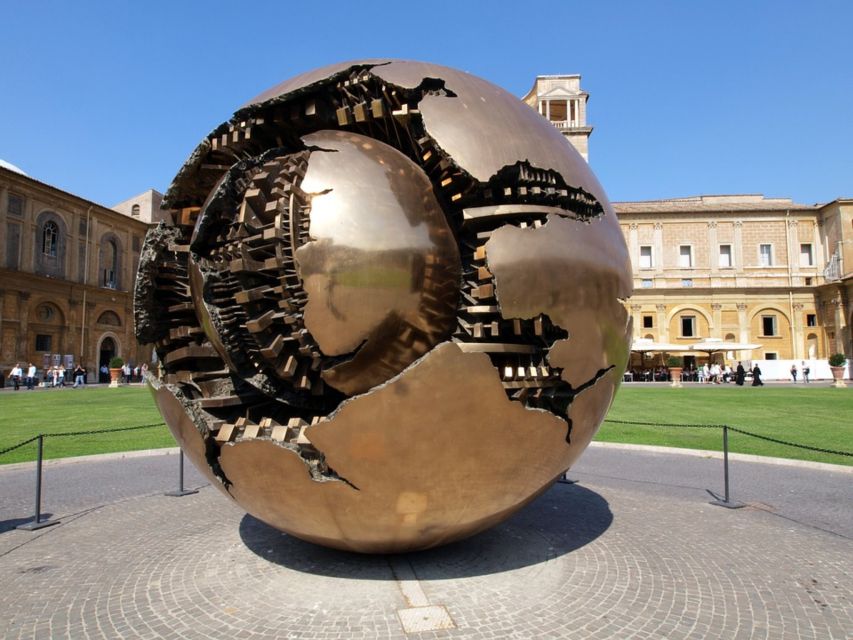
The Belvedere and Pinecone Courtyards offer some breathing room between the museum interiors. These open spaces are useful places to pause, get oriented, and take in the scale of the Vatican complex.
The Pinecone Courtyard takes its name from the huge bronze pinecone placed there. The Belvedere area connects with the museum’s classical collections and gives you a change from packed galleries and painted ceilings.
Do not treat the courtyards as mere passageways. They help explain how the museum complex is arranged and give you a moment to rest. On a crowded day, that small pause can make the rest of the visit more manageable.
The Gallery of Maps
The Gallery of Maps is one of the easiest rooms to underestimate. It is famous for its long sequence of painted maps, including Danti’s topographical charts of Italy from 1583.
The maps are not just wall decoration. They show how Italy was understood and represented in the late sixteenth century. Even if you are not a map enthusiast, the room rewards a slow walk because the ceiling and architectural setting compete for your attention.
This is also a good example of why independent entry suits some people. You can stop to study a region, admire a ceiling panel, or move on when the room becomes crowded. A guide might add useful context, but you are free from a group’s timetable.
Other museums and galleries in Rome:
- Rome: Vatican Museums, Sistine Chapel & Basilica Tour
★ 4.3 · 13,872 reviews - Vatican Museums & Sistine Chapel Skip-the-Line Entry Ticket
★ 4.4 · 13,838 reviews - Rome: Vatican Museums, Sistine Chapel & Basilica Tour
★ 4.7 · 13,217 reviews - Rome: Vatican Museums & Sistine Chapel Guided Tour
★ 4.3 · 12,117 reviews
Classical sculpture in the Pio Clementino Museum
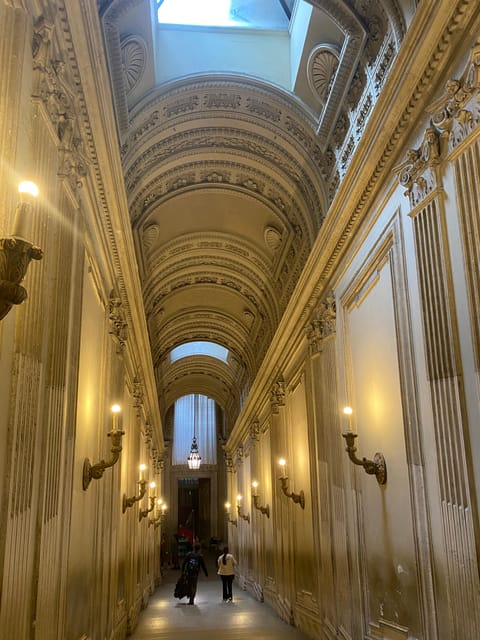
The Pio Clementino Museum takes you into the Vatican’s collection of ancient Greek and Roman sculpture. Its route includes the Greek Cross Hall, the Gallery of the Statues, and the Hall of the Muses.
The Greek Cross Hall is known for its formal layout and large-scale ancient works. The Gallery of the Statues presents sculpture in a more extended sequence, while the Hall of the Muses links ancient art with the museum’s broader study of classical culture.
This part of the visit can be more rewarding if you give yourself a little time to look closely. Marble figures are easy to pass quickly when you are eager to reach the Sistine Chapel, but the sculptural details and poses are central to understanding the Vatican collection.
You will not receive a lecture on each piece with this ticket, so an audio guide or personal reading can help. One person used an online audio tour independently, while another purchased an audio guide inside for €8. These options are not included in the ticket price, but they can add context if you want more than room labels.
The Carriage Pavilion and ceremonial vehicles
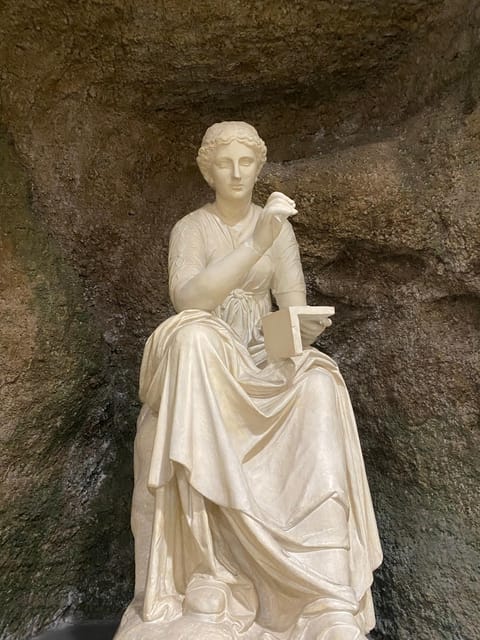
The Carriage Pavilion presents former ceremonial carriages from the Vatican collection. It offers a different kind of history from the paintings and sculpture elsewhere in the museum.
Here, the interest is in travel, ceremony, and display. The vehicles show how official movement was presented before modern transport changed the way leaders traveled. If you enjoy decorative objects, historic vehicles, or court ceremony, this section gives the visit welcome variety.
If your main goal is Michelangelo, you may choose to spend less time here. The museum is too large for equal attention to every collection during a two-hour visit, so plan around your interests.
The Raphael Rooms and High Renaissance painting
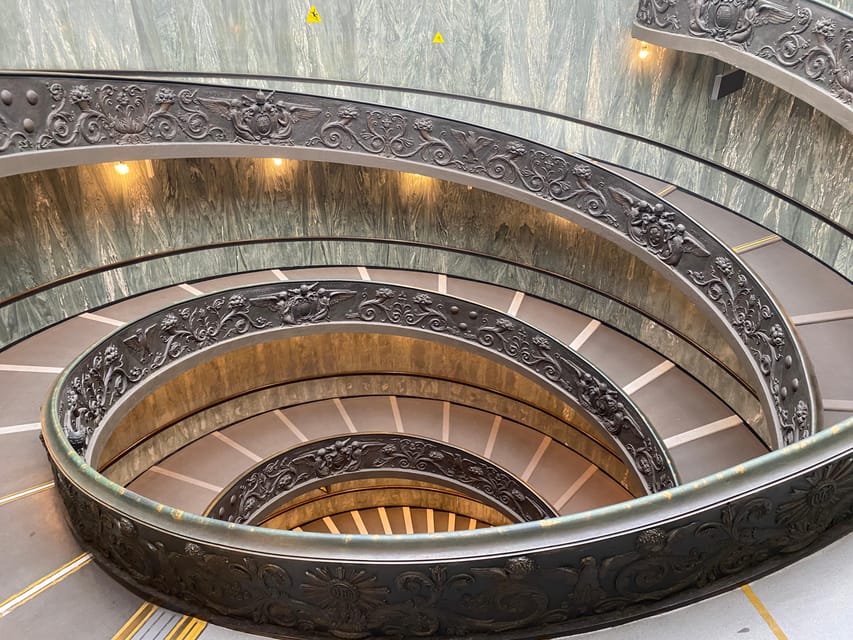
The Raphael Rooms are among the Vatican’s most important painted interiors. They contain High Renaissance works commissioned for the papal apartments and are valued for their scale, composition, and artistic ambition.
These rooms reward patience. You are not simply looking at individual framed paintings. The walls and ceilings work together as a complete setting, and the paintings are designed to be read within that setting.
The independent format lets you pause without holding up a group. You can examine a scene, compare figures across the room, and then continue when you are ready. The drawback is that you must supply your own background information, since the host’s job ends at entry.
The Sistine Chapel: save your attention for the ceiling
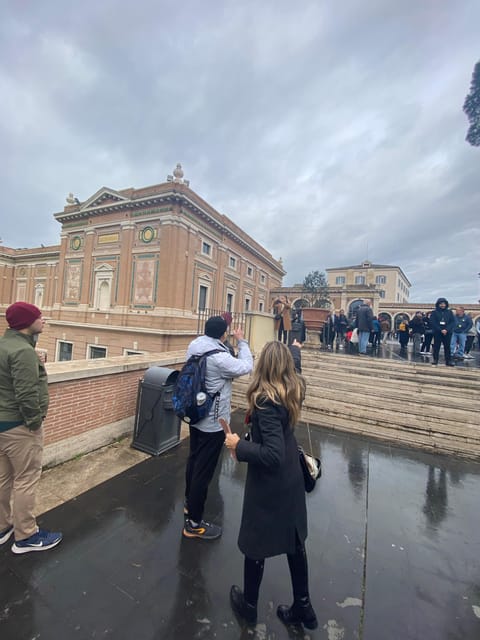
The Sistine Chapel is the emotional high point of the visit. Its ceiling is Michelangelo’s best-known work, but the chapel also contains frescoes by Botticelli, Rosselli, and Perugino.
Do not rush through it. The ceiling is crowded with figures and scenes, and the scale makes it hard to absorb in one glance. Find a position where you can look upward comfortably, then take in the larger design before focusing on individual panels.
The chapel is also the point where crowd levels matter most. You might find it difficult to stand exactly where you want or to study a section for long. This is one reason fast-track entry has real value: saving time before the museum gives you more room for the places you care about most.
Photography rules and chapel behavior are controlled by Vatican staff, so follow the instructions given inside. The listing does not include a guided explanation, and the host does not lead the chapel visit, so prepare yourself with a little reading if you want to recognize the major scenes.
How much value do you get for $62.63?
At $62.63 per person, this is not a budget museum ticket. The price can make sense when official time slots are unavailable and the alternative is waiting in a long line or losing valuable time in Rome.
The strongest value comes from convenience. A host helps you find the correct entry process, and several visitors have entered quickly after meeting up. On a hot day, avoiding a long outdoor queue can be worth a great deal.
The value is weaker if you want a full explanation of the art. There is no tour guide included, and the host simply gets you to the entrance. You also do not get St. Peter’s Basilica, hotel pickup, meals, or drinks.
Before paying, compare the price with an official Vatican Museums ticket if a suitable time is available. One practical complication is that official tickets can sell out, while third-party sellers may have access to remaining inventory at a higher price. In that situation, this ticket is best viewed as a paid convenience rather than a bargain.
Timing, crowds, and meeting-point advice
The activity runs for two to two and a half hours, with starting times shown during booking. Your selected time matters because the meeting point and procedure can vary by option.
Arrive around 15 minutes early. Finding the host may take longer than expected, especially when several businesses and tour groups are gathered near the Vatican. Look for the exact shop, number, or location stated on your confirmation rather than following the first person offering Vatican tickets.
Some people have found the meeting point confusing when the location was not open at the stated early hour. The host eventually provided the tickets and led the group to the entrance, but this is a useful warning: do not arrive at the last second.
The group may be small, but the museum itself will not necessarily feel small or quiet. Fast-track entry avoids one type of waiting, not the crowds inside the Vatican Museums.
What to bring and what to leave behind
You must pass through airport-style security. Large bags and luggage are not allowed, and baby strollers are also prohibited.
Bring your booking confirmation and keep your belongings to a minimum. Comfortable shoes matter because the route involves a great deal of walking and standing, including the short uphill approach reported at some meeting points.
This experience is not suitable for wheelchair users according to the stated conditions. If accessibility is important for your visit, you should choose a different arrangement rather than assume that the fast-track process solves access issues.
Who should book this experience?
I would consider this ticket if you want to see the Vatican Museums without paying for a full guided tour. It suits independent visitors who are comfortable reading room signs, using an audio guide, or preparing a short route in advance.
It also suits people with limited time. If you have only part of a day in Rome, skipping the ticket-purchase queue can protect your schedule. The benefit is especially clear during hot weather or when the regular line is extremely long.
Families with very young children need to think carefully because baby strollers are not allowed. Visitors carrying luggage should make other arrangements before arriving.
If you want expert commentary, detailed art history, or help connecting the Vatican rooms into one story, choose a guided option instead. This ticket gives you access, not interpretation.
Should you book the Vatican skip-the-line ticket?
Book it if saving time and entering independently matter more to you than having a guide. The host service can be quick and useful, and the ticket covers the Vatican Museums and Sistine Chapel, including the Gallery of Maps, Raphael Rooms, classical sculpture collections, courtyards, and ceremonial carriages.
Skip it if you expect a 2.5-hour guided tour, want St. Peter’s Basilica included, or can buy an official ticket at a much lower price for a convenient time. At $62.63, the price is justified mainly when availability is tight or the regular queue threatens to consume your day.
My practical advice is to prepare your route before you go, arrive early at the precise meeting point, pack light, and use an audio guide if you want more explanation. With those expectations, this is a useful entry service for an independent Vatican visit, not a substitute for a real guided tour.
FAQ
How long does the Vatican Museums and Sistine Chapel experience last?
The stated duration is two to two and a half hours. Starting times vary, so you need to check availability when selecting your option.
Is a tour guide included?
No. An English-speaking host or greeter helps with admission and directs you to the entrance, but you explore the museums independently.
Does the ticket include St. Peter’s Basilica?
No. Access to St. Peter’s Basilica is not included.
What attractions are included?
The ticket includes entrance to the Vatican Museums and Sistine Chapel. The route can include the Gallery of Maps, Belvedere and Pinecone Courtyards, Pio Clementino Museum, Carriage Pavilion, Raphael Rooms, and other museum areas.
Do I have to pass through security?
Yes. All visitors must pass through airport-style security before entering.
Can I bring luggage or a baby stroller?
No. Luggage, large bags, and baby strollers are not allowed.
Just added in Rome
- Civitavecchia Private Transfer: From the Port to Rome Airport★ 5.0 · 309 reviews
- Civitavecchia Shore Excursion: Best of Rome Private Tour★ 5.0 · 247 reviews
- Civitavecchia Private Transfer from ship to FCO airport or Rome★ 5.0 · 245 reviews
- Food Tasty and History Tour in Civitavecchia★ 5.0 · 256 reviews
- Palatine Hill and Roman Forum Tour with Fast-Track Entrance★ 4.2 · 417 reviews
- Tivoli: Villa D’Este & Villa Adriana Pass & App Audioguide★ 4.4 · 364 reviews
- Tivoli: Villa D’Este Entry Ticket and App Audio Guide★ 4.3 · 191 reviews
- Vatican Museums & Sistine Chapel Skip-the-Line Guided Tour★ 4.6 · 254 reviews
Vatican & Sistine Chapel Tours, compared.
Vatican: Museums & Sistine Chapel Entrance Ticket
Read our review →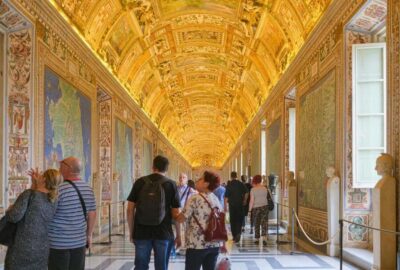
Vatican Museums & Sistine Chapel Tour with Optional Basilica
Read our review →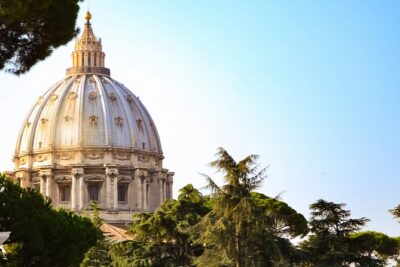
Vatican Museums, Sistine Chapel & St Peter’s Basilica Guided Tour
Read our review →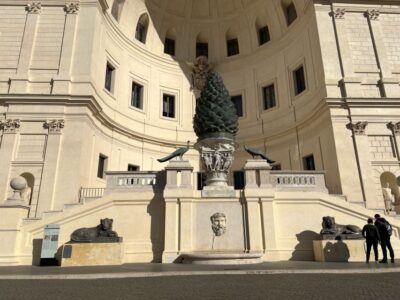
Vatican Museums & Sistine Chapel Skip-the-Line Entry Ticket
Read our review →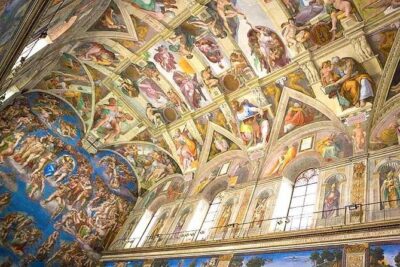
Skip-the-Line Group Tour of the Vatican, Sistine Chapel & St. Peter’s Basilica
Read our review →Browse the lists this tour appears in