
Reviewed · TOURS IN MILAN
Milan: Sforza Castle and Michelangelo’s Pietà Rondanini Tour
Michelangelo’s Pietà Rondanini is the emotional heart of this tour. It is unfinished, spare, and far removed from the polished perfection of his earlier sculptures. A good guide helps you see why this final work, made near the end of Michelangelo’s life, can feel more personal than grand.
I like two things here: the tour gives you a clear route through a huge castle complex, and it connects the building to Leonardo da Vinci, who lived and worked at the Sforza court for nearly 20 years. The main drawback is time. Ninety minutes is enough for the major points, but not enough to explore every museum at an easy pace.
Key points to know
- Michelangelo’s final sculpture: Study the unfinished Pietà Rondanini and hear how its rough surface and elongated figures differ from his earlier work.
- Leonardo at the Sforza court: Learn about Leonardo as an engineer, architect, and court servant, not only as the painter of The Last Supper.
- A compact castle introduction: See the Corte Ducale, Cortile della Rocchetta, Filarete Tower, and key museum spaces without getting lost.
- Strong guide-led storytelling: Guides such as Giorgio, Fabio, Stefania, Simon, Lorella, and Simone have been praised for clear explanations and lively historical detail.
- Small groups can make a difference: Groups may be as small as three or four people, while a private option is also available.
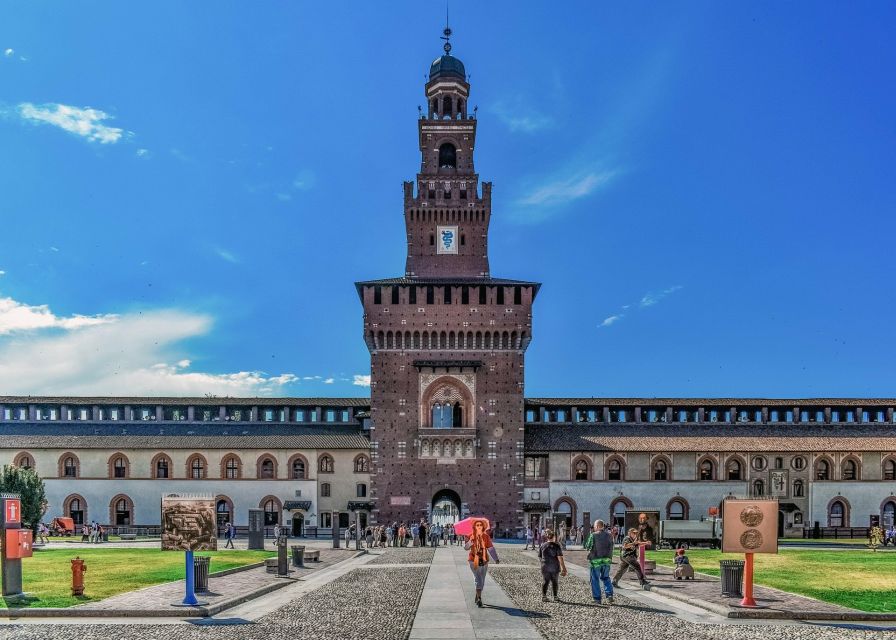
- Meet outside, not inside: Find the guide in Piazza Castello, under the Filarete clock tower, beside the purple Hidden Experiences flag or board.
Why the Pietà Rondanini deserves your first attention
Sforza Castle is enormous, and it can be hard to know where to begin. This tour sensibly puts Michelangelo’s Pietà Rondanini near the center of the experience, giving you a strong artistic focus before moving into the castle’s wider story.
The sculpture was Michelangelo Buonarroti’s last major work. He continued shaping the marble until only a few days before his death at age 89. It was never completed in the usual sense, and that unfinished quality is not a minor footnote. It is the reason the sculpture feels so different from the muscular, carefully defined figures associated with Michelangelo’s earlier career.
You will see the Virgin Mary supporting the body of Christ, but the forms are thin and stretched. The surface remains rough in places. Instead of presenting ideal anatomy, the work suggests physical weakness, grief, and spiritual strain. A guide can point out how the figures seem to merge rather than separate cleanly from the marble.
I find this kind of explanation especially useful because the sculpture may not make an immediate impression in the same way as Michelangelo’s David or the Sistine Chapel ceiling. It asks you to slow down. The roughness is part of the message, not evidence that you are looking at an abandoned project with no artistic purpose.
The museum setting gives the work room to breathe, and the tour’s detailed discussion helps you read it as a late statement about mortality. If your Milan schedule already includes many polished Renaissance masterpieces, this is a welcome change of tone.
Other days out people book in Milan:
- Milan: Cathedral and Duomo’s Terraces Entrance Ticket
★ 4.6 · 61,054 reviews - Milan: Da Vinci’s Last Supper Guided Tour
★ 4.7 · 10,143 reviews - Milan: Science and Technology Leonardo da Vinci Museum Entry
★ 4.5 · 7,169 reviews
Inside Castello Sforzesco, Milan’s ducal fortress
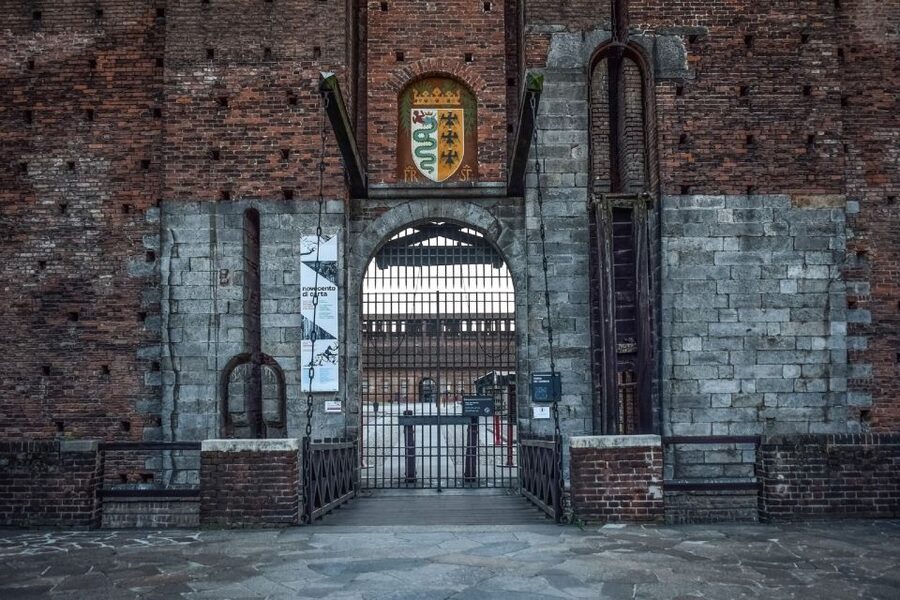
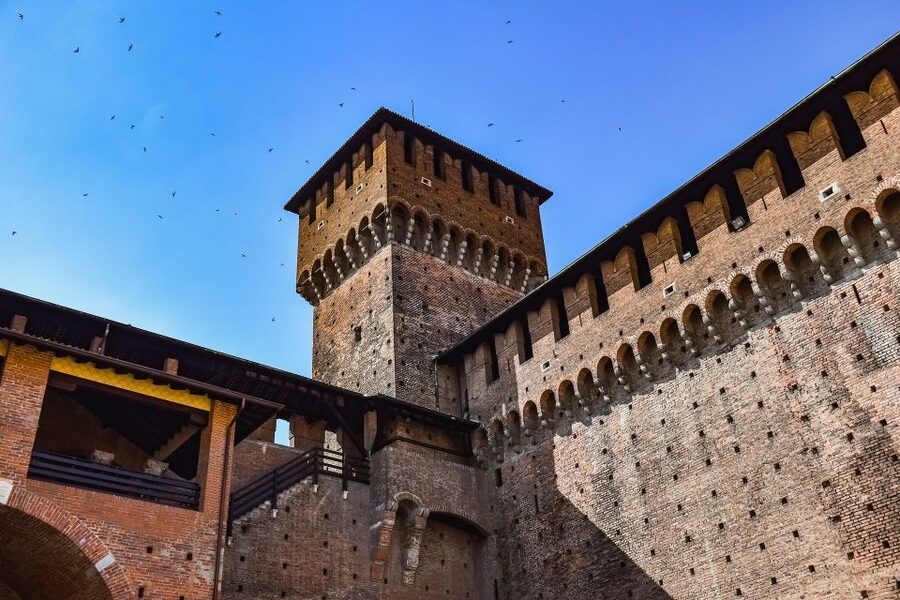
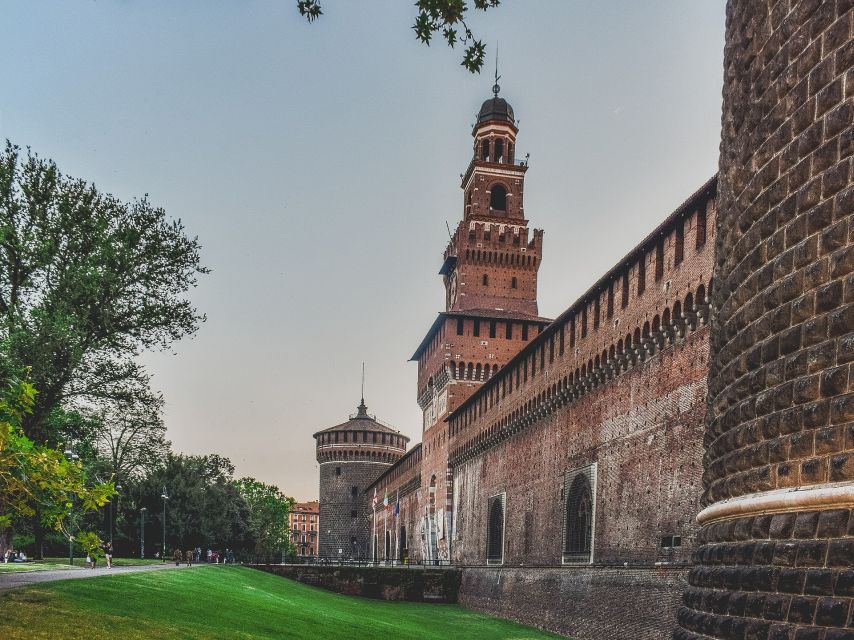
The castle began as a defensive stronghold and later became the seat of the Visconti and Sforza dynasties. Its thick walls, towers, courtyards, and controlled entrances still make its military purpose easy to understand, even after centuries of change.
Your guide will help you see the difference between a medieval fortress and the Renaissance court that grew inside it. The Sforza family wanted more than protection. They wanted a residence that showed political authority, wealth, and cultural ambition.
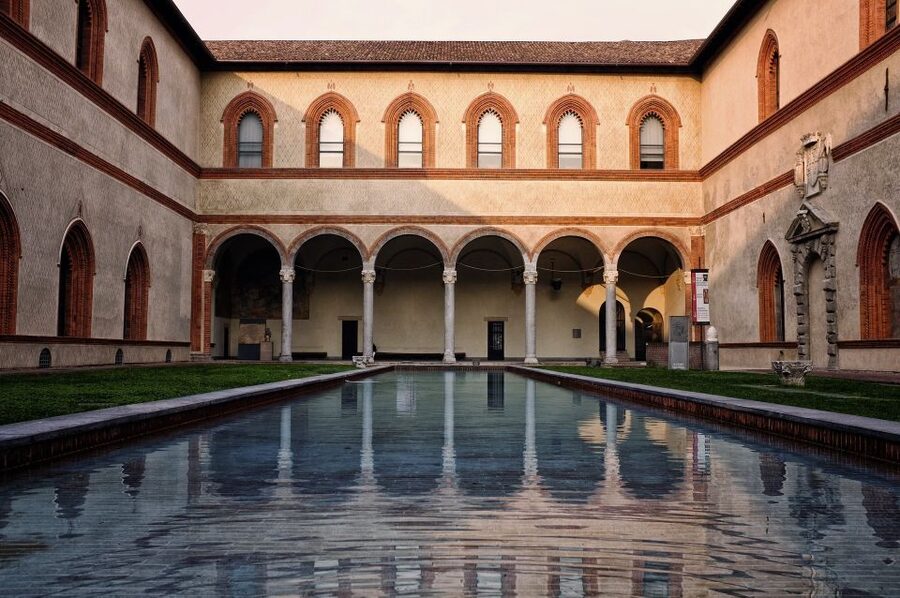
The walk includes the Corte Ducale, or Ducal Courtyard, and the Cortile della Rocchetta. These spaces give you a sense of how the castle functioned as both a military site and a courtly home. The open courtyards also help break up the museum portion of the visit, though summer sun can be strong. One guide was specifically praised for choosing shaded and breezy areas during a hot tour, a useful sign that good guiding here includes practical care as well as historical facts.
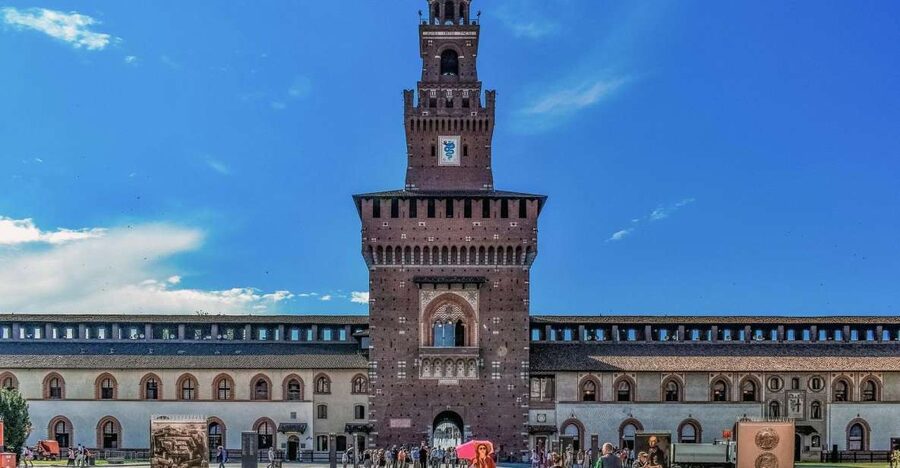
Look up toward the Filarete Tower, the castle’s best-known entrance feature. It is an easy meeting landmark and a useful visual anchor as you move through the complex. The tour explains how the castle survived changing rulers and shifting uses to become part of Milan’s civic identity.
You should not expect every room or collection to receive equal attention. The castle contains several museums and exhibitions, and the point of a 90-minute tour is selection. One participant felt the archaeological museum was covered too quickly, while another noted that the guide picked out the most important pieces. That is the tradeoff: you get a coherent story, but you will not have time for a full museum visit.
Leonardo’s Milan beyond The Last Supper
Many Milan tours use Leonardo’s name to point toward The Last Supper and stop there. This one places him in the daily workings of the Sforza court, which gives you a broader picture of his career.
Leonardo lived and worked in Milan for nearly two decades under Ludovico il Moro. At the castle, he served as a court engineer and architect as well as an artist. That means his work was tied to military planning, architecture, pageants, machinery, and the practical demands of court life.
This context matters. Renaissance rulers hired artists for more than paintings. A gifted court figure could design a festival, plan fortifications, organize a ceremony, or propose a grand building. Your guide will point out traces of Leonardo’s connection to the castle and explain his complicated relationship with the Sforza family.
I like this part because it keeps Leonardo grounded. He was not simply a solitary genius wandering around Milan with a sketchbook. He worked within a political system and depended on powerful patrons. The tour connects his creativity to the ambitions of Ludovico il Moro and the demands of ducal life.
The amount of Leonardo material depends on your guide and the pace of your group. Guides such as Lore, Giorgio, and Stefania have been praised for making his life and work easy to follow, while Fabio and Simon have been singled out for lively facts and clear storytelling. No particular guide is guaranteed, but the range of languages and the repeated praise for explanations make this a sensible choice if you want more context than a label in a gallery can provide.
Visconti, Sforza, and the people behind the stone
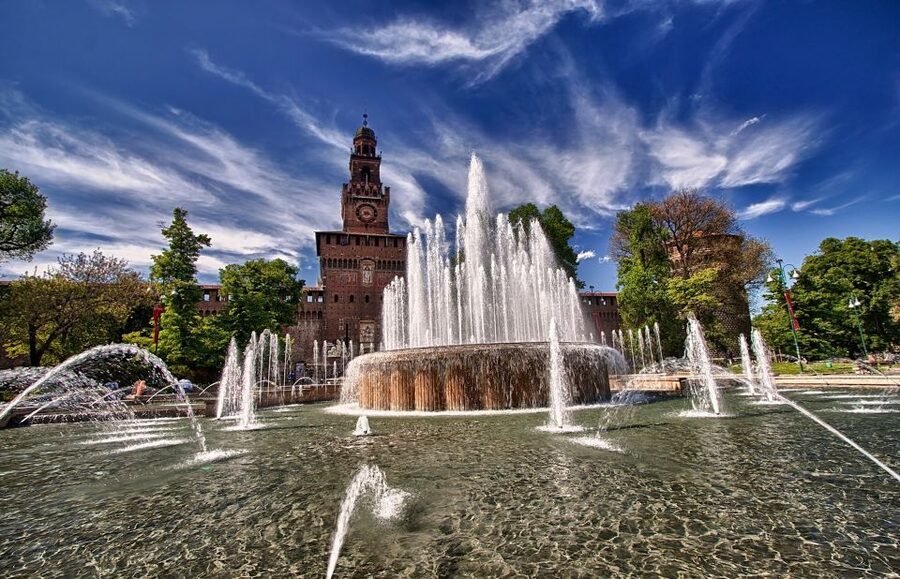
The castle is easier to understand once you stop seeing it as a pile of rooms and start seeing it as a symbol of power. The Visconti family established the earlier fortress, while the Sforza dynasty reshaped Milan’s political and cultural life.
Your guide will introduce the ambitions, alliances, and conflicts that shaped the court. The stories include powerful men, noblewomen, and the practical business of maintaining a ruling family. The Biscione, the serpent emblem associated with Milan, becomes a useful clue to this world of dynastic identity.
This is one of the tour’s strongest features. Dates alone can make Milan’s past feel like a blur of Viscontis, Sforzas, dukes, and foreign armies. A good explanation gives those names a role in the story. The castle then becomes a place where decisions were made, reputations were built, and art served politics.
The tour does not turn the history into a dry lecture. Several guides have been praised for anecdotes, local details, and little-known facts. Visitors who had only a short time in Milan also found the historical overview helpful for understanding other places in the city.
Same base, a different kind of day:
- Milan: City Sightseeing Hop-On Hop-Off Bus with Audio Guide
★ 4.0 · 6,256 reviews - Milan Cathedral: Duomo Terraces Ticket (No Church Access)
★ 4.6 · 6,111 reviews - Milan: Milan Cathedral Direct Entrance – Terrace Excluded
★ 4.5 · 5,782 reviews - Milan: Guided Walking Tour & Last Supper Visit with Ticket
★ 4.7 · 5,409 reviews
What 90 minutes can realistically cover
The 1.5-hour length is both a strength and a limit. It fits well between a morning at the Duomo and an afternoon museum visit, or as a compact introduction on your first day in Milan.
You will likely spend the visit moving between the Pietà Rondanini, selected museum areas, courtyards, and exterior features. The guide supplies the order and meaning, so you are not left wandering through a large complex trying to guess which rooms matter most.
I would not book this expecting a full survey of every collection. The castle houses multiple museums, and even a well-paced guide has to make choices. Some participants wished for more time in the archaeological museum, while others appreciated the concise selection. If you have a strong interest in archaeology, plan to return on your own if opening arrangements allow.
The tour can also run slightly over its stated length. That may be welcome if your guide is answering questions, but it can create trouble if you have a tightly timed restaurant booking or another ticketed sight immediately afterward. Give yourself some breathing room.
Headphones are provided from groups of 11 participants. In a small group, you may simply hear the guide nearby. One person reported intermittent earpiece problems, so stay close and speak up if the sound is unclear.
Group size, guide quality, and language
The experience is offered as a small-group tour, with a private group option available. Group size can vary. Some departures have been as small as three or four people, while other groups are larger.
A small group is valuable inside the castle because you can ask questions without interrupting a large crowd. It also lets the guide adjust the pace. One family arriving late because of traffic received help through the tour office, and the guide was contacted. Still, do not rely on flexibility. Call the provider if you are delayed, and allow time to reach the meeting point.
Guides are available in Italian, English, German, French, and Spanish. Clear speech matters in a place where the story can easily become a list of unfamiliar names. The strongest guide comments praise patient explanations, easy-to-follow English, enthusiasm, and the ability to answer questions.
Names praised in connection with this experience include Giorgio, Fabio, Stefania, Simon, Lorella, Simone, Chiara, Sylvia, and Lore. That does not mean you can request a particular person or that every departure will feel identical. It does suggest that the provider has a broad team with strong art and history skills.
The meeting point and practical details
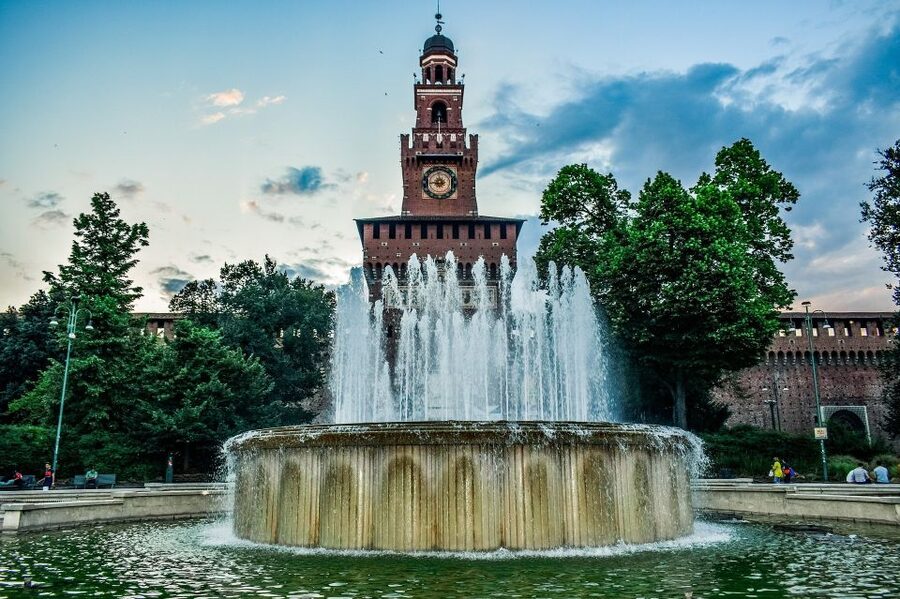
Meet in Piazza Castello under the Filarete clock tower, in front of Sforza Castle. Do not go inside the castle courtyards looking for the group. Find the guide holding the purple Hidden Experiences flag or board.
This detail matters. The castle has several entrances and the meeting area can be busy, so arriving at the correct outside point saves time. The Filarete Tower is the key landmark.
The tour includes admission to the castle and museum, a certified guide, and headphones for groups of 11 or more. Food, drinks, and hotel pickup are not included. Hotel pickup and drop-off may be arranged for an extra charge.
The activity is wheelchair accessible, according to the supplied details. If you need a precise route through individual museum spaces, ask the provider before booking, since the castle is a large historic complex.
Cancellation is free up to 24 hours before the start time, and you can reserve now and pay later. These terms are useful if your Milan plans may shift, but the main decision should still be based on your interest in art and history rather than flexibility alone.
Is $47 a fair price?
At $47 per person, this is not the cheapest way to walk into Sforza Castle. You are paying for admission, a live guide, and a planned route through a complex site rather than simply entering and looking around.
For me, the price makes sense if you care about Michelangelo, Leonardo, or Milan’s dynastic past and want the connections explained. The Pietà Rondanini is not a work I would want to rush past after reading a short wall label. The castle is also large enough that a first visit without a plan can feel scattered.
The value is weaker if you prefer to browse museums alone or already have strong knowledge of Renaissance Milan. You may want more time with the archaeological displays, and the 90-minute format will not satisfy someone hoping to see every collection.
The rating is 4.7 from 1,119 reviews, and the most consistent praise centers on the guides: clear history, strong art explanations, friendly conversation, and useful tips for the rest of Milan. That consistency is important because the guide is the main reason to pay more than a basic entry ticket.
Who should book this castle tour?
I would recommend it to first-time Milan visitors who want a short, structured introduction to the castle. It also suits art lovers who want Michelangelo’s last sculpture explained rather than simply photographed.
Families can benefit from the stories and the limited duration, especially if younger members are unlikely to last through a full museum day. Private groups may prefer the freedom to ask more questions and adjust the pace.
It is less suitable if you want an unhurried museum visit. In that case, use the guided tour as an introduction and return separately for the collections that interest you most. I would also avoid scheduling a hard-to-miss appointment immediately afterward, since the tour can occasionally run long.
Should you book it?
Book this tour if you want the Pietà Rondanini to be more than a quick stop and you like your history connected to real places, families, and political choices. The combination of Michelangelo, Leonardo, Renaissance courtyards, and Milanese dynastic power gives you a useful picture of why Sforza Castle matters.
Skip it if you mainly want to wander alone or spend several hours inside the archaeological museum. For most visitors, though, $47 is reasonable for a focused 90-minute introduction, especially when the group is small and the guide brings the artwork and castle together.
FAQ
How long does the Sforza Castle tour last?
The tour lasts 1.5 hours.
What does the tour include?
It includes entrance fees to Sforza Castle and its museum, a certified live guide, and headphones for groups of 11 participants or more.
Where is the meeting point?
Meet in Piazza Castello under the Filarete clock tower, in front of Sforza Castle. The meeting point is outside the courtyards.
How will I find the guide?
Look for the guide holding a purple Hidden Experiences flag or board.
Which languages are available?
The tour is available in Italian, English, German, French, and Spanish.
Is the tour wheelchair accessible?
Yes, the activity is listed as wheelchair accessible.
Can I book a private group?
Yes, a private group option is available.
Are food and drinks included?
No. Food and drinks are not included.
Can I cancel the booking?
Yes. You can cancel up to 24 hours in advance for a full refund. You can also reserve now and pay later.
Just added in Milan
- Highlights and hidden gems of Milan Bike Tour★ 5.0 · 491 reviews
- Milan Gourmet Tour: A Premium Tasting Experience by Do Eat Better★ 5.0 · 241 reviews
- Private Milan Food Walking Tour of Brera★ 5.0 · 217 reviews
- Leonardo3 The World of Leonardo: Tickets for the Interactive Exhibition★ 4.0 · 220 reviews
- Da Vinci’s Last Supper and Santa Maria delle Grazie Church Tour★ 4.5 · 218 reviews
- Learn to Cook Italian Recipes with an Italian Chef★ 5.0 · 283 reviews
- La Scala Theatre and Museum guided experience★ 4.5 · 664 reviews
- La Scala Theatre and Museum Tour in Milan With Private Guide★ 3.5 · 384 reviews
Tours in Milan, compared.
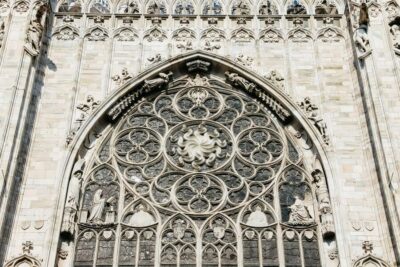
Cathedral and Duomo’s Terraces Entrance Ticket
Read our review →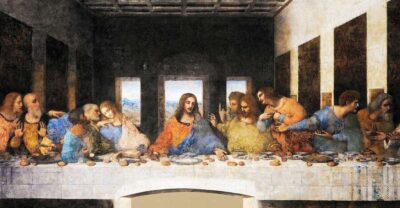

Science and Technology Leonardo da Vinci Museum Entry
Read our review →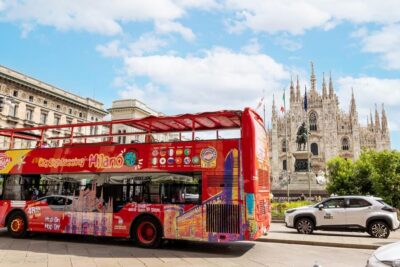
City Sightseeing Hop-On Hop-Off Bus with Audio Guide
Read our review →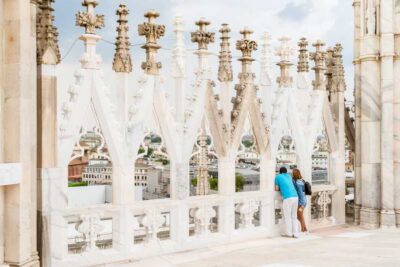
Milan Cathedral: Duomo Terraces Ticket (No Church Access)
Read our review →
Milan Cathedral Direct Entrance – Terrace Excluded
Read our review →
Guided Walking Tour & Last Supper Visit with Ticket
Read our review →
Fast-Track Milan Cathedral and Terraces Guided Tour
Read our review →Browse the lists this tour appears in