
Reviewed · VATICAN & SISTINE CHAPEL TOURS
Rome: Vatican Museums and Sistine Chapel Tour with Ticket
The Vatican Museums make the most sense with a guide who can explain what you are seeing before the crowds sweep you onward. This 2.5-hour tour takes you from ancient sculpture and papal courtyards to Raphael’s Rooms and Michelangelo’s Sistine Chapel frescoes, using a priority entrance to cut down the wait.
I like the clear route through the major rooms and the headsets, which matter when the galleries are crowded. I also like the range: Apollo Belvedere, the Laocoön Group, Italian map frescoes, Raphael, and Michelangelo all fit into one visit. The drawback is simple: the museums can be packed and hot, and two and a half hours gives you an overview, not time to study every masterpiece.
Key points at a glance
- Priority museum entry: You use a separate entrance, though airport-style security can still take up to 30 minutes in high season.
- A strong art route: The tour covers ancient sculpture, the papal galleries, Raphael’s Rooms, and the Sistine Chapel.
- Guides add the value: Guides such as Juliana, Deny, Carolina, Luis, and Andre Luis have been praised for clear explanations, organization, and enthusiasm.
- The Sistine Chapel is tightly managed: Expect a short visit, quiet rules, and no photography.
- Plan for crowds: The Vatican is among the world’s most visited museums, so even skip-the-line entry does not mean empty rooms.
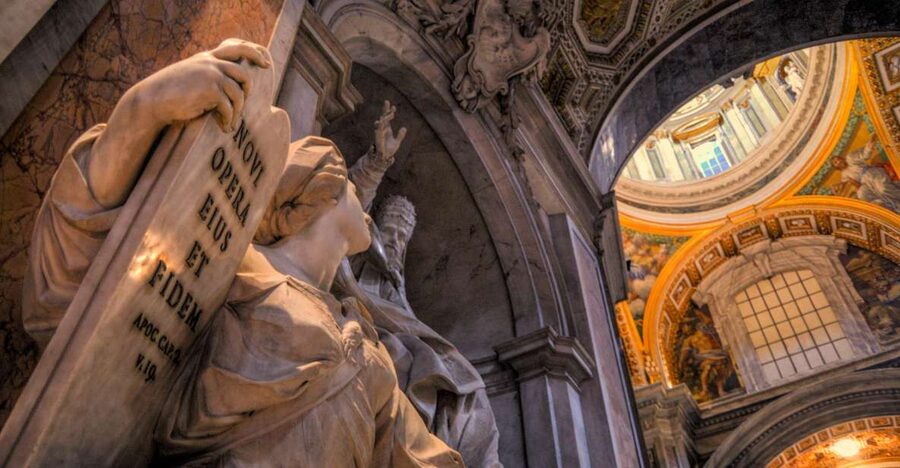
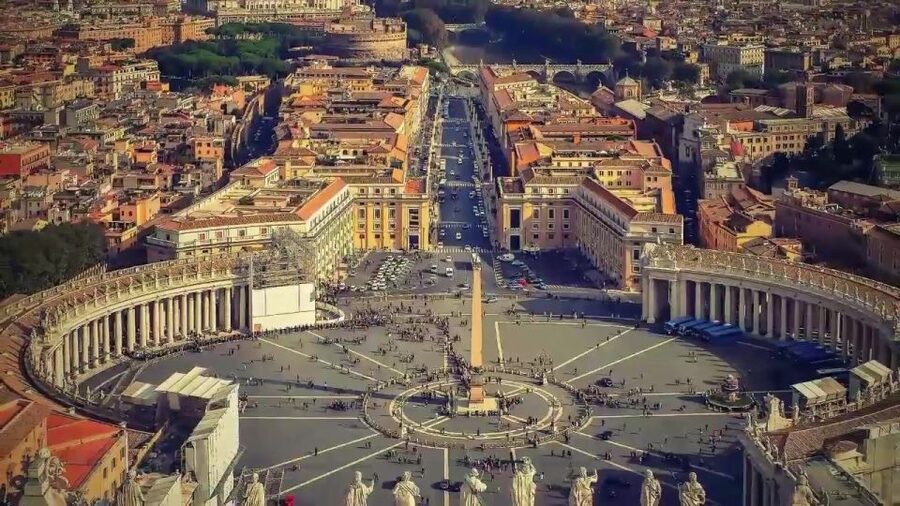
- St. Peter’s is not included as a guided stop: The basilica and dome require separate planning.
Why a guided Vatican tour helps
The Vatican Museums are not one small museum with a tidy collection. They are a long sequence of buildings, galleries, courtyards, chapels, and papal apartments holding more than 70,000 exhibits. You could spend days here, but most Rome itineraries do not allow that.
I find a guided route especially useful because it gives you a plan. Instead of wandering past rooms without knowing what deserves your attention, you move through a selected chain of major stops. The guide can point out why an ancient sculpture matters, how a fresco was made, and where a papal apartment fits into the story.
The headsets are a practical touch. In a quiet gallery, a guide can speak softly. In a crowded Vatican corridor, you need to hear instructions and explanations without standing shoulder to shoulder around the guide. The equipment will not make the crowds disappear, but it helps you stay connected to the tour.
This experience is best for a first visit. If you already know the Vatican well and want hours to examine minor works at your own pace, a guided tour may feel too managed. For most first-time visitors, the structure is worth the trade-off.
Other ways to see the Vatican:
- Vatican: Museums & Sistine Chapel Entrance Ticket
★ 4.5 · 144,003 reviews - Vatican Museums & Sistine Chapel Tour with Optional Basilica
★ 4.3 · 67,413 reviews - Vatican Museums, Sistine Chapel & St Peter’s Basilica Guided Tour
★ 4.5 · 39,149 reviews
Meeting at Via Sebastiano Veniero
The meeting point is at the CheckandGo Tours office at Via Sebastiano Veniero, 21. The office sits on a street parallel to the Vatican Museums entrance, so you should allow time to find it rather than walking straight to the museum gates.
The nearest metro station is Ottaviano on Line A. The directions identify a Todis supermarket and an auto shop with a blue Michelin sign as nearby landmarks. I would arrive early, especially if you are unfamiliar with this part of Rome.
Punctuality matters here. If you arrive late, you may not be able to join the group, reschedule, or receive a refund. That rule is easy to underestimate in Rome, where a delayed train, a wrong turn, or a crowded sidewalk can cost more time than expected.
Starting in the Vatican courtyards
The tour begins at the Courtyard of the Armor, with a glimpse toward the Vatican Gardens. This opening gives you a useful sense of the setting before you enter the long interior route.
You then continue to the Courtyard of the Pine Cone, located among the old papal buildings. It is a grand outdoor space and a good place for your guide to establish the Vatican as both a working religious center and a vast art collection.
These courtyards are not the main reason you book the tour, but they help break up the indoor galleries. They also give you a moment to look around before the denser sequence of sculpture halls and decorated corridors begins.
Ancient sculpture at the Pius Clementine Museum
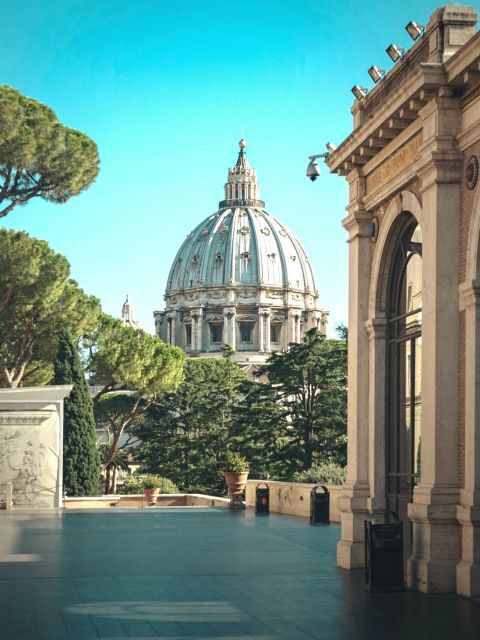
The route continues through the Belvedere Palace, once used as a papal summer residence and now home to the Pius Clementine Museum. This is one of the strongest sections for anyone interested in ancient Greek and Roman art.
Two famous works receive particular attention: the Apollo Belvedere and the Laocoön Group. They are not just old statues to tick off a list. They show the skill, movement, and dramatic expression that made Greco-Roman sculpture so influential to Renaissance artists.
I like this part of the route because it gives you an art lesson before you reach Michelangelo. Renaissance artists did not work in isolation. They studied ancient models, borrowed ideas from the classical world, and used them as a base for new work. Seeing the sculpture first makes the later Renaissance rooms easier to understand.
The limitation is time. The museum contains far more than these headline pieces, and the group will keep moving. If you want to examine every statue, read every label, or compare small details, this is not the right format.
Other museums and galleries in Rome:
- Rome: Vatican Museums, Sistine Chapel & Basilica Tour
★ 4.3 · 13,872 reviews - Vatican Museums & Sistine Chapel Skip-the-Line Entry Ticket
★ 4.4 · 13,838 reviews - Rome: Vatican Museums, Sistine Chapel & Basilica Tour
★ 4.7 · 13,217 reviews - Rome: Vatican Museums & Sistine Chapel Guided Tour
★ 4.3 · 12,117 reviews
Three galleries leading toward the papal apartments
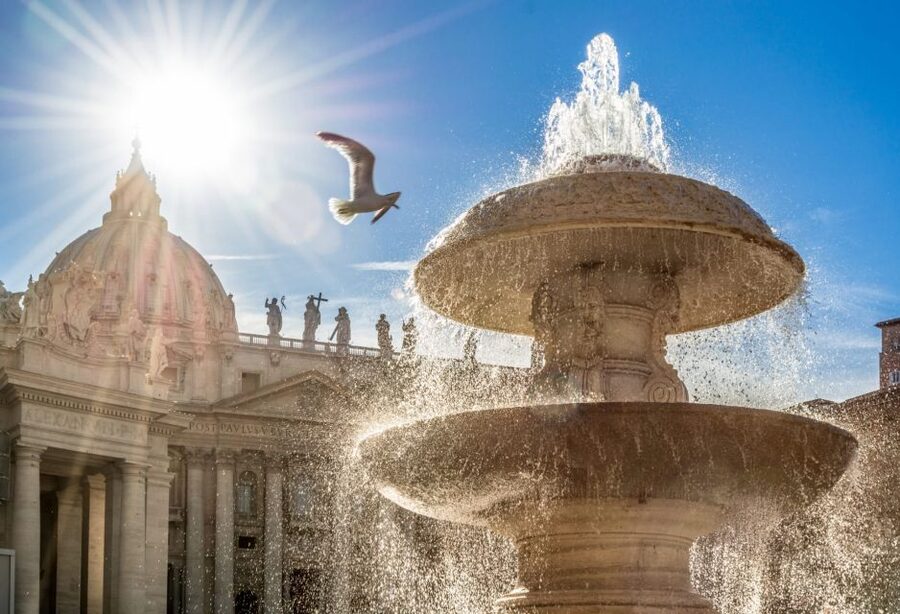
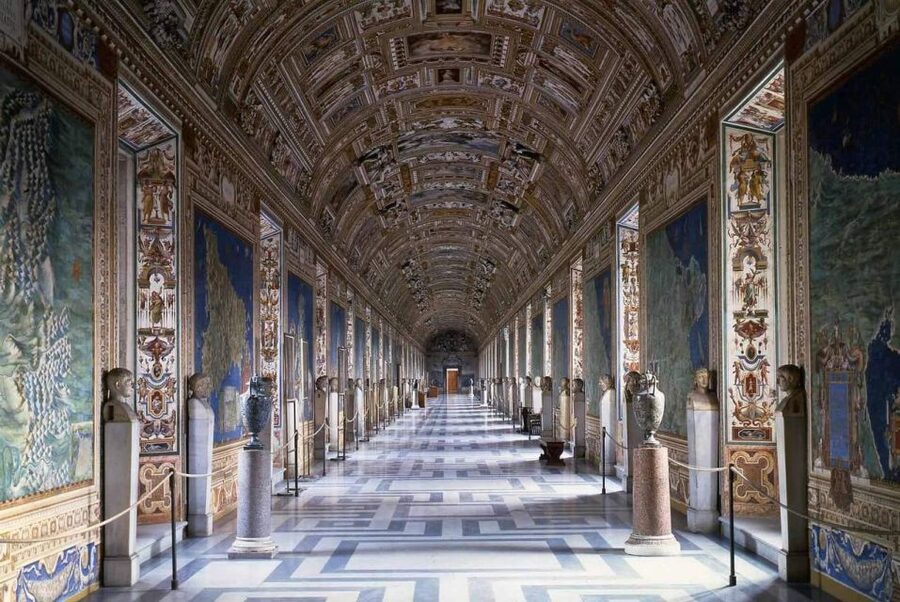
The next stretch includes three long galleries: the Gallery of the Candelabra, the Gallery of Flemish hangings, and the Gallery of Maps. Each has a different visual character, which helps the route stay varied.
The Gallery of the Candelabra takes its name from the large decorative marble pieces displayed along the way. It can feel like a grand corridor rather than a single room, so the guide’s comments help you notice details instead of treating it as a passage.
The Gallery of Flemish hangings contains works from the workshop of Peter Van Aelst. Look upward and along the walls as you walk. These pieces were made to be viewed as powerful decoration in papal surroundings, not as small pictures in a quiet modern gallery.
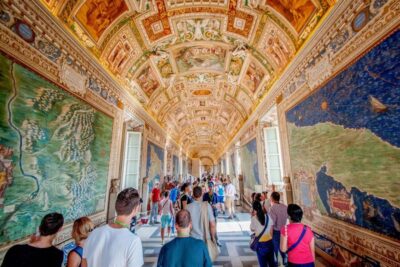
The Gallery of Maps is one of the most memorable parts of the Vatican route. Its walls are covered with frescoed maps of Italian territory, commissioned by Pope Gregory XIII. Even if you are not a map enthusiast, the scale is impressive. You can see how geography, politics, religion, and papal authority were presented together.
This is also where crowds become a real factor. The galleries are narrow compared with the number of people moving through them. You may need to keep close to your guide, and stopping for a long look can be difficult.
Raphael’s Rooms and the papal apartments
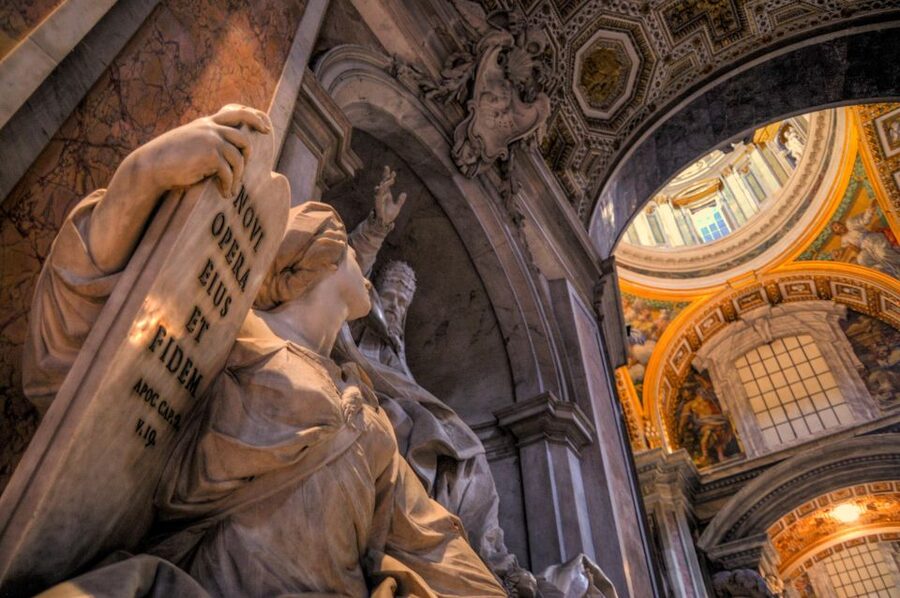
The tour then reaches Raphael’s Rooms in the apartment of Pope Julius II. Raphael and his workshop decorated these rooms with scenes that helped define High Renaissance painting.
Your guide can give you a way to read the paintings instead of simply admiring their size and color. Pay attention to how figures are arranged, how architecture creates depth, and how religious ideas are paired with references to philosophy and classical learning.
Raphael’s Rooms are a highlight, but the experience depends on the pace of the group. You will not have unlimited time in front of each fresco. I recommend deciding in advance that you will focus on a few key details rather than trying to absorb every wall at once.
The rooms also prepare you for the Sistine Chapel. You move from papal art designed for an elite private setting to one of the world’s most famous religious interiors. That progression gives the final stop more meaning.
Michelangelo in the Sistine Chapel
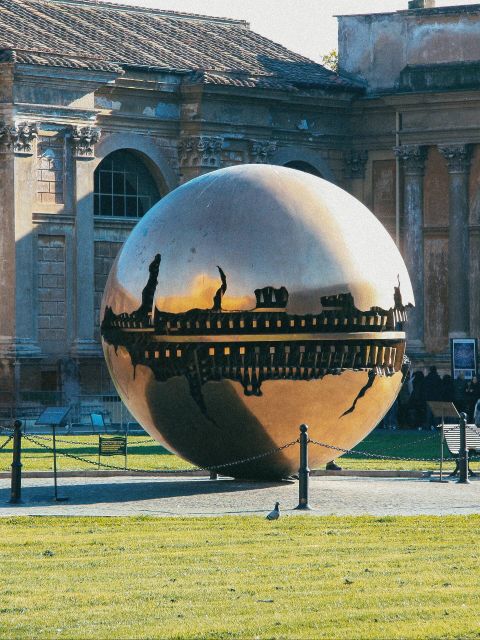
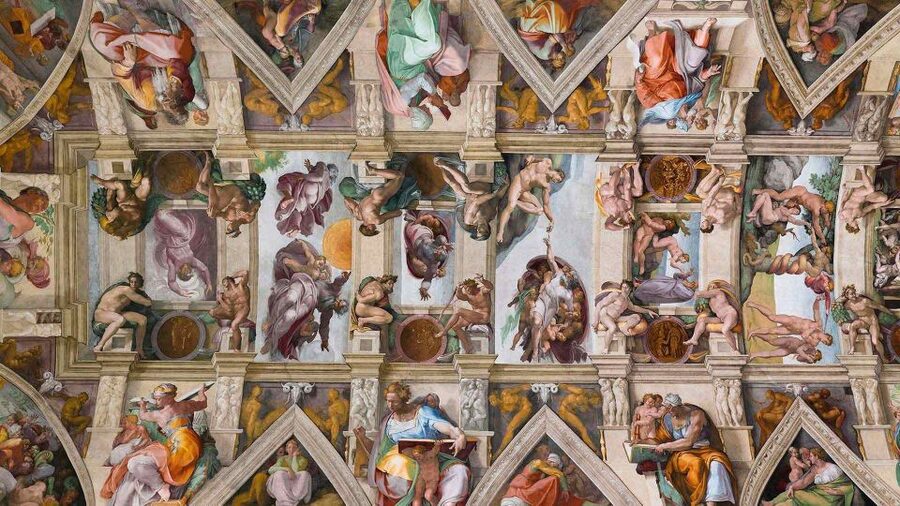
The Sistine Chapel is the emotional high point of the tour. Here you can see Michelangelo’s scenes from the Book of Genesis on the ceiling and The Last Judgement on the altar wall.
The scale is hard to grasp from photographs. The ceiling stretches above you, filled with figures and scenes that demand constant upward attention. The Last Judgement has a different force, with its crowded composition and dramatic treatment of the final fate of humanity.
You need to prepare for strict rules. The chapel is a religious site, so silence and appropriate clothing matter. Photography is not allowed. Sleeveless shirts, miniskirts, shorts, and hats are not permitted, and you should dress conservatively for the entire visit.
Time in the chapel may be brief. One account describes roughly 10 minutes, and the group must stay together before moving on. That can feel rushed, particularly after seeing so much art in quick succession. Still, a guide’s introduction beforehand helps you use those minutes well.
I suggest choosing one ceiling scene and one section of The Last Judgement to study closely. Trying to inspect everything at once usually leads to neck strain and a blur of images. Look, listen, and accept that this is an overview rather than a private viewing.
What the crowds and heat mean for you
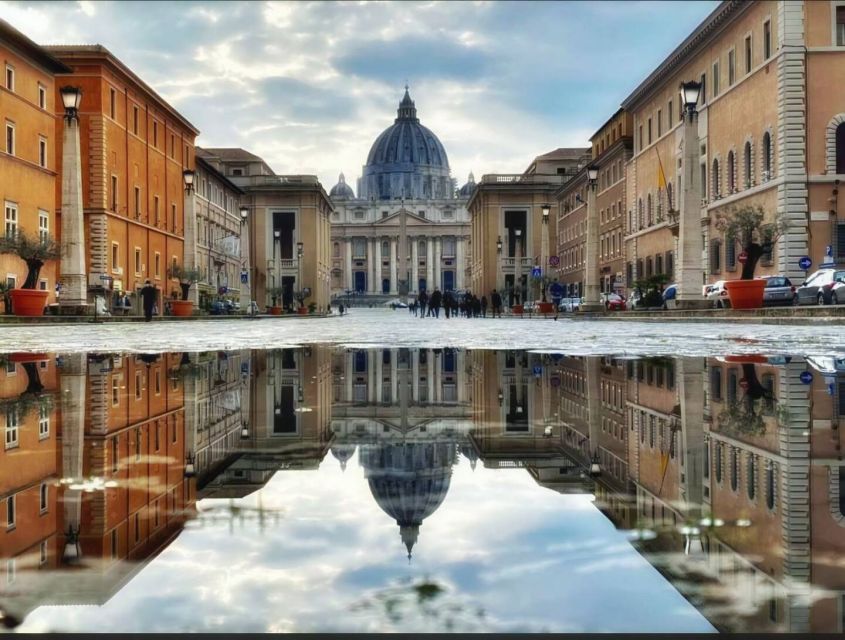
The Vatican Museums are among the most visited museums in the world. Skip-the-line tickets help with the main ticket queue, but they do not create a private entrance into every room.
Everyone must pass airport-style security. In high season, the wait can reach 30 minutes. On some visits it may take only a few minutes, but you should not build your schedule around the best-case scenario.
Inside, the galleries can be extremely crowded. One account describes feeling squeezed in, while another points out that even late September was busy. The Sistine Chapel and museum corridors can also become hot, with limited air circulation.
I would wear light, modest clothing and bring water for the parts where it is allowed. You should not expect a slow, quiet museum visit. Think of this as a guided introduction to the Vatican’s greatest works, delivered in a crowded setting.
The guides are the main source of value
The company offers live guides in English, Spanish, Russian, and Portuguese. The individual guide can shape the experience more than any other factor.
Several guides have received especially strong praise. Juliana has been described as engaging, careful, and deeply informed, with a talent for keeping a mixed group together. Deny has an art background and has explained painting techniques in a way that made the works easier to understand. Carolina has been praised for being approachable and organized, while Luis has been noted for his passion and clear delivery.
Andre Luis has also been singled out for speaking several languages and combining strong subject knowledge with a kind manner. These details matter because a Vatican tour involves constant movement, noise, and a large amount of information. A guide who can explain clearly and keep everyone together is worth paying for.
No guide can control the crowd, the heat, or the time limits imposed inside the chapel. The best guides can help you work around those problems, not remove them.
Is $106 a fair price?
At $106 per person, this is not a budget museum entry. You are paying for admission, skip-the-line access, a live guide, and headsets, all within a 2.5-hour visit.
The value depends on how you would use the museum on your own. If you are comfortable researching the collection, navigating the entrance, and choosing your own route, a basic ticket may cost less and give you more freedom. You would also need to handle the museum’s huge scale without a guide’s explanation.
I think the price makes more sense for a first visit, a short Rome stay, or anyone who wants the major works explained in a set time. It is less appealing if your main goal is to spend half a day studying individual paintings or returning to a favorite gallery.
The priority entry is useful, but remember that it means avoiding the regular ticket queue, not skipping security or every crowd inside. That distinction keeps your expectations realistic.
What is and is not included after the chapel
The tour includes the Vatican Museums and the Sistine Chapel. It does not include a guided tour of St. Peter’s Basilica or access to St. Peter’s Dome.
Some tour arrangements may allow an onward route toward the basilica through a side gate, but you should not treat that as a guaranteed guided visit. The official inclusions do not promise a basilica tour or dome entry, and the dome has its own line and arrangements.
If St. Peter’s is a priority, plan it separately and ask about access on the day. The dome requires additional time, and the basilica can have its own security process. Do not assume that completing the Sistine Chapel automatically gives you a full St. Peter’s experience.
Who should book this Vatican experience?
I would choose this tour if you want the main Vatican highlights in one organized visit and prefer explanations to wandering alone. It suits first-time visitors, families with older children who can manage the pace, and anyone with limited time in Rome.
It is also a good choice if long ticket lines would spoil your day. The priority entrance can save valuable time, even though security may still take a while.
I would hesitate if you use a wheelchair or have significant mobility limitations, since the experience is not suitable for wheelchair users or people with mobility impairments. I would also hesitate if you dislike crowds, heat, strict chapel rules, or a fixed group pace.
The cancellation policy gives you some flexibility: you can cancel up to 24 hours ahead for a full refund, and you can reserve now and pay later. Those terms are useful when your Rome schedule is still taking shape.
Should you book it?
Book this tour if you want a well-planned introduction to the Vatican’s major art and can accept a crowded, fast-moving visit. The strongest reasons are the ancient sculpture, Raphael’s Rooms, Michelangelo’s Sistine Chapel, and guides who can turn a huge collection into a readable story.
Skip it if you want a quiet museum day, extended time with individual works, or a proper guided visit to St. Peter’s Basilica and the dome. For most first-time visitors, though, the $106 cost is defensible because it combines entry, guidance, and a clear route through the Vatican’s essential sights.
FAQ
How long does the Vatican Museums and Sistine Chapel tour last?
The tour lasts 2.5 hours.
What is included in the price?
The price includes a guided tour of the Vatican Museums, skip-the-line museum tickets, a visit to the Sistine Chapel, and headsets to hear the guide.
Is St. Peter’s Basilica included?
A guided tour of St. Peter’s Basilica is not included. St. Peter’s Dome is also not included.
What languages are available?
Live guides are available in English, Spanish, Russian, and Portuguese.
Where is the meeting point?
Meet inside the CheckandGo Tours office at Via Sebastiano Veniero, 21. The office is on a street parallel to the Vatican Museums entrance.
Which metro station is closest?
The nearest metro station is Ottaviano on Line A. The meeting point is near a Todis supermarket and an auto shop with a blue Michelin sign.
Do I still need to wait if I have skip-the-line tickets?
You use a separate entrance to avoid the regular ticket line, but all visitors must pass airport-style security. During high season, security can take up to 30 minutes.
What should I wear?
You should dress appropriately for religious sites. Sleeveless shirts, miniskirts, shorts, and hats are not allowed.
Can I take photographs in the Sistine Chapel?
Photography is not allowed in the Sistine Chapel.
Just added in Rome
- Civitavecchia Private Transfer: From the Port to Rome Airport★ 5.0 · 309 reviews
- Civitavecchia Shore Excursion: Best of Rome Private Tour★ 5.0 · 247 reviews
- Civitavecchia Private Transfer from ship to FCO airport or Rome★ 5.0 · 245 reviews
- Food Tasty and History Tour in Civitavecchia★ 5.0 · 256 reviews
- Palatine Hill and Roman Forum Tour with Fast-Track Entrance★ 4.2 · 417 reviews
- Tivoli: Villa D’Este & Villa Adriana Pass & App Audioguide★ 4.4 · 364 reviews
- Tivoli: Villa D’Este Entry Ticket and App Audio Guide★ 4.3 · 191 reviews
- Vatican Museums & Sistine Chapel Skip-the-Line Guided Tour★ 4.6 · 254 reviews
Vatican & Sistine Chapel Tours, compared.
Vatican: Museums & Sistine Chapel Entrance Ticket
Read our review →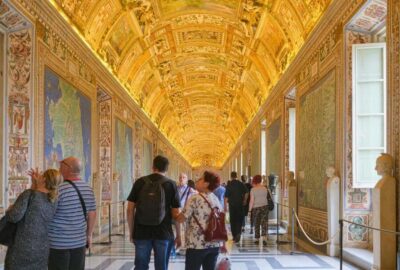
Vatican Museums & Sistine Chapel Tour with Optional Basilica
Read our review →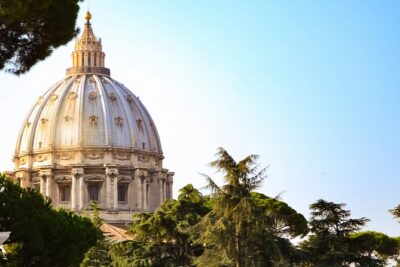
Vatican Museums, Sistine Chapel & St Peter’s Basilica Guided Tour
Read our review →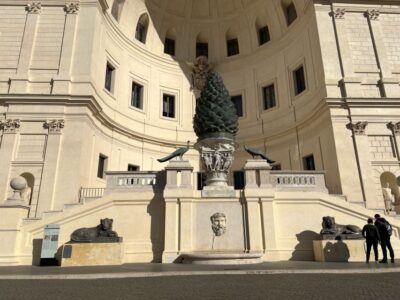
Vatican Museums & Sistine Chapel Skip-the-Line Entry Ticket
Read our review →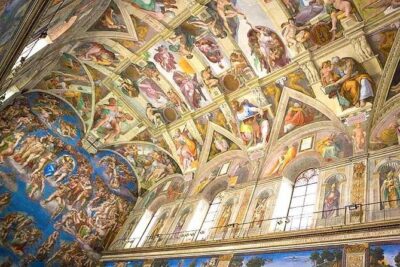
Skip-the-Line Group Tour of the Vatican, Sistine Chapel & St. Peter’s Basilica
Read our review →Browse the lists this tour appears in