
Reviewed · CATACOMBS & UNDERGROUND TOURS
Rome: Tour of St. Clement’s Basilica Underground Temples
Rome’s San Clemente Basilica is a history sandwich: a 12th-century church on top, a 4th-century Christian basilica below, and ancient Roman structures farther down. At about 14 meters underground, you reach a well-preserved Mithraic temple and hear an underground river running through the site. This is one of Rome’s best archaeology stops for seeing how one city changed layer by layer.
I like two things especially. First, the guide gives the underground rooms a clear story instead of leaving you to stare at old stones. Guides such as Francesca, Lorenzo, Paul, and Anestis have been praised for their explanations, humor, and willingness to answer questions. Second, the optional visit to Santo Stefano Rotondo adds a different kind of drama: a circular church lined with graphic scenes of martyrdom. The main drawback is the setting itself: stairs, narrow underground spaces, and no wheelchair access.
Key points to know before booking
- Fourteen meters below street level: San Clemente takes you through several periods of Roman history in one compact visit.
- A genuine Mithraic temple: See the remains of a pagan sanctuary and learn about the secretive cult that operated before Christianity became dominant.
- An underground river: Water still moves through the lower level, adding sound and atmosphere to the archaeology.
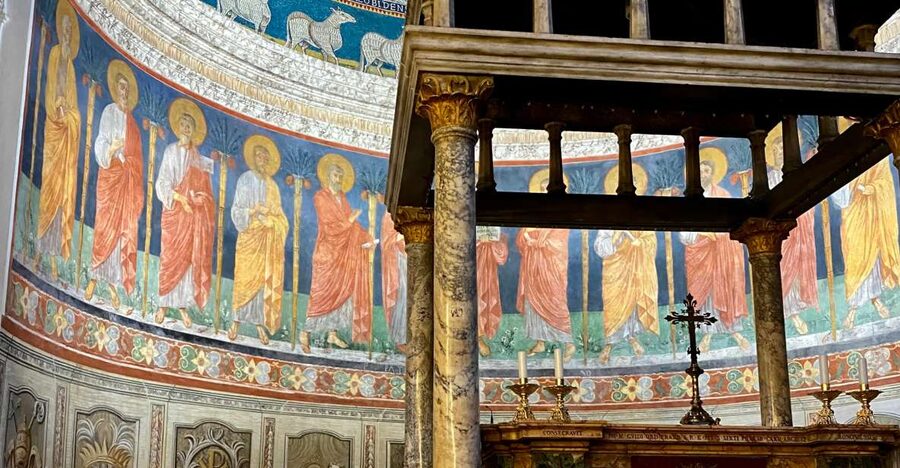
- A golden apse mosaic: Begin with the 12th-century basilica’s elaborate symbolism before heading below ground.
- Santo Stefano Rotondo is optional: Add 45 minutes for its circular design and harsh martyrdom frescoes.
- Best for history-minded visitors: The site is more rewarding with a guide, especially if Roman religion and early Christianity interest you.
Why San Clemente feels like Rome in cross-section
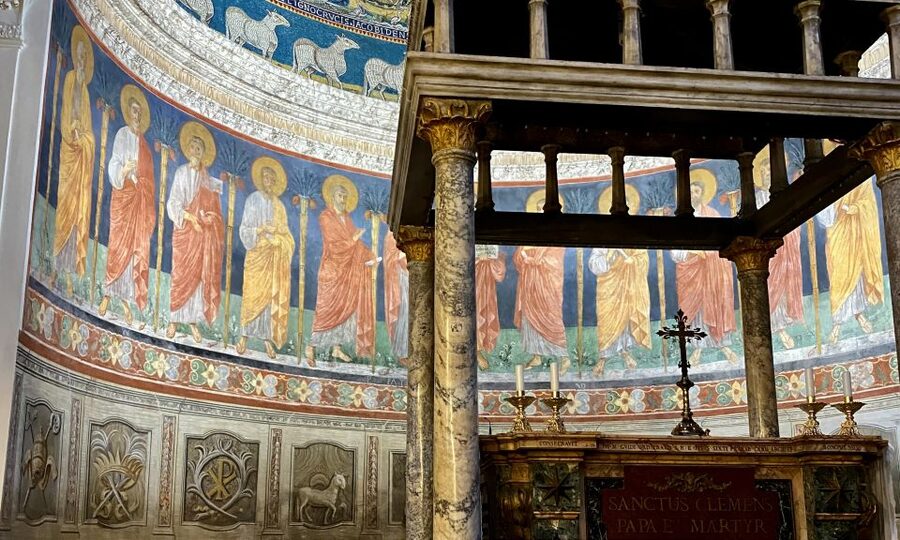
Many Roman monuments show you one era at a time. San Clemente gives you several at once. You begin in a working basilica from the Middle Ages, then descend into an early Christian church, then continue toward older Roman buildings and a Mithraic sanctuary.
That physical descent matters. You are not simply moving between museum rooms. Each stairway takes you farther into the city’s past, and the changing light, masonry, and temperature make the layers easier to picture. One level was built over another, often reusing the space and materials that came before.
Your guide is important here. Without context, the site can look like a string of dark chambers. With a good explanation, it becomes a story about changing beliefs, urban rebuilding, and the way Rome repeatedly covered its own past.
The tour receives a very high overall rating, and the strongest praise centers on the guides. Paul, described as an archaeologist and professor based in Rome, has led tours packed with detail. Lorenzo has been singled out for clear English, warmth, humor, and an easy way of explaining ancient Rome. Francesca has also been praised for her energy and friendly style.
Guide assignments can change, so you should not book on the assumption that one particular person will lead your visit. Still, the pattern is encouraging: the experience depends heavily on live interpretation, and the guides are generally prepared to handle questions rather than deliver a rushed speech.
More Underground Tours in Rome
- Colosseum: Underground and Ancient Rome Tour
★ 4.7 · 12,691 reviews - Rome: Crypts and Catacombs Underground Tour with Transfers
★ 4.6 · 5,341 reviews - Expert Guided Tour of Colosseum Arena OR Underground, and Forum
★ 4.5 · 5,041 reviews
The 12th-century basilica and its golden apse
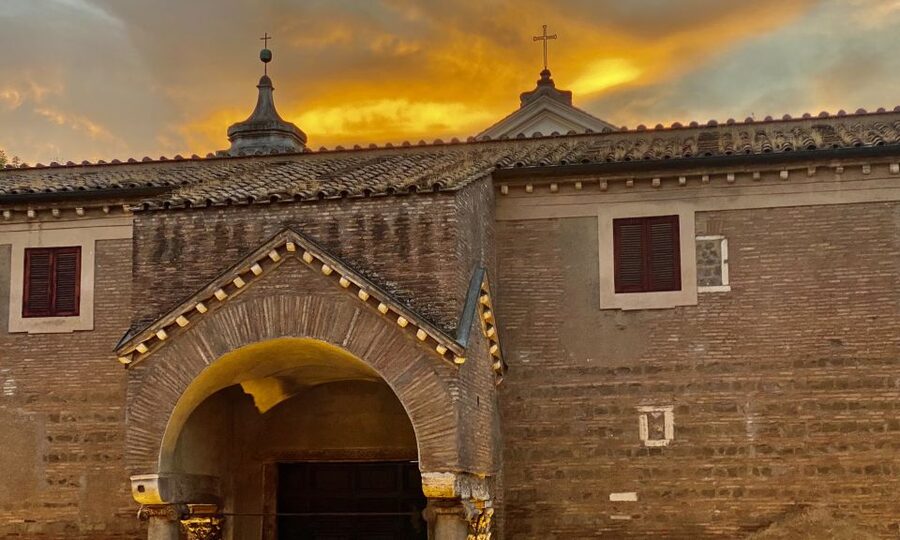
The visit starts at Basilica di San Clemente al Laterano, near the Colosseum and the Lateran area. Before heading underground, you see the present basilica, built in the 12th century.
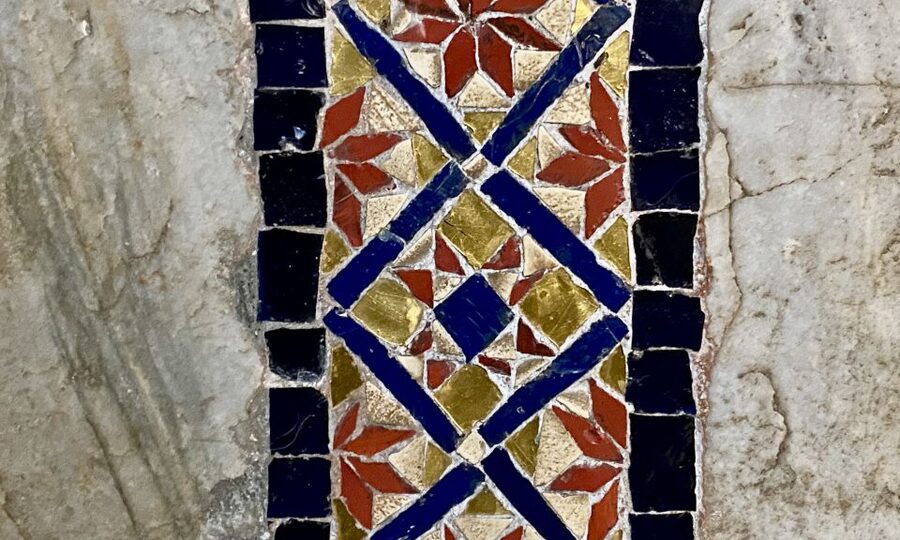
Give the upper church a proper look. Its apse contains a striking golden mosaic filled with Christian imagery and symbolism. The design is not merely decorative. Your guide explains how the symbols connect the church, the cross, paradise, and the spiritual meaning of the building.
This opening section gives you a useful reference point. When you later descend, you understand that the church above is not an isolated monument. It is the latest visible layer in a much older site.
The basilica is more modest than St. Peter’s or St. Paul’s Outside the Walls, which is part of its appeal. You do not get the grand scale or huge crowds associated with Rome’s famous churches. Instead, the reward is concentration: a smaller building with an unusually complicated story beneath it.
Photography is not allowed inside, and video recording is also prohibited. That can be frustrating if you like to document every stop, but it encourages you to pay attention while the guide points out details that are easy to miss.
Descending into the 4th-century Christian church
From the upper basilica, you go down into the remains of a 4th-century Christian church. This level was built over the home associated with St. Clement, traditionally regarded as the third pope of Rome.
Here, the tour shifts from medieval art to the early centuries of Christianity. You see some of the earliest Christian frescoes at the site, including scenes connected with martyrs and the persecution of early Christians.
The frescoes are valuable not only for their age. They show how early Christians used pictures to tell stories and express belief at a time when Christianity was still developing its public identity. Your guide can help you distinguish what you are seeing from later medieval decoration and explain why the images matter.
The underground church is atmospheric, but it is not a bright, spacious hall. Lighting is limited, and the rooms can feel enclosed. If you dislike tight spaces, this is the point where you may begin to feel uncomfortable. The tour is specifically not recommended for people with claustrophobia.
You should also wear comfortable shoes. The route involves stairs and walking through old underground structures, so this is not a good place for flimsy footwear or a hurried visit between formal meals and other appointments.
The Mithraic temple and the sound of running water
The lowest part is the main reason to choose this experience over a standard church visit. Farther below San Clemente, you reach one of Rome’s best-preserved Mithraic temples.
Mithraism was a Roman pagan cult connected with the god Mithras. Its rituals were private, and its meeting places were often small, enclosed sanctuaries. This room gives you a rare look at a religious tradition that existed before Christianity became Rome’s dominant faith.
Your guide explains the cult’s beliefs and rituals, but the value is not in memorizing a list of facts. The room lets you compare two very different forms of worship that occupied the same city, and sometimes the same built environment, across different periods.
The atmosphere changes again at this level. You can hear water from an underground river moving through the site. The sound makes the chamber feel less like a conventional archaeological display and more like a buried part of the living city.
This is also where expert explanation pays off most. The remains are not self-explanatory, and the meaning of the rooms can be hard to grasp if you visit without guidance. A well-paced guide can connect the temple, the older Roman structures, and the Christian buildings above without turning the visit into a confusing lecture.
Expect roughly one hour for the San Clemente portion. That is enough time for the main levels, though not enough for a slow, solitary archaeological study. The tour is designed to keep you moving while stopping for explanations.
Other things to see below Rome:
- The Original Roman Crypts and Catacombs Tour with Transfers
★ 4.5 · 4,896 reviews - Rome: Colosseum Underground Small Group Guided Tour
★ 4.7 · 4,844 reviews - Rome: St. Peter’s Basilica, Dome Climb, and Underground Tour
★ 4.8 · 3,404 reviews - Rome: Colosseum Underground, Arena & Forum Tour
★ 4.7 · 3,272 reviews
Adding Santo Stefano Rotondo for another 45 minutes
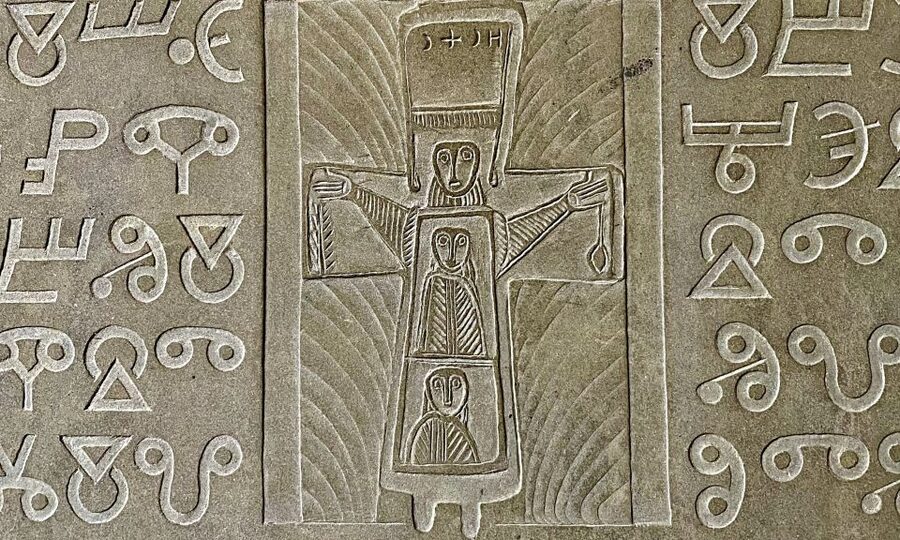
If you choose the extended option, you continue on foot for about 15 minutes to Santo Stefano Rotondo. The added visit lasts approximately 45 minutes.
Santo Stefano Rotondo has an unusual circular plan, quite different from the long central layout of San Clemente. Its famous frescoes show the martyrdom of early Christians in graphic detail. The images are powerful, but they are not gentle religious decoration. Children and anyone sensitive to violent scenes may find them disturbing.
I think the extension works best after San Clemente because it continues the focus on early Christianity, but it also changes the mood. San Clemente is about layers, archaeology, and religious change. Santo Stefano Rotondo is more direct and visual, presenting suffering through a long series of painted scenes.
The optional stop is not always available. Special events and liturgical celebrations can affect access, and the order of the two churches may change. You might begin at Santo Stefano Rotondo and finish at San Clemente instead.
You should also know that the extra visit is not included unless you select that option when booking. Check the exact version carefully. The basic tour covers San Clemente, while the longer version adds Santo Stefano Rotondo.
How much value do you get for $70?
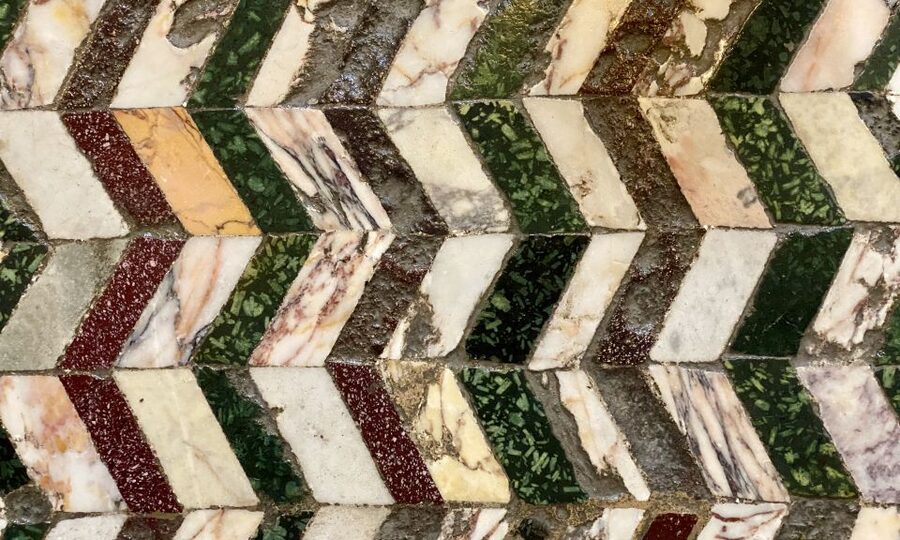
At $70 per person, this is not Rome’s cheapest one-hour sightseeing activity. The value depends on how much you want interpretation and how strongly you are drawn to archaeology, early Christianity, and ancient religion.
A self-guided visit can show you the physical rooms, but it may leave you wondering what each layer represents. Here, the entrance fee to San Clemente and a live guide are included, along with headsets so you can hear clearly. The extended option includes the guided visit to Santo Stefano Rotondo as well.
I consider the price reasonable if you want the site explained in detail. Several visitors have described very small groups, including one tour attended only by a couple. Group size can vary, but the availability of a private group is useful if you want a more personal format.
The strongest value comes from the unusual combination of access and explanation. You are not just entering a famous church. You are seeing a pagan temple, an early Christian church, an underground waterway, and a medieval basilica in one visit.
The price is harder to justify if you prefer to move quickly, dislike guided visits, or have little interest in religious history. San Clemente is not a quick photo stop. Much of its appeal lies in what the guide explains.
Timing, clothing, and practical limits
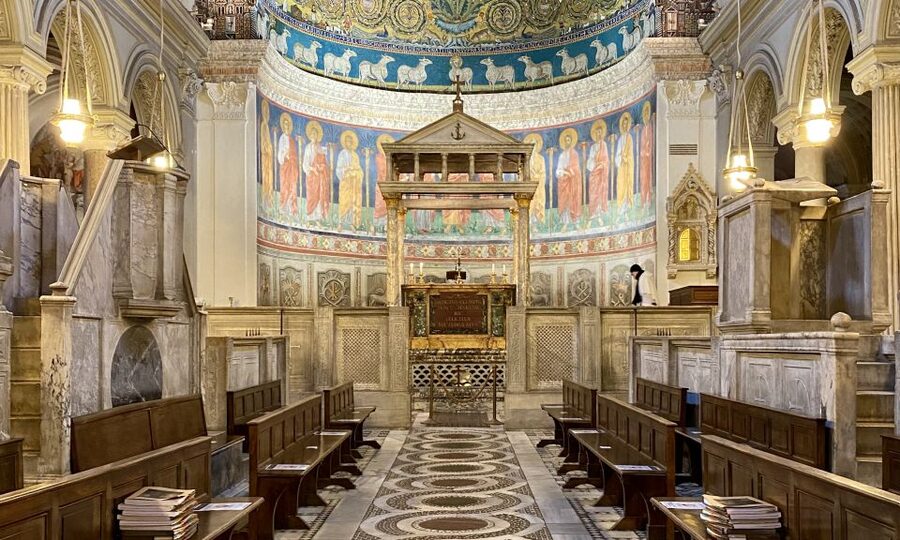
The meeting point may vary according to the option you book, so read your confirmation carefully. The available start times also change, and the total duration is roughly one to two hours depending on whether you add Santo Stefano Rotondo.
Plan to arrive ready to walk. Comfortable shoes are essential, and the underground route is not accessible to wheelchair users because of the architectural structure and stairs.
Dress modestly. Shorts, short skirts, sleeveless shirts, and similar clothing are not allowed. Food and drinks, pets, weapons, sharp objects, alcohol, and drugs are also prohibited.
The churches remain religious sites, not just archaeological attractions. Liturgical events, weather, or special occasions can cause changes or cancellations. If a particular area closes, the guide may adjust the route and use another site while keeping the overall duration unchanged.
You receive headsets, which matter in echoing stone rooms and when the group spreads out along the passageways. Tour languages include English, Italian, Spanish, French, German, and Portuguese.
Free cancellation is available up to 24 hours before the start time, and you can reserve now and pay later. Those policies are useful in Rome, where church schedules can shift around religious events.
Who will enjoy this tour most?
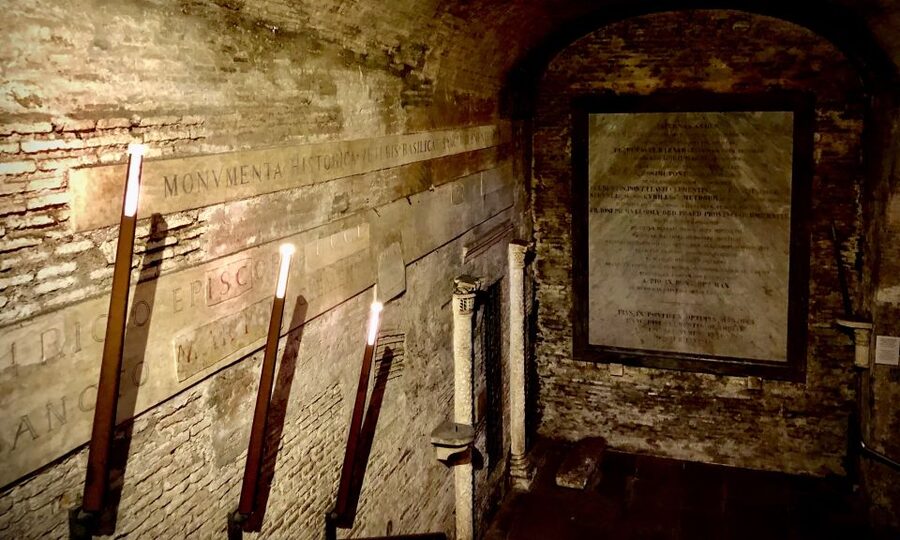
I would choose this for anyone who has already seen the obvious Roman landmarks and wants a more focused archaeological visit. It is particularly well suited to people who enjoy seeing how beliefs and buildings changed over time.
It also works well for adults who want a guide able to answer questions. The best reports about the experience repeatedly point to clear explanations, strong English, good humor, and substantial knowledge of Roman archaeology. Paul’s background as an archaeologist and professor has been especially useful for visitors who wanted more than a basic overview.
Families should consider the age and interests of their children. The underground spaces may feel close and dark, and Santo Stefano Rotondo’s martyrdom scenes are graphic. The extension is not automatically the right choice for younger children.
Art lovers will appreciate the golden apse mosaic and early Christian frescoes. History fans will likely prefer the Mithraic temple and the sequence of buried structures. If you mainly want grand architecture, San Clemente may feel restrained compared with Rome’s enormous basilicas.
Should you book San Clemente underground?
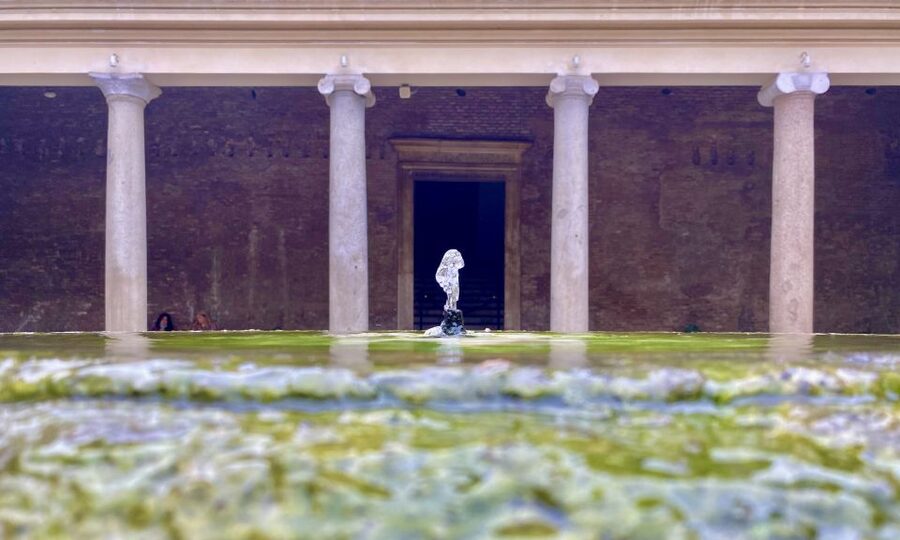
Book it if you want a compact, well-explained look at Rome’s changing religious world. The Mithraic temple, underground river, early Christian frescoes, and golden mosaic give you a rare range of sights in a short visit.
Choose the extended version if Santo Stefano Rotondo’s circular church and martyrdom scenes appeal to you, and confirm that the option is available on your date. Skip the extension if graphic religious art is not for you or if your schedule is tight.
I would not recommend this to wheelchair users or anyone who feels uneasy in enclosed underground rooms. For everyone else, especially history-minded visitors, the $70 price is defensible because the guide turns a complicated site into a story you can follow.
FAQ
How long does the San Clemente tour last?
The guided visit to San Clemente lasts about one hour. If you add Santo Stefano Rotondo, the total experience lasts roughly one to two hours, including the 45-minute visit there and the walk between the churches.
Is Santo Stefano Rotondo included in the basic tour?
No. The guided visit to Santo Stefano Rotondo is included only when you select the extended option during booking.
How far is Santo Stefano Rotondo from San Clemente?
The two churches are connected by an approximately 15-minute walk.
What languages are available?
Live guides are available in English, Italian, Spanish, French, German, and Portuguese.
Is the tour accessible for wheelchair users?
No. The underground areas and architectural structure of San Clemente make the tour unsuitable for wheelchair users.
Is this tour suitable for people with claustrophobia?
No. The underground spaces may feel enclosed, so the tour is not recommended for people with claustrophobia.
Are photographs allowed inside?
No. Photography and video recording are not allowed inside the churches and underground areas.
What should I wear and bring?
Wear comfortable shoes and modest clothing. Shorts, short skirts, and sleeveless shirts are not allowed.
Just added in Rome
- Civitavecchia Private Transfer: From the Port to Rome Airport★ 5.0 · 309 reviews
- Civitavecchia Shore Excursion: Best of Rome Private Tour★ 5.0 · 247 reviews
- Civitavecchia Private Transfer from ship to FCO airport or Rome★ 5.0 · 245 reviews
- Food Tasty and History Tour in Civitavecchia★ 5.0 · 256 reviews
- Palatine Hill and Roman Forum Tour with Fast-Track Entrance★ 4.2 · 417 reviews
- Tivoli: Villa D’Este & Villa Adriana Pass & App Audioguide★ 4.4 · 364 reviews
- Tivoli: Villa D’Este Entry Ticket and App Audio Guide★ 4.3 · 191 reviews
- Vatican Museums & Sistine Chapel Skip-the-Line Guided Tour★ 4.6 · 254 reviews
Catacombs & Underground Tours, compared.
Naples Underground Entry Ticket and Guided Tour
Read our review →
Colosseum: Underground and Ancient Rome Tour
Read our review →
Catacombs of San Gennaro Entry Ticket & Guided Tour
Read our review →
Crypts and Catacombs Underground Tour with Transfers
Read our review →
Expert Guided Tour of Colosseum Arena OR Underground, and Forum
Read our review →
The Original Roman Crypts and Catacombs Tour with Transfers
Read our review →
Colosseum Underground Small Group Guided Tour
Read our review →Browse the lists this tour appears in