
Reviewed · SEGWAY TOURS
Rome: Sights by Segway Tour
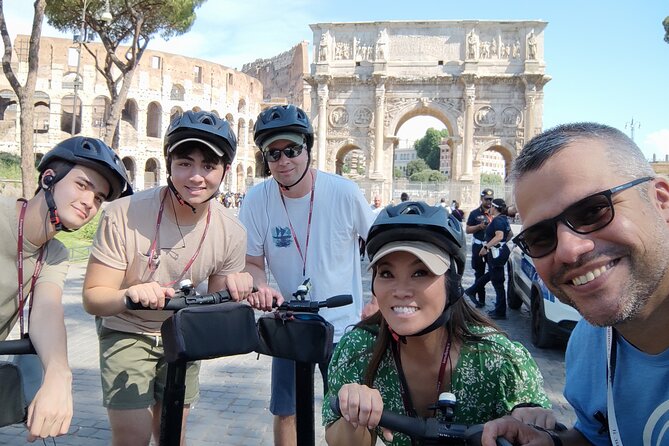
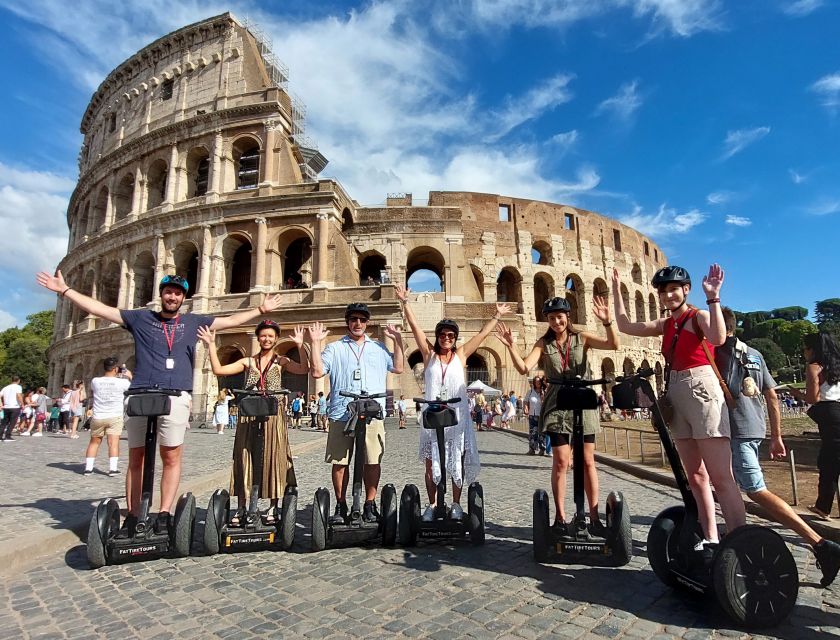
The clever part of this Rome tour is simple: you cover a lot of ancient ground without wearing out your feet. After a careful 30-minute lesson, you glide from the Theatre of Marcellus to the Colosseum, Circus Maximus, and Aventine Hill, with an English-speaking guide handling the history and navigation.
I like the small group of no more than eight, which makes it easier to ask questions and stay close to the guide. I also like the virtual reality reconstructions, which give you a better sense of how ruined Roman sites may have looked in their prime. The main drawback is that this is a sightseeing ride, not a full interior visit to the Colosseum or Forum, so you’ll want separate tickets if you plan to explore those monuments inside.
Key points to know before you ride
- A 30-minute training session comes first: Beginners get time to practice before heading onto Rome’s streets.
- The route covers ancient Rome’s major sights: You’ll see the Colosseum, Roman Forum, Capitoline Hill, Circus Maximus, Aventine Hill, and Mouth of Truth.
- The group is limited to eight people: That helps the guide keep an eye on riders and answer questions.
- Virtual reality adds context: Some stops include a headset showing how ancient buildings may have appeared in their original form.
- The tour is useful in hot weather: You can cover hills and long distances without walking the entire route.
- Strict rider rules apply: Participants must be at least 16, weigh between 100 and 260 pounds, and wear closed-toe shoes.
Why a Segway works well in ancient Rome
Rome rewards walking, but its ancient center can be tiring. The Colosseum, Roman Forum, Circus Maximus, Aventine Hill, Capitoline Hill, and the Theatre of Marcellus are close enough to connect, yet far enough apart to make a hot afternoon feel long.
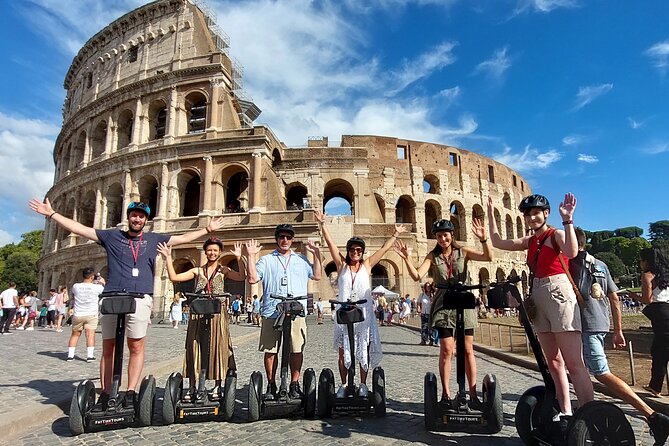
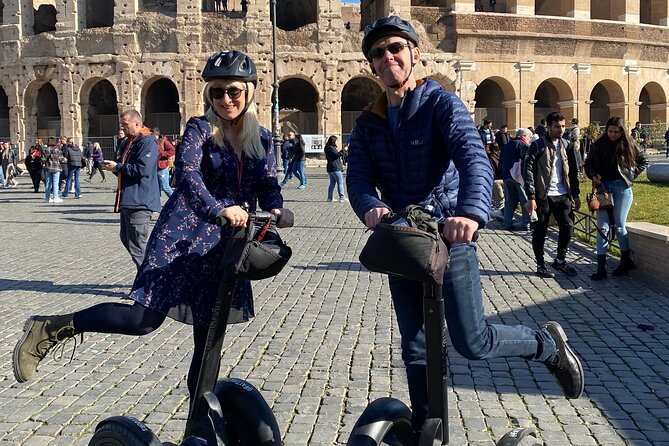
A Segway changes the pace. You move between stops quickly, then pause for the guide’s explanation and photographs. You still need to stand for two and a half hours, but you avoid much of the repeated walking, stair climbing, and hill work that comes with seeing this part of the city on foot.
The route is especially useful if you have only a short stay in Rome. It gives you an introduction to the city’s ancient center and helps you decide which places deserve a longer return visit. It also offers a different view of familiar sights. Instead of arriving at one monument, spending an hour inside, and moving on, you connect several sites and see how Roman public life once spread across the valley and hills.
There is a small tradeoff. Segway touring is active and public. You’ll be riding around streets, sidewalks, and open spaces rather than quietly studying one monument for a long time. If you want detailed archaeology at the Forum or a slow visit inside the Colosseum, book those separately.
Other quick ways round Rome:
- Rome Sights by Segway Tour
★ 5.0 · 1,543 reviews - Milan: Sights by Segway Small Group Tour
★ 4.9 · 450 reviews - Cagliari: Guided Segway Tour
★ 4.9 · 314 reviews
Starting near Piazza Venezia
The tour begins at Fat Tire Tours on Via dei Delfini 35/36, about 150 meters from Piazza Venezia. That is roughly a five-minute walk from the square, though it is wise to allow extra time. One rider found that a map app led them on a longer route, so look for the office address rather than relying only on the estimated walking time.
The location works well for a day of sightseeing. It is about 1.5 kilometers from the Colosseum, so you can reach the meeting point from that area on foot, but the tour itself is designed to carry you through the ancient center rather than begin at the amphitheater.
At the office, you sign a liability waiver, receive a helmet, and begin the training session. The orientation is not a rushed formality. First-time riders often feel nervous, especially when they imagine using a Segway in Rome traffic. Guides such as Arvin, Matt, Ilenia, and Lorena have been praised for patient instruction and for helping beginners feel steady before setting off.
You need to be able to climb and descend stairs without assistance. Open-toed shoes are not allowed, and anyone suspected of being under the influence of alcohol cannot ride or receive a refund. The minimum age is 16, children under 18 must be accompanied by an adult, and pregnant women cannot participate.
Theatre of Marcellus and Capitoline Hill
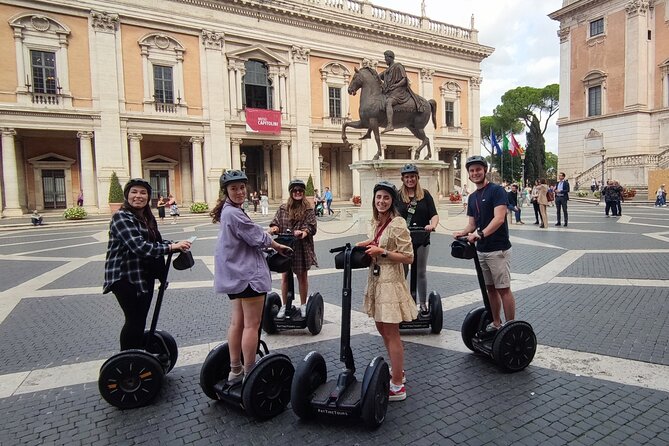
The first sightseeing stop is the Theatre of Marcellus, a useful introduction to Rome’s habit of building new life around old stone. From there, the route continues toward Capitoline Hill, one of Rome’s most important historic viewpoints.
Capitoline Hill brings a change of mood. The ride takes you uphill, and the reward is a broad view across Rome. Your guide explains the political and social importance of the hill while giving you time to look around and take photographs.
This is one place where the Segway earns its keep. The hill is manageable on foot, but arriving without a long climb makes the stop more enjoyable, especially in summer. You can focus on the view rather than catching your breath.
The route also passes Santa Maria Church and the Bocca della Verità, or Mouth of Truth. The famous marble face is linked to a Roman legend involving a hand placed inside its mouth. The stop is brief, but it adds a lighter moment to a tour otherwise filled with emperors, ruins, politics, and warfare.
Roman Forum and the Colosseum
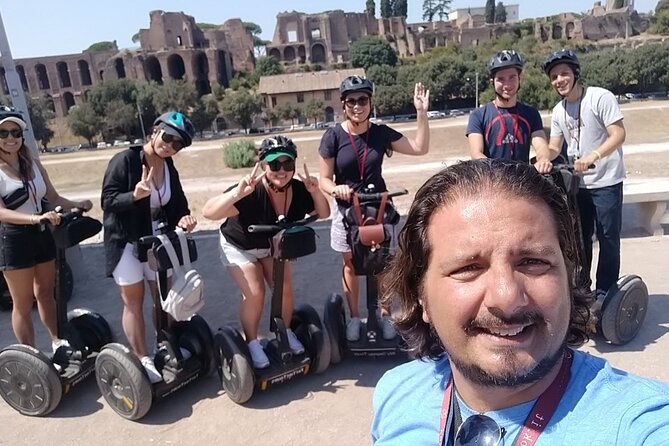
The Roman Forum is one of the most important parts of the route, even though the scheduled stop is short. This was the center of public life in ancient Rome, where politics, religion, law, commerce, and ceremony came together.
From a Segway, you get a broad look at the ruins and their setting. The guide can point out the remains and explain how Roman society worked, including the division between public and private life and the role of political power. The short stop is useful as an orientation, but it is not enough for a close study of every temple and column.
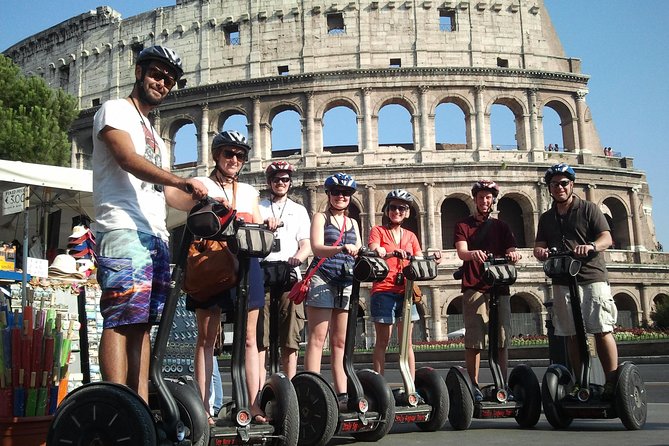
The Colosseum receives the longest stop, about 25 minutes. You’ll have time to admire its massive exterior, hear about its public role, and take photographs. The guide also connects the amphitheater to the wider Roman world, including social class, entertainment, and political control.
Be clear about the format: this is not a Colosseum entry tour. The itinerary takes you to the sight for guided sightseeing, but admission inside is not listed among the inclusions. If you want the arena, underground levels, or interior seating areas, arrange a separate timed ticket.
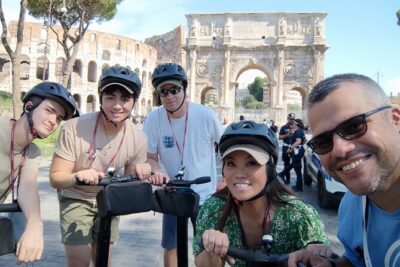
The Arch of Constantine is next. Its proximity to the Colosseum makes it an easy addition, and the guide can explain how Roman monuments often carried political messages through carved scenes and reused artwork. The stop lasts around ten minutes, enough for photographs and a focused explanation.
Same base, a different kind of day:
- Vatican: Museums & Sistine Chapel Entrance Ticket
★ 4.5 · 144,003 reviews - Vatican Museums & Sistine Chapel Tour with Optional Basilica
★ 4.3 · 67,413 reviews - Colosseum, Roman Forum & Palatine Guided Tour
★ 4.7 · 63,148 reviews - Vatican Museums, Sistine Chapel & St Peter’s Basilica Guided Tour
★ 4.5 · 39,149 reviews
Circus Maximus and Aventine Hill
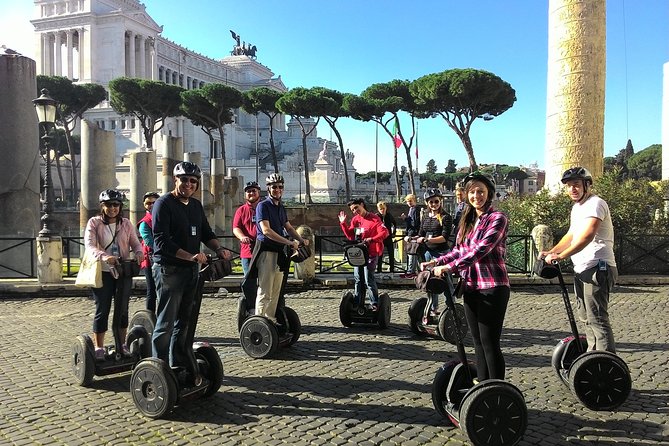
Circus Maximus gives you a strong sense of scale. The ancient chariot-racing arena once held enormous crowds, and today its open space makes it easier to imagine the size of Roman public entertainment.
You will not get the same close-up detail as you would on a long archaeological walk, but the guide’s stories help turn a wide grassy area into a place with purpose. This is where the tour’s broader view of Roman society matters. You learn not only about buildings, but also about the crowds, rituals, contests, and political interests that shaped daily life.
The route then climbs Aventine Hill. Like Capitoline Hill, Aventine offers a change in elevation and a good chance to look across Rome. It is also a quieter part of the route, giving you a break from the dense monument zone.
Aventine Hill is one of the stops that can be difficult to fit into a short independent walking visit, especially in hot weather. The Segway lets you reach it without spending much of your limited sightseeing time on foot. This is one reason I see the tour as more than a novelty ride. It connects places that many people might otherwise skip.
The Mouth of Truth and Temple of Hercules Victor
The Mouth of Truth brings a famous Roman legend into the itinerary. The carved face is associated with the old story that it would bite the hand of someone who lied. The guide gives you time for photographs and explains why this small sculpture became such a well-known part of Rome’s popular culture.
Nearby, the Temple of Hercules Victor provides another glimpse of the ancient city. It is a smaller monument than the Colosseum, but that is part of its appeal. Rome is full of remains that do not dominate the skyline yet help explain how the city was built and rebuilt over time.
These final stops broaden the tour beyond the most famous attractions. You see major monuments, but you also get a look at the smaller pieces that make Rome’s ancient center feel layered and lived-in.
After the Temple of Hercules Victor, you return to the Fat Tire Tours office. The sightseeing time is mixed with riding, instruction, stopping, and explanations, so expect an active overview rather than two and a half hours of continuous historical lecture.
The guide makes the difference
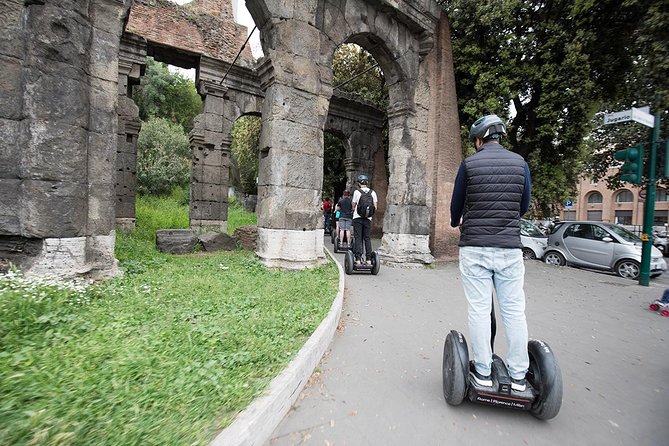
The Segway itself is easy to learn for many people, but the guide determines how safe and useful the outing feels. The strongest guide experiences combine three jobs: teaching the machine, managing the group, and telling Rome’s story in a clear way.
Names that have received especially strong praise include Ilenia, Arvin, Matt, Sergio, Lorena, Nico, Massimo, Stefano, Daniele, and Sara. Individual guide assignments can change, but you can expect an English-speaking leader who explains how to ride, stays attentive to the group, and adds stories to the stops.
The best comments focus on patience with beginners. Several riders were first-timers, and guides helped them move from uncertainty to confidence in a short period. That matters because the first few minutes can feel strange. You control speed and direction by shifting your body, so a calm lesson is more important than a flashy start.
Some guides also use an earpiece for ongoing commentary, which can make it easier to hear while moving between sites. This is particularly useful around busy streets, where stopping every few minutes for a full explanation would slow the route.
The historical approach is conversational rather than academic. You hear about Roman social structure, beliefs, politics, public life, and legends, along with current information about the city. If you want technical archaeology, you may find the commentary too broad. If you want a clear first look at ancient Rome, the balance works well.
Virtual reality adds a useful second view
The virtual reality feature is one of the tour’s most distinctive details. At selected locations, the guide can show how Roman ruins may have looked when buildings, decorations, and public spaces were intact.
Ruins can be difficult to read. A broken wall or scattered column rarely explains its original height, color, or purpose. A reconstructed image gives you a mental picture before you look back at the remaining stones.
The VR element is brief, so do not expect a long technology demonstration. It works best as a visual aid within the history lesson. Daniele and Ilenia were specifically praised for using it to help connect the ruins with their former appearance.
Is $88 good value?
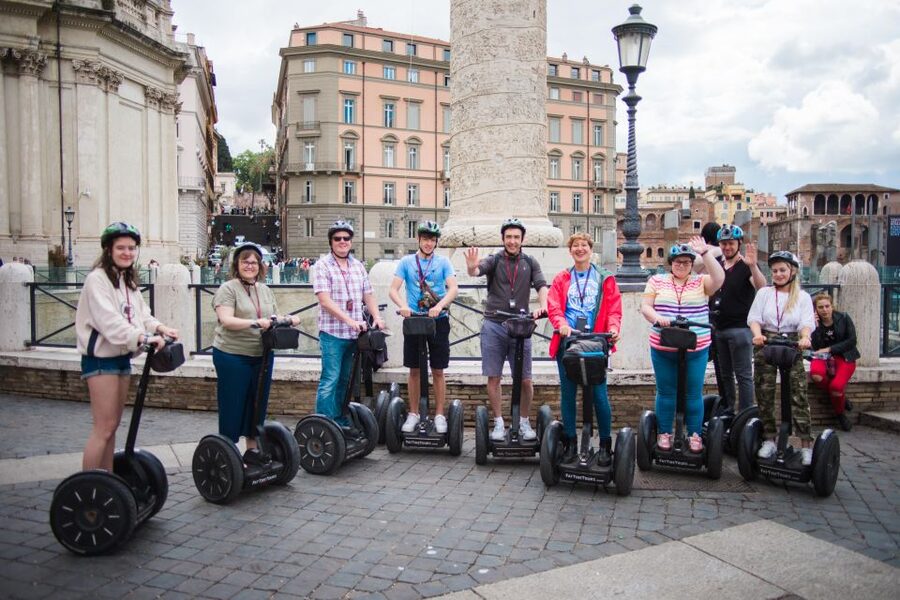
At $88 per person, this is not the cheapest way to see Rome. You are paying for the Segway, helmet, orientation, live guide, small group, and a route that covers a large section of the ancient center in 2.5 hours.
The value is strongest if you want to see more ground with less walking. It also makes sense for a first visit, a short stay, a warm-weather day, or anyone who likes an active tour with a bit of novelty. The maximum group size of eight is important here. A much larger group would make street movement and questions less comfortable.
The price is less convincing if your main goal is entering the Colosseum and Roman Forum. Admission is not included, and the tour cannot provide the same depth as a dedicated archaeological visit. In that case, use this ride as an overview, then spend another day or time slot inside the monuments.
Free cancellation up to 24 hours before departure and the option to reserve now and pay later add useful flexibility. Starting times vary, so check availability before planning the rest of your day.
Who should book this Rome Segway tour?
I would choose it for adults and older teenagers who want a broad introduction to ancient Rome without walking every mile. It suits couples, families with children aged 16 and older, and first-time Segway riders who are willing to follow the safety briefing.
It is also a good choice during a heatwave. You still need to stand and ride, but you avoid some long walks and steep climbs. The route offers several chances to stop, listen, and take photographs rather than forcing you to march from site to site.
I would skip it if you dislike balance-based activities, cannot climb stairs without help, weigh more than 260 pounds, weigh less than 100 pounds, or need a fully accessible experience. Pregnant women cannot participate, and open-toed shoes are not permitted.
Should you book it?
Book this tour if you want a fun, efficient introduction to Ancient Rome and like the idea of learning while moving. The training is patient, the group is small, and the route reaches several hills and open spaces that can be tiring to cover on foot.
Do not book it as a replacement for inside visits to the Colosseum or Roman Forum. Think of it as a lively orientation with views, stories, photographs, and a memorable ride. For many people, the combination of ancient ruins, Roman legends, and virtual reality makes the $88 worthwhile, especially when time or energy is limited.
FAQ
How long is the Rome Segway tour?
The tour lasts 2.5 hours, including a 30-minute orientation session before the sightseeing ride.
Where does the tour meet?
You meet at the Fat Tire Tours office at Via dei Delfini 35/36, 00186 Rome. It is about 150 meters from Piazza Venezia and approximately 1.5 kilometers from the Colosseum.
What sights are included?
The route includes the Theatre of Marcellus, Capitoline Hill, Roman Forum, Colosseum, Arch of Constantine, Circus Maximus, Aventine Hill, Mouth of Truth, and Temple of Hercules Victor.
Is the Colosseum interior included?
No. The tour provides guided sightseeing at the Colosseum, but admission inside is not listed among the inclusions.
What age do you need to be to ride?
All participants must be at least 16 years old. Anyone under 18 must be accompanied by an adult.
What does the tour include?
The price includes an English-speaking live guide, Segway rental, a 30-minute orientation, a helmet, and a poncho in case of rain.
Just added in Rome
- Civitavecchia Private Transfer: From the Port to Rome Airport★ 5.0 · 309 reviews
- Civitavecchia Shore Excursion: Best of Rome Private Tour★ 5.0 · 247 reviews
- Civitavecchia Private Transfer from ship to FCO airport or Rome★ 5.0 · 245 reviews
- Food Tasty and History Tour in Civitavecchia★ 5.0 · 256 reviews
- Palatine Hill and Roman Forum Tour with Fast-Track Entrance★ 4.2 · 417 reviews
- Tivoli: Villa D’Este & Villa Adriana Pass & App Audioguide★ 4.4 · 364 reviews
- Tivoli: Villa D’Este Entry Ticket and App Audio Guide★ 4.3 · 191 reviews
- Vatican Museums & Sistine Chapel Skip-the-Line Guided Tour★ 4.6 · 254 reviews
Segway Tours, compared.

Alberobello Guided Segway and Mini Golf Cart Tour
Read our review →Browse the lists this tour appears in