
Reviewed · CYCLING TOURS
Rome: Highlights Bike Tour
Rome is easiest to understand when its major sights are linked together, and this three-hour bike tour does exactly that. You pedal from the Jewish Ghetto to the Pantheon, Trevi Fountain, Colosseum, and Circus Maximus, with an English-speaking guide explaining what you are seeing along the way.
I like the route’s variety and the fact that it covers so much ground without turning into a tiring march. I also like the headset, which lets you hear the guide while riding, plus the calm attention guides such as Mattia, Stefano, Sarah, and Marco give to road safety. The main drawback is Rome itself: cobblestones, busy streets, and unpredictable traffic mean this is best for a confident cyclist.
Key points to know
- A fast overview of central Rome: See ancient ruins, Baroque fountains, grand piazzas, and Vatican City in one outing.
- Comfortable three-speed cruisers: The bikes are designed for easy riding, and the route is described as mostly flat.
- Strong guide presence: Guides keep the group together, explain the sights, and use headsets so you can listen while moving.
- Exterior sightseeing only: You pass the Colosseum, Pantheon, and other monuments, but the tour does not enter museums or monuments.
- Good for a first day: The route gives you a useful map of Rome and ideas for places to return to on foot.
- Weather matters: Tours run in rain or shine, though ponchos are available and fully reimbursed if unused.
Why a bike is a smart way to see Rome
Rome’s center is compact on a map but surprisingly spread out once you walk between its famous sights. The Pantheon, Trevi Fountain, Colosseum, Circus Maximus, and the Vatican are not next door to one another. On foot, fitting them into one afternoon means a lot of pavement and some backtracking.
A bicycle changes the rhythm. You ride between major stops, pause for explanations and photographs, then get moving again. This gives you a broad first look without spending the entire day underground on public transport or shuffling through crowded streets.
The route uses cruiser bikes with three speeds. That suggests a relaxed ride rather than a sporting workout, and the available comments describe the course as easy and mostly flat. Still, do not confuse flat with effortless. Rome’s cobbles can rattle your hands, and the roads require attention.
The headset is particularly useful. Your guide can talk while the group is moving, so the ride between stops is not dead time. You may hear a story about a Roman emperor while passing the very stones connected with it.
Other rides around Rome:
- Rome EBike Tour: Appian Way, Catacombs & Roman Aqueducts
★ 5.0 · 1,766 reviews - Rome: Top Highlights & Hidden Gems Tour by Cannondale E-Bike
★ 4.9 · 1,760 reviews - Rome: Appian Way, Catacombs, & Roman Aqueducts E-bike Tour
★ 4.9 · 1,421 reviews
Starting near Piazza Venezia
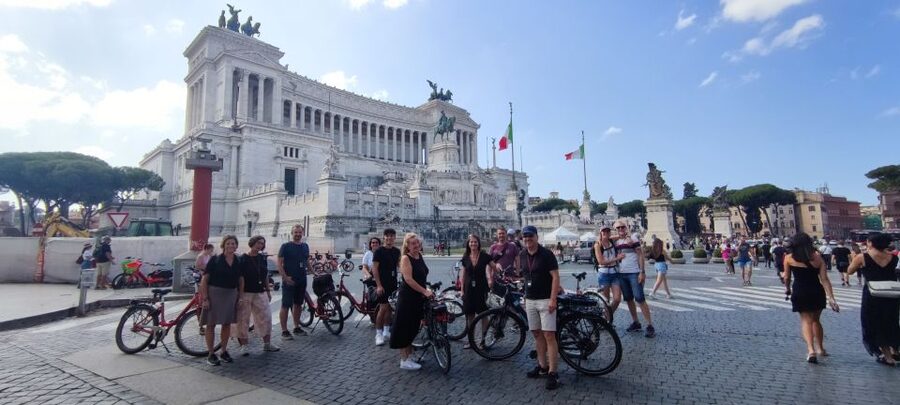
The tour begins at the Fat Tire Tours office on Via dei Delfini 35/36, about 150 meters from Piazza Venezia. That is roughly a five-minute walk from the piazza and about a 15-minute walk from the Colosseum.
Arrive 15 minutes before departure. This gives you time to get fitted for a bike, sort out a helmet if you want one, and listen to the guide’s safety instructions before entering the streets. The activity returns to the same office, which makes the timing easy to plan.
The opening section leads toward the Jewish Ghetto. This is a useful start because it moves you quickly away from the office and into one of central Rome’s older quarters.
Jewish Ghetto and Campo de’ Fiori
The Jewish Ghetto is the first listed stop, reached after about seven minutes of riding. This part of Rome offers a quieter historical counterpoint to the headline monuments. You can expect the guide to provide context before the group continues, rather than spending a long time off the bikes.
After another ten-minute ride, you reach Campo de’ Fiori. The square is one of Rome’s best-known public spaces, and its location makes it a natural bridge between the older neighborhoods and the monumental center.
These first stops help you get used to the bike and the city traffic. You are not yet dealing with the largest crowds around the Trevi Fountain or Colosseum, but you are already riding through streets where pedestrians, scooters, and cars compete for room.
The Pantheon, Piazza Navona, and Sant’Ignazio
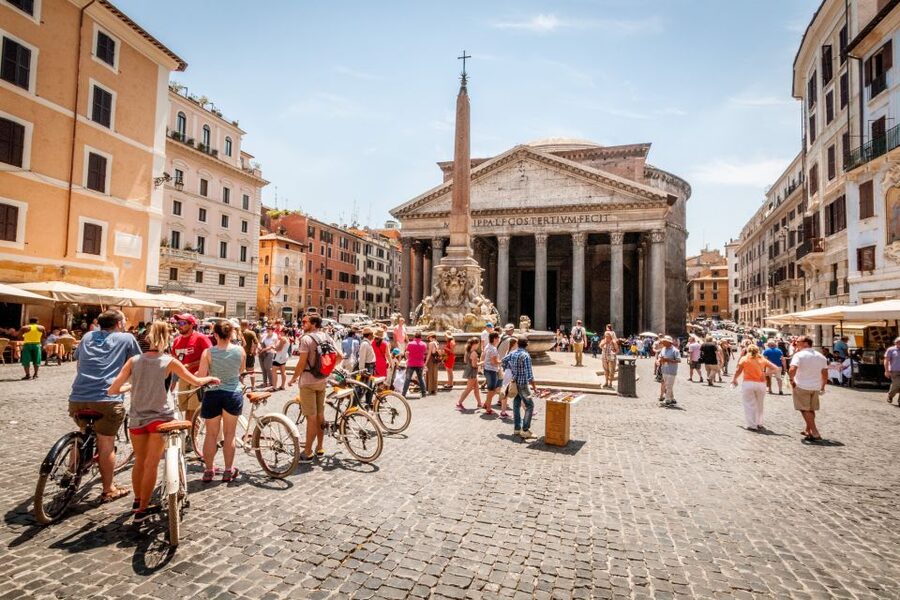
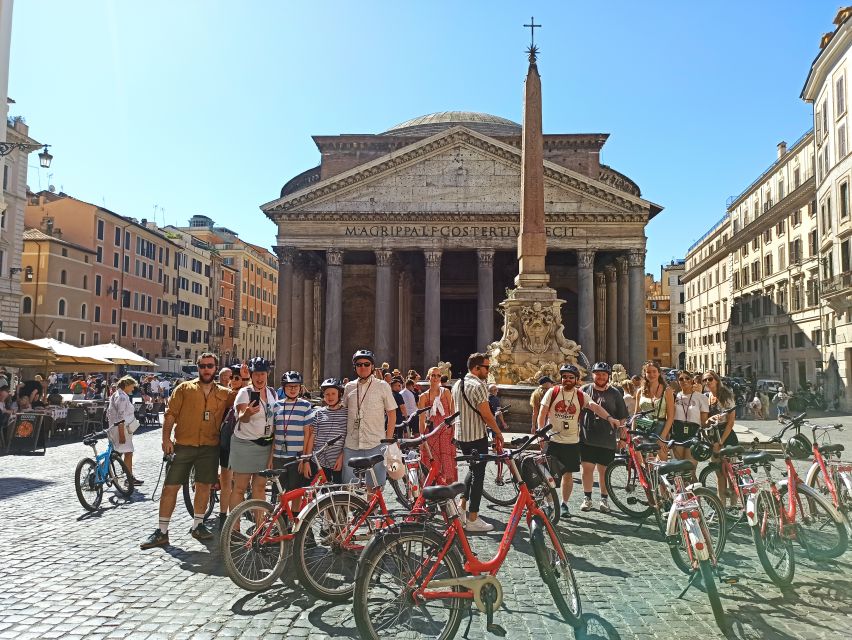
The Pantheon comes next, after about ten minutes of cycling. This is one of the tour’s strongest stops. Its Corinthian columns and huge concrete dome show how ambitious Roman builders were, and the building has influenced major structures far beyond Italy.
You will see the Pantheon from outside, not enter it. That distinction matters. If the interior is high on your list, plan a separate visit and allow time for the line and security arrangements on another part of your day.
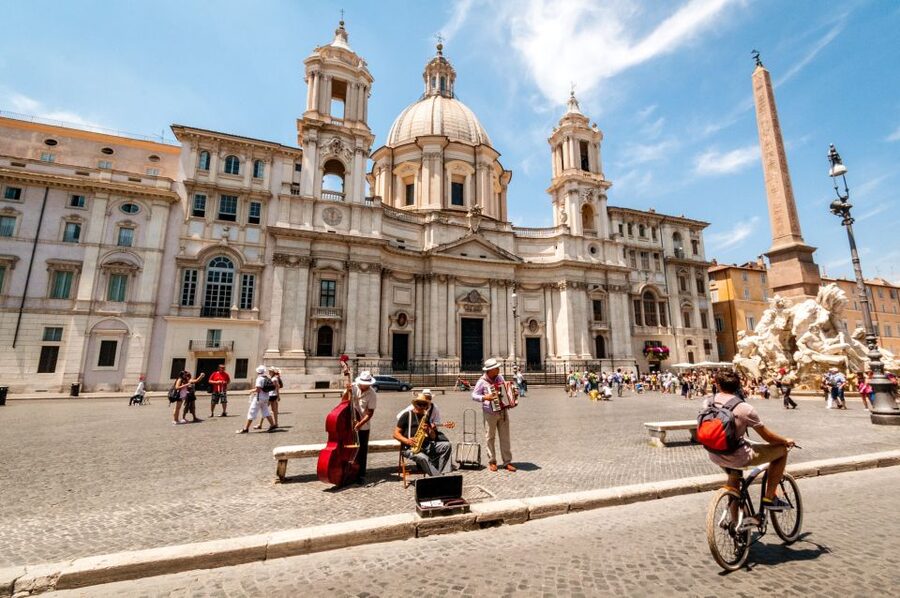
The route continues to Piazza Navona, another ten-minute ride. The elongated piazza follows the shape of an ancient Roman stadium, though the experience today is much more about fountains, architecture, and public life than racing.
Next comes the Church of Sant’Ignazio di Loyola. The itinerary allows another ten-minute bike segment before the stop. Even if you only have a short look from outside, it adds a church and Baroque element to a route otherwise dominated by ancient ruins and open squares.
I like this middle section because it keeps changing the subject. You are not seeing six versions of the same Roman ruin. Instead, the sequence moves from imperial engineering to a lively square, then to church architecture and the shape of the modern city.
Same base, a different kind of day:
- Vatican: Museums & Sistine Chapel Entrance Ticket
★ 4.5 · 144,003 reviews - Vatican Museums & Sistine Chapel Tour with Optional Basilica
★ 4.3 · 67,413 reviews - Colosseum, Roman Forum & Palatine Guided Tour
★ 4.7 · 63,148 reviews - Vatican Museums, Sistine Chapel & St Peter’s Basilica Guided Tour
★ 4.5 · 39,149 reviews
Trevi Fountain and the Temple of Hadrian
The Temple of Hadrian follows after about five minutes of riding. The surviving columns offer a quick glimpse of ancient Rome tucked into the present-day city. This is one of those places that makes a bike tour useful: you can pass close to a lesser-known monument without spending half an hour navigating on foot.
The ride to the Trevi Fountain takes about ten minutes, with around 20 minutes listed for the stop. That is enough time for the guide to explain the fountain, point out details, and give you a chance to take photographs.
Trevi is Rome’s largest Baroque fountain, and its theatrical design rewards a closer look. It is also one of the busiest points on the route. Keep your expectations practical: you will likely have people around you, and the group may need to stay organized so nobody gets separated.
The guide’s headset becomes useful here. Instead of trying to hear a speech over the noise of the square, you can listen at a reasonable distance and then focus on the fountain itself.
Trajan’s Column and Piazza Venezia
After Trevi, you ride for about 15 minutes to Trajan’s Column. The column’s carved scenes spiral upward around its shaft, telling a military story from ancient Rome. You may not be able to study every detail during a short tour stop, but the guide can help you understand why the monument matters.
The route then reaches Piazza Venezia after only about five minutes. The piazza is a major traffic and sightseeing hub, so it also illustrates the practical side of cycling in Rome. You need to follow instructions closely, watch the road, and keep the group in view.
This is where the tour’s safety work matters most. Several guides, including Mattia, Stefano, and Alessandro, are praised for managing the group carefully in busy streets. That does not remove the need for you to ride attentively, but it gives the outing a more controlled feel than exploring Rome’s traffic alone.
Rolling toward the Colosseum
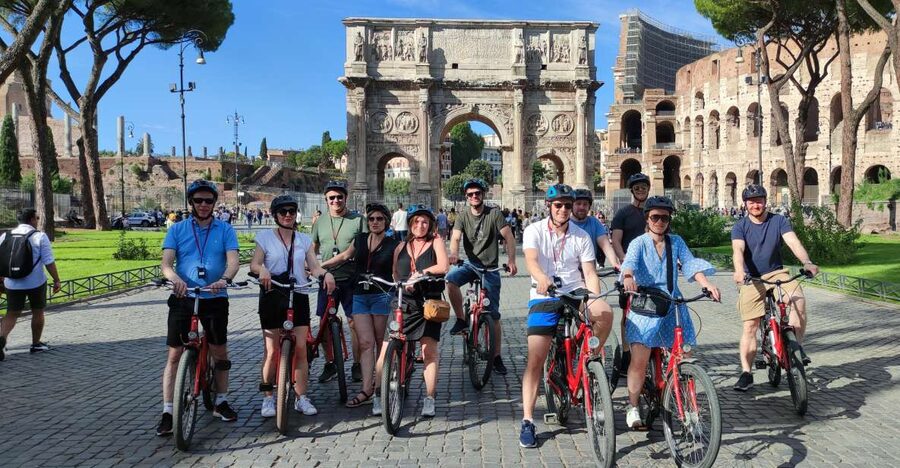
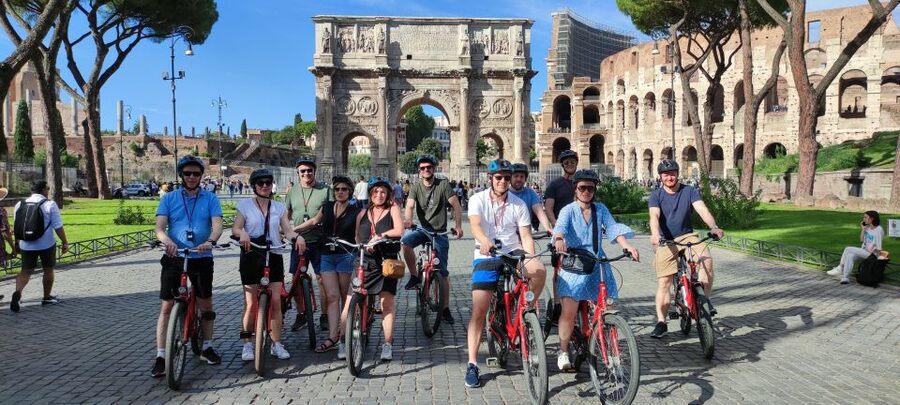
From Piazza Venezia, the group rides toward the Arch of Constantine, with about five minutes listed for that section. The arch is closely tied to the Colosseum area and gives you another view of how Rome reused and connected its monuments across different periods.
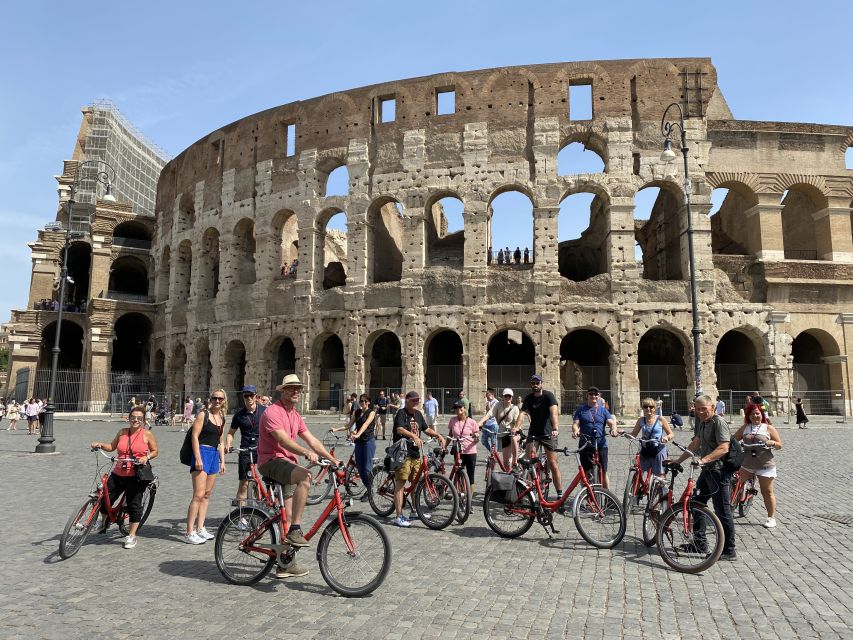
The Colosseum follows after another short ride. The planned stop lasts around 25 minutes, one of the longest pauses on the route. That makes sense. The amphitheater is too important to rush past, and the guide can explain its construction under Emperor Vespasian beginning in AD 72, its role in public spectacles, and its place in the city today.
Again, this is an exterior visit. You do not go inside the Colosseum on this activity. I see that as a benefit if you want a broad city tour, but a limitation if your main aim is exploring the arena and its underground levels. Book a separate timed entry for that.
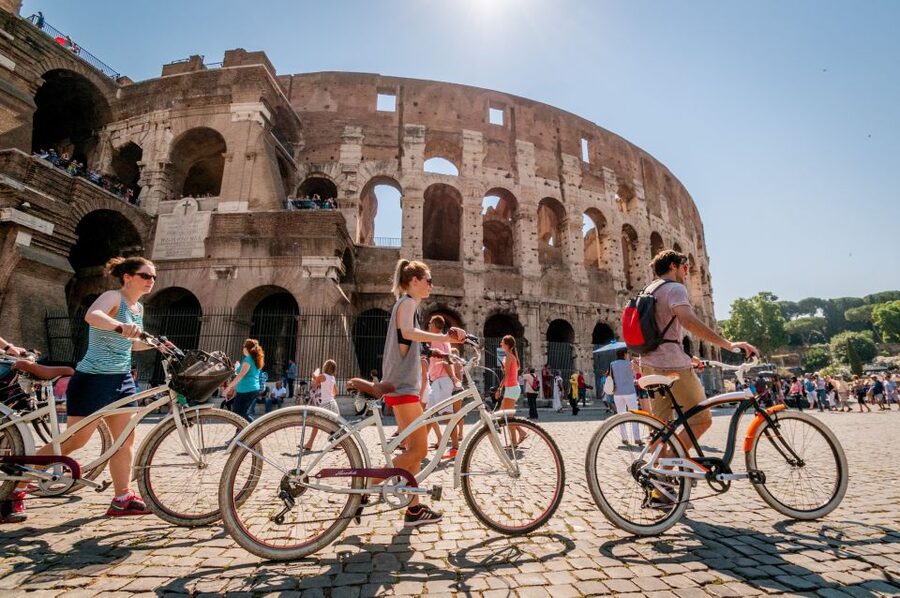
Cycling near the Colosseum is one of the memorable parts of the route. The monument is large enough to reveal itself from several angles, and arriving by bike feels different from approaching it through a metro station or on a tightly scheduled walking route.
Circus Maximus and the ride back
The final major stop is Circus Maximus, reached after about 20 minutes of riding. The former chariot-racing ground is now an expansive archaeological area, and its scale is easier to grasp from the saddle than from a quick photograph.
You will hear about the races and the role the site played in ancient Roman public life. The open setting also provides a change after the close-packed streets around Trevi and Piazza Venezia.
From Circus Maximus, the group returns to the Fat Tire Tours office. The tour lasts three hours in total, so the route is designed for highlights rather than long visits at each site. You should think of it as a moving orientation, not a collection of full monument tours.
What the riding is really like
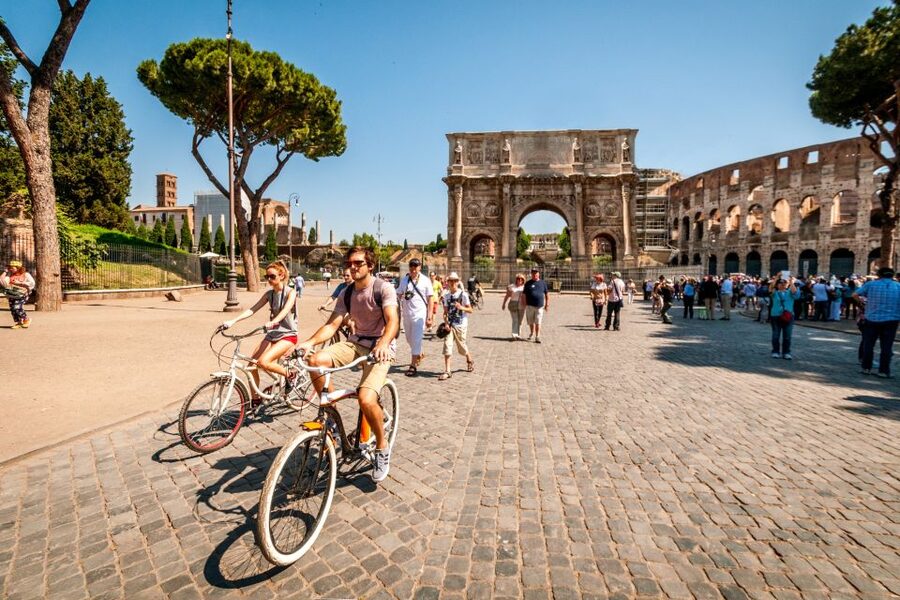
The bikes are cruiser-style models with three speeds. That setup suits a sightseeing route, and the flat sections make the tour accessible to many people who do not regularly cycle for exercise.
Rome is not a traffic-free cycling city. You will encounter cobblestones and stretches of busy road. One useful point from the experience is that confident cyclists of different ages have found the ride manageable, including teenagers and older adults, but confidence matters more than athletic ability.
Wear closed-toe shoes. Open-toed shoes are not allowed, and comfortable clothing suited to the weather is sensible. A helmet is optional, though I would use one on Rome’s uneven streets.
The tour is not recommended for pregnant women or children who are uncomfortable on a bicycle. Children under 10 must be able to ride their own bike at an excellent level, and staff can refuse participation if that standard is not met. Anyone under 18 must be accompanied by an adult.
If you are bringing children, provide their ages and heights when booking so the operator can prepare suitable bikes. The activity is in English only, which is important for families and anyone who needs a slower or translated presentation.
How the guides shape the experience
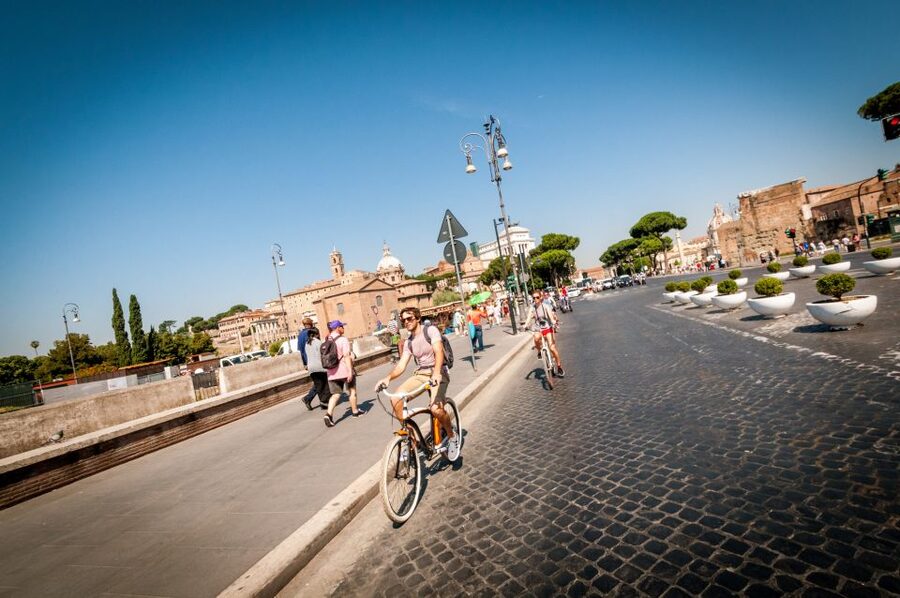
The guide makes a major difference here. You are not simply following a route with an audio recording. A local tour leader handles the streets, keeps the group together, explains the monuments, and answers questions.
The headset gives you the best of both formats. You have a live person leading the outing, but you can still hear explanations while riding. That is especially helpful when traffic or crowds make it hard to gather around one spot.
The strongest guide qualities reported across the experience are safety, humor, and clear historical storytelling. Stefano is noted for combining history with careful riding instructions. Mattia is described as both entertaining and highly attentive to the group. Sarah and Alessandro are also singled out for engaging presentations, while Marco is praised for making the ride easy and informative.
One small caution is worth noting. A guide may speak quickly, especially when trying to fit a lot into three hours. If you miss a point, ask for clarification at the next stop. The headset helps, but it cannot replace speaking up.
Is the $51.24 price good value?
At $51.24 per person, this is not the cheapest way to see Rome, but the comparison should be made with a guided walking tour plus local transport, not with a free stroll.
You are paying for a three-hour route, a cruiser bike, a live English-speaking guide, a headset, and the ability to link distant sights in one outing. If you have limited time in Rome, that can be good value. The tour can save your legs and help you decide which monuments deserve a longer return visit.
The price is less compelling if you want deep visits inside the Colosseum, Pantheon, or museums. None of those interiors is included, so you will need separate admission and time for them.
I would also factor in the value of local orientation. A good guide can point out places to revisit later, explain how the historic center fits together, and suggest where to spend the rest of your day. One guide, Mary, is specifically noted for sharing local ideas that led to a successful meal at a market afterward.
Rain, heat, and other practical details
The tour operates in rain or shine. Ponchos are available, and they are fully reimbursed if you do not use them. That policy offers some protection, but Rome’s slick cobblestones can still make wet riding less pleasant and less secure.
In hot weather, the route includes stops and access to fountains, according to the practical experience of the tour. Bring water, wear sun protection, and do not treat the three-hour duration as a reason to skip preparation.
Free cancellation is available up to 24 hours before departure for a full refund. You can also reserve now and pay later, which helps if your Rome schedule is still changing.
Who should book this Rome bike tour?
I would choose this tour if you have only a short time in Rome, want a lively overview, or prefer moving between sights instead of walking all afternoon. It is also a good first-day activity because it gives you a mental map of the center.
It suits confident cyclists, families with capable older children, and adults who want a moderate ride rather than a strenuous excursion. The mostly flat route and three-speed bikes make it easier than a cycling tour built around hills or long distances.
I would skip it if you dislike city traffic, feel uneasy on cobblestones, are pregnant, or want extensive time inside monuments. In those cases, a walking tour or dedicated museum visit will fit better.
Should you book it?
Book this Highlights Bike Tour if you want to see a long list of Rome’s major sights in three hours and are comfortable sharing the road with traffic. The best parts are the efficient route, the headset, the friendly guide style, and the chance to move from ancient ruins to fountains and piazzas without exhausting yourself.
Do not book it as a substitute for the Colosseum or Pantheon interiors. Use it as a smart first look, then return on foot to the places that catch your interest. At $51.24, it offers solid value for a time-conscious visitor who wants history, movement, and a clear introduction to Rome.
FAQ
How long does the Rome Highlights Bike Tour last?
The tour lasts three hours, though starting times depend on availability.
Where does the tour begin?
It begins at the Fat Tire Tours office at Via dei Delfini 35/36, 00186 Rome. The office is about 150 meters from Piazza Venezia.
Where does the tour end?
The tour returns to the Fat Tire Tours office at the original meeting point.
What sights are included on the route?
The route passes the Jewish Ghetto, Campo de’ Fiori, Pantheon, Piazza Navona, Church of Sant’Ignazio di Loyola, Temple of Hadrian, Trevi Fountain, Trajan’s Column, Piazza Venezia, Arch of Constantine, Colosseum, and Circus Maximus.
Does the tour enter the Colosseum or other monuments?
No. The tour does not visit inside monuments or museums. You see the sights from the outside.
Is the tour available in languages other than English?
No. The live tour is provided in English only.
Are helmets provided?
Yes. A helmet is available, but wearing one is optional. A cruiser bike and headset are included.
Can children join the tour?
Children under 18 must be accompanied by an adult. Children younger than 10 must be able to ride their own bike at an excellent level, and the operator may decline participation if they cannot do so safely. Families should provide children’s ages and heights when booking.
Just added in Rome
- Civitavecchia Private Transfer: From the Port to Rome Airport★ 5.0 · 309 reviews
- Civitavecchia Shore Excursion: Best of Rome Private Tour★ 5.0 · 247 reviews
- Civitavecchia Private Transfer from ship to FCO airport or Rome★ 5.0 · 245 reviews
- Food Tasty and History Tour in Civitavecchia★ 5.0 · 256 reviews
- Palatine Hill and Roman Forum Tour with Fast-Track Entrance★ 4.2 · 417 reviews
- Tivoli: Villa D’Este & Villa Adriana Pass & App Audioguide★ 4.4 · 364 reviews
- Tivoli: Villa D’Este Entry Ticket and App Audio Guide★ 4.3 · 191 reviews
- Vatican Museums & Sistine Chapel Skip-the-Line Guided Tour★ 4.6 · 254 reviews
Cycling Tours, compared.

Rome EBike Tour: Appian Way, Catacombs & Roman Aqueducts
Read our review →
Top Highlights & Hidden Gems Tour by Cannondale E-Bike
Read our review →
Appian Way, Catacombs, & Roman Aqueducts E-bike Tour
Read our review →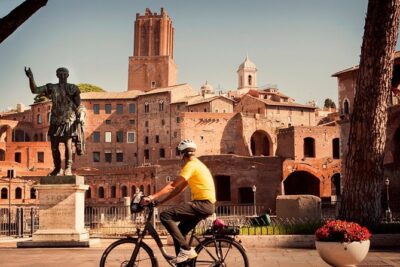
Rome City Small Group Bike Tour with quality Cannondale EBike
Read our review →
Tuscany Bike Tours Through the Chianti Hills with Wine Tasting
Read our review →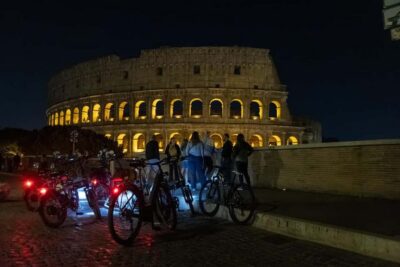
Browse the lists this tour appears in