
Reviewed · COLOSSEUM & ROMAN FORUM TOURS
Rome: Colosseum, Roman Forum & Palatine Hill Group Tour
The best part of this tour is the way it connects three famous Roman sites into one clear story. You move from the Colosseum’s spectacle and power to Palatine Hill’s imperial palaces, then into the Forum, where Rome argued, worshipped, traded, and governed. Guides such as Paulo, Jana, Fe, and Alessandro have been praised for bringing that story to life with humor and real feeling.
I like the timed entry and the use of headsets, especially in a place as noisy and crowded as the Colosseum. I also like the route’s balance: you get dramatic views from the Colosseum, wide city views from Palatine Hill, and the political heart of ancient Rome in the Forum. The main caution is that entry can still be slow during peak periods, and the arena floor costs extra unless you choose that option.
Key points at a glance
- Three major ancient sites in one visit: See the Colosseum, Palatine Hill, and Roman Forum with one guide and one admission plan.
- A guide-led history lesson: Expect stories about gladiators, emperors, senators, public ceremonies, and ordinary Roman life.
- Timed admission helps: You get speedier access than a standard walk-up visit, though busy days can still bring queues.
- Optional arena-floor access: Choose the upgrade if standing at the Colosseum’s central performance level matters to you.
- English and Spanish tours: The experience is designed around live explanation rather than an audio guide alone.
- About three hours well spent: The pace covers a lot without turning the visit into a rushed photo stop.
Why this ancient Rome combination works
Rome gives you no shortage of ruins, but these three sites belong together. The Colosseum shows how imperial Rome entertained and controlled the public. Palatine Hill reveals where emperors lived in grand style. The Roman Forum brings you down into the civic center, where speeches, legal business, religious rites, and everyday dealings took place.
I like this order because it gives you a useful framework for the rest of Rome. After hearing how power worked here, you will recognize the same themes in the Pantheon, Capitoline Hill, and other ancient sites.
The experience is advertised as lasting 1.5 to 3 hours, but you should plan around three hours for the full route. That extra time matters. These ruins are spread across uneven ground, and the guide needs time to explain what you are looking at rather than simply point at broken columns.
The group format also suits visitors who want more than labels on a wall. You can ask questions, follow a planned route, and hear the meaning behind the stones. A guide can explain why a building mattered, who used it, and how the political system shaped daily life.
Other ways into ancient Rome:
- Colosseum, Roman Forum & Palatine Guided Tour
★ 4.7 · 63,148 reviews - Rome: Colosseum, Palatine Hill and Roman Forum Guided Tour
★ 4.8 · 32,814 reviews - Rome: Guided Tour of Colosseum, Roman Forum & Palatine Hill
★ 4.7 · 27,897 reviews
Meeting at the Arch of Constantine
Your meeting point is in front of the Arch of Constantine, beside the Colosseum. Look for the yellow Carpe Diem Tours flag or sign, and arrive at least 10 minutes early.
This is not the place to arrive casually at the scheduled start time. The area is busy, tour groups gather in several directions, and late arrivals cannot be refunded. Bring your passport or ID card, including identification for any minors in your party.
The tour may begin at the Colosseum or at the Roman Forum and Palatine Hill. The starting point depends on the entry tickets secured by the guide, so check the meeting instructions on the day. This flexibility helps the operator work around ticket availability, but it means you should not assume the published order is fixed.
Inside the Colosseum: spectacle, power, and practical limits
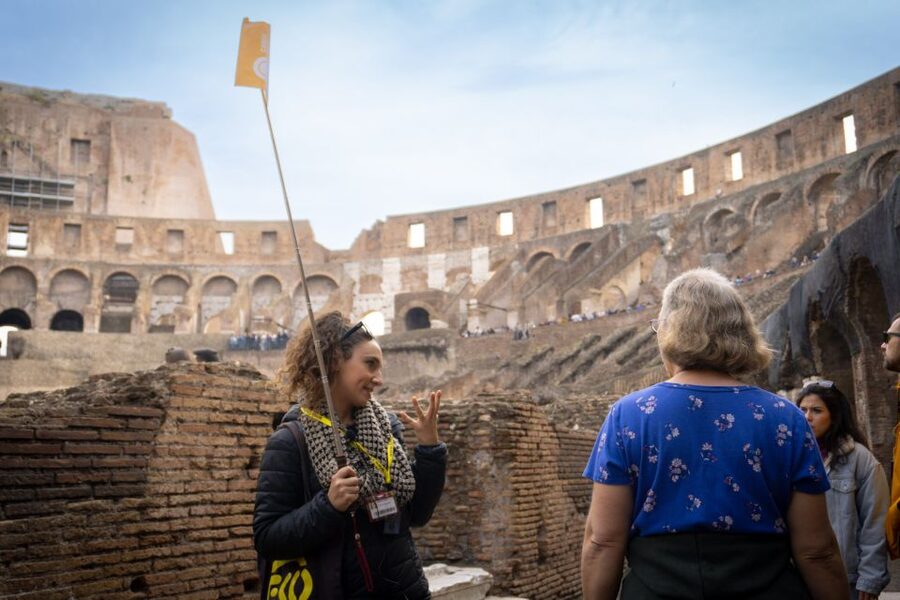
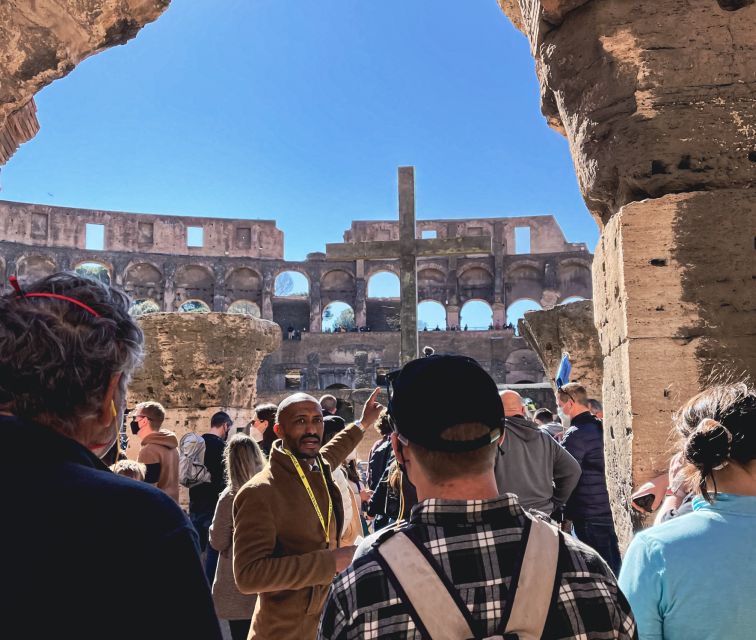
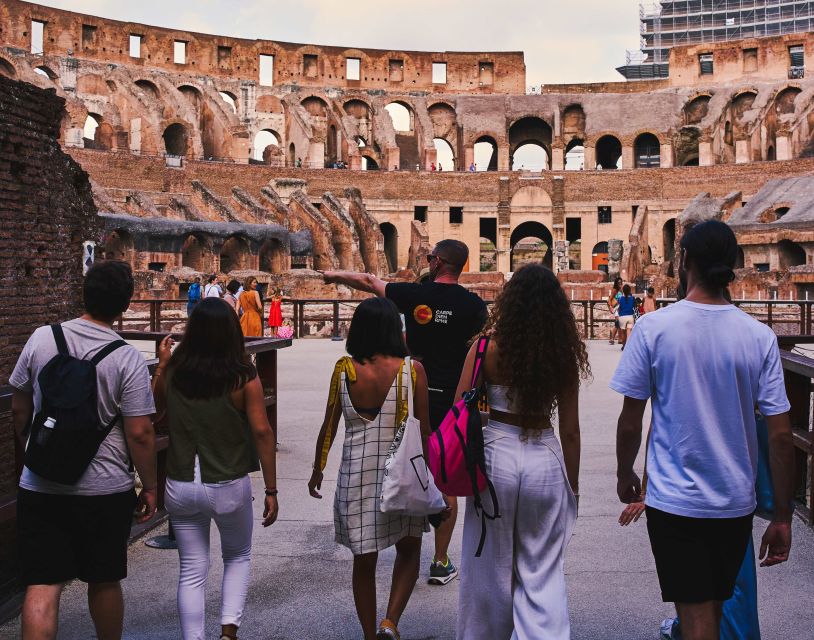
The Colosseum portion takes about an hour. You enter the great amphitheater with a guide and learn how its architecture managed enormous crowds, dramatic events, and the public display of imperial power.
The strongest guides make this more than a lesson about gladiators. They explain the social and political purpose of the games, the role of the emperor, and the way entertainment helped bind the city to its rulers. Fe, Paulo, Jana, and other guides have been singled out for combining historical detail with humor and warm interaction.
That style matters here. The Colosseum is visually overwhelming, but it can also feel confusing. You see tiers, arches, exposed foundations, and fragments of the original structure without an obvious explanation of how they fit together. A guide gives you a mental picture of the building as a working arena rather than a photogenic ruin.
You will also hear about the arena floor and the spaces below it. The standard tour does not automatically include access to the arena floor. If that viewpoint is important to you, select the arena option when booking. The listed entrance price is €18 per person without arena access and €24 with it, though your total tour price is higher because it includes the guide and organization.
The arena-floor option can be worthwhile for visitors who want the most direct view across the oval performance space. Without it, you can still understand the scale of the building and enjoy views from above the arena level. Read the booking option carefully so you know what you have paid for.
The Colosseum is also where the crowd issue is most likely to be felt. One spring visit involved a long wait caused by Easter-week demand and a late opening, despite an early start time. That is not the normal promise of a speedier-entry tour, but it is a useful warning: timed admission reduces some waiting, not all waiting.
If a queue develops, a strong guide can still make the time useful. One guide, Paola, reportedly began explaining the site while the group waited and continued with several hours of interpretation once inside. That kind of flexibility is valuable, though you should still avoid booking the Colosseum at the busiest time if your schedule is tight.
Palatine Hill: emperors above the city
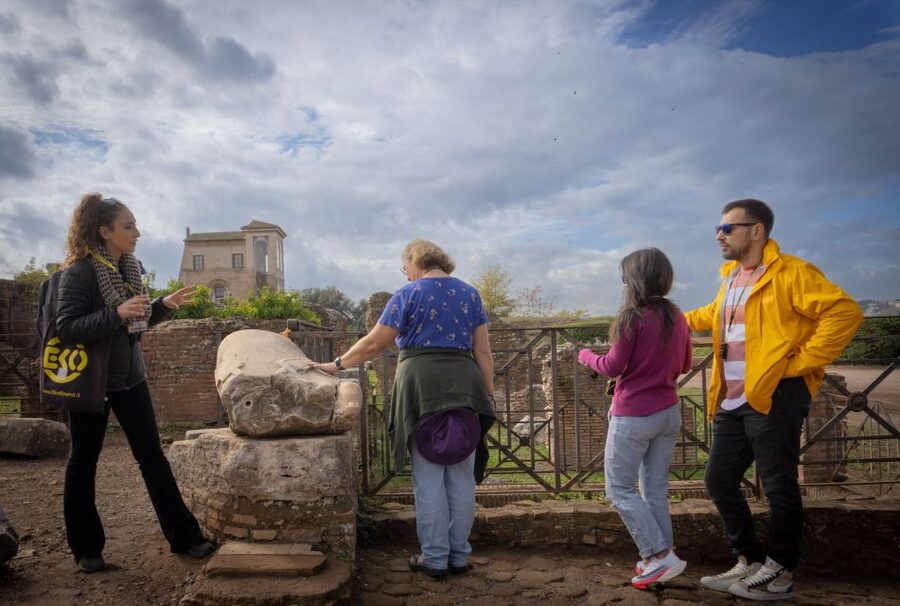
After the Colosseum, the route continues to Palatine Hill, usually for about an hour. This is traditionally linked with the foundation of Rome and later became an imperial residential zone.
The appeal here is not one single intact building. It is the combination of palace remains, open space, and views across the ancient center. From the hill, you can better understand how the Colosseum, Forum, and surrounding city relate to one another.
Your guide helps fill in the gaps. Imperial palaces once covered large areas, but what you see today is a mixture of walls, foundations, terraces, and fragments. Without explanation, it can be hard to tell whether you are looking at a residence, public building, service area, or later alteration.
This is also a welcome change of pace after the Colosseum. You have more room to move, and the broad views give your eyes a break from close masonry and dense crowds. Still, the site involves walking uphill and across ancient ground. Wear shoes with a firm sole, and remember that much of the route is exposed to sun.
Heat has been a real factor on past tours. A visit in 36-degree weather became more manageable because the guide chose shaded stopping places and adjusted the pace. Another group dealt with unusual rain and thunder, with the guide keeping everyone together and encouraging them through the weather. You should still carry water and dress for the forecast.
Same base, a different kind of day:
- Vatican: Museums & Sistine Chapel Entrance Ticket
★ 4.5 · 144,003 reviews - Vatican Museums & Sistine Chapel Tour with Optional Basilica
★ 4.3 · 67,413 reviews - Vatican Museums, Sistine Chapel & St Peter’s Basilica Guided Tour
★ 4.5 · 39,149 reviews - Rome: Colosseum & Forum with Audio Guide App -Optional Arena
★ 4.2 · 24,770 reviews
The Roman Forum: where public Rome operated
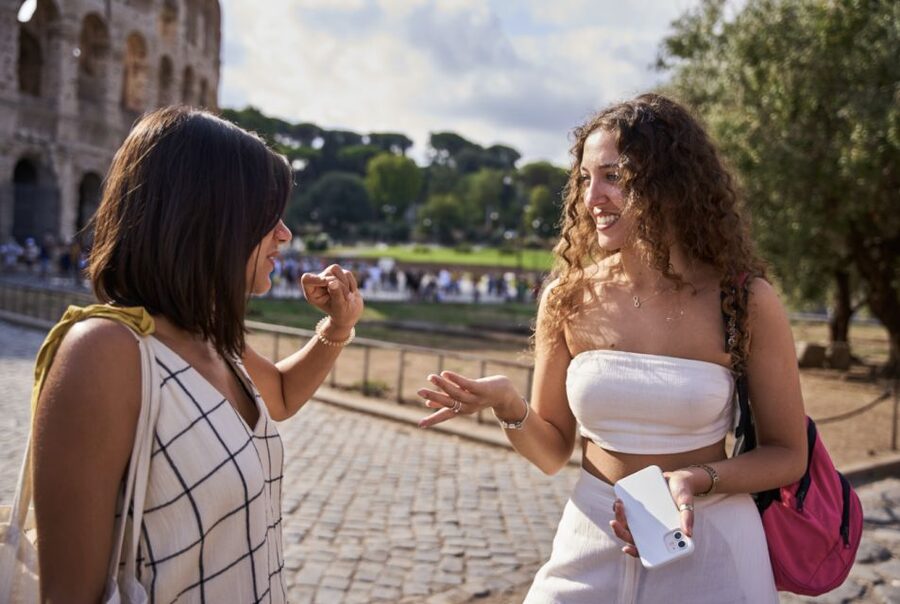
The final major stop is the Roman Forum, once the center of political debate, ceremony, religion, law, and commerce. The tour ends here, which is useful if you plan to continue exploring central Rome on foot rather than return to the Colosseum.
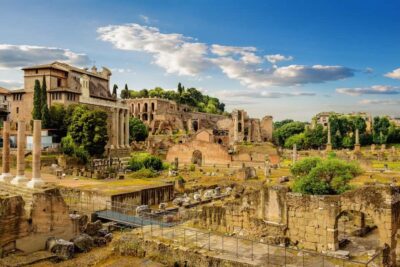
The Forum can be the hardest site to understand on your own. It contains a dense spread of temples, basilicas, arches, roads, and platforms, but many structures survive only as partial remains. A guide can point out the setting of public speeches, religious ceremonies, and political activity, then tie those places back to the people and events discussed earlier.
I especially value the social context here. The Forum was not just a collection of monuments. It was a workplace, meeting ground, legal center, and stage for public life. A good guide explains how senators, priests, merchants, soldiers, and ordinary residents used the space.
This is where the tour’s storytelling style makes the most difference. Past guides have used humor, questions, pop-culture references, and short acted scenes to make unfamiliar Roman customs easier to grasp. That can sound theatrical, but it helps when the stones alone do not tell you what happened there.
The Forum is also a place where you should resist rushing for photographs. Give yourself time to look across the valley and see the relationship among the temples, streets, and hills. The guide-led hour gives you a solid introduction, but the site is large enough that you could happily spend longer there afterward if your ticket and schedule allow.
The guides are the heart of the experience
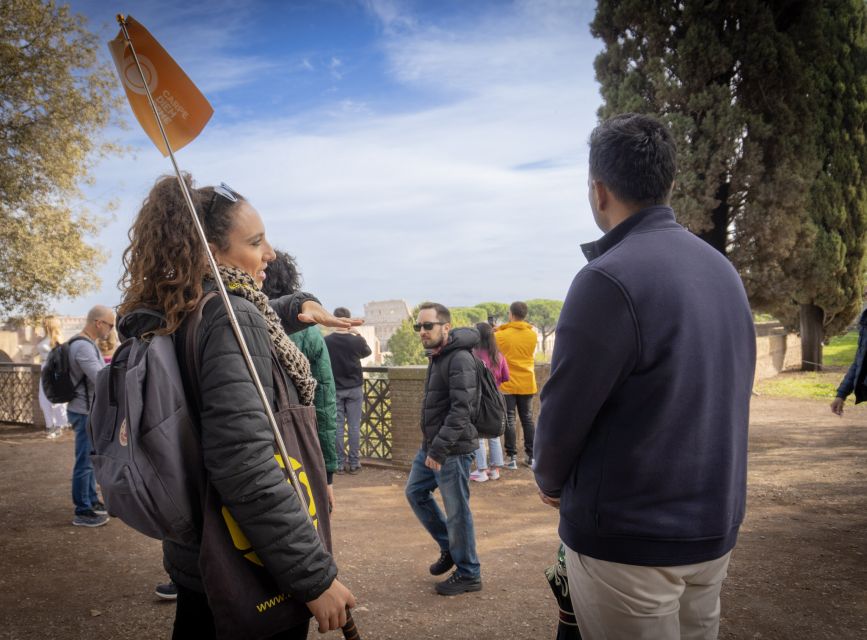
The operator assigns different guides, so your experience will depend partly on who leads your group. That said, the strongest pattern in the feedback is clear: the guides are praised for historical command, enthusiasm, humor, and group management.
Paulo has been described as especially passionate about Rome and good at linking political history with personal stories. Jana has been praised for making the material entertaining without losing detail. Fe was noted for learning everyone’s name, taking questions seriously, and explaining not only what the ruins looked like but what they meant in Roman society.
Other named guides include Alessandro, Barbara, Massimo, Andrea, Selene, Laura, Francesco, Susana, and Paola. You cannot request a particular person from the information provided, but the range of positive comments suggests a well-established guide team rather than a single personality carrying the product.
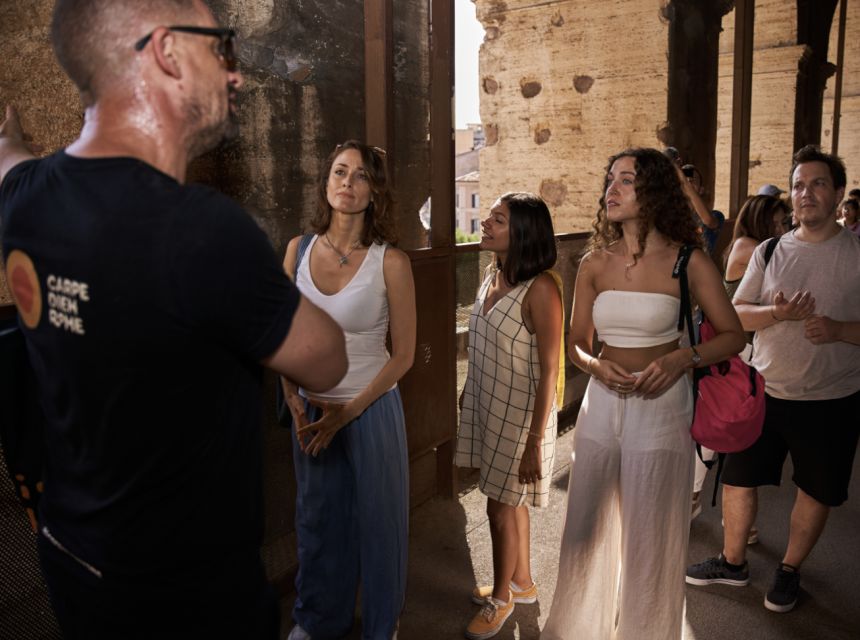
Headsets are included. That is a small but important feature. At the Colosseum and Forum, nearby groups can be loud, and it is easy to miss a key explanation if you are standing a few steps behind the guide. Clear audio also lets you look at the ruins while listening instead of staring at a raised flag.
The live tour is offered in English and Spanish. When booking, select the language that suits your group, and do not assume every departure operates in both languages.
Is $93 a fair price?

At $93 per person, this is not the cheapest way to enter the ancient sites. You are paying for the admission arrangement, a live licensed historian, headsets, and the convenience of seeing three major places under one plan.
The listed Colosseum admission is worth €18 per person, or €24 with arena access. The rest of the price reflects guiding and tour organization. For a first visit, I think the value is strongest if you care about context and want to avoid figuring out the Forum and Palatine Hill alone.
The price makes less sense if you only want a quick look inside the Colosseum or prefer reading at your own pace. It also becomes less attractive if you are comfortable organizing timed tickets and researching the sites before arrival.
The tour has received a 4.7 rating from 232 bookings, with praise focused most strongly on the guides rather than on luxury extras. That tells you where the money goes: into interpretation, route planning, and assistance with the busy entry process.
You can cancel for a full refund up to three days before the tour. That is useful when planning a longer stay, but late cancellations and late arrivals are not covered by the same protection.
Who should book this tour?
I would choose this tour for a first visit to Rome, especially if you want the Colosseum but do not want to treat it as an isolated photo stop. Families and mixed-age groups can benefit from the guide’s stories and clear route, though children still need to manage several hours of walking and outdoor exposure.
It also suits you if history feels dry when presented as dates and names. The best guides make the political and social side concrete, using stories, humor, and questions to show how ancient Rome functioned.
You should think twice if you dislike group pacing or want a very slow photographic visit. The route covers a lot, and the group needs to stay together. You should also allow extra time on busy dates, since ticket checks and crowd control can delay the start.
For the arena floor, choose the upgrade if that specific viewpoint is high on your list. Otherwise, the standard entry still covers the Colosseum, Palatine Hill, and Roman Forum with a full guided explanation.
Final verdict: a strong first-day ancient Rome tour
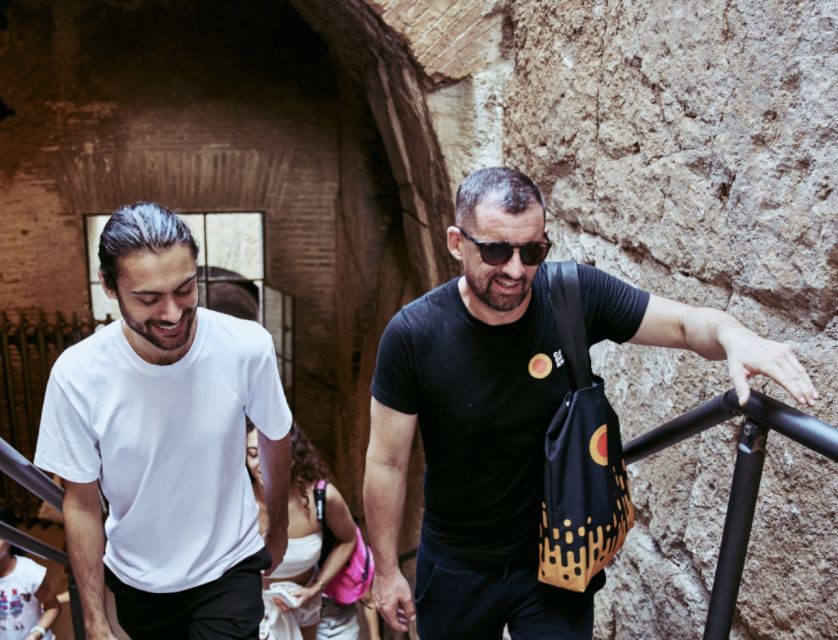
I would book this for a first or second day in Rome when you want the ancient center explained clearly and efficiently. The combination of three sites, a live guide, headsets, and timed admission gives you a much better foundation than wandering among ruins with only a map.
The main risk is crowding, not lack of substance. Busy holidays can produce delays, and the outdoor route can be hot or wet. Arrive early, bring identification and water, wear practical shoes, and keep your schedule flexible.
If you value storytelling and historical context, $93 is a reasonable price for three hours with a strong guide. If you only need entry and photographs, buy the cheapest suitable ticket instead. For most first-time visitors, this tour earns its keep through the explanations that turn impressive ruins into understandable places.
FAQ
How long does the tour last?
The stated duration is 1.5 to 3 hours. Plan for up to three hours if you want the full guided route through all three sites.
Where do I meet the guide?
Meet in front of the Arch of Constantine. The guide will carry a yellow Carpe Diem Tours flag or sign.
How early should I arrive?
Arrive at least 10 minutes before the scheduled start. Late arrivals cannot be refunded.
Can the tour begin somewhere other than the Colosseum?
Yes. Depending on ticket availability, the guide may begin at the Colosseum or at the Roman Forum and Palatine Hill.
Is the Colosseum arena floor included?
Arena-floor access is included only if you select that option. It is available for an additional fee.
What languages are available?
Live tours are available in English and Spanish.
What should I bring?
Bring a valid passport or ID card. You should provide the full names of everyone in your group when booking, including co-travellers and minors.
Just added in Rome
- Civitavecchia Private Transfer: From the Port to Rome Airport★ 5.0 · 309 reviews
- Civitavecchia Shore Excursion: Best of Rome Private Tour★ 5.0 · 247 reviews
- Civitavecchia Private Transfer from ship to FCO airport or Rome★ 5.0 · 245 reviews
- Food Tasty and History Tour in Civitavecchia★ 5.0 · 256 reviews
- Palatine Hill and Roman Forum Tour with Fast-Track Entrance★ 4.2 · 417 reviews
- Tivoli: Villa D’Este & Villa Adriana Pass & App Audioguide★ 4.4 · 364 reviews
- Tivoli: Villa D’Este Entry Ticket and App Audio Guide★ 4.3 · 191 reviews
- Vatican Museums & Sistine Chapel Skip-the-Line Guided Tour★ 4.6 · 254 reviews
Colosseum & Roman Forum Tours, compared.
Colosseum, Roman Forum & Palatine Guided Tour
Read our review →
Colosseum & Forum with Audio Guide App -Optional Arena
Read our review →
Colosseum, Forum & Palatine Hill Tour & Optional Arena
Read our review →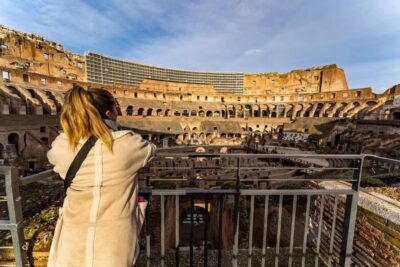
Colosseum, Roman Forum, Palatine with Multimedia Video
Read our review →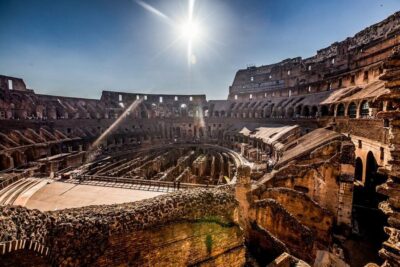
Colosseum: Underground and Ancient Rome Tour
Read our review →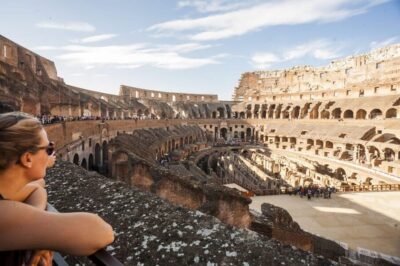
Colosseum, Forum, Palatine Hill Entry & Audioguide App
Read our review →Browse the lists this tour appears in