

Reviewed · COLOSSEUM & ROMAN FORUM TOURS
Colosseum and Ancient Rome Family Tour for Kids
The best thing about this tour is that it treats the Colosseum as a story to solve, not a silent pile of old stones. Children follow clues, answer questions, and use games to picture gladiators, emperors, Roman citizens, and wild animals. I like the very small group, limited to three families, and I like the way guides such as Martina, Donato, Giulia, and Alexandra keep adults involved too.
The skip-the-line ticket saves precious Rome time, and the 3D reconstructions help explain what the ruins once looked like. The tradeoff is the fixed 2.5-hour pace: young children may tire in the sun, and the tour is not wheelchair accessible. At $328.53 per person, it is a serious expense, so it makes the most sense when your family wants help understanding the sites rather than simply seeing them.
Key points to know before booking
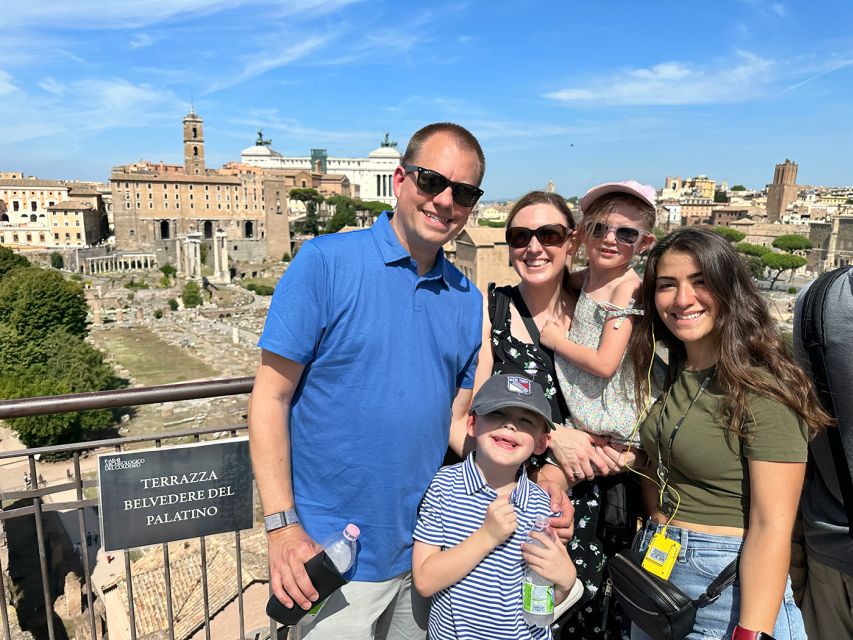
- The group is capped at three families, giving the guide room to ask children questions and adjust the pace.
- Games and treasure hunts carry the lesson, so kids learn by taking part rather than listening to a long lecture.
- The Colosseum and Roman Forum are both included, with views toward temples, courthouses, arches, and imperial buildings.
- Skip-the-line access matters in Rome, especially when children are hot, hungry, or already tired.
- The tour lasts 2.5 hours, with scheduled times of 9:30 AM and 1:30 PM in winter, and 3:00 PM in summer.
- Children under 6 are not considered suitable, although some families report success with younger children when the guide adapts the program.
Why this family tour works better than a standard history walk
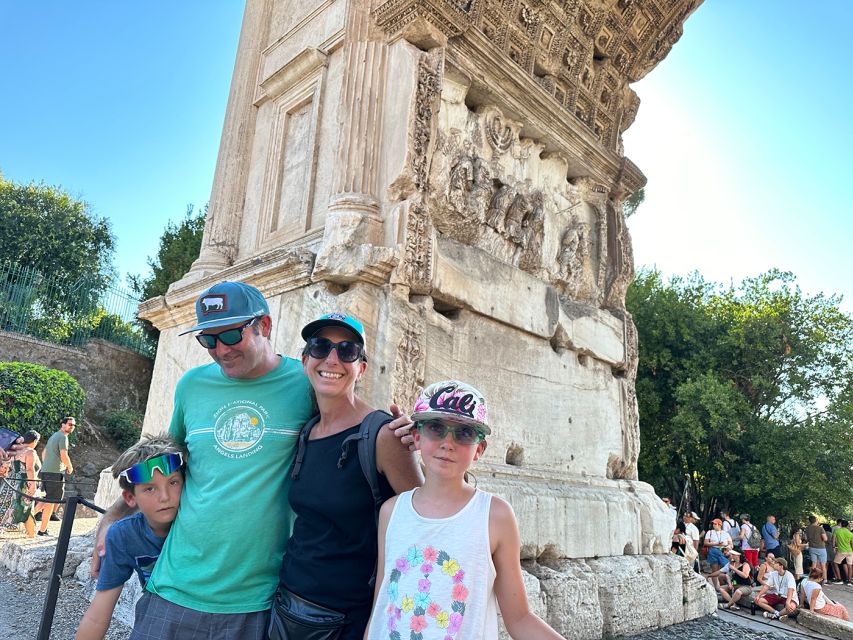
Ancient Rome can be hard for children to grasp. The Colosseum is enormous, but its missing seats, broken walls, and empty corridors do not automatically explain what happened there. The Roman Forum is even trickier. Without help, you see scattered columns and fragments where Roman courts, temples, roads, and government buildings once shaped daily life.
This tour gives children a job. They hunt for clues, answer questions, and take part in activities linked to the places around them. That simple change matters. A child who is looking for evidence of Roman life is more likely to notice a carved arch, a temple platform, or the route between two ruins.
I also like the small group size. With only three families, the guide can bring quieter children into the conversation and redirect the ones who are losing focus. Donato is especially good at spotting when children are drifting and pulling them back into the activity. Guides including Martina and Alexandra also receive praise for balancing games with useful information for adults.
This is not a private tour, so you will still share the experience with other families. But three families is far more manageable than a large group moving through the Colosseum behind a flag. Your child can ask a question without holding up a crowd.
Other ways into ancient Rome:
- Colosseum, Roman Forum & Palatine Guided Tour
★ 4.7 · 63,148 reviews - Rome: Colosseum, Palatine Hill and Roman Forum Guided Tour
★ 4.8 · 32,814 reviews - Rome: Guided Tour of Colosseum, Roman Forum & Palatine Hill
★ 4.7 · 27,897 reviews
Meeting at the Colosseum Metro station
The meeting point is in front of the ground-level exit of the Colosseum Metro station. Your guide will hold a sign with your name. This detail is important because the area around the Colosseum has several roads, stairs, entrances, and open spaces that can make a simple meeting surprisingly confusing.
If you arrive by taxi or ride service, do not assume that being dropped near the Colosseum plaza puts you at the correct spot. One family found that they still needed to go down the Metro stairs to reach the lower level and locate the guide. Give yourself extra time, especially with children and bags.
You should bring a passport or ID card for each person, including children. A copy is accepted according to the tour information. Large bags and luggage are not allowed, so leave bulky items at your accommodation. Scooters are also not allowed on the activity.
The tour starts at set times rather than whenever you arrive. In winter, departures are at 9:30 AM and 1:30 PM. In summer, the listed departure is 3:00 PM. Check the available date carefully, since the time affects heat, energy levels, and the rest of your day.
Inside the Colosseum with gladiators and emperors
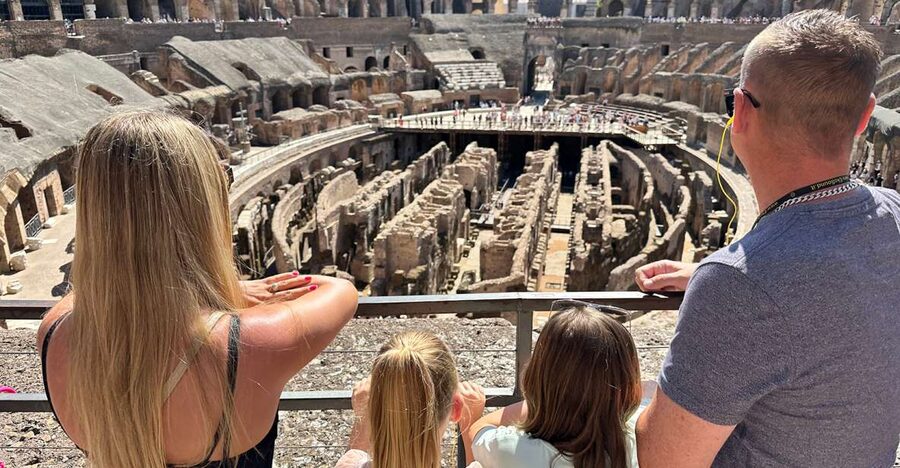
The Colosseum is the natural opening act. Children hear about the amphitheater’s shows, the crowds, and the gladiators who fought wild animals. The guide uses questions and activities to turn a grand but confusing building into a place with human choices, dangers, and drama.
That approach is more useful than throwing dates at a child. A guide can explain why emperors staged spectacles, how the crowd fit into the building, and what made the arena such a powerful symbol. The goal is not to turn your child into a Roman historian in half an hour. It is to give the ruins a shape your child can remember.
The skip-the-line ticket is a real convenience here. You still need to meet the tour group and follow the site’s entry procedures, but you avoid spending a large part of your visit waiting in the regular ticket line. This is especially valuable for a family because children rarely consider standing in a queue an important cultural experience.
Inside, expect plenty of standing and walking. There are no guarantees of shade, and the heat can be intense. Wear comfortable shoes, bring a sun hat, and plan food and rest around the tour. Water stops and bathrooms are available in the wider Colosseum and Forum area, but do not count on every child waiting patiently until the next one.
The Roman Forum and the daily life behind the ruins
The Forum gives the tour more depth. Here, you walk along roads used by Roman citizens and see the remains of temples and ancient courthouses. The guide also points out the altar of Julius Caesar, the Imperial Palace, the Arch of Constantine, and the Arch of Titus.
For children, the strongest part is often the link between the buildings and ordinary life. The Forum was not just a collection of monuments. It was a working center for politics, law, religion, ceremonies, and public business. The activities help your child picture people moving through the same spaces for reasons that had nothing to do with taking photographs.
The ruins can be physically demanding. The ground is uneven, the route includes walking uphill toward the Palatine area, and there is little chance to sit whenever you want. A parent with an energetic 10-year-old may find the uphill walk rewarding, especially for the views. A tired 7-year-old may see it as one Roman hill too many.
That is where the guide matters. Donato is described as making room for rests, and several guides are praised for watching children’s energy. Still, you should arrive with children fed and rested. The tour is not a quick photo stop. It is a sustained outing in an exposed archaeological area.
Same base, a different kind of day:
- Vatican: Museums & Sistine Chapel Entrance Ticket
★ 4.5 · 144,003 reviews - Vatican Museums & Sistine Chapel Tour with Optional Basilica
★ 4.3 · 67,413 reviews - Vatican Museums, Sistine Chapel & St Peter’s Basilica Guided Tour
★ 4.5 · 39,149 reviews - Rome: Colosseum & Forum with Audio Guide App -Optional Arena
★ 4.2 · 24,770 reviews
Games, treasure hunts, and 3D reconstructions
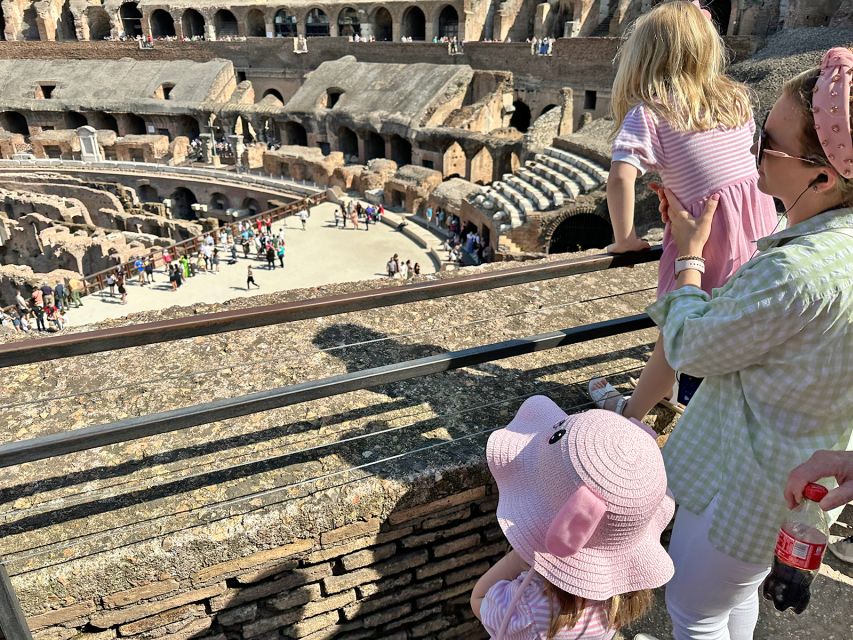
The children’s activities are the heart of the experience. Treasure hunts give young participants something concrete to do, while questions invite them to inspect the ruins instead of wandering past them. Games also create natural pauses in the explanation, which helps children who cannot sit still through a formal talk.
The 3D reconstructions are useful because Roman sites often require imagination. A broken wall does not look like a palace, courthouse, or temple until you can see the missing structure in your mind. Digital or visual reconstructions help bridge that gap and give children a clearer idea of the original buildings.
The activities are intended for the entire family, not just children. Parents can learn how Roman society worked while children focus on the game in front of them. This balance is one of the tour’s strongest features. Guides such as Francesco are praised for staying passionate and attentive even after leading many tours, while Claudia and Manuela are noted for drawing children into the experience.
Every child is different, of course. A 10-year-old who already loves history may want more detail than a 7-year-old who came mainly to see a giant arena. One child may be thrilled by a treasure hunt while another prefers the reconstruction images. The guide can adjust the presentation, but no activity can make a tired or overheated child care about archaeology.
The guide makes or breaks the morning
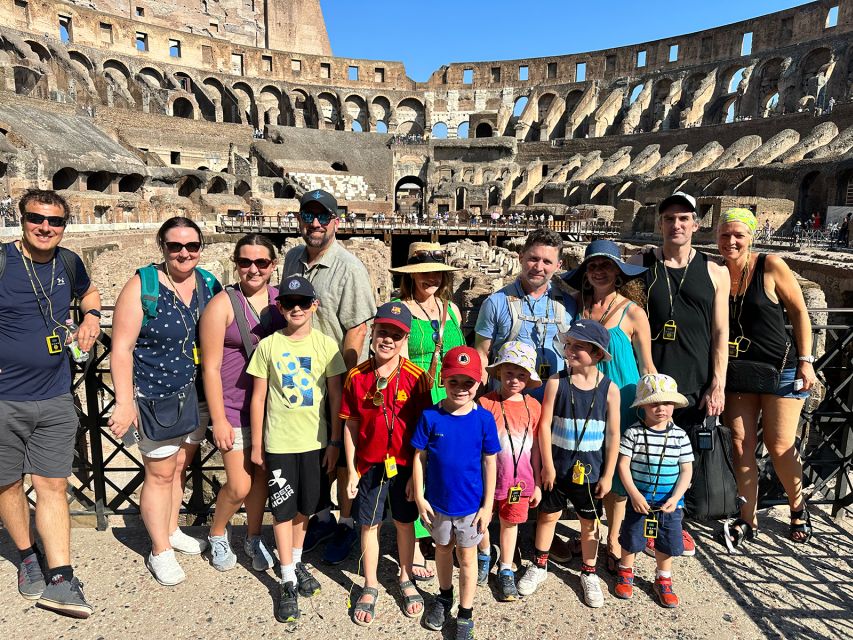
This tour depends heavily on the person leading it. A strong guide has to explain Roman history accurately, keep a group moving, answer adult questions, and notice when children are slipping away mentally. That is a demanding job.
The guide names connected with especially strong family experiences include Martina, Donato, Giulia, Alexandra, Claudia, Manuela, Alessandra, Francesco, and Ronaldo. Their shared strength is not simply knowing facts. They use animation, patience, questions, and short activities to keep children involved.
Giulia is praised for changing the plan when there was a ticket problem and still delivering an interactive visit. That suggests useful flexibility, though you should not book expecting problems to be handled in a particular way. Alexandra is especially effective with groups of children who are easily distracted, while Donato is good at engaging a broad age range, from younger children to teenagers.
The tour is in English. If your family is comfortable following spoken English in a busy outdoor setting, the format should work well. If a child struggles to follow English, the games may lose some of their value.
Timing, heat, shoes, and family stamina
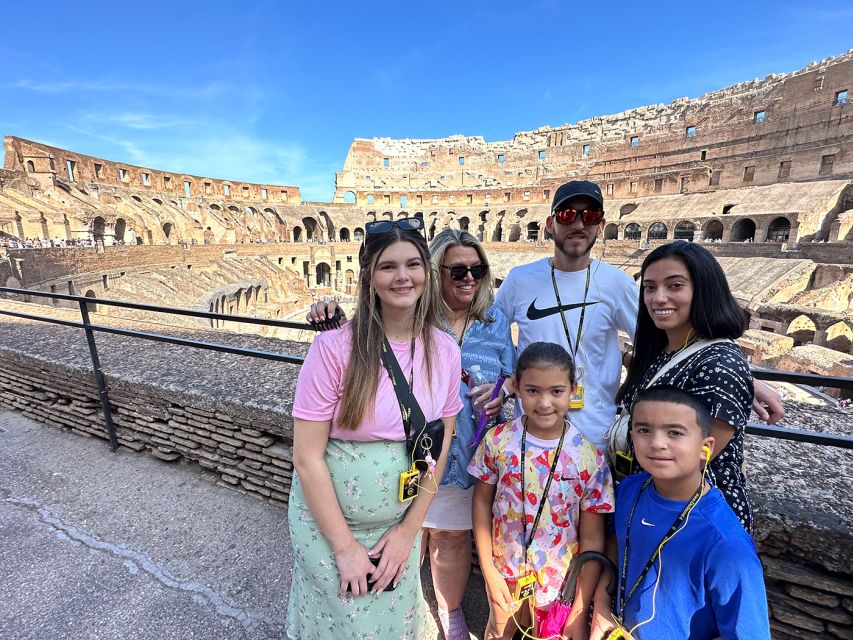
At 2.5 hours, this is long enough to cover the major sites but short enough to fit into a busy Rome day. It is not short enough to ignore basic preparation. Comfortable shoes are essential, and a sun hat is a good idea. The Roman sites expose you to sun, stone, and uneven ground.
Summer’s 3:00 PM start has one clear advantage: you avoid the strongest morning rush. Its drawback is that the heat can still be punishing, and children may already be tired from a morning of sightseeing. The winter times of 9:30 AM and 1:30 PM may feel easier physically, but daylight and weather can change the mood of the ruins.
Plan a meal or substantial snack before setting out. One family specifically found that well-fed, rested children handled the long visit far better. Water is available in several places, but carrying a small bottle is sensible as long as it meets the site’s current entry rules.
Strollers are a poor fit for this outing. The tour is not wheelchair accessible, and the route includes ancient surfaces and uphill walking. A chest carrier is more practical for a small child than a stroller, according to direct family experience. The formal age guidance says the activity is not suitable for children under 6, although some younger children have remained engaged when the guide tailored the visit.
Is the $328.53 price worth it?
At $328.53 per person, this is not a budget activity. The value comes from three things: the small group, the guide’s child-focused approach, and the time saved through skip-the-line entry.
You are paying for more than access to the Colosseum. A family can enter the sites and read signs independently for less, but that option asks you to explain the ruins while managing tired children, directions, entry procedures, and the pace of the visit. A book or audio guide can provide facts, but it cannot easily respond when a child asks why people watched gladiators or how a broken arch fits into the city.
The price is easier to justify if this is your main Ancient Rome visit and you want everyone in the family to remember it. It is harder to justify if your children dislike structured activities, struggle with a 2.5-hour walk, or are happy simply to see the Colosseum from outside.
The small group also adds value. A large family tour can become a lesson in keeping up. Here, the guide has a better chance of noticing questions, boredom, or fatigue. That personal attention is likely the main reason to pay more.
Who should book this Colosseum family tour?
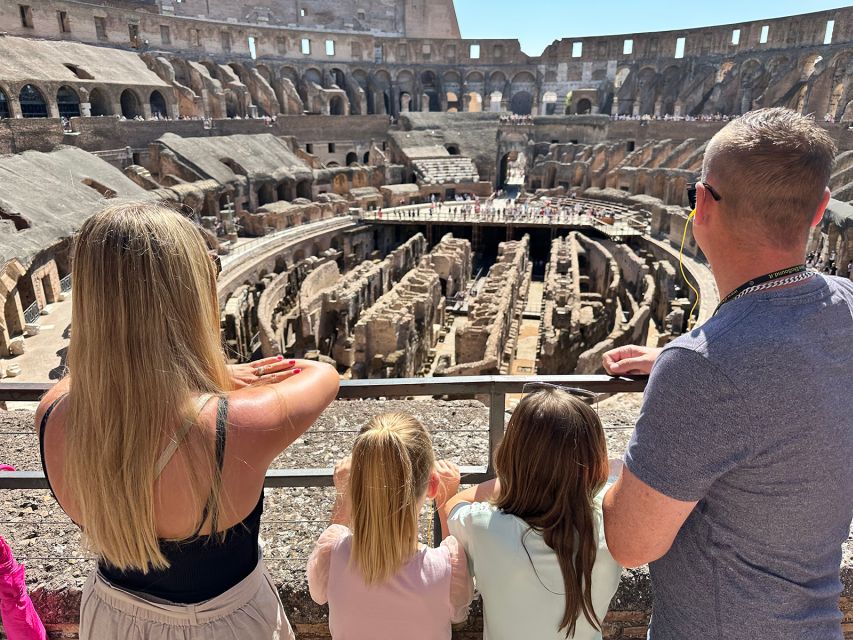
I would choose this tour for families with school-age children who are curious, active, and likely to respond to games. It is especially suitable when adults want real historical context but do not want to spend the entire visit saying please listen.
It can work for mixed ages too. Younger children may enjoy the treasure hunt, while older children and adults take in the political and military details. Guides have handled groups ranging from about 4 to 13 years old, but your own child’s stamina matters more than the number on the calendar.
I would think twice if anyone in your party uses a wheelchair, needs a stroller, or cannot manage uneven ground. I would also reconsider it for a child under 6, since the official guidance does not recommend the activity for that age. Some younger children have enjoyed it, but that is not the same as a reliable fit for every family.
The activity ends back at the meeting point, which makes it easy to continue exploring central Rome afterward. Since the tour takes 2.5 hours, avoid scheduling another fixed appointment immediately afterward. Ancient Rome rarely runs on a tight family timetable.
Should you book it?
Book this tour if you want your children to understand what they are seeing, not just collect a photograph at the Colosseum. The strongest reasons are the tiny group, skip-the-line entry, and guides who use games, questions, and visual reconstructions to make difficult ruins understandable.
Skip it if the price strains your budget, your children are too young for a long walking visit, or your family prefers to explore at its own pace. For most families with children around school age, though, this is a practical way to turn two of Rome’s hardest sites into an experience the whole family can follow.
FAQ
How long does the tour last?
The tour lasts 2.5 hours.
What time does the tour start?
The listed winter start times are 9:30 AM and 1:30 PM. In summer, the tour starts at 3:00 PM. Check availability for the exact date.
What language is the tour in?
The live tour guide conducts the activity in English.
Where do I meet the guide?
Meet in front of the ground-level exit of the Colosseum Metro station. The guide will hold a sign with your name.
Where does the tour end?
The activity ends back at the meeting point.
Are skip-the-line tickets included?
Yes. Skip-the-line entrance tickets for the Colosseum and Roman Forum are included.
How large is the group?
The tour is limited to three families in total.
Can children under 6 join?
The activity is listed as unsuitable for children under 6. Children must also be accompanied by an adult.
Is the tour wheelchair accessible?
No. The tour is not wheelchair accessible. Strollers are also not recommended, and large bags, luggage, and scooters are not allowed.
Just added in Rome
- Civitavecchia Private Transfer: From the Port to Rome Airport★ 5.0 · 309 reviews
- Civitavecchia Shore Excursion: Best of Rome Private Tour★ 5.0 · 247 reviews
- Civitavecchia Private Transfer from ship to FCO airport or Rome★ 5.0 · 245 reviews
- Food Tasty and History Tour in Civitavecchia★ 5.0 · 256 reviews
- Palatine Hill and Roman Forum Tour with Fast-Track Entrance★ 4.2 · 417 reviews
- Tivoli: Villa D’Este & Villa Adriana Pass & App Audioguide★ 4.4 · 364 reviews
- Tivoli: Villa D’Este Entry Ticket and App Audio Guide★ 4.3 · 191 reviews
- Vatican Museums & Sistine Chapel Skip-the-Line Guided Tour★ 4.6 · 254 reviews
Colosseum & Roman Forum Tours, compared.
Colosseum, Roman Forum & Palatine Guided Tour
Read our review →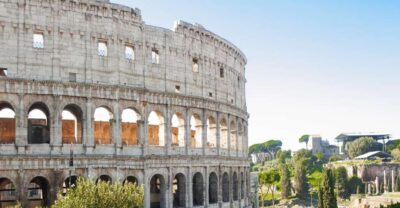
Colosseum & Forum with Audio Guide App -Optional Arena
Read our review →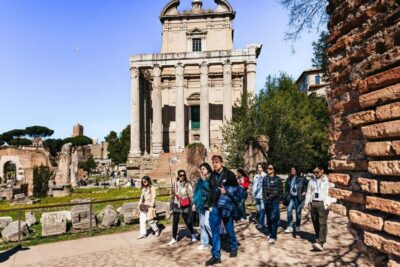
Colosseum, Forum & Palatine Hill Tour & Optional Arena
Read our review →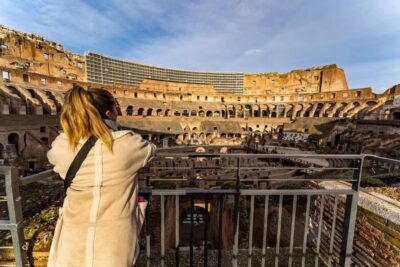
Colosseum, Roman Forum, Palatine with Multimedia Video
Read our review →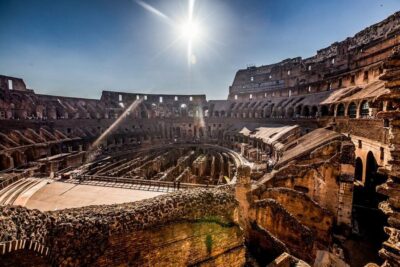
Colosseum: Underground and Ancient Rome Tour
Read our review →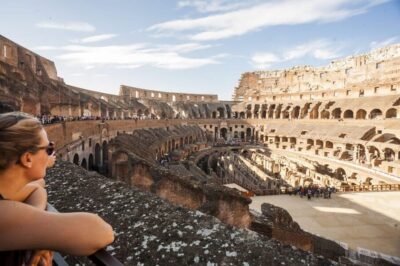
Colosseum, Forum, Palatine Hill Entry & Audioguide App
Read our review →Browse the lists this tour appears in