
Reviewed · CATACOMBS & UNDERGROUND TOURS
Rome: Catacombs of Priscilla Entry Ticket & Guided Tour
The Catacombs of Priscilla offer a close look at early Christian burial practices beneath Rome, with narrow galleries, old inscriptions, and painted images that survived nearly two thousand years. The site began as an abandoned quarry-like sand pit before Christians reshaped it into a burial place in the early third century.
I like the small group size, capped at 10 people, and the guides’ strong command of archaeology and Christian art. I also like the 45-minute length: long enough to make the visit worthwhile, but short enough for an underground tour to remain comfortable. The main drawback is that the tour is brief, photography is forbidden, and the site is not suitable for people with mobility impairments.
Key points before you book
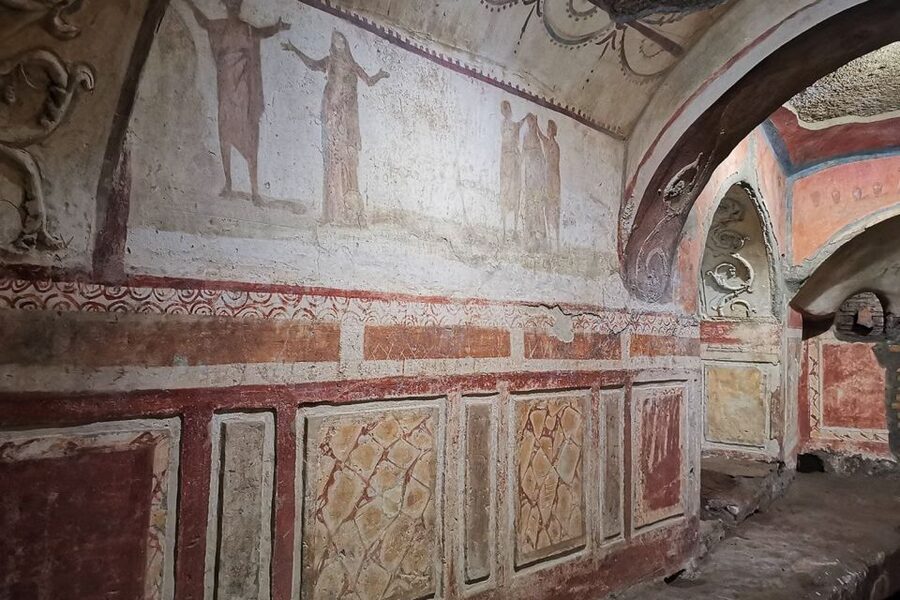
- See early Christian paintings: Some artwork dates from roughly 240 to 280 AD, including an image associated with the Virgin Mary and infant Jesus.
- Walk through two underground levels: The galleries include wall niches, larger family burial areas, and the Acili hypogeum.
- Expect a serious history lesson: Guides explain archaeology, burial customs, martyrs, popes, and the development of Christian art.
- Small groups help in tight spaces: The usual limit is 10 people, making it easier to hear and see the guide.
- Plan transport carefully: The catacombs are on Via Salaria, outside the main ancient-center sights, and transportation is not included.
- Bring a light layer: The underground rooms are cool, even during Rome’s summer heat.
Why the Catacombs of Priscilla feel different from Rome’s headline sights
Rome can make you feel as if every visit must involve the Colosseum, the Trevi Fountain, or St. Peter’s Basilica. The Catacombs of Priscilla offer a quieter change of pace. You leave the grand public monuments behind and enter spaces made for private burial, remembrance, and religious practice.
That change matters. The Colosseum tells you about imperial spectacle. Priscilla gives you a more intimate view of how members of the Christian community marked death and remembered their dead. The setting is not polished for entertainment, and that helps preserve its serious character.
The catacomb lies on Via Salaria and extends across two levels. Its name probably comes from Priscilla, a woman linked to the senatorial Acili family. Her name appears in an inscription connected with the Acili hypogeum, an underground burial area attached to the wider complex.
You should not expect a grand underground city with endless corridors open to explore. The route is controlled, and the visit focuses on selected areas that explain the site well. One visitor felt there was not a great deal to see, but still praised the guide. That is a fair warning: Priscilla’s value comes more from its age, art, and explanation than from sheer visual scale.
More Underground Tours in Rome
- Colosseum: Underground and Ancient Rome Tour
★ 4.7 · 12,691 reviews - Rome: Crypts and Catacombs Underground Tour with Transfers
★ 4.6 · 5,341 reviews - Expert Guided Tour of Colosseum Arena OR Underground, and Forum
★ 4.5 · 5,041 reviews
A 45-minute route through burial galleries and family tombs
Your visit begins at the catacomb ticket office. Go directly there and show your reservation at least 10 minutes before the scheduled start. The activity includes admission and the guided tour, but not hotel pickup, drop-off, or transport to Via Salaria.
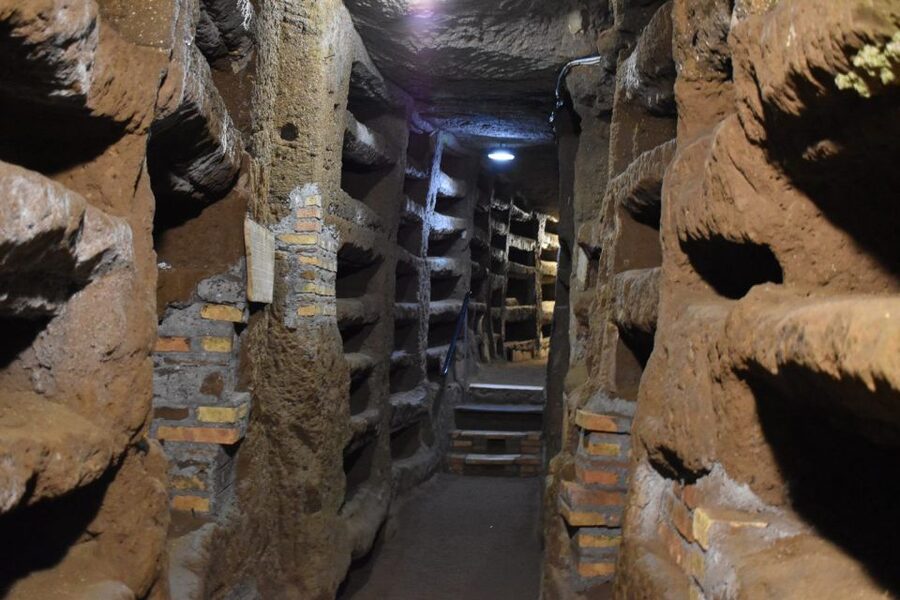
Once underground, the guide leads you through galleries formed from the site’s earlier use as an arenarium, a place where sand or similar material was extracted. After that use ended, Christians adapted the irregular passages for burial in the early third century.
The first level contains around 20 larger niche tombs and hundreds of smaller wall niches. These are not dramatic chambers in the usual sightseeing sense. They are narrow, practical spaces cut into the walls, and they show how a growing religious community used the ground beneath Rome for burial and memorial rites.
The route can feel tight at times. You may need to stay close to the guide as the group moves through turns and narrow passages. That is one reason the 10-person limit is useful. In a larger group, it would be harder to see the details or hear the explanation.
The guide supplies the meaning that the bare walls cannot provide. A good guide may explain how the spaces were organized, what the niches were used for, and how later discoveries fit into the story of the complex. Guides such as Sister Lydia, Sister Lidia, Alexandra, Clara, and Alexandria have been singled out for clear explanations, humor, patience, and enthusiasm. Your guide may be different, but tours are offered in English, Italian, and Spanish.
The frescoes are the main visual reward
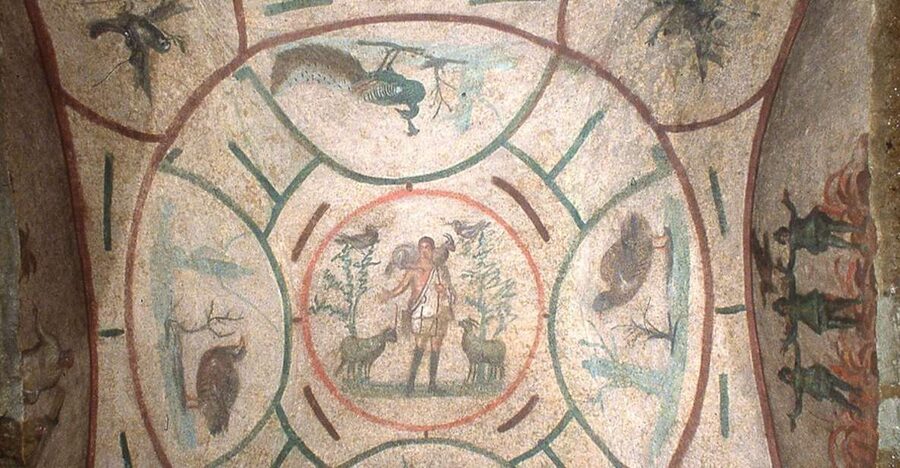
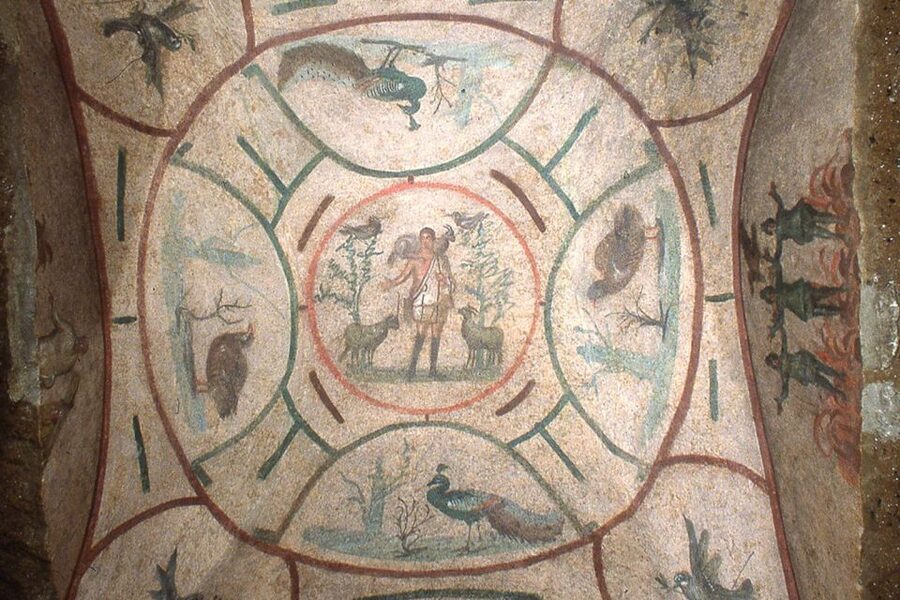
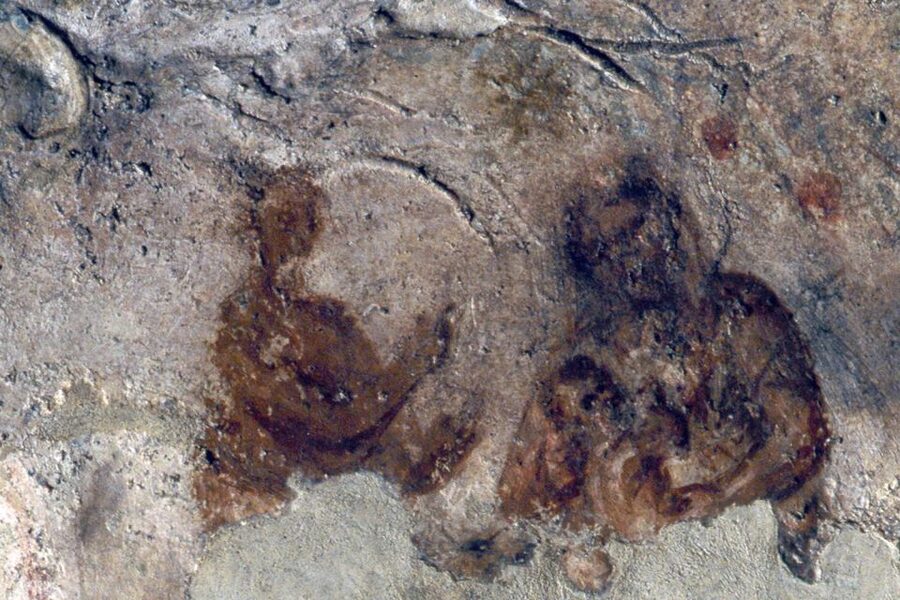
The most memorable part of the visit is the early Christian art. Some paintings date from around 240 to 280 AD, making them among the oldest surviving examples of Christian imagery in Rome.
The artwork is valuable not simply because it is old. It shows how early Christians expressed belief through symbols and scenes at a time when Christian art was still developing. The guide helps you understand what you are seeing instead of leaving you to stare at faded color and guess.
A major highlight is the image associated with the Virgin Mary and the infant Jesus. Several people have considered this one of the most moving parts of the tour, especially those interested in the history of Christian art. The image is often described as one of the earliest known depictions of Mary and Jesus.
Photography is not allowed inside. That may disappoint you, particularly because the paintings are unusual and difficult to see elsewhere. The site may offer postcard prints of the art, and one visitor noted that these were available for a small charge. Still, the no-camera rule helps keep the visit focused and protects a fragile setting.
The frescoes are not bright museum paintings. They have survived in an underground environment for centuries, and some are easier to appreciate with the guide’s help. If you want a polished art display with labels and broad galleries, this is not that kind of visit. If you want to see old Christian images in their original burial setting, it is far more meaningful.
The Greek Chapel and Acili hypogeum
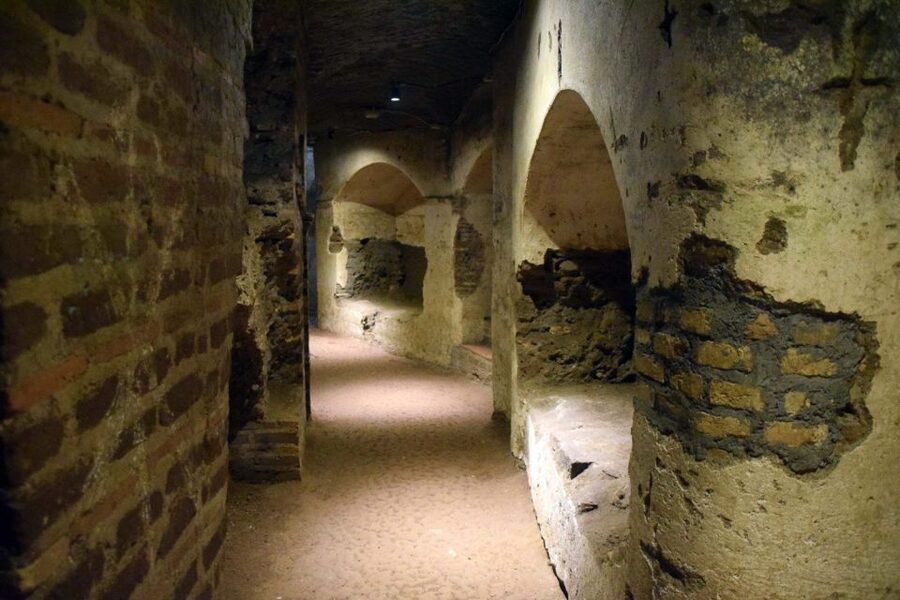
Near the main galleries is a cryptoporticus, an underground passage or covered area connected with the catacomb. It includes the Greek Chapel and a larger underground room that began as a noble family burial ground.
This part adds an important layer to the visit. Priscilla was not just a collection of ordinary wall niches. The complex also contains evidence of family burial, social status, and connections between different underground spaces.
The Acili hypogeum began as a water cistern before being used for burial. Inscriptions connected with the Acili family were found there and are now displayed. These inscriptions help connect the physical site with the people and families who used it.
You will not spend a long time at every feature. The advertised duration is 45 minutes, although one tour ran longer because the guide added information and allowed more time for questions. Another visitor wished the tour lasted longer, which is understandable if you enjoy archaeology. Still, the short format suits many visitors, especially if this is one stop in a busy Rome itinerary.
Other things to see below Rome:
- The Original Roman Crypts and Catacombs Tour with Transfers
★ 4.5 · 4,896 reviews - Rome: Colosseum Underground Small Group Guided Tour
★ 4.7 · 4,844 reviews - Rome: St. Peter’s Basilica, Dome Climb, and Underground Tour
★ 4.8 · 3,404 reviews - Rome: Colosseum Underground, Arena & Forum Tour
★ 4.7 · 3,272 reviews
Martyrs, popes, and the people buried here
The guide also places Priscilla in the story of early Christian persecution and church leadership. Among those associated with the catacomb are the brothers Felice and Filippo, who were martyred, probably under Emperor Diocletian, along with their mother, Saint Felicita, and their five brothers: Alessandro, Marziale, Vitale, Silano, and Gennaro.
Several popes were also buried at Priscilla. They include Marcellino, who died in 304, Marcello, who died in 309, Silvestro, who died in 335, Liberius, who died in 366, Siricius, who died in 399, Celestino, who died in 432, and Vigilius, who died in 555.
These names can sound like a long list if presented without context. The best part of the tour is the explanation of how the catacomb functioned as both a burial place and a site of memory. You begin to see the galleries not as empty tunnels, but as a record of a community, its leaders, and the people it honored.
The tombs themselves are empty today. The remains were moved, and one visitor specifically noted that this was not clear before arrival. Keep that in mind if you expect to see intact burials. What remains is the architecture, the inscriptions, the paintings, and the story of how the site was used.
Villa Ada, Saint Sylvester, and the museum nearby
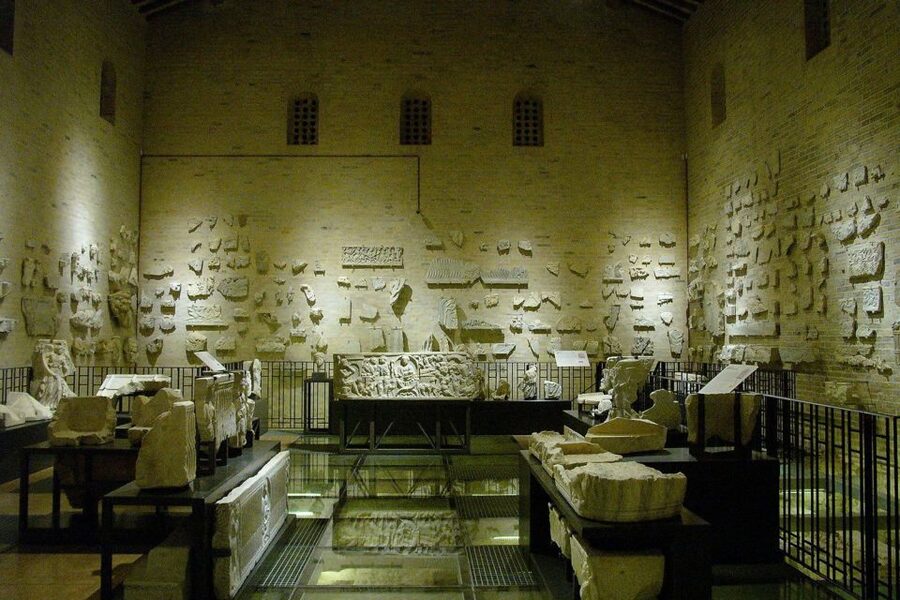
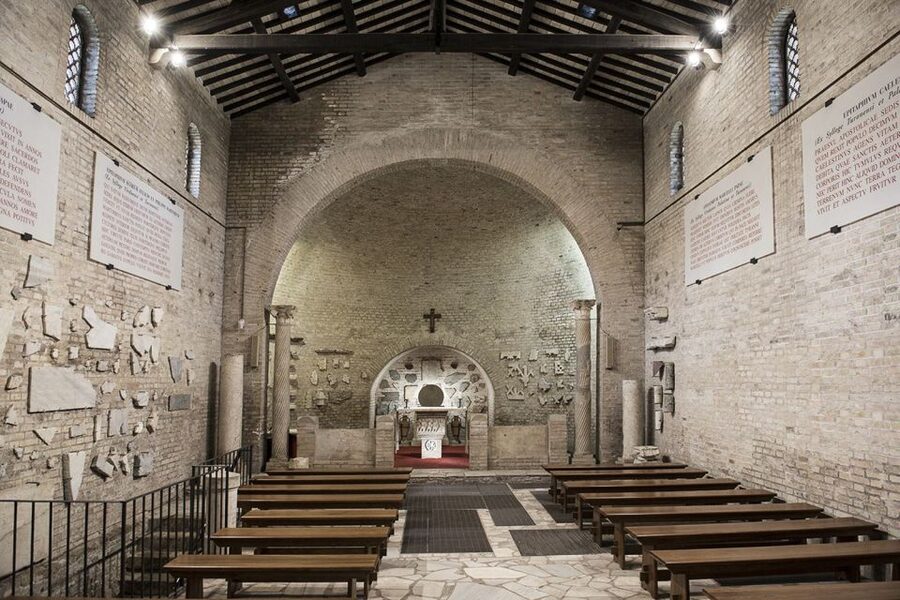
The wider area includes several related features. Inside Villa Ada is a basilica built by Pope Saint Sylvester over the tomb associated with Felice and Filippo. Near the basilica, a museum holds hundreds of sarcophagus fragments found during excavations around the catacomb.
The standard 45-minute experience centers on the catacombs themselves. Do not assume that every nearby feature is part of the guided route or included in the ticket. The supplied activity includes entry to the Catacombs of Priscilla and the guided tour. It does not list transport, hotel service, or a separate museum visit.
Still, this wider setting gives the catacomb more meaning. The underground galleries are part of a larger archaeological area, not an isolated attraction built only for modern sightseeing. If you have a strong interest in Roman burial customs or early Christian art, allow extra time around the visit to consider the nearby sites, but check what is open and included before making a firm plan.
Getting there and making the timing work
The catacombs are on Via Salaria, away from the main concentration of ancient-center sights. Transportation is not included, so you need to plan your own route. A bus serves the area, and it has been described as inexpensive and reliable. Some people also find the catacombs walkable from the city center, but the practical choice depends on your starting point and the weather.
Give yourself enough time to arrive without rushing. The required check-in is at the catacomb ticket office at least 10 minutes before the tour. Do not go looking for a separate city-center meeting point. The instruction is to go directly to the site’s ticket office.
The underground temperature is a plus in hot weather. One person booked the tour partly to escape the summer heat and ended up finding the history far more rewarding than expected. In cooler months, take a light top because the rooms can feel chilly.
Strollers are not allowed, and the experience is not suitable for people with mobility impairments. The narrow underground route is the reason, not a lack of welcome. Families with older children and teenagers can find the visit worthwhile, especially if they enjoy history, art, or unusual places. Very young children may have less patience for the quiet, short, and serious format.
How the guides shape the experience
The guide makes a major difference here. The walls, niches, and faded paintings need context, and the strongest tours use questions, stories, and clear explanations to keep the group engaged.
Several guides have been praised by name. Sister Lydia and Sister Lidia are noted for combining religious perspective with archaeology and humor. Alexandra has been praised for explaining the site with energy and confidence. Clara has been remembered for answering questions and adding extra time. These names do not guarantee who will lead your tour, but they show the kind of guiding style you can expect from the operation.
The language options are Italian, English, and Spanish. English delivery can vary by guide, and one visitor found the guide’s English less polished than expected. That is a minor concern for most people, but if exact wording matters to you, keep it in mind.
The small group helps. With no more than 10 people, you have a better chance of hearing the guide and seeing the artwork. It also makes it easier to ask questions. The spaces are narrow, so a compact group is more useful here than it would be in a large open monument.
Is $16 a fair price?
At $16 per person, this is one of the more affordable guided history activities in Rome. The ticket covers entry and a live tour, and the small group adds real value because the underground route benefits from personal explanation.
You are paying for access to a protected archaeological site and for the guide’s interpretation, not for a long attraction with many rooms and displays. If you measure value by duration alone, 45 minutes may seem brief. If you measure it by the age of the art, the unusual setting, and the chance to see a part of Rome that many itineraries skip, the price is fair.
I would book it for a traveler who has already seen the main monuments and wants something quieter and more specific. It also makes sense for anyone interested in Christian art, Roman burial customs, archaeology, or religious history. If your ideal attraction needs a big visual payoff, dramatic architecture, or plenty of time to wander independently, you may find Priscilla modest.
Free cancellation is available up to 24 hours before the scheduled tour for a full refund. That gives you some flexibility if your Rome plans change, but the important practical point remains simple: arrive early at the ticket office and arrange your own transport.
Who should book the Catacombs of Priscilla?
I would choose this tour if you want to see ancient Christian art in its original setting rather than in a modern gallery. The paintings, the early burial spaces, and the stories of martyrs and popes give the visit real substance.
It is also a good pick for a hot afternoon, a second-time Rome visit, or a family with teenagers who have had enough of the standard sights. The compact length prevents the underground atmosphere from becoming tiring, and the guides add the detail that turns a short visit into a useful history lesson.
I would skip it if you dislike enclosed spaces, need step-free access, or want to take photographs. I would also manage expectations: this is not the Colosseum, and there is no grand opening view. It is a quiet, narrow, serious place where the rewards are old paintings, human stories, and a better sense of how early Christians lived and remembered their dead.
FAQ
How long does the Catacombs of Priscilla tour last?
The scheduled duration is 45 minutes. Some tours may run longer when the guide answers questions or adds extra explanations.
How much does the experience cost?
The listed price is $16 per person. This includes entry to the Catacombs of Priscilla and the guided tour.
What languages are available?
Guided tours are available in Italian, English, and Spanish.
How large is the tour group?
The experience is offered as a small-group tour limited to 10 participants.
Where do I meet the guide?
Go directly to the ticket office at the Catacombs of Priscilla on Via Salaria. Show your reservation there at least 10 minutes before the scheduled start.
Is transportation included?
No. Hotel pickup, hotel drop-off, and transportation to the catacombs are not included.
Can I take photographs inside?
No. Photography is not allowed inside the catacombs.
Is the tour suitable for people with mobility impairments?
No. The experience is not suitable for people with mobility impairments, and baby strollers are not allowed.
Just added in Rome
- Civitavecchia Private Transfer: From the Port to Rome Airport★ 5.0 · 309 reviews
- Civitavecchia Shore Excursion: Best of Rome Private Tour★ 5.0 · 247 reviews
- Civitavecchia Private Transfer from ship to FCO airport or Rome★ 5.0 · 245 reviews
- Food Tasty and History Tour in Civitavecchia★ 5.0 · 256 reviews
- Palatine Hill and Roman Forum Tour with Fast-Track Entrance★ 4.2 · 417 reviews
- Tivoli: Villa D’Este & Villa Adriana Pass & App Audioguide★ 4.4 · 364 reviews
- Tivoli: Villa D’Este Entry Ticket and App Audio Guide★ 4.3 · 191 reviews
- Vatican Museums & Sistine Chapel Skip-the-Line Guided Tour★ 4.6 · 254 reviews
Catacombs & Underground Tours, compared.
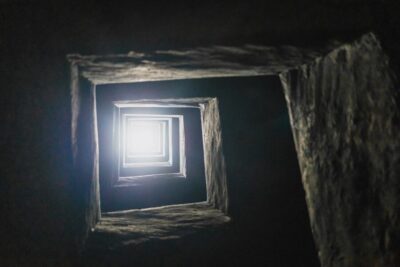
Naples Underground Entry Ticket and Guided Tour
Read our review →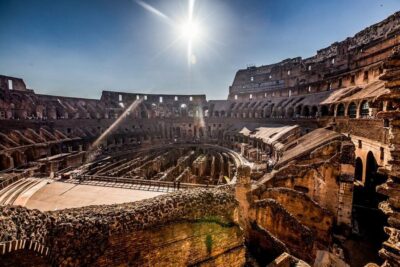
Colosseum: Underground and Ancient Rome Tour
Read our review →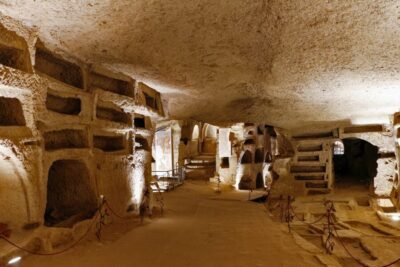
Catacombs of San Gennaro Entry Ticket & Guided Tour
Read our review →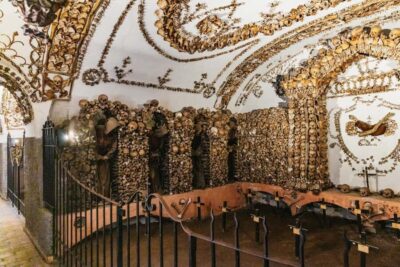
Crypts and Catacombs Underground Tour with Transfers
Read our review →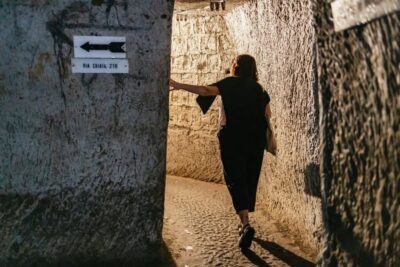
Expert Guided Tour of Colosseum Arena OR Underground, and Forum
Read our review →
The Original Roman Crypts and Catacombs Tour with Transfers
Read our review →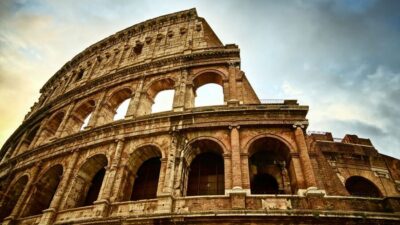
Colosseum Underground Small Group Guided Tour
Read our review →Browse the lists this tour appears in