
Reviewed · ALBEROBELLO, MATERA & THE TRULLI TOWNS
Polignano a Mare: Pasta Making Cooking Class with Drink
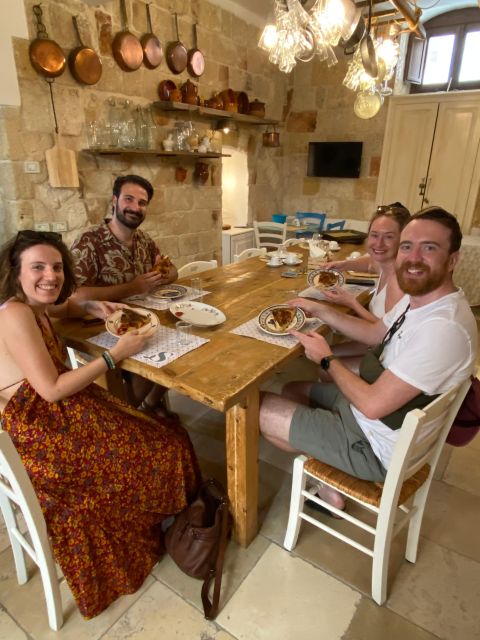
Making pasta by hand is the heart of this two-hour Polignano a Mare cooking class. You learn the Apulian shapes orecchiette and cavatelli from local cooks such as Annamaria and Daniele, then sit down to eat what you made with wine, taralli, preserved vegetables, and other regional treats. The setting is a typical house in the historic center, at Via S. Vito 20.
I like two things in particular: the small, friendly format, which allows the instructor to correct your pasta shapes, and the useful explanations about dough, sauces, cooking rules, and Apulian food culture. The class is also a good family choice, with children as young as five taking part. One thing to consider: this is mainly a pasta-shaping lesson, not a full meal-preparation workshop. You watch the chef make the dough and sauce rather than preparing every part yourself.
Key points to know before booking
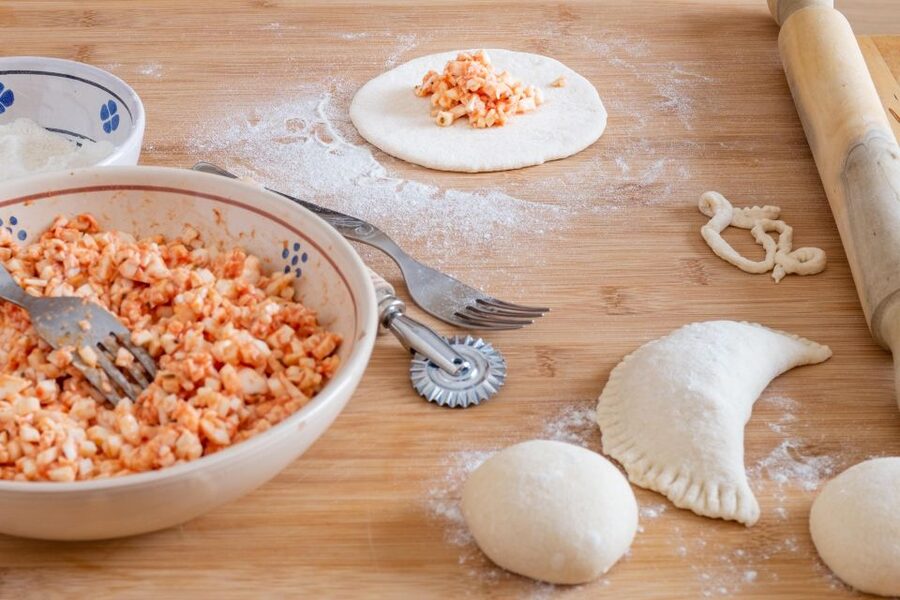
- Shape two famous Apulian pastas: Learn the ear-like orecchiette and ridged cavatelli by hand.
- Eat the pasta you help make: The class finishes with orecchiette served with tomato sauce, or another sauce used during the lesson.
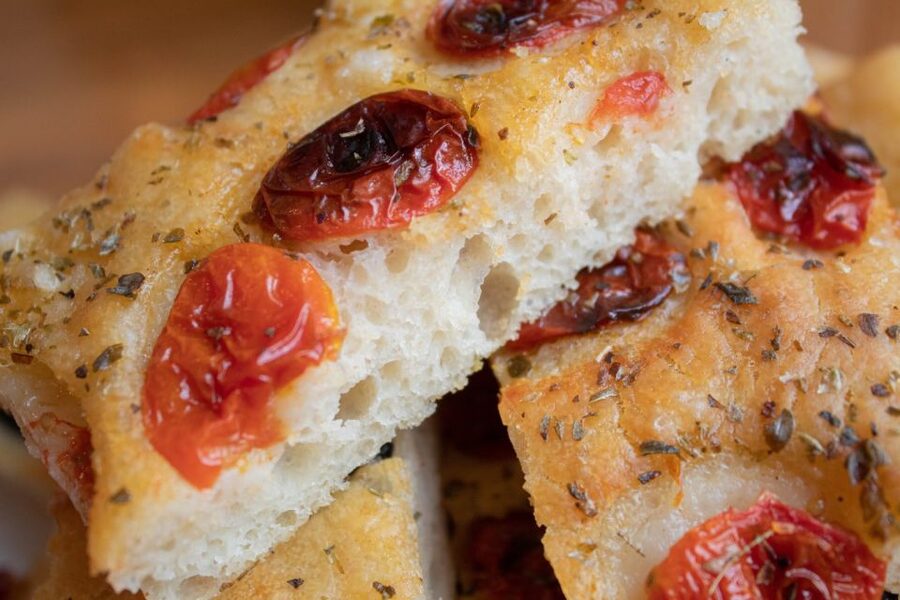
- Expect a social aperitivo: Taralli, olives, preserved vegetables, seasonal greens, focaccia, wine, and other local products may accompany the lesson.
- Learn from local cooks: Annamaria and Daniele are praised for patient instruction, clear English, humor, and practical tips.
- Plan around the class format: You do not usually prepare the dough or sauce yourself, so this suits you if shaping and food culture matter more than a full cooking workout.
- Meet in central Polignano: The class takes place at Via S. Vito 20, with optional transfers from Monopoli and nearby towns available by request.
What this Polignano pasta class is really like
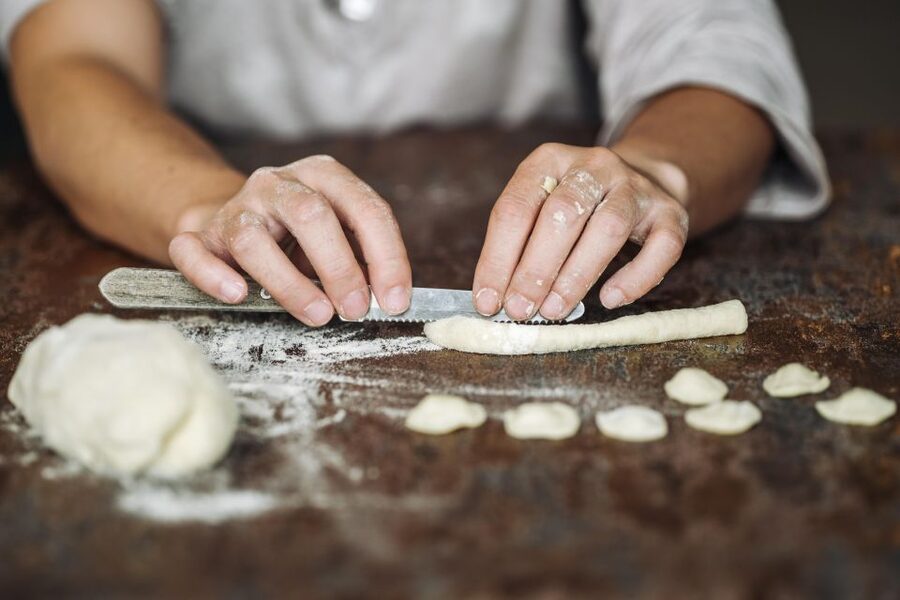
This is a hands-on introduction to one of Puglia’s most recognizable food traditions. You meet your instructor at a typical house in Polignano a Mare’s historic center, settle in, and begin with the basics of Apulian pasta.
The lesson focuses on simple ingredients and careful technique. The magic is not in a complicated recipe. It is in learning how a small piece of dough becomes a neat little ear, then repeating the motion until your hands begin to understand it.
The class is conducted in English and Italian. Annamaria and Daniele are the names most often associated with the teaching, though other instructors, including Maria, may lead a particular session. The teaching style is warm and conversational. Along with pasta, you may hear about regional cooking, Italian food habits, Apulian ingredients, local history, social issues, and even food waste.
That wider conversation is part of the appeal. You are not simply copying a hand movement. You are learning why pasta is made in this way in southern Italy and how the shape works with sauce.
Other classes where you do the cooking in Bari:
- Florence: Pasta Cooking Class with Unlimited Wine
★ 4.9 · 10,285 reviews - 3 in 1 Cooking Class near Navona: Fettuccine, Ravioli & Tiramisu
★ 5.0 · 7,376 reviews - Florence Pizza or Pasta Class with Gelato Making at a Tuscan Farm
★ 5.0 · 6,801 reviews
Shaping orecchiette and cavatelli by hand
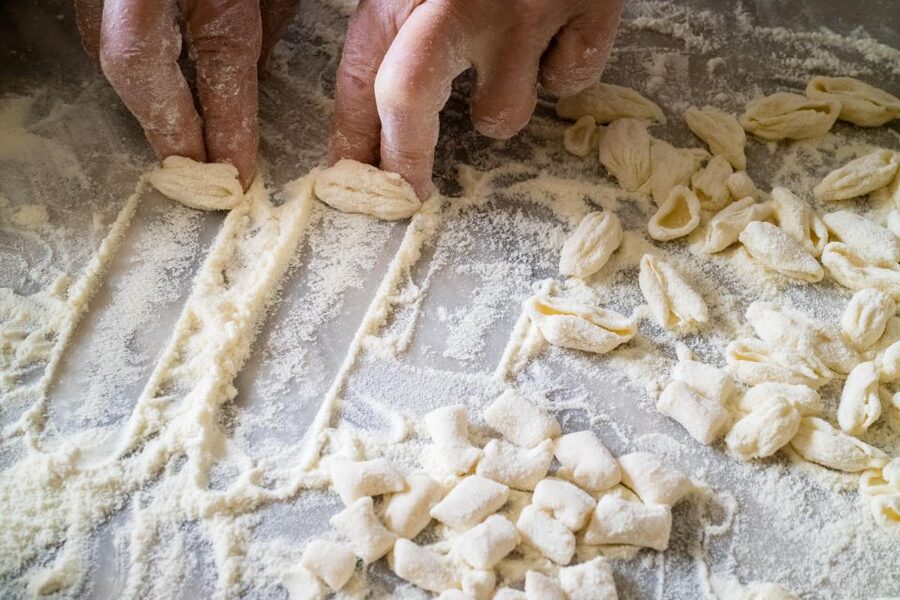
Orecchiette means little ears, and the name makes sense as soon as you see the finished pasta. Each piece has a shallow center and a slightly thicker rim, a form that holds sauce well.
Cavatelli has a different look and feel. It is shaped into small hollow pieces, often with ridges that catch sauce. The contrast between the two shapes gives the lesson a clear purpose. You are not making one generic fresh pasta and calling it local. You are learning two forms tied closely to Puglia.
The chef demonstrates the movements, then gives you dough to work with. This is where the small group matters. Annamaria is described as checking each person’s technique, while Daniele is praised for patient, individual help. If your first orecchiette looks more like a shell, do not worry. The point is to get useful correction and improve as you go.
You will want to pay attention to pressure and speed. The shaping looks easy when an experienced cook does it, but your first attempts may be uneven. That is normal, and the class is structured for practice rather than perfection.
Bring questions. This is one of the better features of the lesson. You can ask about dough, cooking times, sauces, ingredients, and how to repeat the process at home. Several instructors also explain general pasta rules that are easy to follow blindly, such as how to judge texture and how sauce and pasta shape work together.
What you eat during the two hours
The class includes more than the pasta itself. An Apulian aperitivo usually accompanies the teaching, with taralli, preserved vegetables, seasonal greens, olives, and other local products. Focaccia may also be served.
Taralli are small, crisp, ring-shaped snacks common in Puglia. They give you something salty to nibble on while the chef explains the lesson. Preserved vegetables add a sharper, more savory taste and show how local food traditions make good use of seasonal produce.
Wine is included, and red wine is frequently served during the class. Lemon liqueur may also appear at the end. The exact selection can vary, so think of this as a regional tasting rather than a formal wine lesson.
At the end, you eat the orecchiette you helped shape. The included dish is listed with tomato sauce, while different sessions have also used pesto or another simple sauce. The important point is that your pasta becomes the meal. That adds a satisfying finish and lets you taste how the shape handles sauce.
Portions are described as generous. Still, this is a two-hour cooking class with an aperitivo, not a long multi-course dinner. If you have a large appetite, you may want to plan another meal later.
The parts you do, and the parts the chef does
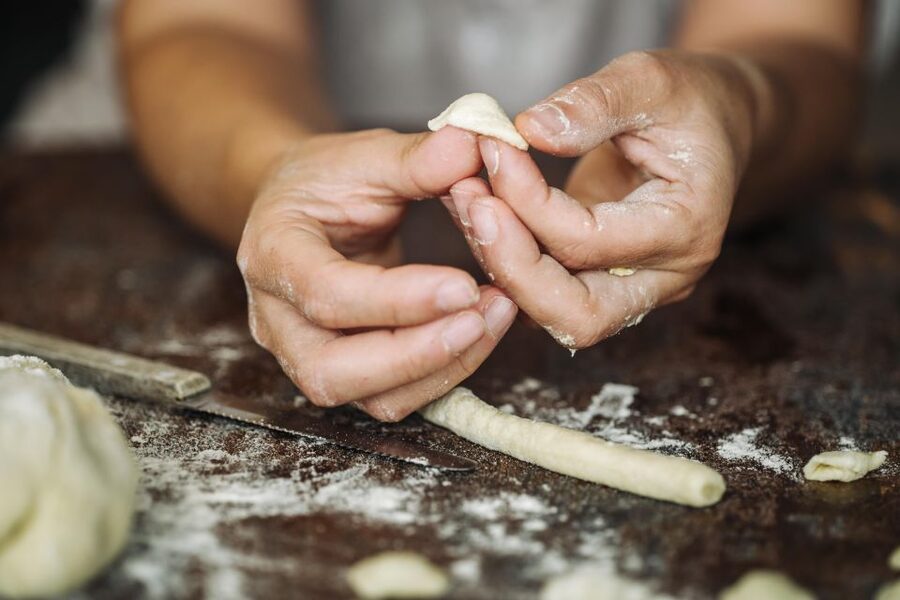
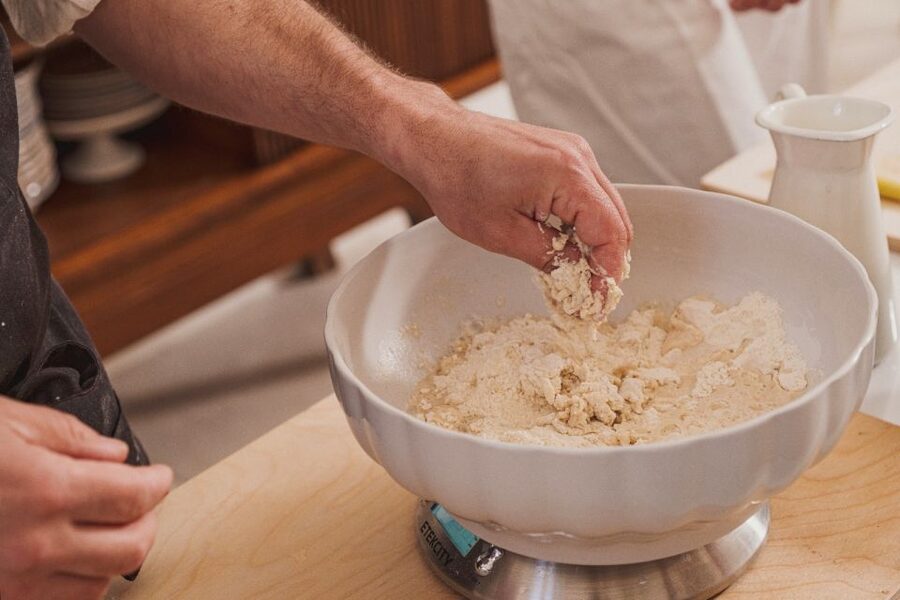
This distinction is important when you compare cooking classes. You shape the orecchiette and cavatelli, but the chef generally prepares the dough and sauce. You watch, listen, and then work with dough that is ready for shaping.
That format has advantages. You spend more time learning the tricky handwork instead of struggling through every stage of a dough recipe in a short session. You also get a clear demonstration from someone who makes these shapes regularly.
The drawback is that you may expect to make a sauce from scratch, knead the dough, or prepare the full meal yourself. This class does not promise that. If your goal is a complete kitchen workshop, ask before booking or choose a longer class. If your goal is to learn the defining shapes of Apulian pasta and understand how to repeat them at home, the format works well.
One participant who had taken several pasta classes in Italy found this lesson especially strong on the reasons behind cooking rules. Another appreciated the focus on sustainability and reducing food waste. Those details suggest a lesson with more substance than a quick demonstration, even though your direct cooking work centers on shaping.
Other old stone towns within reach of Bari:
- Polignano a Mare: Speedboat Cruise to Caves with Aperitif
★ 4.8 · 3,382 reviews - Polignano a Mare: Cave Boat Tour with Aperitif
★ 4.7 · 1,891 reviews - Polignano a Mare: Boat Trip, Swim & Cave with Aperitif
★ 4.8 · 1,300 reviews - Polignano a Mare boat tour emotions, caves, diving and appetizers
★ 5.0 · 1,022 reviews
The teaching style: patient, lively, and practical
The instructors are a major part of the experience. Annamaria is repeatedly described as warm, specific, and attentive. She shows the correct technique, answers questions, and shares recipes and advice for pasta, focaccia, and sauce.
Daniele brings a slightly different style. He has professional kitchen experience and is described as funny, engaging, and easy to understand. He also explains the science behind different pasta methods across Italy. That can be useful if you want to understand why Apulian pasta differs from egg pasta found in other regions.
Maria is also described as an entertaining teacher with broad knowledge of Italian food and society. The instructors may talk well beyond the recipe, so expect conversation rather than a silent demonstration followed by a quick meal.
English ability is a strong point. The class is available in English and Italian, and the instructors are described as clear and attentive. A late arrival was accommodated during one session, but I would not plan to arrive late. You will want to see the dough and shaping demonstration from the beginning.
Why the small group makes a difference
The group size can be as small as six people, though the exact number is not specified for every session. A smaller class gives the chef time to look at your hand position and correct your technique.
It also creates the social side of the evening. You may share a table with couples, families, and people from several countries. Wine and snacks make conversation easy, but you are not forced into a loud or highly staged activity.
Families have found the class suitable for children and teenagers. Children aged five and eight have taken part, and a ten-year-old and teenager were also included in a family group. Younger children may need help with the dough and shaping, but the activity offers a useful break from sightseeing and a memory they can repeat at home.
For adults, the class works well as an early-evening activity. You receive a meal, a drink, and a local lesson without giving up an entire day. Two hours is long enough to learn a real skill but short enough to fit around a walk through Polignano.
The setting in Polignano a Mare
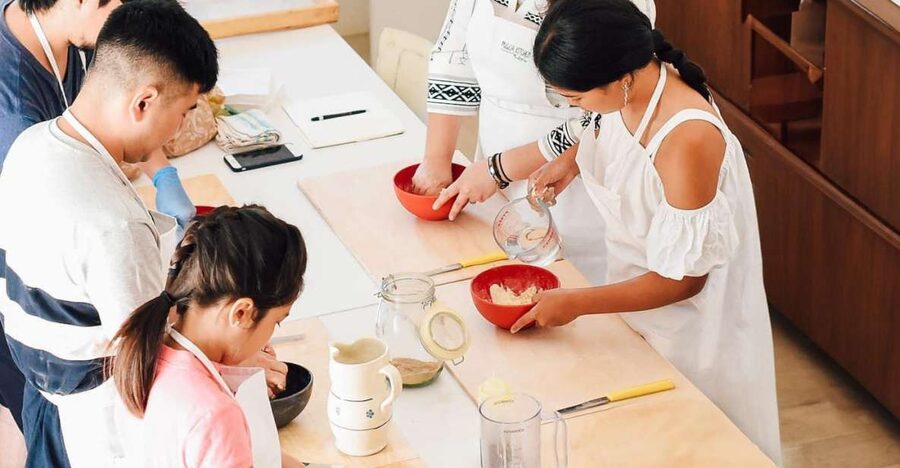
The meeting point is Via S. Vito 20, 70044 Polignano a Mare, in the historic center. You meet Annamaria at the typical house used for the class.
The central location matters because Polignano is easy to explore before or after the lesson. You can spend the day walking through the old town, then use the class as a food-focused evening stop. The activity itself does not include a sightseeing tour, so allow time separately if you want to see the town’s famous coastal views and lanes.
The house setting also feels more personal than a large commercial teaching kitchen. That does mean you should pay attention to the meeting instructions and arrive at the correct address. Optional pickup can be requested from Monopoli and nearby cities, but hotel pickup and drop-off are not included as standard.
The activity is listed as wheelchair accessible. If you need a transfer or have specific access needs, request arrangements in advance, especially if you are coming from outside Polignano.
Is $77 a fair price?
At $77 per person, this is not the cheapest way to eat pasta in Puglia. You can find a less expensive meal in town, and you may find other cooking classes that include more cooking steps.
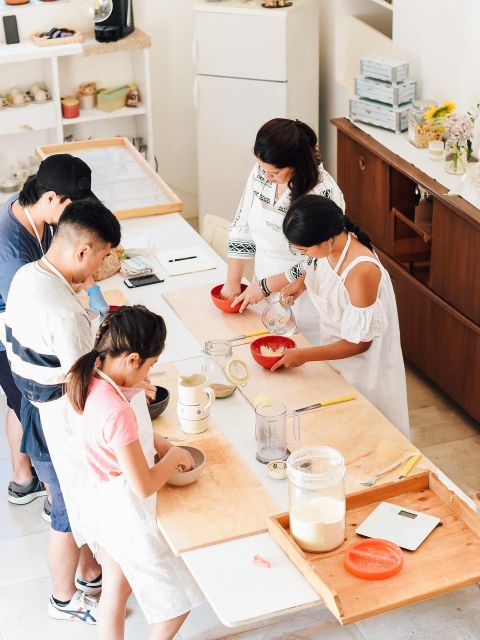
The value comes from the combination of instruction, food, drinks, and setting. You receive a professional chef, kitchen utensils, a hands-on lesson, an aperitivo, local products, wine, and the pasta dish. You also get direct correction while shaping the pasta, which is hard to gain from a cookbook or a casual demonstration.
I consider the price reasonable if you want a social activity and a practical skill. It is less compelling if you mainly want a large dinner or expect to cook every course yourself. One participant felt the activity was expensive compared with other classes in Italy, and that is a fair caution.
The best value comes when you actually use what you learn later. Take notes or ask if you may record parts of the demonstration. One person wished for a printed recipe sheet, and a recipe handout is not listed as included. You may be allowed to record the lesson, but confirm with the instructor first.
Who should book this class?
I would recommend it to food lovers, first-time pasta makers, families, couples, and anyone who wants a relaxed evening in Polignano. It is especially useful if you want to learn a pasta shape strongly tied to Puglia rather than a general Italian pasta recipe.
Vegetarians and vegans can take part. The included orecchiette with tomato sauce and the vegetable-based aperitivo make the class suitable for plant-based diners, though you should mention your requirements when booking.
Children can join, but the experience includes sitting, listening, and following careful hand movements. It is not a fast-paced activity. Children who enjoy crafts, cooking, or making things with their hands are likely to get the most from it.
You may want another option if you are looking for advanced cooking instruction, a full sauce-making workshop, or a long chef-led dinner. You also should not book it solely for a recipe sheet, since one is not guaranteed.
Booking is flexible: you can cancel up to 24 hours ahead for a full refund, and the reserve-now, pay-later option lets you hold a place without paying immediately. Check the available start time before booking because the class lasts two hours.
My verdict on the Polignano pasta experience
Book this class if you want more than a meal and less than a full-day cooking course. The strongest part is the careful teaching of orecchiette and cavatelli, supported by local food, wine, and easy conversation.
I especially like the combination of practical correction and cultural talk. Annamaria, Daniele, and the other instructors appear to treat pasta as a doorway into Puglian life, not just a recipe. The main limitation is clear: you shape the pasta, but you do not usually make the dough and sauce from start to finish.
For most visitors, that is a reasonable trade. You leave with a regional skill, a full plate of your own pasta, and a pleasant two hours in central Polignano. At $77, it earns its price best when you value the teaching and the social setting as much as the food.
FAQ
Where does the pasta class take place?
The class takes place at a typical house in Polignano a Mare’s historic center, at Via S. Vito 20, 70044 Polignano a Mare BA.
How long does the activity last?
The cooking class lasts two hours.
Which pasta shapes will I learn?
You will learn how to make orecchiette and cavatelli, two traditional Apulian pasta shapes.
Is the pasta class taught in English?
Yes. The activity is offered in English and Italian.
Is food and wine included?
Yes. The experience includes drinks, local products, an Apulian aperitivo, and orecchiette served with tomato sauce. The aperitivo may include taralli, preserved vegetables, seasonal greens, olives, and focaccia.
Can vegetarians and vegans join?
Yes. The activity is suitable for vegetarians and vegans.
Is hotel transportation included?
No. Hotel pickup and drop-off are not included. Optional pickup from Monopoli and nearby cities is available on request.
Can I cancel the booking?
You can cancel up to 24 hours in advance for a full refund. The reserve-now, pay-later option is also available.
More classes and workshops in Bari
- Naples: Pizza-Making Workshop with Drink and Appetizer
★ 4.9 · 5,411 reviews - Rome: Pasta & Tiramisu Class with Fine Wine by the Vatican
★ 4.9 · 4,852 reviews - Cooking Class and Lunch at a Tuscan Farmhouse with Local Market Tour from Florence
★ 5.0 · 4,831 reviews - Authentic Pizza Making Class in Naples with Appetizers and Drink
★ 5.0 · 3,178 reviews
More pasta to make and eat in Bari
- Bari: Pasta Experience Walking Tour
★ 4.7 · 660 reviews - Bari Walking Tour with Pasta Experience
★ 4.5 · 270 reviews - Florence: Pasta & Tiramisu Cooking Class with Unlimited Wine
★ 4.9 · 6,708 reviews - Florence: Pasta Cooking Class with Unlimited Wine
★ 5.0 · 6,413 reviews
Just added in Bari
- UNESCO’s Alberobello and Matera from Bari★ 4.5 · 271 reviews
- Bari Vecchia Group Tour in Italian★ 5.0 · 241 reviews
- Alberobello and Matera Bus Tour, from Bari★ 4.5 · 250 reviews
- Polignano a Mare boat tour emotions, caves, diving and appetizers★ 5.0 · 1,022 reviews
- The Original Street Food Walking Tour in Bari★ 4.5 · 226 reviews
- Boat tour of the Polignano a Mare caves with aperitif★ 4.5 · 595 reviews
- Boat trip to the Polignano a Mare caves★ 5.0 · 395 reviews
- Bari Walking Tour with Pasta Experience★ 4.5 · 270 reviews
Alberobello, Matera & the Trulli Towns, compared.

Sassi Tour with Cave House and Rupestrian Church
Read our review →
Polignano a Mare: Speedboat Cruise to Caves with Aperitif
Read our review →
Polignano a Mare: Cave Boat Tour with Aperitif
Read our review →
Discover Matera, the ancient city – English tour
Read our review →
Polignano a Mare: Boat Trip, Swim & Cave with Aperitif
Read our review →
Polignano a Mare boat tour emotions, caves, diving and appetizers
Read our review →
Browse the lists this tour appears in