
Reviewed · WALKING TOURS
Bologna: City Center Walking Tour
Bologna’s best introduction is on foot, and this tour puts you right among its medieval towers, grand squares, and food stalls. In two to three hours, you move from the Neptune Fountain and Palazzo d’Accursio to San Petronio, Santo Stefano, the Quadrilatero Market, and the Two Towers.
I like the way the route mixes major sights with everyday Bologna. I also like the guides’ range, from Ricardo’s history and politics to Leonardo’s food tips and Victoria’s lively storytelling. The main drawback is that the amount of information can feel brisk, especially with a fast speaker or a larger group.
Key points at a glance
- Bologna’s central sights in one walk: See Piazza Maggiore, San Petronio, Santo Stefano, the Quadrilatero, and the Two Towers.
- Food and history share the route: The market walk gives useful context for Bologna’s famous food culture.
- Strong guide-led storytelling: Guides including Ricardo, Maria, Victoria, Nicola, and Michaela are praised for clear explanations and humor.
- Helpful early-trip orientation: The walk gives you practical ideas about restaurants, shops, and places to revisit.
- Audio support may help: Some departures use headphones, making it easier to hear while taking photos.
- Plan for walking and proper clothing: Comfortable shoes are essential, and churches require covered shoulders and legs.
Why this Bologna walk works so well at the start of your stay
Bologna can seem easy to understand at first. The center is compact, the porticoes guide you through town, and the main squares are close together. Yet the city’s story is layered: medieval power, Europe’s oldest university tradition, church politics, market life, and a food culture that is part of daily life rather than just a restaurant theme.
A guided walk gives those pieces order. Instead of seeing a fountain, a church facade, and two leaning towers as separate photo stops, you learn how they fit into Bologna’s civic life.
I would book this on your first day or the morning after arrival. The route helps you get your bearings, and the guides often suggest restaurants, shops, and places worth returning to. You will still need separate time for museums and detailed church visits, but you finish with a useful map in your head.
The tour costs $26 per person. That is a fair price for a certified guide and two to three hours in a city where many important sights are best understood from the street. The value is strongest if you listen closely and use the walk as a foundation for the rest of your visit, not as a complete survey of Bologna.
Other walks around Bologna:
- Bologna: Walking Food Tour with a Local Guide
★ 4.8 · 882 reviews - Private Half Day Parma Food Walking Tour
★ 5.0 · 561 reviews - Bologna: City Center Guided Wine Walking Tour
★ 4.9 · 210 reviews
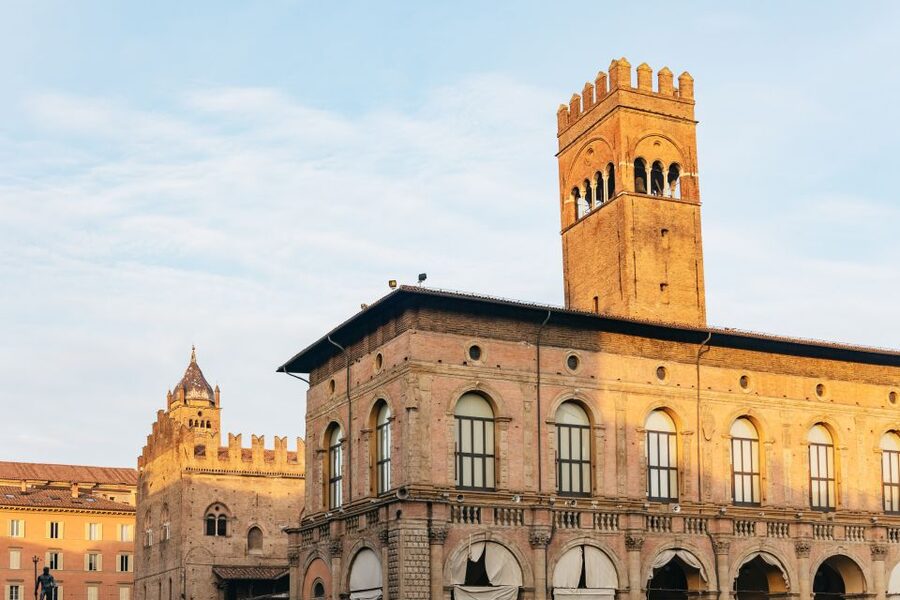
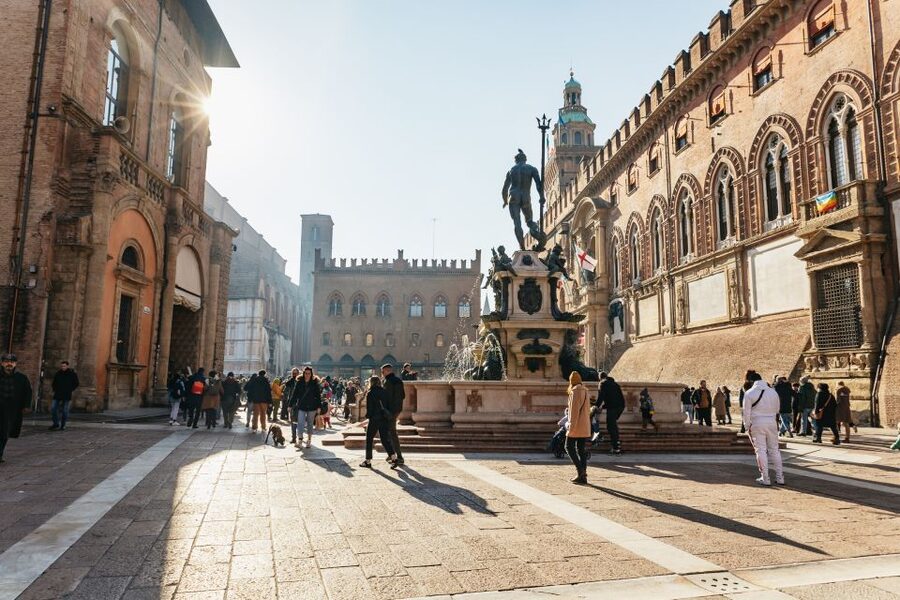
Starting at the Neptune Fountain and Palazzo d’Accursio
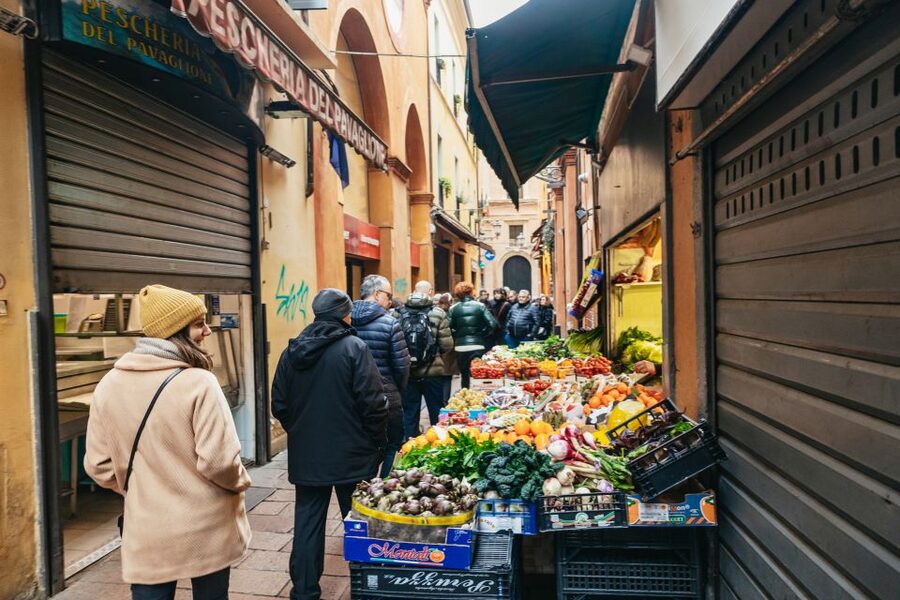
The meeting point may vary with the option you book, but the listed starting choices center on the Fountain of Neptune. This is a sensible place to begin because it puts you beside Bologna’s political heart and one of its most recognizable public artworks.
The Neptune Fountain is more than a handsome landmark. It is a natural gathering point, and the tour includes the local tradition of making a wish there. The guide also uses the fountain to introduce the city’s public spaces and the way Bologna presents its history in the open air.
From there, you move toward Palazzo d’Accursio. This large civic building faces the main square and helps explain Bologna as a city of government as well as churches and markets. Listen for the guide’s details here, since the building is easier to appreciate when you know what role it played in the city’s public life.
The opening section can be information-heavy. That is useful if you enjoy history, but you may want to jot down a restaurant or sight recommendation rather than trying to remember every date and name. One guide, Ricardo, has been praised for covering history, culture, and politics with real enthusiasm, though a faster pace may be challenging for some listeners.
Piazza Maggiore and the scale of San Petronio
Piazza Maggiore is the tour’s main stage. Bologna’s central square brings together civic buildings, arcades, and the Basilica of San Petronio, so it gives you the clearest sense of the city’s scale and ambition.
The square is a good place to pause and look up. Bologna’s porticoes frame the edges of the center, while the buildings around the piazza show how religious and civic authority once faced each other across the same public space.
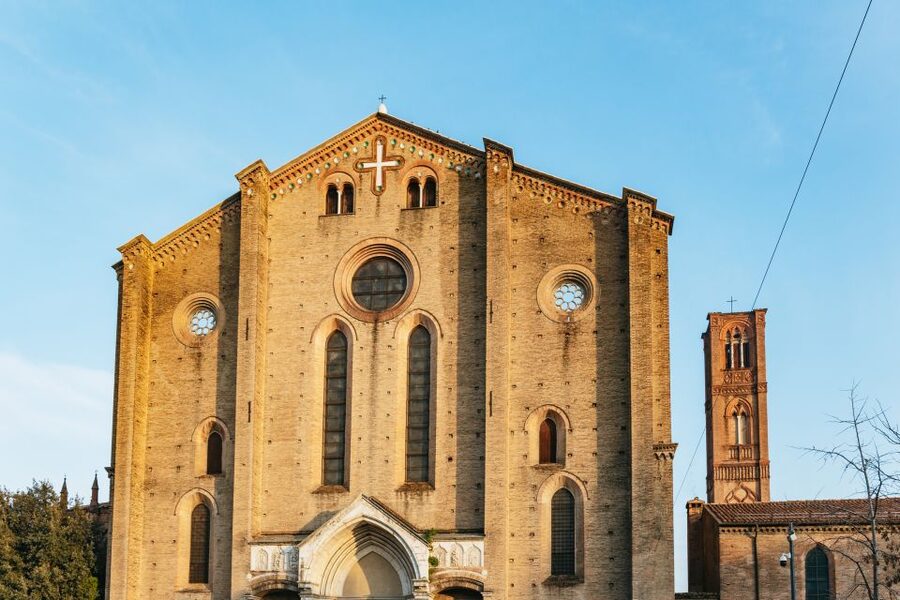
San Petronio is the major church stop and one of the tour’s biggest visual rewards. Its facade immediately catches your eye, but the guide’s explanation helps you see more than the front of the building. You learn why the basilica matters to Bologna and how its story connects to the city’s political and religious past.
Appropriate clothing is required if you enter places of worship. Do not arrive in a vest, top, shorts, or miniskirt. The information also advises against short skirts and skirts generally, so modest, comfortable clothing is the safest choice.
The church visit may be the moment you want to linger. The tour has a fixed route and a limited time, so you should not expect a long, quiet examination of every chapel or artwork. If San Petronio grabs your attention, mark it for a return visit.
Several guides receive special praise for making this stop memorable. Maria is described as clear and thorough, while another guide was praised for bringing the basilica to life through passionate explanations. That difference matters: a large church can feel like a quick photo stop without a guide who gives you a reason to look.
The Quadrilatero Market, where Bologna gets practical
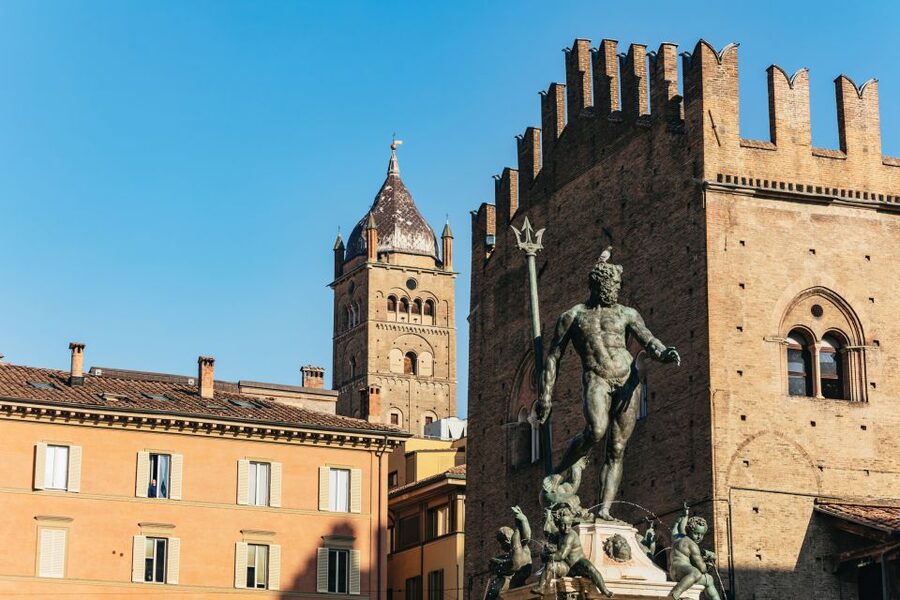
The walk then turns toward the Quadrilatero Market, one of the most useful stops for anyone interested in Bologna’s food culture. This is not a detached food lecture. You see the market streets as part of the historic center and learn why eating and shopping have long been tied to the city’s identity.
I like this section because it gives you something to do after the tour. Look for the kinds of shops and local products the guide points out, then return later when you have time to eat or browse without keeping up with a group.
Guides bring different strengths here. Leonardo is praised for combining food and history, and another guide included traditional local food and wine in the experience. The exact food component can vary, so you should not book this as a full tasting tour. Think of it as a market walk with useful food advice.
This is also where a good guide can save you from eating at random. Recommendations are not a guarantee of a perfect meal, but they give you a starting point in a city where the central market streets can feel crowded and confusing.
The market is one of the liveliest parts of the route, which also makes it one of the least predictable for group movement. Stay close to the guide, especially if your group is large. One group had 28 people, yet the guide managed to keep everyone together through crowded streets. A small-group departure should feel easier in this setting.
A few more things to do in Bologna
- Bologna: Open Bus City Tour and Local Food Tasting
★ 3.7 · 550 reviews - Parma: City Walking Tour
★ 4.2 · 203 reviews - Rome: City Sightseeing Hop-on Hop-off Bus with Audioguide
★ 4.0 · 16,045 reviews - Milan: City Sightseeing Hop-On Hop-Off Bus with Audio Guide
★ 4.0 · 6,256 reviews
Piazza della Mercanzia and Bologna’s merchant past
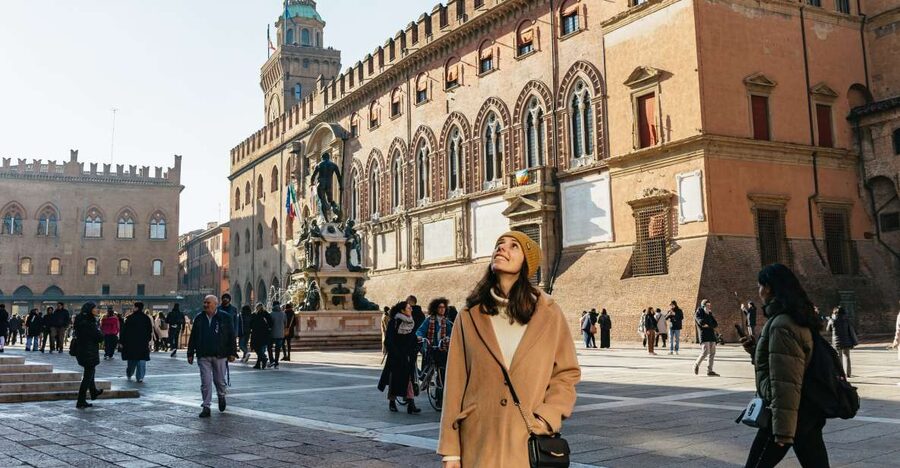
Piazza della Mercanzia takes the route toward Bologna’s commercial side. The square’s name and setting connect naturally with the market section, giving the walk a chance to explain how trade shaped the old center.
This is the sort of stop you could easily pass without understanding its role. A guide can point out the visual clues in the surrounding buildings and explain how merchants, civic bodies, and powerful families influenced the city.
The route does not simply string together famous photo points. Its value comes from the links between them. The fountain introduces public display, Piazza Maggiore shows civic power, the market presents daily commerce, and the later tower stops reveal the ambitions of Bologna’s medieval families.
That broader pattern is why I prefer this kind of walk to a loose list of landmarks. You leave with a sense of how the center functions, not just a set of photographs.
Santo Stefano and the quieter church stop
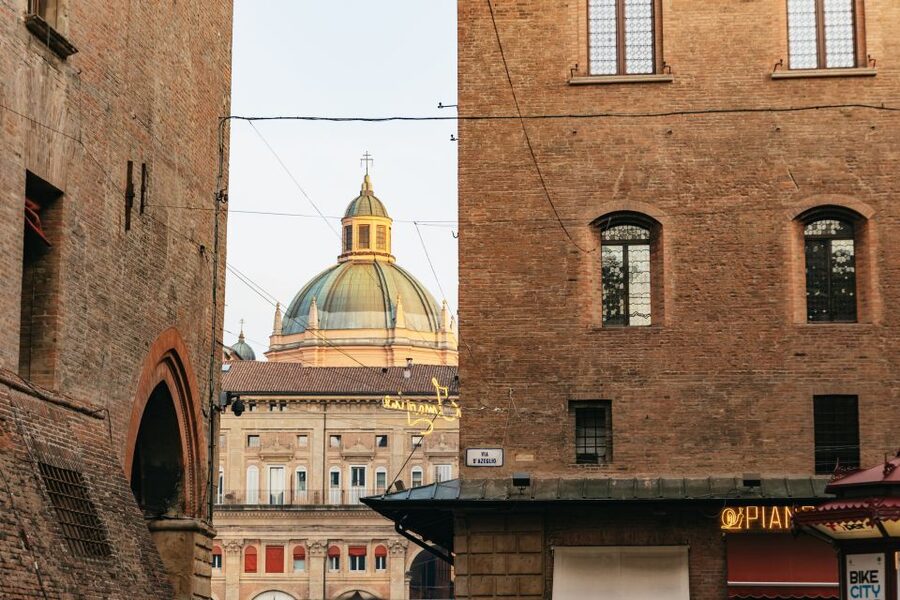
Piazza Santo Stefano offers a change of mood. Compared with the wide openness of Piazza Maggiore, this square feels more intimate and gives the tour a chance to focus on religious architecture and the atmosphere of Bologna’s old center.
The stop includes Santo Stefano, a church complex with several connected spaces and a distinctive identity within the city. The contrasting churches are one of the route’s strengths. San Petronio feels monumental and civic, while Santo Stefano gives you a more enclosed and layered setting.
One important practical point: the time spent at each sight can vary with the guide, group, and day. A visitor who wants a longer look inside Santo Stefano may find the stop too brief. The tour is designed to introduce the place, not replace a dedicated visit.
Wear comfortable shoes even though the walk is not considered strenuous. There are regular stops, but you remain on your feet for two to three hours, moving through paved streets and busy public areas. People with limited mobility should note that the experience is not recommended for them.
The Two Towers and Bologna’s skyline

The Two Towers are the route’s most instantly recognizable sight. The Asinelli Tower rises above the center beside its shorter companion, and the pair gives you a vivid reminder of medieval Bologna’s competitive spirit.
The guide explains the towers’ height and importance rather than simply pointing them out. That context makes the view more interesting. You begin to notice how many other towers once shaped Bologna’s skyline and why these two became the city’s defining image.
This is a viewing stop, not a tower-climbing excursion. The tour information promises a visit to the Two Towers, but it does not include a climb. If you want to go up, check separately for admission and current access before building your plans around it.
The tower area can be crowded, especially when groups gather for photos. Headphones may be used on some departures, and that is a real help. You can step a little aside to take a picture and still follow the explanation instead of choosing between listening and photography.
The walk returns to the Fountain of Neptune. Ending where you began makes the route easy to follow later, especially if you want to return to Piazza Maggiore or the market on your own.
Guide quality, group size, and the pace of information
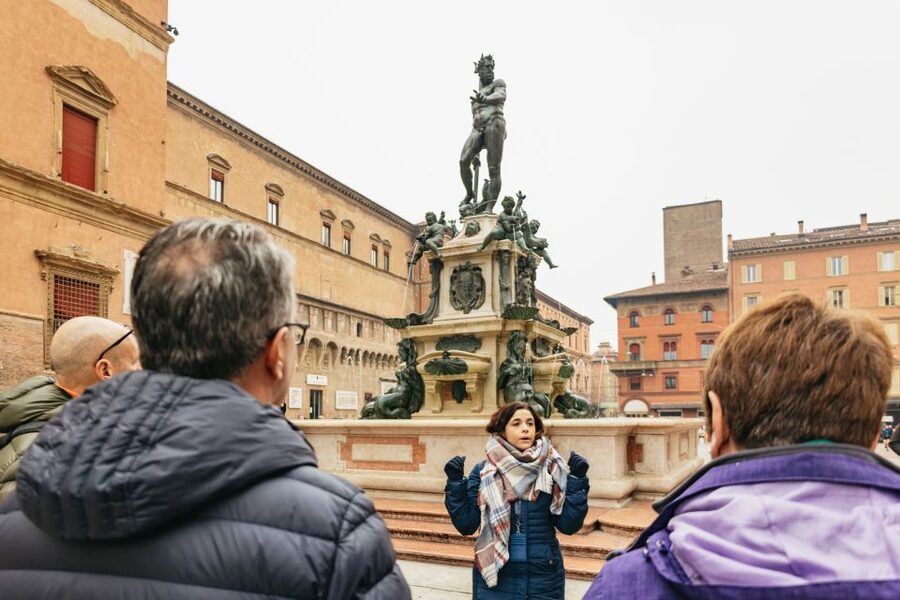
The strongest part of this experience is the guide. The tour is available in Italian, English, Spanish, and French, with a certified guide leading the walk. The names attached to particularly praised departures include Ricardo, Maria, Victoria, Nicola, Michaela, Leonardo, Matteo, and others.
Their styles differ. Ricardo is associated with a historian’s level of detail and wide-ranging discussion. Maria is praised for clear, in-depth explanations. Victoria is noted for storytelling, while Michaela is described as entertaining and able to make two hours pass quickly.
That variety means your experience depends partly on the individual guide and the language departure. Some guides offer a lot of material at a fast pace. If you prefer a slower, more reflective walk, stay near the guide and ask questions during pauses.
Small-group availability is a plus. It helps the group move through narrow streets and crowded squares, and it gives you a better chance to ask about food or places to revisit. Larger groups can still work, particularly when audio equipment is available, but they require more attention at crossings and crowded stops.
The overall pace is moderate rather than athletic. One detailed account describes plenty of stopping and a walk that is not strenuous. Still, this is not a seated sightseeing experience. If standing for several hours is difficult, choose another way to see the center.
What to bring and how to dress
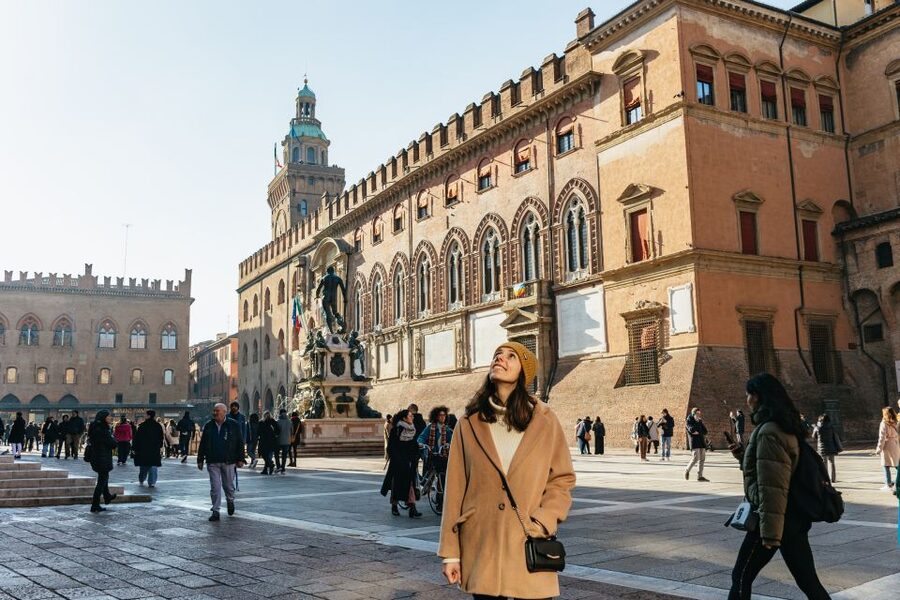
Bring comfortable shoes. Bologna is a walking city, and this route uses the historic center rather than a bus or vehicle.
Bring a long-sleeved shirt or another modest layer. The dress rules for places of worship are clear, and you do not want to miss an interior visit because your clothing is unsuitable.
A small bottle of water, weather protection, and a phone for notes are sensible additions, though only shoes and appropriate clothing are specifically required. The route passes food shops and restaurants, so you may also want room in your schedule for a meal after the tour rather than trying to eat while walking.
You can cancel up to 24 hours before the start for a full refund, and the reserve-now, pay-later option keeps the booking flexible. Check the available start times because the tour lasts two to three hours and the exact meeting point can vary by booking option.
Who should book this Bologna walking tour
I would choose this tour if you are visiting Bologna for the first time, have only a day or two, or want a clear introduction before exploring alone. It is also a good fit if you care about both food and architecture, since the route connects the Quadrilatero with churches, squares, and towers.
History fans should enjoy the amount of explanation, especially on departures led by guides such as Ricardo or Maria. You will get more from the walk if you like stories, political context, and details about buildings rather than simply moving from one photo stop to the next.
Families and older visitors should assess the walking requirement carefully. The route is not described as strenuous, but it is not suitable for people with limited mobility. Large groups may also be less comfortable for anyone who needs frequent breaks or finds busy streets difficult.
I would not choose this as your only Bologna experience. Use it to identify the places you want to revisit, then return to San Petronio, Santo Stefano, the market, or the university area with more time.
Should you book it?
Book this tour if you want a well-priced orientation with a strong chance of an engaging guide. The $26 fee is reasonable for a two to three-hour walk covering Bologna’s core sights, especially when the guide adds food suggestions and details you would likely miss alone.
Skip it if you dislike group walking, want long interior visits, or need step-free access. For most first-time visitors who can walk comfortably, this is a smart first look at Bologna, with enough history, food, and local detail to make the rest of the city easier to enjoy.
FAQ
How long does the Bologna City Center Walking Tour last?
The tour lasts between two and three hours. Available start times can vary, so check the schedule when booking.
How much does the tour cost?
The listed price is $26 per person.
Which languages are available?
The tour is available in Italian, English, Spanish, and French.
Where does the tour start?
The meeting point may vary by booking option. Listed starting choices include the Fountain of Neptune, Neptune’s Fountain, and Fontana del Nettuno.
Which main sights are included?
The route includes Palazzo d’Accursio, Piazza Maggiore, San Petronio, Piazza della Mercanzia, Piazza Santo Stefano, and the Two Towers. It returns to the Fountain of Neptune.
Is a small group available?
Yes. Small-group departures are available, although group size depends on the option and departure you choose.
What should I wear?
Wear comfortable shoes and bring a long-sleeved shirt or other suitable clothing. Places of worship require covered shoulders and legs, and vests, tops, shorts, and miniskirts are not allowed.
Is the tour suitable for people with limited mobility?
No. The tour is not recommended for people with mobility impairments.
Just added in Bologna
- Bologna Food Experience: Factory tours & Family-Style Lunch★ 5.0 · 1,201 reviews
- Bologna on the plate, Cooking Class with Alessia★ 5.0 · 260 reviews
- Bologna Private Highlights & Hidden Gems Tour with a Local★ 5.0 · 359 reviews
- Bologna gastronomic experience with a local★ 5.0 · 626 reviews
- Bologna Private Food Tour with 6 or 10 Tastings★ 4.5 · 344 reviews
- Bologna: Full meal Food Tour with Local Delights by Do Eat Better★ 5.0 · 541 reviews
- Bologna Food Tour by Taste Bologna: Intimate Group (Max 10)★ 5.0 · 424 reviews
- Bologna Food & Market Tour with 6 Tastings, Pasta, Wines & More★ 5.0 · 1,328 reviews
Walking Tours, compared.
Guided Walking Tour & Last Supper Visit with Ticket
Read our review →
Rialto Bridge & Offbeat Unusual Venice Walking Tour
Read our review →
Private 3 hrs Venice Tour: St Mark’s, Walking tour & Boat tour
Read our review →
Skip the line: Uffizi and Accademia Small Group Walking Tour
Read our review →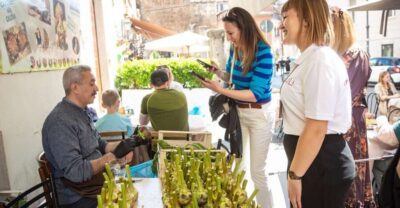
Trastevere & Campo de Fiori Street Food Walking Tour
Read our review →Browse the lists this tour appears in